
- Why are fruit trees grafted?
- What is cherry grafted onto?
- Suitable cherry varieties
- Cherries
- Plum
- Bird cherry
- Cherry plum
- Blackthorn
- Other cultures
- Optimal timing for the procedure
- In the spring
- In the fall
- In summer
- Preparatory activities
- Selecting cuttings for grafting
- Preparation of scions and rootstocks
- Methods and technology of vaccination
- Budding
- In the side cut
- For the bark
- Into the cleft
- Half-split
- Bridge grafting
- How to care for a tree after grafting
- Common mistakes and how to solve them
Many novice gardeners are interested in how to properly graft a cherry tree onto a cherry tree. To do this, it is recommended to properly prepare the cuttings and choose the appropriate method. Today, there are many methods for grafting, including budding, side grafting, and cleft grafting. To ensure the graft takes root, the tree must be given proper care after the grafting.
Why are fruit trees grafted?
Vaccination helps to achieve a number of results:
- Preserve varietal characteristics. Seed propagation of the main cherry varieties prevents the inheritance of the parent plant's characteristics.
- Accelerate the first harvest. Grafted trees produce fruit in just 2-3 years. Trees grown from seed don't begin bearing fruit until 5-8 years later.
- Rejuvenate the garden. Old plants that have lost productivity are pruned and then grafted with fresh cuttings.
- Increase resistance to disease and adverse environmental factors. Grafting helps make the tree resilient.
- Combine the properties of different varieties in one sample.
- Save space in the garden. You can grow shoots of different varieties on a single rootstock.
What is cherry grafted onto?
Cherry grafting can be done on a variety of trees. There are many interesting options available today..
Suitable cherry varieties
Cherry trees are best grafted onto cherries. Any variety can be used. Rastunya, Pulkovskaya, Shubinka, and Vladimirskaya are most commonly used. Griot or Uvarovskaya are also acceptable. In any case, good survival rates are achieved.
Cherries
This combination will increase the tree's frost resistance. Cherry grafting is easy. Wild cherry is used as rootstock. Podbelskaya, Rubin, Lyubskaya, and Kharitonovskaya varieties are also acceptable.
Plum
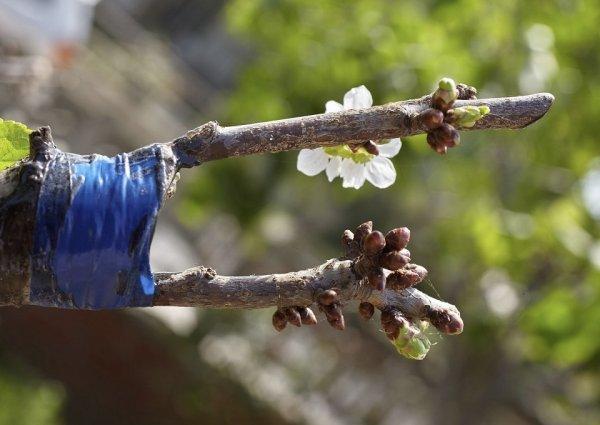
Wild plum is considered one of the most favorable rootstocks for cherries. It improves the fruit's flavor, making the cherries larger and sweeter. Furthermore, it increases the tree's stress tolerance and strengthens its immune system. It also significantly reduces the ripening time.
Bird cherry
This plant belongs to the cherry subgenus. Therefore, the crops are characterized by biological compatibility. Many gardeners use bird cherry as a rootstock. This makes the cherry tree frost-resistant.

Cherry plum
Gardeners' opinions on the compatibility of these plants vary. Some believe the procedure leads to good survival and increased yields. Others insist that cherry cuttings have difficulty rooting on cherry plums. In any case, it all depends on the gardener's skill.
Blackthorn
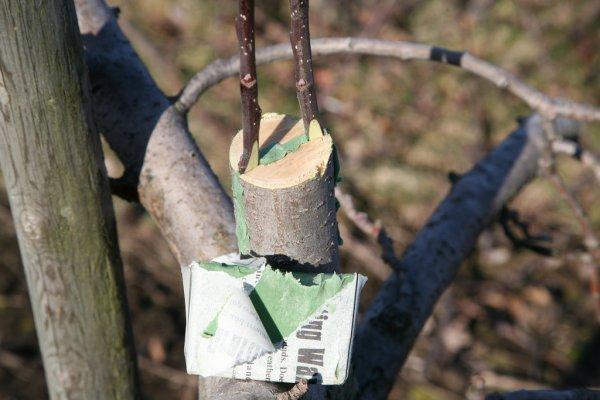
This tree is excellent as a rootstock for cherry trees. These plants are often crossed with excellent results.
Other cultures
Sometimes they do pear grafting Or apple trees for cherries, or vice versa. It's important to keep in mind that positive results aren't always achieved. Even with good survival, there's a risk of crop failure. The plant will lose its natural immunity and become more vulnerable to temperature fluctuations.
Optimal timing for the procedure
To ensure the procedure is successful, it's important to time it correctly. This is especially important in northern conditions.
In the spring
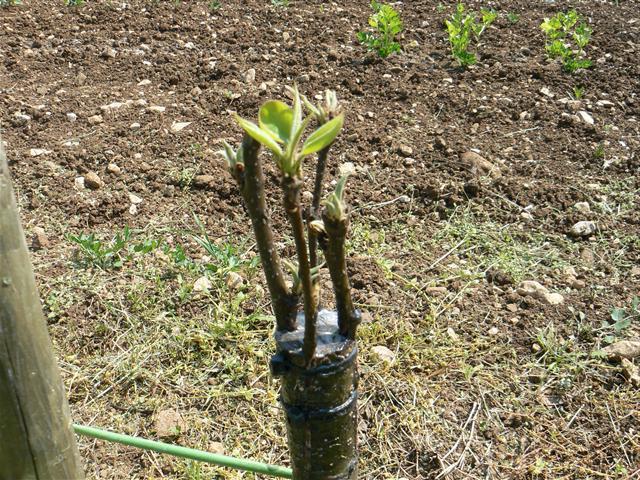
Spring grafting of cherry trees is considered the best option. This is when sap flow is most active, helping the cuttings to take root quickly.
In the fall
Cherry grafting is rare at this time of year. However, there are some successful cases. Fall grafting is only permitted in regions with warm climates where sap flow continues until the end of August. In such cases, it is recommended to perform the procedure before September 10. The grafted area should be wrapped in paper.
In summer
Summer grafting is a good solution. It can be performed if spring grafting is ineffective. In June or July, the sap in the trunk circulates well, so this procedure will yield good results.
Preparatory activities
To ensure successful cherry grafting, proper preparation is recommended. This includes selecting cuttings and preparing rootstocks and scions.
Selecting cuttings for grafting
Fruit plant cuttings should be selected in the fall. This is best done closer to winter, but before frost sets in. Stone fruit cuttings can be stored frozen. Frozen sawdust is used for this purpose. The cuttings should be wrapped in a damp cloth beforehand.
Preparation of scions and rootstocks
If you plan to use one or more seedlings as rootstocks, they should be carefully cared for. They should be about the thickness of a pencil in diameter. Care includes timely weeding, watering, and fertilizing.
On the day of grafting, it is worth getting rid of excess shoots and buds.
Afterwards, wipe the surface with a damp cloth. This will help prevent dirt from getting into the damaged areas.
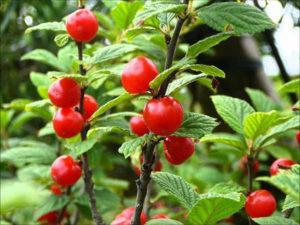
Rootstocks should be prepared in the fall. It's recommended to cut them into 10-15 centimeter-long cuttings. Each cutting should have 2-3 buds. The cuttings should be refrigerated. The day before cutting, remove them and place them in warm water.
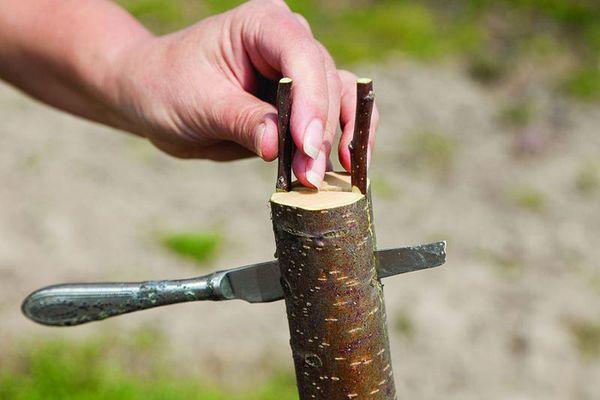
Methods and technology of vaccination
Today, there are many known methods for performing this procedure. Each has its own distinctive features.
Budding
This is a bud grafting method. It is considered one of the most difficult and labor-intensive. The procedure should be performed in mid-June. It is recommended to make a T-shaped cut on the rootstock, including the wood. Prepare a small scion with a growth bud in the center. Place the scion in the rootstock cavity, press firmly, and secure it with plastic film. After a month, it is recommended to remove the film.
In the side cut
This is an effective method that requires proper preparation of the rootstock and scion. A triangular cut should be made on the side and end of the cut branch. The scion is cut at the same angle, forming a triangle, and placed into the triangle on the rootstock. The main difficulty with this method is that the cut angles on the branch and scion must match.
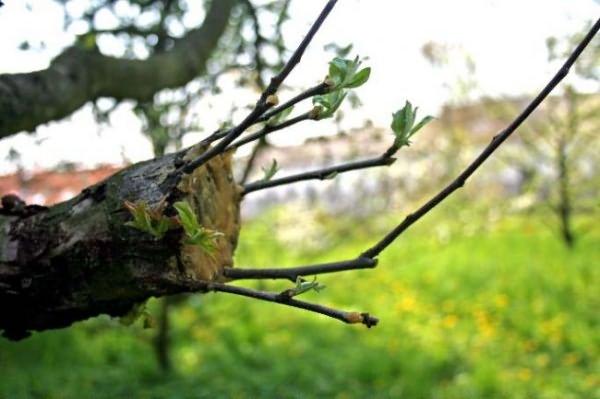
For the bark
To properly complete this procedure, it is recommended to go through the following steps:
- cut the bark along the branch and tear it away from the wood in this area;
- cut the cutting at an acute angle and place it under the bark;
- wrap and treat with garden pitch.
If all manipulations are performed carefully, cherry grafting can be done quickly and efficiently. In this case, there is no need to maintain precise dimensions or angles.
Into the cleft
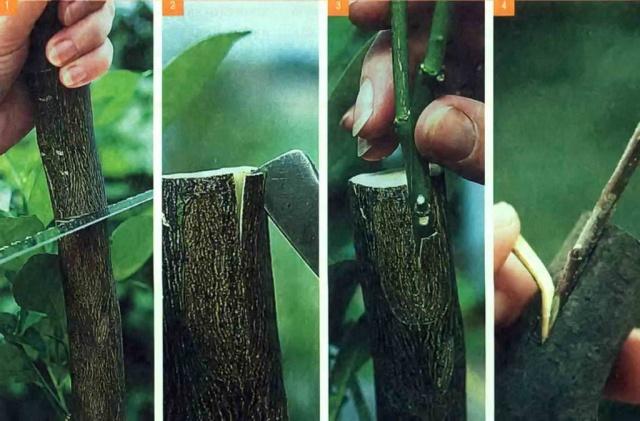
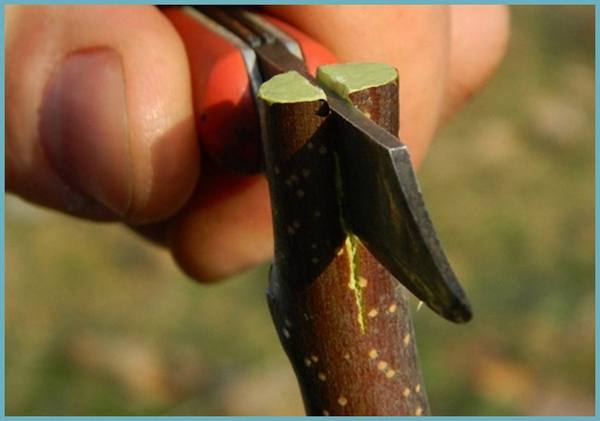
One of the most common budding methods is cleft grafting. This procedure is recommended in the spring. It won't produce the desired results in the summer. To perform the procedure, follow these steps:
- prepare tools;
- select a rootstock with a diameter of at least 10 centimeters;
- split the tree trunk to a depth of approximately 2.5-3 centimeters;
- make an oblique cut on the scion - its shape should resemble a sharp tongue;
- graft the scion onto the rootstock - to do this, place the cutting in the hole and secure it securely with electrical tape;
- To protect damaged areas from pests, it is worth treating the crop with garden pitch.
Half-split
To follow this procedure step by step, it's worth reading the instructions. A half-split differs from a full split only in that the split is not made across the entire width of the cut, but only along one edge, up to half the rootstock's diameter.
Bridge grafting
Bridge grafting can be used to prevent trunk damage from hares. This should be done at the very beginning of the growing season. To achieve this, cuttings should be inserted into the bark along the trunk's diameter.
How to care for a tree after grafting
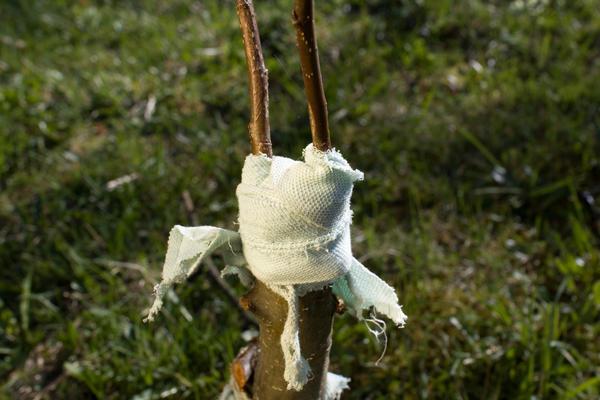
After grafting, the tree requires thorough care. It's important to protect the grafting area from wind. It will take 1-2 weeks for the grafted area to heal. After this time, it's recommended to remove the protective bandage. This will allow oxygen to reach the graft.
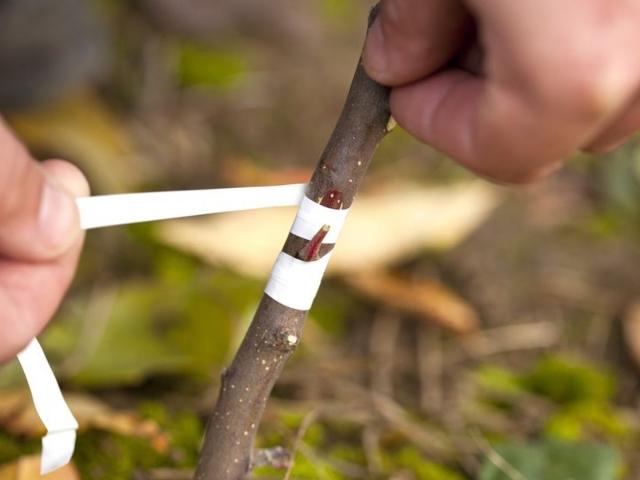 During the recovery period, the plant requires timely fertilization. For this, nitrogen, phosphorus, and potassium-based fertilizers are used. After three years, the grafted shoot will yield a harvest.
Common mistakes and how to solve them
Beginner gardeners often make various mistakes during the process. These include the following:
- wild seedlings aged 2-3 years are used as rootstock;
- an eye is cut out from the bottom or top of the cutting for grafting onto the rootstock;
- unstratified cherry stones are used to grow rootstock;
- Wild seedlings with a root collar less than 5 millimetres thick are used as rootstock.
To ensure the vaccination is effective, it is important to follow the basic recommendations:
- First of all, it's important to consider the seasonal characteristics of the rootstock and scion. Don't combine early and late varieties. It's simply pointless.
- Cuts on branches and cuttings should be as straight as possible. The work should be done with a sharp tool. The survival rate depends on the quality of the cut.
- To ensure a high-quality graft, the material should be used immediately after cutting from the tree. Long-term storage is unacceptable.
- Avoid allowing fresh cuttings to become contaminated. Otherwise, the cutting will not take root.
Cherry grafting is a complex and challenging process that requires strict adherence to basic guidelines. To achieve results, it's essential to properly prepare the rootstock and scion and select the appropriate method for the procedure. This ensures the tree's survival and helps ensure a good harvest.
Related posts:
 Choosing a rootstock for cherry grafting and budding rules for beginners
 Rules and methods for grafting plums in summer, tips for beginners
 When and how to properly graft a pear tree step by step for beginners
 Methods for planting and propagating cherries at home
 Timing and methods of grafting a peach tree, rules of procedure
 How and whether it is possible to graft an apricot, the choice of rootstock, timing and methods of budding
 How and where to graft an apple tree: a step-by-step guide for beginners on budding
 Characteristics and description of the Shokoladnitsa cherry variety, pollinators and fruiting