
- What is fruit tree grafting?
- Benefits of the method: how it is beneficial for apricots
- What are they vaccinating for?
- Cherry plum
- Plum
- Peach
- On almonds
- To the cherry
- For cherries
- Suitable varieties of apricot
- Optimal timing of vaccination
- Is it possible to graft in spring?
- In summer
- In the fall
- How do the timings depend on the growing region?
- Preparatory work
- Necessary materials and tools
- Preparation of the rootstock
- Preparing the scion
- Preparing cuttings
- Vaccination technologies
- Apricot budding
- T-shaped budding into the crown of the rootstock
- Bark grafting
- Into the cleft
- Copulation
- Improved
- Normal
- Bridge method
- Common mistakes made by novice gardeners and how to solve them
The importance of grafting agricultural crops shouldn't be underestimated. For example, heat-loving apricots can be grown even in Siberia if the procedure is carried out correctly. To learn how to graft an apricot tree correctly, it's important to research this topic in as much detail as possible.
What is fruit tree grafting?
Grafting is a vegetative method of propagating fruit trees by combining parts of the same crop. In other words, it involves grafting cuttings from one tree onto another.
The plant parts used for grafting are called scion and rootstock. The scion is the part of the plant that is grafted onto the seedling. This can be a cutting or a simple bud. The rootstock is the lower part of the seedling into which the cutting is inserted or the bud is attached. The rootstock is responsible for the varietal characteristics.
The rootstock is the part of the plant onto which the scion is grafted. This is the lower part of the trunk. The rootstock is responsible for the tree's nutrition and adaptability to local climate conditions.
Grafting can "rejuvenate" a tree and significantly increase yield if it has begun to decline. In the case of apricots, this procedure is necessary to increase frost resistance.
As is well known, apricots are grown in southern regions with mild winters. In central latitudes, where temperatures can reach -30 degrees Celsius, the trees cannot survive such cold and die. To graft apricots, they select a local frost-resistant plant and graft it onto it.
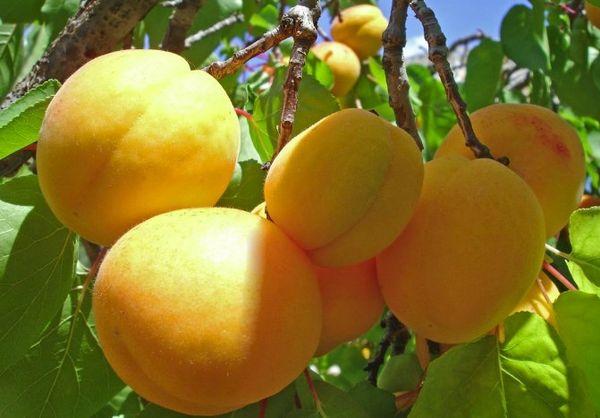
Benefits of the method: how it is beneficial for apricots
The main advantage of grafting for apricot is that it increases the tree's frost resistance, which is especially important when living in cold regions.
Advantages of grafting for apricot:
- Improving the taste of fruits.
- Increasing crop yields.
- Increased immunity to diseases.
The procedure differs only in its benefits for the tree. But to achieve a good result, you need to know exactly how to graft the plant.
What are they vaccinating for?
Trees are grafted onto crops with similar characteristics. Stone fruit trees are ideal. Although not all stone fruit trees can be grafted onto apricots, some varieties are incompatible with each other, and the graft will not take.
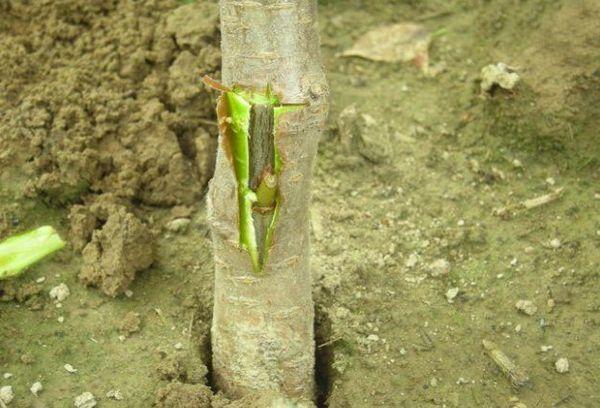
Cherry plum
Apricots can be grafted onto cherry plum. The advantage of this method is that cherry plum is disease-resistant. The cuttings take root well, and the fruit develops a pleasant sweet and sour flavor. Grafting onto cherry plum is done in early spring.
Plum
Plum is an excellent grafting partner for apricots. It's best to use a semi-wild plum for grafting. This will increase the apricot's frost resistance. It's also worth noting that apricots begin bearing fruit earlier.
The plum tree should be no more than 3-4 years old. Older trees can be used, but be aware that the scion will have a harder time taking root.
Peach
You can try grafting a tree onto a peach, but this method is only suitable for southern latitudes. Peaches, like apricots, don't tolerate freezing winters, so there's no point in grafting in the north; it won't be of any use.
On almonds
Even almonds can be used as rootstocks. After all, almonds and apricots belong to the same genus—plum. However, in practice, this is rarely the case; almonds and apricots are poorly compatible. Only two varieties—Luisette and Royale—are reasonably compatible with almonds.
To the cherry
Apricots are rarely grafted onto cherries because it's difficult to find compatible varieties. Another problem arises from the fragility of the branches; they don't fuse well and break in strong winds.
For cherries
The same story applies to cherries as to sour cherries. Cherry cuttings are very fragile and easily break, for example, in strong winds. Cherry cuttings don't take root well. And even if they do, there's no result. Furthermore, cherries are among those plants that require grafting, so grafting apricots onto cherries is not advisable.
Suitable varieties of apricot
The best apricot varieties for grafting:
- Alyosha;
- Minusinsk amber;
- Khabarovsk;
- Bullfinch;
- Samara;
- Darling;
- Red-cheeked;
- Honey.
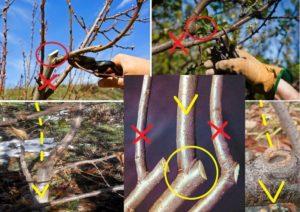
In principle, all tree varieties are suitable for grafting.
Optimal timing of vaccination
Before you begin the procedure, you need to know the exact timing when it is best to do it.
Is it possible to graft in spring?
Spring is one of the best times to perform the procedure. It's performed before the sap begins to flow in early spring. Timing may vary depending on the region. In southern regions, the procedure is performed from early to late March. In central regions, it's carried out until mid-May. However, before grafting trees, you need to wait for good weather. Grafting trees in rainy or cloudy weather is not recommended.
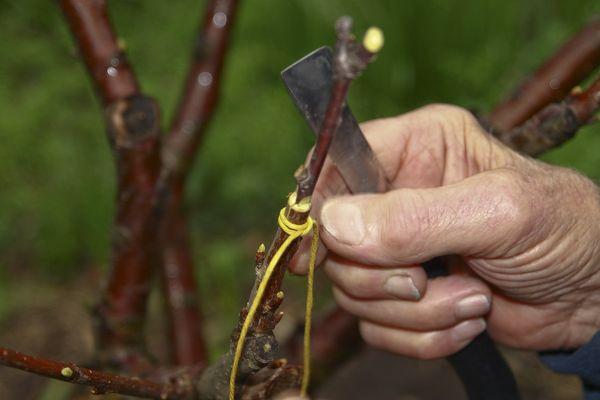
In summer
The advantages of summer grafting include a higher survival rate of the cuttings. The trees have time to recover before the cold weather sets in. And there's no need to store the scion all winter.
The trees need to be grafted before August. It's best to do this between mid-May and early June. The apricots should have finished blooming and have developed foliage.
In the fall
It's not recommended to perform this procedure in the fall. The tree requires a lot of energy for the scion to take root, and in the fall, the tree is already preparing for winter, so the procedure won't yield good results.
How do the timings depend on the growing region?
The timing of grafting depends on the growing region, as climatic conditions vary across latitudes. For example, in the south, the procedure is carried out in early spring, while in the temperate zone, it's done in mid-May.
The procedure should be carried out two weeks before the sap begins to flow. However, it's difficult to calculate exactly when this will begin, especially if you're inexperienced in growing fruit trees.
Preparatory work
Before carrying out the procedure, it is necessary to prepare not only the scion and rootstock, but also the necessary tools.
Necessary materials and tools
To perform this procedure, you'll need a grafting knife, which should be well-sharpened to avoid creases. You'll also need pruning shears and several whetstones. A coarser one is used for sharpening, while a finer one is used to hone the blade.
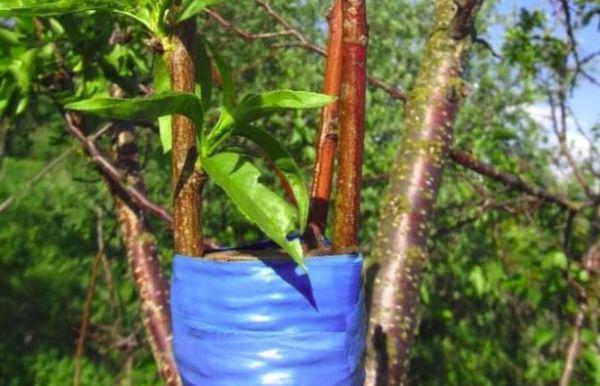
In addition to a knife and blocks, you'll need some binding material. Typically, these are strips of compressor film or polyethylene film. The length should be 30-45 cm and the width 5-8 mm. The last thing you might need is garden pitch.
Preparation of the rootstock
The rootstock determines the tree's stability, frost resistance, and fruiting potential. Local planting material is used as rootstock. Choosing a rootstock should be approached carefully, as it determines how well the apricot tree adapts to unfamiliar climatic conditions.
Preparing the scion
Scions are taken from one- or two-year-old branches. It's best to select upper stems on the south or east side. Scions with fruiting buds should be used only;
Preparing cuttings
Cuttings can be taken twice a year—in the last days of autumn or at the end of winter. If you can't make the cuttings during these periods, you can reschedule them for early spring. In late autumn, cuttings are taken after the leaves have fallen and the first frosts have occurred. In spring, cuttings can be taken any day after the weather warms up.
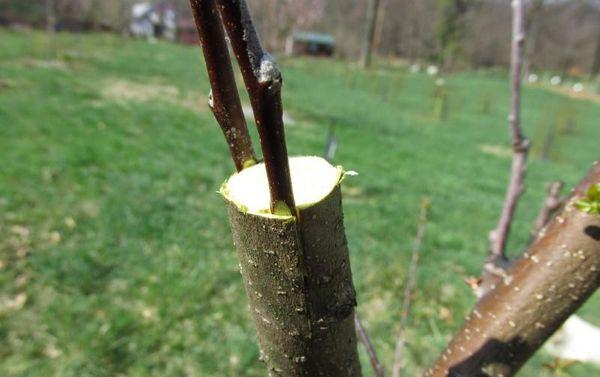
It's not recommended to take cuttings from thin or weak shoots. They should be taken from one-year-old shoots while they're still green. Fresh cuttings should be 30 to 40 cm long and 7 mm in diameter. Cut the cuttings with sharp pruning shears. Avoid touching the cut areas with your hands to avoid introducing infection.
How to keep cuttings fresh before grafting:
- They can be stored in the snow. To do this, dig a trench 40 cm deep and line the bottom with spruce branches. Then lay out the cuttings and cover them with more branches. Cover with soil and snow. When using this method, keep in mind that the snow cover should be at least 40 cm thick.
- Another storage option is in the basement. Place the cuttings, bottom side down, in damp sawdust or sand. To prevent mold, ensure the room temperature is between 0 and 1 degrees Celsius. Humidity should not exceed 70%.
- You can store cuttings in the refrigerator, but not for long. In March, the buds begin to emerge. Place the cuttings in damp cheesecloth, then in a plastic bag or bottle.
The easiest way to store cuttings is in the cellar.
Vaccination technologies
There are several methods for grafting apricots. Each has its own pros and cons. It's difficult to say which method is best.
Apricot budding
The procedure is performed in late summer. By this time, the buds have fully matured, and shoot growth has stopped. If you rush and perform it earlier, the buds will begin to sprout in the fall and will die in winter. Delaying the procedure is also crucial, as the scion will not be able to take root in time.

Budding is the transfer of a bud from one tree to another. This method is best used for grafting young trees or skeletal branches of mature apricot trees.
T-shaped budding into the crown of the rootstock
Budding can also be carried out in the spring, but it must be done during the period of sap flow in the plant tissues.
The evening before budding, water the tree generously, and the procedure itself is performed early in the morning, before the sun's rays are as strong. This procedure is performed at a height of 5 to 25 cm from the base of the trunk. Budding at a high altitude is not recommended, as this will slow the seedling's growth.
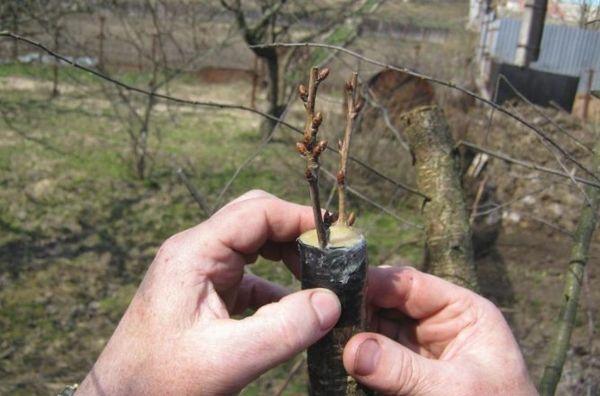
The budding process:
- Wipe away any dust from the grafting site and trim off any small branches. It's best to choose a tree on the north side, away from direct sunlight.
- Cut the crown at the rootstock site in the shape of the letter “T”.
- Then the bud is cut off along with part of the bark.
- Make one short cut above and below the bud, then turn the knife over and cut off the bud with the shield.
- The bud with its base is driven under the bark.
The shield should be the right size for the bud. If it's slightly longer, trim part of it off after it's placed in the pocket. Finally, wrap the grafting site, leaving the bud exposed.
Bark grafting
This method is chosen when sap flow has just begun and the bark is easy to separate. At this stage, the trees' foliage has already blossomed and the flowers are about to bloom. This method is used for plants no older than 10 years.
The process of grafting;
- Cut off the main branch of the tree with sharp pruning shears (you can also cut off the central trunk at the same time).
- Make several cuts in the bark. The larger the trunk, the more cuttings can be placed on it.
- Cut off the lower part of the cutting at an angle of 45 degrees so that 2-3 buds remain on it.
- Insert carefully prepared cuttings into the cuts in the bark.
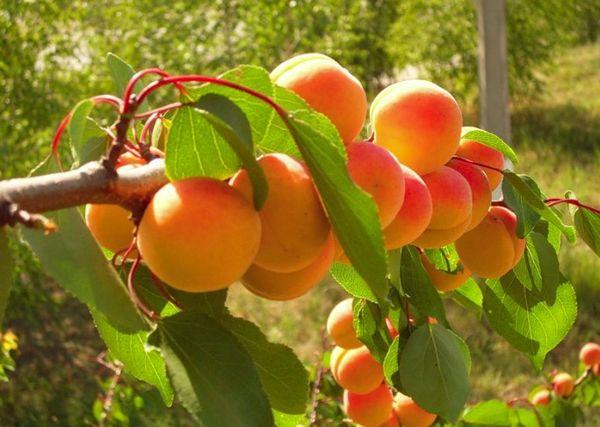
At the end of the procedure, the scions are secured with tape. Any parts of the graft that couldn't be covered with tape are treated with garden pitch.
Into the cleft
This method is used for mature and large branches, but is also suitable for young trees. It is recommended to graft this way before sap begins to flow in the tree tissue.
Step by step process:
- Cut the rootstock to the required height.
- Make a straight cut in the middle - a split (depending on the type of scion and rootstock, its depth should not be less than 2 cm and more than 5 cm).
- Cut a portion of the cutting on both sides at a 45 degree angle so that it can be easily inserted.
- Insert it and move it to one edge.
- Trim the cutting so that 2-3 buds remain on it (this should be done only above the topmost bud).
- Secure the graft with tape and coat with garden pitch where necessary.
It is important to pinch the cutting correctly so that it takes root.
Copulation
Another method of grafting apricots is copulation. This procedure is performed before the tree's sap begins to flow. There are two types of copulation: improved and standard.
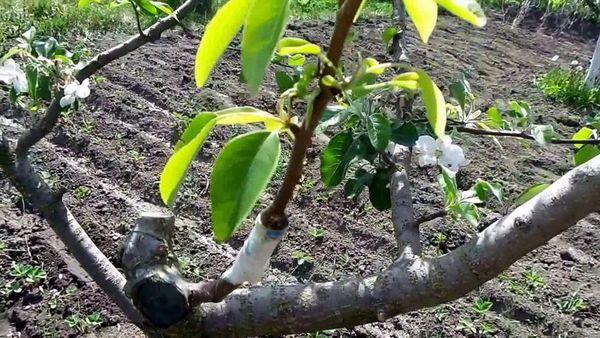
Improved
This method is similar in technology to standard copulation. You also need to make acute-angle cuts on the prepared scion and rootstock. Then, step back 1/3 of the way from the top edge and cut a "tongue"—approximately 10 mm into the shoot. Do the same on the rootstock. Then insert them into each other.
Normal
The second method of copulation is the standard method. Like most grafting, standard copulation is performed before the sap begins to flow, when the leaves have not yet begun to unfurl and the inflorescences have not yet bloomed.
Subsequence:
- Make an oblique cut on the lower part of the seedling and make the same cut on the lower part of the prepared scion.
- Combine them together.
- Wrap them with tape so that they fit tightly together.
- Cut off the top of the scion so that 2-3 buds remain on it, and coat the cut area with garden pitch.
In 3-4 weeks, buds should appear if the process was successful.
Bridge method
The bridge method is used when the tree bark has been severely gnawed by mice or other rodents and the tree needs to be saved. This method is suitable if there is circumferential damage. In other cases, the damaged areas are simply coated with garden pitch.
The procedure process:
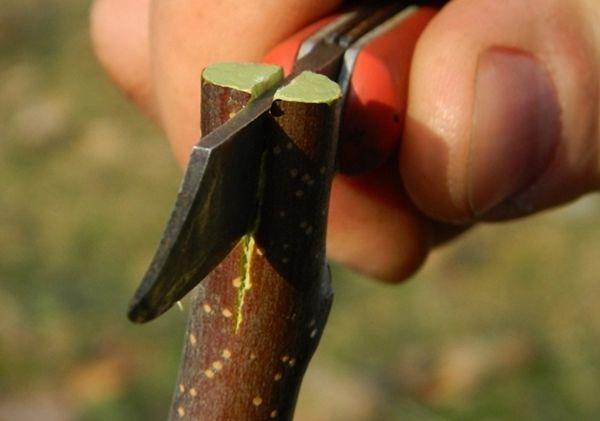
- The bark needs to be peeled down to the undamaged area, wiped and a 3-4 cm long T-shaped cut made at the bottom.
- After this, you can begin preparing the cutting. Remove all buds and cut a portion at a 45-degree angle from the top and bottom.
- Carefully push back the bark at the cut site to avoid breaking it accidentally, and insert the scion. It should form an arch.
Secure the bridge with thick tape and, if necessary, coat with garden pitch.
It's best to create two bridges on a single tree, as one of them might fail. A second one is made just in case. The chances of two bridges failing are extremely low.
Caring for a tree after grafting
The tree must be properly cared for after the procedure. The grafting is successful if leaves appear within a few weeks. If possible, the grafting site should be protected from strong sunlight. It's best to do it on the north side.
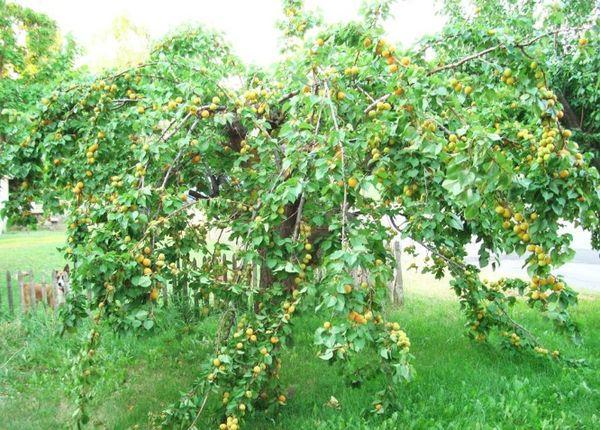
A few weeks after the foliage appears, the bandage should be loosened or removed completely. If new shoots begin to appear, they should be cut off immediately to ensure all the nutrients are absorbed into the graft.
If any inflorescences appear on the scion, they are also immediately cut off. After grafting, the trees are watered generously 3-4 times a week.
It's important to remember that apricots are susceptible to pests. The most common diseases include:
- moniliosis;
- brown spot;
- holey spot;
- Valsa's mushroom;
- Verticillium wilt.
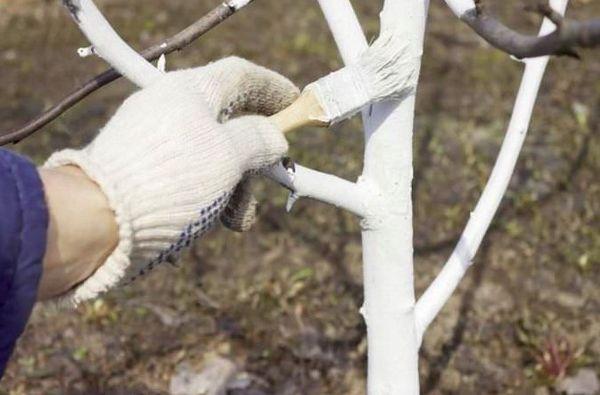
To reduce the risk of disease, preventative measures should be taken in the spring after grafting. One such measure is whitewashing the lower part of the tree trunk. To prepare the solution, you will need:
- 1 kg of lime;
- 200 g of copper sulfate;
- 10 liters of water.
Mix lime and copper sulfate and dilute in water to form a homogeneous liquid. Whitewashing is carried out in the second half of April.
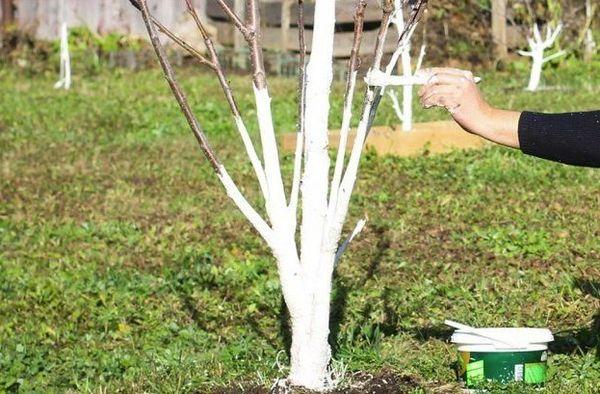
In addition to whitewashing the trunk, preventative spraying is necessary. The trees are treated once before budding, and again when the inflorescences emerge. The final spraying is done after flowering. Fungicides such as "Hom," "Switch," and "Skor" are used for this treatment.
After the procedure, fertilizing is also important. During the first half of the season, nitrogen-containing fertilizers are added to the soil. Nitrogen accelerates tree growth, which is very important for apricots during this period. As summer approaches, organic fertilizers are added to the soil along with nitrogen.
Organic fertilizers that can be used during this period include urea, diluted chicken manure, or slurry. If using manure or manure, make sure it's well-rotted. Fresh fertilizer is very concentrated and can burn the root system.
By autumn, the tree needs to be prepared to withstand the cold weather better. Add phosphorus and potassium to the soil. A small amount of calcium is also beneficial. Wood ash contains large amounts of phosphorus and potassium, so you can sprinkle the soil around the trunk with ash and then water it with warm water.
Common mistakes made by novice gardeners and how to solve them
Mistakes made by novice gardeners when grafting apricots:
- Use dull pruning shears or a knife to cut cuttings, as this will leave creases in the cuts. Before cutting, sharpen the tool.
- Some people dig up the seedling and graft it at the table, because it's more convenient. However, this procedure only worsens the seedling's condition. The survival rate of the cuttings in this case is very low. The procedure should be carried out where the seedling is growing.
- Carry out vaccination without paying attention to climatic conditions and weather.
Even experienced farmers can make mistakes when grafting apricots. And if a gardener is performing the procedure for the first time, it's often impossible to do everything perfectly.
Related posts:
 Is it possible to grow an apricot tree from a seed in your garden? How to plant and care for it?
 Choosing a rootstock for cherry grafting and budding rules for beginners
 Timing and methods for grafting walnuts at home in summer
 How and where to graft an apple tree: a step-by-step guide for beginners on budding
 Methods for planting and propagating cherries at home
 Description of the Melitopol apricot variety and cultivation technology
 Rules and methods for grafting plums in summer, tips for beginners
 Description and characteristics of the Lel apricot, planting technology and care