
- Is it possible to grow an apricot tree from a seed?
- Will it bear fruit?
- Which seeds are suitable for planting?
- Selecting a variety
- Seed selection
- Stratification of planting material
- Is it necessary to germinate the seed before planting?
- How to germinate apricot kernels at home
- When should seeds be germinated?
- What you will need
- Soil and drainage for apricot
- Planting pot
- We create optimal conditions for the sprout
- Illumination
- Temperature and humidity
- The process of planting and caring for plantings
- Seed depth and placement pattern
- Watering and fertilizing
- Transplanting a seedling into open ground
- When to plant
- In the spring
- In the fall
- Do I need to prune an apricot tree when planting it?
- We maintain the layout and distance between plantings
- What is recommended to plant next to apricots?
- Peculiarities of planting apricot trees in the regions
- In the middle zone
- In the Moscow region
- In the Urals
- In Siberia
- Further care
- We organize watering
- Fertilization
- Is it necessary to graft an apricot tree to produce fruit?
- Caring for the tree trunk circle
- Preventive treatments
- Preparing for the winter period
Fruit trees are mostly grown from mature seedlings. However, you can try growing your own tree from a seed. Although this is a slow process and can take many years, it's important to know how to properly grow an apricot from a seed.
Is it possible to grow an apricot tree from a seed?
The easiest way to grow apricots is from ready-made seedlings purchased at a gardening store. However, propagation is also possible using fruit pits. However, growing this way can be very time-consuming. For successful cultivation, use only high-quality seed material. It is recommended to plant sweet pits.
Will it bear fruit?
When growing from seeds, you can't be sure what the result will be. When propagating trees from seeds, only local varieties should be used. While all varieties of apricots can be grown in the south, in regions with cold winters, it's better to plant frost-resistant varieties. A significant drawback of this method is that it takes 5-6 years to know whether the tree will bear fruit abundantly.
Which seeds are suitable for planting?
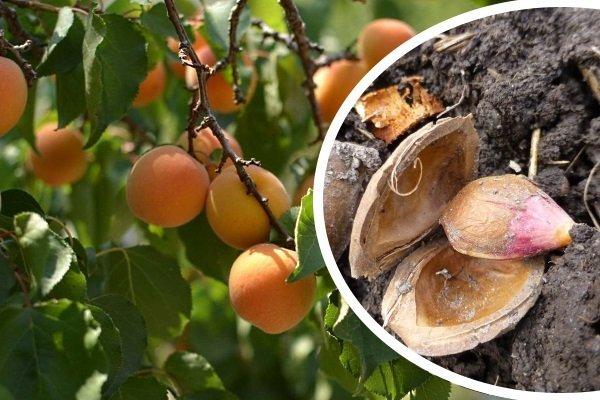
To preserve the tree's varietal characteristics, use high-quality seedlings for planting. Apricots should be large, with an even scarlet blush. There should be no signs of damage on the skin. Bitter pits are not recommended for planting. Sweet, large seeds are the best choice for propagation.
Selecting a variety
Growing apricots in any region other than the south always poses a problem: the tree can freeze in winter. Although the root system is frost-resistant, the tree has a short dormancy period. This means that after January, the tree "wakes up," especially if a thaw begins. The buds begin to open and, consequently, die. After all, winter thaws are short-lived. To avoid this problem, it's important to carefully select the variety.
All apricot varieties are suitable for southern regions, especially early varieties. However, when growing in areas with cold winters, you'll have to search for a suitable variety.
Best varieties:
- Northern Triumph;
- Amur;
- Saratov ruby;
- Compote;
- Tsar's;
- Favorite;
- Alyosha;
- Academician.
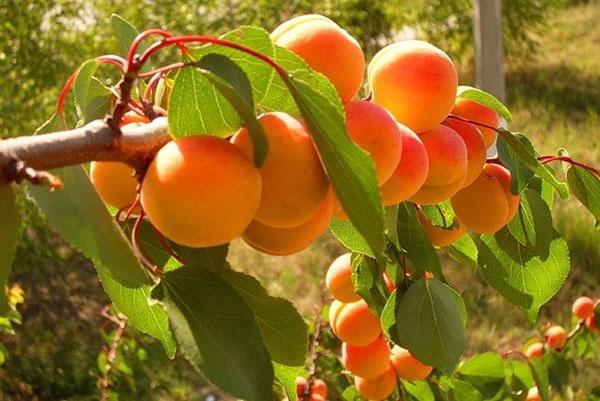
All these varieties are frost-resistant.
Seed selection
When choosing seeds for planting, you should select trees grown in the local climate. Using seeds from store-bought fruit is a bad idea. Store-bought fruit comes from southern countries. It's best to go to the market and buy fruit from locals.
Planting material is taken from overripe large fruits, from which the seeds are easily separated.
It is recommended to store seeds in the refrigerator before planting.
Stratification of planting material
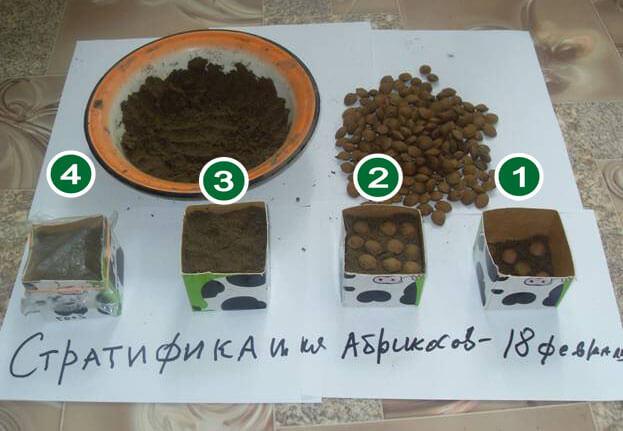
Stratification is the hardening of seeds before planting. This procedure is necessary to ensure the planting material is resistant to cold and certain diseases. Stratification is essential when growing in cold regions. The procedure for stratifying apricot kernels is as follows:
- Separate the seeds from the pulp and rinse thoroughly under water.
- Dry the bones.
- Place in a plastic bag and refrigerate for several months.
The stratification process for planting material typically takes 1 to 3 months. Hardened seeds are planted directly into open ground in a permanent location.
Is it necessary to germinate the seed before planting?
Germinating the seeds before planting is not necessary. Seeds are usually sown before winter, and sprouted seedlings may die if this is done. Germinating the seeds is necessary if they are being sown indoors and then planted outdoors. However, this method of growing apricots is not the best. The seedlings grow weak and may die when transplanted outdoors.
How to germinate apricot kernels at home
Germinating apricot kernels is easy. The procedure is not much different from germinating seeds of other crops.
When should seeds be germinated?
Germinate the planting material in mid-March. If you live in northern latitudes, you can begin germinating the planting material in early April.
What you will need
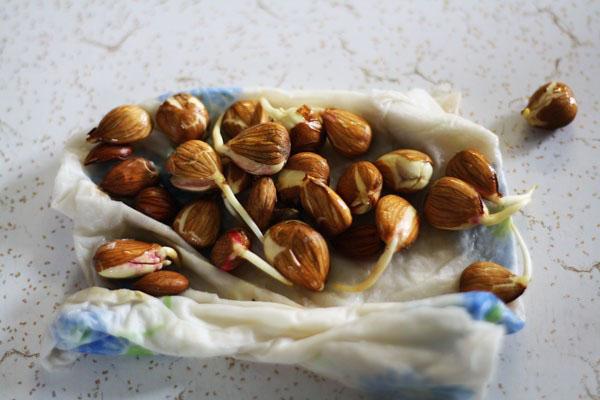
Before planting in the spring, seeds can be germinated ahead of time to speed up germination. To do this, split the hard part of the seed. Place the seed inside in damp cheesecloth and leave it there until the sprouts appear, in a dark, warm place. Keep the cheesecloth moist at all times.
Soil and drainage for apricot
Apricots prefer well-drained soil with a high acidity level (pH 6.5-8). It is not recommended to plant them in sandy soil. The seeds can be planted in black soil. Be sure to add drainage to the bottom of the container. Then add soil.
Planting pot
Large, spacious pots are suitable for seedlings. Containers made of any material can be used. Before planting, rinse them with water and potassium permanganate to disinfect them. Only then can you begin planting.
We create optimal conditions for the sprout
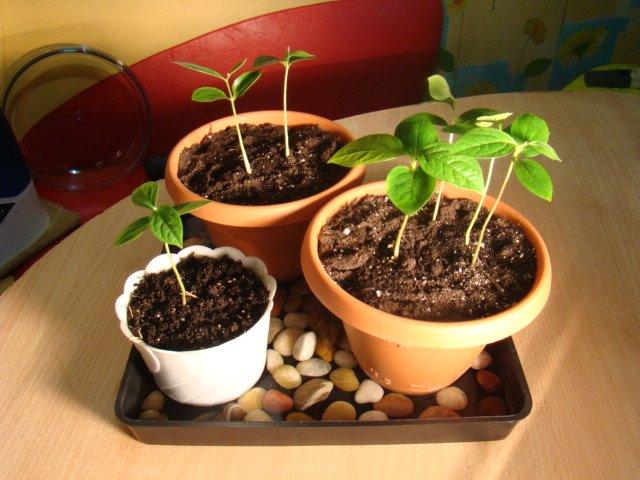
To ensure active seedling growth, favorable conditions must be created. Lighting and temperature are key considerations.
Illumination
Place the seedling containers in a sunny window. However, it's best not to place them on a south-facing window, where the sun is intense. An east- or west-facing window is ideal. The seedlings should receive at least 12 hours of sunlight. If the apricot seedlings don't receive enough light, install additional grow lights and turn them on for 3-4 hours in the evening.
Temperature and humidity
The temperature should be maintained between 18 and 22 degrees Celsius. Sudden temperature fluctuations are undesirable.
High humidity is not suitable for seedlings; the optimal level is 60%.
Excessive moisture can cause seedlings to rot and die.
The process of planting and caring for plantings
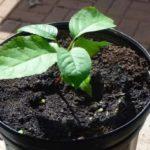
Once the soil has been prepared and favorable conditions for growing the tree have been created, you can begin planting the seedlings.
Seed depth and placement pattern
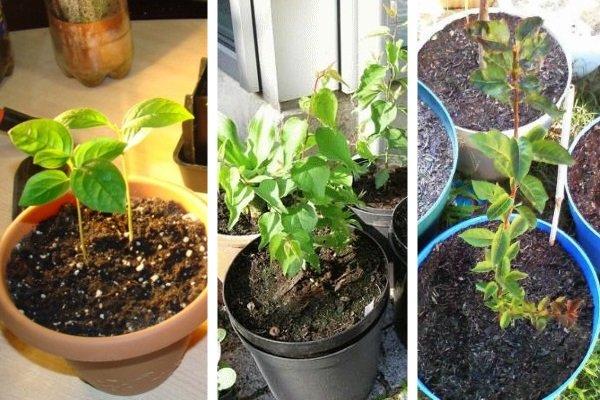
Plant seeds 8-10 cm apart. If they are planted too close together, they will interfere with each other's development and will grow weak. Avoid planting seeds too deeply; plant them at a depth of 2-3 cm.
Watering and fertilizing
After planting, water the seeds generously with room-temperature water. Water the soil as it dries out. Apricots don't like overwatered soil. When sprouts appear, add fertilizer to the soil. Sprinkle the seedlings with wood ash and water. You can also water with potassium humate or poultry manure diluted in water.
Transplanting a seedling into open ground
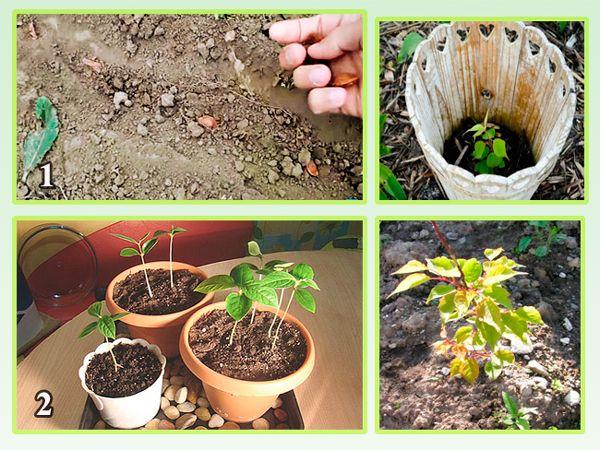
At the dacha, transplanting home-grown apricot seedlings into open ground is usually done in March-April. Before transplanting into open ground, the seedlings are hardened off. The boxes containing the seedlings are taken outside for 20-30 minutes every day for 14 days. During the second week, the time can be increased by 10-15 minutes. Hardening off will allow the seedlings to survive the transplant and adapt more quickly to the new conditions.
When to plant
The seedlings should be planted outdoors after the danger of frost has passed. Apricot planting times vary by region, and the weather is the primary consideration.
In the spring
In spring, apricot seedlings should be planted after warm weather sets in and there are no more frosts. In the central part of the country, this is usually mid-May. In the north, the timing shifts by several weeks.
In the south, on the contrary, you can plant seedlings in early spring, or directly plant the seeds in open ground.
Holes for spring planting are prepared in the fall. The soil is dug, fertilized, and weeded. Suitable fertilizers include nitrophoska, compost, or well-rotted manure. Drainage is added to the bottom of the hole (if the soil is clayey). Drainage is not necessary on sandy soil.
In the fall
In the fall, transplanting seedlings is important before frost sets in. It's best to do this in early fall so the bushes have time to establish themselves in their new location. The best time for transplanting is early September. In northern latitudes, transplanting seedlings should be done in mid- to late summer, as frosts arrive early there, so apricot trees can freeze if planted too late. However, if possible, it's best not to plant seedlings in the fall at all in colder regions. This timeframe is suitable for the south, where winters are mild. Plants should be covered for the winter.
Do I need to prune an apricot tree when planting it?
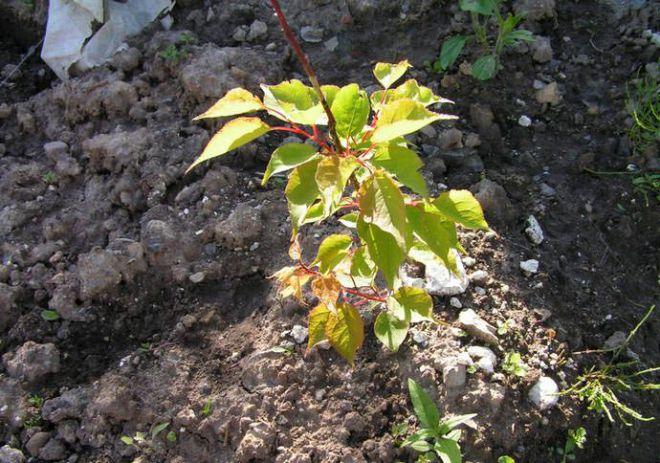
Pruning is necessary to ensure consistent fruit production each year. The seedling is pruned when it has grown to a certain size. When growing apricots from a seed, this will take a while. Therefore, it is not advisable to prune a young seedling when planting.

You can prepare the tree for planting by pinching the top to encourage bushy growth. To do this correctly, use a sharp knife.
The cut area needs to be disinfected. But this isn't necessary; leaving the bush unpinched won't make things worse.
We maintain the layout and distance between plantings
It's unlikely anyone would plant more than three trees in a garden plot. Although apricots don't have dense crowns, they still require space to grow properly.
Trees are planted in a single row if there are no more than three. However, if there is no space for this planting pattern, any other arrangement can be used. The main thing is to keep the distance between apricot trees and other trees at least 3 meters. It's important to remember that the tree crowns will eventually close together.
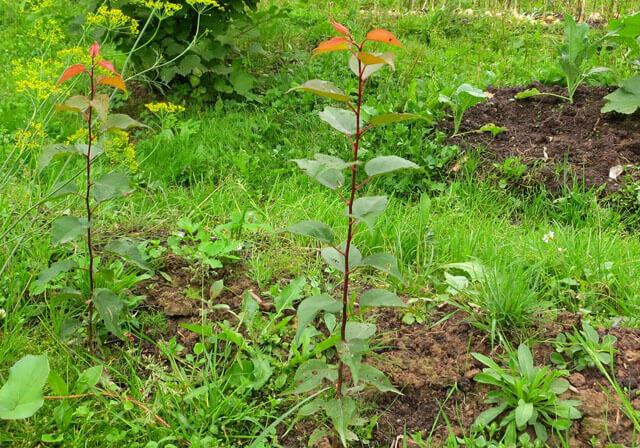
Planting trees too close together is also not recommended due to the structure of their root system. Apricot roots grow very far and can interfere with the growth of other crops.
Some farmers argue that, on the contrary, apricots should be planted as close to each other as possible.
Supposedly, this should have a positive effect on winter hardiness. However, no one explains how this is supposed to happen. The planting holes are dug shallow. Seedlings grown from seeds are very small. The hole depth is 10 to 15 cm.
What is recommended to plant next to apricots?
Growing an apricot sapling correctly isn't everything. It's also important to consider where to plant it to ensure a good relationship with other trees.
Compatibility of apricot with other fruit crops:
- plums;
- apricot;
- quince;
- cherry plum;
- viburnum;
- barberry;
- hawthorn;
- pear;
- blueberry;
- sea buckthorn;
- apple;
- dogwood;
- persimmon.
Apricots can be planted next to conifers. It is not recommended to plant cherries, walnuts, cherries, or peaches near apricots.
Besides fruit trees, you can plant other crops near the apricot tree to keep the space occupied. For example, you can plant low-growing spring-blooming flowers (tulips, primroses, daffodils, daisies) under the tree canopy. Alternatively, you can plant shade-tolerant plants. Another option is to plant green manure crops (clover, alfalfa, oats, rye) around the tree trunks, and then till the soil around them in the fall.
Green manure acts as a fertilizer and nourishes the soil.
Peculiarities of planting apricot trees in the regions
Apricot cultivation varies from region to region. These primarily relate to winter preparation and the timing of seed planting.
In the middle zone
Warm weather in central Russia sets in around early April, so seeds should be sown no earlier than February. When planting outdoors, seeds are planted in mid-May. It's recommended to cover young seedlings for the winter, especially if they're in their first or second year.
In the Moscow region
As in central Russia, in the Moscow region, apricot pits should be planted around mid-April, once the soil has warmed up completely. For the winter, consider covering the tree; you can mulch the soil or cover it and the lower part of the trunk with spruce branches. If the sapling is still small, you can try covering it completely before winter sets in.
In the Urals
When planting in the Urals, the first rule is to choose only frost-hardy varieties. Any other varieties simply won't survive local winters. Seedlings are planted in the spring. Planting apricots in the fall is dangerous due to the risk of frost. Planting is done closer to May, when the weather is warm, the soil has warmed, and night frosts have passed. The planting process is no different from planting in any other region. During the first year after planting, the bushes are covered for the winter.
In Siberia
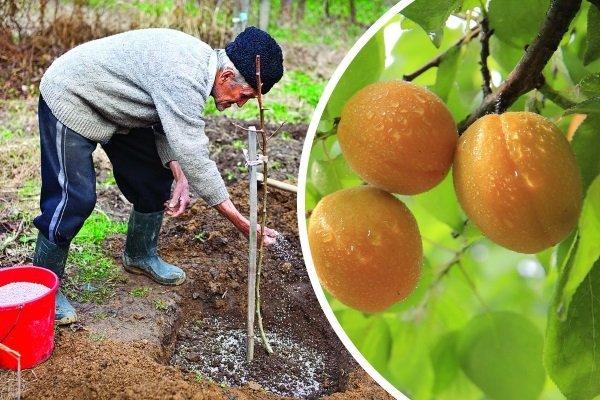
Growing apricots in Siberia — it's not an easy task. The climate in this region is completely unsuitable for the heat-loving apricot, and attempts to grow a tree often end in failure. But it's possible to try growing a tree.
The most frost-hardy varieties are suitable for planting. The rest shouldn't even be attempted.
The crop is planted outdoors in mid-May, when the weather is warm. The planting process is similar to that in other regions. Before winter, the young plants are covered to protect them from frost.
Further care
Growing seedlings require regular care. This is a very delicate and fragile plant, and if proper agricultural practices are not followed, the seedlings will quickly die.
We organize watering
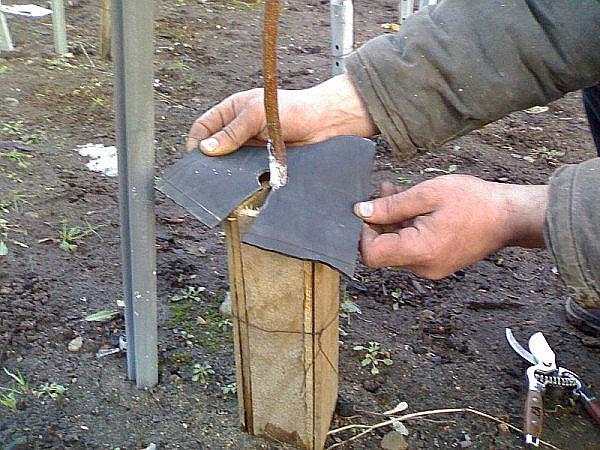
In spring, water the soil depending on the weather. If it's raining, you don't need to water the soil. If it's sunny, water it as the soil dries out. In summer, you'll need to water frequently. Before watering the apricot tree, make sure the water is warm.
Watering with cold water can lead to disease. In summer, seedlings grow rapidly and require plenty of water to mature. It's best to water the soil daily if the weather is hot.
Mature plants can be watered less frequently, but should be thoroughly moistened. Mist the soil 2-3 times a week.
Fertilization
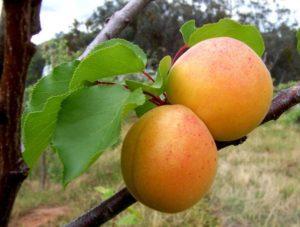
In early spring, apricots are fed with nitrogen-containing fertilizers. Nitrogen has a positive effect on seedling growth. Potassium is also added to the soil. Potassium-containing fertilizers help increase frost resistance and the tree's resistance to various diseases.
During flowering, trees are fed with phosphorus. This is especially important during the flowering and fruit set periods.
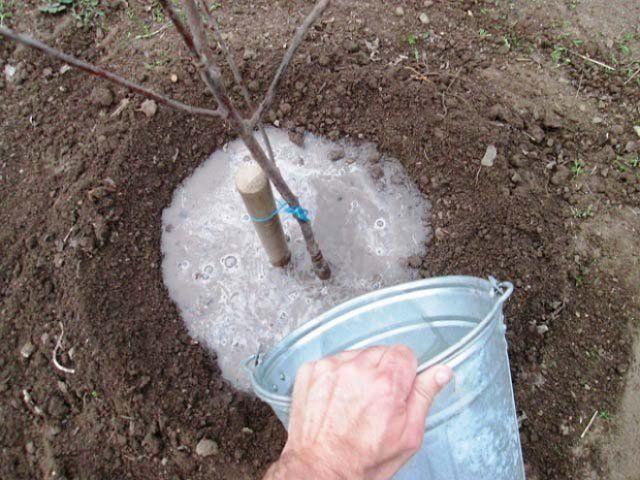
Along with mineral fertilizers, organic fertilizers are also added to the soil. These can include manure, bird droppings, urea, and wood ash. After harvesting, the soil is dug over and mixed with rotted manure.
Is it necessary to graft an apricot tree to produce fruit?
Apricot trees require grafting. This isn't so much about fruiting as it is about increasing frost resistance. Grafting begins in the spring. There are many different methods.
It's recommended to graft trees onto stone fruits, such as apricot, cherry plum, and plum. It's best to use native plants that tolerate the local climate. If you live in the south, peaches are a good choice for grafting.
Caring for the tree trunk circle
In spring, when the snow begins to melt, ensure that water does not accumulate around the tree's trunk. Excessive moisture can cause root rot. Regularly weed the soil around the trunk and remove weeds.
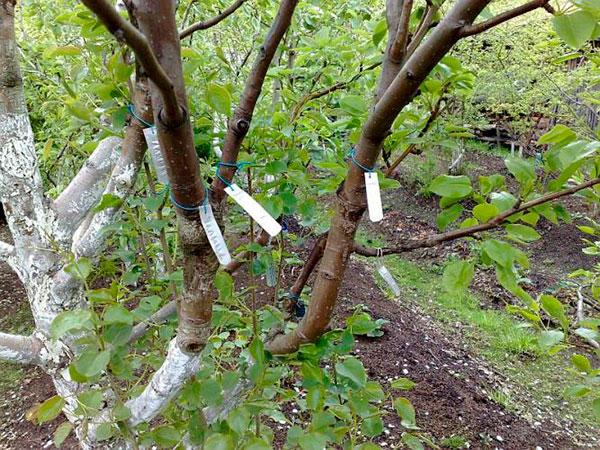
Some gardeners believe that planting grass or flowers around the tree's trunk is undesirable for normal growth. Weeds are constantly pulled out to ensure the soil is always visible. This technique for growing apricots is called "black fallow."
Preventive treatments
Preventive tree treatment is essential. This procedure will help prevent diseases. Special agrochemicals are used for treatment. The advantage of these products is that they are non-toxic and are not absorbed into the fruit pulp or plant tissue. For example, Bordeaux mixture and copper sulfate can be used.
Spraying is recommended on a cloudy, windless day. Wear goggles, gloves, and a mask before spraying. Spraying should be done in early spring. This will help prevent diseases right when the growing season begins.
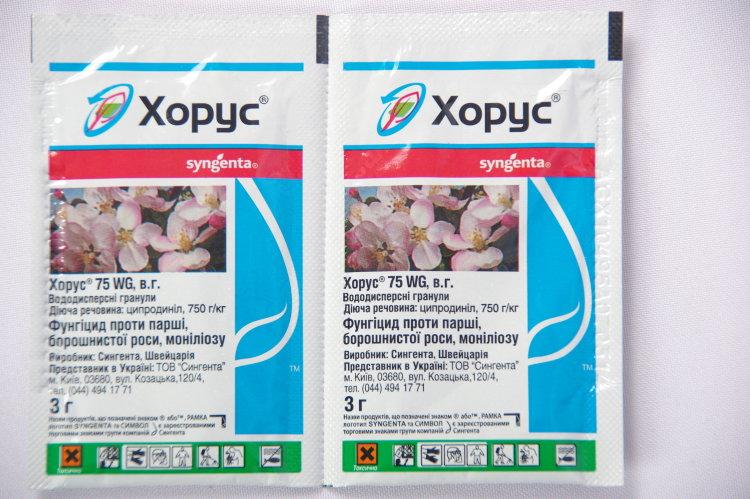
Horus is effective against bacterial and fungal diseases. It is used before apricot blossoms.
Urea is effective in preventing disease development. Treat trees with urea in spring or fall. Dissolve 500 g of urea in 10 liters of water. When using urea, remember that if the solution is too concentrated, it will burn the foliage, so it's best to treat either before the leaves emerge or after they fall.
But diseases aren't the only thing you have to contend with when growing trees. Apricots are also susceptible to insect attacks. Altar and Confidor Maxi are effective pest control products.
Diesel fuel is a folk remedy that can help get rid of insects. This procedure is performed in the fall, after the leaves have fallen. Diesel fuel is diluted in water and applied to the trees.
Preparing for the winter period
Before the onset of cold weather, seedlings transplanted outdoors must be prepared to prevent them from freezing. For example, you can mulch the soil to prevent the roots from freezing.
In regions with cold winters, the tree trunk circle within a 1-2 meter radius is dug up and filled with sawdust and fallen leaves. This layer is covered with reeds, spruce branches, or straw.
The root collar is particularly vulnerable in winter. To protect it, stakes are driven near the trunk. They are wrapped in plastic wrap, and the top of the wrap is secured to the bark. The top is then wrapped in burlap. This creates a kind of greenhouse around the root collar.
As spring approaches, thaws often occur, which can lead to freezing of the stems. A characteristic feature of apricot trees is that their buds bud very early. If a thaw begins and then a sudden frost hits, the buds freeze. If the weather forecast predicts frost, smoke the trees by setting wet straw on fire.
Related posts:
 How and whether it is possible to graft an apricot, the choice of rootstock, timing and methods of budding
 Description and characteristics of the Lel apricot, planting technology and care
 Reasons why apricot trees may not bear fruit and what to do about it
 Description of the Melitopol apricot variety and cultivation technology
 The benefits and harms of apricot kernels, properties and contraindications for the body
 Description and subtleties of growing the Champion of the North apricot variety
 How to grow a cherry tree from a seed at home
 Methods for planting and propagating cherries at home