
- History of the variety
- Varieties and description of the Melitopol variety
- Early
- Late
- Radiant
- General characteristics of apricot
- Growing regions and ripening period
- Characteristics of fruits and their purpose
- Productivity and transportability
- Apricot planting
- Deadlines
- Location and layout
- Instructions for planting seedlings
- Caring for fruit crops
- Watering
- Trimming
- Crown formation
- Sanitary and regulatory pruning
- Summer minting
- Fertilization
- Organic fertilizers
- Mineral fertilizers
- Preparing for winter
- Diseases and pests
- Weevil
- Khrushchevs
- Aphid
- Cytosporosis
- Clusterosporiasis
- Moniliosis
- Harvesting and storage
- Reproduction of the variety
- Reviews
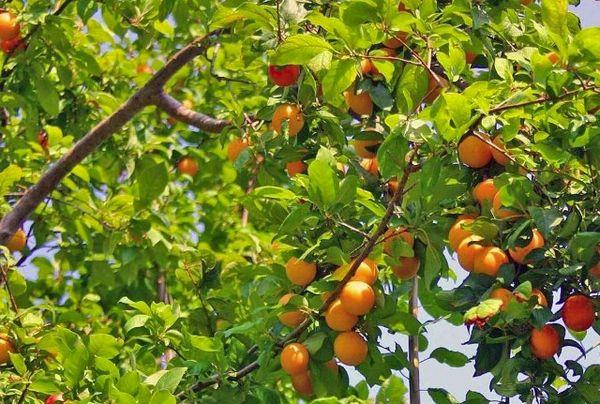
Melitopol apricot varieties are renowned for their high yields, self-fertility, and pleasant, sweet fruit flavor. Many gardeners have grown them for over 50 years. The tree is medium-sized and requires little attention. It's suitable for planting, even for beginners. The fruits are attractive and sell quickly.
History of the variety
The variety got its name from the city where the work was carried out, Melitopol. The Akhrori and Krasnoshchyok varieties were crossed. The result was a new, self-fertile, high-yielding variety of apricot. It was included in the State Register in 1947. The Melitopol variety continued to be crossed with other apricots, resulting in new varieties.
Varieties and description of the Melitopol variety
Apricots come in many varieties and cultivars. The most popular Melitopol subspecies are early, late, and radiant. They have different ripening times and fruiting periods.
Early
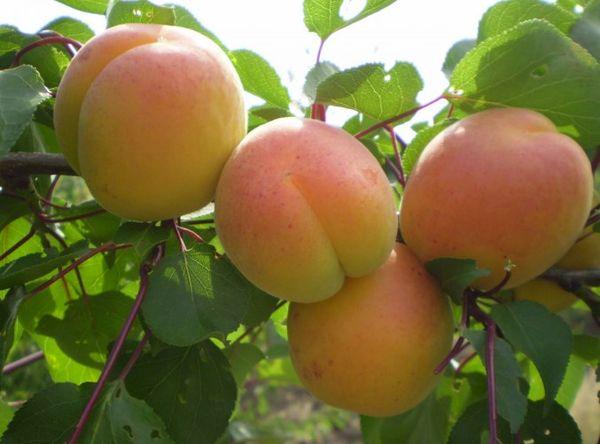
The parent variety of all other Melitopol apricot varieties. The tree is medium-sized, growing no taller than 2.5 meters. Self-fertile, it produces a high yield, up to 60 kg per plant. The fruits are oval, light orange, and have soft, juicy, and sweet flesh. The pit is brown and easily separated from the flesh.
Harvesting takes place in mid- to early July, depending on the growing region. Early apricots are suitable for cultivation throughout Russia and are frost-resistant. The tree is immune to bacterial canker and partially resistant to moniliosis.
 Important! Fruiting begins 5-6 years after planting.
Late
Less common than the early variety. The tree is medium-sized, flowering begins in late June. Later, bright yellow fruits with a slight pink blush, weighing up to 65 g, are formed. Larger individual fruits are also found. The pit separates easily from the pulp. The apricot is self-fertile, bearing fruit in the 3rd or 4th year of growth. The crown is spherical and dense, requiring regular pruning and thinning.
Radiant
A low-growing, early-maturing, self-fertile tree. It produces medium-sized fruits weighing up to 65 g. They are yellow-orange in color. The flesh is orange, juicy, and sweet, easily separating from the pit. The yield is over 50 kg per tree. The apricots are transportable and have a good marketable appearance. The wood is moderately winter-hardy, suitable for growing in mild climates. Harvesting takes place in late July or early August.
General characteristics of apricot
An apricot's characteristics reveal its growing region, yield, and transportability. Only after examining these qualities should you decide whether to plant a tree on your property.
Growing regions and ripening period
Melitopol varieties are suitable for growing in temperate and southern climates. Certain varieties can be planted in the north, but this requires the plant to be highly frost-resistant.
The ripening period also varies depending on the variety. Early varieties typically ripen in 70 days, while medium-ripening varieties take 90-100 days.
Characteristics of fruits and their purpose
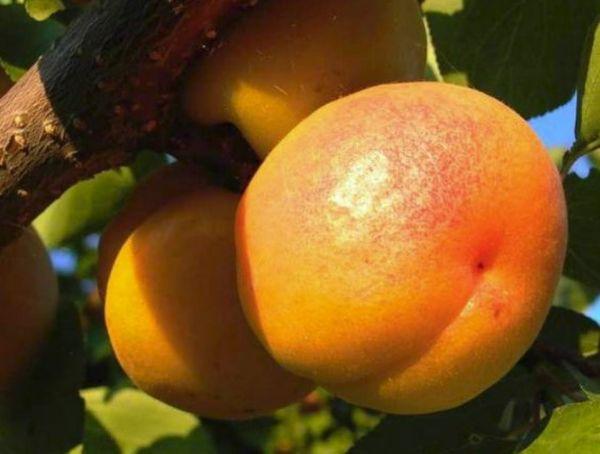
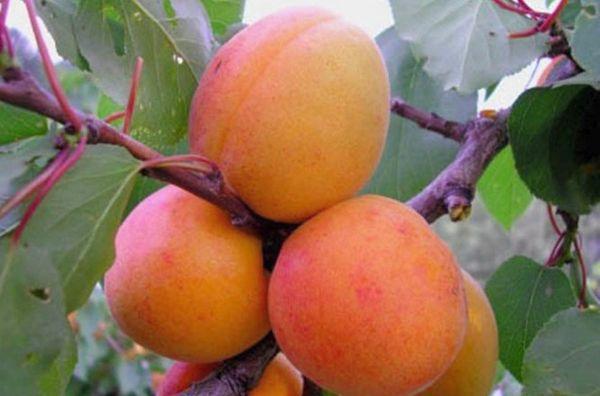
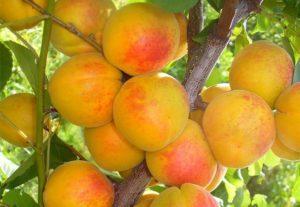
Melitopol apricots are renowned for their fruit. They are delicious, sweet, and rich in beneficial minerals and nutrients. They average 50 to 70 grams in size. Their color ranges from bright yellow to yellow-orange with a blush. The pits are easily separated from the flesh.
The fruit can be used to make homemade jam, juice, compote, and marmalade. Early varieties don't have a long shelf life, so it's recommended to process them almost immediately. Apricots are also often canned whole. The radiate variety is suitable for transportation and sale.
Productivity and transportability
The Melitopol apricot tree produces high yields. The tree is self-fertile, producing the maximum number of ovaries for fruit on its own. A single tree can yield up to 60 kg of fruit.
Early varieties don't travel well in transit; it's recommended to process them immediately. Radiant and late apricots can be stored for at least two months in a cool place. They are easy to transport, have excellent marketability, and sell quickly.
Apricot planting
To get a decent harvest and create the most suitable growing conditions for the tree, you need to carry out proper planting.
Deadlines
Planting is carried out in spring or fall. For the most successful rooting, choose early spring, before the tree's sap begins to flow. This will ensure maximum survival, allow you to monitor the seedling's development, and address any problems that arise.
Planting is done in the fall in the south. If the winter is not very warm, the seedling may die. Therefore, it is recommended to protect the tree from frost with a special material.
Important! If you purchase a seedling in the fall, planting can be postponed until spring.
To do this, the roots of a young tree are covered with soil in a greenhouse, with the trunk positioned horizontally. The top is insulated and left to stand until the right time.
Location and layout
The Melitopol apricot prefers sunny, north-facing sites sheltered from the wind. A brick wall is ideal for this tree. It will provide additional warmth and protect it from drafts. The groundwater table should be at least 1.5 meters deep to prevent overwatering of the root system and the development of rot.
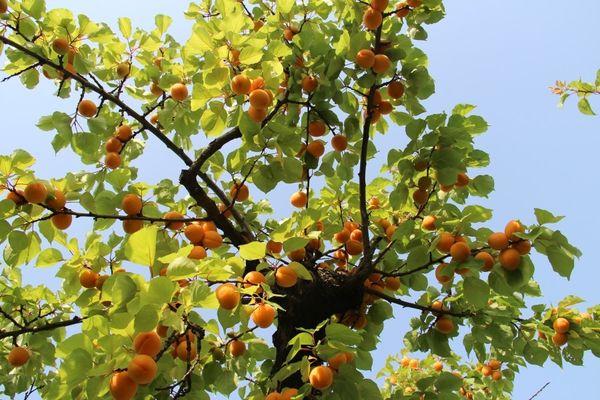
They are spaced 3-4 meters apart throughout the plot. The tree can also be planted separately from other crops; it doesn't require a pollinator.
Instructions for planting seedlings
To avoid mistakes, it is recommended to follow certain instructions for planting an apricot seedling:
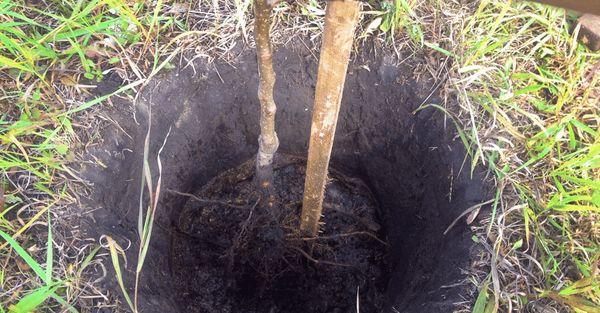
- After choosing a place for the seedling, dig a hole 70 cm in diameter and 1 m deep.
- Drainage in the form of small pebbles and broken bricks is placed at the bottom.
- The excavated soil is mixed with humus, ammophos, superphosphate, potassium salt and wood ash.
- Half of the mixture is poured back into the hole.
- Leave for at least 2 weeks.
- A wooden stake is driven into the hole to a height of 1.5-2 m.
- A day before planting, apricot roots are soaked in a 1% solution of potassium permanganate.
- The seedling is placed with its roots in the hole and straightened.
- They bury the soil layer by layer, compacting each layer.
- Form a tree trunk circle 7-8 cm deep and 50 cm in diameter.
- They tie the apricot to a wooden stake.
- Water with 4-6 buckets of water.
When carrying out planting work in spring, the hole is prepared in the fall.
Caring for fruit crops
Apricot is not a very demanding crop, but following simple agricultural practices will increase the yield and quality of the fruit.
Watering
The crop is moisture-loving, so irrigation is done several times per season. The most suitable times are:
- during bud formation;
- during the flowering period;
- during ovary formation;
- during the fruiting period;
- after harvesting.
For a young tree, use 4-6 buckets of water; for a mature, fruit-bearing tree, use 8-10 buckets of water. Pour the liquid into the area around the trunk.
If there is a lot of rainfall during the season, then watering is reduced; if there is a drought, then it is increased.
Trimming
Crown formation and sanitary thinning are essential care procedures for apricot trees. If the crown is too dense, it can promote bacterial infections due to poor air permeability.
Crown formation
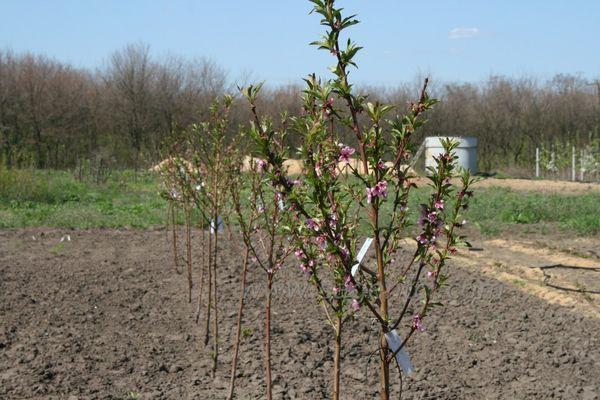
Crown formation begins in the first year of vegetation. To do this, the central shoot is pruned the following season after planting. A year later, two main branches are selected, and the rest are removed. In the third year, four main branches are selected, and the side branches are shortened so that they are 20 cm shorter than the main branches.
All work is carried out before the sap begins to flow in early spring.
Sanitary and regulatory pruning
From the fourth year of growth, it's necessary to monitor the density of the branches and their condition. At the end of the season, after harvesting, remove all broken, dry, damaged, and diseased shoots. Dense areas are thinned out. Old branches are removed, as the fruiting branches are those that are one year old.
Summer minting
This procedure is designed to remove all broken, diseased, and damaged branches. It's done in the summer, making it easier to spot damaged areas. Misdirected, non-fruiting branches are also removed to stimulate new growth and increase yield.
Fertilization
The tree needs to be fed regularly. Adequate mineral content in the soil will ensure a high-quality harvest. It will also maintain the apricot tree's health and strengthen its immune system.
Organic fertilizers
Organic fertilizers combine a wide range of minerals. They provide the tree with everything it needs. The following are used for apricot:
- rotted manure;
- chicken manure;
- compost;
- humus;
- wood ash;
- herbal decoctions.
They are laid in a layer around the trunk, or solutions are prepared and sprayed onto the apricot tree's foliage. When spraying with fertilizers, absorption occurs more quickly, and the nutrients are absorbed through the stomata.
Mineral fertilizers
If organic mixtures are unavailable or undesirable, ready-made mineral fertilizers are often used. These are now available at any specialized store. There are also fertilizers containing individual microelements, packaged in fertilizers specifically for fruit trees.
For apricots, select fertilizers containing nitrogen, phosphorus, and potassium. Other minerals are used as supplements.
Fertilizer application is combined with watering. Fertilizing is done only after irrigation.
Preparing for winter
To prevent unforeseen events, apricots are covered for the winter. Preparation for winter occurs in three stages:
- mulching the tree trunk circle with straw, sawdust, cut grass, moss;
- painting the trunk with whitewash to protect it from rodents;
- covering the crown of a young tree with spunbond, agrofiber or other breathable material.
During the winter, the plant is also fed and watered generously so that during the dormant period the apricot gains strength and is ready for the new season.
Diseases and pests
If agricultural practices are not followed and unfavorable weather conditions occur, apricots' immunity is weakened. This allows fungi and pests to infest.
Weevil
The insect is medium-sized, ranging from 0.4 to 0.6 cm. Its face is covered with a proboscis, which it uses to feed. The pests become active in early spring, when the buds swell. They penetrate and feed on young leaves, which then sprout uneven, damaged leaves.
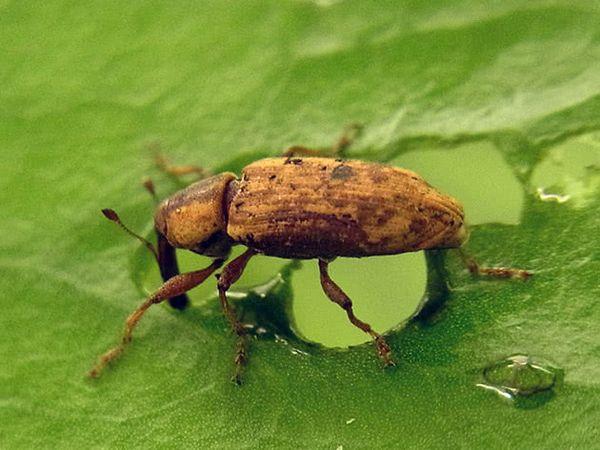
Next, they penetrate the buds, where they remain until the ovaries begin to form. After the fruit forms, the weevils pierce them with their proboscis, leaving a tunnel. The female enters this tunnel and lays her eggs. The new larvae then eat the fruit from the inside.
Take a look Also
Khrushchevs
May beetle larvae begin to cause damage only in their third year of life. The beetles inhabit the tree's root zone, feeding on humus and small tree roots. By the age of three, they have developed chewing mouthparts. The damage they cause afterward significantly impacts the fruiting and development of the apricot tree.
Important! To control beetles, use insecticides and traps.
Aphid
These are small black insects. They appear due to high humidity. They completely cover the leaves and shoots of the tree. They feed on the apricot foliage, leaving holes in it. The plant begins to shed its fruit, the leaf blades curl, turn yellow, and fall off. Aphids can only be controlled with insecticides.
Cytosporosis
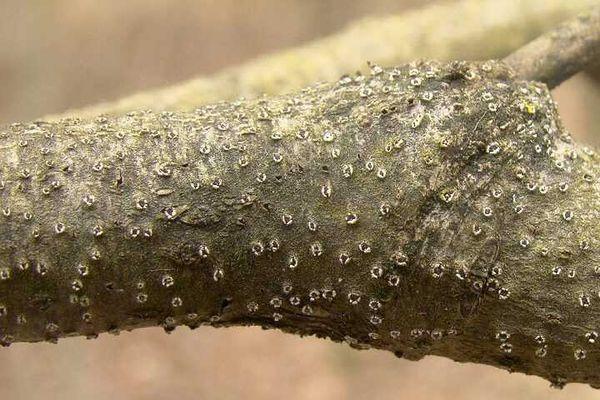
The fungus spreads to all parts of the tree. Apricots are affected in spring or early summer. Spots form on the bark and begin to turn yellow. Later, the fruits and leaves dry out, but remain attached to the branch.
Clusterosporiasis
Small red spots appear on apricot leaves. They gradually increase in size. The center of the spot dries out and falls off, leaving behind small holes with a red border. The disease also spreads to the fruit. While the fruit ripens, it loses its flavor.
Moniliosis
Gray growths appear on the bark and other parts of the apricot tree. They gradually affect the entire branch. The foliage begins to turn yellow, the fruits burst and begin to leak, and become covered with a gray coating. Moniliosis can cause up to 50% yield losses.
Harvesting and storage
For personal consumption, apricots are picked from the tree when they are fully ripe. They acquire their characteristic color, blush, and pleasant aroma. For commercial use, the harvest is done a little earlier to allow the fruit to ripen during transportation.
Apricots are stored in a cool place; in this condition they can last for more than 2 months.
Reproduction of the variety
There are two ways to propagate apricot:
- Cuttings. Select cuttings 0.5-0.7 mm in diameter and 20-25 cm long. Soak them in a rooting medium for 24 hours, plant them in a bed, cover with a transparent cap, and leave until rooted.
- By seeds. Apricot kernels are washed, dried, and placed in warm water for 3 days. Then they are left in a cool place for 2 days and planted outdoors.
Reviews
Boris, 46, from Omsk: "I love the Melitopol apricot for its yield; the fruit is very tasty. It's been growing on our plot for seven years now. We harvest six to seven boxes of fruit each year. It's enough for processing, eating, and storing in the cellar for a couple of months."
Lyudmila, 54, from Novgorod: "I have a Melitopolsky ranny apricot growing in my garden. We're very pleased with the quality of the fruit; they're all uniform, yellow-orange, and sweet. The yield is high, but the fruit doesn't store well, so we try to process them all."
Alina, 39, from Voronezh: "I grow Melitopol Radiant apricots for sale. I have five of these trees on my plot. I like the short ripening time, the marketable appearance, and the ease of transport. It's easy to care for, making it suitable for beginning gardeners."
Related posts:
 Is it possible to grow an apricot tree from a seed in your garden? How to plant and care for it?
 Description and characteristics of the Lel apricot, planting technology and care
 Description and technology of growing the Tsarsky apricot variety
 Description and rules for growing the Dessert apricot variety
 Description and cultivation of the Manchurian apricot variety
 Description and subtleties of growing the Champion of the North apricot variety
 Description and rules for growing the Black Velvet apricot variety
 Planting and caring for apricots in the middle zone, description of the best varieties