
- History of the selection of the Dessert apricot
- Main pros and cons
- Description of the variety
- Tree dimensions
- Fruiting
- Pollination, flowering and ripening times
- Apricot yield and taste
- Transportability and use of fruits
- Characteristics of the culture
- Immunity to diseases and pests
- Drought resistance and winter hardiness
- Required conditions for growing
- Landing specifics
- Selecting a site
- Timing and rules for planting seedlings
- Further care
- Watering and fertilizing
- Loosening and mulching the tree trunk circle
- Crown formation
- Preventive treatments
- Preparing for winter
- Reproduction
- Gardeners' reviews
The Dessertny apricot variety has several advantages. Despite growing in harsh climate conditions, its fruits are juicy, tasty, and have a long shelf life. Learning about the growing rules and characteristics of this variety will be very useful for most gardeners and summer residents who want to plant apricots in their garden. With proper care, a bountiful harvest is guaranteed.
History of the selection of the Dessert apricot
The main characteristic of the Dessertny apricot is that, despite unfavorable growing conditions, its fruits are large and rich in flavor. A Western European apricot was pollinated with a mixture of Michurin pollen, which resulted in improved characteristics. The tree is frost-resistant, but flower buds are often damaged by night frosts.
Main pros and cons
This variety of apricot has both advantages and disadvantages.
Advantages:
- general purpose;
- pleasant tasting fruits;
- does not require special conditions for wintering;
- resistant to wood diseases.
Flaws:
- with excessive moisture the fruits begin to crack;
- The trees are characterized by their large size.
Description of the variety
Apricot Dessert has the following parameters.
Tree dimensions
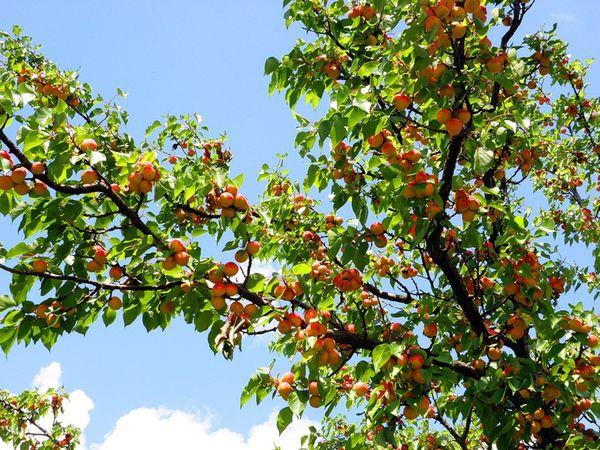
The tree is tall – about 4-5 meters, the crown is dense, spherical.
Fruiting
Fruiting of the Dessert apricot begins in the 4th year.
If flowers appear prematurely, they are plucked to prevent the tree from wasting energy on fruit formation. Everything should be aimed at strengthening the shoots and root system.
Pollination, flowering and ripening times
Since this variety is self-fertile, it is often grown without nearby pollinator trees. However, it is a known fact that the presence of pollinators increases the number of fruit sets. This, in turn, improves the quality and flavor of the fruit. The following varieties are planted next to the Dessertny variety: Detsky and Countess.
Apricot yield and taste
This variety is characterized by high productivity, with the greatest number of fruits appearing after 5 years.
Of course, the very first fruits - about 10 pieces - can be tried already in the 3rd year, but it is better to pick all the flowers during this period and not allow the apricot to bear fruit.
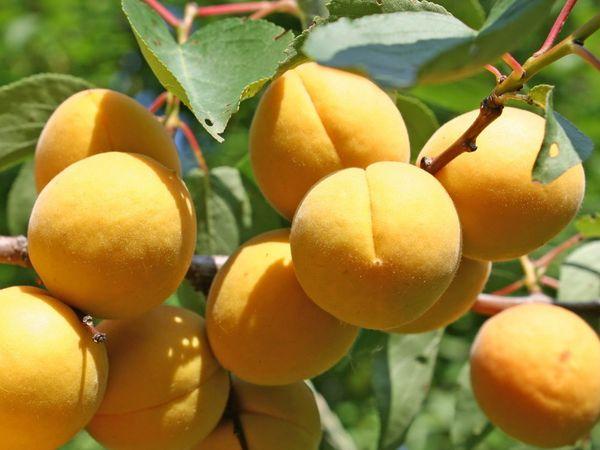
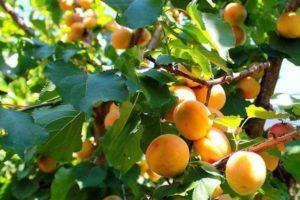
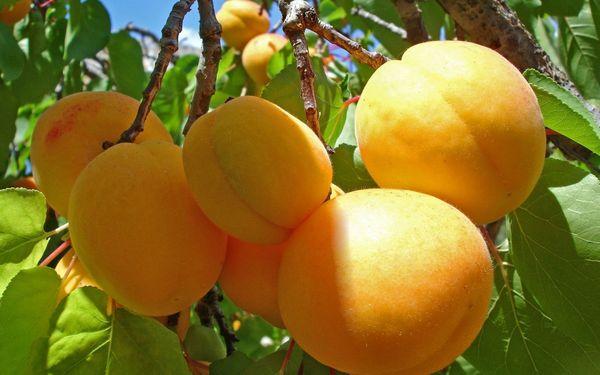
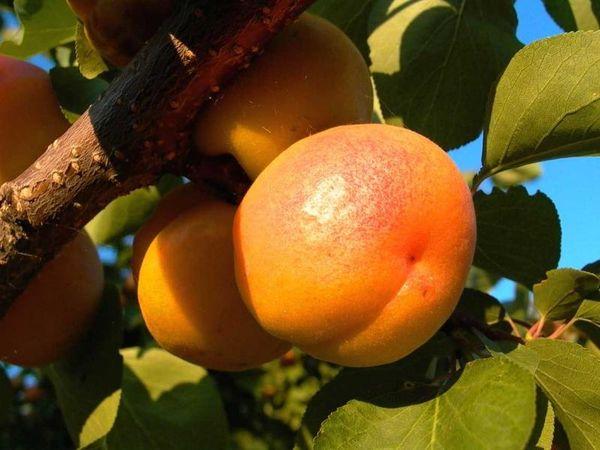
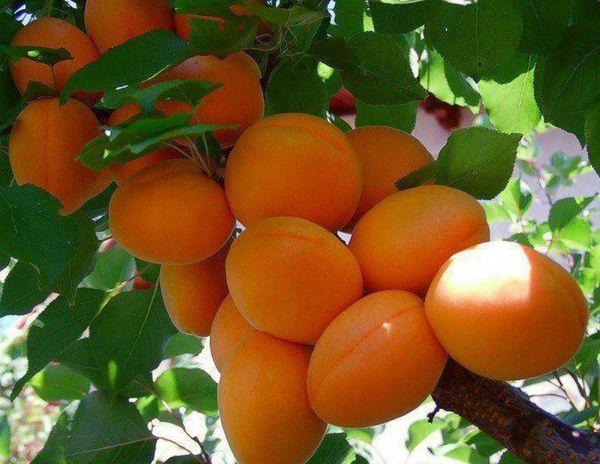
The fruits ripen in mid-July. The apricots are a uniform light yellow color. In some cases, they are covered with small red spots. The fruits are typically large, weighing up to 30 grams. The taste is sweet with a hint of tartness. The flesh is tender, and inside lies a small stone that separates easily. A mature tree can yield up to 50 kilograms.
Transportability and use of fruits
Dessert apricots are not a variety that transports well. This is because the fruit has delicate flesh and easily bruises. Within 24 hours, fermentation and rotting begin. Apricots are transported in refrigerated trucks, where temperatures are maintained between 8 and 10 degrees Celsius.
To ensure that the fruits remain fresh for another week after transportation, they are picked from the trees unripe.
Characteristics of the culture
Let's consider the main characteristics of the variety.
Immunity to diseases and pests
The Dessert apricot is disease-resistant. However, regular monitoring is necessary. The most common problem is mineral deficiency. This leads to various diseases, such as moniliosis. Pests such as codling moths and leaf rollers often damage the tree. Timely prevention and appropriate treatment, if necessary, can help avoid problems and preserve the fruit.
Drought resistance and winter hardiness
This variety is characterized by high frost resistance. The plant can easily survive in temperatures of -15 degrees Celsius and can also withstand short-term frosts down to -22 degrees Celsius. The fruit is grown without special conditions in the southern and central regions of Russia.
The variety tolerates prolonged drought, while deepening its root system. The tree survives without additional watering, finding water in the lower layers of the soil, but it usually sheds its fruit.
Required conditions for growing
When planting a seedling, consider its future location. It's best to have it enclosed by some kind of structure on the north side. Planting near groundwater is not recommended.
Despite the fact that the apricot is quite unpretentious, if planted in poor-quality soil, there is a high probability that the tree will not take root.
Sunlight is important for fruits so that the tree can survive the winter.
Landing specifics
The best seedlings are purchased from nurseries or agricultural institutes. One- or two-year-old apricots, grown in conditions similar to the site where they will be planted, thrive.
Selecting a site
Firstly, the location must be well-lit, and secondly, it is recommended to plant in loose, non-acidic soil. Seedlings will not thrive in areas with high humidity or where cold air accumulates.
Timing and rules for planting seedlings
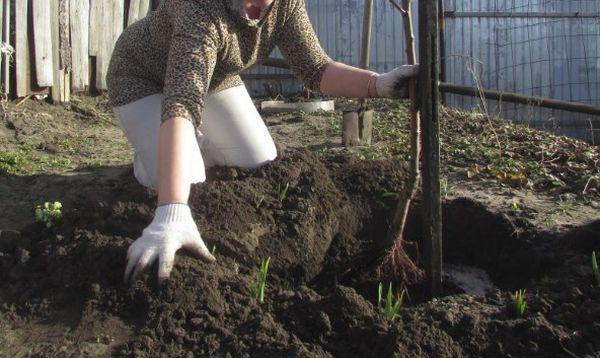
Since this fruit is a stone fruit, planting begins at the same time as other varieties. Seedlings are planted in the spring before the buds begin to swell, which is approximately mid-April.
It's best not to plant in the fall, as the root system won't have time to fully develop before winter, and the seedlings will die. Furthermore, spring-grown apricots are more resilient to severe temperature fluctuations.
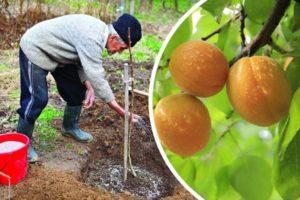
For planting, dig holes 50 to 70 cm deep and place a layer of crushed stone at the bottom. Then, add pre-sifted fertilizer, such as humus or wood ash.
Place the apricot tree in the hole, ensuring the root system is evenly distributed. Then, add soil mixed with fertilizer and water generously. Also, keep in mind that the seedlings should be spaced 4 to 6 meters apart. For spreading trees, increase the distance between the apricot trees by 1.5 times.
Take a look Also
Further care
To ensure a fruit tree grows and thrives, it needs proper care. This includes timely feeding and fertilizing. It's crucial to prevent waterlogging, as this will lead to root rot.
It is important to take into account that apricots require different care in different seasons of the year.
Watering and fertilizing
How often you water an apricot tree depends directly on the following factors:
- age;
- climatic conditions;
- growing season.
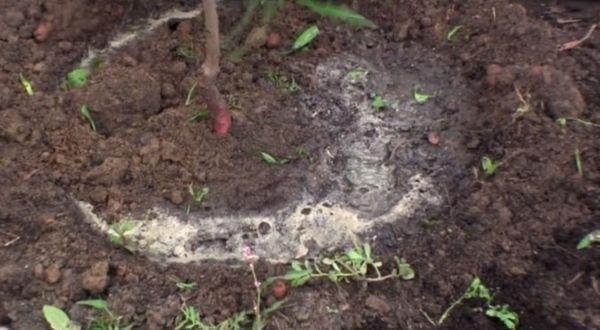
After planting, the seedlings are watered generously, even if it rained beforehand. This is necessary not only to ensure the tree gets its fill but also to compact the soil around the root system. The amount of water a seedling will need depends on the soil in the garden. On average, it's 1-2 buckets. If the soil is loose and prone to splashing, water with a sprinkler. In summer and fall, water the apricot tree thoroughly to prevent the soil from drying out.
A year after planting, reduce the frequency of watering. This is because frequent watering causes the roots to rot and the leaves to dry out. If the problem has already occurred, loosen the soil around the tree to allow the tree to begin its recovery.
Trees that are more than 3 years old do not require frequent watering, so during a dry season, apricots are watered about 4 times.
During the tree's development, it is fed with various fertilizers, and this depends on the season of the year:
- Complex fertilizers are used during the period when the tree emerges from dormancy, as well as during active growth.
- In spring and summer, fruits require organic fertilizers. This could include, for example, chicken manure.
- Mineral fertilizers are applied at the end of summer and beginning of autumn.
There are several different methods for applying fertilizer to the soil, including foliar and root application. Foliar application involves fertilizing the tree's crown, while root application involves applying the mixture close to the trunk.
Loosening and mulching the tree trunk circle
These techniques are used to increase apricot yields. Mulch forms a protective topsoil layer. It can be grass, pebbles, crushed rock, or peat. The mulch is renewed as the old one decomposes. The mulch layer should be 5 to 10 cm thick, with a distance of about 3 m between the tree and the edge of the mulch.
The soil is loosened both in autumn and spring, and this procedure has its own advantages in different seasons.
Loosening in autumn:
- insects and their larvae are placed on the soil surface, where they eventually die during the winter;
- the root system is saturated with oxygen.
Loosening the soil in spring helps get rid of weeds.
Crown formation
There are several options for shaping the crown of the Dessertny variety, each of which has its own advantages and disadvantages:
- A bush form. This produces a low-growing plant with numerous cluster branches. The branches are constantly renewed, which has a positive effect on yield. They are frost-resistant and can be covered during the winter. The risk of damage from gusts of wind is virtually eliminated.
- Layered crown. This option is suitable for trees grown in southern climates. This type of crown ensures even light distribution to the fruit, significantly simplifying harvesting.
Take a look Also
Preventive treatments
Preventative apricot treatments help prevent various diseases that lead to yield losses. Some treatments can even increase fruit production.
Processing begins in the spring and proceeds according to the following scheme:
- The first treatment is carried out to protect against diseases.
- All subsequent treatments are for pests and diseases.
- All products are used at temperatures above 12 degrees.
- Both the trunk and the crown are processed.
It's important to keep in mind that treatments are carried out on dormant buds and flower buds. Precipitation can adversely affect the effectiveness of the treatments, so pay attention to weather conditions.
Preparing for winter
Since apricots are heat-loving plants, when grown in northern regions, care is taken to insulate them for the winter. First, a thick layer of mulch is laid around the tree, and then the trunk is prepared. For this, the trunk is wrapped in burlap. It's important to remember that the crowns of one- and two-year-old trees also need insulation.
Reproduction
There are various ways to propagate the Dessert apricot, but seedlings are the most common. This involves collecting seeds from ripened fruits, then thoroughly washing and drying them.
In early September, the seeds are planted in humus-rich soil. It's best to plant the seeds in the location where the tree will eventually grow. This will prevent unnecessary damage and allow fruiting to begin a year earlier. After two winters, seedling Ready for planting, you just need to select the best options.
Gardeners' reviews
- Inna: "I grow the Dessertny apricot at my dacha. I found information about it online, then ordered seeds by mail and planted them. Apricots aren't typical for our area, but this variety took root right away. The first fruits appeared four years later, bright yellow. I've noticed that the Dessertny tolerates March temperature fluctuations well."
- Alexey: "This variety grows in my garden. The fruits are small, but versatile. They can be used for jam and compote. They also have a long shelf life—after being picked from the branches, they last for several days without rotting. The fruits travel well and don't bruise."
- Ivan: "I planted a seedling in the spring, and it took root immediately. The tree was wrapped to ensure good wintering, and buds appeared in the spring. However, temperature fluctuations began, and the apricot stopped developing. It was concluded that the current climate was too cold for the Dessertny variety."
Related posts:
 Is it possible to grow an apricot tree from a seed in your garden? How to plant and care for it?
 Description and characteristics of the Lel apricot, planting technology and care
 Description of the Melitopol apricot variety and cultivation technology
 Description and technology of growing the Tsarsky apricot variety
 Description and subtleties of growing the Champion of the North apricot variety
 Description and cultivation of the Manchurian apricot variety
 How and whether it is possible to graft an apricot, the choice of rootstock, timing and methods of budding
 Planting and caring for apricots in the middle zone, description of the best varieties