
- Description of the Saratov variety
- Drought resistance, winter hardiness
- Pollination, flowering period and ripening time of the Saratov variety
- Productivity, fruiting
- Application of fruits
- Disease and pest resistance of Saratov apricot
- The main positive and negative aspects
- Growing nuances
- Location and soil
- When to plant?
- What crops can and cannot be planted near Saratov apricot?
- Preparing the planting hole
- Selection and preparation of planting material
- Planting diagram and process
- Care instructions
- Watering rules
- Top dressing and fertilizers
- Pollination
- Tree pruning
- Preparing for winter
- Diseases, pests, prevention
- Harvesting and storage of crops
- Reviews from summer residents
The Saratov Rubin apricot variety is popular in Russia and the CIS due to its large fruit size and excellent flavor. The tree is renowned for its high cold tolerance and thrives in new locations. The yield is abundant, and the variety is suitable for planting for personal consumption or commercial use. All cultivation guidelines are listed below.
Description of the Saratov variety
The Saratovsky Rubin apricot variety was added to the state register in 2015 and is recommended for cultivation in the Lower Volga and North Caucasus regions. It was developed over several decades; the hybrid variety was created through a symbiosis between the Pharaoh variety and a hybrid of the Manchurian and common apricot tree. The former gave the Saratovsky Rubin an excellent flavor, while the latter gave it increased frost resistance.
The developer was the general director of biotechnology at the company "Garden and Vegetable Garden", a scientist from Saratov, A. Golubev. This variety is distinguished by its rapid growth. It is a medium-sized plant with a luxurious, spherical canopy of moderate density.
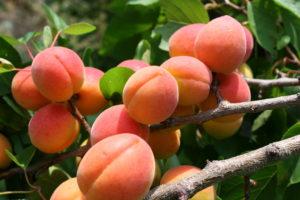
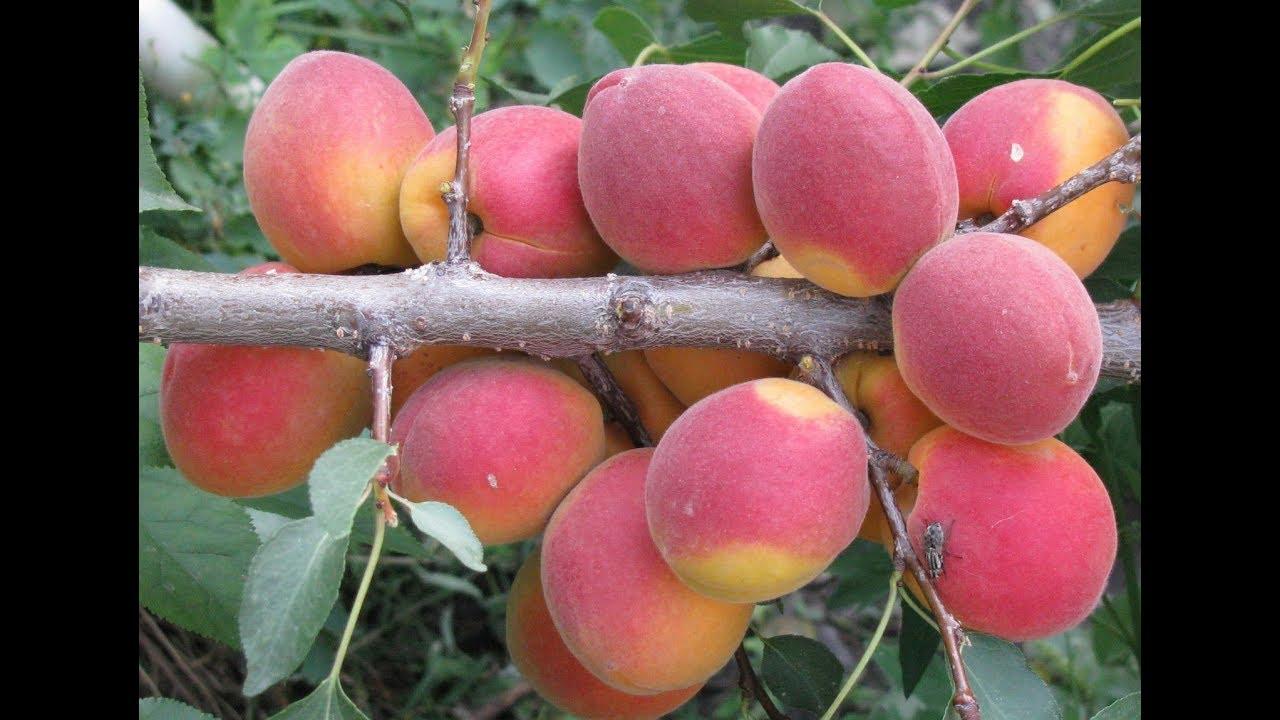
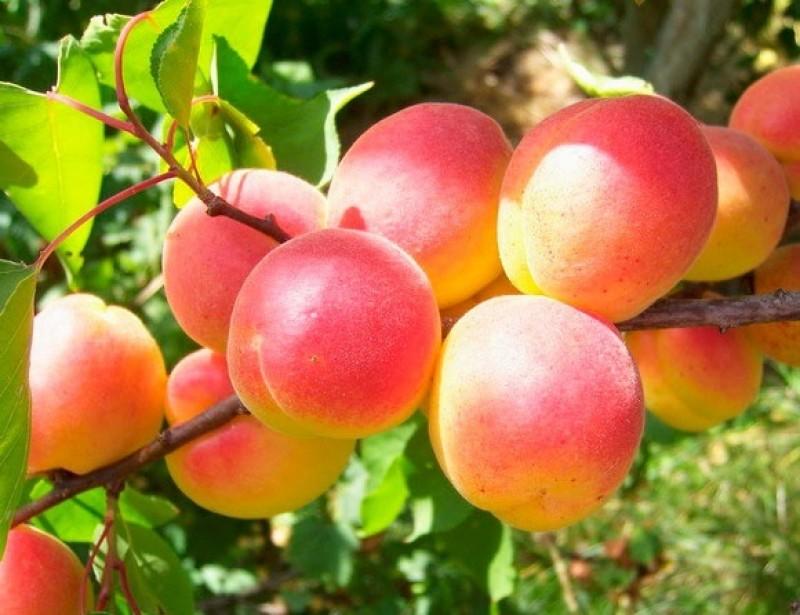
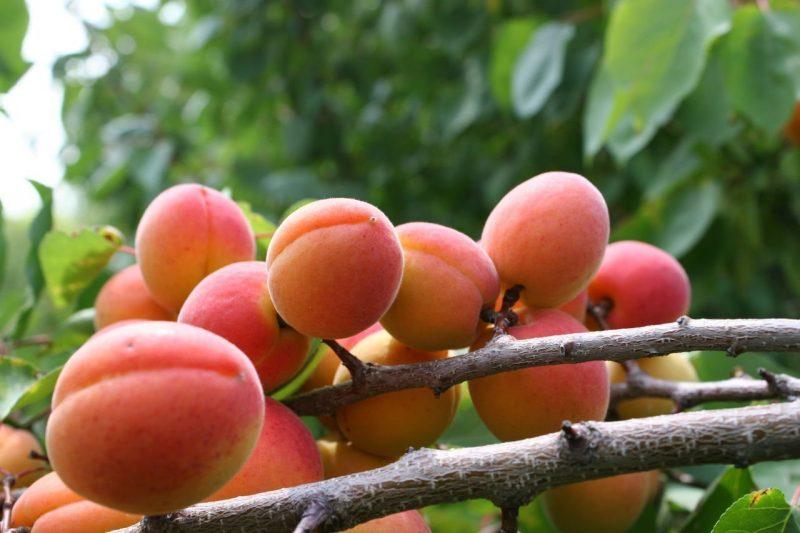
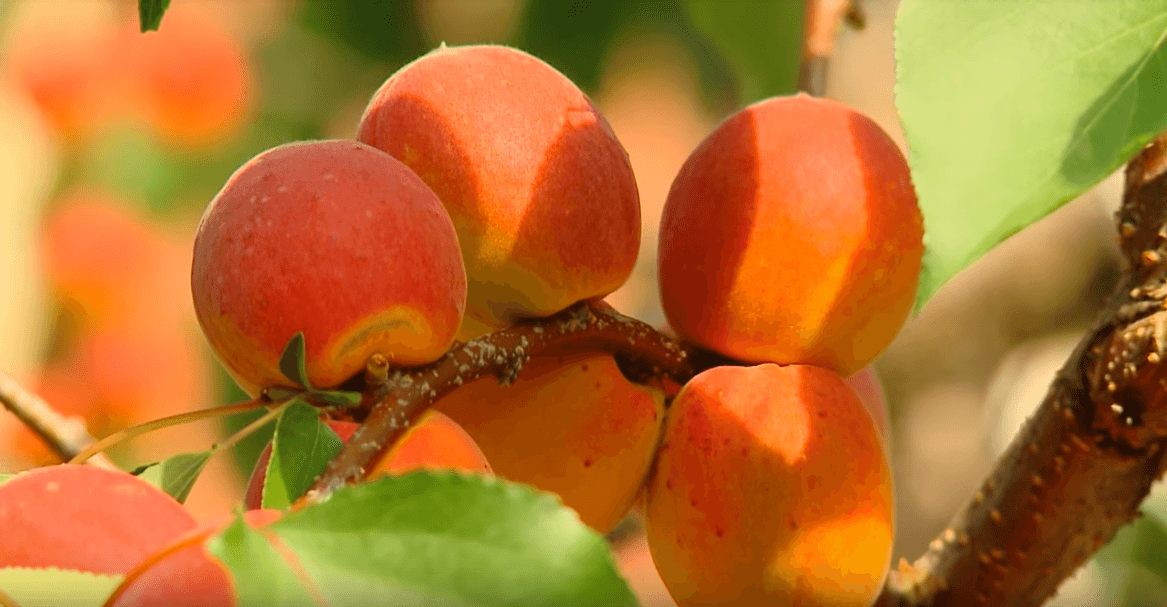
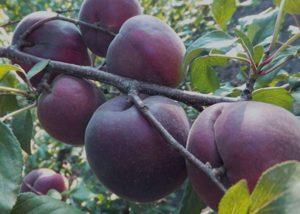
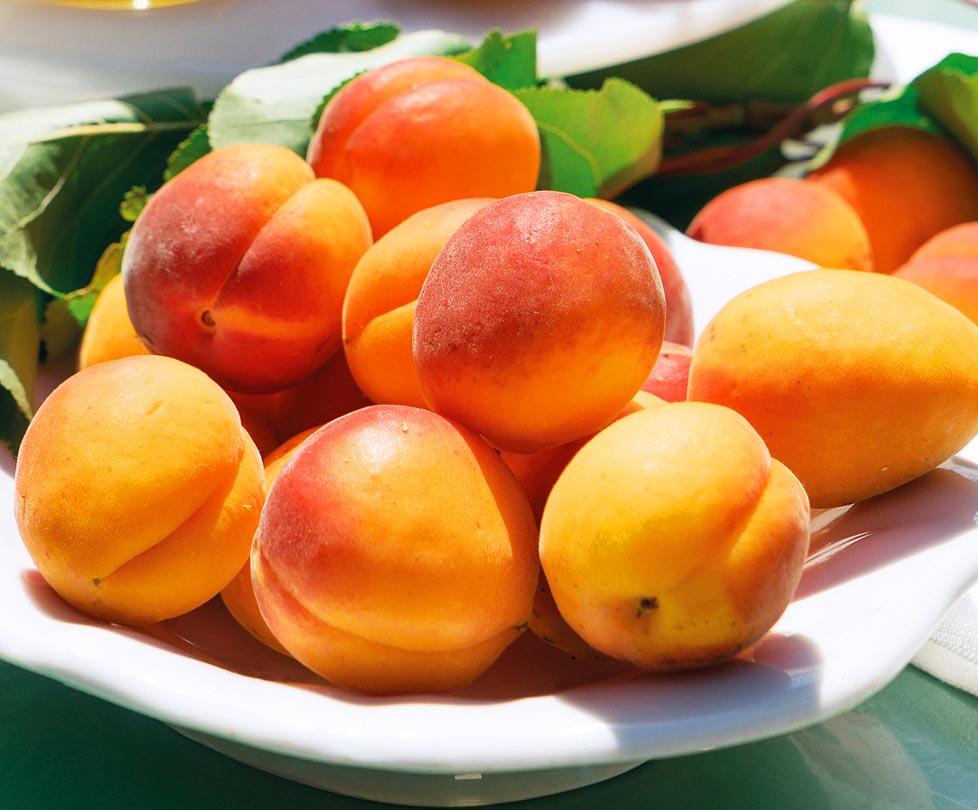
The branches are medium-length, straight, and covered in fuzzy, brownish-brown bark. The bark is flaky and brown. The tree grows spreading, reaching 4-5 meters in height, with emerald-colored leaves. The inflorescences are solitary and white. The average apricot weight is 42 grams; they are elliptical in shape with velvety, light-orange skin. The skin separates easily from the flesh, as does the pit. The juice is clear, with a pleasant sweet-tart flavor and a distinctive aroma. Tasters rated the variety 4.3 stars.
Owners of small plots should choose a place for permanent planting of the crop.
Drought resistance, winter hardiness
This apricot variety easily survives dry periods, but not prolonged ones. The tree can withstand temperatures as low as -45 degrees Celsius, and remains frost-free even after February thaws. The variety is also resistant to damping-off, and the fruit keeps for a long time.
Pollination, flowering period and ripening time of the Saratov variety
This variety is self-fertile, but pollinators can be planted nearby. Flowering occurs in mid-April, creating a romantic atmosphere in the garden. The apricots ripen by July.
Productivity, fruiting
Apricots are harvested starting in mid-July, with a single tree yielding 95-115 kg of fruit. A young tree begins bearing fruit 3-4 years after planting.
Application of fruits
Apricots are versatile: they're used to make jams, preserves, compotes, dried apricots, and frozen for the winter. The fruit is also eaten fresh, used to decorate desserts, and added to baked goods.
Disease and pest resistance of Saratov apricot
The Saratov apricot is resistant to moniliosis; flowering branches are not susceptible to moniliosis blight, and the fruit is not susceptible to rot. Signs of clasterosporium are rarely found on them. Due to its strong resistance to diseases, the trees do not require regular chemical treatment.
The main positive and negative aspects
The variety has a number of advantages, but the disadvantages are minor.
| Pros | Cons |
| Stable harvest | The need for crop rationing |
| Resistance to fungal infections | |
| Wonderful apricot taste | |
| Transportability |
Growing nuances
The Saratov Rubin apricot variety doesn't require any special cultivation techniques. Planting and care follow the standard guidelines.
Location and soil
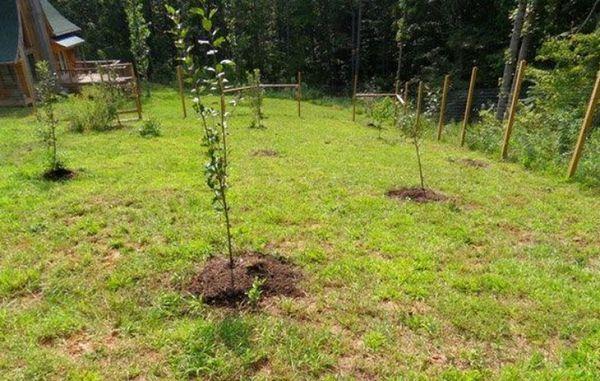
Trees should be planted in areas protected from drafts and well-drained. Apricots prefer loamy, light soil with a neutral or alkaline reaction. Acidic soil should be diluted with lime. Apricots do not tolerate lowlands, where groundwater accumulates. This can lead to rhizome rot and disease.
When to plant?
In cool climates, apricots should be planted in the spring, before the snow has completely melted and when the air temperature does not drop below 10 degrees Celsius. The seedlings should have time to root before the buds begin to open. In the south, planting is best done in October, after the leaves have fallen. In warmer regions, young trees have time to take root before the cold weather sets in.
What crops can and cannot be planted near Saratov apricot?
Apricots don't like to be planted next to pears, apples, plums, cherries, or other fruit trees. Only different apricot varieties can be planted next to each other; they will provide additional pollinators.
Primroses, tulips, daffodils or perennial herbs are placed under the tree.
Preparing the planting hole
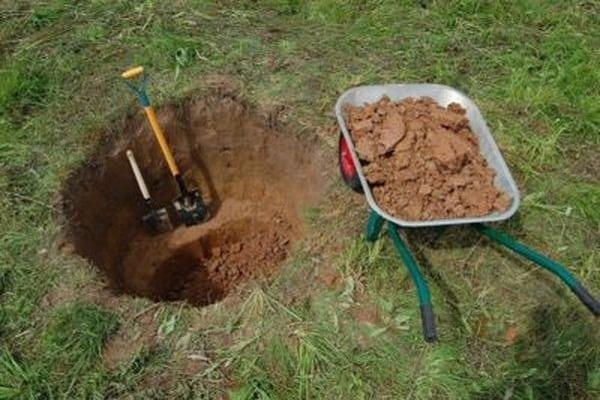
Preparation of the hole, or site, begins two weeks before planting. First, loosen the soil with a spade blade, removing weeds and promoting aeration. Next, dig a hole 70 x 70 cm in diameter and 80 cm deep, enough to completely accommodate the seedling's rhizome. Lightly tamp the soil down with your hands.

Selection and preparation of planting material
It's recommended to purchase one-year-old seedlings after first inspecting them for integrity and the absence of disease and bugs. Before planting, trim the rhizomes by 3-5 cm and soak them in a mullein and clay mixture for 30 minutes.
Planting diagram and process
A drainage layer of crushed stone is placed at the bottom of the hole. Add soil mixed with humus in a 2:1 ratio, then 2 kg of ash and 0.5 kg of superphosphate. Some of the soil is transferred to the hole, and the seedling is placed on top. The rhizomes are covered with the remaining soil and watered. The seedling is watered and tied to a support if necessary.
Care instructions
Caring for an apricot tree is simple: it requires regular watering, weeding, fertilization, and pest and disease control. The health of the tree and its yield depend on how well these cares are carried out.
Watering rules
Apricot trees need to be watered during the fruit ripening period. For the first three years, young seedlings are watered twice a month with 30 liters of water. During dry summers, mature apricot trees should be watered once a month with 70 liters of liquid, but be careful not to allow the water to stagnate around the trunk. It's best to use settled water, which can be applied from a hose.
Top dressing and fertilizers
Apricot trees need regular fertilization in the spring with liquid fertilizers such as mullein or bird droppings. In June, foliar feeding is effective, including spraying the leaves with solutions of complex fertilizers. Starting in July, phosphorus-potassium fertilizers are added to stimulate fruit set. After harvesting, scatter half a bucket of wood ash around the tree and lightly dig it in with a shovel or hoe. About once every two years, in spring or November, dig shallow holes near the apricot tree and add one to two buckets of manure or compost.
Pollination
The Saratov Rubin apricot is partially self-fertile, but to increase yield, it should be planted nearby with the Dessertny Vid (Dessert variety), Golubeva (Golubeva), or Lakomka (Lakomka). In the north, frost-resistant pollinators such as Manitoba 604, Zhigulevsky Souvenir, and Severny Triumph are recommended.
Tree pruning
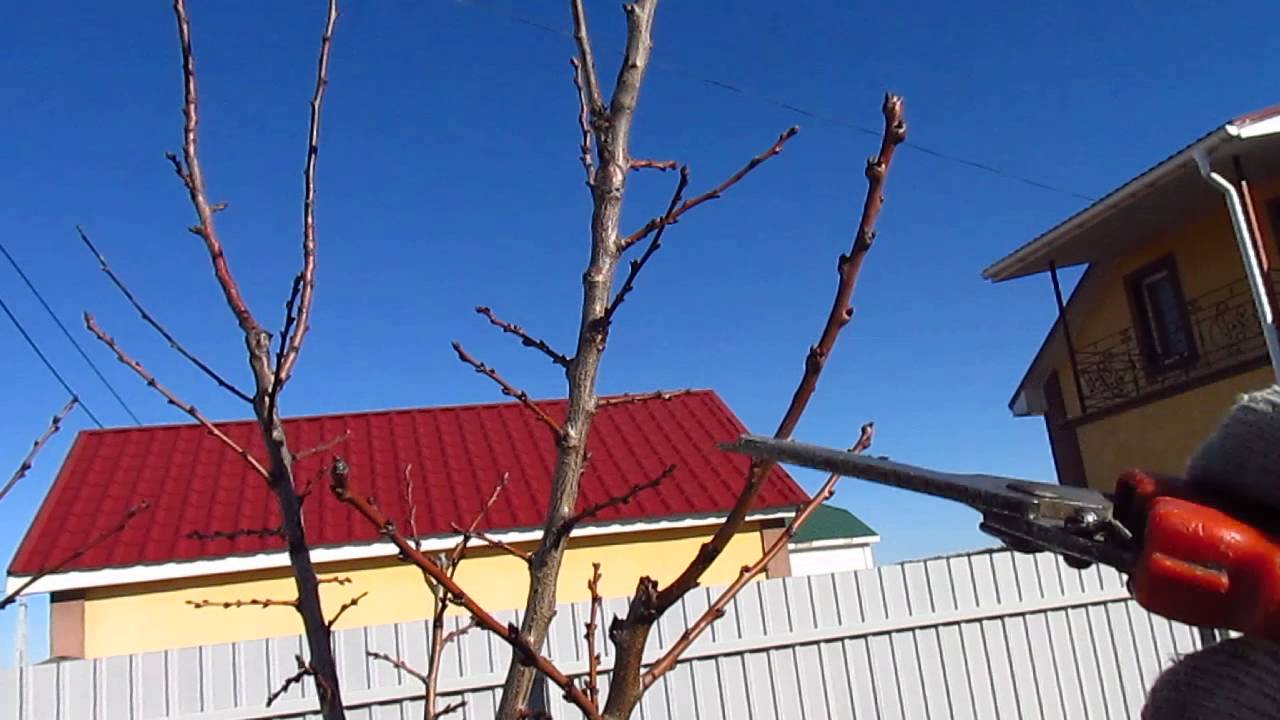
Regularly shape the bush to prevent it from becoming dense and to stimulate new growth. Pruning is done to give it a rounded shape. Dead, damaged, and frozen branches are removed, leaving 6-7 branches each year in spring and fall. In March, thin out dense areas of the tree, removing weak shoots and any trees older than 3 years. This procedure can be repeated in the first half of June to rejuvenate the crown. In the fall, remove damaged and dried shoots and treat large cuts with garden pitch. Young branches are shortened by 1/3 of their length, leaving 6-7 buds.
Preparing for winter
Apricot trees are protected from frost and rodents by pruning the lower part of the trunk with wire mesh or roofing felt. When the plant is young, it is covered with agronomic fiber to protect it from freezing.
Diseases, pests, prevention
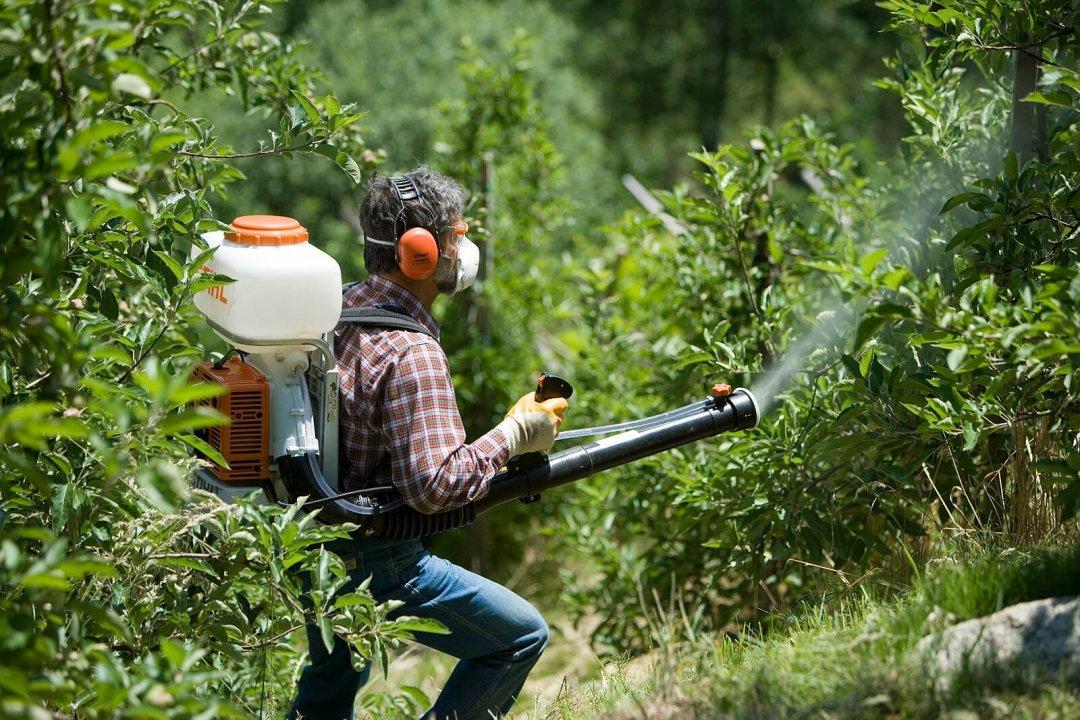
The Saratov Rubin apricot is sometimes affected by brown spot and aphids. It has a high resistance to other diseases and insects. Problems can be controlled by spraying with Bordeaux mixture, irrigating with a soap solution, and applying Fitoverm or Karbofos.
Harvesting and storage of crops
Apricots are harvested in two stages during sunny, dry weather, as the fruit tends to ripen unevenly. The fruit is discarded and placed in wooden or plastic boxes. They are stored in a basement or cellar at temperatures up to +5°C.
Reviews from summer residents
Gardeners generally speak positively about the Saratov Rubin apricot.
Igor Leontiev, 59 years old, Kyiv.
Hello everyone! I grow Saratov Rubin apricots in my garden for personal consumption; the trees bear fruit abundantly in July. I harvest the fruit in two batches, making jams, compotes, adding them to baked goods, and eating them raw.
Oksana Kulakova, 68 years old, Bila Tserkva.
Hello! I recommend the Saratov Rubin apricot tree to everyone. It's easy to care for and produces a ton of fruit. The apricots have incredible flavor.
Related posts:
 Is it possible to grow an apricot tree from a seed in your garden? How to plant and care for it?
 Description and characteristics of the Shalah apricot, relatives and cultivation
 Description and technology of growing the Tsarsky apricot variety
 Description of the Krasnoshchyok apricot variety, planting technology and care
 TOP 12 recipes for preparing apricot slices in syrup for the winter
 Description and cultivation of the Manchurian apricot variety
 Description and characteristics of the Triumph Severny apricot variety, planting and care
 Description and characteristics of the Lel apricot, planting technology and care