
- Selection of Black Velvet Apricot
- Advantages and disadvantages
- Description and characteristics
- Tree size
- Fruiting
- Pollination and flowering period
- Ripening time and yield
- Taste and use of fruits
- Apricot diseases
- Moniliosis
- Coccomycosis
- Clusterosporiasis
- Susceptibility to pests
- Weevil
- Khrushchevs
- Drought resistance, winter hardiness
- Landing specifics
- Optimal timing
- Choosing the right bush
- Favorable and unfavorable neighbors
- Preparing the seedling
- Planting technology
- Further care
- Watering
- Fertilizers
- Loosening and mulching the tree trunk circle
- Crown formation
- Preventive treatments
- Shelter for the winter
- Reproduction
- Seeds
- Cuttings
- Gardeners' reviews of the variety
The Black Velvet apricot variety has fruits of an unusual color. They are small in size, but have a pleasant sweet and sour flavor. This variety is suitable for growing in all regions, as it is frost-resistant. The tree quickly establishes itself in new locations, produces high yields, requires little attention, and is easy to care for.
Selection of Black Velvet Apricot
The velvet apricot was developed by scientists from the Krasnodar Territory and the city of Krymsk. They collaborated on a new variety of the black variety. The research was conducted in 1994. Prior to this, varietal diversity had been developed in America and Asia. The variety was only registered in the State Register in 2005 after undergoing agricultural trials.
Advantages and disadvantages
Apricot has several advantages and disadvantages. Among the advantages are:
- winter hardiness;
- drought resistance;
- immunity to fungal diseases;
- pleasant taste;
- medium ripening period;
- long flowering;
- small bone;
- frost resistance of flowers and ovaries;
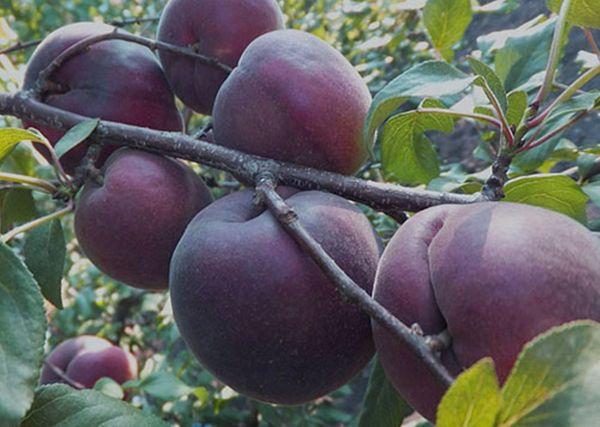
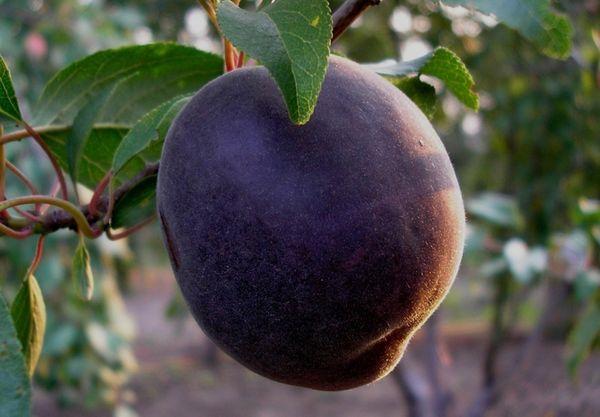
- unusual color of fruits;
- good shelf life and transportability.
Gardeners find several drawbacks to this variety: poor separation of the pit from the pulp, average drought resistance, and a ripening period that does not allow for cultivation throughout Russia.
Black velvet begins to bear fruit only in the 3rd-4th year and requires a pollinator.
Description and characteristics
Tree characteristics include a description of the tree's height, appearance, fruit, resistance to diseases and adverse conditions.
Tree size
The apricot tree is medium-sized, reaching 2-2.5 m in height. Regular pruning is required to maintain a consistent crown shape. Black Velvet is characterized by a round, spreading crown.
Fruiting
Ripening, fruiting, and flowering times are average. Fruit ripening occurs in the tree's third or fourth year of growth. Until then, the plant grows, takes root, and increases the number of fruiting shoots.
Pollination and flowering period
The variety is partially self-pollinating; the tree can independently fertilize about 20% of its buds. To increase yield, a pollinator is required. Apricots, peaches, or other stone fruits with a similar ripening period to Black Velvet are suitable. The flowering period varies depending on the growing region. In the south, the tree blooms in mid-July, and in the north, in early August.
Ripening time and yield
The berry ripening period ranges from early August to mid-September, depending on the growing region. This is a high-yielding variety. At peak fruiting, a tree yields 50 to 60 kg of apricots.
Taste and use of fruits
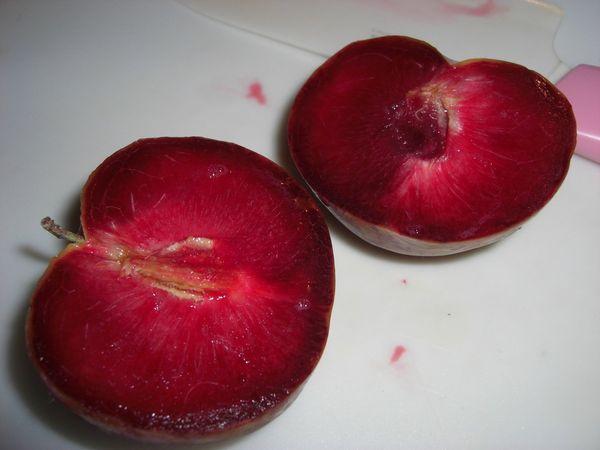
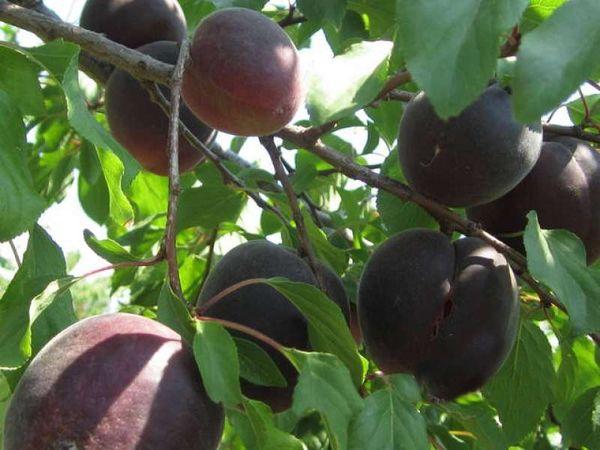
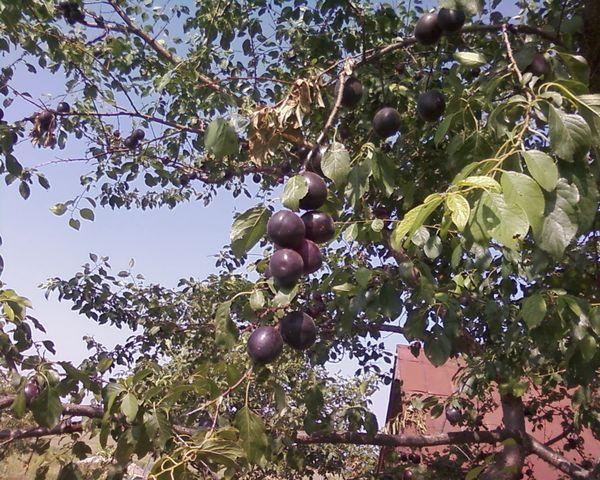
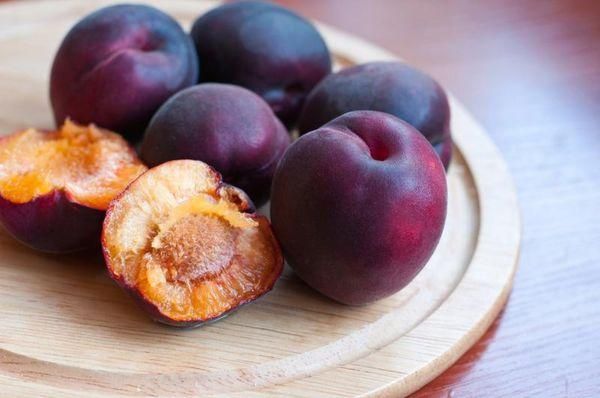
The fruits are highly palatable. They have a pleasant sweet-and-sour flavor. The outer skin is dark purple, almost black. Inside, yellow flesh opens up and is difficult to separate from the pit. The drupes are processed into preserves, compotes, jams, and food additives. They are sold because they have a long shelf life and are easy to transport.
Take a look Also
Apricot diseases
Trees are susceptible to fungal attacks when their immunity is weakened. This occurs due to a weakened immune system and improper agricultural practices.
Moniliosis
A fungal disease that can destroy a large portion of the crop. Gray growths appear on the tree bark, and leaves and shoots dry up and fall off. Fruits, while still on the branch, burst, rot, leak, and fall off. Antifungal agents are used for control and prevention.
Important! Moniliosis can destroy more than 50% of the crop.
Coccomycosis
It appears as small, brownish-brown spots on leaves and shoots, no more than 2 mm in diameter. These quickly spread throughout the plant. The fungus spreads to the fruit, which ripens but loses its flavor. The micelles of coccomycosis spread very quickly throughout the plant.
Clusterosporiasis
The fungus attacks all above-ground parts of the apricot tree. Small spots, 2 mm in diameter, appear on the leaves, reddish-brown or yellowish-brown. A red border forms around the spots, a distinctive sign of the disease. The center of the affected area dries out, then dies and falls off. This results in small holes with a red border on the foliage.
Susceptibility to pests
In addition to diseases, the juicy apricot fruit is also susceptible to pests. They feed on the leaves or sap of the drupe, penetrate the fruit, and completely consume its interior.
Weevil
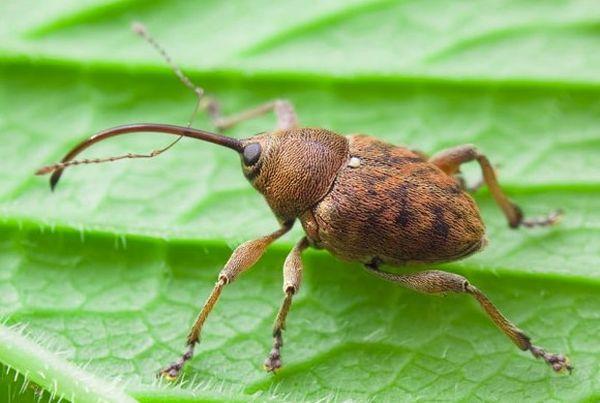
A medium-sized group of insects, their body length ranges from 4 to 6.5 mm. The facial part of the weevil has a proboscis, which the weevil uses to puncture leaves and fruits, sucking out the sap. The fruit weevil variety becomes active in late May. During bud formation, it penetrates the buds and causes them to weep.
After budding and ovary formation, the beetle punctures the fruit. The female then lays eggs, and within a month, new individuals emerge, which actively feed on the apricot juice. The weevils damage the drupes, rendering them unfit for consumption.
Khrushchevs
May beetle larvae damage the tree's root system. The beetle spends its entire life cycle in the soil, laying eggs, overwintering, pupating, and feeding. During the first two years, when the May beetles' mouthparts are not yet fully developed, they feed on humus and compost.
By the third year, the gnawing mouthparts are formed, after which the May beetles begin feeding on the tree's roots, causing damage. Apricot yields decline, as the roots don't absorb enough nutrients and minerals, which affects the plant's immunity and health.
You can get rid of beetles using insecticides, traps, and manual destruction.
Drought resistance, winter hardiness
Black Velvet is highly winter-hardy. The plant can tolerate temperatures as low as -38°C. The buds also easily tolerate frost, maintaining the tree's productivity and health.
The tree's drought tolerance is average. When grown in the south, it requires regular and abundant watering.
Landing specifics
To ensure a successful apricot tree and high yields, it's important to plant the young sapling correctly. The tree's future health and fruit production depend on this process.
Optimal timing
Planting is done in early spring or fall. For more northern regions, spring is recommended to allow the apricot to establish roots and become strong by fall. For the south, planting times are flexible. Black Velvet thrives in these conditions.
Choosing the right bush
Young trees are purchased from specialized stores and reputable nurseries. Pay attention to the following conditions:
- foliage (healthy, no signs of disease);
- roots (without rot);
- bark (without chips, cracks, scratches, damage).
Important! It is recommended to use one-year-old seedlings; they take root faster and more easily.
Favorable and unfavorable neighbors
Apricot is an exotic plant, so it doesn't do well next to plants native to the region. It doesn't like:
- apple trees;
- pears;
- plums;
- peach;
- cherries;
- red rowan;
- cherries;
- nuts.
Also, avoid planting shrubs under the tree. They intertwine with the tree's root system and interfere with proper nutrition and mineral metabolism. Good neighbors for apricots include:
- cherry plum;
- apricots of other varieties;
- quince;
- barberry;
- hawthorn.
Preparing the seedling
The seedlings are prepared in advance. The roots of the young tree are soaked in a weak solution of potassium permanganate for 24 hours. The roots should not be left uncovered; if they dry out, the tree will die. If you buy an apricot tree in the fall, you can postpone planting until spring. To do this, bury the seedling in the ground at an angle, place it in a greenhouse, and cover it for the winter.
Planting technology
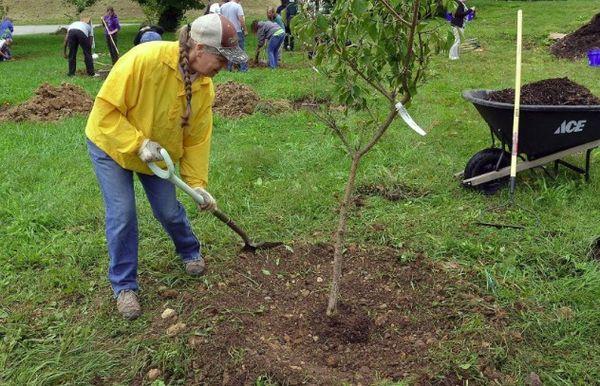
Planting operations are carried out in several stages:
- Choose a sunny place on the north side, protected from the wind.
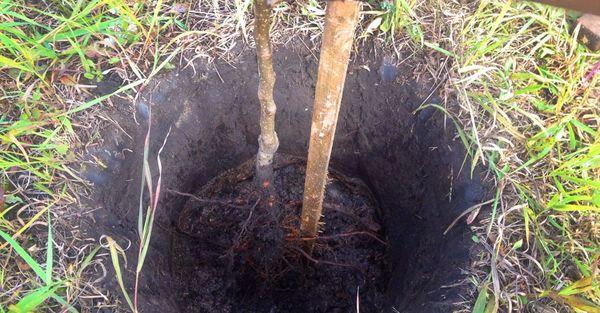
- Dig a hole about 1 m deep and in diameter.
- The excavated soil is mixed with humus and mineral fertilizers.
- Half of the mixture is placed back into the hole and left for 2 weeks.
- The seedling is placed in the center of the hole and the roots are straightened.
- They are sealed with soil layer by layer, compacting each one.
- Form a tree trunk circle with a diameter of 50 cm and a depth of 7-10 cm.
- Water generously.
It is recommended to select areas where groundwater lies at a depth of no more than 1.5 m.
Further care
To ensure good growth and high yields, it is necessary to follow agricultural practices.
Watering
Irrigation is carried out several times per season:
- in spring, after the sap begins to flow;
- during flowering;
- during the period of ovary formation;
- during fruiting;
- after harvesting.
The soil is moistened each time to a depth of at least 35 cm. Apricot is a moisture-loving crop and does not always tolerate drought well.
Fertilizers
The tree is fertilized three times per season:
- before the buds begin to open;
- during the flowering period;
- during fruiting;
- after harvesting.
Special mineral fertilizers containing nitrogen, potassium, and phosphorus are used for fertilization. Manure, humus, chicken manure, copper sulfate, wood ash, and herbal infusions are also suitable.
Loosening and mulching the tree trunk circle
Mulching the area around the tree's trunk helps retain moisture and minerals at the tree's roots. The following are used for this purpose:
- straw;
- sawdust;
- moss;
- chopped grass;
- humus.
Loosening the soil is essential to prevent the formation of a crust above the soil surface, which prevents minerals from reaching the apricot tree's roots.
Crown formation
Formative pruning is done starting in the first year of planting. The central shoot is cut off. The following year, two central branches are selected and pruned. In the third year, four are pruned. At the end of the season, the tree is given a sanitary treatment: all damaged, broken, and dead branches are removed.
Important! Formative pruning is done in the spring, and sanitary pruning is done in the fall.
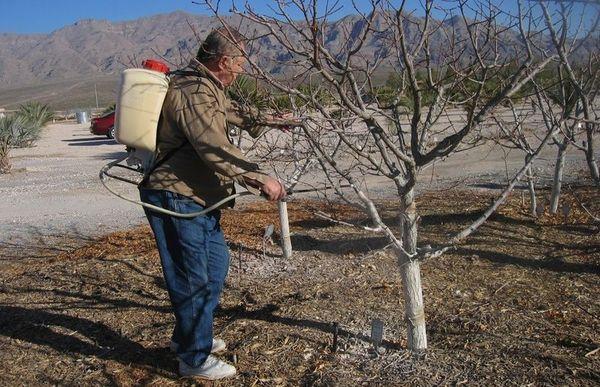
Preventive treatments
To prevent diseases, several manipulations are carried out:
- do regular weeding and loosening of the soil;
- monitor watering of the plant;
- at the beginning of spring, spray with insecticides and fungicides;
- Copper sulfate is used to repel insects and fungi.
Shelter for the winter
The Black Velvet apricot is a winter-hardy variety. For mature plants, mulching around the trunk is sufficient. Young seedlings are completely covered until the third year of growth. Agrofibre, spunbond, or another breathable material are used for this purpose.
Reproduction
Propagation of apricot There are two possible ways: by seeds and cuttings.
Seeds
This method is convenient for any time of year. The seeds are soaked in water and dried for two days. Then they are planted in soil to a depth of 10 cm, watered, and waited for germination.
Cuttings
Select cuttings at least 0.6 mm in diameter and 15-20 cm long. They are then soaked in a rooting solution for 24 hours. Afterward, they are placed in soil and covered with a transparent cap. They are kept in this condition until rooting occurs.
Gardeners' reviews of the variety
Alena, 45, Perm: "The Black Velvet apricot tree has been growing on my plot for seven years now. Since the third year, we've been harvesting 8-10 boxes of fruit. They store well in the cellar until mid-winter. The plant is frost-resistant, so the harvest has time to ripen fully."
Lydia, 60, from Krasnodar: "I like the Black Velvet apricot for its shelf life, unique color, and pleasant flavor. We have two trees of this variety growing on our property. We harvest a large crop from them, selling some and processing the rest for fresh consumption. The plant requires regular and abundant watering, but is otherwise undemanding."
Vladimir, 39, from Novosibirsk: "The Black Velvet apricot has been delighting us with its harvest for many years. The main thing is not to leave the fruits on the tree too long, otherwise they become overripe and have a shorter shelf life. The tree is easy to care for and tolerates winter well.
Related posts:
 Is it possible to grow an apricot tree from a seed in your garden? How to plant and care for it?
 Description of the Melitopol apricot variety and cultivation technology
 Description and characteristics of the Lel apricot, planting technology and care
 Description and technology of growing the Tsarsky apricot variety
 Description and subtleties of growing the Champion of the North apricot variety
 Planting and caring for apricots in the middle zone, description of the best varieties
 Description and characteristics of the Black Prince apricot variety, planting and care
 How and whether it is possible to graft an apricot, the choice of rootstock, timing and methods of budding