
- Which apricots are recommended for planting in central Russia?
- Climatic characteristics of the region
- Variety selection criteria
- The most popular varieties with descriptions
- Guiani
- Pacer
- Saratov ruby
- Favorite
- Edelweiss
- Aquarius
- Countess
- Iceberg
- Alyosha
- Tsar's
- Lel
- Large-fruited
- Winter-hardy varieties
- Varieties of columnar apricots
- Low-growing and dwarf species
- Self-fertile
- Crops with black fruits
- How to plant correctly: step-by-step instructions
- Optimal timing for planting
- Choosing a landing site
- Preparing the planting hole and seedling
- Algorithm for planting crops
- Care instructions
- How often to water
- What fertilizers does a tree need?
- What diseases does apricot suffer from in the central zone?
- Caring for the tree trunk circle
- Do I need to cover it for the winter?
- When apricots ripen: the nuances of harvesting
Breeders are diligently working to make warm-season crops accessible to gardeners in other regions, delighting them with a harvest of tasty and healthy fruits. Apricots are no exception. Planting and caring for them in temperate climates differs somewhat from similar practices in warmer southern climates. Furthermore, not every variety is suitable for growing in harsh and unstable climates.
Which apricots are recommended for planting in central Russia?
Breeders have worked tirelessly to develop apricot varieties suitable for cultivation in temperate climates since the 19th century. The renowned scientist I.V. Michurin and his followers developed plants with high frost resistance.
Climatic characteristics of the region
The climate of the Volga region and central Russia is characterized by sharp temperature fluctuations throughout the year. Winters are cold and snowless, with spring frosts common. Summers are hot. Plants can have a hard time adapting to these climatic conditions.
Variety selection criteria
For the middle zone, whose climate is characterized as cold and risky for agriculture, it is recommended to choose the following apricot varieties:
- possessing increased frost resistance and resistance to temperature fluctuations;
- resistant to recurrent frosts in spring;
- withstanding prolonged thaws;
- withstanding stagnation of excess moisture in the soil;
- resistant to sunburn.
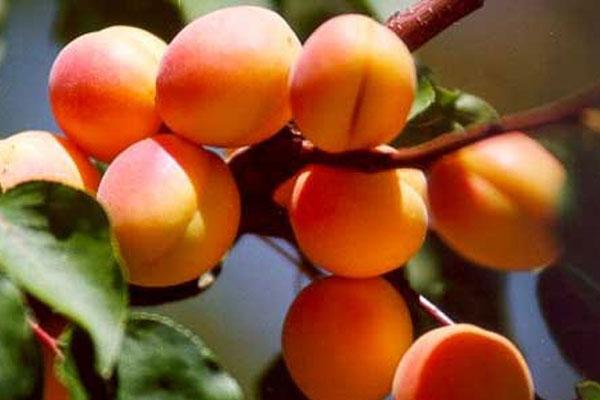
Growing early varieties is fraught with the risk of flower buds freezing as a result of recurrent spring frosts.
The most popular varieties with descriptions
Over the years of growing apricots in the temperate zone, gardeners have developed favorite varieties. These are the ones they most often plant in their plots to produce a harvest of healthy fruit.
Guiani
The ripening period occurs in late August. The fruits are orange-pink in color and have an easily removed pit. Yields are high. A distinctive feature of this apricot is the sweet kernel. The tree grows up to 7 meters tall.
Pacer
The Inohodets tree reaches a maximum height of 3 meters. The yield is average but consistent. The fruits ripen around mid-August. The pit and pulp separate easily. Characteristic features include slight pubescence and a blush on the skin.
Saratov ruby
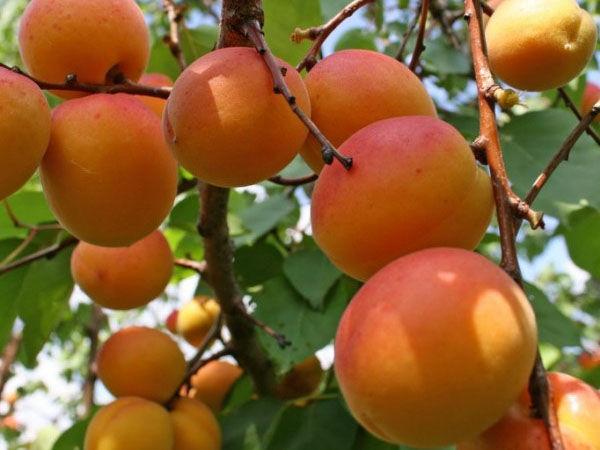
This apricot deserves the attention of gardeners not only for its excellent winter hardiness and the flower buds' resistance to low temperatures, but also for its bark's resistance to rot. At the technical ripeness stage, the fruits are orange with a beautiful ruby blush. The pit is small and separates easily from the pulp. The harvested fruit is suitable for storage and transportation.
Favorite
A large-fruited apricot with dense, tasty flesh and a small pit. The fruits are orange, with a red blush on one side. Among the disadvantages, gardeners point out the very late ripening period. Sometimes the harvest did not even have time to fully ripen.
Edelweiss
A distinctive feature of this variety's fruits is their unique nose. They are yellow with a slight blush. The tree reaches a maximum height of 3 m. The harvested fruit can be stored and transported over long distances.
Aquarius
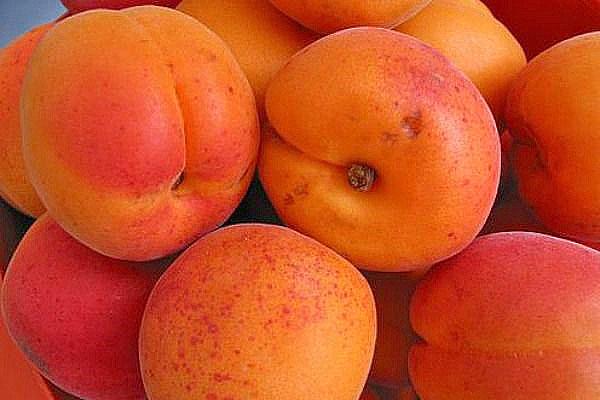
This variety produces high, consistent yields. The tree is tall and vigorous. The fruits are a uniform yellow color, with small stones. The flavor is harmonious, sweet and sour. The ripening period is average.
Countess
A tall, mid-season apricot that's sensitive to weather conditions. Ripe fruits are creamy with a blush. The flesh is sweet, and the pit separates easily. In damp, rainy summers, the tree is susceptible to clasterosporium.
Iceberg
The harvest ripens in late July or early August. When ripe, the fruits are yellow-orange in color, with a slight blush and barely noticeable pubescence. The pit is small and separates easily from the juicy flesh.
Alyosha
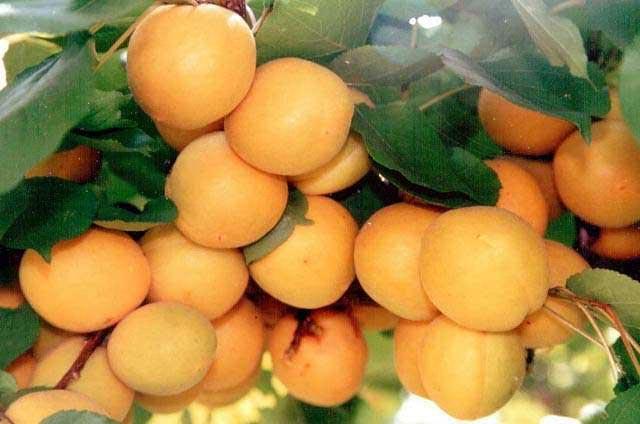
A tall variety that adds extraordinary beauty to the garden during flowering with its large, pinkish flowers. It ripens early. By the end of July, you can enjoy bright yellow, blush-colored fruits. Gardeners note one drawback: the large pits of these apricots.
Tsar's
The Tsarskogo tree reaches a maximum height of 4 m. The flower diameter is approximately 4 cm. The harvest ripens in early August. The fruits are large, with a small stone. They are yellow with a slight blush and lightly pubescent. A distinctive feature is their strong, classic aroma.
Lel
A small tree that can become a true garden centerpiece. The harvest ripens early. The fruits turn orange when ripe, and their skin is glossy. The flesh has a balanced sweet and sour flavor. The pit is large and separates easily.
Large-fruited
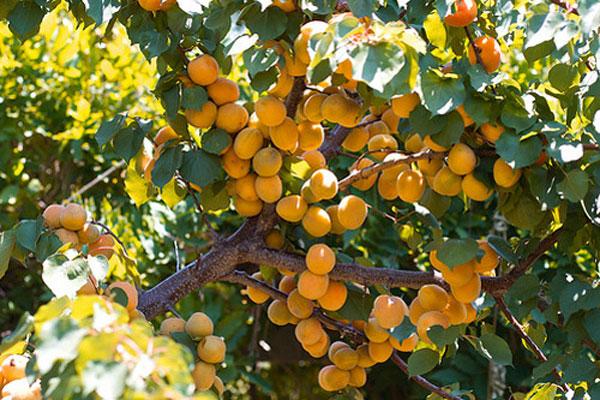
Apricot varieties that produce large, tasty fruits are becoming increasingly popular. These are the characteristics that breeders have focused on when developing new varieties. The following large-fruited varieties are suitable for cultivation in temperate climates:
- Lejuna;
- Triumph of the North;
- Masis Pineapple;
- Pineapple Shalah;
- Red-cheeked.
They are distinguished not only by the attractive appearance of ripe fruits, but also by their excellent taste.
Winter-hardy varieties
If it is not possible to prepare the garden for winter every year and provide insulation for fruit trees, then when choosing varieties, preference should be given to winter-hardy varieties with good commercial and taste characteristics. The following are best suited for growing in the middle zone:
- Hardy;
- Red-cheeked;
- Darling;
- Honey;
- Russian;
- Bullfinch;
- Triumph of the North.
Many of the varieties presented have stood the test of time, and their popularity continues to grow every year.
Varieties of columnar apricots
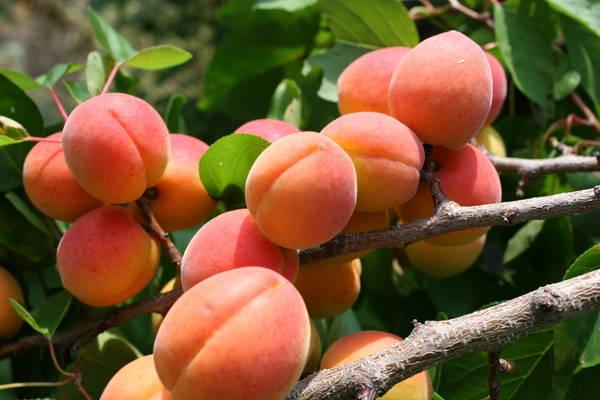
For a small plot, the best fruit trees are columnar. Despite their compact size, they produce excellent fruit yields, and their characteristics are in no way inferior to their tall, spreading counterparts. The best varieties of this type of apricot are:
- Prince Mart;
- Star;
- Gold;
- Sunny.
Low-growing and dwarf species
A low-growing tree makes harvesting easy. It also doesn't take up much space and doesn't create excessive shade for other plants. Caring for this type of crop is also simplified. The best low-growing apricot varieties are considered to be:
- Bullfinch;
- Cup;
- Black mouse;
- Black Prince.
These plants are distinguished not only by their dwarf size, but also by their excellent winter hardiness. In temperate climates they overwinter without additional shelter.
Self-fertile
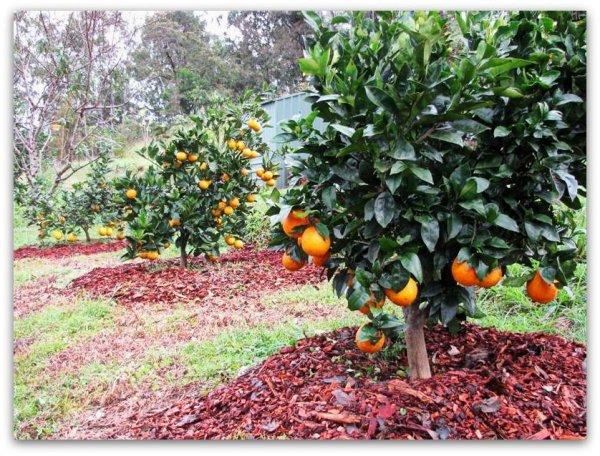
If your garden plot is small and you can't plant many trees, self-fertile apricots are recommended. They produce excellent results even if there are no pollinator varieties nearby. The most popular varieties among gardeners are:
- Triumph of the North;
- Tsar's;
- Sardonyx;
- Hardy;
- Dessert;
- Bullfinch;
- Lel.

Crops with black fruits
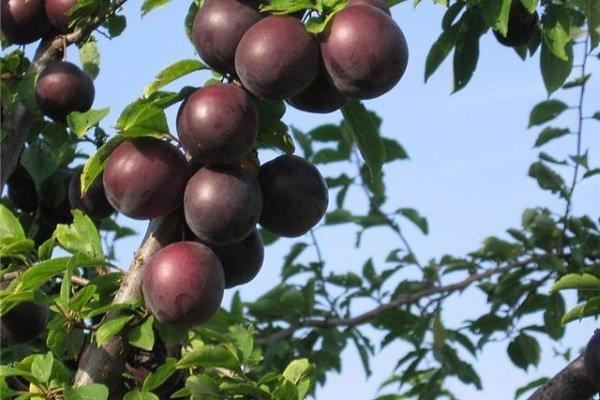
Lovers of exotic and unusual fruits will appreciate apricot varieties with black berries. These fruits are very attractive and immediately attract attention. The plant itself is a hybrid, a cross between a cherry plum and a common apricot. Common varieties that produce black berries include:
- Black Prince;
- Black velvet;
- Melitopol black;
- Korenevsky black;
- Black mouse;
- Lugansk black.
How to plant correctly: step-by-step instructions
To grow a fruitful apricot tree on your own plot, you must not only know how to select the right variety, but also carefully follow agricultural practices and ensure proper care for the seedlings.
Optimal timing for planting
In the middle zone, apricot seedlings are not planted in the fall, since they will not have time to take root well, and the risk of the tree freezing is too highPlanting is carried out in the spring, before the sap begins to flow and the buds begin to open.As a rule, this period occurs at the beginning of April.
Choosing a landing site
Apricot trees grow in the same area for at least 25 years, so choosing a planting site is a responsible matter. The plant prefers loamy soil with good air permeability and responds negatively to heavy clay soil.Its acidity level should be close to neutral.
Leave a distance of 3.5-4 m from neighboring trees. The location chosen for growing apricots should be well-lit by sunlight and protected from strong winds and drafts.
You should not plant seedlings in lowlands where cold air accumulates and there is a risk of stagnant moisture.
Preparing the planting hole and seedling
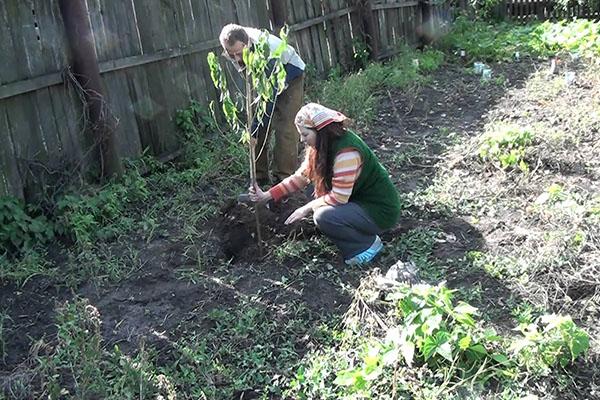
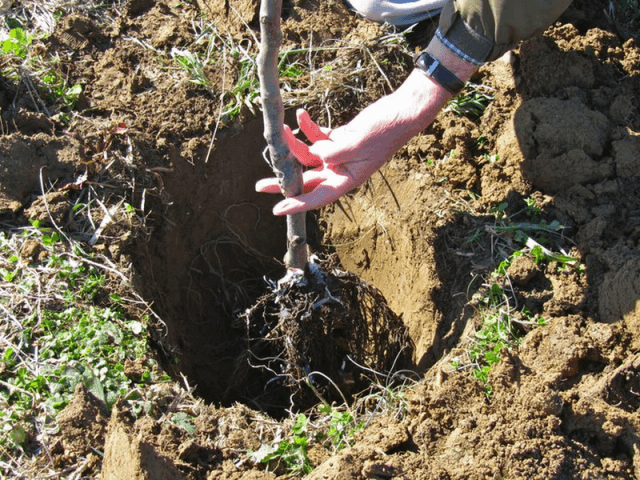
It's best to prepare the apricot planting hole in the fall. At the very least, prepare it a couple of weeks before planting. This time is necessary for the soil to settle. The hole should be between 0.5 and 0.7 m wide, and about 0.7 m deep. If a seedling is purchased with closed roots, then the planting hole is made 2 times larger than its container. A drainage layer of small stones or broken bricks is placed at the bottom, after which a layer of fertile soil is poured.
Before planting an apricot, a complex of fertilizers and micronutrients is added to the hole, namely:
- the top fertile layer of soil;
- humus or compost;
- slightly acidic peat;
- sand;
- superphosphate or bone meal;
- potassium sulfate or wood ash.
Algorithm for planting crops
If you plant an apricot tree correctly, all the plant's energy will be devoted to rooting. As a result, the tree will establish itself well within a season and survive the winter safely. The procedure is as follows:
- At the bottom of the hole, make a mound of nutrient substrate (only for seedlings with an open root system).
- Install a wooden peg, which will later serve as a support.
- Place the seedling in the center of the mound and carefully straighten out its root system.
- Carefully fill the hole with soil and compact it, starting from the base of the seedling (the root collar should rise above the soil surface by 4 cm).
- Form a tree trunk circle around the perimeter of the apricot tree.
- Water the plant with 2-3 buckets of water.
- Tie it to the previously installed peg using twine.
- Mulch the tree trunk circle with compost or humus.

Care instructions
It is important not only to plant the apricot tree, but also to properly care for it in order to achieve maximum yield and delicious fruits.
How often to water
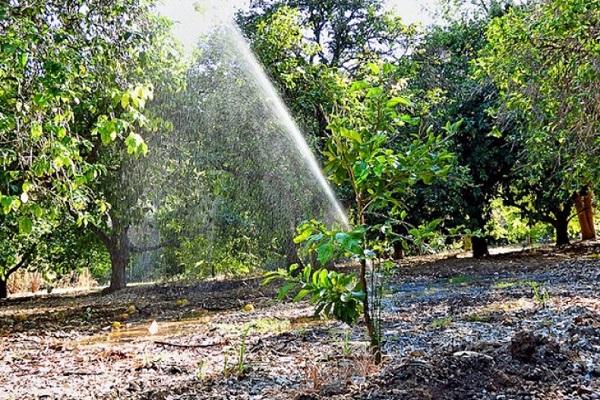
The frequency of watering depends on the time of year. In spring and fall, trees are watered once every two weeks, while in hot, dry summers, heavy watering is required almost weekly. Overwatering at the end of the growing season can delay fruit ripening. Watering needs are determined as follows: Dig a small hole the size of a spade and take a handful of soil from the bottom. If the soil is dry, a heavy watering is needed immediately.
What fertilizers does a tree need?
During the first year, apricot trees require no additional feeding. Subsequently, immediately after the snow melts, liquid mineral and organic fertilizers are applied. Complex fertilizers, produced in granular form, are incorporated into the soil, followed by watering. Foliar feeding with urea is carried out before bud break.
What diseases does apricot suffer from in the central zone?
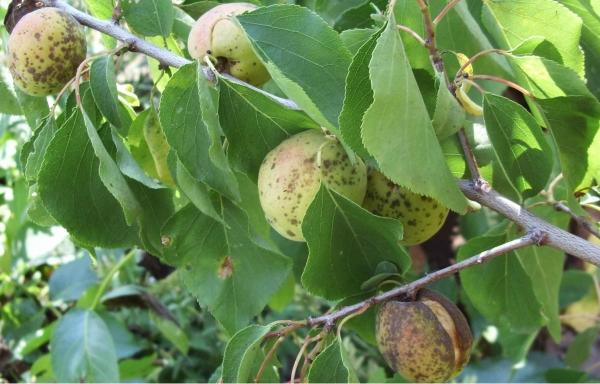
In temperate climates, apricots are often susceptible to various diseases, so to ensure a high-quality harvest, timely preventative treatments and spraying are essential. The most common diseases are:
- Clusterosporiosis;
- moniliosis;
- cytosporosis;
- fire blight;
- brown spot;
- holey spot;
- gummosis.
Caring for the tree trunk circle
It's recommended to dig a new hole every year. If this isn't possible, the hole shouldn't be too deep. Otherwise, excess moisture will accumulate there in early spring, causing the root collar to become damp.
Every autumn, the soil around the apricot tree should be dug up to the depth of a spade blade to prevent pests hiding there from overwintering.
As the weather warms, mulch the soil to reduce moisture evaporation. Weeds that appear are removed regularly.
Do I need to cover it for the winter?
Apricot trees are naturally poorly winter-hardy, so in temperate climates they require winter protection. This protection determines whether the tree will produce a harvest next season. The area around the trunk is mulched with straw or sawdust, a layer of which should be at least 20 cm thick. The root collar should be wrapped with a material with good air permeability. It is recommended to additionally cover the young seedling with a dense material, such as burlap.
When apricots ripen: the nuances of harvesting
Apricots are typically harvested by hand. This is because the fruit is very delicate and easily damaged. It's preferable to pick slightly unripe apricots from the tree, especially if they need to be transported from the garden to the home. Picking the fruit should only be done if you plan to consume it immediately or process it.
Related posts:
 What to cook with apricots for the winter and 19 best step-by-step recipes
 Description and growing guidelines for the 15 best apricot varieties for the Moscow region
 14 Best Step-by-Step Recipes for Making Apricot Jam for the Winter
 Is it possible to grow an apricot tree from a seed in your garden? How to plant and care for it?
 Description and technology of growing the Tsarsky apricot variety
 The benefits and harms of apricots for the human body, properties and contraindications
 Description of the 11 best winter-hardy apricot varieties for the Urals, planting and care
 How to make apricot compote for the winter, recipes with and without pits, for a 3-liter jar