
- What you should know before planting cherry plums in the Moscow region
- Climate conditions
- Criteria for choosing a variety
- Features of crop cultivation
- Timing and technology of planting
- Care
- Regularity of watering
- What to feed
- Seasonal treatments
- Crown formation
- Diseases and pests: treatment and prevention
- The best cherry plum varieties for the Moscow region
- Classification of cherry plum varieties by ripening time
- Early ripening
- Mid-season
- Late-ripening
- How cherry plum is classified by shades
- Yellow cherry plum
- With red fruits
- Green
- With purple fruits
- Taste characteristics of cherry plum varieties
- Sweet and sour
- Sweet-fruited
- Self-fertile crops
- Vetraz-2
- Kuban Comet
- Winter-hardy varieties
- Columnar
- A gift to St. Petersburg
- Traveler
- Tent
- Large-fruited
- Found
- Huck
- Monomakh
- Popular
- Timiryazevskaya
- Early-bearing
- Scythian gold
- Ruby
- Columnar
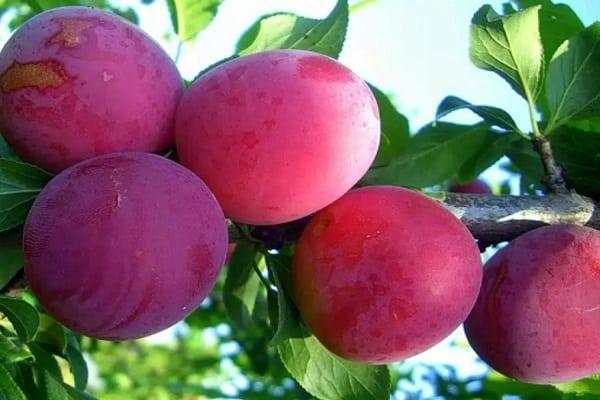
Choosing the best cherry plum varieties for the Moscow region isn't all that difficult. Today, there are a wide variety of plants that can be grown in variable climates. This allows gardeners to choose the best options based on their preferences. Cherry plums vary in flavor, fruit color, and ripening time.
What you should know before planting cherry plums in the Moscow region
To choose the right variety of this crop, it's important to consider many important factors. First and foremost, the region's climate is crucial.
Climate conditions
The Moscow region is characterized by fairly frosty winters and cool, humid summers. Cherry plum is considered a southern heat-loving crop that must withstand adverse conditions. Therefore, breeders have developed many varieties that produce a good harvest during the short summer.
Criteria for choosing a variety
To grow a good tree in the Moscow region, it is recommended to consider the following:
- It's essential to choose a vigorous and well-adapted seedling. It's recommended to choose plants that are suitable for the region and match the gardener's preferences.
- It's best to choose early-bearing varieties. This allows for a harvest within 1-2 years.
- It's worth familiarizing yourself with the variety's growing requirements. It's essential to follow all the rules from the very first day of cultivation.
- When choosing a seedling, it is necessary to select the correct soil composition, take into account the duration of warm weather, general climatic conditions, and other characteristics.
- When purchasing a plant, it's important to find out whether it's self-fertile or pollinated. If the latter, you won't be able to get a good harvest without pollination.
Features of crop cultivation
To grow a healthy plant, you need to plant it correctly and follow basic care recommendations.
Timing and technology of planting
In the Moscow region, it's recommended to plant the crop in early spring, immediately after the snow melts. It's important to plant before the buds swell. Once the plant begins to develop, it has difficulty establishing itself.
Crops with closed root systems can be planted later. However, to do this, the seedling should be removed with the root ball.
Planting cherry plum in the fall is not recommended. It won't be able to establish itself before frost sets in. Furthermore, the plant is not very winter-hardy. Therefore, a young tree won't survive a severe frost.
It's recommended to plant cherry plums in an open location with at least half a day of sun. It's important to ensure the site is well protected from northerly winds.

The plant isn't particularly demanding regarding soil composition. However, good drainage and a high content of organic fertilizers will ensure rapid growth and excellent fruiting. When choosing soil pH, neutral values are preferable. It is not recommended to plant cherry plum in very acidic or overly alkaline soil.
To plant a plant, you should follow these steps:
- Dig a planting hole. It should be 50 x 50 centimeters in size. The depth should be 40-60 centimeters. The exact depth depends on the root size.
- Mix the top layer of soil with fertilizer. You'll need half a bucket of compost or humus, 300 grams of double superphosphate, and a handful of ash. Add the fertile mixture to the soil.
- Place a stake or stick in the hole to tie the seedling to. It's recommended to position the plant vertically in the hole. It's important to spread out the roots.
- Manually fill the tree with soil. It is recommended to compact each layer well to avoid creating air pockets.
- After planting, water the plant at the roots. This will require one bucket of water.
- Carefully tie the seedling to the stake using twine.
- It's a good idea to sprinkle the area around the tree trunk with peat or compost. Mulching will help the soil stay moist longer.
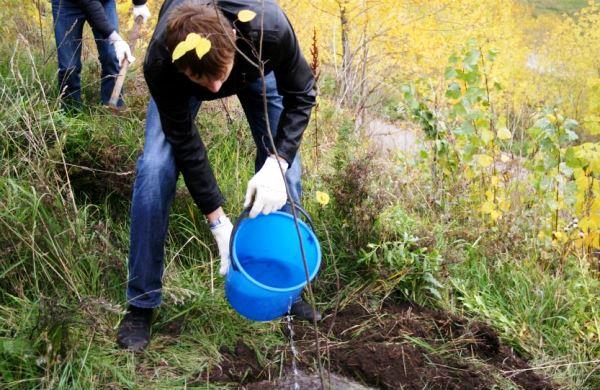
When planting several trees on a plot, it's important to properly space them. It's recommended to consider the height of the trees, as well as the shape and size of their crowns. For small plants with compact crowns, a 3-meter spacing is sufficient. For medium-height cherry plums, a 4-5-meter spacing is required. For taller plants, a 6-meter spacing is recommended.
Care
Yield parameters are directly affected by proper care and adherence to basic agricultural practices. Cherry plum care is quite simple. Standard procedures that influence tree development and fruiting are followed.

Regularity of watering
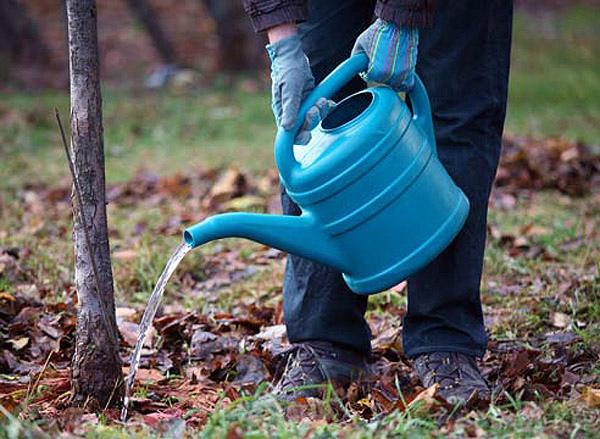
Cherry plums tolerate dry weather well. However, it's important to keep in mind that their roots are located near the soil surface. Therefore, in extreme heat, even mature plants require ample watering. Five to six buckets of water are recommended per tree.
A lack of water negatively impacts yield. Therefore, during this period, it's important to water the crop generously. Young plants require constant soil moisture. However, it's important to remember moderation, as excess water is harmful to the plant.
What to feed
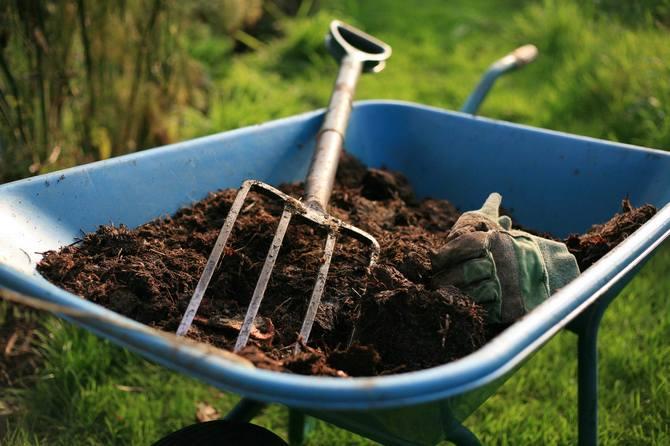
Cherry plum needs timely fertilizing.Organic fertilizers are especially important for it. No additional fertilizers are used during the first year after planting. The tree is sufficiently supplied with the fertilizer applied at planting. Then, as the plant develops, it is recommended to apply additional fertilizer several times during the season. Nitrogen fertilizers are used in the spring, and a potassium-phosphorus mixture is applied in the fall.
Organic fertilizers, such as compost or humus, can be used not only in spring or fall. They can also be applied mid-season. It's especially important to apply these substances during fruiting.
Before the harvest begins to ripen, it's recommended to apply potassium fertilizers. They improve the flavor of the fruit. Cherry plums require neutral soil, so it's important to regularly monitor the soil's acidity and adjust it promptly. If the plant is prone to high acidity, apply ash, bone meal, or lime. This should be done once every five years.
If the soil becomes too alkaline, its composition is improved with iron, potassium sulfate, or powdered sulfur. Organic fertilizers are also used to normalize the pH. These include pine needles, dried leaves, and sawdust. It's important to keep in mind that the decomposition of these materials will draw nitrogen from the soil.
Seasonal treatments
To ensure the cherry plum's normal development, it's important to pay attention to seasonal care around the tree's trunk. Weeding and loosening the soil are recommended first. Mulching the soil makes caring for the plant easier. This also protects the root system from freezing in winter.
Crown formation
This manipulation promotes crown rejuvenation and curbs growth. Cherry plum trees can reach 6-10 meters in height. During the first years of life, plants are characterized by rapid growth. To prevent the seedling from becoming elongated, new shoots should be pinched back, and diseased or damaged shoots should be completely removed.
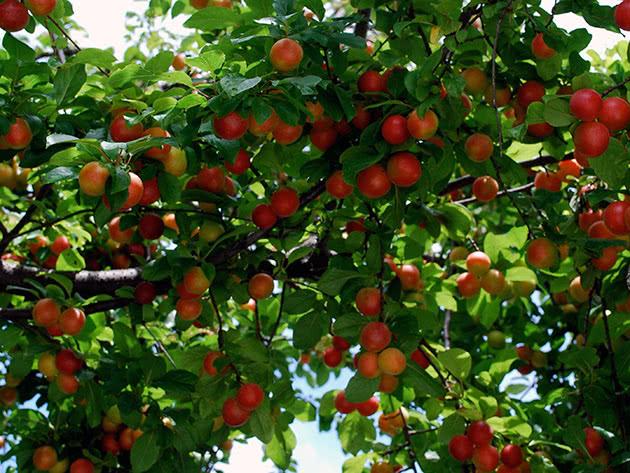
Cherry plums can be pruned in spring and fall. Healthy branches should be trimmed back slightly. This is done to make the tree more attractive and compact.
Diseases and pests: treatment and prevention
Cherry plums themselves rarely encounter diseases or pests. However, when planted with other trees, the risk of infestation increases. Apple scale insects, plum fruit moths, and sawflies are particularly dangerous for cherry plums. The tree can also be attacked by black and copper borers.
To protect cherry plums from pests, it's worth using specialized biological treatments. The most effective include Akarin, Fitoverm, and Iskra. These treatments should be used no more than once a month.
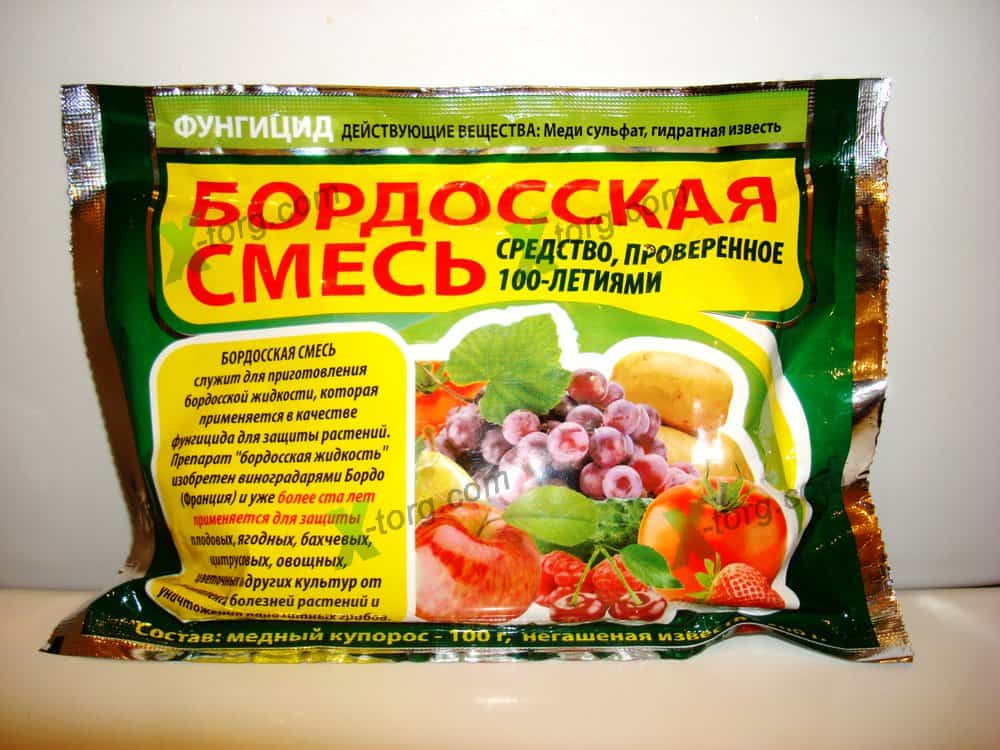
With the arrival of spring, the tree should be sprayed with a urea solution. To prepare it, use 700 grams of the solution per 10 liters of water. Bordeaux mixture or other copper-containing solutions can also be used.
Preventative treatment is recommended before buds appear, as these products can burn young foliage. Bordeaux mixture and similar solutions help combat a variety of diseases, including fungal infections.
Before fruiting, the tree may suffer from a false milky sheen, which is accompanied by the appearance of a gray coating on the leaves. There is also a risk of developing clasterosporium leaf spot, which causes brown spots.
During fruit ripening, the plant often encounters moniliosis, or gray mold. This disease is fungal in origin and spreads rapidly. To combat the disease, remove affected leaves and fruits. Bordeaux mixture (a 3% concentration) is used as a preventative measure. It's also important to prune the crown promptly and remove affected branches and leaves.
The best cherry plum varieties for the Moscow region
There are quite a few cherry plum varieties suitable for growing in the Moscow region. To choose the best option, it's worth analyzing their characteristics.
Classification of cherry plum varieties by ripening time
First of all, trees differ in the time of harvest ripening. They are classified as early, mid-season, and late.
Early ripening
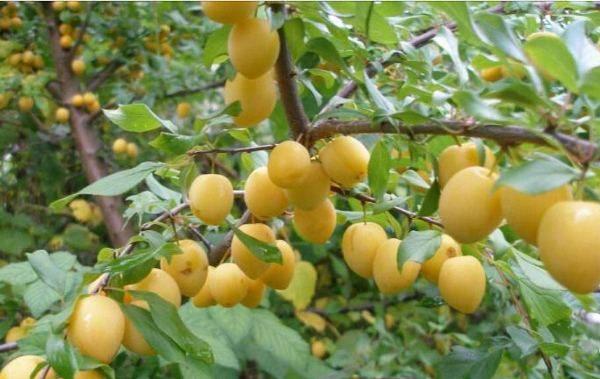
Early varieties are popular with gardeners. Some crops produce fruit as early as July, making them quite common to plant.
Mid-season
These plants produce a harvest in midsummer. Flowering begins relatively late, in mid-spring. The crops begin to bear fruit in the second half of summer. These varieties are distinguished by their resistance to disease and frost.
Late-ripening
These trees begin to bloom in early May, and the harvest ripens in late summer. Late-ripening cherry plums typically store well and withstand long-distance transportation.
How cherry plum is classified by shades
Cherry plums come in a variety of shades. This helps you choose a specific variety.
Yellow cherry plum
To such varieties include Tsarskaya cherry plum, which produces small fruits, each weighing 20 grams. The fruits ripen by early August. They are prized for their excellent taste and transportability. They contain a high amount of sugar and citric acid. The tree is medium-sized and produces fruit in the second year after planting.
Another popular yellow cherry plum variety is Ivolga. It grows to a height of just over 5 meters. The tree produces a regular harvest and is resistant to heat and water stress. The harvest begins in late July.
With red fruits
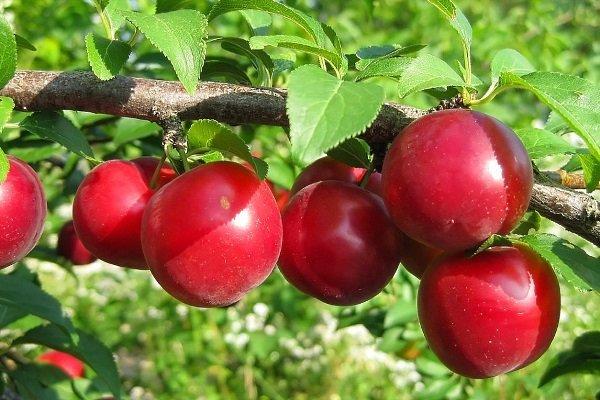
The July Rose variety produces such fruits. They are elongated and weigh approximately 40 grams. The tree is medium-sized and can produce fruit without pollinators. However, with pollinators present, fruiting will be more abundant.
Green
Unripe cherry plums are used in cooking. They are used in garnishes and sauces. These fruits contain a lot of citric acid. Using this seasoning in various dishes improves their flavor and promotes better digestibility.
With purple fruits
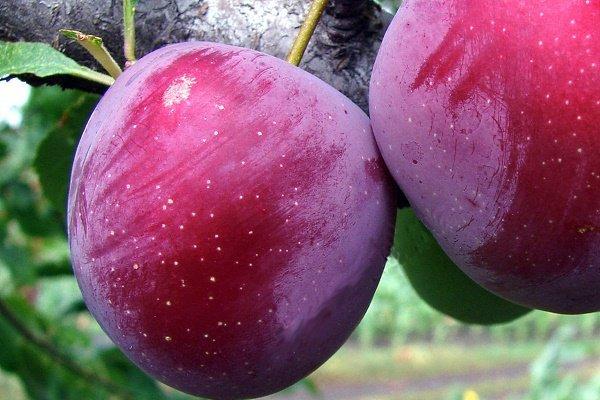
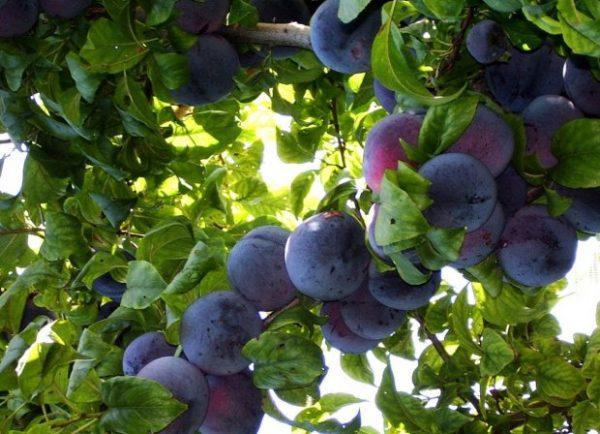
Naydena belongs to this category. It produces large fruits that ripen quite early. Cherry plums begin bearing fruit three years after planting. It produces a rich harvest—one tree can yield up to 40 kilograms of fruit. They are purple in color, with yellow flesh inside. The fruit weighs 35 grams.
The plant is highly resistant to temperature fluctuations. To ensure pollination, other species that bloom at approximately the same time are planted nearby.
Taste characteristics of cherry plum varieties
Cherry plums also vary in taste. They can be sweet and sour or sweet-fruited.
Sweet and sour
One such variety is Soneyka. This small tree grows to a maximum height of 3 meters. It produces yellow fruits with a sweet and sour taste, weighing 40-50 grams. The harvest ripens in early September. It is an early-bearing variety, beginning to bear fruit 2-3 years after planting. It is also characterized by good frost resistance.
Sweet-fruited
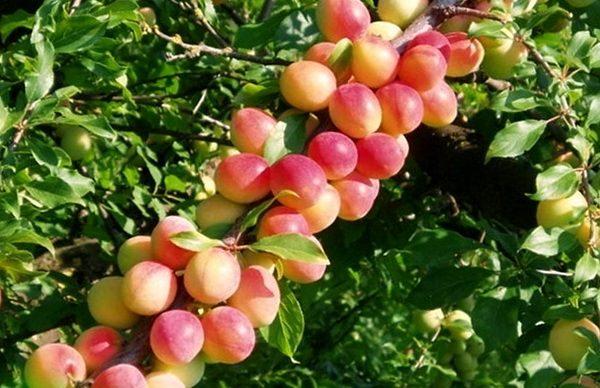
Sweet varieties are especially popular with gardeners. Among them is the Apricot Plum. It produces large fruits that resemble apricots. They are distinguished by their yellow-pink skin and bright, juicy flesh. The harvest can be completed throughout August. This variety tolerates frost well. However, sudden temperature fluctuations can cause a decrease in yield.
Self-fertile crops
Many cherry plum varieties grown in the Moscow region are considered self-sterile. This means that other cherry plum varieties are needed for proper pollination and fruit production. However, self-pollinating plants do exist. These are called self-fertile.
Vetraz-2
This hybrid variety produces juicy and sweet fruit. It is characterized by large berries, reaching 45 grams in weight. The tree easily tolerates cool temperatures and severe frosts. To increase yield, a pollinator is required.
Kuban Comet
This plant is ideal for growing in backyard gardens. It's a small tree that produces a good harvest, which can reach up to 40 kilograms.
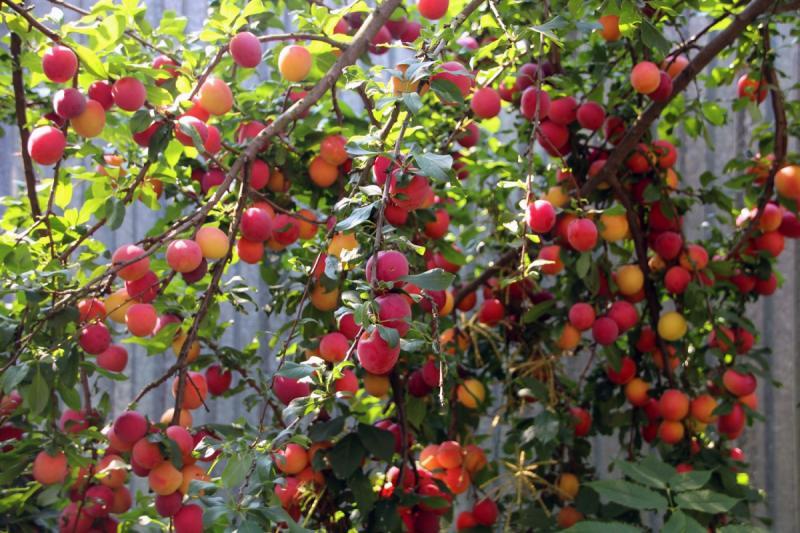
The fruit is characterized by red skin and yellow flesh. Each fruit weighs 28 grams and has a sweet and sour taste. Cherry plums are eaten fresh or used for processing. The pits are difficult to remove.
The plant does not require additional pollination. It is frost-resistant but requires frequent watering.
Winter-hardy varieties
To achieve good results, it is worth choosing varieties that are characterized by frost resistance.
Columnar
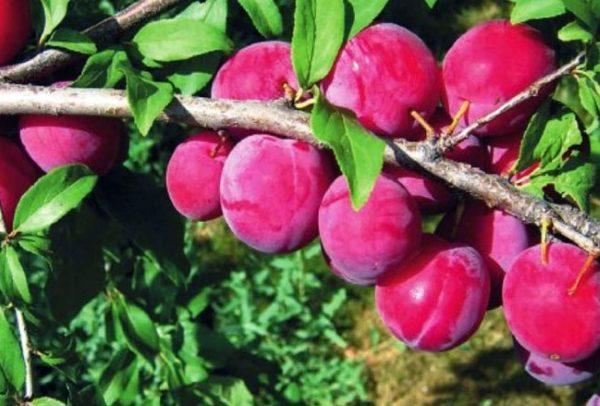
This is the most unique variety. It is characterized by its compact size. The tree grows to a height of no more than 3 meters. The crown diameter is 1.5 meters. The variety is frost-hardy and easily regenerates. Columnar cherry plums are characterized by large fruits, weighing up to 40 grams. They are covered with red skin with a waxy coating. The tree tolerates heavy rainfall well and is not prone to cracking. The fruit has delicious flesh.
A gift to St. Petersburg
This hybrid variety is distinguished by its short trunk and dense crown. The plant produces small fruits, weighing no more than 10-12 grams. The fruits have yellow-orange skin and sweet-tart flesh. The pit is difficult to remove. The tree produces fruit consistently. A single tree can yield up to 60 kilograms of fruit.
Cherry plum ripens fairly early, in early to mid-August. The variety is characterized by excellent frost resistance. The tree quickly recovers from damage. The plant produces fruit after three years. Disadvantages include self-sterility. Ripe fruits often fall off.
Traveler
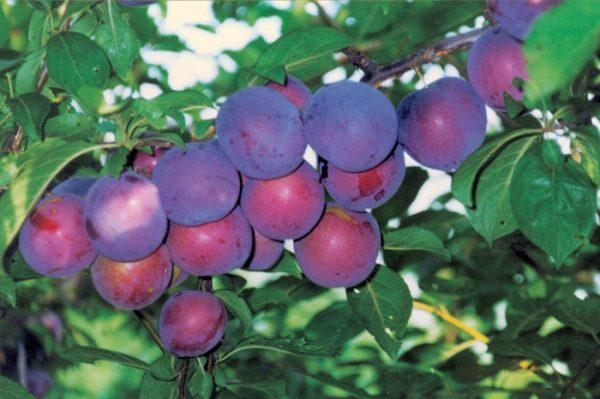
This cherry plum ripens in late July. The medium-sized tree has a round crown. It produces small fruits weighing up to 27 grams. They are covered with a purple bloom and have orange flesh. The flesh is sweet and aromatic.
This variety is characterized by frost resistance and good fruiting. The fruits ripen early. Drawbacks include small fruit size and self-sterility.
Tent
This is a small tree that quickly grows to its desired size. It begins bearing fruit after 4-5 years. Its rounded crown points downward. The tree produces large fruits, each weighing 40 grams. The fruit is characterized by yellow flesh. The fruits are eaten fresh or processed. One tree can yield 35 kilograms of fruit.
The harvest ripens fairly early. The plant is characterized by high frost resistance. It easily tolerates winter frosts and spring temperature fluctuations. Its drawbacks include self-sterility. The tree also has moderate drought tolerance.
Large-fruited
These varieties are very popular with gardeners. They produce large fruits with excellent flavor.
Found
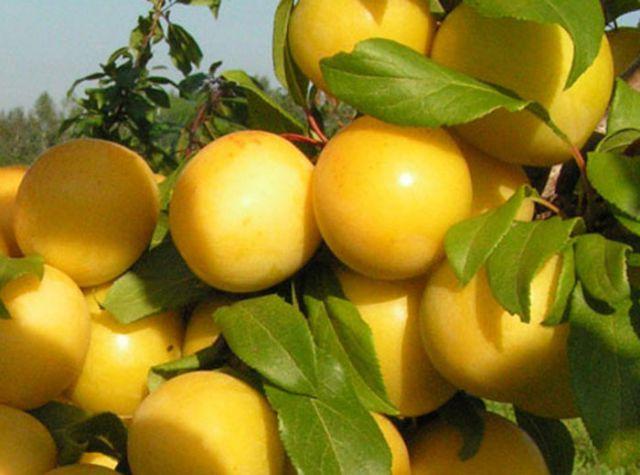
This variety has a mid-season ripening period. The medium-sized tree has a round crown. Fruits weigh 35 grams and are distinguished by yellow flesh. The fruit has a sweet and sour flavor. The plant begins bearing fruit three years after planting. One tree produces 40 kilograms of fruit.
The plant tolerates freezing temperatures in winter and spring fluctuations well. It has moderate drought tolerance. Pollination occurs through other trees.
Huck
This variety is considered mid-season. The tree is characterized by rapid growth. It is considered medium-sized and has a dense crown. The fruits weigh 35 grams and contain yellow flesh. Cherry plums have a sweet and sour taste.
The variety is resistant to subzero temperatures and produces consistent yields. Pollination is required for a good harvest.
Monomakh
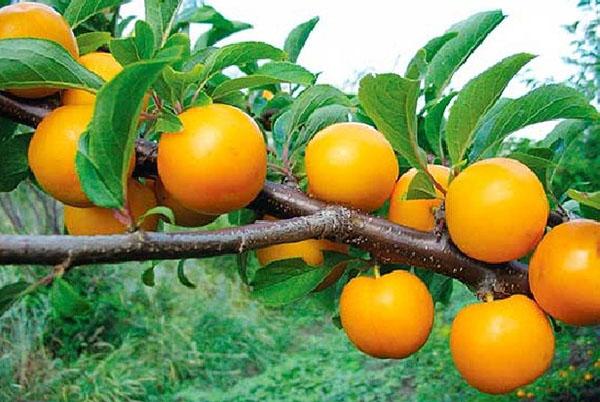
This variety is characterized by small fruits, weighing 30 grams. The plant is characterized by excellent flavor and juiciness. Cherry plums have a distinctive shape. The skin has a purple hue. The harvest can be done quite early.
Popular
For the Moscow region, you can choose popular varieties that are often used by gardeners. This is due to their good yield and excellent taste.
Timiryazevskaya
The tree grows up to 3 meters tall. It has a spreading, conical shape. The leaves are sparsely arranged. The small, egg-shaped fruits have a red skin.
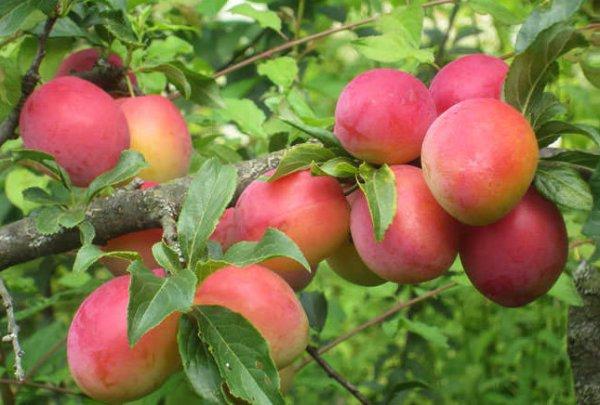
The pulp has excellent flavor. A single tree can yield up to 30 kilograms. Furthermore, the plant requires little care and easily adapts to frost. It is also resistant to fungi.
Early-bearing
This Chinese variety produces fruit in 2-3 years. It has a compact size and produces medium-sized red fruits. The flesh has a delicate flavor. The pit separates easily. It is frost- and wind-resistant. However, pollinators should be planted nearby.
Scythian gold
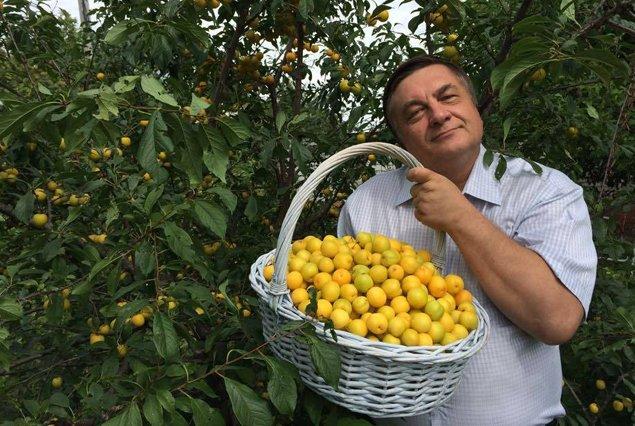
This medium-sized cherry plum has a spreading crown. It is characterized by average yields and is considered self-sterile. The plant produces large fruits, weighing 36 grams. They are covered with yellow skin and have juicy flesh.
Ruby
This small tree is easy to care for and adapts easily to climate conditions. It is resistant to temperature fluctuations. It produces burgundy-colored fruits with yellow flesh inside. The fruits have a sweet taste.
Columnar
This tree is characterized by its compact size, making it suitable for growing in small spaces. The variety is resistant to low temperatures. Large fruits weigh up to 40 grams.
There are many varieties of cherry plums that are approved for planting in the Moscow region. When choosing a specific variety, it's recommended to consider your preferences for fruit flavor and care requirements.
Related posts:
 Rules for growing and caring for cherry plum in open ground, planting and fertilizing
 Description of the Kubanskaya Kometa cherry plum variety, planting and care details
 Description and characteristics of the cherry plum variety Naydena, cultivation technology
 Description and cultivation technology of the Mara cherry plum variety, pollinators
 Simple recipes for making cherry plum jam with and without pits for the winter
 Descriptions of the 20 best cherry varieties for the Moscow region, their planting and care
 Description of the cherry plum variety Zlato Skifov, cultivation and pollinators
 Methods for planting and propagating cherries at home