
- Description and characteristics of plum
- History of selection
- Main characteristics of the variety
- Drought resistance and winter hardiness
- Pollinators
- Traveler
- Nesmeyana
- Vitba
- Asaloda
- Mara
- A gift to St. Petersburg
- Flowering period
- Ripening time
- Productivity and fruiting
- Resistance to diseases and pests
- How to plant correctly
- Requirements for the location
- Preparing the site and the pit
- How to select and prepare planting material
- Planting diagram
- Recommendations for choosing deadlines
- Acceptable and unacceptable neighbors
- Care instructions
- Watering mode
- Top dressing
- Preparing for winter
- Trimming
- Formative
- Regulatory
- Supportive
- Sanitary
- Caring for the tree trunk circle
- Pros and cons of the variety
- Diseases and pests
- Aphid
- Sawfly
- Rodents
- Moniliosis
- Polystigmosis
- Clusterosporiasis
- Thick-legged
- Codling moth
- Harvesting and storage
- Tips from experienced gardeners
Frost-resistant crops are planted in Russia's northern regions, including the cherry plum variety Naydena. This hybrid tree produces sweet and sour fruits, characteristic of an early variety. The plant belongs to the group of garden plums, but is self-sterile. This characteristic gives Naydena versatile culinary qualities. The fruits acquire different shades, as well as sweetness or sourness, from neighboring varieties.
Description and characteristics of plum
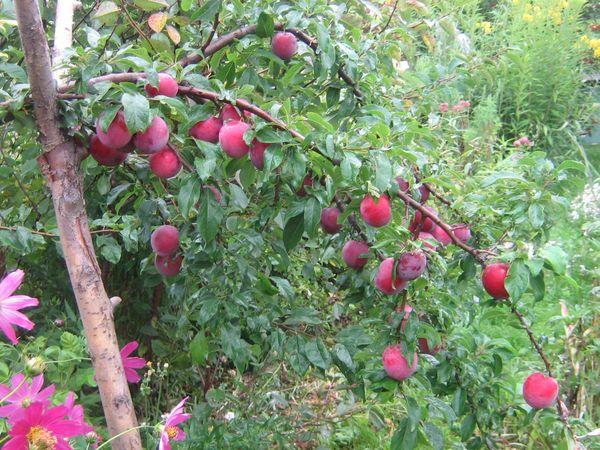
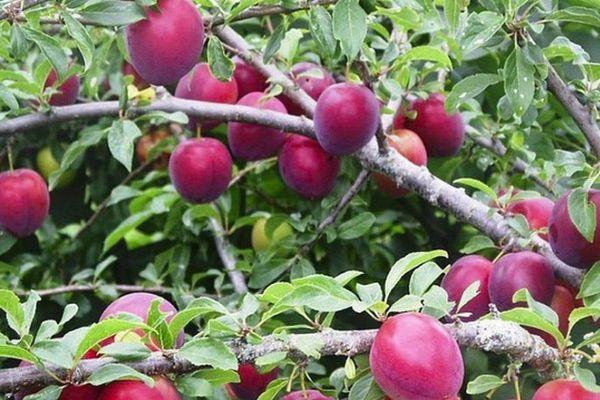
This fruitful tree reaches an average height of 2.5-3 meters. Its ash-gray trunk bears a flat, round crown with organically growing shoots of medium foliage. Each oval leaflet is slightly pointed at the base. Compared to other varieties, the Nayden plum is rather modest in its cut, but its full beauty comes during the flowering and fruiting season.
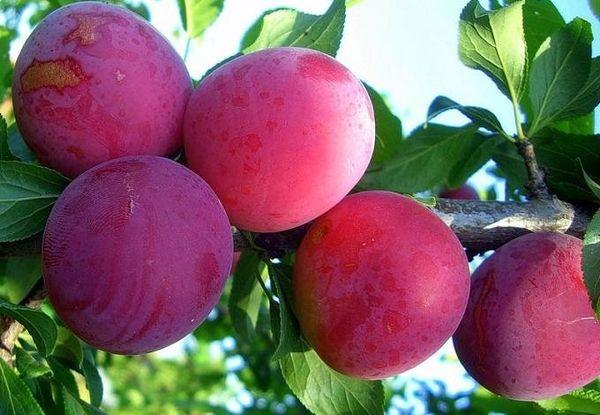
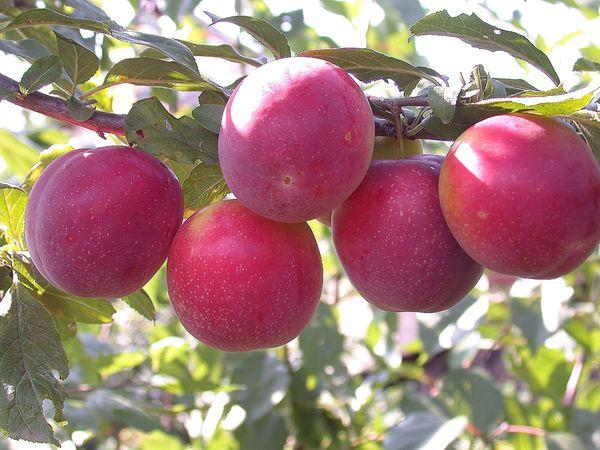
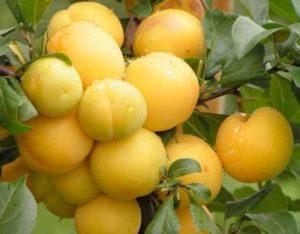
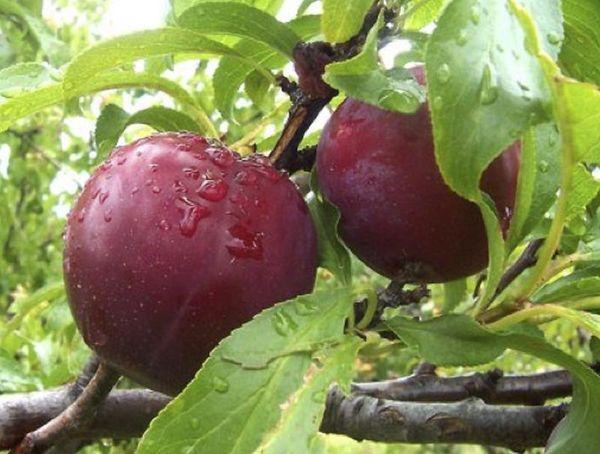
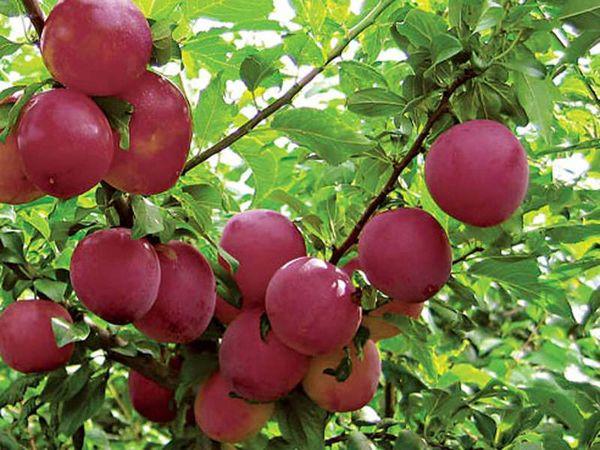
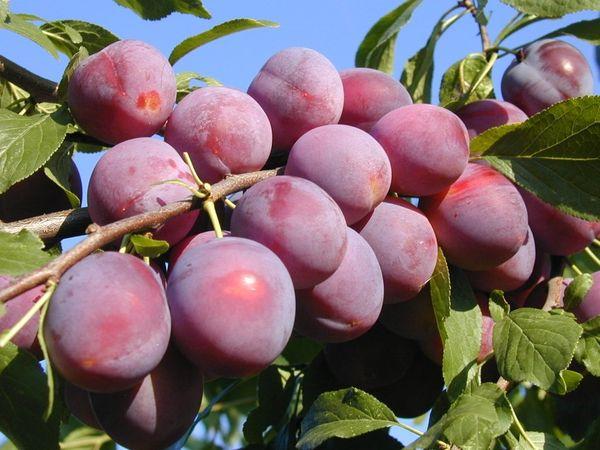
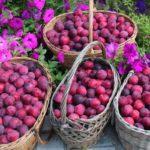
The beautiful fruits of the Naydena variety ripen in dense clusters, each weighing up to 30 grams. The oval fruit has a firm skin and bright orange flesh. The plum has no ventral groove, and its appearance is perfect—a uniform shade of deep burgundy or reddish-violet, shimmering with a waxy coating. The brown stone is firmly set in the center of the fibrous flesh. The fruit has a fruity, warm aroma with notes of sloe and mountain cherry plum.
History of selection
The Nayden cherry plum variety was created in 1986 in Crimea, with the selection stage carried out by Crimean and Belarusian breeders. The experiment was conducted with Chinese Skoroplodnaya and Russian Dessert Plum This resulted in the development of a robust cultivar called Nayden's cherry plum. In 1993, it was added to the State Register and began to spread throughout Russia, Belarus, and Ukraine.
Main characteristics of the variety
The characteristic features of garden cherry plum are its adaptability; it is this aspect that has attracted the attention of gardeners in the northwestern and central regions of Russia. The description of the Naydena variety highlights its strengths of winter hardiness, drought tolerance, and pollination.
Drought resistance and winter hardiness
The Nayden plum variety has increased immunity to low temperatures; its thick, dense bark and extensive root system easily withstand long winters, cold autumns, and late springs. However, despite its winter hardiness, it is weaker in warmer regions. Therefore, its drought tolerance is considered moderate.
Pollinators
Pollination is crucial for the Nayden plum variety. Because it is self-sterile, it produces a high yield at the expense of neighboring plum varieties. These include Puteshestvennitsa, Nesmeyana, Vitba, Asaloda, Mara, and Podarok Sankt-Peterburgu.
Traveler
The Puteshestvennitsa cherry plum is biologically and physiologically similar to the Naydena variety, with the only difference being that it is self-pollinating. It produces early-ripening fruits that are very juicy and sweet. Flowering occurs in the first ten days of April, and the harvest is in mid-July, which is also the same time.
Nesmeyana
The early, self-sterile Nesmeyana variety can be added to Puteshestvennitsa's company. It also relies on pollination and is planted with other varieties to enhance its dessert qualities. Its fruit is characterized by a slight tartness.
The crop is early ripening, so it contains more organic acidity than sugar, which is pleasant to the taste and reduces excessive sweetness.
Vitba
The Vitba plum is related to the Nayden cherry plum. Its origins are linked to the Belarusian Research Institute of Fruit Growing, where a hybrid variety was created by crossing a Chinese plum and a common cherry plum. This garden tree is distinguished by its resistance to fungal diseases, which allows for the full development of shoots and roots. The Vitba boasts neat, round fruits of medium density and tender flesh, from which the pit is easily removed.
Asaloda
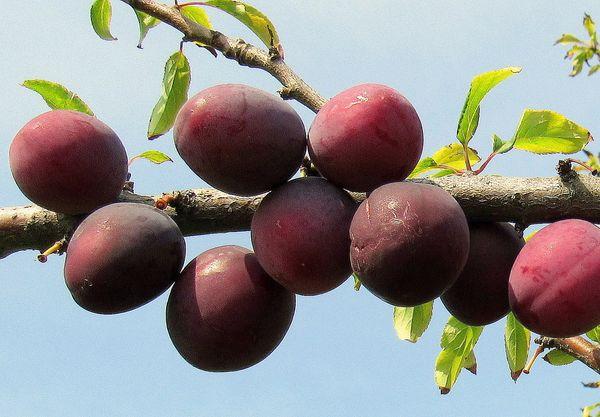
The Asaloda plum variety is self-sterile, producing purple-red fruits with a pleasant flavor. It's similar to the previous varieties due to its rapid growth; after just two to three years, the tree produces fruits weighing 25 grams. Of particular importance is that Asaloda is a winter-hardy and productive plant.
Mara
According to the description, the Mara plum variety is a vigorous plant with a spreading crown and medium-sized fruits weighing 23 g. Mara's flowering period is similar to the Nayden cherry plum, but it differs in fruiting time. This variety is late-bearing, harvesting in September. The fruit has loose flesh and a pleasant sweet-and-sour flavor.
A gift to St. Petersburg
The hybrid plum cultivar "Podarok Sankt-Peterburgu" shares the same roots as the "Naidena." Two plum varieties were used in the Crimean breeding process: the Chinese "Skoroplodnaya" plum and the cherry plum "Pionerka." This garden plum is frost-resistant and produces small fruits weighing 12 g. The fruit's skin is thin, and the flesh is pleasantly sweet and tart; it is often used to make preserves and jams.
Flowering period
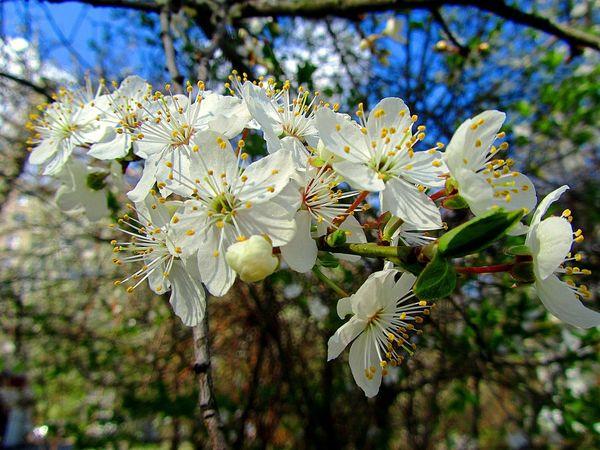
Gardeners report that the Nayden cherry plum begins blooming in the first ten days of April. During this period, the crown is covered with white flowers with rounded petals. A stamen with a bright yellow anther is visible in the center—the harmonious blooming lasts for about eight days. Remarkably, the leaves during this period seem to wait their turn, which arrives a little later.
Ripening time
The growing season lasts 2-3 years, after which the plum is ready to bear fruit. By mid-July, the fruits acquire an appetizing shape, the flesh is juicy, and the skin tightly protects all the nectar. They cling tightly to the branches and rarely fall off. Ripening continues until September.
Productivity and fruiting
A single tree yields 60-100 kg of whole fruit, depending on the region: southern regions have more time to ripen, while northern regions have less. If the harvest isn't picked on time, the fruit becomes overripe, the stems lose their firmness, and the plums lose their appearance and fall off.
Resistance to diseases and pests
The health of garden cherry plum depends on its inherent resistance to fungal diseases and pests. Naidena has high rates. The variety has a strong immune system, and early spraying makes it easier to fight butterflies and beetles that lay their larvae on the leaves.
How to plant correctly
The fruit tree is undemanding to planting conditions, but certain agricultural practices should be taken into account.
Requirements for the location
Plum saplings thrive in a variety of soils, but planting them in areas with waterlogged soil is not recommended. They are best planted in soil with a small amount of clay and sand. When planting a garden, the Naydena cherry plum should be planted on a south-facing slope, with the north side sheltered by trees or a white wall. This will protect the plant from strong winds and drafts and provide it with sufficient light and warmth.
Preparing the site and the pit
The plum tree's root system isn't very extensive; digging a hole 80 cm deep and 70 cm in diameter is sufficient. If the soil is loamy, prepare the hole by digging up the soil and filling it back in. Cover it with thick, breathable fabric. Leave it there until spring.
How to select and prepare planting material
High-quality seedlings are sold in the fall; their lifespan is 1-2 years. You need to select based on the root system and crown; the trunk should not be dry or cracked. Moist roots indicate the plant is in good condition. After purchase, planting material should be stored in a basement with a temperature of 0 to 5 degrees Celsius throughout the winter.
Planting diagram
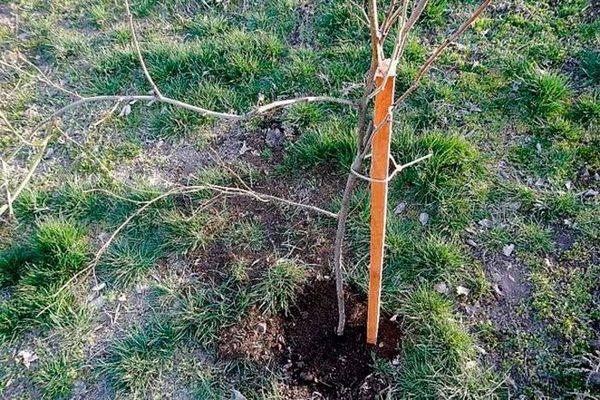
In the spring, open the hole and dig out the soil to allow for loose planting. Form a mound at the bottom and carefully distribute the young plant's roots across it. Fill with soil, compact it, and water generously with warm water. After a while, loosen the soil around the cherry plum.
Recommendations for choosing deadlines
In southern regions, where winters are mild and there are no severe frosts, it is recommended to plant plum trees in the fall—in October. In northern climates, the best time is spring—in April—during which the roots will adapt and strengthen before the cold weather sets in.
Acceptable and unacceptable neighbors
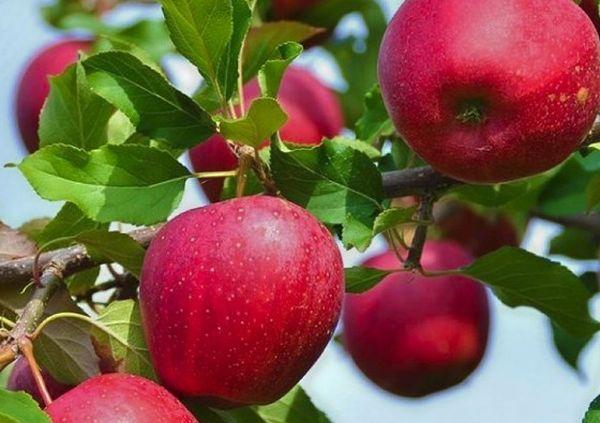
If you plan to plant other crops in the garden, the Nayden cherry plum thrives alongside currants, gooseberries, and apple trees. It won't thrive with other plants.
Care instructions
It is not advisable to neglect the care of the Nayden cherry plum, as the growing season, fruit quality, and lifespan of the plant depend on it.
Watering mode
In hot summers, plum trees need to be watered twice a month; in cool summers, only once. For more gentle care, you can preheat the water in the sun—two buckets will suffice.
Top dressing
Before planting, the soil was supplemented with beneficial compounds, so additional fertilizing is not recommended. After the first harvest, apply fertilizers in the spring and fall. Organic fertilizers are used in both seasons; mineral and complex fertilizers are suitable for spring.
Preparing for winter
The Nayden cherry plum variety requires pruning and preventative care. Dead and dry areas are removed from the tree's surface, and the trunk and branches are whitewashed twice. Young cherry plum trees are covered with burlap or heavy paper.
Trimming
According to the description of the Nayden plum, the tree is short with a medium crown, requiring little pruning. Pruning is done to ensure uniform development of all parts—roots, trunk, leaves, and fruit. With numerous shoots and abundant foliage, yield will be the first to suffer.
Formative
To give the crown of the Nayden cherry plum variety an organic, "bowl"-like shape, its main shoots are pruned over the course of 5 years, in March.
Regulatory
If shoots or suckers begin to bend inward, they are pruned in March. If the cherry plum crown develops without excessive density, then no further pruning is necessary.
Supportive
In June of each year, young shoots are cut back by 10 cm, this stimulates them to branch out, resulting in the formation of more fruitful buds.
Sanitary
It's important to clear the plum tree trunk of dry, broken, and weak branches before winter, at the end of October. Repeat the procedure in the spring.
Caring for the tree trunk circle
Additionally, care is taken around the tree's trunk, periodically digging it up. This should be done carefully, as the roots of the Nayden cherry plum are very twisted. Two days after watering, mulch the area, and place sawdust or hay around it to maintain moisture, enrich the soil, and prevent weed growth.
Pros and cons of the variety
The plum variety Alycha Nayden has many advantages, including:
- early ripening variety;
- abundant flowering;
- short growing season - fruiting in 2-3 years;
- high frost resistance;
- good yield;
- beautiful fruits of uniform ripening;
- universal taste qualities.
The disadvantages of the Nayden plum include:
- average drought resistance;
- demands on the site;
- self-sterility.
Diseases and pests
Fungal diseases damage the bark, leaves, and shoots of the Nayden cherry plum variety. In addition to diseases, garden crops are also attacked by pests.
Aphid
Plum aphids are a pest that infest the lower leaves of plum trees. To treat these areas, use solutions such as "Karbofos" or "Sumithion."
Sawfly
A worm that feeds on inflorescences and fruits is called a sawfly. This pest can be controlled with Cyanox, Rogor, and solutions of Karbofos or Chlorophos. Spraying is done before flowering.
Rodents
Rodents feed on the roots and trunks of the Nayden cherry plum, most often in late fall and winter. To protect the fruit tree, its lower part is covered with straw, paper, spruce branches, or scraps of fabric soaked in creolin.
Moniliosis
In case of moniliosis, the plant is sprayed with fungicides, and the affected areas are removed: stems, leaves, bark.
Polystigmosis
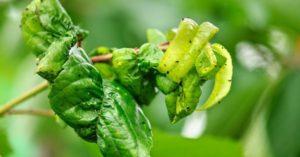
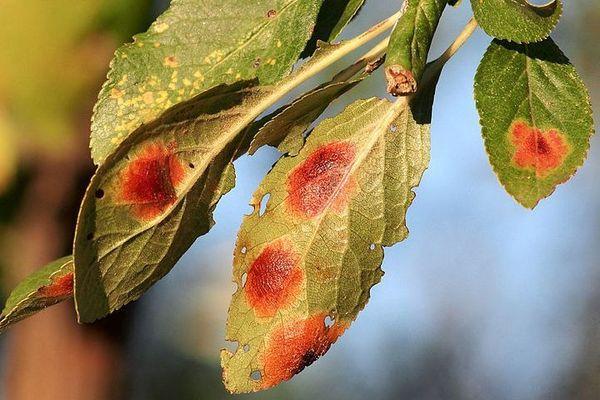
Polystigmosis affects cherry plum leaves, causing burnt spots to appear. Fungicides are used for treatment or prevention, with spraying recommended from the highest shoots down to the lowest.
Clusterosporiasis
To prevent clasterosporium, garden plums are treated with Bordeaux mixture.
Thick-legged
A fly-like insect damages the pits of the Nayden plum variety. Mass attacks by the plum borer occur a week after flowering. During this period, all parts of the plum tree should be sprayed with insecticides.
Codling moth
Insecticides also help against codling moths, which feed on leaves and fruit. This insect is first a larva, then a caterpillar, and then a butterfly.
Harvesting and storage
The Naidena plum harvest should be timely; the juicy fruits are used to make desserts and preserves for the winter. When fresh, it can be stored in the refrigerator for up to two weeks.
Tips from experienced gardeners
If the soil is too clayey, add 10 cm of gravel, expanded clay, or brick fragments to the bottom. Separately prepare additional soil from sand, black soil, and humus and transfer it to the hole. Spread 300 g of wood ash and superphosphate on top, and mix everything thoroughly.
The Nayden plum variety doesn't like constant fertilization or frequent watering, so experienced gardeners recommend choosing preventative measures based on the soil fertility and climate of the region. The tree also appreciates pre-winter care: pruning, removing weeds and rotten fruit, and digging.
Related posts:
 Description and cultivation of the 15 best cherry plum varieties for the Moscow region, planting and care rules
 Description and characteristics of the Yakhontovaya plum variety, pollinators
 Description of the Renklod plum varieties and cultivation technology
 Rules for growing and caring for cherry plum in open ground, planting and fertilizing
 Description and characteristics of the 30 best yellow plum varieties, planting and care
 Description of the Kubanskaya Kometa cherry plum variety, planting and care details
 Description and cultivation technology of the Mara cherry plum variety, pollinators
 Description and varieties of plum variety Ternovka, planting and care technology