
- Selection of the July Rose variety
- Pros and cons of fruit crops
- Features of cherry plum
- Size and annual growth of a tree
- Fruiting
- Flowering and pollinators
- Ripening time and harvest
- Tasting evaluation and scope of application of fruits
- Susceptibility to diseases and parasites
- Resistance to low temperatures and drought
- How to plant a tree on a plot
- Required soil composition
- Selecting and preparing a site
- Dimensions and depth of the planting hole
- Timing and rules for planting fruit crops
- Subtleties of care
- Watering
- Top dressing
- Crown pruning
- Sanitary
- Regulatory
- Supportive
- Loosening and mulching the soil
- Seasonal treatments
- Methods of reproduction
- Gardeners' reviews of the July Rose variety
The July Rose cherry plum is very popular among gardeners. This variety is characterized by excellent yields and a pleasant taste. To achieve success in growing this plant, it is essential to provide it with high-quality and comprehensive care. This should include timely watering, fertilization, and pruning. Treating the trees for diseases and pests is also crucial.
Selection of the July Rose variety
This cherry plum variety was developed relatively recently, in 1999, at the Crimean Experimental Breeding Station. The plant inherited most of its characteristics from the Kubanskaya Kometa variety and the Chinese plum. Its popularity is due to its high yield and ease of care.
Pros and cons of fruit crops
The advantages of this variety include the following:
- early ripening of fruits - this occurs at the end of June or the beginning of July;
- high yield – cherry plum produces up to 10 kilograms of fruit;
- annual fruiting;
- quick adaptation to weather conditions;
- frost resistance;
- disease resistance;
- early onset of fruiting – the crop produces a harvest already in the 3rd year;
- high quality fruits.

However, the plant also has certain disadvantages. These include:
- uneven ripening of fruits;
- average drought resistance.
Features of cherry plum
This hybrid variety is highly productive and develops quickly, making it so popular among gardeners.
Size and annual growth of a tree
This medium-sized plant is characterized by a smooth trunk and a medium-density crown. The shoots are horizontal and range in diameter from 25 to 35 millimeters.

Fruiting
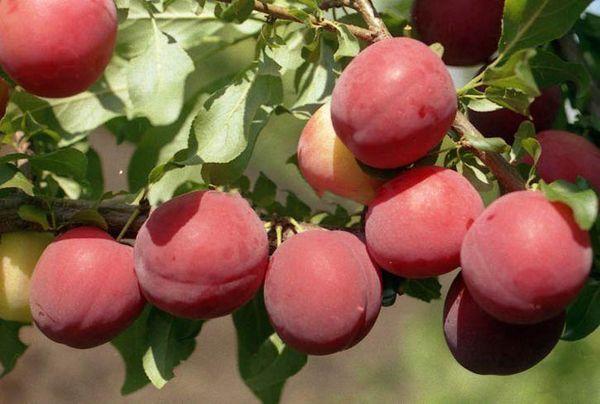
The plum bears fruit on short, clustered branches. The fruits are ovoid and weigh about 30 grams. They are covered with a very light waxy coating on the outside. The skin is elastic and difficult to separate from the flesh. The skin is red. Inside, there is yellow flesh of medium density.
Flowering and pollinators
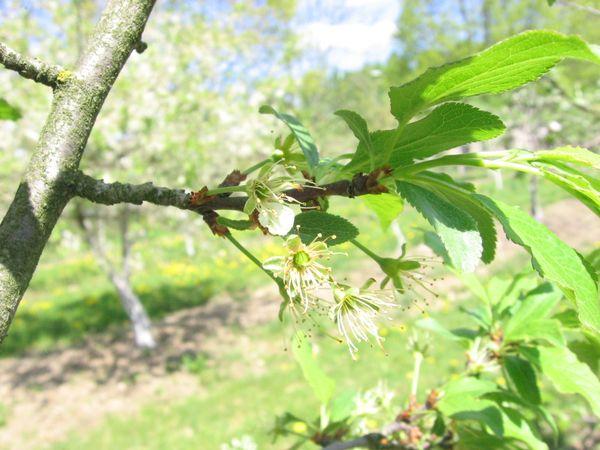
The plant begins blooming quite early, in mid-April. The plant is considered self-sterile. To produce a normal harvest, it requires pollinators. Cherry plum varieties such as Naydena or Puteshestvennitsa can provide this role.
Ripening time and harvest
The fruits of this variety ripen in late June. The tree is highly productive. At eight years of age, it produces up to 10 kilograms of fruit.
Tasting evaluation and scope of application of fruits
The fruits are eaten fresh. The tasting score is 4.4 points. Canned fruits are acceptable.
Susceptibility to diseases and parasites
Cherry plum has strong protective properties. It is virtually immune to disease and parasite attacks.
With proper care, the plant's lifespan reaches 15 years.
Resistance to low temperatures and drought
The tree tolerates short-term drought well. It is considered a moisture-loving tree. However, excess water can encourage aphid infestations and disease.
The plant is considered frost-resistant. It can withstand temperatures as low as -36 degrees Celsius. It also withstands adverse weather conditions, including rain, wind, and snow.
How to plant a tree on a plot
To ensure that the plant develops normally and produces a rich harvest, it is important to carry out planting work correctly.
Required soil composition
The crop requires loose soil that is neutral or slightly acidic. Avoid high groundwater levels. Avoid planting cherry plums in waterlogged areas.
Selecting and preparing a site
Before planting, it's important to choose the right location. A south-facing slope is best. A southwest-facing slope is also suitable. However, the tree should be protected from the north by a building or fence.

Dimensions and depth of the planting hole
The hole should be 70-80 centimeters in size. Its diameter should be the same or slightly larger.
Timing and rules for planting fruit crops
Planting should be done in the spring, before the sap begins to flow. If the seedling has a closed root system, it should be planted between April and October.
To carry out planting work, do the following:
- The seedling should be dug up or taken out of the basement and soaked in water for a couple of hours. A growth stimulant can be added to the water.
- Remove some soil from the hole to accommodate the root system.
- Create a mound in the center. Drive a wooden stake into the mound 10 centimeters apart. The stake should be 1 meter high.
- Place the seedling in the hole. The root collar should be at the surface, and the roots should be evenly distributed along the slopes.
- Sprinkle with soil and compact.
- Tie the tree to the support.
- Water generously.

Subtleties of care
For the normal development of the culture, it is necessary to provide it with complete and comprehensive care.
Watering
This variety has limited drought tolerance. Therefore, it requires regular watering. This is typically done every 3-4 weeks. The soil should be moistened to a depth of 30 centimeters. Excess moisture will negatively impact the plant's development.
Top dressing
Fertilizing is recommended 3-4 years after planting, when the soil's nutrients begin to deplete. In the spring, trees require nitrogen supplements. Potassium fertilizers can be applied in the summer. Phosphorus fertilizers are used in the fall.
Every three years, it's acceptable to apply organic matter. Manure, compost, or humus are considered excellent fertilizers. It's recommended to evenly distribute these products around the tree trunk. Liquid concentrates are also acceptable. These are prepared using manure, cow dung, and fresh grass.
Crown pruning
It is recommended to prune the tree twice during the growing season. In the spring, remove 20 centimeters of lateral shoots. In the fall, it is recommended to remove diseased branches. At eight years of age, cherry plums require rejuvenation pruning. This will help replace old branches with new ones.

The cut areas are treated with garden pitch. This will prevent pathogenic microorganisms from entering.
Sanitary
This procedure is performed in late October or early November. It is recommended to remove any dry or damaged shoots. They should be burned.
Regulatory
This type of pruning is performed in late March or early April. It's done before the buds open. During this procedure, branches that grow inward are removed. Crossing shoots should also be trimmed back.
Supportive
Young trees are pruned by 15 centimeters annually. This helps prevent frost damage. Dead branches should also be removed. Thinning the crown is also important, as it allows the fruit to receive air and sunlight.

Loosening and mulching the soil
After each watering, it is recommended to loosen the soil and cover the tree with mulch. Hay or compost can be used for this purpose. Well-rotted sawdust can also be used. If beetles or other insects are found in the mulch, they should be destroyed and the soil allowed to dry. The mulch layer should then be replenished.
Seasonal treatments
To prevent cherry plum from becoming infected with diseases and prevent attacks by harmful insects, it is worth following these steps:
- Before flowering and for two weeks afterward, treat the crop with Bordeaux mixture. Hom is also used for this purpose.
- In the spring, before the sap begins to flow, the cherry plum is treated with a ferrous sulfate solution. The concentration should be 3%.
Fallen leaves and other debris should not be left under trees over the winter. Timely pruning is also crucial. This helps prevent attacks by harmful insects and the development of diseases.

Methods of reproduction
Cherry plums can be propagated in a variety of ways. Seed propagation is rarely used, as it's considered quite labor-intensive and requires specialized knowledge. Cherry plums are most often propagated by cuttings or grafting. These are relatively simple procedures, accessible even to novice gardeners.
Gardeners' reviews of the July Rose variety
Numerous reviews of this cherry plum variety attest to its popularity:
- Inna: "I've been wanting to plant cherry plums in my garden for a long time. I chose the July Rose variety, and I'm very happy with it. I got a medium-sized tree. It produces a very abundant harvest, and it continues to bear fruit for a month. We eat the cherry plums fresh and add them to compotes."
- Anastasia: "I used to be a bit of a sucker for cherry plums. However, when I planted the July Rose, I changed my mind. This variety produces delicious, sweet fruits with a hint of tartness. The whole family eats them and uses them for preserves."
The July Rose cherry plum is highly productive and produces very tasty fruits. To achieve success in growing this plant, it is important to strictly follow basic agricultural practices.
Related posts:
 Methods for planting and propagating cherries at home
 The best grape varieties for growing in the Urals, planting and care rules in summer
 Description and cultivation of the 15 best cherry plum varieties for the Moscow region, planting and care rules
 Growing and caring for hazelnuts in open ground, rules for planting hazelnuts
 Conditions for growing mandarin at home and rules for caring for the tree
 The best methods for growing grapes from seeds at home
 Peach tree care and agricultural secrets, pest control
 Descriptions of the 20 best cherry varieties for the Moscow region, their planting and care