
- What is this method of reproduction used for?
- Breeding a new variety
- Rootstock
- For general education
- Growing conditions at home
- Water temperature
- Loosening
- Fertilizer
- Choosing a location
- Diseases and pests
- Suitable varieties
- For preservation
- For trading
- For decoration
- For food
- For wine
- Stages of seed selection
- Checking the planting material by touch
- Visual inspection
- Testing in water
- How to prepare for planting
- Substrate
- Plastic bag
- Temperature
- Soil
- Stages of cultivation
- Landing
- The emergence of sprouts
- Transplantation
- Accelerating growth
- Transplantation into open ground
- Distance between cuttings
- Soil and fertilizer quality
- Pegs
- Aftercare
- Thinning
- Watering
- Top dressing
- The first flower stalks
- Sanitary pruning
- Tips and advice from experienced gardeners
Many gardeners ask how to grow grapes from seed. This isn't the most common method of propagating grapes. It doesn't preserve the varietal characteristics of the parent plant. Therefore, this method is primarily used for breeding. Sometimes, gardeners experiment with this method or grow the plant as a rootstock. In any case, only a comprehensive approach will achieve good results.
What is this method of reproduction used for?
Grapes are most often propagated using seedlings or cuttings. Seed propagation presents a number of challenges, making it much less common.
When planting seeds, it is important to be aware of the potential risks. It's impossible to predict in advance what qualities a new crop will acquire. There's a chance the berries won't be as large as expected. Their flavor may also deteriorate.
Breeding a new variety
Growing grapes from seed can solve many problems. This procedure helps develop new, fruit-bearing varieties, which is why it's often used by breeders.
Rootstock
Quite often, grapes are grown from seed as rootstocks. The resulting vine can then be grafted onto a productive variety.
For general education
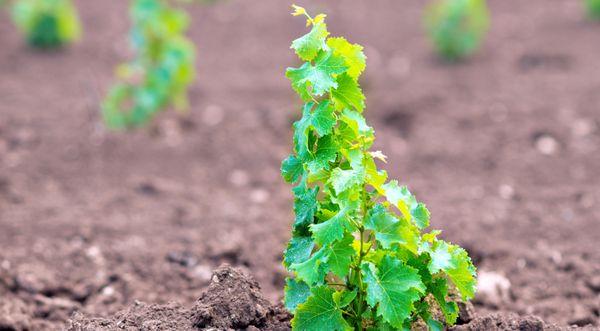
Sometimes a gardener wants to feel like a plant breeder. In this situation, they grow grapes from seeds for overall development. For this purpose, it is recommended to plant several seeds at once.
Then, it will be possible to compare the resulting plants for resistance to diseases and pests, evaluate their resistance to frost and dry weather, and determine yield parameters and the quality characteristics of the berries.
Growing conditions at home
To achieve success in growing grapes from seed, high-quality care is essential. This care must be comprehensive and include a specific set of steps.
Water temperature
The seedlings require regular watering. It's important to ensure the soil isn't too wet or too dry, as this will negatively impact subsequent plant development. To prevent disease and ensure normal growth, use room-temperature water.
Loosening
To provide the plant with nutrients and improve oxygenation, the soil should be loosened regularly. It is recommended to loosen the soil in the top layer. This will help prevent damage to the plant.
Fertilizer
Every plant requires timely fertilization. Proper fertilization helps ensure normal plant development and improve crop yields.
Choosing a location
Choosing the right site for planting grapes is crucial. A sunny location protected from drafts and north winds is ideal. It is recommended to plant grapes in rich black soil. However, waterlogged soils are strictly prohibited, as the grapes will not thrive in such conditions.
Diseases and pests
It's important to ensure the bush isn't affected by fungal infections. If symptoms of dangerous problems appear, take immediate action.
Grapes often suffer from attacks by harmful insects. Spider mites are considered one of the most dangerous pests. They cause the destruction of leaf cells, which disrupts photosynthesis. As a result, young plants cannot develop normally.
Suitable varieties
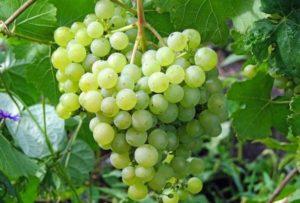
To select the optimal variety, first determine the intended use of the berries. The fruits can be used to make jam, compotes, and wine. They can be eaten fresh or sold. Berries are often used as a garnish for dishes. The variety chosen depends on the intended use of the fruit.
The region's climate is also important. When choosing a variety, consider the soil composition. Providing the plant with the right conditions and growing it in the right location will yield good results.
Take a look Also
When choosing a variety to grow, gardeners consider yield parameters. The most productive plants include the following:
- Wax;
- Northern;
- Laura;
- Victor;
- Mascot;
- Codryanka.
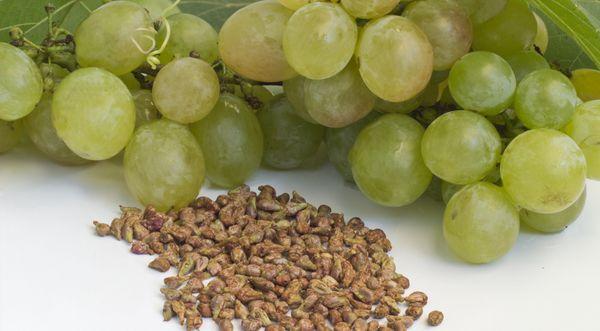
It's recommended to use new, early-ripening varieties for seed. Hybrids that thrive in local conditions are also acceptable. These varieties are considered preferable because breeders have already worked on them, making them more resistant to frost and other climatic conditions.
When choosing a hybrid, it's important to consider its origin. European varieties are characterized by low germination rates. Amur and American varieties are superior in this regard.
It's best to use grape seeds from grapes grown locally. Fruits brought from southern regions will bear less fruit in central Russia.
Grapes grown from seed typically bear fruit only 4-5 years after planting. However, some varieties can bear fruit the following year. It's important to note that such berries are unlikely to be suitable for consumption or winemaking.
For preservation
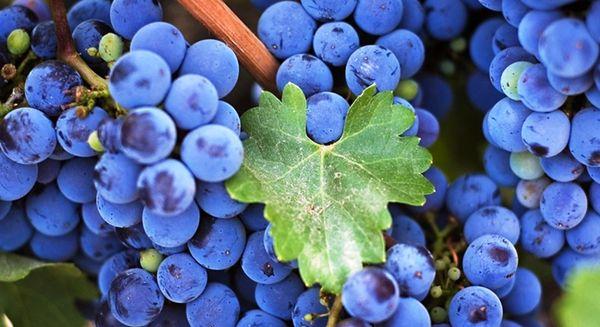
For preserves, it is acceptable to use varieties with dense and aromatic fruits. According to many housewives, the best option is considered Isabella grapes.
For trading
For sale, it's worth growing varieties that are easy to transport and have excellent commercial qualities. These include Talisman grapes or Tamerlane.
For decoration
For ornamental purposes, varieties with large, beautifully shaped fruits are used. Tamerlan and Talisman varieties are acceptable for this purpose.
For food
Berries with a sweet flavor and few seeds are ideal for fresh consumption. Good choices include the Tamerlan and Talisman varieties.
For wine
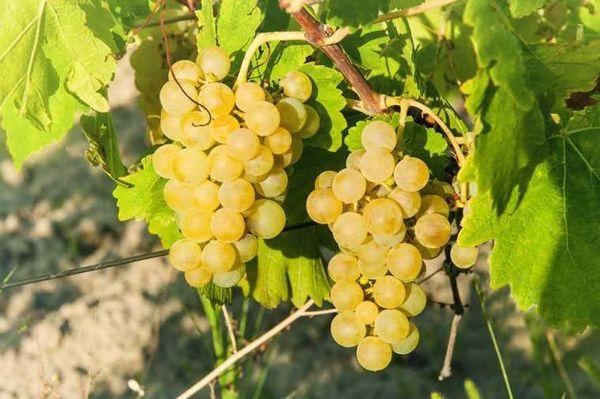
Special varieties with distinct aromas are used for winemaking. Good options include Bianca and Regent. Saperavi and Chardonnay are also popular choices.
Stages of seed selection
After choosing a variety, it's time to obtain seed. This can be purchased at specialty stores or prepared yourself.
Checking the planting material by touch
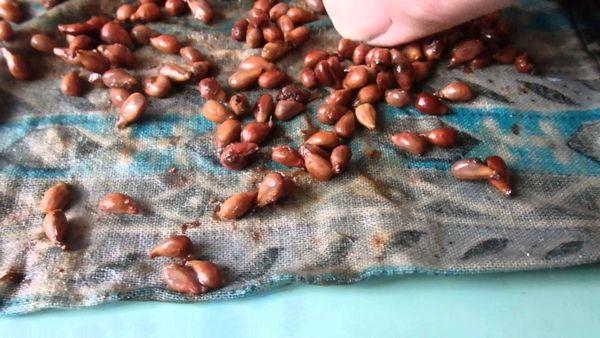
When preparing grape seeds for planting yourself, it's important to ensure their quality. First, check the seeds by touch. High-quality seeds should feel firm.
Visual inspection
Next, it's recommended to carefully inspect the seeds. Pay particular attention to their color. Suitable seeds contain a white liquid under the shell.
Testing in water
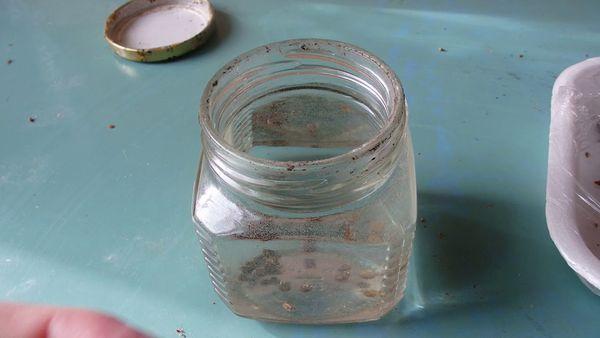
At the next stage, it is recommended to submerge the planting material in water. All unripe seeds will float to the surface. Only those seeds that sink to the surface are allowed to be used for planting.
How to prepare for planting
After checking the seeds for suitability for planting, it's recommended to rinse them. To do this, soak the seeds in water and leave them for 24 hours. This causes the seeds to separate. This process is called stratification. Germination can be inhibited or stimulated.
If you plan to plant in a month or more, it's recommended to place the seedlings in a cool, damp location. To slow seed development, keep them in the ground over winter. When growing grapes indoors, on the contrary, the process needs to be accelerated. Various methods can be used for this.
Substrate
This term refers to an airtight container containing a large number of moistened wipes. Sand or moss can also be used for this purpose. Peat moss is ideal. It has antifungal properties and helps combat mold quickly.
Plastic bag
Place the seeds in a bag and spread them out over the entire surface. Sprinkle the seeds with a special substrate. Its thickness should not exceed 15 millimeters. It is recommended to store the bag in a cool, humid place.
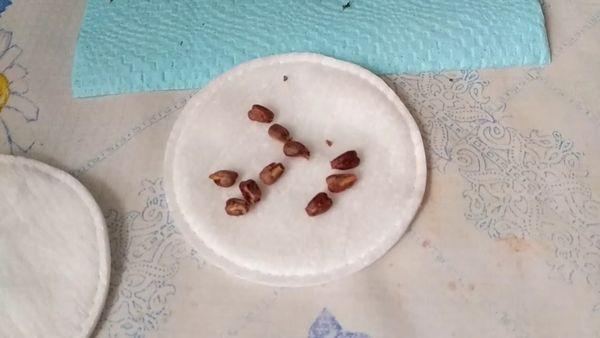
The best option is a refrigerator. It's recommended to store the seeds in this environment for 90 days. However, placing the bag in the freezer is strictly prohibited. It can only be placed on a shelf.
The seeds should be removed for planting in early March. They should be planted in special containers, one at a time.
Temperature
To speed up grape germination, it's important to provide the right temperature. At night, the temperature shouldn't drop below 15 degrees Celsius. To ensure the required conditions, place the seeds in a greenhouse or use special heating mats.
Soil
When growing grapes in a pot, certain conditions must be observed. Overwatering the soil is strictly prohibited. If you recently watered the plant but the soil has dried out, using a sprayer is recommended.
Sprouts will appear in approximately 14-56 days. Experts advise constantly monitoring the development of culture. It is permissible to move the bushes to a new location when they reach 8 centimeters in height.
To make the plant stronger and more frost-resistant, it's recommended not to move the pots outside prematurely. This should be done when the bushes reach 30 centimeters. Furthermore, the plant should have strong roots. It's also important that the stems have at least six leaves.
Stages of cultivation
To successfully grow grapes from seed, it's important to follow a number of recommendations. It's crucial to provide the crop with comprehensive care.
Landing
To germinate the seeds, it's recommended to plant them in fertile soil. A nutrient-rich substrate is easy to make yourself. It should include humus and sand. Mix these ingredients in equal parts.
Fill the container with potting soil and plant it into the soil to a depth of 1 centimeter. It's recommended to place the pot near a window. Grapes need adequate light.
The emergence of sprouts
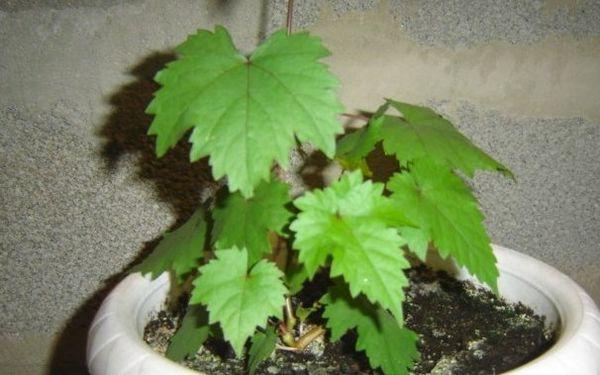
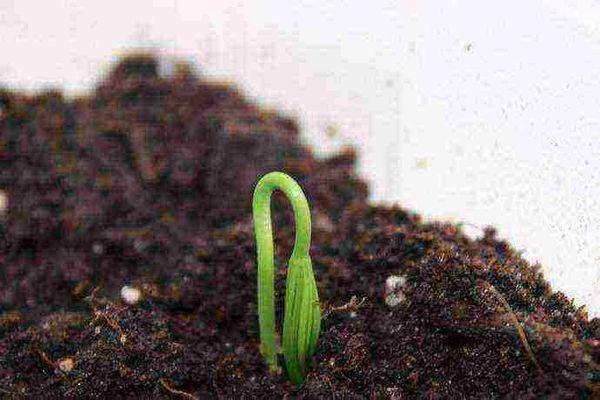
In appearance, the seedlings resemble pepper sprouts. They require high-quality and comprehensive care. This includes timely soil moisture and loosening. Proper fertilizing and pest control are also crucial. It's worth noting that spider mites pose the greatest threat to grapes.
Transplantation
At the end of May, it's recommended to transplant the young vines into more suitable containers. These should be wide enough. The transplanted plants should be moved to a balcony. Over the summer, the grapes can grow up to 2 meters in height.
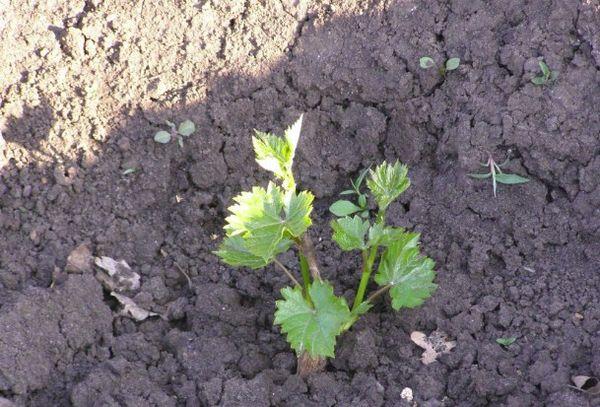
With the arrival of autumn, the shrub can be transplanted into the garden. The plant can be planted immediately, but it needs to be hardened off first.
To do this, take the potted plant outside. Gradually increase the time. Initially, leave the plant outside for half an hour, then for 1 hour, 2 hours, and so on. This will help the plant adapt to the climate.
Accelerating growth
To ensure the plant thrives, it's recommended to provide it with the necessary nutrients. Nitrogen is responsible for the active growth of shoots and leaves. Fertilizers containing this nutrient should be applied in early March. This stimulates the growth of green mass. It's important to note that nitrogen is found in urea and ammonium nitrate.
In summer, grapes don't require fertilizer. In autumn, nitrogen fertilizers are prohibited. During this period, the bush prepares for dormancy. Fertilizing can cause new shoots to emerge. This will prevent the grapes from entering dormancy and may cause frost damage.
During the flowering period, crops require phosphorus. In the fall, plants require potassium fertilizers. These help strengthen the plant's immune system, significantly increasing its frost resistance. Copper-containing fertilizers increase the plant's resistance to climatic factors and have a negative impact on the plant's development.
Transplantation into open ground
When transplanting crops into open ground, certain recommendations must be followed. Choosing the right site is crucial. The crop requires adequate light, so planting it in the shade is not recommended. The planting pattern, soil composition, and timely fertilization are also crucial.
Distance between cuttings
It's recommended to space the cuttings 2.5 meters apart. The soil needs to be well-drained. If it contains a lot of clay, add sand, compost, or other drainage materials. To avoid waterlogging, it's recommended to raise the bed.
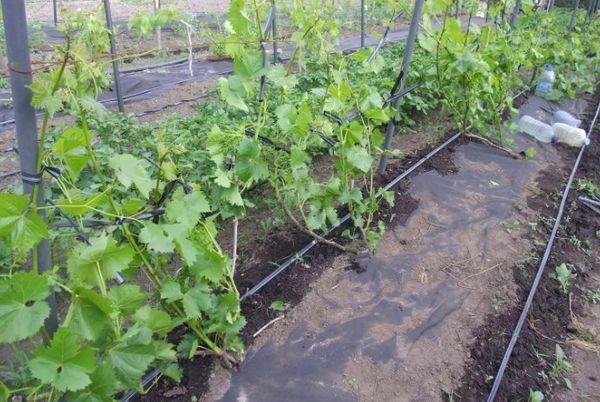
Before planting, it is recommended to test the soil for pH. This value is determined by the plant variety. American crops require pH values between 5.5 and 6, hybrids between 6 and 6.5, and European varieties between 6.5 and 7. Depending on the pH and the variety chosen, the soil should be acidified or reduced before planting.
Soil and fertilizer quality
It's recommended to plant grape vines in fairly fertile soil. Fertilize the plants two weeks after planting. Apply nutrients once a year, in spring or fall.
Pegs
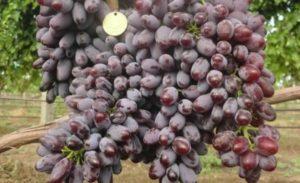
These tools are required for small cuttings. First, drive wooden stakes into the ground near the bushes, then tie the plants to them. It's important to choose the correct height for the stakes. They should be high enough to keep the grapevines from reaching the ground.
After some time, the poles can be removed. At this stage, the grapevines are tied to the arbor. Subsequently, it is recommended to train the shoots to form a wall or arbor frame.
Aftercare
To ensure proper grapevine development, it is recommended to provide high-quality care. This should be comprehensive and include a series of sequential steps. This will help ensure a strong and viable plant.
Thinning
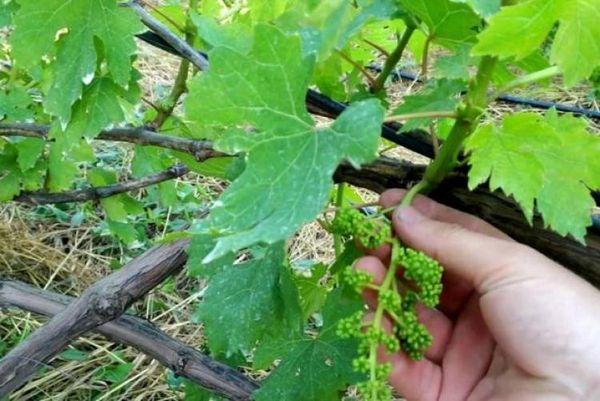
When planting grape vines, it's important to ensure they don't grow too densely. Thinning is acceptable if necessary. This will result in a strong and vigorous plant.
Watering
To ensure the plant thrives, it needs regular watering. Moderate soil moisture is recommended. The plant should receive at least eight hours of sun.
In addition, it's recommended to loosen the soil after watering. This will provide the soil with nutrients and improve oxygenation. However, loosening should be done very carefully. The roots of young plants are located on the surface, so they are highly susceptible to damage.
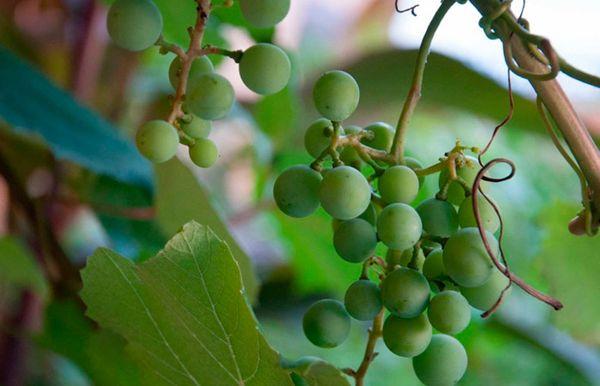
It's important to keep in mind that young plants should be watered with a spray bottle during the initial stages of development. This will help protect the roots from damage. It's recommended to carefully inspect the seedlings daily to detect the presence of spider mites. These dangerous pests can cause the death of the plant.
Top dressing
Fertilizing grapes is recommended two years after planting. Experienced gardeners recommend improving the soil composition with nitrogen- and phosphorus-based fertilizers.
The first flower stalks
To ensure young grapevines can produce full fruit, the first flower stalks must be removed promptly. This will help prevent the vines from becoming depleted.
Sanitary pruning
The plant requires periodic sanitary pruning. This procedure removes broken, deformed, and frozen shoots. This helps make the plant healthier and form a neat bush. Sanitary pruning also reliably protects the vineyard from dangerous diseases.
Tips and advice from experienced gardeners
To ensure full fruit production from seed-grown grapes, it's recommended to follow the advice of qualified gardeners when cultivating them. Indoors, the plant should be grown until it reaches 2 meters in height. Then, it should be transplanted outdoors.
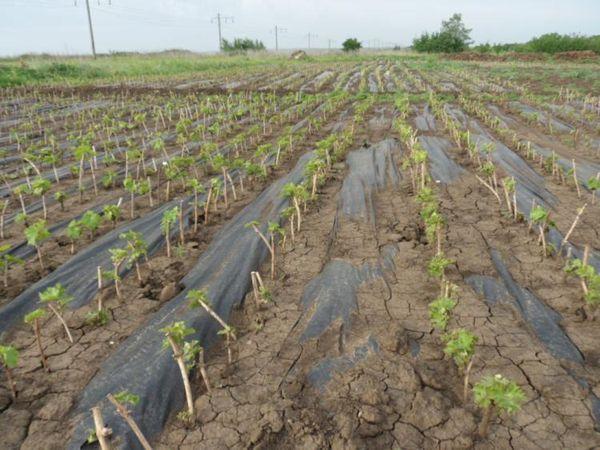
In this case, it is recommended to follow these rules:
- It is recommended to plant grapes only in a well-lit area. The north side should be well-protected from drafts. Young vines should not be exposed to north winds.
- The soil should be sufficiently permeable. However, overwatering is not recommended.
- To grow a vigorous plant, you'll need a trellis. These are supports with taut wire.
- Before planting, it's recommended to create a drainage layer. Small stones will be needed for this.
- It is worth pouring nutrient soil on top of the drainage.
- Subsequent plant care includes regular watering and soil loosening. Timely fertilization is also crucial.
- With proper care of the plant, you can expect to see fruit in about 4 years.
Growing grapes from seeds is considered a rather complex and labor-intensive method. Therefore, it is rarely used in garden plots.
However, proper execution of the procedure and adequate care of the seedlings will help ensure a strong and viable plant that will produce a bountiful harvest. Therefore, before attempting this procedure, it's important to familiarize yourself with the key recommendations of experienced gardeners.
Related posts:
 How to grow grapes in the Moscow region in open ground without a greenhouse
 Description of 30 grape varieties for Siberia, planting and care for beginners
 The ripening time of grape vines by variety, how to speed up the process, and what to treat the plant with
 Description of the Julian grape variety, planting and care instructions
 Description of 30 varieties and types of Muscat grapes, planting, cultivation and care
 The best grape varieties for growing in the Urals, planting and care rules in summer
 Description of the Krasotka grape variety, planting and care technology
 Beginner's Guide to Growing Grapes in Open Ground in Central Russia