
- Growing grapes in the middle zone for beginners
- Climatic features of the region
- Which varieties are the best?
- Dark
- Codryanka
- Venus
- Northern
- Amethyst
- Nadezhda Altaiskaya
- Lowland
- Winner
- Agat Donskoy
- Whites
- Cocktail
- Bogatyanovsky
- White early
- Chrysolite
- Citrine
- Diana
- Lunar
- Muscat of Moscow
- Red and pink
- Agatha Donskaya
- Brother of Delight
- Cardinal
- Muromets
- Lucy the Red
- Tenderness
- Transfiguration
- Technical (wine)
- Alpha
- Crystal
- Platovsky
- Augusta
- Aligote (Makhranuli)
- Chardonnay
- Riesling
- Shunya
- Nadezhda Aksayskaya
- Victoria
- When it ripens
- Ultra-early
- Timur
- Olympics
- Elegant Super Early
- Early
- Crimean pearl
- Option
- Surprise
- Amber
- Average
- Chasselas
- Russian Concorde
- Lily of the valley
- Floral
- Starting
- Late
- Moldova
- Italy
- Smuglyanka Moldavian
- Strashensky
- Crane Anniversary
- When can you plant?
- How to grow in open ground
- On the trellis
- In barrels
- In containers
- On a long vine
- Smolensk method
- How to plant correctly
- Preparing seedlings
- Selecting a location on the site
- Landing algorithm
- Agricultural technology of cultivation
- Formation
- Trimming
- Topping
- Pinching out stepsons
- Thinning
- Coinage
- Lightening
- Top dressing
- In the spring
- In summer
- In the fall
- Watering
- Spraying
- Diseases
- Pests
- Increasing crop yields
- Reproduction technology
- Harvesting
- Preparing for winter
- Basic recommendations for beginners
Growing grapes in central Russia raises a lot of questions for beginners. The answers are easy. Numerous varieties have been developed that are suitable for temperate climates. By following proper agricultural practices, you can achieve high yields; the key is to choose an easy-to-grow variety suited to the region.
Growing grapes in the middle zone for beginners
In temperate climates, it's recommended to choose varieties with early or mid-season ripening. The key is to ensure the fruit ripens before the end of summer and survives the winter well. Beginners should first learn the proper cultivation practices, select a suitable site, purchase healthy seedlings, and maintain proper care throughout the season.
Climatic features of the region
In the temperate climate zone, the summer period lasts 120-140 days. It's recommended to choose varieties with a similar ripening period. In winter, maximum temperatures reach -25°C. This is important to consider. If the variety is not very tolerant, it will freeze and die over the winter. This reduces the likelihood of getting the desired harvest.
Which varieties are the best?
Grape varieties come in a wide variety. They come in dark, white, and red colors. Industrial varieties are grown commercially. They have the best flavor and are grown for processing and sale.
Dark
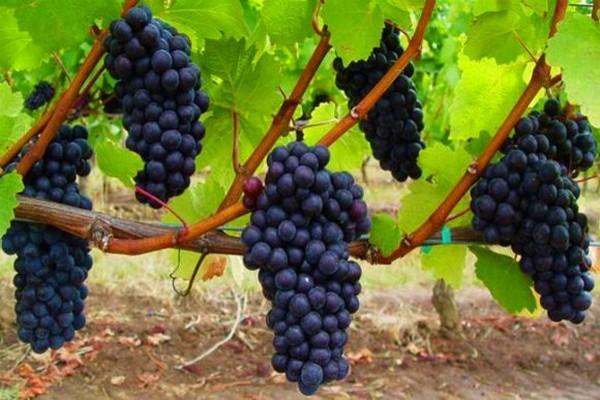
The purple and dark-colored berries have a pleasant flavor. They are used to make red wines and juices, and there is a wide variety of varieties.
Codryanka
The berries are large. The variety was developed in Moldova, but the patent was acquired by the Italians. It is an early-ripening variety, with large clusters, up to 1 kg, and in favorable conditions, reaching 2 or more. The fruits are dark purple or blue. The taste is sweet and sour.
Venus
A versatile grape with dark blue, almost black berries, gathered in large clusters. It contains an ideal balance of sugar and acidity. It remains popular due to its flavor, winter hardiness, and early ripening.
Northern
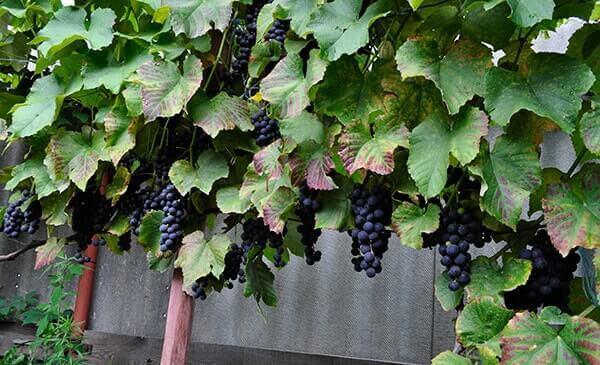
It boasts good winter hardiness. The yield is high, and the clusters are cone-shaped. The berries are blue and waxy. The flavor rating is 4.5 out of 5. The fruits are easy to store and transport. Ripening takes approximately 110 days.
Amethyst
It has several subspecies. The berries are collected in cylindrical clusters. They are light purple in color, turning a vibrant crimson when overripe. The leaves are large and green. The yield is average, with a maximum of 700g per bush.
Nadezhda Altaiskaya
A late-ripening variety, it produces large clusters weighing over 3 kg. The berries are dark blue and elongated. They have excellent flavor, containing approximately 18% sugar and 12% ascorbic acid. The grapes ripen in late August.
 Important! Don't pick grapes early; they won't ripen properly if left on the balcony or in the refrigerator, and instead will start to spoil.
Lowland
One of the most popular varieties. It tolerates adverse weather conditions well. It produces red or yellow-pink berries, which are borne in clusters. The berries are arranged rather sparsely. Each grape weighs over 10-15 grams.
Winner
Medium-sized bushes with large, green foliage. The fruit is large, light purple or burgundy in color, and borne in cylindrical clusters. The grapes are large, weighing over 12 grams each. They have excellent flavor, with a pleasant sweet and sour taste. They ripen late.
Agat Donskoy
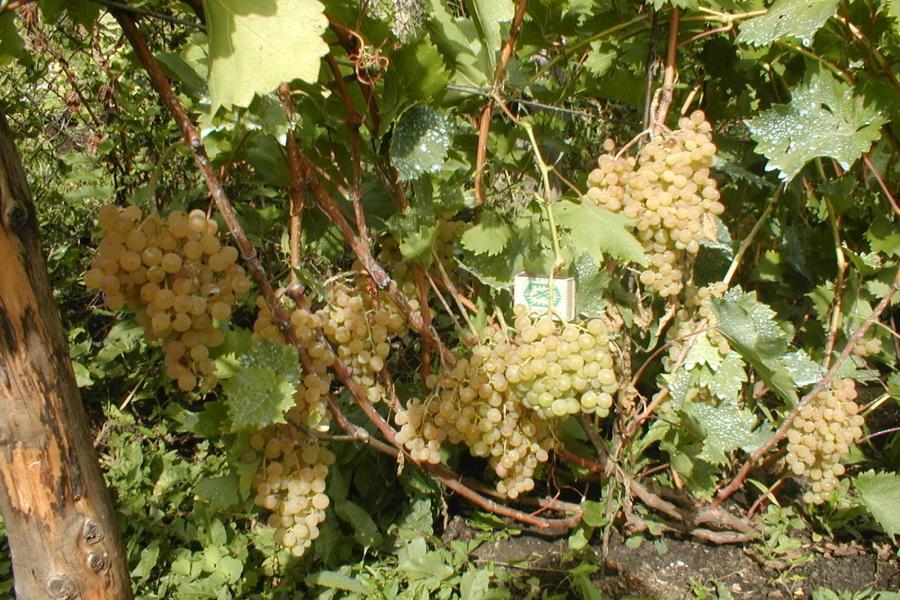
A tall shrub that produces conical clusters of dark purple berries covered with a white waxy coating. They have a rich, sweet-and-tart flavor. They are considered a table variety. They have a strong immunity and are frost-resistant.
Whites
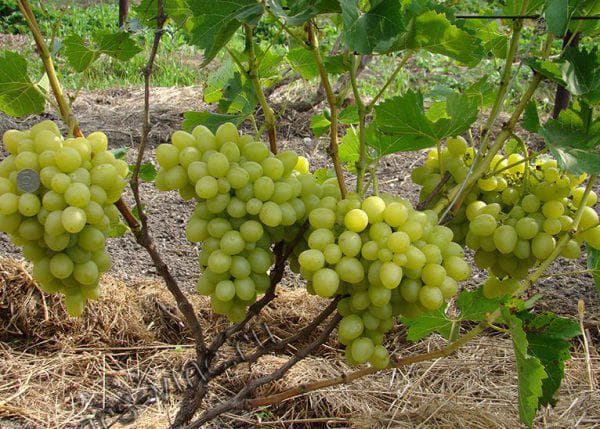
Light-colored berries have a sweeter flavor than dark ones. They are grown for processing into white wine, juice, and fresh consumption.
Cocktail
A white grape variety. Included in the State Register in 2011. The bushes are medium-sized, ripen early, and have average frost and disease resistance. The berries weigh approximately 5 g and are light yellow in color. They have a distinct, sweet flavor.
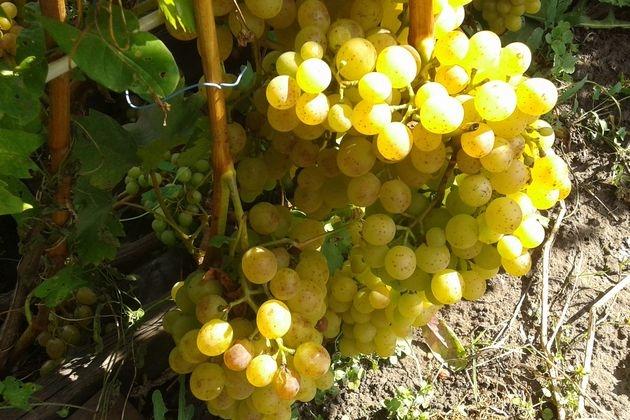
White grapes contain less vitamin C than black ones.
Bogatyanovsky
A table grape variety with average frost resistance. The fruits develop a yellow-brown color and have a pleasant sweet flavor. The skin and flesh are firm, containing 3-4 brown seeds. Ripening is early.
White early
An early table variety. The bush is medium-sized, with yellow or greenish berries. They are borne in cylindrical clusters. It has moderate frost resistance and strong immunity to fungal diseases.
Chrysolite
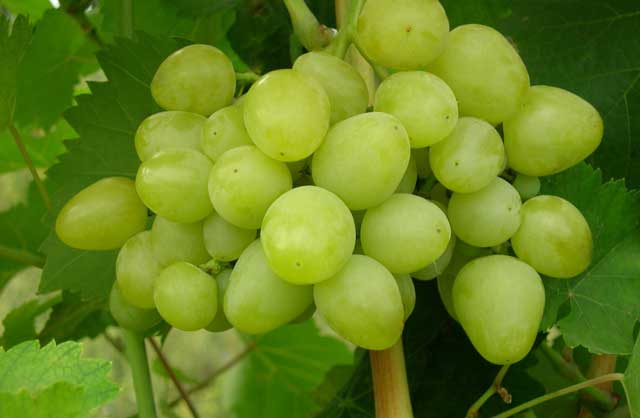
A hybrid grape variety with an early ripening period. It produces clusters weighing approximately 500 g. The berries are bright green and firm, with a sweet, sugary flesh. They contain 2-3 seeds. The bush is tall, with large, green leaves.
Citrine
A hybrid variety with early ripening and high yields. Moderate frost resistance and high disease resistance. The berries are large, gathered in cylindrical clusters. They are yellow-green in color and have a sweet and sour taste. Suitable for table use.
Diana
An early table grape. It forms elongated clusters with tightly packed, round, light green berries. They contain 1-2 brown seeds. The fruits are high in sugar and have a pleasant flavor.
Take a look Also
Lunar
The bushes are tall, producing clusters of green berries with a slight purple blush. The grapes are round, the skin is dense and crisp, and the berries are high in sugar, making them suitable for processing and fresh consumption.
Muscat of Moscow
Added to the State Register at the beginning of the 21st century, it is suitable for cultivation in temperate climates, both on site and for industrial purposes. The berries are yellow with a green tint. Their taste quality is rated 8.2 out of 9. The plants are tall and ripen early.
Red and pink
A cross between dark and light-colored grapes, it comes in a wide variety of cultivars and is most often grown in private plots.
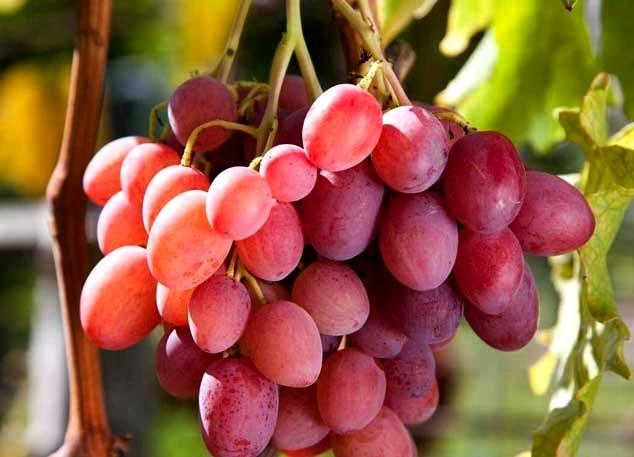
Agatha Donskaya
A medium-sized shrub, it boasts strong immunity to fungal diseases and easily tolerates harsh winters. It produces high yields, producing large fruits (approximately 12 g each) that are light pink in color, turning crimson when fully ripe.
Brother of Delight
An early, low-maintenance grape variety. It produces high yields, with each branch weighing approximately 700 g. The fruits are compactly arranged and have a reddish-purple color. It is highly resistant to fungi and moderately frost-hardy.
Cardinal
Table grapes with medium yields and medium-sized bushes. The berries are large, pinkish-purple in color, and the clusters are cylindrical. The grapes contain approximately 18% sugar, which enhances their flavor.
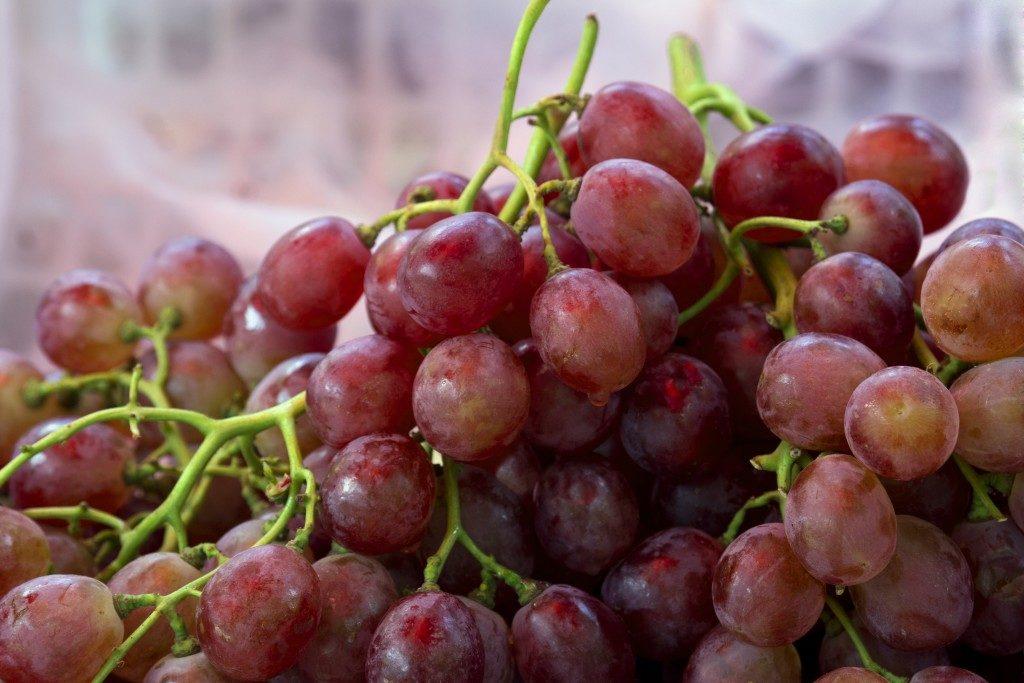
Muromets
The grapes have a pleasant pink hue. The plants are medium-sized and ripen mid-season, typically in August. The berries are large, weighing over 15 grams each. They have excellent flavor, high sugar content and moderate acidity. Yields are high, reaching approximately 6 kg per vine.
Lucy the Red
This self-fertile grape variety makes it easy to grow on your property. The fruits are borne in cylindrical clusters. The flavor is sweet, with hints of tartness and Muscat. The grapes are reddish-pink in color, medium in size, and produce a high yield.
Tenderness
This ultra-early table grape has a pleasant flavor and high sugar content. The grapes are round, yellow, and borne in dense clusters weighing 400 g each. The bush is medium-sized and quickly adapts to new growing conditions.
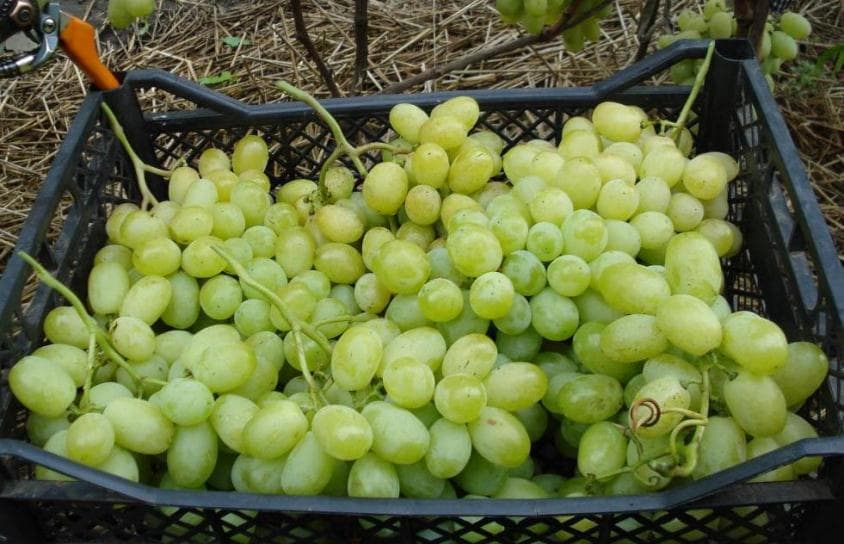
Transfiguration
An early-ripening hybrid grape variety with a pleasant flavor, the berries are elongated and pink. The fruits are gathered in cylindrical clusters, each weighing an average of 1.2 kg. It has average frost resistance.
Technical (wine)
These varieties have the most pleasant flavor and are grown for the production of wines and juices on an industrial scale.
Alpha
Belongs to the Isabella variety. The grapes are closely packed together, gathered in cone-shaped clusters. The grapes are dark purple with a white waxy coating. The bush is tall and requires a pollinator. The yield is high. The berry flesh is gelatinous, green, with several brown seeds.
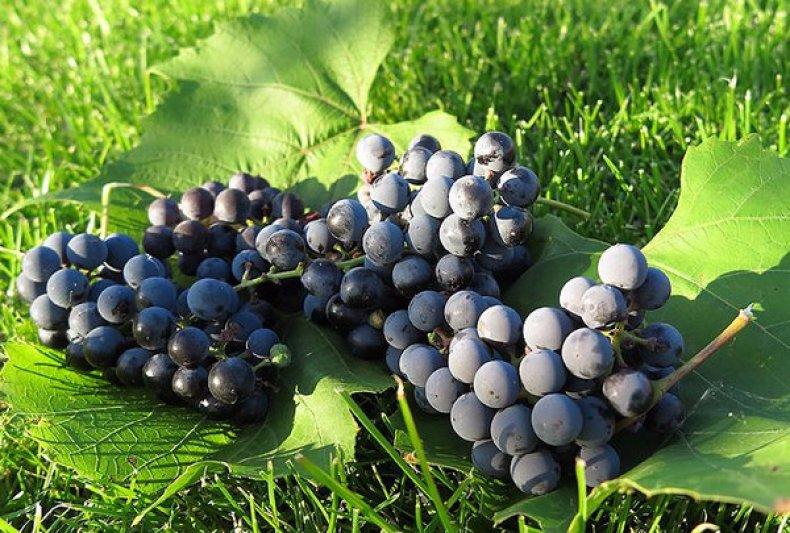
Crystal
A short-ripening industrial variety characterized by high frost resistance. It produces clusters weighing approximately 200 g. The berries are small, 2-3 g each, and yellow-green in color. The acidity and sweetness are perfectly balanced. The bushes are medium-sized.
Platovsky
The grapes ripen early, producing a pleasantly sweet, tart flavor. The conical clusters weigh 400-500 g each. The yield per bush is 5-6 kg. The grapes are yellow, with a pink blush covering the entire skin. A distinctive feature is their high frost resistance.
Augusta
A wine grape variety. Ripening occurs in late August or early September. The bush is short, producing small clusters weighing up to 150 g. The berries are small, 1.5-2 g, about the size of a currant. The fruit has excellent flavor, containing 25% sugar and only 9 g acid.
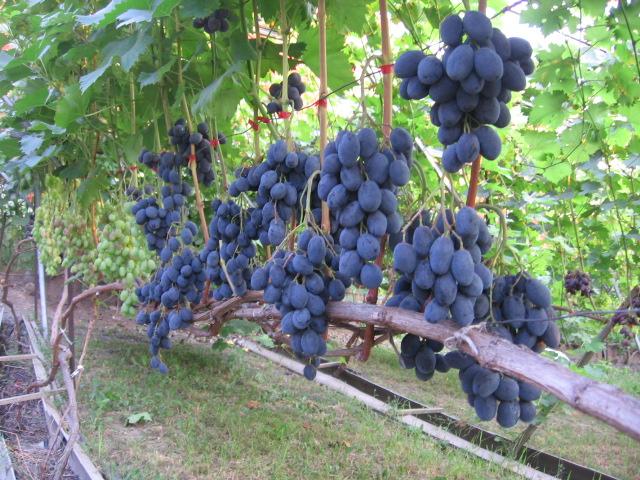 Important! Augusta has a characteristic nutmeg scent.
Aligote (Makhranuli)
One of the most popular varieties, grown for juicing, winemaking, and other processing. The bush is medium-sized, with small clusters of grapes, up to 160 g each. The fruits are small, yellow-green, covered with a white waxy coating, and closely packed. They have excellent flavor. Aligote is grown in Europe, California, and Ukraine.
Chardonnay
A commercial grape variety widely grown throughout Europe. It is processed into wine. The vines are medium-sized, the clusters are cylindrical, and the grapes are yellow with a pink tint. The average berry weight is 100 berries per 120 g. Chardonnay has a high sugar content and exhibits resistance to frost and fungal diseases.
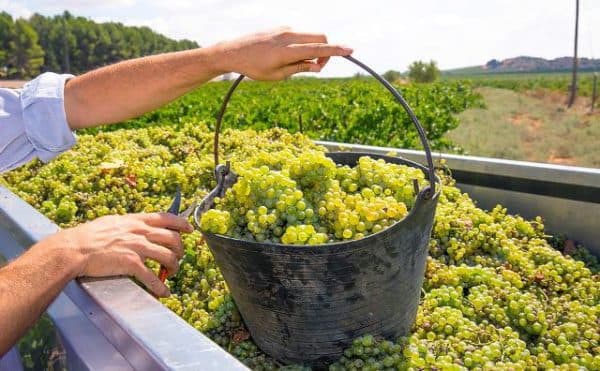
Riesling
Suitable for growing in hot climates, the growing season lasts over 150 days. The plants are medium-sized, with rich, light-green fruits borne in conical clusters weighing up to 150 g. Frost and fungal resistance are weak. Damage occurs due to poor agricultural practices and adverse weather conditions.
Shunya
The grapes ripen in mid-August. Plant growth is high, reaching up to 3 meters annually. The clusters are large, weighing up to 500 grams each. The fruits are elongated, cylindrical, pink in color, with thin, crack-resistant skin. The flavor is excellent, with a sugar content of 15%.
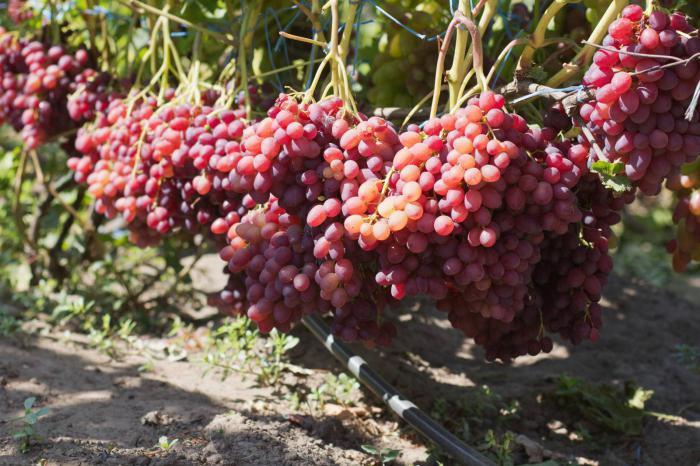
Shunya is suitable for novice gardeners, as it does not require special care.
Nadezhda Aksayskaya
A self-fertile hybrid grape variety. The yield is high, with a single plant yielding up to 10 kg. The clusters are large, each up to 1.5 kg, and the berries are 12-15 g in size. The fruit is light green, turning yellow when fully ripe. Sugar content is 18%. Ripening time is 120 days.
Victoria
It has excellent marketability and is easy to transport. The clusters are medium-sized, up to 500 g, and the berries vary in size.
Victoria is prone to pea formation and has strong immunity to diseases and pests. Early ripening.
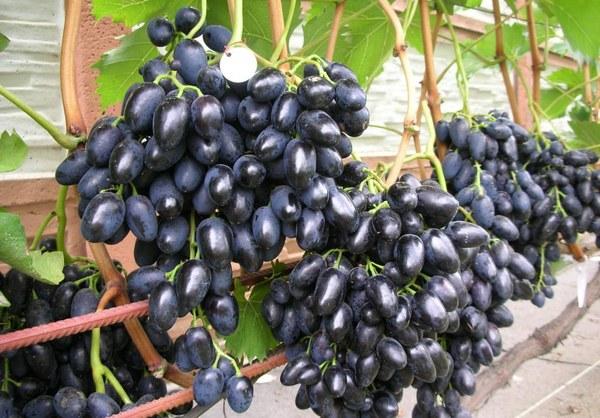
The grapes are a deep crimson color. They have excellent flavor and are suitable for both processing and fresh consumption. This variety is considered one of the most delicious.
When it ripens
According to ripening time, grapes are divided into ultra-early, early, mid-season and late.
Ultra-early
Suitable for cultivation in cool climates. Ripens in 90-100 days.
Timur
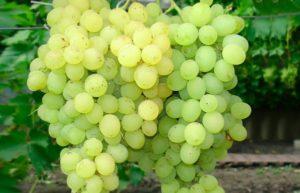
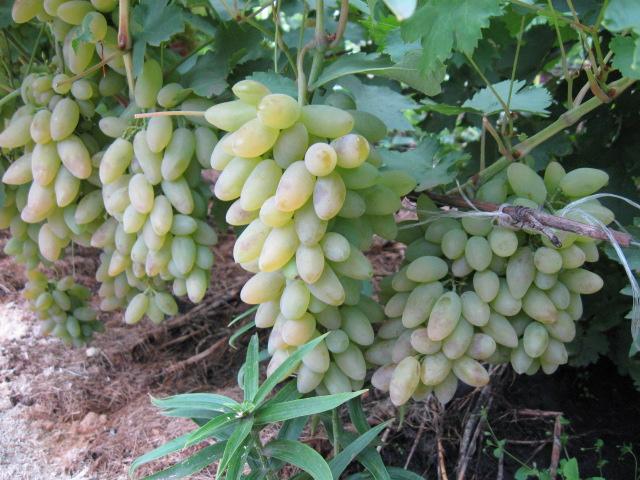
Ripening takes 100-110 days, and the bush blooms in early June. The flowers are gathered in clusters of 2-3. The bush grows tall and produces numerous ovaries. Each ovary weighs 500 g. The fruits are elongated, conical, and pointed. The color is bright green, and the skin is thin. The sugar content is 25%. Timur is resistant to fungi and has moderate frost tolerance.
Olympics
The bushes are tall, with small clusters weighing 200 grams each. The berries are small, green with a yellow tint, and round. Sugar content is average, 15%. The variety has virtually no immunity to diseases and pests. Preventative measures are required to protect against damage. Ripening time is short, up to 100 days.
Elegant Super Early
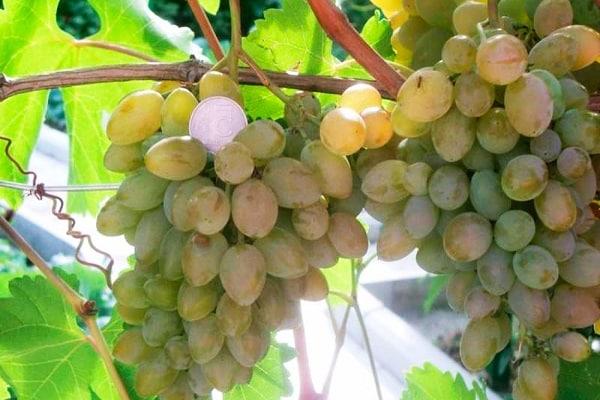
This artificially bred variety produces flowers of both sexes. The berries ripen in 100 days. The clusters are conical, weighing up to 600 g. The berries are bright green, very sweet, and weigh up to 10 g each. They are moderately resistant to frost and disease. The bush is medium-sized, with large, light green foliage.
 Important! Ultra-early grapes are suitable for growing in areas with cooler climates.
Early
These grapes are grown in temperate and northern climates and ripen by mid- to late August.
Crimean pearl
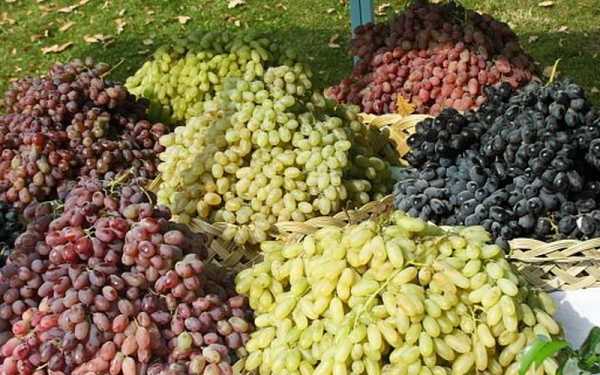
The growing season lasts 90 days. The medium-sized bush produces numerous large ovaries weighing up to 600 g. The grapes are large, green with a yellow tint. The sugar content is average, 16%. The plant is resistant to frost and most fungal diseases.
Option
A dark purple grape. The vines are tall, ripening in late August or early September. A distinctive feature of this variety is its high resistance to frost and fungal diseases. The bunches are medium-sized, up to 700 g, and the berries are large, up to 12 g. The sugar and acid content are perfectly balanced.
Surprise
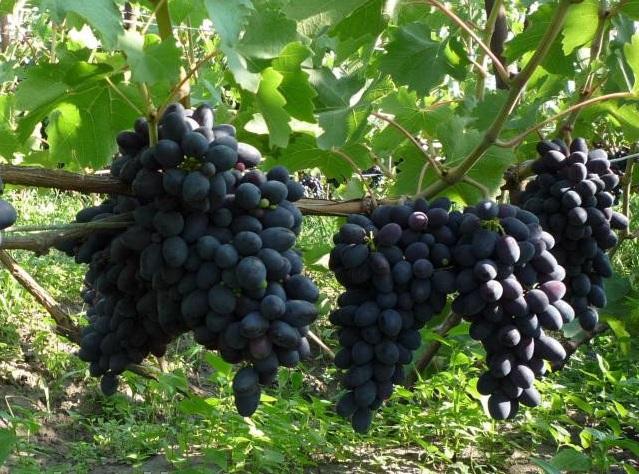
Mid-season ripening. A distinctive feature is the seedlessness of the fruits. The plant is tall, with conical clusters producing medium-sized fruits of a dark purple color with a light white bloom. The taste is excellent, with a tasting score of 8 points. Yields 3 kg per bush.
Amber
A mid-season table grape. The green grapes are harvested in clusters weighing up to 300 g. Sugar content is 17%, acidity 9%. No immunity to fungal diseases. Frost resistance is average. The plant is medium-sized, with large, light green foliage. Yields are average, up to 140 centners per hectare.
Average
It's best to plant these varieties in temperate or southern regions, where they demonstrate high survival rates and yields.
Chasselas
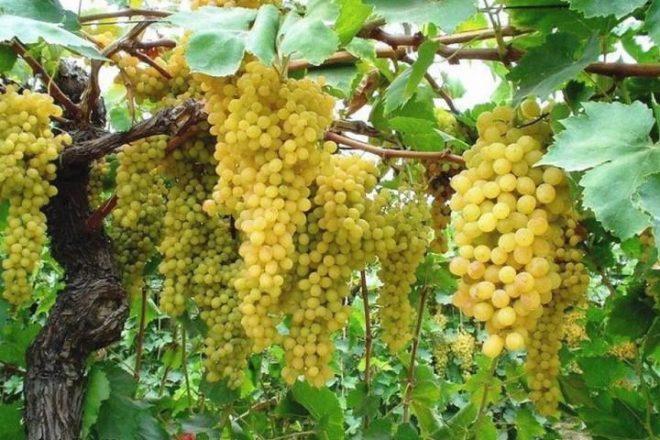
The plants are medium-sized and ripen mid-season. The berries are green, collected in clusters weighing 200 g each. The yield is average, and frost resistance is average. Disease susceptibility is high. The tasting score is 8.1 points. Widely distributed throughout Europe, the variety has good transportability.
If all agricultural practices are followed, the likelihood of disease is sharply reduced.
Russian Concorde
Requires a pollinator, as it produces female flowers. This is an artificially bred Isabella variety. It is highly resistant to frost and disease. Suitable for cultivation in northern regions. Yields 80 centners per hectare. The fruits are light green, in conical clusters weighing 250 grams each.
Lily of the valley
A table grape variety with bright light green grapes. Excellent flavor. Good frost resistance, suitable for growing in northern climates. The clusters are cylindrical, weighing up to 500 g. The fruits are elongated, with pointed ends.
Floral
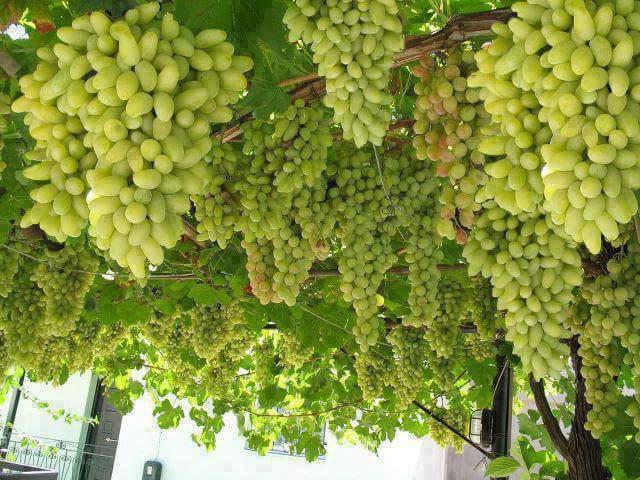
A table grape variety with a sugar content of over 24%. The grapes are yellow-green in color and have thin skins. The vines are medium-sized, with large, green foliage. The plant produces a large number of ovaries. The yield is average.
Starting
High frost resistance, moderate resistance to fungi. Clusters of grapes weigh up to 300 g, producing round, yellow-green fruits with a pink tint. High yield, suitable for cultivation in northern regions.
Late
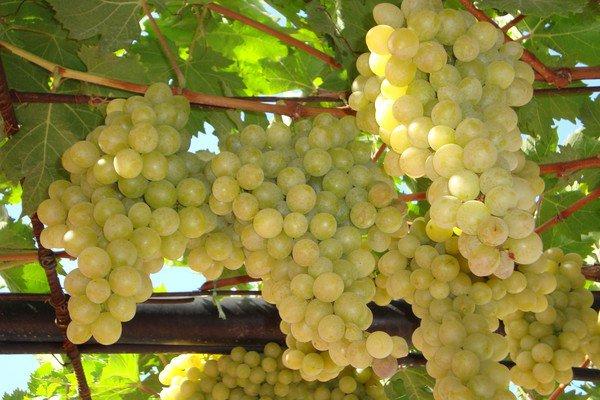
Ideal for the south. These varieties have good quality, strong immunity, and good transportability.
Moldova
Developed in Moldova, this variety boasts numerous positive qualities: high yields, low maintenance, and disease resistance. It's a medium-sized plant with clusters weighing up to 1 kg. The berries are densely packed and dark purple with a white bloom.
Italy
This variety is common in all countries where grapes are grown commercially. The tall bush produces large clusters of berries, each weighing 20 grams, conical in shape, with elongated ends. The grapes are light golden in color.
Smuglyanka Moldavian
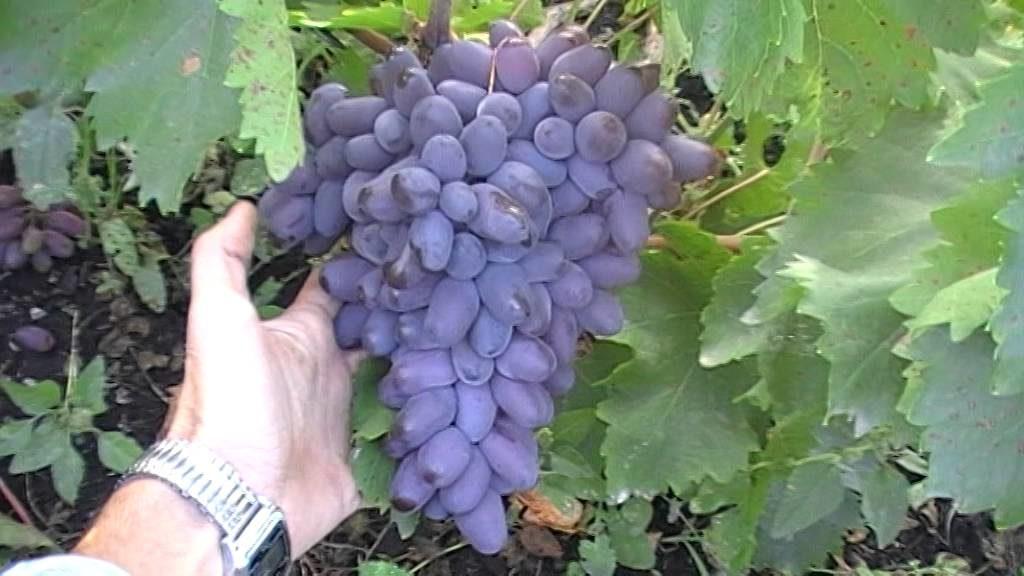
This is a medium-sized table variety. It produces dark purple berries, elongated and conical in shape, with pointed ends. They are covered with a white coating on top. The plant has increased resistance to diseases, pests, and frost.
Strashensky
A large-fruited variety. The bushes are tall, bearing round, dark blue or black berries. They are borne in conical clusters, weighing up to 1 kg. It is distinguished by its high hardiness, frost resistance, robust immunity, and high yield.
Crane Anniversary
A late-ripening hybrid table grape variety. It has a medium-sized bush. It produces a large number of ovaries, each weighing up to 700 g. The grapes are large, round, and pinkish-purple in color. Frost resistance and immunity are average.
When can you plant?
Planting is carried out in the fall or early spring. Winter planting is recommended, as this allows the plant time to strengthen, adapt to the new climate, and establish proper roots. Prepare the planting hole in advance, no later than two weeks before planting.
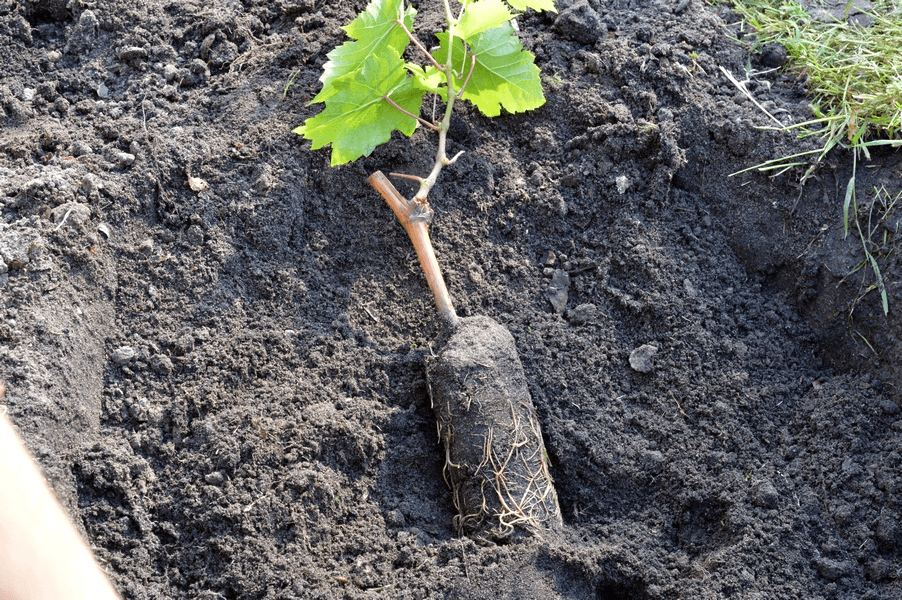 Important! The seedling must be planted within 12 hours of purchase.
How to grow in open ground
Growing in open ground is possible using several methods: on a trellis, in barrels, on vines, in containers, and the Smolensk method.
On the trellis
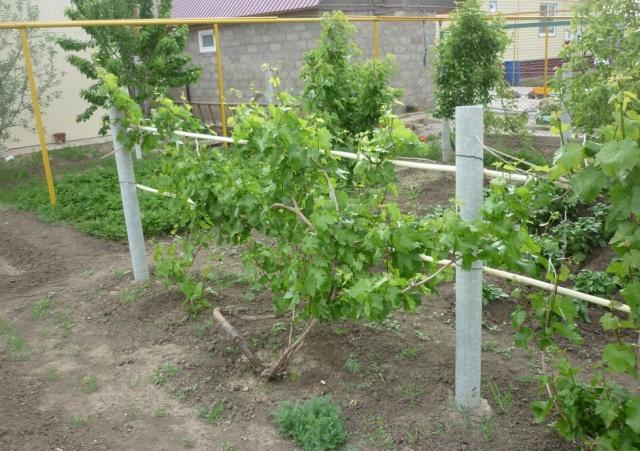
Growing grapes on a trellis is convenient and attractive. It can be installed in an archway or near the entrance to a house. The grapes will beautifully twine around the trellis, which helps with harvesting, as the bunches will hang through the openings.
In barrels
For growing in barrels, choose a large container. Under these conditions, grapes can grow for over 10 years. Several trellises are installed in the pot to provide support for the vine. Every three years, the vines are replanted into a larger pot.

In containers
Suitable for growing seedlings. Young plants are planted in containers, which can be plastic or cellophane. Under these conditions, grapes can grow for up to three years.
On a long vine
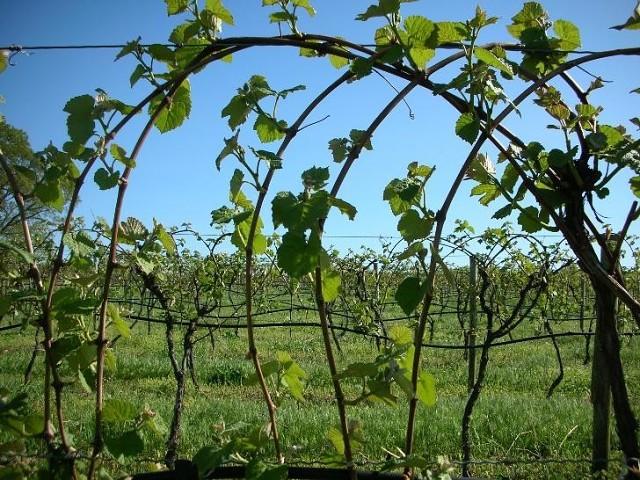
In the fall, after the harvest, a long vine cutting is selected. The vine is planted, twisted into a ring, and covered for the winter. In the spring, a new bush begins to develop.
Smolensk method
The method was developed in Smolensk. Special beds are formed and trellises are installed. Grape seedlings are planted 1.5 meters apart.
How to plant correctly
To get a bountiful harvest, planting must be done wisely. Choosing the right location plays a crucial role in fruiting.
Preparing seedlings
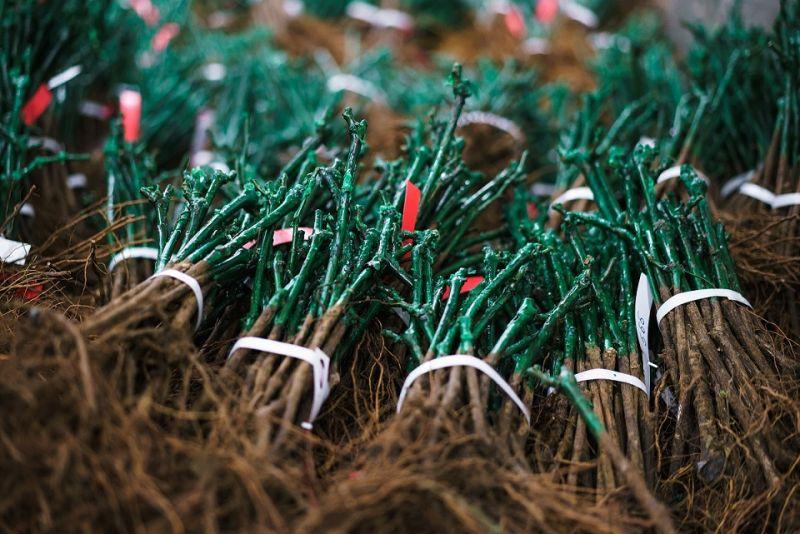
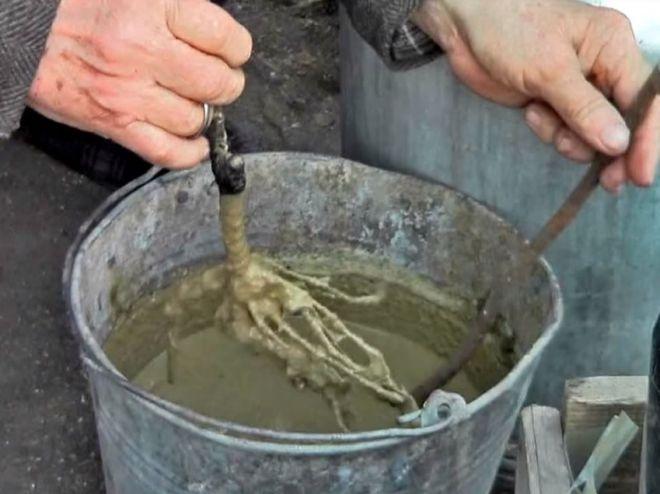
Seedlings are purchased from nurseries, preferably reputable sellers. Choose healthy, strong plants. A couple of hours before planting, soak the roots in water and clay. Then trim the roots by 1-2 cm and the shoots by 3-4 cm.
Selecting a location on the site
Grapes prefer well-lit areas protected from drafts. They are undemanding regarding soil composition. When planting in clay or loamy soils, ensure drainage is provided.
Landing algorithm
Planting operations are carried out according to a specific algorithm:
- Dig a hole 80 cm deep.
- Place drainage from crushed stone or broken bricks at the bottom.
- The excavated soil is mixed with humus and a mineral complex for grapes.
- Half of the mixture is placed back into the hole and left for 2 weeks.
- They drive a wooden stake into the hole to tie up the plant.
- The seedling is placed in a hole.
- Straighten the roots.
- They cover it with soil.
- They tie it to a peg.
Agricultural technology of cultivation
Grapes require specific care to ensure a healthy and large harvest. This includes shaping the vine, fertilizing, irrigating, and treating for diseases and pests.
Formation
It is necessary to form the vines correctly.
Trimming
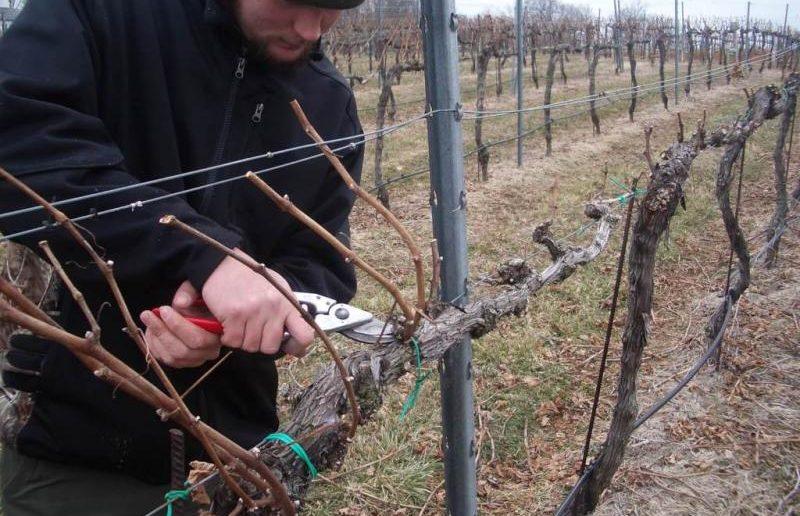
This procedure is performed twice per season: in spring and fall. All young green shoots are pruned at the beginning of the season. After harvesting, all dead and old vines are removed. This helps preserve strength and nutrients for the next season.
Topping
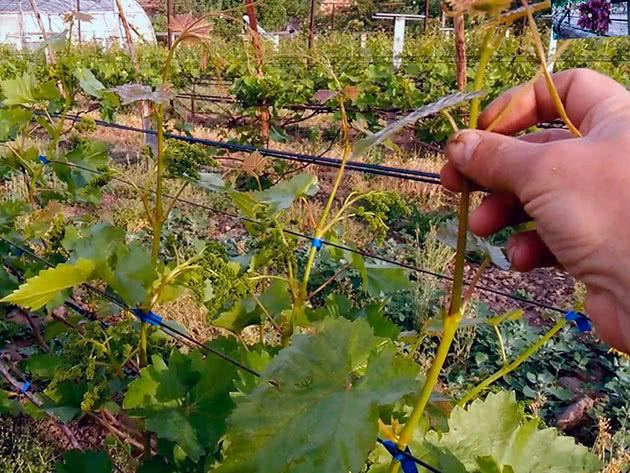
The tips of young green shoots are removed. This slows the vine's growth and creates shorter bushes, as well as preventing flower drop. Pinching is done twice per season: once when the shoots reach 20-25 cm in length, and again at the beginning of flowering.
Pinching out stepsons
This manipulation prevents the bush from becoming denser and allows air to penetrate the plant. Secondary shoots appear on the vineyard. Each shoot, which has 4-5 leaves, is pinched back to the first or second leaf.
Thinning
Select heavily overgrown areas of the bush and then pinch off excess branches. These are usually non-fruit-bearing and should be removed to stimulate crop development.
Coinage
Remove all weakly developed plants and leaves from the vineyard. This strengthens the plant, stimulates its growth, and improves the condition of the vineyard. It also helps increase resistance to frost and disease.
Lightening
In the area where grape clusters are forming, remove all leaves so they are exposed to direct sunlight. This stimulates additional berry production and helps them fill with juice.
Top dressing
Grapes require additional nutrition. For optimal growth, fertilize in spring, summer, and fall.

In the spring
After the bush opens in the spring, apply mineral fertilizers such as superphosphate, potassium salt, and copper sulfate. Dissolve them according to the instructions and apply them separately, weekly.
In summer
During flowering, the plant is fed with superphosphate, ammonium nitrate, and potassium salt. Mix all ingredients in a container and add 10 liters of water. Water the bush.
In the fall
After harvest, vines are fertilized with potassium-rich compounds. This increases winter hardiness. Potassium salt or potassium nitrate are used.
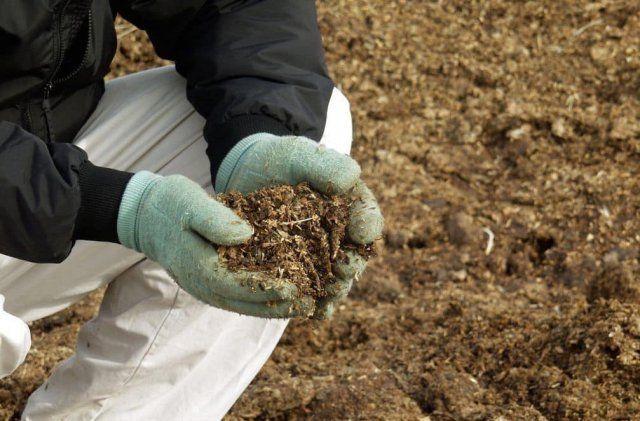
Grapes cannot be fed with nitrogen-containing compounds.
Watering
Irrigation is carried out several times per season. Flowering begins in July, during which time the plant requires additional nutrition. The procedure is repeated during ovary formation and fruiting.
Important! Avoid allowing water to stagnate around the vineyard roots. This will promote the development of fungal diseases and root rot.
Spraying
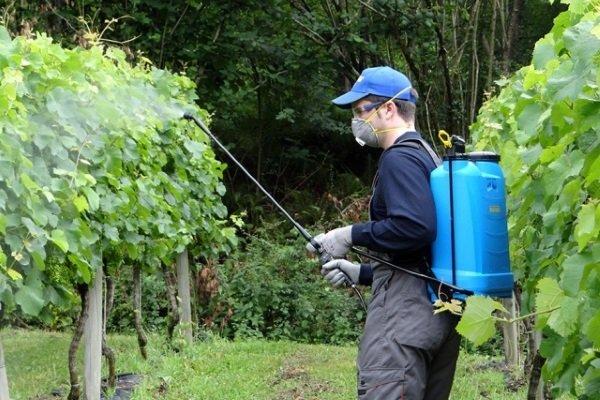
To prevent diseases and stop their development, it is necessary to spray the bush.
Diseases
If signs of disease are detected, spray with fungicidal agents. In the spring, before the sap begins to flow, this procedure is performed as a preventative measure.
Pests
To prevent pest infestations, treat the foliage with insecticides designed for garden plants. Insect traps are also installed, the soil is sprinkled with copper sulfate, and the roots are watered with boiling water in early spring.
Increasing crop yields
To increase yields, spray phosphorus compounds and apply foliar fertilizer. Phosphorus stimulates fruit development. All agricultural practices must also be followed to boost yields.
Reproduction technology
There are several methods of propagating grapes:
- cuttings;
- layering;
- seeds.
Harvesting
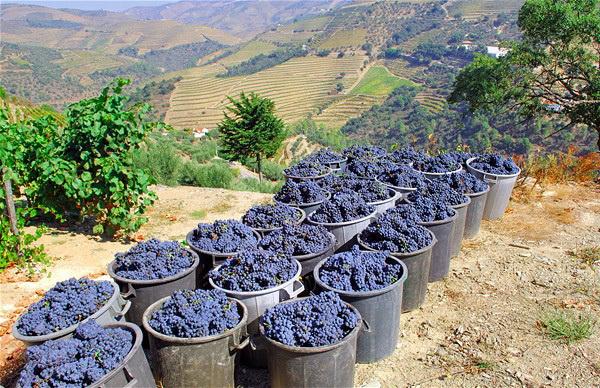
Depending on the ripening time, harvesting takes place from early August to early October. Each bunch of grapes is carefully cut with scissors and placed in crates with large holes to allow for air circulation.
Preparing for winter
Covering the vines for the winter is a must. To achieve this, the vineyard is covered with a triple layer of insulating material. This is secured to the ends of the trellis or support. Spunbond or agrofibre are used for this purpose.
Basic recommendations for beginners
Beginning winemakers are advised to follow a few simple rules:
- Select varieties suitable for the growing region.
- Choose the right landing site.
- Observe agricultural practices.
- Harvest on time.
Related posts:
 Description of 30 varieties and types of Muscat grapes, planting, cultivation and care
 Description of 30 grape varieties for Siberia, planting and care for beginners
 The best grape varieties for growing in the Urals, planting and care rules in summer
 How to grow grapes in the Moscow region in open ground without a greenhouse
 Description of the Julian grape variety, planting and care instructions
 Description of 36 of the best sweet and large varieties of gooseberries
 The ripening time of grape vines by variety, how to speed up the process, and what to treat the plant with
 Description and characteristics of 45 of the best frost-resistant grape varieties