
Without proper care, grapes often become diseased and produce poor yields. But even with proper care, gardeners often encounter various diseases affecting this crop. One effective treatment for grapes is colloidal sulfur. It is used to treat many ailments.
How does it affect grapes?
Colloidal sulfur has a positive effect on grapevines during the treatment of certain agricultural diseases. Primarily, it helps eliminate fungi.
Sulfur is used not only to combat existing diseases, but also as a preventative measure.
For example, for processing and disinfecting planting material before planting in the ground.
In addition to diseases, the substance combats plant mites and prevents the population of these insects from multiplying and destroying crops.
Purpose
Colloidal sulfur is used to treat existing diseases, kill insects, and as a preventative measure.
Oidium
Powdery mildew is a true powdery mildew. The characteristic symptoms of the disease include a white coating on the foliage, flower heads falling off before they even open, and small clusters of flowers. Powdery mildew is caused by a fungus.
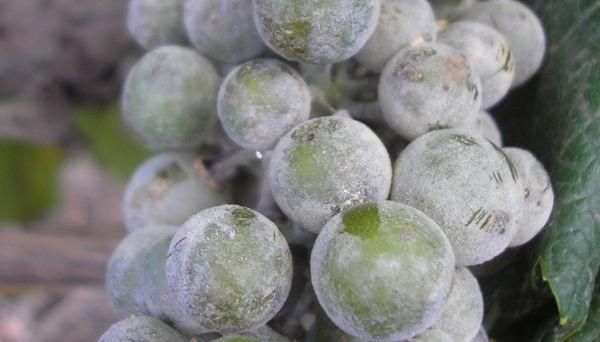
The disease can be controlled by spraying with colloidal sulfur. This is a very effective remedy. It has a toxic effect on the fungus, killing it. This procedure is performed before flowering. Dissolve 50 g of sulfur in a bucket of water. You can also add "Karbofos" to the solution. Spray the bush with the resulting solution. This procedure is repeated daily for 6 days.
Powdery mildew
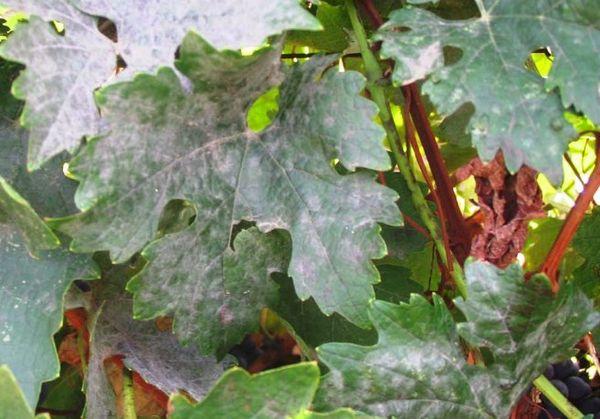
Unlike true powdery mildew, downy mildew appears on the underside of the leaf. The leaf blade becomes covered with a white coating. The berries also become coated with the coating, and the skins crack. Almost immediately, the grapes either rot or dry out. Dark spots appear on the vines.
As with powdery mildew, colloidal sulfur can help combat downy mildew. However, copper-containing chemicals are most effective.
Preparing the solution is easy. Pour sulfur into a bucket and gradually add water, stirring the solution constantly. It's not recommended to apply sulfur by eye; the packaging always contains precise instructions to follow. To treat mildew, use 80 g of the solution per 10 liters of water. Spray the bushes no more than five times per season.

Anthracnose
The first sign is the appearance of dark spots on all parts of the vine. As they develop, the affected areas dry out, and holes form instead of spots. There are two ways to treat grapevine anthracnose: spraying the entire vine or treating only the affected leaf area. The latter method is best used when the disease has just begun to spread.
Treatments are carried out before or after flowering. Frequent treatments are also not recommended, especially if anthracnose has only just begun to appear. Frequent spraying is necessary if a large portion of the bush is already affected.
Gray rot
To combat gray mold, grapes can be treated with sulfur no more than four times per season. Dissolve 80 g of powder in 10 liters of warm water. Mix the solution thoroughly and apply it to the vines. It's best to apply the solution before flowering. Over-spraying may cause buds to fall off.
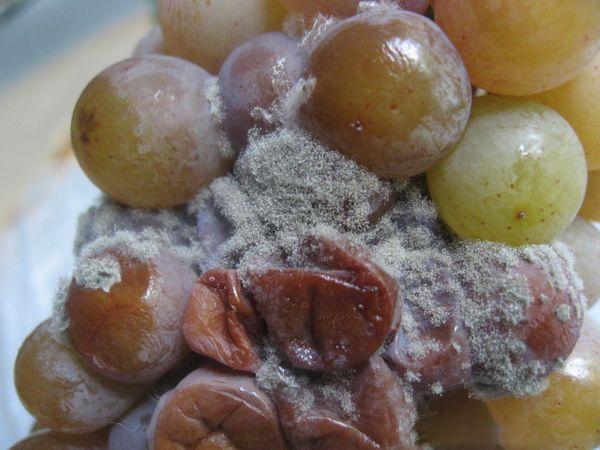
The procedure is performed in the evening, on a sunny, windless day. It's a good idea to check the weather forecast beforehand to ensure there's no rain in the coming days.
Fungal diseases
Colloidal sulfur is a non-toxic fungicide. It does not penetrate plant tissue, making it safe to use for treating fungal diseases of grapes.
Despite its safety, frequent use of the fungicide is not recommended. It's recommended to spray the vines no more than five times per season. If necessary, and the disease is not completely cured, the number of treatments can be increased. Typically, 80 g of the product is required per 10 liters of water. However, for disease prevention, the concentration can be lowered.
Instructions for use
When using colloidal sulfur, follow the instructions carefully. Applying the substance to the eye can be dangerous for both the grapes and the person using it.
Deadlines
Before spraying grape vines, it's important to determine the right timing. It's best to treat the plant before flowering in July.
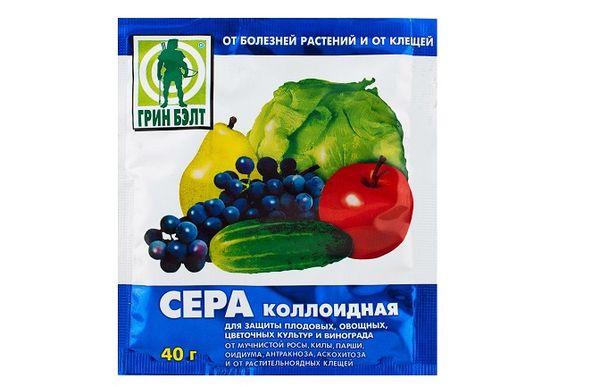
If sulfur is used to treat existing diseases, the plants can also be treated after flowering, when ovaries begin to form. The latter treatment should be carried out no later than 3-4 days before harvest.
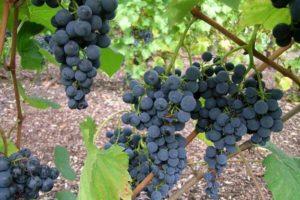
Preventative treatments are carried out before bud break in early spring. This helps prevent diseases and mites.
Dosage
Before performing a procedure, it's not enough to simply familiarize yourself with the appropriate timing. It's also important to study the dosage of the substance. Depending on the purpose, the solution can be made less or more concentrated.
For treatment
For treating grapevine diseases, it's best to use concentrated solutions. Typically, 80 g of solution is required per 10 liters of water. This dosage is suitable for combating all diseases. The resulting amount is sufficient to treat 60 square meters of vineyard.
For prevention
For preventative treatments, the amount used can be much smaller. Simply dilute 55 grams of sulfur in water and apply the resulting solution to the vines in early spring. Preventative treatments are carried out in dry, windless weather at temperatures between 20 and 30 degrees Celsius.
How to prepare a solution
Preparing a sulfur solution is quite simple. Just take warm water and a large container. Pour the sulfur into the container and add water. Then stir the solution thoroughly to dissolve the sulfur.
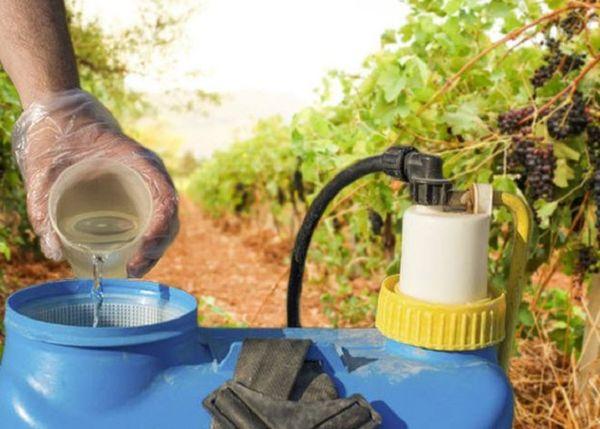
How to spray
You can treat grapevines at any time of day, but it's best to do it in the evening, after sunset. It's also important that there's no rain in the next few days after the treatment. The treatment is pointless at temperatures below 16 degrees Celsius (61 degrees Fahrenheit). It won't have any effect. The substance can only kill fungi in its vapor state, and for that to happen, it needs to be very warm outside.
Protective measures
When performing the procedure, it's important to take precautions. Although colloidal sulfur is not toxic to humans, it's always a good idea to be safe. However, frequent exposure to the fungicide can cause an allergic reaction.
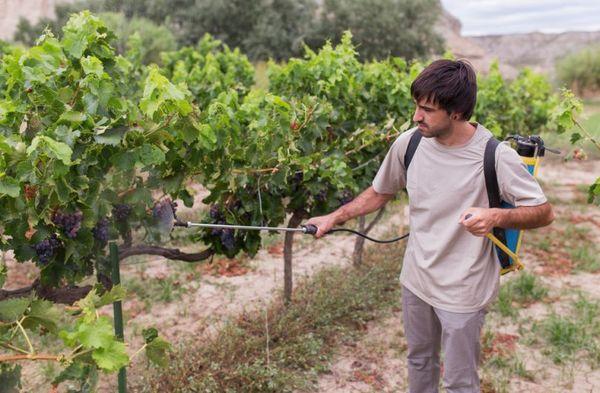
Spray the vines on a windless day to prevent spray from flying in all directions. It's best to cover your face with a mask and wear a rubberized suit or raincoat. The most important thing is to protect your skin.
Storage conditions
Colloidal sulfur should be stored out of the reach of pets and children. A cool, dry place away from direct sunlight is ideal. It's also important to avoid storing the fungicide near medications and food. Sulfur is flammable, so keeping it near a stove or heating vent is also prohibited.
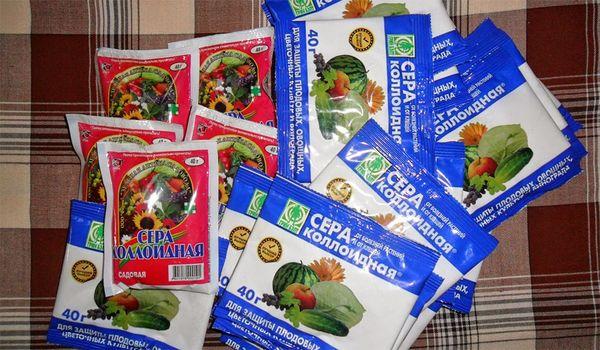
Tips and recommendations
How to use colloidal sulfur to achieve results:
- The substance begins to evaporate at a temperature of +16-+18 degrees, only then will it begin to act; at this temperature, 100 g of sulfur can be diluted in 10 liters of water.
- In hot weather, too strong a concentration of fungicide can cause burns. In such weather, it's best to avoid the procedure or prepare a solution at a rate of 60 g per 10 liters of water.
- The instructions for the fungicide state that it should not be mixed with other products. However, the experience of many gardeners suggests otherwise. Sulfur is compatible with most other substances. For example, it will be most effective in treating downy mildew when mixed with copper-containing substances.
- When preparing the solution, it must be stirred continuously while the sulfur is being poured into the water.
- If there is a large amount of solution left over after processing the grapes, it should not be stored. The shelf life of the prepared sulfur solution is no more than 3 hours.
Using this substance is not much different from similar fungicides. The main thing is to follow the instructions and not overdo it on the grapes. Even the safest chemical, if used in large quantities, will only harm the plant.
Related posts:
 The best eggplant varieties for growing in a polycarbonate greenhouse: planting and care
 Types of fungicides for cucumbers in a greenhouse and instructions for use
 Useful properties and contraindications of white cinquefoil, rules of application
 Causes and treatment of cherry diseases, methods of pest control
 The health benefits and contraindications of black radish
 How to propagate and grow peas, cultivation technology, and care in open ground
 How to prepare a solution for treating grapes with copper sulfate in the summer: instructions for use
 How to properly treat grapes with soda and potassium permanganate