- Climatic features of the Leningrad region
- Requirements for choosing a variety
- Recommended varieties
- Zilga
- Early Express
- Supaga variety
- Vandal Cliché
- Early purple
- Veres
- Solaris
- Black Pearl
- Hasansky Sweet
- Galant
- Regent
- First Michurinsky
- P34
- P33
- Danko
- Muscat Blau
- Laura
- Kishmish Radiant
- Aglaya
- Amur
- Nina's Muscat
- Supaga
- Arcadia
- Advantages and disadvantages of using a greenhouse
- Features of cultivation
- Recommendations for choosing deadlines
- Site preparation
- How to prepare the soil and hole correctly
- Formative pruning
- Preparing for winter
- Reproduction
- Layers
- cuttings
- Diseases and pests
- Mildew
- Oidium
- Gray rot
- Spider mite
- Leaf roller
- Tick
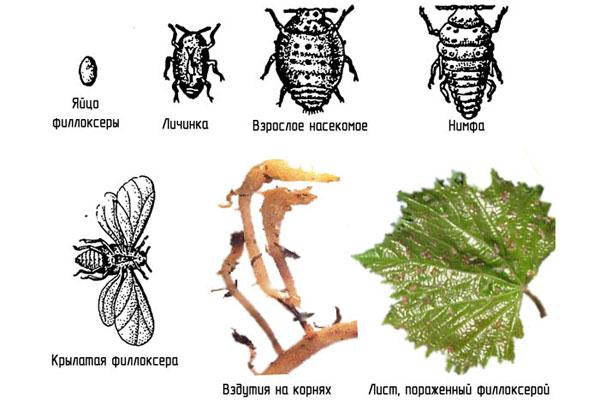
- Phylloxera
- Tips and advice from experienced gardeners
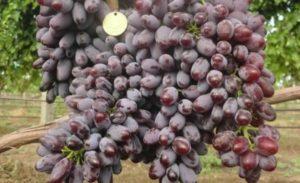
Grapes are heat-loving crops and are grown primarily in southern regions. However, thanks to selective breeding, gardeners now have the opportunity to plant grapes even in less favorable conditions. Planting and caring for grapes in the Leningrad Region is no different from planting grapes in other regions.
Climatic features of the Leningrad region
The climate in the Leningrad Region is very variable due to frequent changes in air masses. The weather can change several times in a single day. Furthermore, it rains frequently, including in summer, making the region unsuitable for growing grapes.
The vine does not like over-watered soil.
Summer rarely experiences prolonged heat, if ever. The average temperature in July is around 22 degrees Celsius, with a minimum of 15 degrees Celsius. Growing grapes outdoors in this climate is problematic. It's best to plant them in a greenhouse.
Requirements for choosing a variety
When choosing a variety for planting in the Leningrad Region, it is important to consider the following factors:
- The period of crop ripening.
- Frost resistance level.
- Features of vineyard care.
The ripening period should be short, the harvest should have time to ripen by the time the maximum positive temperature is established outside - in July. Frost resistance is also important; winters in this region are not very cold, but the weather is unpredictable, so it is better not to take risks and plant frost-resistant varieties.
Recommended varieties
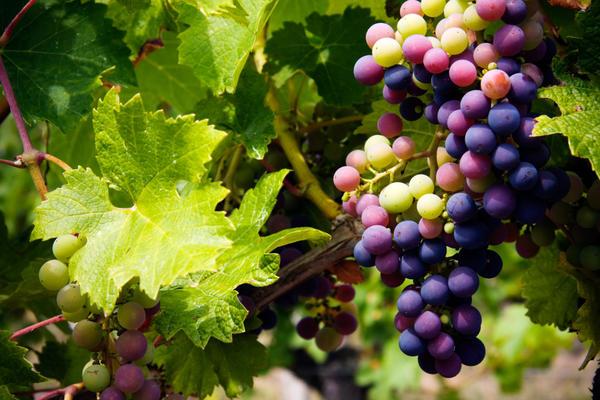
Unfortunately, most grape varieties prefer warm climates. However, excellent hybrids can be found that thrive in the Leningrad Region climate.
Zilga
This hybrid is versatile, suitable for both food and wine. Frost resistance is good, with the vines surviving temperatures down to -25°C. The clusters are medium-sized, weighing between 250 and 355g. Fully ripened, the clusters are cone-shaped. The grapes have a sugar content of 18-21%. The skins are dark blue.
Early Express
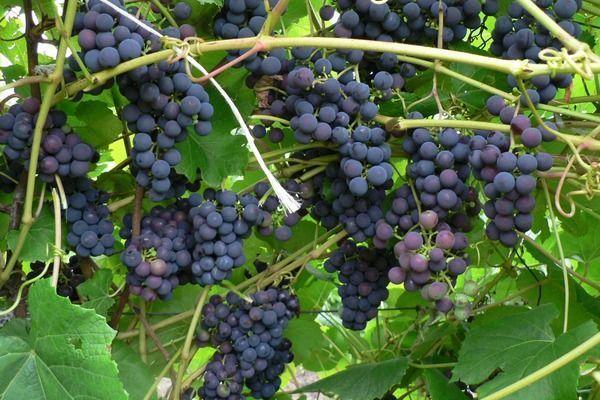
At full maturity, the clusters are loose, with berries not tightly packed together. They weigh between 200 and 500 grams. The vines can withstand temperatures down to -31 degrees Celsius. The grapes are sweet, with a hint of Muscat.
Supaga variety
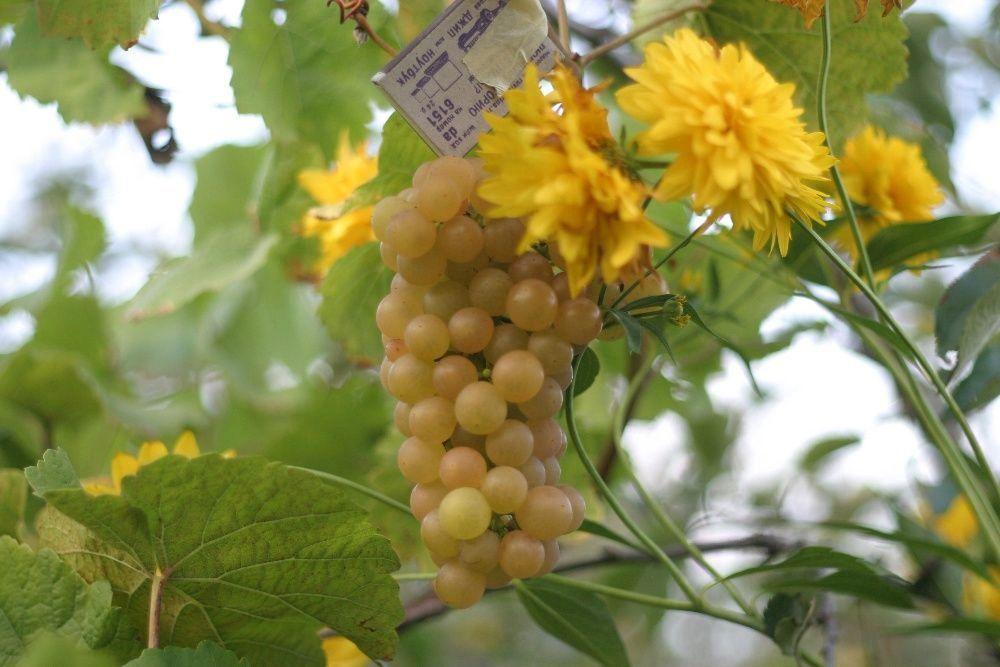
A table hybrid. Large clusters, from 250 to 550 g. Cylindrical shape. Round grapes, light green at first ripening, later turning amber.
Vandal Cliché
This hybrid is characterized by early ripening. It has good frost resistance, with the vines able to withstand temperatures down to -35 degrees Celsius. It produces high yields. The clusters are large, weighing from 450 to 600 g.
Early purple
This hybrid is characterized by small clusters, up to 155 g. Frost resistance is down to -27 degrees Celsius. Grapes weigh up to 2.5 g and are dark purple in color. Sugar content is 22%.
Veres
The clusters are very large, reaching 900 g. The ripening period is short, approximately 100 days. The skin is light pink, and the flesh is sweet.
Solaris
An ultra-early variety, the harvest ripens 85-95 days after ovary formation. Grapes weigh 2.5 to 3.5 grams, with greenish-white skins.

Black Pearl
A mid-early hybrid with deep purple berries. Bunches are medium-sized, weighing up to 350 g. The ripe flesh is sweet, aromatic, and has a muscat flavor.
Hasansky Sweet
Excellent frost resistance, the bush can withstand temperatures down to -35 degrees Celsius. The berries are a rich purple hue, and a single vine can yield up to 4 kg.
Galant
The bushes are vigorous and require regular thinning. This hybrid is early maturing, with the harvest ripening 120 days after flowering. The berries are large and deep blue.
Regent
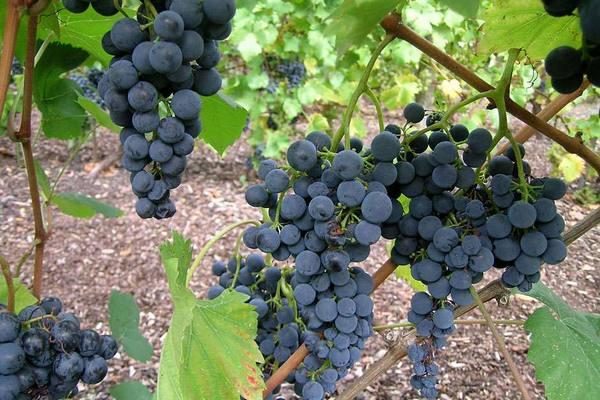
A technical hybrid, the harvest ripens in mid-autumn. The grapes are large and round. The ripe skin is almost black. The pulp is sweet and juicy. The bunches are medium-sized, weighing from 180 to 210 g. The grapes have a pleasant aroma with notes of Muscat and fresh meadow grass.
First Michurinsky
This hybrid is distinguished by its early ripening period. The clusters are small, weighing up to 150 g. The grapes are dark red or purple when fully ripe. The pulp is juicy and has a pleasant muscat flavor.
P34
It is distinguished by its low sugar content in the ripe pulp, which is only 12%. It has good frost resistance, with the bushes able to withstand temperatures as low as -40 degrees Celsius. Among its drawbacks, the variety is often susceptible to powdery mildew.
P33
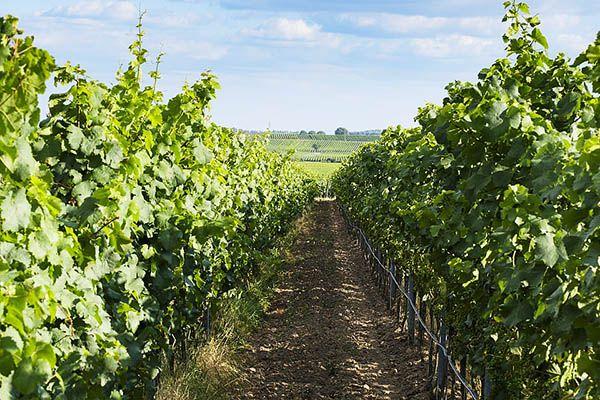
The bushes are medium-sized, with upright stems. This hybrid is considered early-ripening; the first ripe bunches can be picked in early August. The grapes are a rich black-purple hue. Its drawbacks include weak immunity to most grape diseases.
Danko
The plant is tall, reaching a height of approximately 3 meters. It has moderate disease resistance. Ripe grapes weigh approximately 2 grams. The skin is a rich purple. The flowers are bisexual, making this hybrid ideal for greenhouse planting.
Muscat Blau
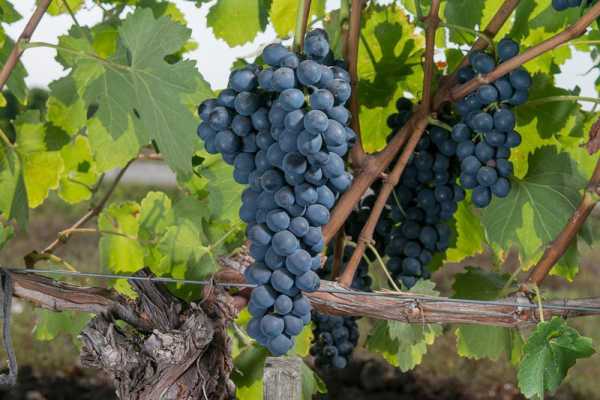
The clusters are medium-sized at technical maturity, weighing from 150 to 255 g. Each grape weighs 5 g. The berries are loosely arranged within the cluster. The skin is a rich eggplant color. When ripe, the skin is firm, and the flesh is juicy and aromatic.
Laura
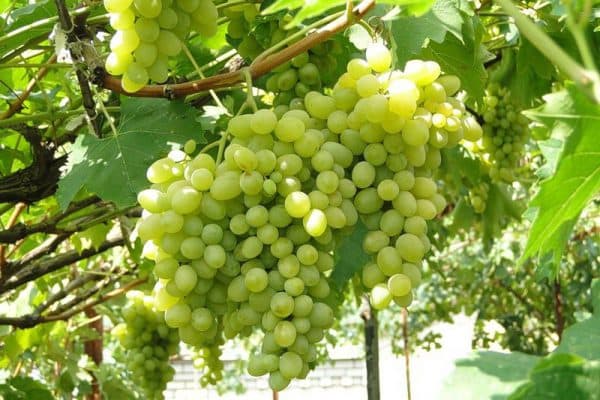
The harvest ripens early, with berries ripening in 110 to 115 days. The clusters are large, weighing up to 1 kg. The maximum weight can reach 3 kg. The clusters are medium-firm, with a light green skin. If the clusters are exposed to sunlight for too long, the skin takes on a yellow tint.
Kishmish Radiant
The main advantage of this hybrid is the absence of seeds in the pulp. The bunches ripen mid-early. Ripe grapes are a beautiful pink color. The shape is elongated. The average weight of ripe bunches is 400 g, with a maximum weight of up to 1 kg.
Aglaya
Fully ripened clusters are dense, weighing up to 450 g. The grapes are emerald green in color and medium in size. The pulp has a sweet, refined flavor. This variety is distinguished by good tolerance to sudden drops in temperature.
Amur
The hybrid has many advantages, but its most important ones are its resistance to disease and frosts down to -25 degrees Celsius. The seedlings tolerate transplanting well and quickly establish themselves in new locations. A distinctive feature of the hybrid is its vine's appearance, reminiscent of wild grapes.
Nina's Muscat
This versatile variety is used for fresh eating and winemaking. The grapes are amber-colored when fully ripe. The skin is thin, the flesh is aromatic and juicy. The sugar content is high.
Supaga
It tolerates temperatures from -21 to -25 degrees Celsius. The grapes are sweet and honey-like. The yield is good. The berries are emerald green. It is characterized by frost resistance.
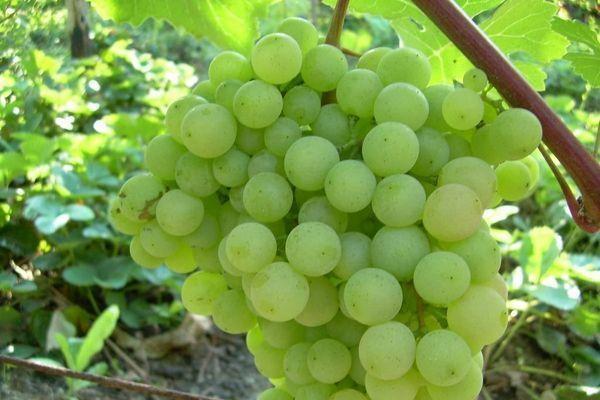
Arcadia
An early-ripening hybrid. Ripe bunches weigh up to 600 g. It can withstand temperatures down to -24 degrees Celsius. The berries are amber-colored and sweet. The grapes are regularly rounded.
Advantages and disadvantages of using a greenhouse
Grapes are best grown outdoors in the south or central regions. Greenhouses are the preferred method for growing grapes in the Leningrad Region.
Advantages of greenhouse grape growing:
- The bushes are protected from frost and adverse climate conditions.
- Higher yield.
- The vine rarely gets sick.
- You can regulate the temperature and light conditions.
- The soil will not be waterlogged.
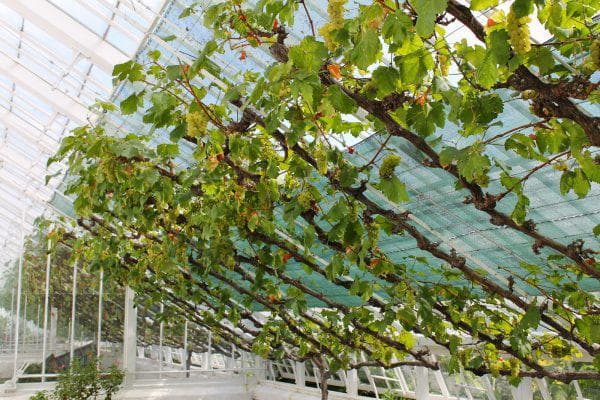
There are no significant disadvantages to growing shrubs in a greenhouse. The only drawback is that if the greenhouse is small, space for the plants is limited, and many varieties have tall bushes. In this case, planting in open ground is an advantage.
Features of cultivation
Growing grapevines in the Leningrad Region is no different from other regions. To ensure a good harvest, the vines require careful care and winter protection.
Recommendations for choosing deadlines
To grow healthy bushes, you need to determine the right time to plant the seedlings. Grapes are planted in the spring, immediately after the weather warms up. The soil should be warm to a depth of 15-20 cm.
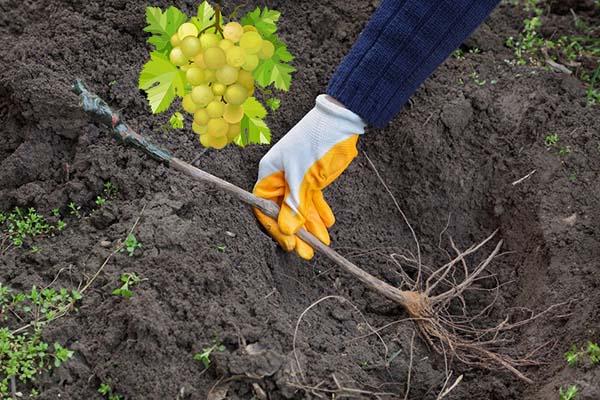
You can also plant vines in the summer, at any time. Seedlings with closed root systems are suitable for planting at this time. Fall planting is also common. However, to prevent the vines from freezing in winter, they are earthed up and well covered.
Site preparation
The planting site should be prepared in advance. The soil should be dug to a depth of 10 cm to prevent insects from appearing in the spring. All weeds should be pulled out. Then, the soil should be mixed with well-rotted manure.
Before planting the vines, you need to leave the area for 2 weeks so that the soil is saturated with nutrients from the manure.
How to prepare the soil and hole correctly
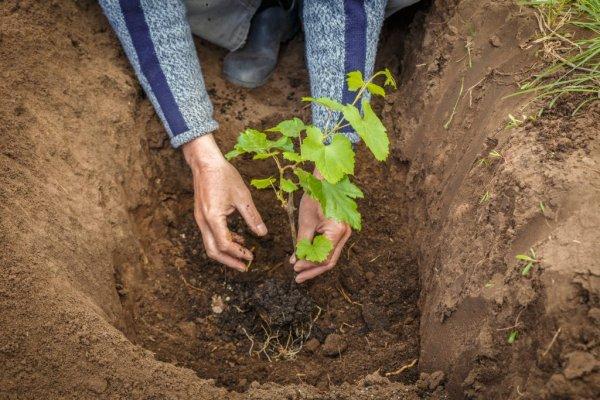
Before planting a seedling, you need to prepare a hole. If the soil is clayey, grapes may not grow well. To ensure proper growth, mix the soil with mineral fertilizers, organic matter, and wood ash, and add sand to the bottom. Then you can begin planting the seedling.
Another way to prepare a hole is to mix soil with manure and dig a hole. Add drainage material to the bottom and lay a thick cardboard sheet on top of it. Cover the cardboard with soil. This method is suitable for planting in black soil.
Formative pruning
Formative pruning is performed the year after planting the seedling. The healthiest and strongest branch—the shoulder—is left. The rest is pruned. The following year, three large stems are left. The rest is pruned. The following year, four large buds are left on each of the three stems. The rest is removed. By the fourth year, the vine will be fully formed. Subsequently, only sanitary and thinning pruning is performed.
Preparing for winter
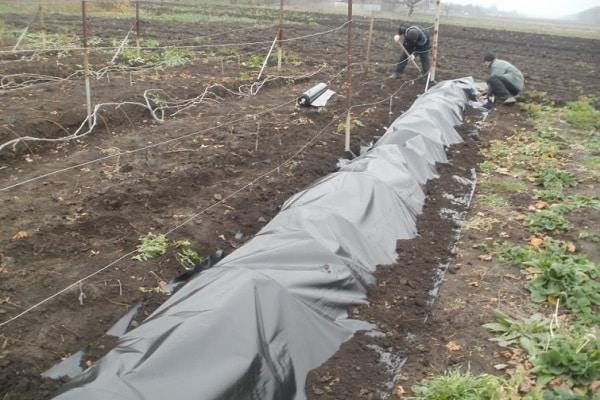
In the Leningrad Region, special attention must be paid to preparing vineyards for winter. The vines are hilled. The mounds should be at least 10 cm high. The vines can then be pressed down to the ground and covered with spruce branches. The key is to ensure a dense covering layer. If it's not possible to press the plant down to the ground, cover the lower part of the trunk as high as possible.
Reproduction
There are several methods for propagating grapevines. The two most common are layering and cuttings.
Layers
The easiest way propagation of grapes - horizontal layering in springTo do this, select a long, strong vine and dig a trench 30 cm deep. Place the vine in the trench and bury it. To prevent it from rising, you can secure it with metal hooks. Cover the vine for the winter. You can add peat or compost to the bottom of the trench.
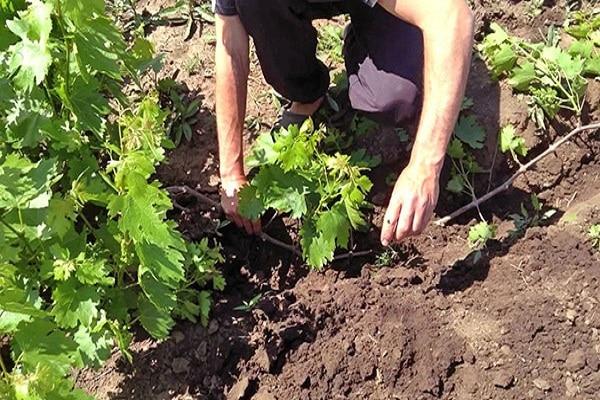
By next spring, the root system of the seedlings will be formed, and they can be separated from the mother bush and replanted separately.
cuttings
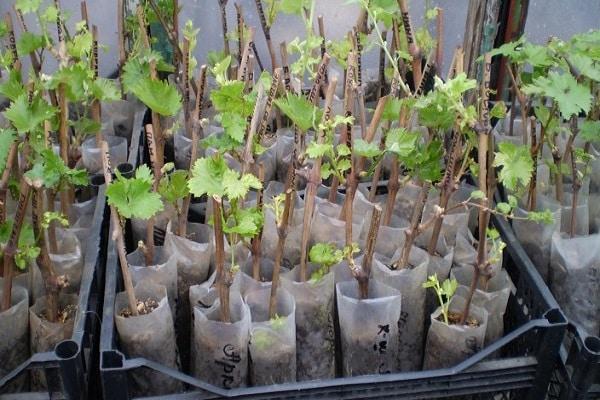
Another method of propagating grapes is by cuttings. Cuttings are taken in the fall. Branches cut to a clump or the middle section of a fruiting stalk are suitable for this. All tendrils and leaves should be trimmed from the cutting. Only four buds should remain.
Trim the lower part of the stem just below the top bud. Then make three vertical cuts. The cuts should be about 3 cm long. After this, place the cuttings in a copper sulfate solution for 24 hours to disinfect them. Place the cuttings in a plastic bag and store them in a cellar or refrigerator until February. In February, plant them in the ground and grow them indoors until spring. In the spring, plant them outdoors.
Diseases and pests
The joys of growing grapes can be spoiled by the sudden appearance of disease or harmful insects.
Mildew
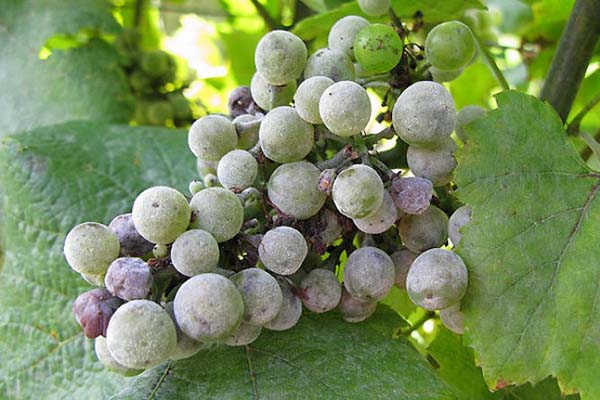
Downy mildew is a type of downy mildew. Symptoms include a white coating on leaves and fruit, flower drop, reduced yield, and very small grapes.
The disease can be cured by spraying with copper sulfate, Bordeaux mixture, and colloidal solution. The drug "Alirin-B" is also effective.
Among folk remedies, treatments with potassium permanganate and wood ash can be helpful. For best results, chemicals and folk remedies can be alternated.
Oidium
Colloidal sulfur treatments help combat powdery mildew. Bayleton, Rubikan, and Karatan are also effective. These treatments can be carried out after the grapevine has flowered.
Gray rot
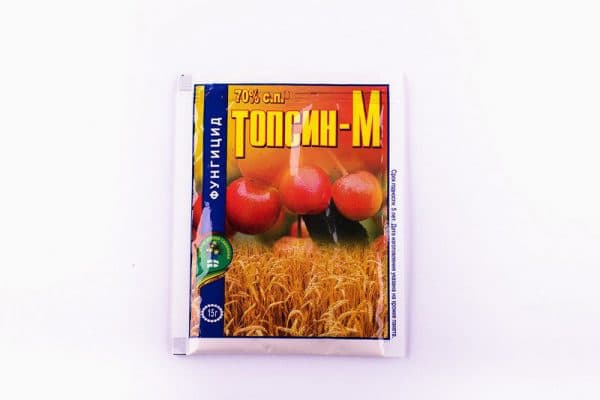
Treat the vines with a baking soda solution every 5-7 days. However, this method is rarely effective. Fungicides such as Ronilan, Rovral, Euparen, and Topsin can be used. Spray the vines with them no more than four times per season.
Spider mite
To repel ticks, you can plant onions and garlic near the vineyard. The scent of these plants repels the parasites. Chemicals such as Actellic, Demitan, Karate, and Akarin are effective in killing ticks.
Leaf roller
To combat leaf rollers, the following preparations are used:
- "DNOC";
- "Fozalon";
- "Keltan";
- Karbofos.
You can also hang homemade traps. Poke holes in empty bottles and fill them with grape juice. Hang the bottles in the vineyard. As soon as the insects fly in, destroy the bottles.

Tick
Treat vines for itch mites in the fall, after the leaves have fallen. Spray the bushes with a lime solution. In the spring, treat the vines with a Carbolineum solution.
Phylloxera
Phylloxera is virtually impossible to eradicate. If the vine is severely infested, it is dug up and destroyed, and the soil is then treated with a soil treatment.
The only way to kill the pest is to flood it. The soil is flooded and kept moist for 40-50 days. However, not every grapevine can survive such a drastic treatment.
Tips and advice from experienced gardeners
Tips for growing vineyards in the Leningrad region:
- All grape varieties need to be covered, including those that do not require covering.
- Don't forget about caring for the vineyard: use warm water for irrigation, fertilize the bushes with mineral and organic fertilizers several times a season, regularly loosen the soil and pull out weeds.
- In autumn, sanitary pruning is carried out, dry and damaged branches are cut off.
- It's best to plant seedlings on a south or west-facing surface. It's important to protect the plant from strong winds.
Even in unfavorable climates, grapes can be grown quite successfully if you follow the advice and recommendations for planting and caring for the vines.
Related posts:
 Beginner's Guide to Growing Grapes in Open Ground in Central Russia
 How to grow grapes in the Moscow region in open ground without a greenhouse
 Description of the Julian grape variety, planting and care instructions
 Timeframes and methods for preserving grapes for the winter at home
 Rules for growing grapes in a greenhouse at your dacha, planting and care
 Description of the Krasotka grape variety, planting and care technology
 Description and characteristics of the Codryanka grape variety, ripening period and care
 Description of 30 varieties and types of Muscat grapes, planting, cultivation and care