
- The best varieties for the Moscow region
- By ripening time
- Very early
- Early
- Early-Middle
- Late
- By nature of use
- Technical (wine)
- Dessert (table)
- Universal
- Kishmish-raisin
- How to plant in open ground at your dacha
- Deadlines
- Choosing a location
- Preparing the planting hole
- Processing of seedlings
- Scheme
- Growing and care
- Formation
- Trimming
- Topping
- Pinching out stepsons
- Thinning
- Coinage
- Lightening
- Top dressing
- In the spring
- In summer
- In the fall
- Watering
- Spraying
- Diseases
- Pests
- Increasing crop yields
- Harvesting and storage
- Rules for preparing a vineyard for winter
- Shelter
- Bending over
- Instillation
- Basic mistakes
- Pro tips for beginners
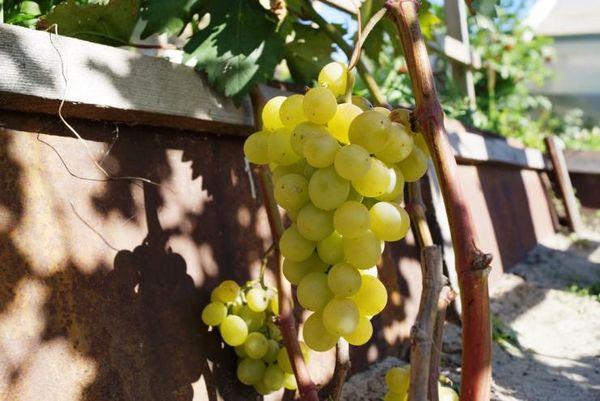
Growing grapes without a greenhouse is gaining popularity among gardeners in the Moscow region. Without a greenhouse, you'll need to provide favorable environmental conditions, follow standard agricultural practices, and select suitable varieties based on your location.
The best varieties for the Moscow region
When choosing grape varieties for planting in the Moscow region, consider not only your own preferences but also the soil type, ripening time, intended use of the crop, and other factors. By choosing a grape variety that meets all these criteria, you'll be able to grow a good harvest and avoid common problems.
By ripening time
All grape varieties are divided into several categories based on ripening time. If you want to harvest grapes early, choose the appropriate varieties. If you have the opportunity to care for the crop over a long period, you can plant late-ripening varieties.
Very early
The ripening period for very early grape varieties is approximately three months. Typically, grape ripening begins after bud swelling. The exact time depends on the average daily temperature. Suitable temperatures for grape ripening range from 2 to 30 degrees Celsius. At higher temperatures, berries ripen later and lose their sweetness in taste, and exposure to cold slows down the development of grape bushes.
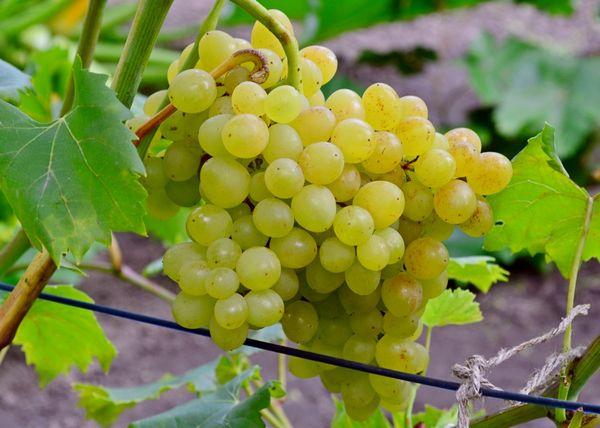
The advantage of ultra-early grape varieties is that they don't require a lot of sunny days to ripen. These varieties ripen even in short, cool summers. An additional advantage is that their early ripening allows them to avoid complications associated with infections. By the time the fungus becomes active, most of the harvest has already been harvested. Popular ultra-early grape varieties include the following:
- The Timur variety. This variety was discovered through hybridization of the Frumoase Albe and Vostorg varieties. The grapes ripen in no more than 105 days. A ripe bunch weighs approximately 600 g. Timur grapes produce large yields with fleshy pulp and a pleasant aroma.
- Elegant variety. Ripening time is no more than 110 days. Grape clusters weigh approximately 500 g and are conical in shape. The fruits are large, pale green, and have firm flesh. This variety has increased resistance to low temperatures and infections.
- Red Muscat variety. This variety was developed by Moldovan breeders. Ripening takes 95-100 days. The clusters are cylindrical, the berries slightly oval, and thick-skinned. As they ripen, the fruit changes color from light red to purple and develops a distinct Muscat aftertaste.
- Rubtsovaya variety. The ripening period for this grape variety is no more than 100 days. The grapes are round, black, and weigh up to 5 grams. The grape clusters ripen actively in large quantities in the second ten days of July. Rubtsovaya is cold-resistant and tolerates temperatures down to -24 degrees Celsius.
Early
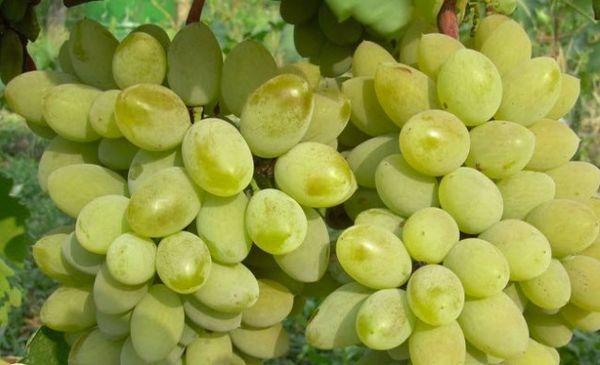
Early-ripening varieties yield fruit in 115-120 days. Early grapes are recommended for growing in cool climates to ensure harvesting before frost. Popular early-ripening grape varieties include the following:
- Krasa Severa (Beauty of the North) is a table grape variety with large, conical clusters weighing up to 250 g. The berries are round, slightly tart, with thin skin and firm flesh.
- Victoria grape variety. This grape variety is prized for its high yield, large berries, and resistance to cold and disease. Victoria grape vines are low and produce numerous shoots, 70% of which are fruit-bearing. Victoria grapes require periodic thinning as they are prone to overcrowding.
- Aleshenkin variety. A common table grape variety with high yields and sweet berries. Grapes reach 5 grams in weight and have juicy flesh. Aleshenkin is self-pollinating, making it easy to care for, especially for inexperienced gardeners.
Early-Middle
Mid-early grape varieties can yield a harvest in 115-120 days. In most cases, harvesting occurs in the second half of September. Early-mid-season varieties can be grown outside of greenhouses, provided the climate is favorable. Popular early-mid-season varieties include:
- Valiant variety. A frost-hardy grape that produces medium-sized clusters of small, blue berries. The fruits have a unique flavor reminiscent of strawberries.
- Marshal Foch variety. The berries are small, round, weighing approximately 1 g. The cylindrical clusters are dense and reach 100-120 g in weight. Frost resistance is down to -32 degrees Celsius.
Late
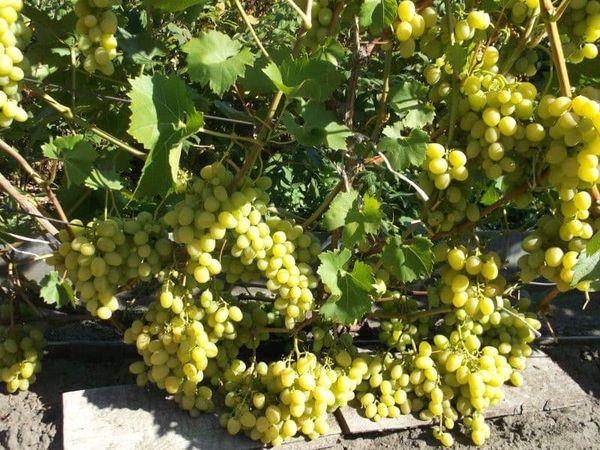
More than 135 days pass from bud break to berry formation. Late-season grape varieties that require no cover must be frost-hardy to prevent wilting during autumn cold snaps. Among the late-season grape varieties suitable for growing in the Moscow region are the following:
- The Alpha variety is a table grape variety similar in appearance to the Isabella grape. The Alpha grape harvest occurs in late September and early October. The grape vines have large, densely pubescent leaves, compact clusters weighing up to 150 g, and oval, dark-blue berries. This variety is drought-tolerant but tolerates frosts well and requires no cover.
- Aligote variety. A winter-hardy variety common in the Moscow region, used to produce table wines and soft drinks. The berries are small and round. The bunches are dense, averaging around 100 g.
By nature of use
Depending on your grape growing goals, you need to select a variety that meets your requirements in terms of taste and other characteristics. By choosing the right variety based on your intended use, you'll be able to fully enjoy the berries' flavor.
Technical (wine)
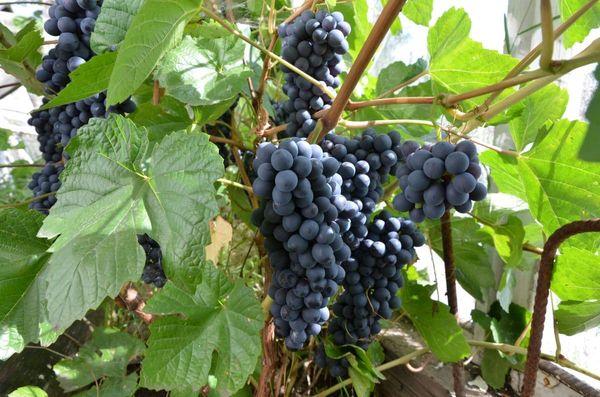
The harvest of industrial grape varieties, also known as wine grapes, is used to produce wine, juices, and other non-alcoholic beverages. Distinguishing features of industrial grape varieties include a higher juice content in the fruit, reaching 75-85% of the berry's weight, as well as a low cluster structure, determined by the ratio of berry weight to rachis weight.
The sugar content and acidity of the harvest of industrial grape varieties influences the type of product produced from them. Compared to table grapes, the appearance of the berries and the size of the bunch are less important for industrial grapes. Mechanical and chemical compositions play a significant role, depending on the growing conditions and the biological characteristics of the particular variety. For this reason, identical industrial grape varieties grown in different soil and climate conditions may differ in their intended use.
Industrial grape varieties are widely cultivated in all geographical viticultural zones. The following varieties are common in the Moscow region:
- Crystal grape variety. Developed by Hungarian breeders, this variety is popular in many regions. Its main advantages include high yields, a short ripening period, and a balanced flavor. Crystal grape vines are medium-sized, with a shoot yield of up to 90%.
- Amursky Potapenko 1 variety. A mid-season variety with tall bushes producing clusters weighing up to 150 g. The berries are round, with juicy flesh and a blue-black hue. This variety is resistant to most diseases and can withstand extremely low temperatures.
Dessert (table)
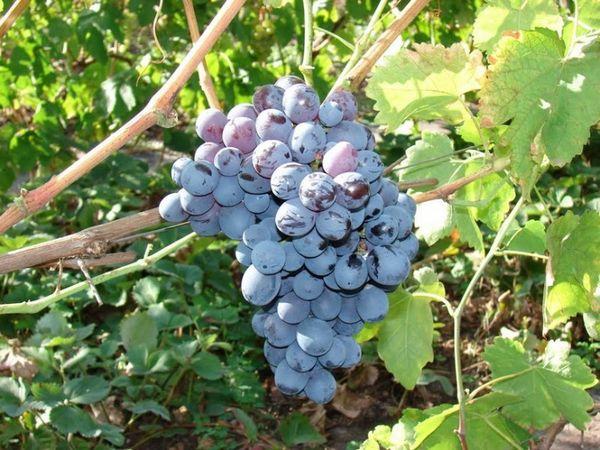
Table grapes are characterized by fleshy pulp, thin skin, and minimal or no seeds. The fruit is sweet and can be tart or slightly sour. Due to its pleasant flavor, grapes are often served for dessert. The sugar content of the berries ranges from 13-17%.
Table grape varieties with large berries per bunch and large fruit size are the most prized. To ensure proper ripening and juice accumulation, grapes must be grown in good natural light. In the Moscow region, the recommended table grape varieties are Cardinal and Timur.
Universal
General-purpose grape varieties are suitable for fresh-picked consumption, processing, and the production of wine and soft drinks. Most general-purpose varieties have neutral flavor characteristics and are more suitable for growing in garden plots than for industrial production. Due to their low maintenance, general-purpose grapes are popular among novice gardeners with limited experience growing this crop. General-purpose varieties include Moskovsky Bely, Druzhba, and Zhemchug Zala.
Kishmish-raisin
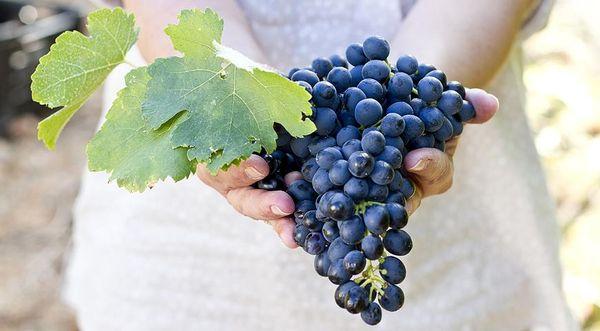
Breeders around the world have developed numerous varieties of sultana-raisin grapes. They differ in fruit shape, bunch size, color, flavor, and other characteristics. Grapes in this category are typically seedless, a significant advantage. Sultana-raisin varieties are frost-resistant and can grow quickly even when exposed to cold temperatures.
Note: If temperatures drop to extremely low levels, shelter may be necessary.
How to plant in open ground at your dacha
When considering growing grapes in open ground at your garden plot, there are a number of considerations to consider. To prevent common problems and ensure a regular, good harvest, follow planting guidelines and complete a number of preparatory steps.
Deadlines
Grape seedlings can be planted in both spring and fall. Planting at different times has its pros and cons. The main advantage of spring planting is that the seedlings will take root better and have time to adapt to their new location during the warmer months. You also have the opportunity to prepare the soil in advance and leave it until spring. Planting in spring makes it easier to predict weather conditions and avoid sudden drops in temperature.
The disadvantages of spring planting include the fact that when it gets warmer, various pathogens become more active. Untimely and poor-quality prevention can lead to poor adaptation of bushes and subsequent death.
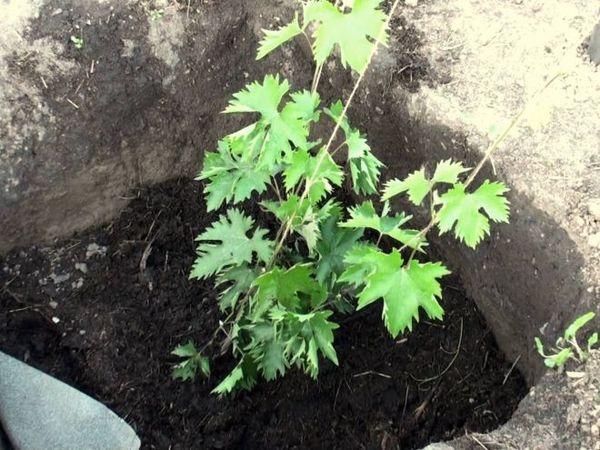
The advantages of fall planting include a large selection of good seedlings and vigorous growth. It's important to plant in early fall to allow the vines to establish roots before severe frosts set in. A sudden cold snap can kill the vines, so it's important to check the weather forecast in advance and plan for adequate cover.
Choosing a location
Grapes are considered a heat-loving crop, so they need to be planted in a site with good natural light and protection from drafts. However, unventilated or fenced areas are not the best choice. The optimal location is along a fence or the walls of a south-facing building. Buildings are heated by the sun during the day and release heat at night, which positively impacts grape growth.
Grapes grow best in clay soil, but they can also be planted in sandy loam, sandy clay, and loamy soil. It's important that the soil is fertile and contains the nutrients the seedlings need.
Take a look Also

Preparing the planting hole
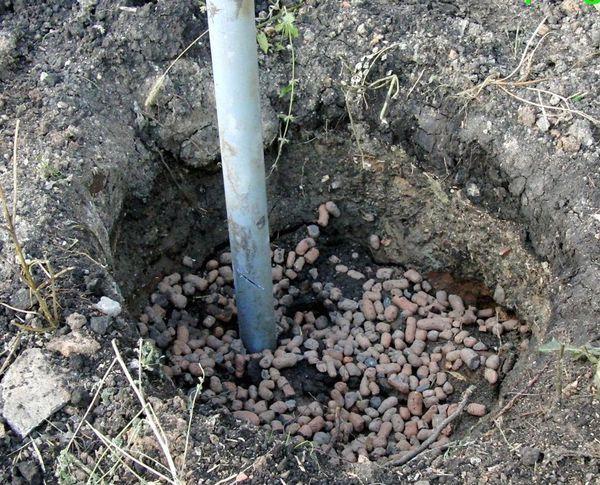
It's best to dig a hole for planting grapes in advance to allow the soil to settle. Preparation begins with outlining the boundaries and determining the location of the vines. A suitable planting hole size is 1 x 1 m. This volume allows for the required amount of loosened soil mixture and fertilizer to be added.
Fill the planting hole layer by layer with sand, humus, wood ash, and fertile black soil. Before planting, it's a good idea to apply superphosphate and ammonium nitrate to the soil.
Processing of seedlings
Before transplanting the seedlings to the prepared hole, they should be treated to promote vigorous growth in their new location. A few hours before planting, the seedlings should be soaked in a growth stimulant and disinfected to reduce the risk of infection.
Scheme
A common grape planting scheme is to arrange the shoots on a single plane. For this purpose, single-strip trellises 2 meters high are used. The distance between shoots should be approximately 12 cm. If more than 25 shoots are planned for a single vine, a trellis section 3.5 meters long is required. To prevent the vines from shading each other, a gap of about 2 m is left between rows.
Growing and care
Grapevine yields are directly dependent on the quality of care. To produce large quantities of delicious fruit, basic agricultural practices and favorable environmental conditions are essential.
Formation
During the growing season, grapevines require periodic pruning to ensure vigorous growth and fruit production. There are several pruning options, each with a different technology.
Trimming
Over time, grapevines retain old shoots that require pruning to encourage new growth. Because grapes have strong, porous wood, pruning should be done with sharp pruning shears. Vines should be pruned at an internode, slightly above a bud. Perennial shoots are pruned according to agricultural practices, leaving no stumps.
When training grapevines in the first year of growth, the most vigorous fruiting shoots are left and paired so they are located close together. One shoot is pruned short, leaving 2-3 buds, and the other is pruned long, leaving 8-9 buds. In the fall of the second year, the long vine is cut back along with all its shoots.
Topping
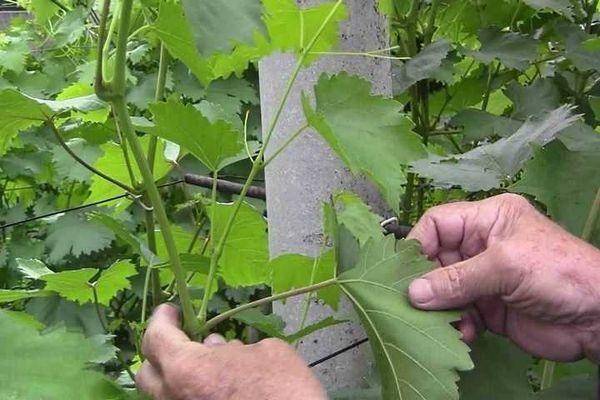
Pinching is essential for accelerating crown formation. This technique causes shoots to branch intensively, and buds to form new branches. Pinching allows you to direct the shrub's growth direction. Pinching can be accomplished in two ways:
- Before flowering, strong shoots are broken off above the tenth node. This slows the vine's growth and subsequently produces more ovaries and inflorescences.
- The tops are removed, snapping off 2-3 cm from the end of each shoot. Three young leaves should remain in the treated areas.
Pinching out stepsons
To accelerate the growth of grapevines and improve photosynthesis, side-shoots are removed. This procedure is performed in the spring, when the first leaves form on the secondary branches. Each side-shoot around the inflorescence is trimmed to ensure uninterrupted pollination after flowering. After pruning, the lower pair of leaves is left, and the remaining leaves are removed. The frequency of care depends on how quickly the shoots mature.
Thinning
Grapes are thinned in clusters to improve the appearance of the harvest. Table grape varieties with dense clusters require thinning in particular. Grapes that are not fully formed are cut off along with the upper part of the cluster, where the small grapes grow.
Coinage
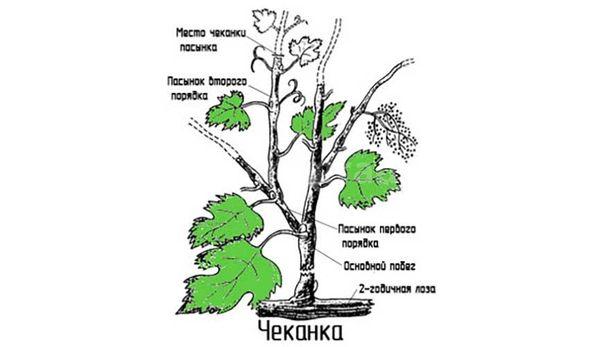
If shoot development is slow, grapevine pruning is required. This involves removing the upper portions of the shoot down to the level of the first developed leaf. The need for pruning can be recognized by the straightened tops of the bushes. If the vines are developing normally, pruning is not necessary to avoid excessive growth of lateral branches. Pruning is typically performed in late August, when the vegetative process slows. The benefits of pruning include the following:
- Nutrients are delivered more quickly to all parts of the bushes;
- the quality of berries improves;
- When grapes are affected by mildew, the healing process is accelerated.
Lightening
The thinning procedure involves removing some of the foliage as the bunches ripen. Removing some of the leaves helps ensure better ripening of the fruit. Cut leaves should not be left near the bushes, as plant debris can harbor pathogens.
Top dressing
Fertilizing grapevines has a positive effect on their development, fruit size, and flavor. Fertilizing should be done several times during the season. The crop requires specific nutritional requirements at different times of the year.
In the spring
Every year, as grapevines mature, they absorb nutrients from the soil, essential for fruiting. Without a nutrient deficiency, grapevines are susceptible to diseases and pests. In spring, grapevines require nitrogen for vigorous growth, phosphorus for flowering and ripening, and potassium for fruit set and increased plant immunity. For convenience, a complete fertilizer containing all the necessary components can be used.
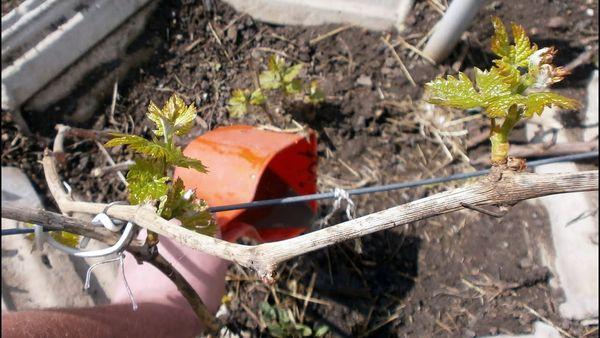
Grapes can also be fertilized with organic matter, which can be used as a primary fertilizer or as a supplement to mineral fertilizers. Organic fertilizers are applied before flowering. Most often, well-rotted manure is used for grapes, which is incorporated into the soil in early spring to a depth of 25-30 cm. In addition to manure, compost made from grass clippings, wood ash, sawdust, and plant residues can be used.
In summer
During the summer, the vegetative mass begins to grow rapidly and fruit formation occurs, requiring several applications of fertilizer. The easiest way is to use complex fertilizers, applying them in early summer and again in late July or early August.
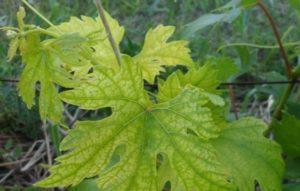
The fertilizer can be sprinkled under the grapevines or used in a diluted form. It's important not to exceed the recommended dosage indicated on the packaging to avoid damaging the roots. When choosing a fertilizer, it is worth considering the composition of the soil in order to accurately determine which elements the crop needs.
In the fall
After harvesting, the soil should be fertilized with nutrients used by the plant throughout the season. Autumn grape fertilization should definitely contain potassium and phosphorus. Magnesium and zinc are also beneficial. All of these components boost the plant's immunity and help it withstand frost. In addition to mineral fertilizers, the soil should be treated with a solution of well-rotted compost, manure, or chicken manure.
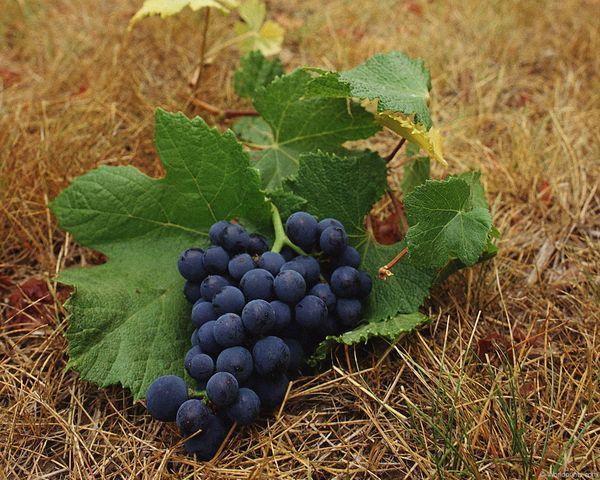
Autumn fertilization is carried out in stages: first, organic matter is added, followed a few days later by mineral nutrients. Additionally, it is recommended to spray the grapes with monopotassium phosphate in early September to promote ripening of the vines.
Watering
Grapes are moisture-loving plants, so regular watering accelerates growth and improves yields. However, grapevine leaves are sensitive to excess moisture. During rainy seasons, it's best to avoid irrigating the vine to avoid fungal infections. In the absence of significant rainfall, the crop is watered several times throughout the season, either aboveground or underground.
Spraying
To protect crops from external negative influences and improve fruiting, spraying is carried out. Depending on the purpose, various products are used.
Diseases
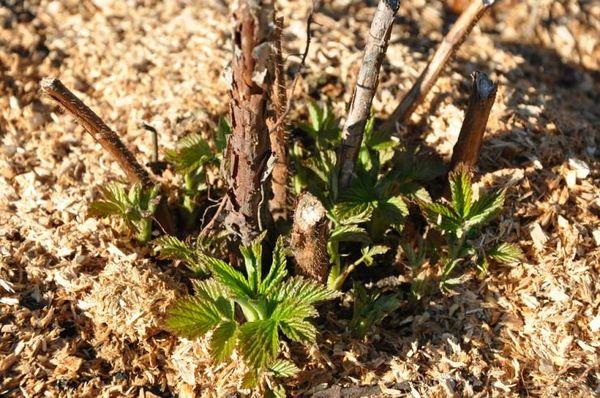
Improper care and unfavorable environmental conditions lead to the development of infectious diseases in grapes. These diseases include anthracnose, phomopsis, downy mildew, and others. Treatment with specialized fungicides is an effective preventative measure against these diseases. You can also prepare a soda solution or use colloidal sulfur.
Pests
Grapes are susceptible to infestations of spider mites, leaf rollers, thrips, mealybugs, and phylloxera. Typical signs of pest presence include:
- unnatural color of foliage;
- general depressed state of the vines;
- the presence of holes or spots on the leaves;
- rotting of shoots.
Increasing crop yields
You can speed up the ripening process and increase yields by spraying with specialized products. A common solution is gibberellin, which should be applied evenly to the ovaries and inflorescences. Gibberellin should be used in combination with standard fertilizers.
TUR is also suitable for grapes. This biologically active substance inhibits cell growth. Using this product helps grow a healthy harvest through improved berry set. Treatment must be carried out before flowering begins.
Harvesting and storage
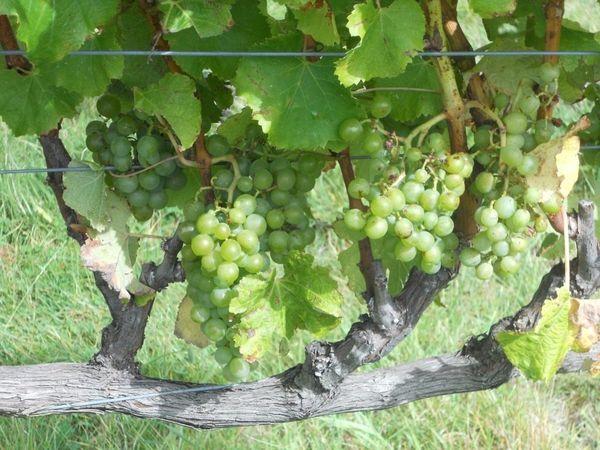
When the grapes are ripe, they should be carefully cut with pruning shears and placed in clean, dry containers. Ripeness can be determined by external signs: color, waxy coating, and firmness. Store the harvested grapes at a temperature of around 0°C and a humidity of 90-95%.
Rules for preparing a vineyard for winter
When growing grape varieties with insufficient frost resistance, you'll need to prepare your plants for winter. There are several ways to protect your plants from the cold.
Shelter
Agrofibre is the optimal material for covering bushes. This environmentally friendly, woven material protects plants from frost and prevents damping-off. In regions with severe frosts, other high-density materials can be used in addition to agrofibre.
Bending over
In regions with abundant snowfall and a stable snow cover, simply pressing the vines to the ground is sufficient. Branches can be placed under the vines to reduce the amount of contact between the vines and the ground. The pressed plants are then covered with snow, creating a natural protective layer.
Instillation
The burying procedure involves protecting the base of the bushes from frost by covering them with soil. It is recommended to stretch a polypropylene cloth over the vines and then add moistened soil on top. Once warm weather arrives, the cloth and soil will need to be removed.
Basic mistakes
Common mistakes made by novice gardeners are related to improper grape care. Difficulties also arise from choosing the wrong location for the vines. If the plants are planted on a shaded side or are too shallow, they need to be moved to a different location and deeper holes dug. When growth and fruiting problems arise due to vertical vines on a trellis, staking them horizontally is sufficient.
Pro tips for beginners
Experienced gardeners recommend paying special attention to the grape variety when growing grapes. To avoid problems, choose a variety adapted to the Moscow region's conditions. The site where you plan to grow the grapes and the preparation of the seedling holes in advance are also crucial. By following all planting and care guidelines, you can regularly reap a bountiful harvest with excellent flavor.
Related posts:
 Description of 30 grape varieties for Siberia, planting and care for beginners
 Description of 30 varieties and types of Muscat grapes, planting, cultivation and care
 Beginner's Guide to Growing Grapes in Open Ground in Central Russia
 The ripening time of grape vines by variety, how to speed up the process, and what to treat the plant with
 Description of the Julian grape variety, planting and care instructions
 The best grape varieties for growing in the Urals, planting and care rules in summer
 Description and characteristics of the Syrah grape variety, where it grows
 Description of the Krasotka grape variety, planting and care technology