
- History of origin
- Description and characteristics of the variety
- Characteristics
- Caloric content
- Benefits and harms
- Acidity
- Vine
- Bunch
- Productivity
- Growing regions
- French farms
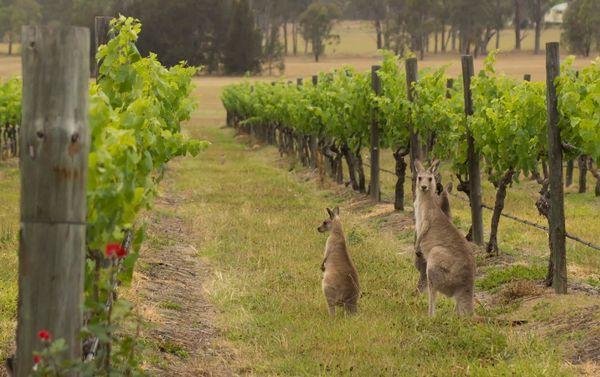
- Australia
- Switzerland
- South Africa
- Chile
- Argentina
- How to plant
- Recommendations for choosing deadlines
- Site preparation
- How to select and prepare planting material
- Planting diagram
- Care instructions
- Watering mode
- Additional wind protection
- Preventive spraying
- Top dressing
- Preparing for winter
- Trimming
- Topping
- Wine Producers Overview
- French wines
- Domaine Jean-Louis Chave
- Charles Thomas
- Maison Tardieu-Laurent
- Domaine Yves Cuilleron
- Domaine Gilles Robin
- Jean-Luc Colombo
- Domaine Bunan
- Maison Nicolas Perrin
- Australian wines
- Gramp & Sons
- Oxford Landing
- Penfolds
- Glaetzer
- Torbreck
- D'Arenberg
- Rootstock of cuttings
- Advantages and disadvantages
- Diseases and pests
- Mildew
- Oidium
- Powdery mildew
- Medicinal properties
- For men
- For women
- For children
- Harvesting and storage
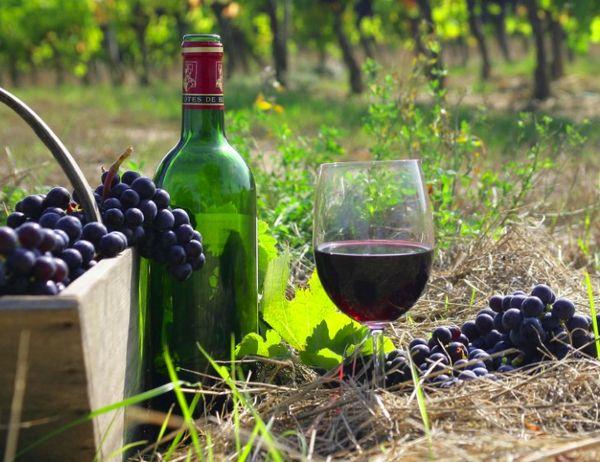
Syrah grapes are used to make sparkling, dry, and fortified red and rosé wines. The resulting spirit pairs well with meat dishes, desserts, cheeses, and berries. It has a deep purple color and aromas of spices, black pepper, and raspberries. Syrah wine has a tart, pleasant flavor, making it quite popular today.
History of origin
Legend has it that the grape variety was first cultivated in Shiraz, one of Iran's most ancient cities, where the famous Shirazi wine was produced. Shiraz, or Syrah, is another name for the newly developed variety. It was assumed that the grape was brought from Iran to what is now France, but scientific research has confirmed that the variety originally grew in the southeast of France.
Description and characteristics of the variety
Syrah grapes are known for their low yields. In France, where the variety was discovered, they account for a small percentage of all red grapes. However, in Australia, where wine production is widespread, the variety accounts for almost half of the total planted area. Wines made in France taste different from those made in Australia. The variety's distinguishing features include high-quality ripening and long shelf life. Syrah grapes are susceptible to certain diseases.
Characteristics
The Shiraz grape variety, like other varieties, has a number of characteristics, the main ones being caloric content, acidity, nutritional value, weather tolerance, and yield.
Caloric content
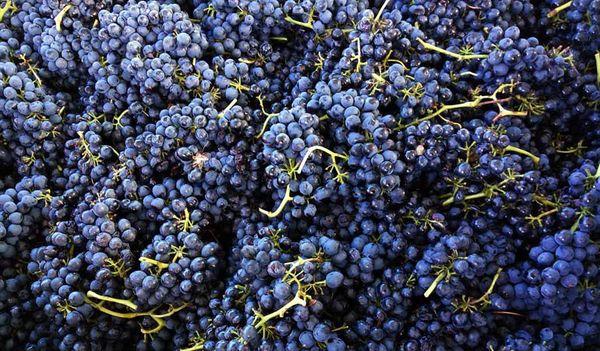
Unprocessed Syrah grapes are low in calories, with approximately 70-80 kilocalories per 100 grams. Juice made from the grape increases the caloric value, reaching approximately 140-150 kilocalories per 100 grams. As a wine, the product also has a low calorie content, slightly higher than that of pure grapes – 80 to 90 kilocalories.
Benefits and harms
Syrah grapes have several beneficial properties:
- normalizes hemoglobin levels;
- promotes proper functioning of the gallbladder, gastrointestinal tract, and liver;
- Antioxidants contained in berries help to normalize the condition and color of the skin;
- speeds up metabolism.
It's impossible to claim that Syrah grapes are harmful to the body. Those with high blood sugar should monitor their intake. Personal intolerances should also be considered.
Acidity
The shelf life of Shiraz wine depends on acidity. French wines have higher acidity than Australian ones, averaging 8-9%, while Australian wines have only 6-7%.
Vine
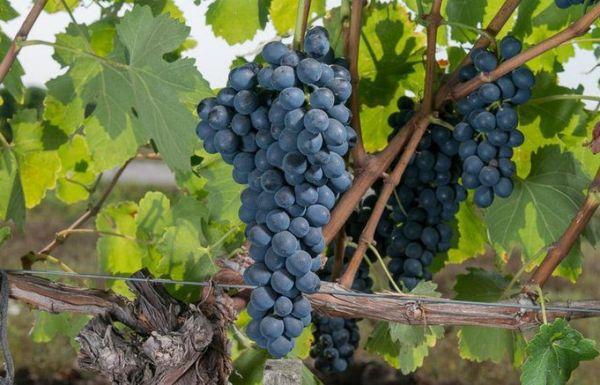
Syrah vines grow moderately, with average productivity. While Shiraz grapes are relatively resistant to viruses and rot, they can thrive almost anywhere.
Often, due to unfavorable conditions, flowers cannot develop normally, so ovaries form late and the harvest only ripens by mid-season.
Bunch
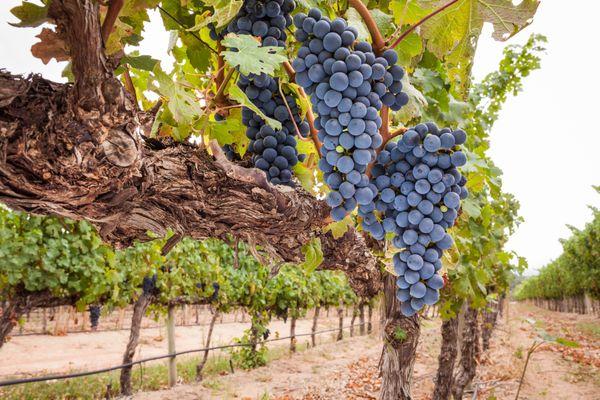
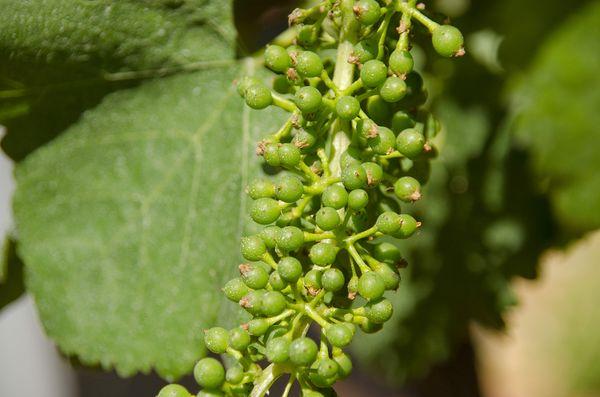
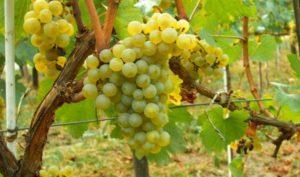
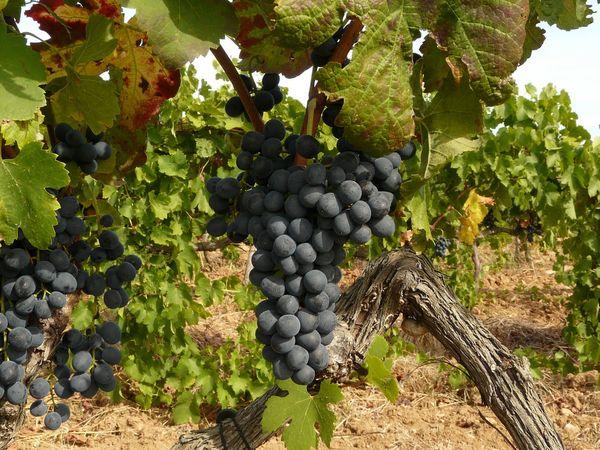
The clusters are small and cylindrical. Each cluster typically weighs approximately 110 grams. A single vine typically contains 2 to 3 clusters. The clusters are medium-sized and loosely textured. The berries are dark purple with firm skin and light-colored flesh.
Productivity
The Syrah grape variety has a low yield. However, the low yields improve the flavor, texture, and pulp quality of the berries.
When growing this variety, you need to be careful: if the fruits are not harvested in a timely manner, they may lose their beneficial properties and rich flavor.
Growing regions
Depending on climate conditions, Shiraz grapes can be grown in various countries. Several cultivation regions are distinguished.
French farms
Production is characterized by a specialization in austere, dark wines. The wines traditionally boast aromas of spices and black pepper. Some regions have distinctive alcoholic beverages; for example, drinks from the Rhône Valley are characterized by floral and berry aromas and flavors.
Australia
In this country, wine names have fewer variations than in France. They specialize in producing young wines with distinctive coffee, chocolate, and berry flavors. These wines are characterized by a rich, dark hue.
Switzerland
In Switzerland, production is distinguished by the fact that the artisans, after picking the berries, then allow them to overripen. The resulting wine has a rich flavor, allowing them to create an unusual line of drinks.
South Africa
Juiciness, vibrant flavors, and aromas are characteristic of local drinks. The region primarily produces young drinks with subtle hints of jam and olives.
Chile
Chile produces inexpensive, young Syrah wines. They are characterized by richness, a vibrant array of aromas, and flavors.
Argentina
Here, just like in Chile, they produce drinks with a colorful list of different aromas and flavors, distinguished by berry notes.
How to plant
Growing Shiraz grapes has its own nuances, which involve selecting and preparing not only the planting site but also the materials.
Recommendations for choosing deadlines
Fruits are often sensitive to changes in weather and temperature. At low temperatures, both berries and vines develop more slowly. Syrah grapes do not tolerate drought well, nor do they tolerate areas with strong winds. Spring, after the snow has completely melted, is a good time to plant. Seedlings are usually planted in April and May, followed by green cuttings in June. An alternative option is planting grapes Shiraz in October or November, before the onset of frost, with subsequent covering of plants.
Site preparation
The planting site should be prepared in accordance with the following recommendations:
- Drainage should be provided if the soil consists of clay.
- You need to add humus and manure if the soil is sandy.
- It is necessary to add sand if the area is peaty.
- It is not recommended to plant the plant in salt marshes.
- Groundwater should be at a depth of up to 2.5 meters.
How to select and prepare planting material
It's important to have healthy planting material. To ensure quality, pay attention to:
- The root cut should be white. There should be no brown spots on the surface.
- Last year's shoot. It must be fully mature at the time of planting.
- Buds. On healthy shoots, they are usually firm, well-attached, and do not fall off.
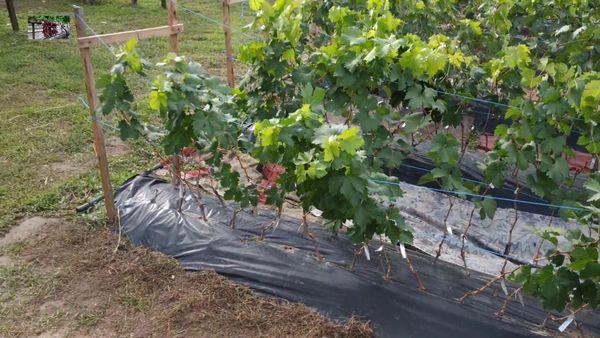
The seedlings should be prepared for planting. The cuttings should be soaked in a honey solution made from 1 tablespoon of honey and 3 liters of water. This is necessary to speed up the growth of Syrah grapes.
In addition to preparation, Syrah grape planting material must be hardened off to avoid damage due to exposure to sunlight.
Keep the seedlings in the shade for a week before planting, then in partial sun for a week and a half. This hardening process will accelerate the growth of the variety.
Planting diagram
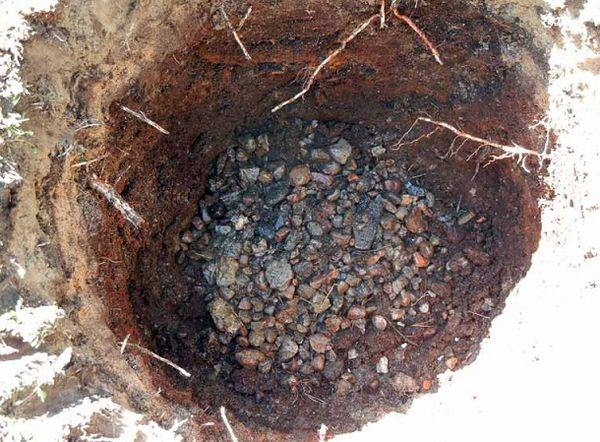
- About a month before planting, dig a hole 80 centimeters long and 80 centimeters wide to allow the soil to settle. Leave a space of 2 meters between the holes.
- A peg should be placed in the middle of the hole, and drainage made of crushed stone or broken brick should be placed in the hole.
- Fill the bottom of the hole with soil (about 10 centimeters) and water it. Add humus, manure, and fertilizer. Place another layer of soil on top. The hole should be one-third full.
- Place the roots of the seedlings in a bucket of water for 2 days. Trim the young shoots.
- After two days, place the seedlings in the hole, straighten the roots and attach to a peg.
- Add soil and compact it. Hill up the seedling to a height of 20 centimeters.
Care instructions
There are certain rules for caring for the Syrah grape variety. It's important to know how to properly water, carry out preventative measures, and protect the plants from adverse weather conditions.
Watering mode
Shiraz grapes should be watered exclusively at the roots. The first watering is done in the spring, when the soil layer begins to dry out. The second watering occurs after fruit set. The third watering is in the fall.
Pay close attention to your watering schedule, as this variety does not tolerate drought. Prolonged neglect can lead to the plant's death.
Take a look Also
Additional wind protection
To protect Syrah grapes from the wind, you can plant a row of trees near the vineyards. The key is to plant the row perpendicular to the wind direction most commonly encountered in the area.
Preventive spraying
With the arrival of spring, you should prune off broken stems. Add 200 grams of Nitrafen to water (10 liters) and spray the Syrah grapes to prevent pests and diseases. In summer, you can also use Ridomil or Fufanon to treat the vines against spider mites.
Top dressing
In summer, the plant needs to be fertilized twice with manure. In autumn, the vines become weak, so we also feed them with an organic solution. It's important to fertilize Syrah grapes on time, otherwise they will slow down their development.
Preparing for winter
In the fall, the bushes should be earthed up with soil, the vines pruned and bent to the ground. Cover the variety with spruce branches. For greater frost resistance, you can use a solution of Epin and water. Spray the bushes a few days before the expected frost.
Trimming
In spring, broken stems should be cut off. In summer, leaves that shade the fruit are trimmed.
Topping
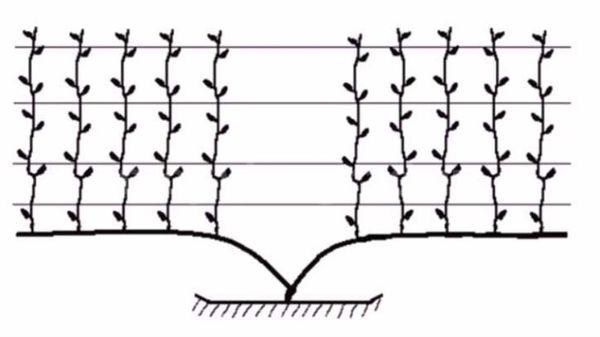
During the summer, pinch the vines to keep them from growing beyond 170 centimeters. In the fall, pruning is done only after the harvest. In winter, pinch the plant back so it bends easily toward the ground.
Wine Producers Overview
It's impossible to say definitively which wines are better—French or Australian. Syrah grapes develop differently in different climates, resulting in unique and unusual flavors and aromas. Winemakers around the world strive to preserve all the beneficial properties of Syrah grapes, creating their own signature wines, infusing their flavors with hints and notes of spices, fruits, flowers, and sweets.
French wines
Below you can see a brief description of the main French wine producers from this variety.
Domaine Jean-Louis Chave
The wines are characterized by a fresh aroma with fruity notes and hints of butter. They have refreshing acidity against a backdrop of fruity flavors.
Charles Thomas
The producer's wines have a tart taste and a whole range of aromas, including berry and floral.
Maison Tardieu-Laurent
The wines are characterized by a deep flavor, energizing and driving. However, the producer himself does not participate in the vinification process.
Domaine Yves Cuilleron
The wine is characterized by spicy aromas and fruity, berry notes. The producer is highly regarded in the wine market.
Domaine Gilles Robin
The wine has a concentrated flavor, with notes of licorice and smoke. The winemaker's ancestor worked extensively on the development of the Syrah grape.
Jean-Luc Colombo
The producer has had a significant impact on the development of winemaking in the Rhône Valley. His wines are distinguished by their tart flavor and high quality.
Domaine Bunan
The wines have aromas of raspberry, strawberry, and apricot, with subtle citrus notes. A refreshing wine with good acidity and hints of spice.
Maison Nicolas Perrin
The wines have a distinctive smoky aroma with hints of black pepper. The palate is complex with dark fruits and flowers.
Australian wines
Several producers produce Syrah wine in Australia. Some information about them is provided below.
Gramp & Sons
Delicious wines with deep flavor and a range of aromas of berries and spices.
Oxford Landing
The wines are dominated by notes of spices and chocolate, aromas of flower leaves and freshness.
Penfolds
The wines are distinguished by their original taste and sweet aromas, but the producer's work is not highly valued.
Glaetzer
The drinks are filled with notes of sweet spices, cherries, and other dark berries. The taste is deep and tart.
Torbreck
A young producer who skillfully combines the traditions and tastes of old and new wine production.
D'Arenberg
The manufacturer is valued in the market for its high-quality products, original taste, and sound pricing policy.
Rootstock of cuttings
Syrah grapes need to be grafted to combat soil pests. The rootstock also helps the plant adapt to poor soil conditions. Careful selection of the rootstock variety is essential, as the grapes may grow better or worse depending on the variety. Consider the soil type and the capabilities of the rootstock variety.
Advantages and disadvantages
The advantages of the Syrah variety are:
- Ability to grow in different climatic zones;
- Benefits to human health;
- Richness of taste;
- Suitability for wine production.
Flaws:
- Low yield;
- Susceptibility to diseases;
- Sensitivity to sudden temperature changes.
Diseases and pests
The most common disease that affects Syrah grapes is powdery mildew.
Mildew
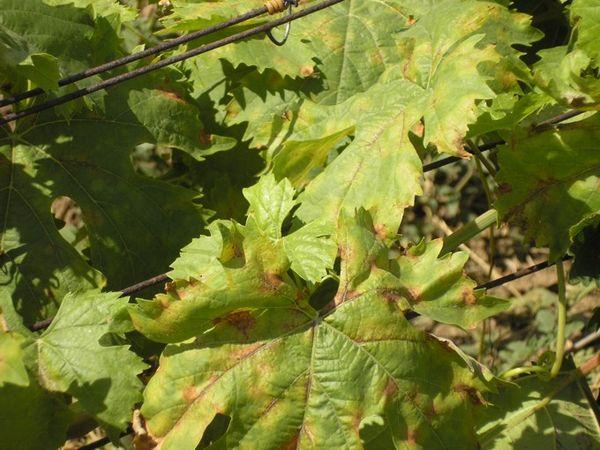
Downy mildew is a type of downy mildew. Hot and damp weather causes oily-yellow spots to appear on the leaf surface, which soon turn brown. A white coating appears on the underside of the leaf. Flowers and ovaries dry up. To prevent fungal infections, treat the plant with fungicides before and after flowering. Keep in mind that these products can be washed away by rainwater, so repeat applications are necessary.
Take a look Also

Oidium
Powdery mildew is a true powdery mildew. Damage occurs due to dry heat or sudden changes in humidity. A white coating appears on the leaves, which can be easily wiped off. The fruits crack, rot, or dry out, releasing a characteristic rotten odor. For prevention, treat the plants with fungicides. For treatment, use Thiovit Jet every 10 days.
Powdery mildew
This disease is not particularly dangerous, but it spreads quickly. Fungal infections require prompt treatment and preventative measures.
Medicinal properties
Shiraz grapes retain their beneficial properties in any form: fresh (as fruit), liquid (as juice or wine), or dried (as raisins). Scientific research has confirmed that Syrah grapes have beneficial effects on the human body. Their properties include:
- improving brain function, strengthening memory;
- slowing down cell aging;
- elimination of chronic constipation;
- stabilization of blood pressure;
- strengthening the cardiovascular system;
- reducing stress levels;
- acceleration of metabolism;
- reducing the risk of malignant tumors;
- combating the symptoms of migraine;
- maintaining the condition of the circulatory system.
For men
Syrah grapes are especially valuable for men. They help restore the body after exercise. Drinking them also boosts libido and helps treat infertility.
For women
The antioxidants found in large quantities in Syrah grapes help women avoid the development of malignant tumors, especially in the mammary glands.
Consumption of this variety is a preventative measure against cancer, diabetes, and stroke.
For children
In children, Syrah grapes help normalize the functioning of the gastrointestinal tract and liver, strengthen the cardiovascular system, and control blood cholesterol levels.
Harvesting and storage
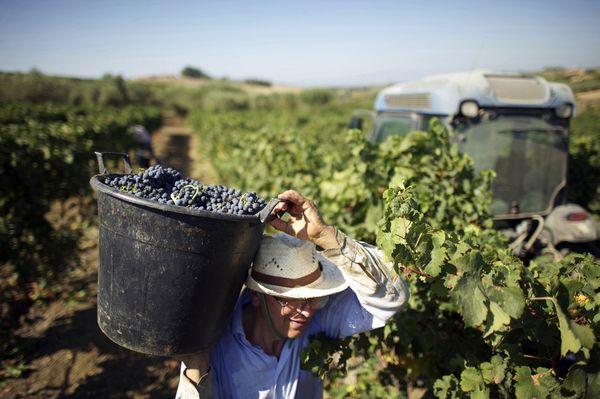
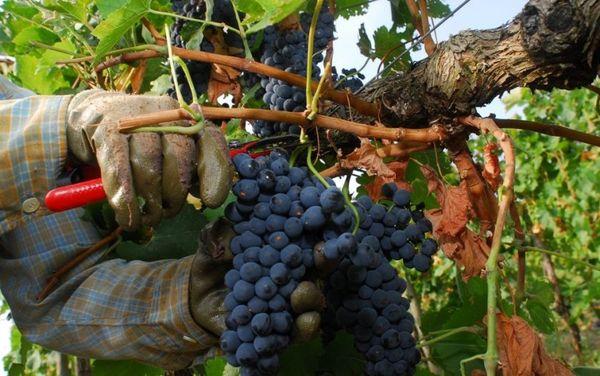
Syrah is an early-ripening grape variety. The first harvest can begin in early August. It's important to harvest the grapes early to ensure they retain their nutritional and flavorful qualities.
If stored properly, berries will stay fresh for up to several months.
To do this, you need to monitor the temperature (the optimal temperature is between 0 and 7 degrees Celsius). Regularly check the fruit for rot or plaque. If necessary, promptly remove any infected or damaged areas.
If storing large quantities of Syrah grapes, they are placed in the freezer or on the balcony in cardboard boxes. In the refrigerator, the berries can be stored for up to seven months, after which they lose their flavor. It is recommended to use plastic bags for freezing.
The fruits can be kept on the balcony for up to 2 months, constantly inspecting them for spoiled berries.
It is not recommended to wash Syrah grapes before storing them, as moisture accelerates the rotting process, ultimately reducing the shelf life of the fruit.
When storing grapes indoors, hang them to avoid contact with surfaces.
Syrah grapes are a healthy industrial grape variety. They boast a number of beneficial properties and have a positive effect on the health of both adults and children. The variety's advantages include its rapid adaptation to various soil types and its ability to thrive in almost any climate. Its drawbacks include low yields, which, on the other hand, guarantee the taste and quality of the berries.
Growing Shiraz grapes requires considerable effort, but the results are pleasantly surprising. With proper storage, the fruits can be eaten for a long time. The harvested grapes can be used to make wine, which will also restore vitality, help combat stress, improve health, and serve as an excellent preventative measure.
Related posts:
 Description of 30 varieties and types of Muscat grapes, planting, cultivation and care
 How to grow grapes in the Moscow region in open ground without a greenhouse
 Description of 30 grape varieties for Siberia, planting and care for beginners
 The ripening time of grape vines by variety, how to speed up the process, and what to treat the plant with
 Beginner's Guide to Growing Grapes in Open Ground in Central Russia
 Description of the Julian grape variety, planting and care instructions
 The best grape varieties for growing in the Urals, planting and care rules in summer
 Description of the Krasotka grape variety, planting and care technology