
- History of selection
- Description and characteristics of the variety
- Main characteristics
- Appearance
- Clusters
- Berries
- Frost resistance
- Productivity
- Transportability
- Disease resistance
- Pros and cons
- How to plant correctly
- Site selection and preparation
- How to choose and prepare a seedling
- Recommendations for choosing deadlines
- Planting diagram
- Care instructions
- Watering
- Mulching
- Top dressing
- Formation
- Preventive spraying
- Protection from wasps and birds
- Preparing for winter
- Methods of reproduction
- Seeds
- Cuttings
- Layering
- Graft
- Harvesting and storage
- Applications of berries
- Tips and advice from experienced gardeners
Thanks to years of work by an amateur breeder, the Super Extra grape variety has acquired unique characteristics that allow it to be grown even in cold climates. In addition to its increased frost resistance, the variety is naturally immune to most diseases, and the berries ripen within 90 days of the growing season.
History of selection
The new hybrid was developed by renowned winegrower E. G. Pavlovsky, who crossed the renowned Talisman grape with the equally renowned Cardinal. From its parent varieties, the Super Extra grape inherited excellent flavor characteristics and an attractive presentation.
Based on the results of varietal testing, in 2015 the new hybrid form was entered into state registers under the name Citrin grape.
Note! Among gardeners, farmers, and winegrowers, this fruit crop has adopted the first name. Therefore, among connoisseurs, it is known as Super Extra.
Description and characteristics of the variety
Grape ripening depends on weather conditions and proper care. In southern regions, the harvest is 90 days after bud break. In northern latitudes, ripening takes 110 to 115 days.
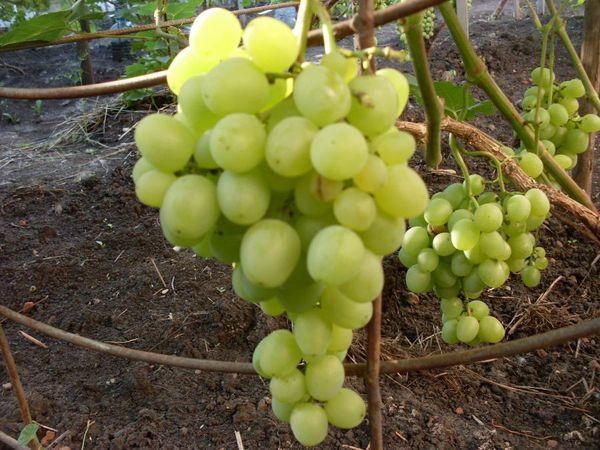
Super Extra grapes are classified as table and dessert varieties of berry crops, which allows the fruits to be used both fresh and processed.
Main characteristics
The fruit crop is easy to care for and grow, and quickly adapts to almost any climatic conditions.
Appearance
Hybrid grapevines are characterized by rapid growth, vigorous and spreading, with rapidly maturing fruit shoots of green or light brown hues. The leaves are characteristic of berry crops, dark green, with small hairs on the underside.
During the flowering period, racemose inflorescences with male and female flowers appear on the shoots, indicating the variety's ability to self-pollinate.
Important! During flowering, numerous clusters form on the fruiting vine. These clusters must be carefully trimmed, leaving 1-3 clusters on each shoot.
Clusters
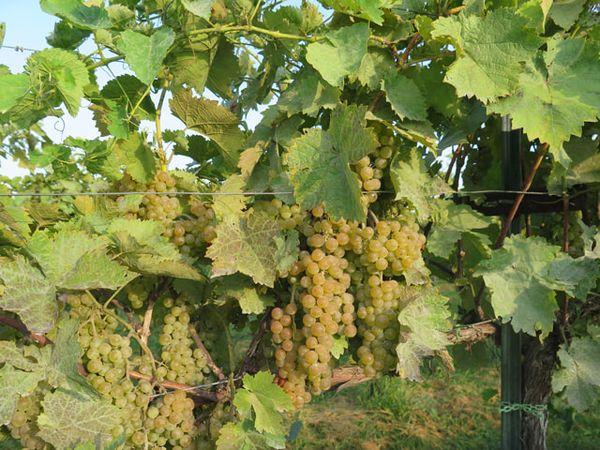
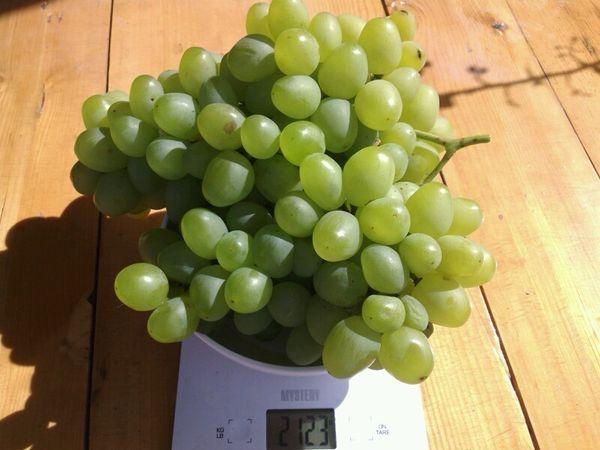
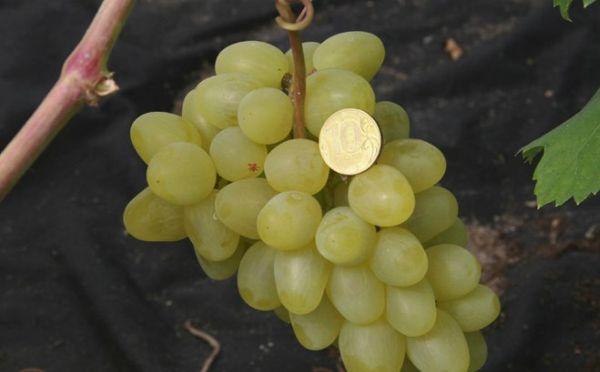
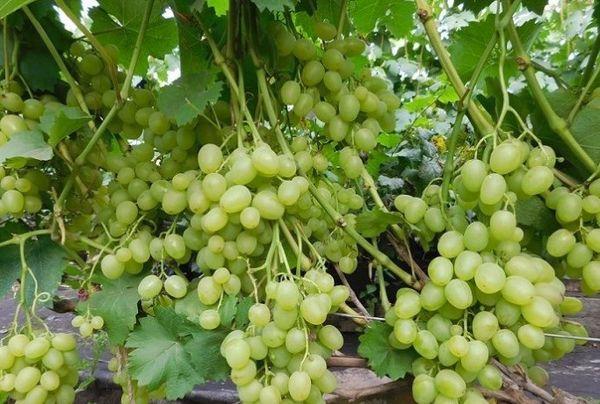
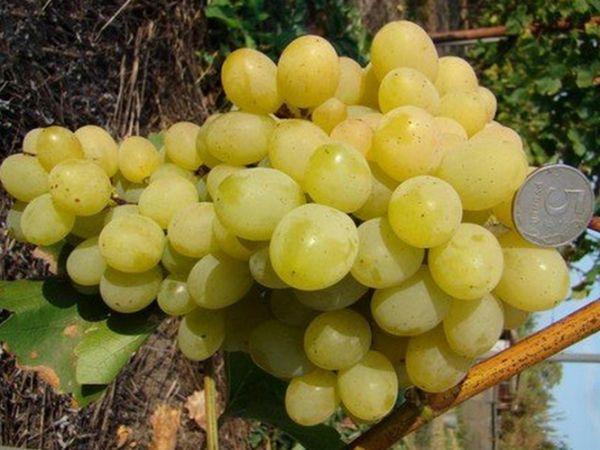
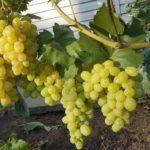
Ripe grape clusters are large, weighing from 700 grams to 1.5 kilograms, and shaped like a cone or cylinder. The clusters are medium-dense, preventing the berries from becoming misshapen and allowing them to receive even sunlight.
The main feature of Super Extra grapes is the uneven size of the berries, which negatively affects the presentation of the bunches.
Berries
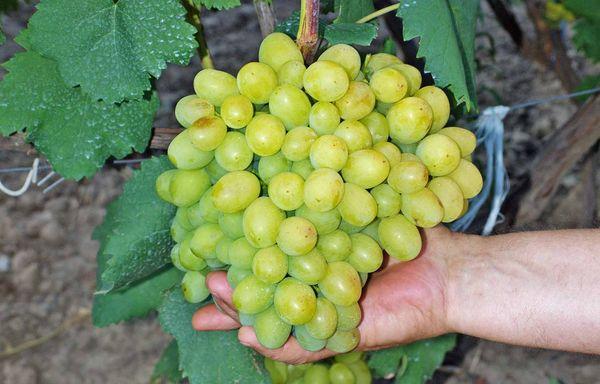
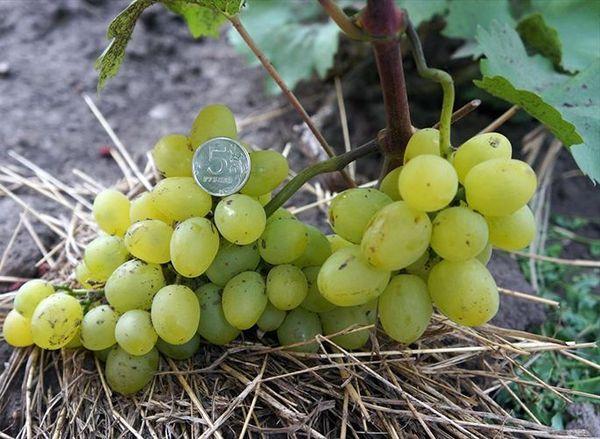
The berries are attached to a long, light-green ridge. They are up to 3 centimeters in size, weighing 6-8 grams, and oblong in shape. The berries have thin, beautiful yellowish-white skin, covering dense, juicy, sweet-tasting flesh with a light aroma of citron and nutmeg.
The skin, although thin, is quite dense, which allows for long-term storage of the fruit and protects the berries from damage by wasps.
Advice! Don't leave grape clusters on the vines after they've ripened. Excess moisture will cause the berries to crack and fall off.
Frost resistance
The main goal set and achieved by the variety's creator was increased resistance to low temperatures. Grape vines can survive frosts down to -23 to -25 degrees Celsius without loss. In northern regions, fruit crops require additional protection from low temperatures.

Productivity
The first harvest is collected as early as the second year of open-field grape growth. The variety's yield depends on the pollination process and the weather conditions in the growing region. On an industrial scale, up to 20 tons of berries can be harvested from one hectare of land. Gardeners harvest up to 25 kilograms of grape clusters from a single vine.
In the southern regions, in mid-September, the second wave of the harvest is collected, ripening on one-year-old shoots.
The yield of Super Extra grapes depends on the load on the vine. The more fruiting clusters remain on the vines, the longer the berries take to ripen, the less flavor they produce, and the smaller the fruit size.
Transportability
Due to the dense skin, ripe berries easily withstand long-distance transportation without losing their taste or marketable appearance.
Disease resistance
The Super Extra grape variety boasts high resistance to all types of powdery mildew and most pests. However, the berry bushes are not immune to viral and bacterial infections, so they require timely preventative treatment.
Pros and cons
To avoid making mistakes when growing a hybrid grape variety, it is necessary to understand all the possible advantages and disadvantages of the fruit crop.
Pros:
- High frost resistance threshold.
- Increased yield rates.
- Easy to care for.
- Natural immunity to fungi and harmful insects.
- The seedlings easily adapt to any climate zone.
- Large fruits with excellent taste.
Also, the advantages of this variety include the quick ripening of the berries.
Flaws:
- Plants are prone to significant overload, which negatively affects the yield and taste of the fruit.
- Uneven size of berries in clusters.
Although the dense skin allows for long-term storage and transportation of berries, it is a negative factor for taste.
How to plant correctly
Choosing the right location for grape seedlings is the key to obtaining a high-quality and abundant harvest of berries in the future.
Site selection and preparation
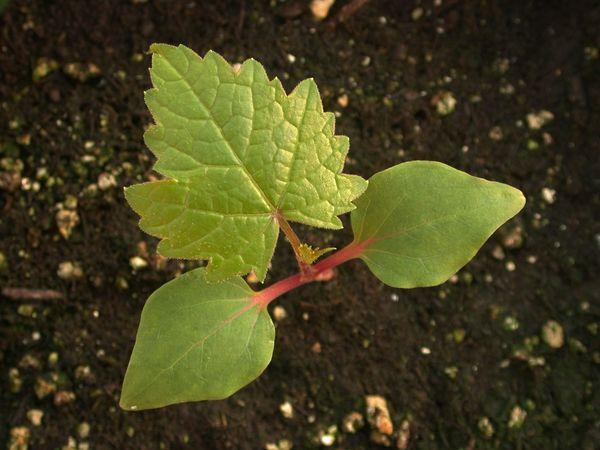
Genetically, grapes are a southern, sun-loving crop. Therefore, even in northern regions, grapevines are planted on the south or southwest side of the garden plot.
Site preparation rules:
- The land plot chosen is dry, well-lit, protected from gusty winds and strong drafts.
- Groundwater is allowed to be no higher than 2 m from the ground surface.
- The fruit crop prefers loose, light and fertile soil with a neutral acid and moisture content.
- The area is carefully dug up, cleared of weeds and loosened.
- The soil is mixed with humus, organic and mineral fertilizers.
- 4-6 weeks before planting the seedlings, planting holes are dug, 60-70 centimeters deep and wide.
- The distance between plantings is maintained within 1.5-2 meters, between rows up to 3 meters.
- I put drainage from broken stone at the bottom of the holes and pour a mound of fertile soil.
- The prepared planting site is watered generously, and a support peg is driven into the hole.
Important! Large grape vines require additional support, such as trellises or arches.
How to choose and prepare a seedling
The growth and development of the grape bush depends on the quality and origin of the planting material.
It is recommended to purchase seedlings only from reputable nurseries, taking into account the following rules:
- The plant is examined for damage and lesions.
- The roots are developed, without broken parts, well moistened.
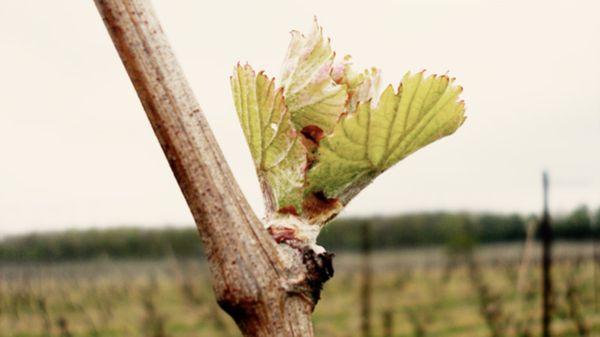
- The conductor must have buds or green leaves.
- In grafted seedlings, a trace of the grafting always remains in the lower part of the trunk.
Tip! Before planting outdoors, place the seedlings in a container of warm, settled water, then treat the roots with antibacterial agents and a growth stimulant.
Recommendations for choosing deadlines
The timing of planting seedlings depends on the weather and climate conditions in the grape-growing region. In southern latitudes, it is recommended to plant grapes in the fall, 4-6 weeks before the first frost.
In temperate and northern climates, seedlings are planted in the spring, before the start of the growing season.
Planting diagram
On the day of transplanting the plants into open ground, the rhizomes of the seedlings are trimmed, leaving only long and developed branches.
Planting order:
- The seedling is placed in the planting hole.
- The roots are evenly distributed throughout the hole and covered with a fertile mixture.
- The soil under the bush is compacted and watered generously.
- After planting, the plant is tied to a support, and the soil around the trunk circle is mulched with a layer of humus or compost.
Once the seedlings have taken root and grown, they are tied to the constructed support structures.
Care instructions
Subsequent care for grape vines is not complicated. Plants require timely watering, fertilizing, weeding, and pruning.
Watering
The frequency of irrigation also depends on the climate of the region where the fruit crop is grown. In arid regions, grapes require more frequent watering, while in temperate climates, 3-4 irrigations per season are sufficient.
Irrigation is especially important before flowering and during berry formation.
Mulching
Mulching the trunk area significantly reduces watering, weeding, and soil loosening. And the mulch, containing nutrients, provides an additional source of nutrition for the grapevine's root system.
Top dressing
As berries grow and ripen, the bushes release a great deal of energy and nutrients. Therefore, the fruit crop requires additional feeding and fertilizers:
- At the beginning of spring, the grapes are fertilized with nitrogen-containing organic matter.
- Before flowering and during the formation of berries, the plant requires mineral fertilizers based on phosphorus and potassium.
- After harvesting, humus, manure and balanced mineral fertilizers are added to the soil.
Important! Before winter dormancy, apply a thick layer of humus or peat mulch under each bush.
Formation
In warm climates, grape vines are trained on tall stems. In temperate and northern latitudes, vines require additional insulation, so they are grown using the fan method.
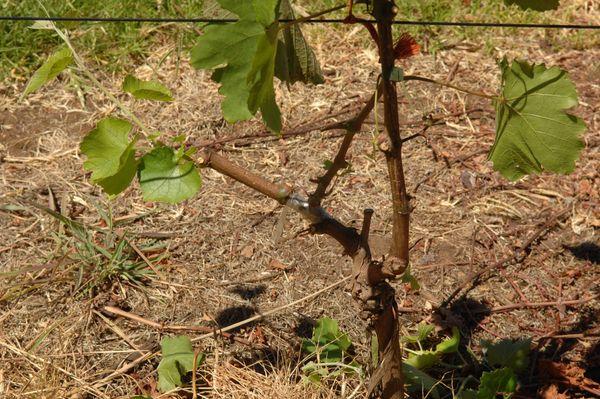
Formative and sanitary pruning is carried out in spring or fall, removing all old, damaged, and broken branches and shoots. Up to 30 buds are left on each bush, at a rate of 3-4 buds per fruiting shoot.
The Super Extra grape variety is prone to serious overloads, which negatively impact the yield and taste of the berries.
Preventive spraying
Although the hybrid form of grapes is declared to be resistant to diseases and all kinds of pests, if agricultural practices are not followed and the environment is unfavorable, the grapes become susceptible to diseases and insect infestations.
As a preventative measure, in spring and autumn the bushes are sprayed with professional chemical and biological pesticides.
Protection from wasps and birds
Large flocks of birds can destroy a grape harvest in minutes, and wasps feed on the juice of the berries, which then crack and dry out.
To protect the vineyard, special nets with small holes are purchased, into which ripening bunches of grapes are placed.
Preparing for winter
In southern latitudes, grape vines don't require additional insulation. In the fall, the vines are watered generously, the area around the trunk is mulched with a thick layer of humus, and covered with straw or dry leaves.
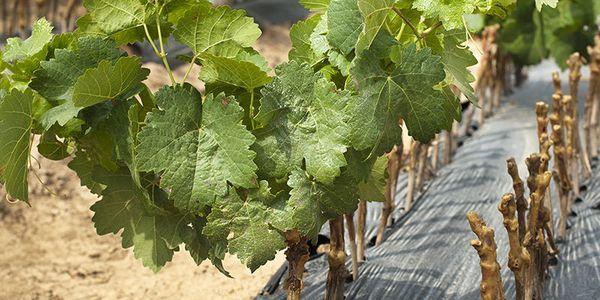
In latitudes with cold winters, the grapevine is removed from its supports and laid on a layer of dry leaves, covered with soil on top and burlap or agrofibre.
Methods of reproduction
You can grow new grape seedlings yourself, using plants already growing in your garden.
Seeds
Hybrid forms of fruit crops do not retain their varietal properties and characteristics when propagated by seed. Typically, the seeds produce a completely ordinary, wild grape bush.
Cuttings
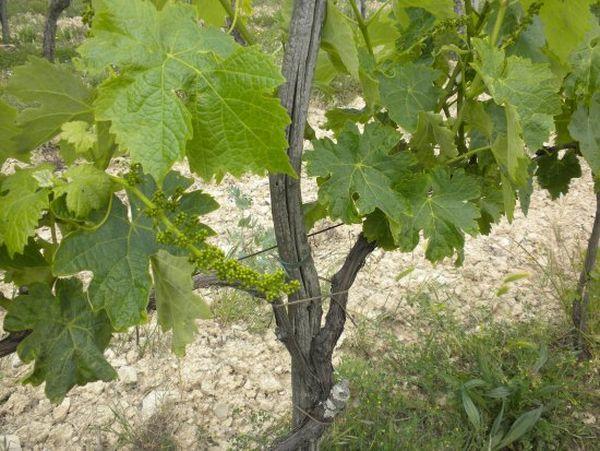
To propagate by cuttings, in the spring, cut a long, strong shoot from a mature bush and divide it into several equal parts. Each cutting should have 3-4 buds or leaves. The cuttings are planted in containers with fertile soil and transferred to individual planting holes in the fall.
Layering
In early summer, select a strong, long lower shoot from a mature bush and bend it to the soil surface. The shoot is covered with soil, leaving only the tip exposed. Water and feed it throughout the growing season. In the fall, separate the rooted shoot from the mother bush and transfer it to a hole filled with fertile potting mix to allow it to grow independently.
Graft
By grafting a cutting onto an old rootstock, the grape crop is rejuvenated and new, strong, fruit-bearing plants are obtained.
Harvesting and storage
The ripening of the Super Extra grapes also depends on the growing region. In the southern regions, the harvest begins in early August, but a second wave of grapes ripens in mid-September.
In the temperate climate of the middle zone, grapes are harvested in early September.
After harvest, grapes are stored for a long time without losing their flavor or appearance. In specially equipped chambers, the shelf life of grapes increases to 2.5-3 months.
Applications of berries
The berries of this fruit crop contain a huge amount of nutrients and vitamins. Therefore, the main purpose of table grapes is to eat the fruit fresh.
The berries are also used to produce delicious juices, rich nectars, and compotes. In cooking, the fruits are used in desserts and baked goods. Due to their high juice content, Super Extra grapes are suitable for making homemade wines, liqueurs, and cordials.
Grape seeds have long established themselves as an excellent raw material for the production of cosmetics and medical preparations.
Tips and advice from experienced gardeners
According to experienced winegrowers and gardeners, the Super Extra variety is easy to care for. Its only weakness is its tendency to overload its fruiting shoots. With timely and careful monitoring of the berry bushes' growth and development, a high-quality and abundant grape harvest is guaranteed.
Related posts:
 Description of 30 grape varieties for Siberia, planting and care for beginners
 The ripening time of grape vines by variety, how to speed up the process, and what to treat the plant with
 How to grow grapes in the Moscow region in open ground without a greenhouse
 Description of the Julian grape variety, planting and care instructions
 Description of 30 varieties and types of Muscat grapes, planting, cultivation and care
 Description of the Krasotka grape variety, planting and care technology
 Beginner's Guide to Growing Grapes in Open Ground in Central Russia
 Description and characteristics of the Laura grape variety, planting and care