
- History of selection
- Description and Features
- Grape bushes
- Berries
- Resistance
- Pollination
- Ripening period
- Main characteristics of the variety
- Taste qualities
- Frost resistance
- Productivity
- Adaptation
- Resistance to diseases and pests
- Transportation and storage
- Useful properties of berries
- Pros and cons
- Landing rules
- Selecting a location on the site
- Soil preparation
- Selection and preparation of planting material
- Preparing the planting hole
- Planting diagram
- How to care
- Mulching
- Watering
- Top dressing
- Formation
- Preparing for winter
- Processing
- Bush load characteristics
- Diseases and pests
- Oidium
- Sulfur preparations
- Potassium permanganate solution
- Mullein infusion
- Chemicals
- Chlorosis
- Bacteriosis
- Rubella
- Anthracnose
- Bacterial cancer
- Wasps
- Leaf rollers
- Weevils
- Moth
- Spider mite
- Thrips
- Fleas
- Rodents
- How to propagate correctly
- Cuttings
- seedlings
- Harvesting and storage
- Applications of berries
- Tips and advice from experienced gardeners
The early-ripening table grape, Laura, is considered one of the best hybrid fruit varieties developed in the last twenty years. This fruit variety is characterized by its rapid ripening, excellent flavor, frost resistance, low maintenance, and long shelf life.
History of selection
The Laura grape is known to most farmers and gardeners as "Flora." This is the name under which the fruit crop is listed in state registers. The Laura grape variety was developed by Odessa scientists at the Tairov Institute of Viticulture. Five different grape varieties were used as pollinators to create this new fruit crop.
As a result of crossbreeding, scientists obtained a unique berry crop that incorporated the best characteristics of the parent grape varieties.
Description and Features
The Laura grape variety has its own varietal characteristics that influence care, cultivation, and yield.
Grape bushes
Fast-growing, medium-sized grape bushes with a large number of fruit-bearing shoots.
The main trunk is strong and powerful, with grayish bark and brown twigs. The leaf blades are large, smooth, rich green, and serrated along the edges.
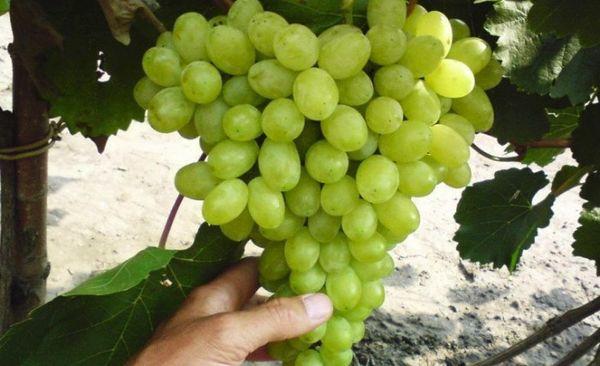
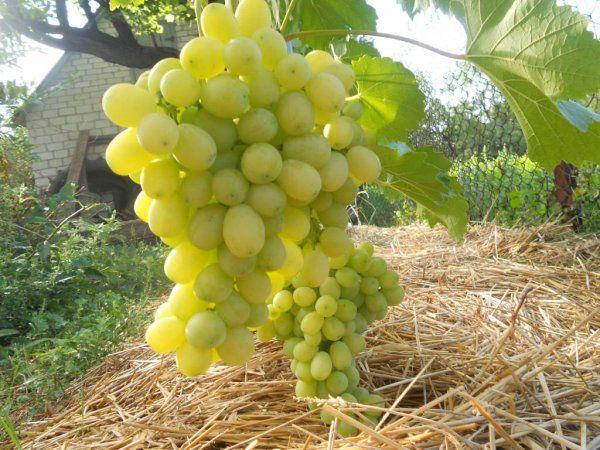
The grape clusters are dense, massive, cone-shaped, weighing from 700 to 1000 g.
Advice! Large numbers of fruiting shoots need to be controlled and the load on the vine reduced. This will increase the cluster weight to 2 kg.
Berries
Ripe fruits of the Laura grape variety are distinguished by their attractive commercial appearance, excellent taste and beneficial properties.

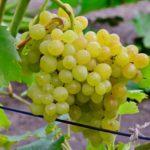
The berries are large, weighing up to 12 g, elongated, with a dense greenish-white skin and a protective bloom; sometimes a pink blush appears on the sunny side. Each berry contains several seeds, easily separated from the pulp.
Resistance
Thanks to many years of scientific work, the Flora berry variety has become resistant to diseases, pests, and climatic conditions.
Pollination
To produce a harvest of tasty and healthy berries, the hybrid Flora variety requires pollination. During flowering, only female flowers bloom, so other grape varieties with similar flowering times are planted nearby, or pollination is carried out manually.
Tip! The best pollinators for the Laura grape are the Kishmish Radiant or Arcadia varieties.
Ripening period
The ripening time of berries directly depends on proper care, pruning, and the climatic conditions of the growing region.
The berry bush enters the active flowering phase in May.
According to the data stated in the variety characteristics, fruit ripening occurs 110-115 days after the formation of the ovaries.
But there are several reasons why crop ripening may be accelerated or delayed.
- A large number of fruiting shoots. If a vine has more than 30 clusters, the grapes take much longer to ripen.
- In the southern regions, berries ripen 10-14 days earlier than in the central zone.
- If there are few bunches of grapes on the vine, then the ripening period begins in early August, which is fraught with the formation of new ovaries in early autumn.
The recommended number of bunches on an adult grape bush is from 23 to 28.
Main characteristics of the variety
The declared varietal properties and characteristics may vary depending on climatic changes, the location of seedling planting, and the quality of care provided to the berry crop.
Taste qualities
The taste of ripe berries is the main advantage of Flora grapes.
Large, crisp fruits with juicy, sweet flesh and a nutmeg aftertaste.

The balanced sugar content of up to 20% and acids of up to 9 g/l in the berries makes the fruits attractive both for fresh consumption and for the production of various types of wine.
Frost resistance
When developing the Laura variety, breeders achieved increased frost resistance in this fruit crop. The grape vines easily tolerate temperatures as low as -27 degrees Celsius, making it possible to grow this berry bush even in subzero temperatures.
Productivity
Grape vines begin bearing fruit in the second or third year of outdoor growth. With proper and timely care, a single plant can yield up to 35 kg of berries, and with additional strengthening of the fruiting shoots, the yield increases to 50 kg per vine.
Adaptation
Due to its resistance to low temperatures, diseases, and pests, this grape variety is cultivated in a variety of climates. Both southern latitudes and regions with a temperate climate are suitable for growing this fruit crop.
Important! High humidity and heavy rainfall reduce the flavor and yield of grapes.

Resistance to diseases and pests
When developing the Laura variety, special attention was paid to disease and pest resistance. Although the grapes are naturally immune, powdery mildew and black mold often attack the fruit crop.
Transportation and storage
Ripe bunches retain their marketable appearance for a long time on the vine; the berries do not dry out, spoil, or fall off. Thanks to their dense skins, the harvested grapes are stored for a long time and transported over long distances.
Useful properties of berries
Grapes contain a huge amount of vitamins, micro and macroelements, fructose, glucose, amino acids, pectins, flavonoids and fiber.
The fruits are used to treat and prevent colds and cardiovascular diseases. They support the gastrointestinal tract, replenish the body's supply of nutrients and beneficial substances, have a calming effect, and are recommended for stress and depression.
Also, grapes are used for the production of perfumes and cosmetics.
Pros and cons
To properly grow a fruit crop, it is necessary to understand all the advantages and disadvantages of the Laura grape variety.

Advantages:
- Early ripening of fruits.
- Resistance to the climatic features of the growing region.
- High yield rates.
- Easy to care for.
- Excellent taste of berries.
- The fruits do not fall from the bushes, are stored for a long time and tolerate long-distance transportation well.
With proper care and proper agricultural practices, the yield of the Flora grape variety increases many times over.
Flaws:
- High humidity and precipitation have a negative impact on the taste and ripening time of berries.
- The variety is often affected by powdery mildew.
- Pollination is necessary to obtain a harvest.
- Instability of fruiting.
- Because of their sweet taste and muscat aroma, the berries are susceptible to attack by wasps.
- The larger the bunches of grapes, the worse the taste of the berries.
But even these difficulties in growing fruit crops do not prevent gardeners and farmers from obtaining abundant harvests of tasty, juicy, and most importantly healthy berries.
Landing rules
The Laura grape variety is easy to care for and grow, grows and bears fruit in different climatic zones, and is undemanding to soil composition.

With proper and timely planting of seedlings, berry bushes quickly take root and develop.
It's recommended to plant grape vines in the spring, as soon as the soil warms to 15-17 degrees Celsius. If spring planting doesn't work out, postpone the work until early fall.
Selecting a location on the site
Fruit crops grow best in sunny, slightly elevated plots sheltered from northern winds and drafts. If the chosen site has a high groundwater level, artificial embankments are installed or the planting location is relocated.
Important! Grapes do not tolerate very wet soil, lowlands, or marshy ground.
Soil preparation
Soil preparation is carried out 3-4 weeks before the planned planting work.
- The land plot is dug deeply.
- The soil is cleared of weeds, roots and debris, and loosened.
- The soil is mixed with humus, organic matter and mineral fertilizers.
- Areas with high acid content are limed, river sand and humus are added to clay soil, and sandy soil is mixed with peat and compost.
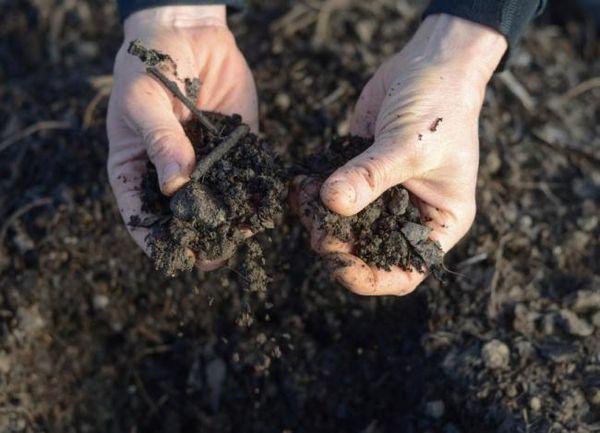
Grapes prefer to grow and develop in light, fertile soils. Soils with excessive acidity or salt levels kill seedlings.
Selection and preparation of planting material
It is recommended to purchase varietal grape seedlings from specialized nurseries or garden centers.
- 1-3 year old seedlings take root best.
- The plant trunk has no obvious damage or lesions and is uniform in color.
- The presence of fruit buds and green leaves is required.
- The roots are well moistened, without damage or rotting or fungal deposits.
Important! Before planting in open ground, place the seedlings in a container with warm, settled water for 6-8 hours, then treat them with a manganese solution and a growth stimulant.
Preparing the planting hole
Planting holes are dug in a prepared area with fertile soil.
- The depth and width of the planting hole should be at least 2 times the length of the seedling roots.
- The distance between plantings is from 1 to 1.5 m, between rows 2 m.
- A drainage layer of broken stone and river sand is placed at the bottom of the hole.
- Fertile soil is poured on top and watered.
To support young plants, a support peg is driven into the center of the hole.
Planting diagram
Once the planting holes are dug and prepared, the roots of the seedlings are trimmed, leaving only developed and healthy shoots.
- A seedling is placed in the center of the hole at a slight angle.
- The roots are evenly spread out in the hole and covered with fertile soil.
- The soil under the bush is carefully compacted and watered.
- The seedling is tied to a peg.
- The tree trunk circle is mulched with humus or dry grass.
When planting grape vines, avoid leaving gaps between the roots and the soil. These gaps allow moisture to accumulate, which can lead to root rot and the development of fungi, viruses, and pests.
How to care
The Laura grape variety is easy to care for, but requires timely watering and pruning.
Mulching
Mulching the soil makes caring for berry bushes much easier.
Grapes are mulched in spring and fall to retain soil moisture and control weeds. The mulch is removed in summer.
Watering
Irrigation is determined by the climate of the growing region. In moderate climates with frequent rainfall, the shrub is watered as needed, or not at all.
In regions with a dry climate, grapes require additional moisture, so watering is more frequent.
Important! Fruit trees do not tolerate watering under the plant's trunk, so special drainage channels are dug and the water is poured into them.
Top dressing
The Laura grape variety is a high-yielding crop that requires additional nutrition.
The berry bush is fed with mineral and organic fertilizers.
Activities during the flowering and ovary formation phases are especially important.
Before winter dormancy, organic matter and a mineral complex are added to the bushes, which will help the grapes survive the cold season more easily.
Formation
Bush formation begins in the 2nd or 3rd year of growth in open ground. Fruiting shoots are pruned to the optimal number of buds, relieving excess strain on the bushes.
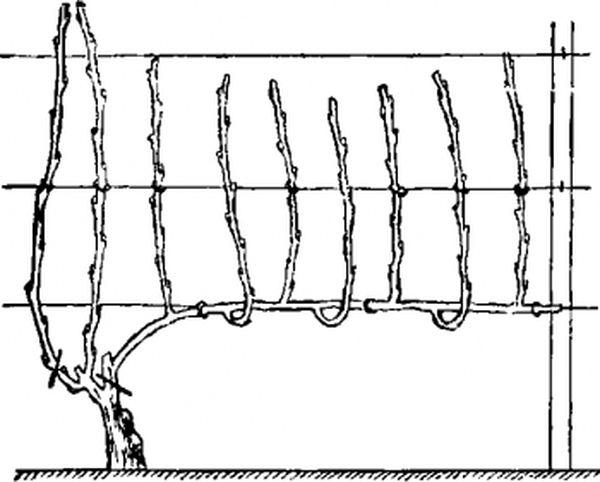
In the fall, fruiting vines are completely pruned, leaving 3-4 main shoots on the bush. Also, in the spring and fall, sanitary pruning is performed, removing branches and shoots that are frozen, dry, damaged, or affected by diseases or pests.
Preparing for winter
In southern regions, preparation for winter includes watering, pruning, fertilizing and mulching the soil.
In areas with moderate and cold climates, the bushes are bent into the soil, secured, and completely covered with special materials, spruce branches, or a thick layer of straw.
Processing
To reduce the chances of spreading diseases and pests, preventative spraying of berry bushes and soil with chemical and biological preparations is carried out.
Bush load characteristics
Laura grapes produce clusters of uniform shape and size on fruitful vines. Therefore, careful monitoring of plant growth and development is necessary. Too many clusters negatively impacts the flavor and size of the berries.
It is recommended to leave no more than 25-30 buds on fruit-bearing vines on one bush.

Diseases and pests
The health of the fruit crop determines the harvest at the end of the season. If planting and agricultural practices are not followed, the fruit crop is susceptible to diseases and pests.
Oidium
Powdery mildew attacks the leaves, buds, fruits, and shoots of grapevines. The fungus spreads quickly and weakens the fruit plant's immunity. Affected plants develop a whitish-gray coating and an unpleasant odor reminiscent of rotten fish. The first signs of infection appear in the spring.
Sulfur preparations
To treat berry bushes, dissolve 100 g of powdered sulfur in 10 liters of water. Apply early in the morning or after sunset at a temperature of at least 20 degrees Celsius. Repeat the treatment every 10 days until the plant is completely cured.
Potassium permanganate solution
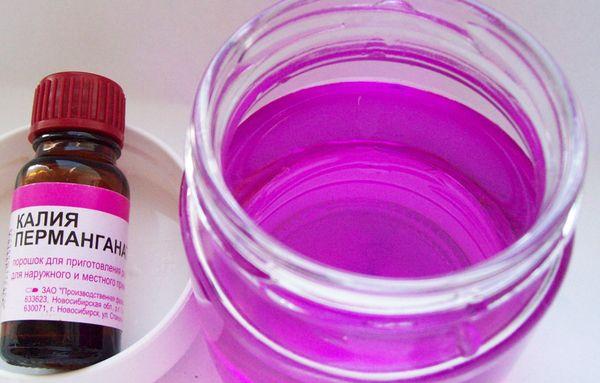
Some gardeners use a manganese solution to combat fungus. To do this, dilute 1 g of dry manganese in 4 liters of water and apply the resulting solution to the berry bush every 5-7 days until the fungus is completely cured.
Mullein infusion
Also, an infusion of cow dung is used to treat fungal infections caused by powdery mildew.
Fill a large container 1/3 full with mullein and add warm water. Cover the container with plastic wrap and let it steep for 4-6 days, stirring constantly. Strain or let the infusion settle, and then apply the liquid to the plants.
Chemicals
If the disease cannot be stopped by folk methods, chemical fungicides or biological means of protecting plants from fungal infections are used.
Chlorosis
The disease manifests itself as yellowing of the foliage, but the entire bush suffers from chlorosis. The plant's growth and development slows, and flowers, ovaries, and berries fall off.
For prevention and treatment, plants are fertilized and bushes are sprayed with preparations containing iron.
Bacteriosis
Bacterial blight manifests itself through specific symptoms on leaves, berries, and fruit stalks. The main sources of infection are damaged plant parts and pests.

For prevention and treatment purposes, I treat the bushes with sulfur-based preparations and solutions or Bordeaux mixture.
Rubella
A common fungal disease of grape leaves. It appears as large reddish spots on the leaf blades. The leaves dry out and fall off.
Bushes affected by rubella are sprayed with fungicides or professional biological control agents.
Anthracnose
A fungal infection of grapevine foliage. It appears on leaves as brown spots with a purple border. As a result, holes appear in the affected foliage and ulcers appear on the shoots.
For treatment and prevention, chemical preparations based on fungicides containing copper are used.
Bacterial cancer
The disease manifests itself as rapidly spreading compactions throughout the plant, which leads to the cessation of growth and development of grapes, and the shedding of ovaries and fruits.
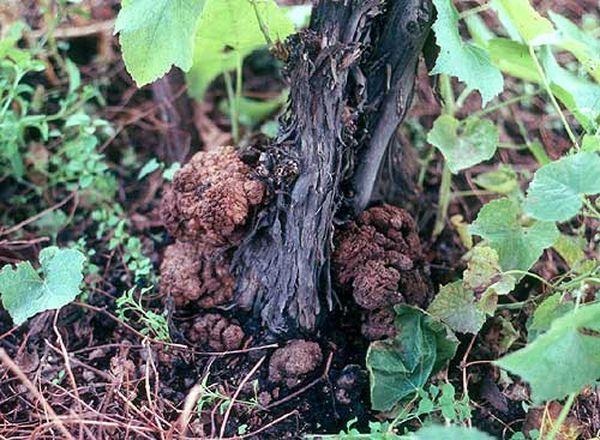
A completely affected bush is dug up and burned, and the contaminated soil is treated with special agents, but it is not recommended to plant plants in such soil for the next 3-5 years.
Wasps
Wasps love grape juice and cause great damage to crops by biting into the fruit.
To combat the pest, wasp nests are destroyed, poisoned bait is placed in the vineyard, and areas where insects congregate are sprayed with special preparations.
Leaf rollers
Leaf rollers pose a particular danger in the caterpillar stage, completely eating buds, berries, leaves, flowers and ovaries.
To defeat the pest, spray the bushes with Alatar or Inta-Vir.
Weevils
A small bug that poses a threat to grape fruits, leaves, and ovaries. Insecticides are used to control the pest.
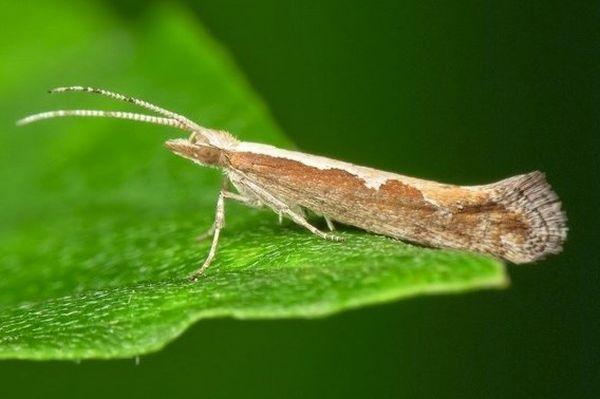
Moth
The pest feeds on the plant's leaves and lays its eggs on them. To control the moth, carefully monitor the weeds and spray the bushes with insecticides.
Spider mite
This microscopic pest appears as a dense web on the underside of leaves. The insect feeds on the sap of leaves and fruits, causing damage to crops.
For control and prevention purposes, professional chemicals are used; experienced gardeners also recommend treating bushes with onion broth or a soap solution.
Thrips
The pest attacks the leaves and fruits of grapes, leaving brown, elongated spots on the berries.
Insecticides are used to control the pest.
Fleas
The pest feeds on the leaves of grape bushes and lays larvae on them, which can completely destroy the green cover of the plant.
For control and prevention, bushes are sprayed with insecticide-based preparations.
Rodents
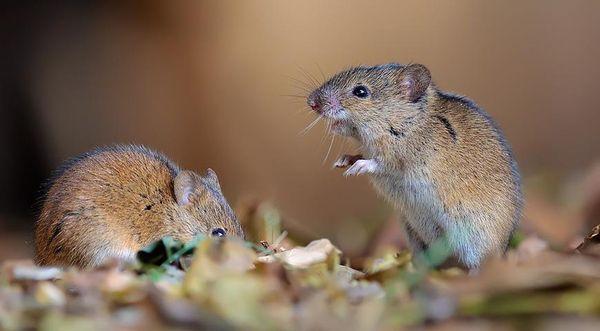
Rodents often attack grapevines during the winter, damaging young shoots. If rodent damage is detected in the spring, it should be pruned to a minimum, leaving one or two buds on each shoot. Rodents carry bacteria and viruses, so damaged branches should be removed as much as possible.
How to propagate correctly
To propagate the Laura grape variety, vegetative methods are used to obtain new plants.
Cuttings
A healthy, strong shoot is pruned from a mature bush and divided into several cuttings with fruiting buds. The cuttings are treated with a growth stimulant and planted in containers with fertile soil. In the spring, the seedling is transplanted into the open ground.
seedlings
Grape vines produce many shoots, which eventually become full-fledged seedlings. In early summer, a strong, healthy shoot is selected and bent to the ground. The shoot is secured and covered with soil, leaving the top of the plant above the soil surface. In autumn, the rooted shoot is cut from the mother bush and planted separately.
Harvesting and storage
Once the Flora grapes have ripened, the clusters remain on the branches for a long time and retain their marketable appearance, allowing for a loss-free harvest of the berry crop.

Thanks to the dense skin of the fruit, the collected bunches are stored for a long time and withstand transportation well.
Applications of berries
Laura grapes are distinguished by their excellent taste and berry composition, which allows the fruit to be consumed both fresh and processed.
Their grapes are used to make juices, nectars, compotes, jams and marmalades, and are used in cooking for baking, desserts, sauces and salads.
And of course, the main purpose of table grapes is winemaking.
Tips and advice from experienced gardeners
According to gardeners and farmers, basic care for the Laura grape variety includes timely pruning, watering, and preventative treatment of the bushes against diseases and pests.
This fruit crop is undemanding in terms of growing conditions and care, making it accessible even to novice gardeners.
Related posts:
 Description of 30 grape varieties for Siberia, planting and care for beginners
 The ripening time of grape vines by variety, how to speed up the process, and what to treat the plant with
 How to grow grapes in the Moscow region in open ground without a greenhouse
 Description of 30 varieties and types of Muscat grapes, planting, cultivation and care
 Description of the Julian grape variety, planting and care instructions
 Beginner's Guide to Growing Grapes in Open Ground in Central Russia
 Description of the Krasotka grape variety, planting and care technology
 Description of the Nizina grape variety, planting and care in open ground