
- History of selection
- Description and Features
- Main characteristics of the variety
- Taste qualities
- Frost resistance
- Productivity
- Adaptation
- Resistance to diseases and pests
- Transportation and storage
- Useful properties of berries
- Pros and cons
- Landing rules
- Recommendations for choosing deadlines
- Selecting a location on the site
- Soil preparation
- Selection and preparation of planting material
- Preparing the planting hole
- Planting diagram
- How to care
- Mulching
- Watering
- Top dressing
- Before flowering
- After flowering
- Before ripening
- After harvesting
- Trimming
- Sanitary
- Formative
- Standardization
- Preparing for winter
- Bird protection
- Processing
- Diseases and pests
- Bacteriosis
- Bacterial cancer
- Rubella
- Anthracnose
- Aphid
- Spider mite
- How to propagate correctly
- Cuttings
- Graft
- Harvesting and storage
- Applications of berries
- Tips and advice from experienced gardeners
Breeding has advanced greatly, and while growing grapes in other regions was once problematic, varieties with good frost resistance have now been developed. The Kodryanka grape variety is an excellent one. This hybrid is distinguished by its resistance to winter frosts and high yield, which is why it has become so popular with summer residents living in the temperate zone.
History of selection
The Codryanka hybrid is of Moldovan selection. It was obtained by crossing grape varieties Moldova and Marshal's. Another common name for the grape is Black Magic.
Description and Features
The Kodryanka grape hybrid is an early variety, with the harvest ripening in late June to early July. The growing season lasts approximately 110-123 days. The yield is good, and with careful care, very large clusters can be grown.
The vine is characterized by a rapid growth rate. It begins to bear fruit within a year of planting. The inflorescence is bisexual. However, pollination does not occur on all flowers, so some berries may remain underdeveloped. This means the hybrid is prone to pea-shaped fruit. Fortunately, this problem is easily solved. The inflorescences are sprayed with the phytohormone "Gibberellin." Spraying is carried out when half the flowers have opened, at temperatures between 15 and 24 degrees Celsius.
Main characteristics of the variety
Before choosing a grape hybrid for planting, you need to carefully study all its characteristics to know exactly whether this hybrid is suitable or not.
Taste qualities
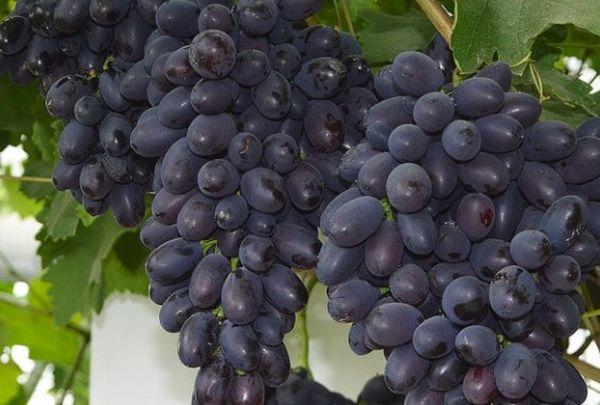
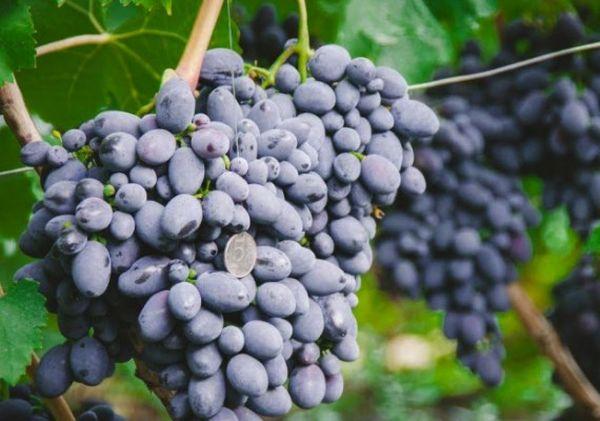
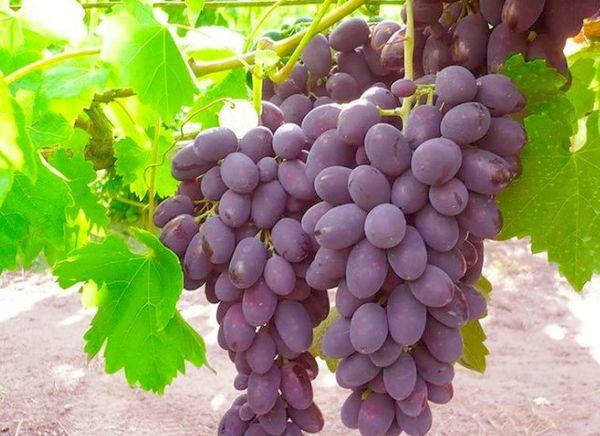
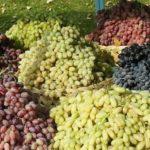
Codryanka grapes are a table grape variety. The grapes are large and elongated, weighing between 6 and 9 grams. The skin is a rich purple, covered with a thin waxy layer, making the berries appear lighter. The flavor is simple, lacking a Muscat flavor, yet very pleasant.
The skin is thick, the seeds in the pulp are large, but there are never more than three of them, and they separate easily. Fully ripe grapes adhere well to the stems, so they don't fall off even during transportation. The sugar content is high, and grapes begin to accumulate it early, so even unripe berries taste sweet.
Frost resistance
Codryanka is distinguished by its good frost resistance. The grapes can withstand temperatures as low as -22 degrees Celsius. When grown in regions with heavy snowfall, the vines can be left uncovered. Another advantage of Codryanka is its resistance to spring frosts, which is very rare among hybrid grapes.
Productivity
With proper care, grapevines will produce a good harvest even when grown in poor soil. The clusters are large, averaging 400-600 g. The maximum recorded cluster weight was 1 kg.
Adaptation
The Codryanka grape variety can be grown in any climate. The only exception is northern latitudes, where it can only be grown in a greenhouse. Southern climates are best, but the Codryanka hybrid will also thrive in temperate climates.
Resistance to diseases and pests
This variety has good resistance to the main grape diseases. It rarely suffers from powdery mildew and downy mildew. With preventative measures, you won't have to deal with these diseases at all.
Transportation and storage
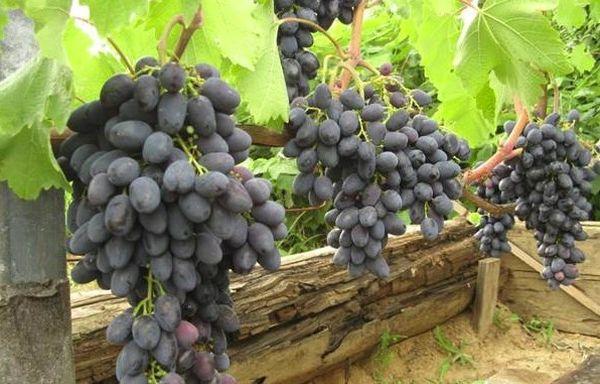
Thanks to the dense skin, which does not crack, and the fact that the grapes are tightly attached to the stalk, the harvest is easily transported over long distances.
The harvested grapes also store well. To prevent spoilage as long as possible, store them in a cool place, away from direct sunlight. It's best to arrange the bunches in a single layer.
Useful properties of berries
Useful properties of grapes:
- Helps strengthen the immune system.
- Improves the functioning of the cardiovascular and circulatory systems.
- Replenishes vitamin deficiency in the body.
- Normalizes blood pressure.
- Helps eliminate constipation and improves gastrointestinal function.
- It has a rejuvenating effect and slows down aging.
- Improves the condition of skin, nails and hair.
Grapes are very healthy. They're rich in vitamins and beneficial microelements and low in calories. However, due to their high sugar content, you shouldn't overindulge in them.
Pros and cons
Advantages of growing the Codryanka grape variety:
- High yield.
- Resistance to frost and diseases.
- Ability to produce a good harvest even when grown on poor soil.
- Taste qualities.
- Duration of storage.
- Early ripening period.
No significant defects were found in the Codryanka grape hybrid.
Landing rules
When planting seedlings, it's important to follow proper agricultural practices. This is the only way to grow healthy grapevines.
Recommendations for choosing deadlines
The best time to plant vines is spring (late March to early April). There's no risk of the still-fledged seedling drying out, as can happen when planted in the fall. It will have time to take root over the spring and summer, and by the following year, it will begin to grow vigorously.
Selecting a location on the site
It's recommended to plant seedlings in sunny, wind-protected areas. It's important to choose a site away from tall trees and shrubs that will create long-term shade. Choose a western or southern-facing site.
Soil preparation
Before planting a seedling, it is important to choose a location and prepare the soil in advance.
Selection and preparation of planting material
Particular care should be taken when selecting seedlings. When purchasing, inspect the root system. It should be well-developed; dry roots or damaged roots are undesirable. The stem should be firm and healthy.
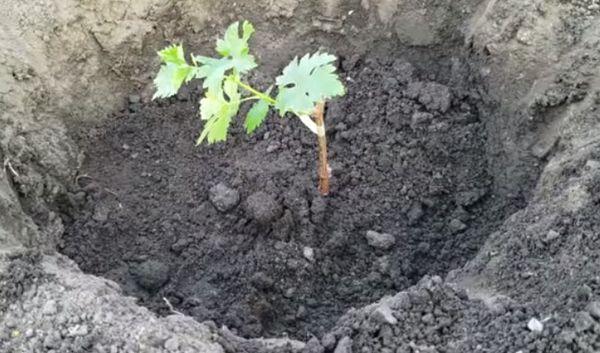
Before planting, the rhizome must be dipped in a liquid clay solution. You must not allow the clay to dry out, so you need to plant the seedling immediately after this.
Preparing the planting hole
The soil is prepared several weeks before planting. The soil is dug over and all weeds are pulled out. Fine drainage is added to the bottom. The soil is mixed with well-rotted manure. The site is left in this condition for 10-14 days.
Planting diagram
Grapes are planted at a distance of 30-45 cm from each other.
The process of planting a seedling:
- Dig a hole about 55 cm deep and 40 cm wide.
- Pour drainage material into the bottom and place a thick piece of cardboard on top of it.
- Fill the area with soil mixed with manure.
- Place the seedling in the hole and bury it.
At the end of planting, water the hole generously.
How to care
It is impossible to grow a good harvest without caring for the grape vine.
Mulching
Mulching is part of grape care. Straw, peat, agrofibre, rotted manure, or compost are used as mulch. The layer should be at least 15 cm thick. This will keep the soil moist and prevent weeds from growing.
Watering
Newly planted seedlings are watered several times a week in the spring. The first watering is done before buds appear. After that, the seedlings can be watered 5-6 times every two weeks.
Mature vines are watered less frequently. The first time is before buds appear, and the second time is 20 days before flowering. In summer, the vineyard is watered as needed, based on the vine's appearance. During flowering, it is undesirable to overwater the soil, as this will cause the flowers to fall off.
Top dressing
A prerequisite for successful grape growing is regular fertilization.
Before flowering
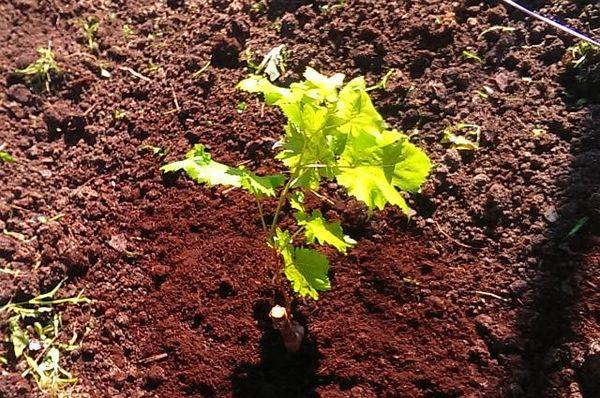
During the first half of the season, before the plant begins to bloom, it requires nitrogen to rapidly develop foliage. Well-rotted manure is also added to the soil during this period.
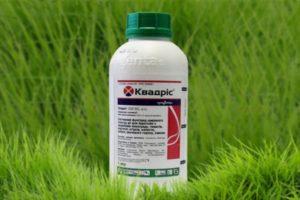
Foliar feeding is also important. Spray the vines with Aquarin, Plantafol, or Novofert. Sprinkling wood ash on the foliage and then watering is also helpful. Foliar feeding should be done in the evening.
After flowering
After flowering, superphosphate and potassium fertilizers are added to the soil. Nitrogen application is stopped. 20 g of fertilizer is diluted in 10 liters of water and used to water the beds.
Before ripening
During this period, phosphorus and potassium are also added to ensure large, sweet berries. Suitable organic matter includes rotted manure, ash solution, or bird droppings.
After harvesting
After harvesting, it's time to prepare the vines for winter. At this time, nitrogen should not be applied. Potassium fertilizers and a solution of bird droppings are best.
Trimming
An important aspect of growing grapes is vine pruning.
Sanitary
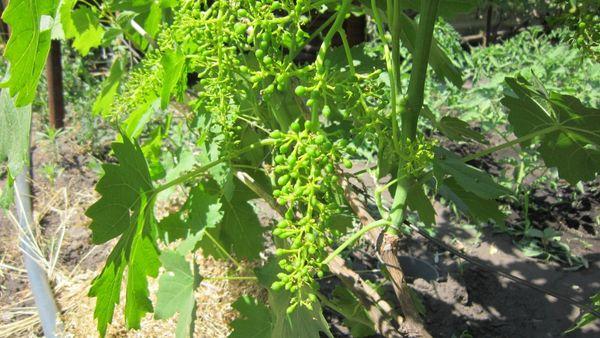
Sanitary pruning of grapes is carried out in the fall, after the harvest. Dry, broken, or damaged branches are removed.
Formative
Formative pruning is performed in the second year after planting. A shoulder—the healthiest branch—is left on the vine. The following year, three stems are left on it, and the rest are pruned. In the third year, all buds are pruned except those on these three stems. By the fourth year, the vine will be fully formed.
Standardization
Grapes should be thinned as needed. Young and weak branches should be trimmed. You can also trim off some of the larger stems if they are blocking all light from the grape clusters.
Preparing for winter
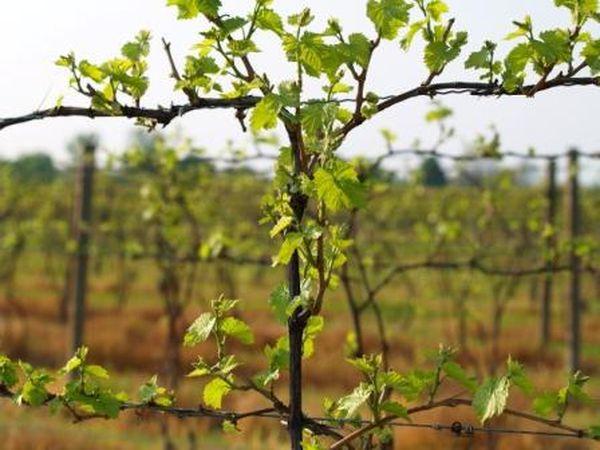
After harvesting the grapes, you need to prepare the vines for winter. To do this, you need to hill them up. The height of the hills should be at least 15 cm. You can bend the vines down to the ground and cover them with spruce branches.
Bird protection
To protect grapes from birds, the bunches can be covered with double mesh or fishing netting, nylon stockings, or tulle. You can also install a scarecrow or hang old bird discs around the garden to repel birds.
Processing
As a preventative measure to prevent the development of diseases, grape vines must be treated.
After winter
Colloidal sulfur is an excellent preventative. Dissolve 60 g of sulfur in 10 liters of water and spray the grapes before bud break.
During the growing season
Preventative treatments are not recommended during grapevine flowering, as this will cause the flowers to fall off.
After flowering
The grapes can be treated again after flowering, when the ovaries are forming. The vines are sprinkled with wood ash and watered.
Diseases and pests
It is not uncommon to encounter diseases when growing grapes.
Bacteriosis
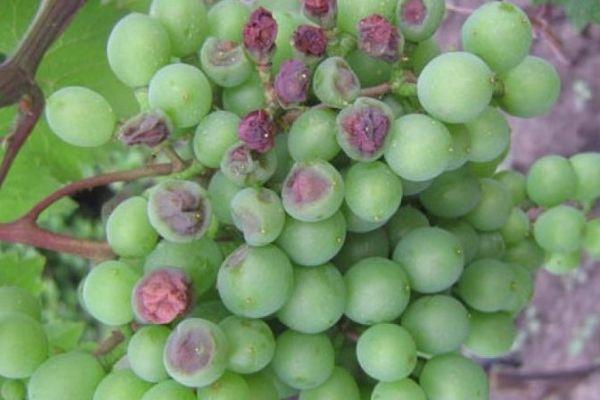
Bordeaux mixture is used to combat bacterial wilt. The vines are treated at the first signs of the disease in the spring. Repeat treatment after the leaves emerge. If after several attempts the disease fails to be cured, the vine is dug up and burned.
Bacterial cancer
Bacterial canker cannot be cured. If grapevines become infected, the vines must be dug up. To prevent the disease, prune with sterile tools and remember to carry out preventative treatments.
Rubella
Rubella in grapes is treated with fungicides. Bordeaux mixture, Omite, Fundazol, and Gauspin are effective in combating the disease.
Anthracnose
First, remove any diseased parts of the grapevine by cutting them off and burning them. Then, spray the vines with Bordeaux mixture. After two weeks, apply copper sulfate. These treatments are carried out early in the morning or in the evening after sunset.
When spraying, be careful not to let the drops drip onto the ground, but rather onto the lower leaves of the grapes. A spray bottle with fine holes is best.
Aphid
In the fall, the soil is dug to a depth of 15 cm. It is sprinkled with wood ash and watered with hot water to kill aphids that overwinter in the soil. The procedure is repeated again in early spring.
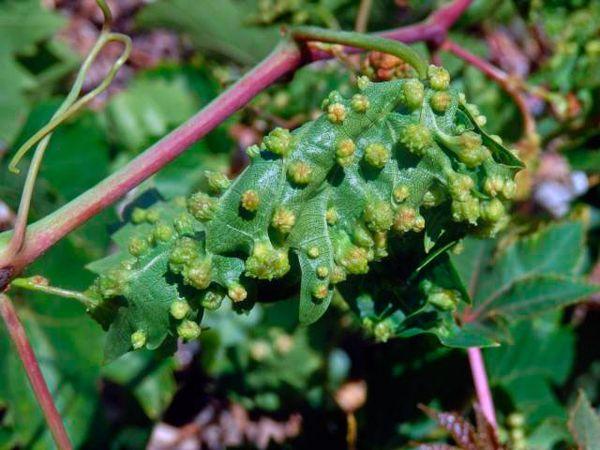
Spraying with wood ash, laundry soap, and garlic infusion helps against aphids. Chemicals used include Fitoverm, Tanrek, and Aktara.
Spider mite
Garlic and onions help repel spider mites. The scent of these plants repels them, so you can plant several rows of them near your grapes.
A decoction of tobacco, chamomile, and horseradish is helpful. If the spider mite population is very large, it's better to use chemicals such as Actellic, Demitan, or Karate.
How to propagate correctly
There are two ways to propagate grape vines: cuttings and grafting.
Cuttings
Cuttings are taken in the fall. A branch cut to a replacement shoot or the middle section of a fruiting stem is suitable for the cutting. All leaves, twigs, and tendrils are removed from the cutting.
Each cutting should have four buds remaining. Trim the lower part below the bud and cut three vertical strips 3 cm long. Then place the cuttings in water for 24 hours and treat with copper sulfate.
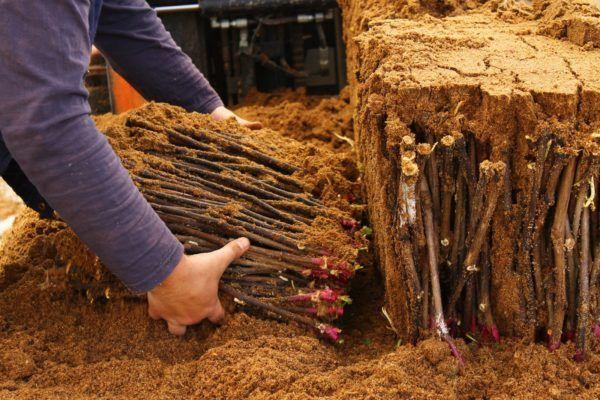
They are wrapped in plastic and stored in the refrigerator or basement until February. In February, they are taken out to germinate. The cuttings are placed in water for two days, then planted in boxes and allowed to germinate indoors until spring. In the spring, the cuttings are planted in the ground.
Graft
Grafting grapes is not much different from grafting fruit trees. The scion should be the same thickness as the rootstock. Cuttings are harvested in the fall, in October-November. Grafting is performed in April.
The grafting process:
- 2-3 days before, the cuttings are placed in a solution of the drug "Epin".
- The trunk for the scion is dug to a depth of 15 cm and cleared of bark and roots.
- In the middle of the trunk, you need to cut a cleft with a depth equal to the length of the pointed end of the cutting.
- Insert the cutting into the cleft, secure it firmly and coat it with clay.
The hole dug near the rootstock is filled in at the end of the grafting process. After grafting, the vine is watered generously with warm water.
Harvesting and storage
You can harvest the grapes immediately after the bunches have ripened; you don't have to wait until all the bunches are ripe. It's best to store ripe bunches in the refrigerator, placing them in a single layer in a large container. However, grapes shouldn't be stored for long, as they quickly begin to ferment.
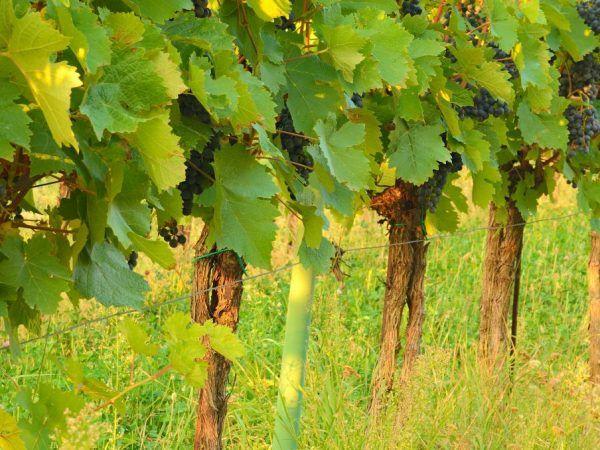
Applications of berries
Table grapes are primarily used for eating, including the Codryanka variety. Due to its very sweet flavor, it's excellent for eating fresh. It can also be used to make delicious compotes.
Tips and advice from experienced gardeners
Tips for growing hybrid grapes:
- To prevent the development of diseases, grapevines are sprayed with colloidal sulfur before the buds open.
- Avoid using sprinklers when watering. Grapes don't like wet leaves or excess moisture, as this can lead to powdery mildew.
- For pruning, use sterile and sharply sharpened instruments; before each cut, the instrument must be wiped with alcohol.
- It is not advisable to remove the winter cover immediately after the snow melts; you need to wait until warm weather sets in.
Growing grapes is not difficult if you don’t forget about care.
Related posts:
 Description of 30 grape varieties for Siberia, planting and care for beginners
 The best ways and methods for properly covering grapes for the winter
 How to grow grapes in the Moscow region in open ground without a greenhouse
 Description of the Julian grape variety, planting and care instructions
 Description of the Krasotka grape variety, planting and care technology
 Description of 30 varieties and types of Muscat grapes, planting, cultivation and care
 The ripening time of grape vines by variety, how to speed up the process, and what to treat the plant with
 Beginner's Guide to Growing Grapes in Open Ground in Central Russia