
- History of selection
- Description and Features
- Bush
- Bunch
- Berries
- Varieties
- Black
- White
- Pink
- Characteristics of the variety
- Frost resistance
- Drought resistance
- Productivity and fruiting
- Applications of berries
- Disease resistance
- Advantages and disadvantages of the variety
- How to plant correctly
- Recommendations for choosing deadlines
- Site selection and preparation
- How to select and prepare planting material
- Planting diagram
- Care instructions
- Watering mode
- Top dressing
- Trimming
- Protection from birds and insects
- Preparing for winter
- Preventive spraying
- Methods of reproduction
- Cuttings
- Grafting
- Layers
- From seeds
- Diseases and pests
- Oidium
- Mildew
- Powdery mildew
- Alternaria
- Gray rot
- Black rot
- White rot
- Harvesting and storage
- Tips and advice from experienced gardeners
The beneficial properties of grapes have long been known to mankind. The Original grape variety is adapted to growing conditions in southern latitudes and temperate climates, making it a deserved favorite among gardeners. The berries strengthen the immune system and normalize the function of the heart, blood vessels, and gastrointestinal tract. They also help with stress, insomnia, and depression, enriching the body with amino acids and antioxidants, substances that protect against cancer.
Unfortunately, not every fruit variety is adapted for cultivation in temperate climates. However, every year, breeders delight gardeners and farmers with new grape varieties with enhanced frost and disease resistance.
History of selection
The Original table grape variety was developed by Ukrainian breeders at the Odessa Research Institute of Winemaking and Viticulture. Breeding work began back in 1970. The crossbreeding involved the Datier de Saint-Vallée and the Damascus Rose grapes.
From its parent varieties, the Original grapes inherited resistance to low temperatures, natural immunity to major diseases, a unique fruit shape, and an invigorating berry flavor.
The variety was included in the state register of fruit crops after testing in 2009.
Description and Features
The characteristics of the Original grape cannot be described unambiguously, as the variety has several varieties that differ in both the color and taste of the berries.
Bush
This hybrid fruit tree grows tall and spreading bushes, with mature plants reaching 3 meters in height. The leaf blades are bright green, characteristic of fruit trees. As the bush grows, it produces numerous side shoots, which need to be managed.
Bunch
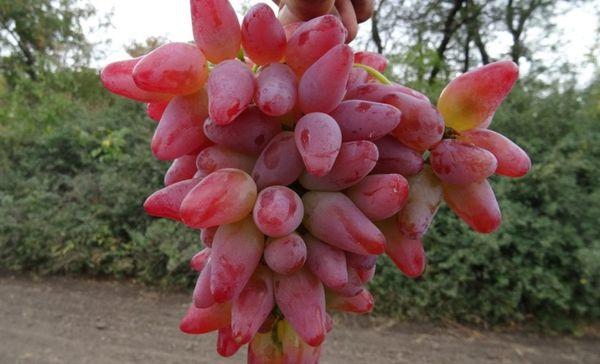
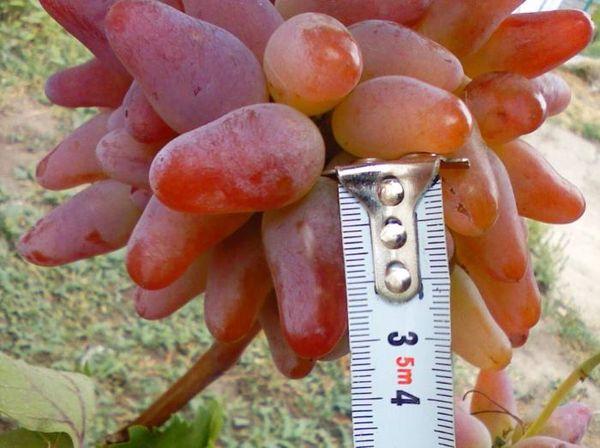
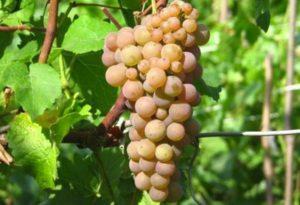
Large, conical or cylindrical clusters ripen on vigorous, fruit-bearing shoots. A ripe grape cluster weighs from 600 g to 2 kg. Each vine can produce up to six clusters of large berries.
Berries
The color of the berries depends on the Original grape variety. Ripe fruits are large, weighing 6 to 12 grams, pear-shaped, with thin, firm skin and juicy, sweet flesh. Each berry contains 2-3 small seeds.
Sugar content up to 21%, acids from 5 to 7 g/l.
According to experts, the taste of the berries was rated at 8.8 points on a 10-point scale.
Important! The berries are poorly attached to the stalk and will fall off during long-distance transportation.
Varieties
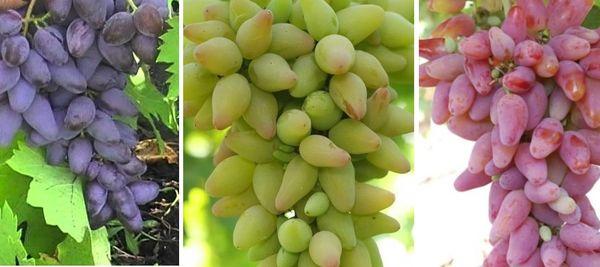
There are several varieties of Original grapes, differing in the color and taste of the berries.
Black
The Original black grape variety is distinguished by its dark blue berries and slightly smaller clusters. This variety is more susceptible to diseases and pests.
White
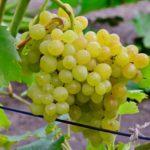
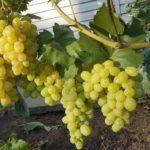
The white variety has a slightly sour taste, large white-yellow berries, and large cone-shaped clusters.
Pink
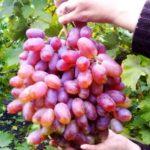
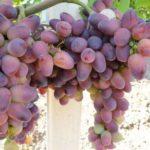
The pink grape variety has the most attractive presentation and sweet taste. The clusters are large, conical or cylindrical, with large, pink berries.
Important! The sugar and acid content of Original grapes is influenced by the climate and weather conditions of the growing region. The more sun and warmth the fruit receives, the sweeter and more delicious the berries will be.
Characteristics of the variety
Thanks to the work of breeders, the Original grape variety has acquired only the best properties and characteristics inherent in the fruit crop.
Frost resistance
This grape variety, bred in the southern region, easily withstands temperatures down to -24 degrees Celsius. However, before wintering, additional insulation is recommended for berry bushes, especially in moderate and cold climates, otherwise the fruit buds will freeze.
Drought resistance
A short-term drought cannot harm the plant or affect the yield or taste of the berries.
But hybrid grapes need watering, especially after a hot, dry period.
Productivity and fruiting
Fruiting begins in the third to fourth year of open-ground growth. Ripening times vary depending on growing conditions and the climate of the region where the grapes are grown.
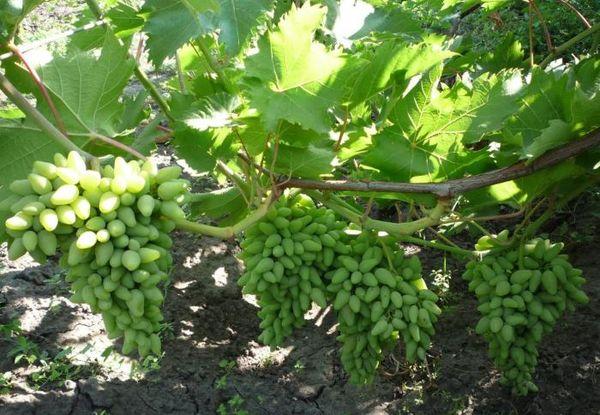
According to the stated characteristics, full ripening of the fruits occurs 135-145 days after the start of the growing season.
In the southern regions, the harvest is obtained in mid-August; in the central zone, the berries ripen no earlier than September.
This variety has a high yield. With proper and timely care, a single vine can yield 30 to 100 kg of ripe, tasty, and healthy berries.
Important! Heavy rainfall and high humidity negatively impact the quality and quantity of the harvest.
Applications of berries
Original grapes are recognized as a table grape variety. The berries are recommended for fresh and processed consumption.
The fruits are preserved, dried, and frozen. They are also used to make healthy juices, nectars, compotes, and jams. In cooking, grapes are used to make sauces, desserts, baked goods, homemade wines, and liqueurs.
The fruit seeds contain unique substances used in the production of cosmetics.
Disease resistance
Natural immunity in the Original grape variety varies depending on the variety.
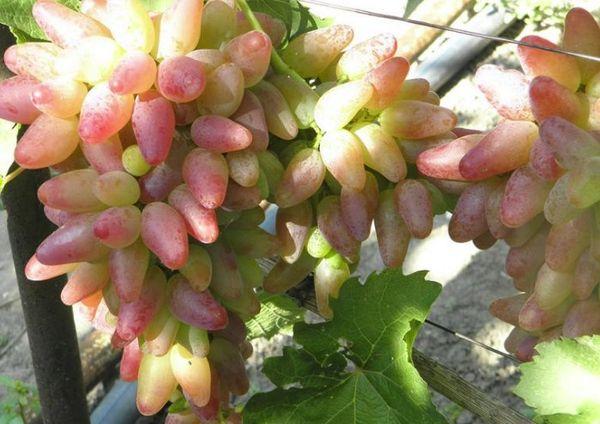
While pink and white grape varieties are rarely affected by diseases and pests, the black grape variety often becomes easy prey for wasps and fungal infections.
Advantages and disadvantages of the variety
Before growing a hybrid crop, it is necessary to familiarize yourself with the advantages and disadvantages of the variety.
Advantages:
- High yield rates.
- Rapid growth of the bush and maturation of the vine.
- Resistance to frost and drought.
- Increased natural immunity to diseases and pests.
- Possibility of long-term storage of ripe berries.
- Excellent decorative properties of the plant.
Mature Original grape bushes are used to decorate arches, gazebos and buildings in garden plots.
Flaws:
- Shedding of ripe berries.
- The formation of clusters on one-year-old shoots significantly reduces the yield of the fruit crop.
- Prolonged rains and high humidity have a negative impact on fruiting and yield.
- If it rains while the grapes are flowering, the berries that ripen are small and tasteless.
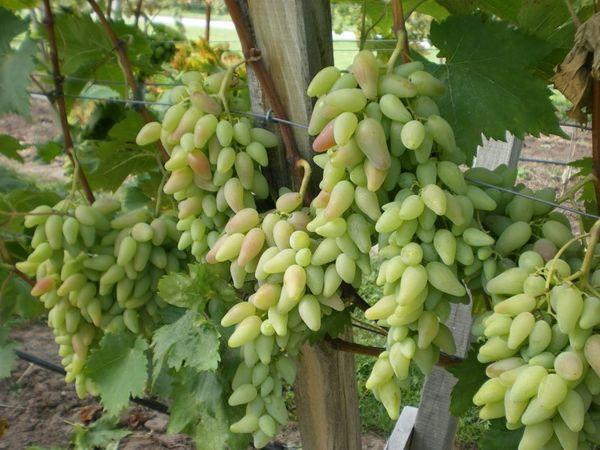
Important! Due to the weak attachment of the berries to the stalk, the fruits completely fall off the bunches during long-distance transportation.
How to plant correctly
The health of the fruit bushes and future yield depend on the correct choice of location for planting grapes, soil composition, and adherence to planting timing.
Recommendations for choosing deadlines
Planting is carried out in spring or fall. Autumn planting is carried out after the berry harvest, 5-6 weeks before the onset of cold weather.
In the spring, grapes are planted as soon as the soil warms to 15 degrees Celsius. The seedlings will take root, grow, and strengthen over the summer.
Site selection and preparation
The site for planting should be well-lit, protected from northern winds and drafts.
The minimum permissible groundwater level is 3 meters above the topsoil. Grapes are not recommended for planting in lowlands or marshy areas. Seedlings quickly rot and die.
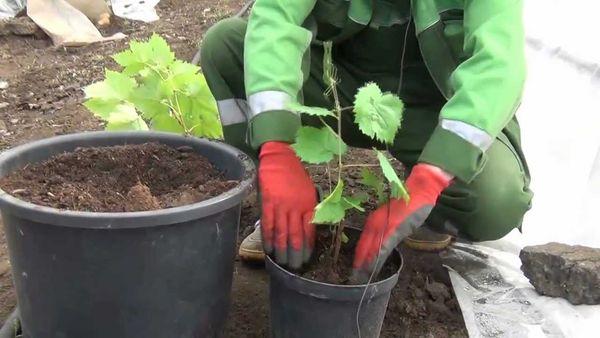
Grapes prefer to grow in loose, fertile soils with low acid content.
- The area is dug to a depth of 70-80 cm.
- The soil is cleared of weeds, debris and roots.
- The soil is mixed with organic and mineral fertilizers.
- Planting holes were dug 3-4 weeks before planting.
- The depth and width of the hole is 80 cm, the distance between plantings is from 3 to 4 m, between rows 5 m.
- Drainage is placed in the holes, fertile soil is poured on top and watered.
Important! Drive a support stake into each planting hole to tie the seedlings to.
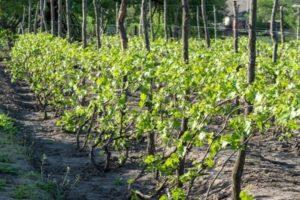
How to select and prepare planting material
It is best to purchase varietal plants from reputable garden centers and specialized nurseries.
- Plant 1-3 year-old seedlings. Young plants transplant easily and quickly establish roots in their new location.
- The seedling is examined for damage and disease.
- The trunk of the plant is smooth, uniform in color, with the obligatory presence of fruit buds.
- The rhizomes are developed, moist, without obvious damage or rot.
Before planting in open ground, the plant roots are dipped in a solution of water and clay for 10-15 hours, and then treated with a weak solution of manganese.
Planting diagram
The roots of the prepared seedlings are trimmed, leaving only long and strong branches.
- The plant is placed in the center of the planting hole.
- The roots are carefully distributed over the hole and covered with fertile soil.
- The soil is compacted, the seedling is tied to the support, and watered.
After completing the planting activities, the tree trunk circle is mulched with dry grass or humus.
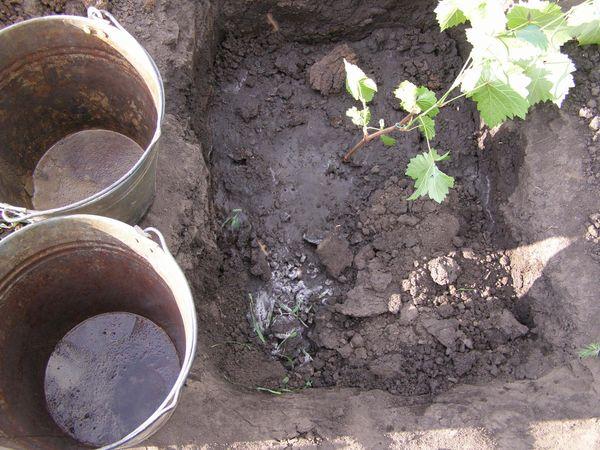
Care instructions
The growth, development and fruiting of grape bushes depend on proper and timely care.
Watering mode
Original grapes are watered 3-4 times throughout the season. The plant especially needs watering at the beginning of flowering and during fruit set.
Abundant watering is done in the fall, after harvesting.
After irrigation, the soil is thoroughly loosened; if necessary, the tree trunk circle is weeded and mulched.
Top dressing
Grape bushes expend a lot of energy and nutrients to ripen the vines, so the plant requires additional feeding and fertilizers.
- In early spring, berry bushes are fed with organic matter containing nitrogen.
- During the flowering and fruit formation period, grapes are fed with phosphorus and potassium.
- The same feeding is done during the ripening process of the berries.
- In autumn, organic matter and mineral fertilizers are added to the soil.
After the seedlings have been planted correctly, fertilizing begins in the 3rd-4th year of growth.
Trimming
To increase yield and speed up the ripening of berries, grape bushes must be pruned annually.
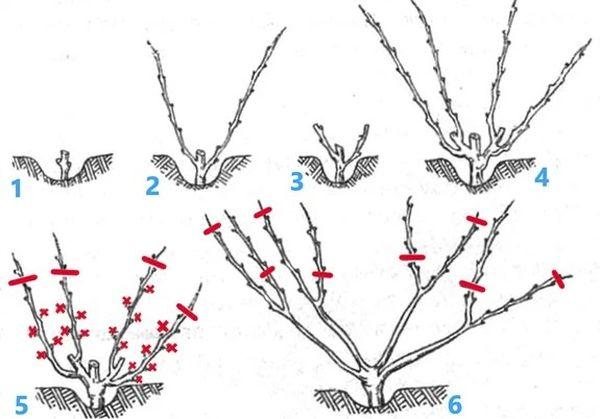
The main harvest ripens on 2-3 year old shoots; old woody branches are removed.
Fruiting shoots produce numerous buds, which significantly increases the load on the vine. No more than two clusters are left on each shoot; in cooler climates, this number is reduced to one.
During sanitary and rejuvenating pruning, dry, broken, frost-bitten and old branches and shoots are removed.
Protection from birds and insects
Grapes always attract the attention of birds and wasps, which can cause irreparable damage to the crop.
To combat birds, people set up scarecrows and hang up shiny old disks and ribbons.
Wasps are more difficult to control. Poison traps or spraying the bushes with chemical pesticides can help get rid of the insects.
The bunches are also covered with a fine mesh, blocking free access to the berries.
Preparing for winter
With the onset of autumn, grape bushes are prepared for winter rest.
- The plants are watered generously, the soil is loosened and mulched with a thick layer of humus.
- The tree trunk circle is covered with dry leaves or spruce branches.
- The grape branches are removed from the supports and laid on boards covered with dry grass.
- The bushes are covered with film or special materials.
- When the first snow falls, a large snowdrift is raked over the grape bushes.
It is recommended to cover the Original grape variety even in regions with a southern, mild climate.
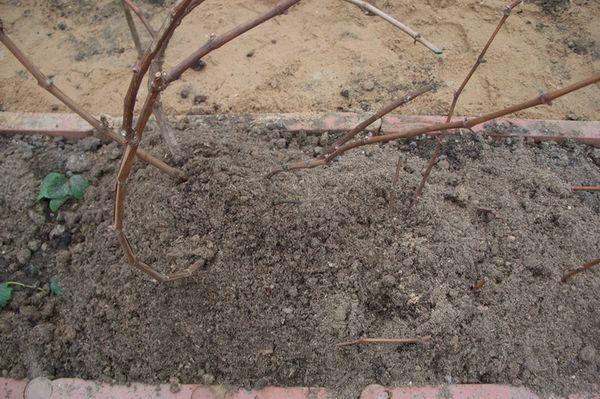
Preventive spraying
Although the Original grape variety has a natural immunity to most diseases and pests, preventative treatments reduce the risk of fungal and pest infestations.
Spraying is carried out in early spring, before flowering, and before winter dormancy.
Methods of reproduction
To increase the number of hybrid grapes and obtain new seedlings, various methods of propagation of fruit crops are used.
Cuttings
In late spring, a strong, healthy shoot is selected from a mature bush and pruned. The shoot is divided into cuttings and planted in containers with fertile soil. In the fall, the rooted plants are transplanted into open ground.
Grafting
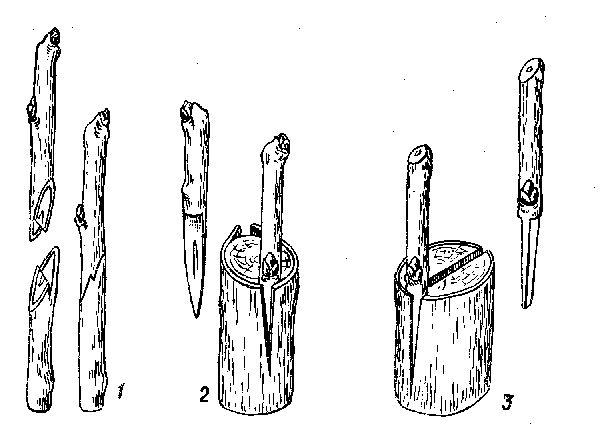
An old grape bush is chosen as a rootstock, onto which a young cutting is grafted.
The plant is pruned, the main stem is split, and the scion is inserted. The young shoot is secured to the rootstock with special tape or material.
Layers
Propagation of grapes by layering is the fastest and easiest way to obtain new seedlings.
At the beginning of summer, a strong lower shoot is selected from a mature bush, bent to the ground and covered with fertile soil, leaving the top of the plant above the soil surface.
In autumn, the rooted seedling is separated from the mother bush and transplanted into a planting hole.
From seeds
Growing hybrid grape varieties from seed is only possible in laboratory conditions for scientific breeders. Otherwise, the fruit crop loses all its varietal characteristics.
Diseases and pests
Sudden changes in weather conditions and violations of agricultural practices lead to the spread of fungal and viral diseases.
Oidium
The fungal infection manifests itself as a grayish and white coating on the above-ground portion of the plant. The berries crack, dry out, rot, and fall off. The disease is accompanied by a strong, unpleasant odor.
For control and prevention, preparations based on sulfur and fungicides are used.
Mildew
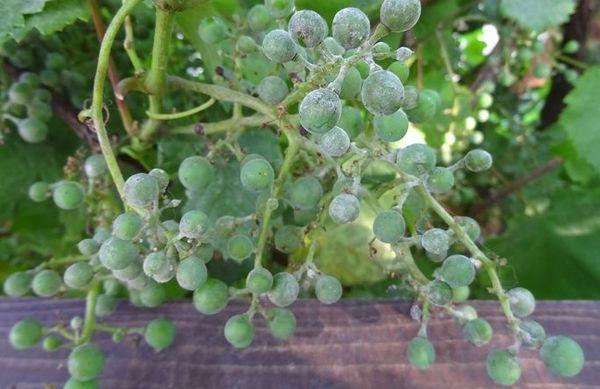
The fungus appears as yellow or brown spots on the leaves and fruit clusters of the bush. A white coating forms on the berries. The inflorescences dry out, the leaves curl, and the fruit fails to ripen.
Bordeaux mixture and fungicides are used as preventative treatments and treatments.
Powdery mildew
The fungal disease manifests itself as a powdery coating on the bush, the leaves dry out, and the berries rot and fall off.
For treatment, copper-based products and fungicides are used.
Alternaria
The fungus appears as grayish or brown spots on the above-ground parts of the plant. Leaves turn black and dry out, and flowers and ovaries fall off.
For treatment, chemical agents based on fungicides are used.
Gray rot
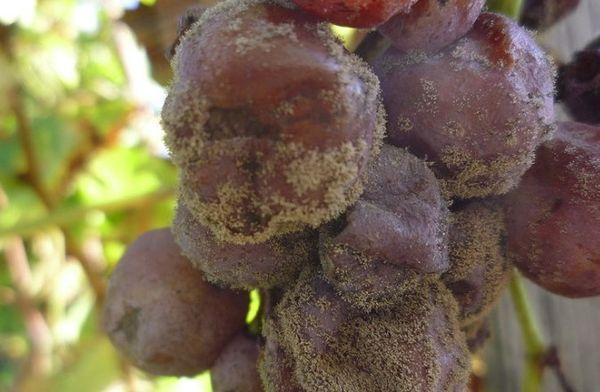
The disease affects the leaves, shoots, and berries of grapes. It appears as a gray coating and spots and spreads rapidly. Chemical and biological control agents are used for treatment.
Black rot
The fungus manifests itself as a purple coating or spots. Leaves and berries dry up and fall off.
The disease is treated with biological preparations or fungicides.
White rot
A fungal infection of the above-ground part of the plant, manifested by yellow and brown spots on the leaves and a grayish coating on the berries.
Biological and chemical preparations are used to prevent and treat the disease.
Harvesting and storage
The harvest time for Original grapes depends on the weather and climate conditions in the growing region. In southern latitudes, the berries ripen in August; in temperate climates, the harvest time is mid- to late September.
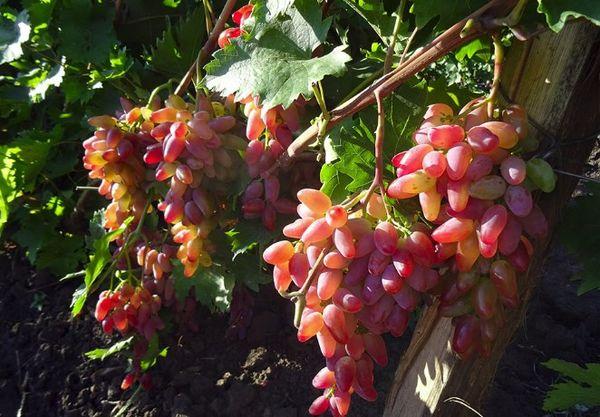
Ripe fruits do not hold well on the bushes and begin to fall off, so the berries are picked immediately as they ripen.
Original grape clusters can be stored in the refrigerator for up to 3 to 4 months without losing their marketable appearance. However, during transportation, the berries tend to fall off the clusters; long-distance shipping is not suitable for this grape variety.
Tips and advice from experienced gardeners
The main recommendations from experienced gardeners and farmers are timely and proper care of fruit crops. Pay particular attention to the load on the vines and avoid allowing too many bunches to ripen. Otherwise, the vines will break, the berries will take longer to ripen, and they will become smaller.
Related posts:
 Description of 30 grape varieties for Siberia, planting and care for beginners
 The ripening time of grape vines by variety, how to speed up the process, and what to treat the plant with
 Description of 30 varieties and types of Muscat grapes, planting, cultivation and care
 Beginner's Guide to Growing Grapes in Open Ground in Central Russia
 How to grow grapes in the Moscow region in open ground without a greenhouse
 Description of the Julian grape variety, planting and care instructions
 Description and characteristics of the Laura grape variety, planting and care
 Description of the Krasotka grape variety, planting and care technology