
- Description and Features
- History of selection
- Main characteristics
- Description of the bush
- Description of bunches and berries
- Productivity
- Transportability
- Frost and drought resistance
- Disease resistance
- Taste qualities
- Applications of berries
- Pros and cons of the variety
- How to plant correctly
- Recommendations for choosing deadlines
- How to choose and prepare a site
- How to select and prepare planting material
- Planting diagram
- Care instructions
- Watering mode
- Top dressing
- Early spring
- When buds are forming
- When the first berries ripen
- Pruning and shaping
- Mulching
- Preventive spraying
- Protection from birds and pests
- Preparing for winter
- Loosening and weeding
- Methods of reproduction
- Diseases and pests
- How to grow in a barrel
- Harvesting and storage
- Tips from experienced gardeners
The Platovsky grape variety has advantages over other varieties: it produces excellent fruit, ripens early, is frost-resistant, is very productive, is resistant to many diseases, and is rarely attacked by pests. The vines are planted in the North Caucasus region and in central Russia. However, it is important to remember that it requires covering in the fall if grown in latitudes with low temperatures. The berries produce some of the best white wines in Russia.
Description and Features
This is a technical grape variety. Unlike processing table grapes, Platovsky grapes produce high-quality white wine.
History of selection
The Platovsky grape is also known as Early Dawn. It was bred by I. Kostrikin, A. Maistrenko, S. Krasokhina, and L. Lychova at the All-Russian Research Institute of Viticulture and Winemaking by crossing the Podarok Magaracha and Zaladende varieties. The vine is frost-resistant, virtually disease-free, and resistant to phylloxera. The grape was entered into the State Register of Breeding Achievements in 2003.
Main characteristics
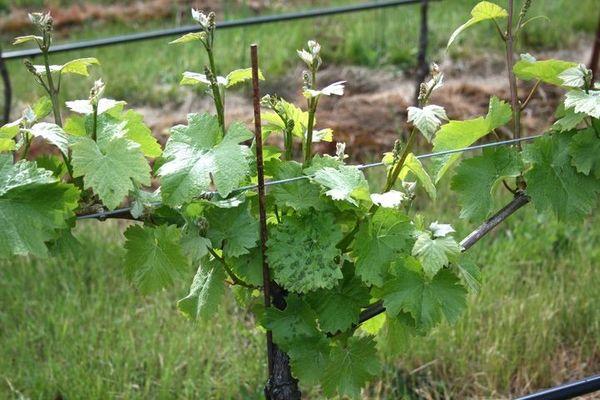
The Platovsky grape variety is an extremely early variety. It takes 110 days from bud swelling to harvest. Young shoots are reddish-green or burgundy. The foliage is five-lobed, corrugated, and dark emerald. The veins at the base of the leaves are red, turning light green toward the edges.
Description of the bush
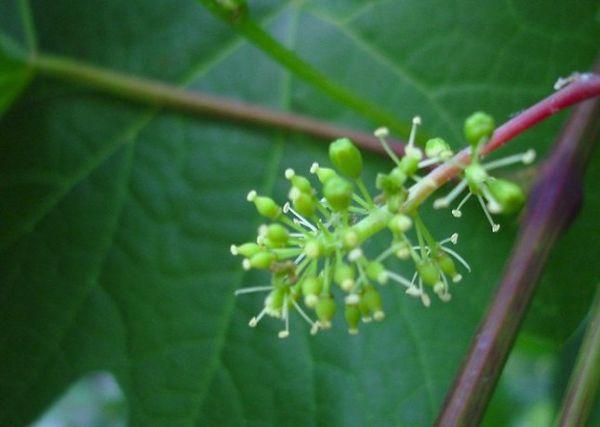
The grapevines are medium-sized. The leaves are small, moderately dissected, and pubescent. The flowers are bisexual.
Description of bunches and berries
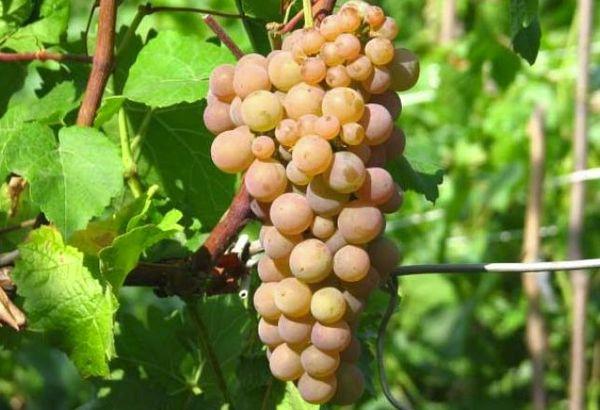
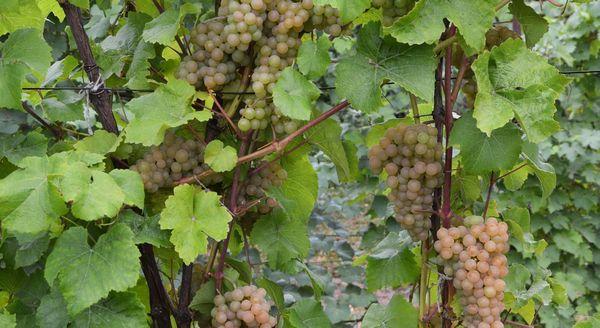
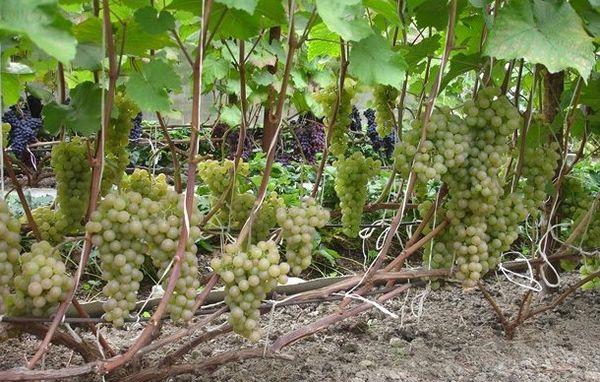
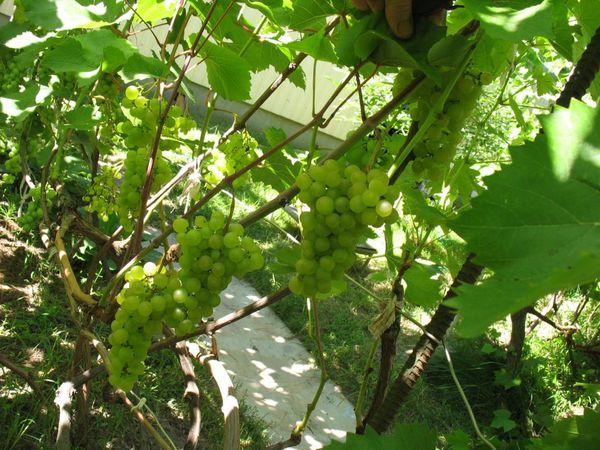
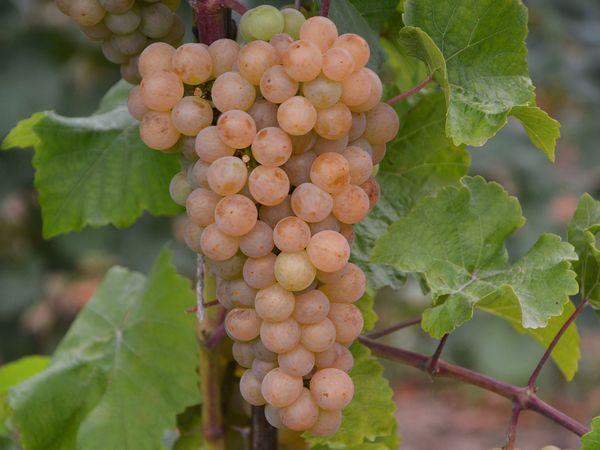
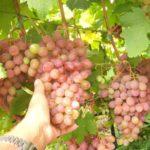
One to three clusters form on a single shoot. The clusters are shaped like conical cylinders, weighing 217 g. Their density is average.
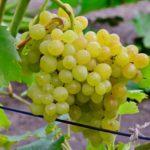
The grapes are greenish-white, juicy, and round, with a Muscat flavor. They have thin skins. In the sun, the berries take on a pinkish tint. Each berry weighs 2-4 g. The dry wine has a tasting score of 7.4. Sugar content is 21.3%, and acidity is 8.6 g/l. Once fully ripe, the berries can hang on the vines without falling off for up to a month. Each berry contains 2-3 seeds. The stems are short, and the grapes are not very tightly attached to them.
Productivity
This variety produces high yields, yielding 373-489 kg per 100 square meters. Up to 6 kg can be harvested per bush. Up to 80% of the shoots mature.
Transportability
The bunches are dense, so they can be easily transported over long distances.
Frost and drought resistance
The vine easily tolerates frosts down to -29°C. If planted in northern regions, the grapes should be covered for the winter. It is recommended for cultivation in the North Caucasus region.
Disease resistance
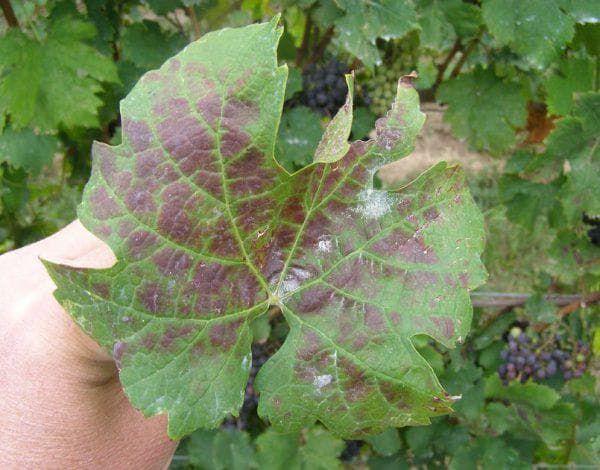
The vine is immune to fungal diseases: mildew, gray mold, oidium.
Taste qualities
The berries are very juicy and sweet, with a muscat flavor.
Take a look Also
Applications of berries
After fermentation, the berries produce dessert and table wine. The fruits are juiced, made into raisins, and eaten fresh. They are also used for compotes and jams.
Pros and cons of the variety
Pros:
- grape seedlings take root and multiply in any soil;
- when it rains, the same number of berries are formed as in the sun, only they will contain less sugar;
- the berries are not pea-sized;
- the berries can hang and not fall off for 30 days after ripening;
- Although this is a technical grape variety, it is not only used to make wine, the berries also have a good dessert taste;
- Due to the high sugar content and the characteristics of the fruit, the wine has a tart taste with a green apple flavor.
The downside is that the grapes need to be covered if there is no snow in the winter.
How to plant correctly
You should select a location with a groundwater depth of at least 1.5 m.
Choose a well-lit location, such as a south, west, or southwest-facing plot. Avoid planting the vine near houses or fences. Avoid low-lying areas where moisture is excessive. A south-facing slope is a good choice.
Grapes prefer to grow on chernozem, loam, or clay-limestone soils. They do not thrive in marshy, acidic, or saline soils.
Recommendations for choosing deadlines
The seedlings are planted in October, 10 days before the first frost. It's better to plant in the fall than in the spring, as the vines have time to establish roots before winter begins.
If planting in spring, the soil temperature should be +10 degrees and the air temperature +15 degrees.
How to choose and prepare a site
Three weeks before planting, dig the planting holes. This should be done early to allow the soil to settle. The hole should be 0.8 m in diameter and 0.6 m deep.
A 10-cm layer of pebbles and expanded clay is placed at the bottom of the holes. A 6-cm-diameter plastic pipe is buried vertically, extending 15 cm above the surface for irrigation. Substrate is added to each hole and the soil is allowed to settle. The substrate should consist of a bucket of humus, a cup of nitroammophoska, and a cup of ash.
How to select and prepare planting material
When purchasing, choose one-year-old, 50 cm tall seedlings. They should have a shoot girth of 6 cm and a root system length of 10 cm. The roots should not be excessively dry, and the plant should appear healthy with strong buds that will be slightly swollen in the spring. The buds should not fall off or be dry.
Planting diagram
The seedling is trimmed back to leave four buds. The root system is trimmed slightly and placed in a solution of 10 liters of water, 1 teaspoon of sodium humate, and 400 g of clay for 2-3 hours.
A mound of soil is filled into each hole, and the seedling is placed there with the buds facing north and the root ball facing south. The roots are spread out and covered with soil. The root collar should be below the soil, and the buds (eyes) should be above it.
Water generously, pouring 3 buckets of water under the seedling. Cover the soil under the plant with plastic film. Once the plant has established itself, remove the film.
Care instructions
The crop is watered and fertilized during the growing season. To reduce the risk of disease, the seedlings are sprayed. In the fall, they are pruned to shape the vines. Wire is tied to pipes at the beginning and end of the row, and the shoots are tied to the wire.
Take a look Also
Watering mode
After planting, water the seedlings once a week for 30 days. Add 5 liters of water under each seedling. Then water them twice a month.
When the grapes grow, they are watered as follows:
- in the spring, when the shelter is removed;
- 7 days before the buds open;
- after the berries begin to set.
Pour 4 liters of settled water under the bush in the evening. Avoid watering the leaves and stems. You can add 500 g of ash to the water.
Water is poured into a buried plastic pipe. If pipes are unavailable, holes are dug. Dig a circular hole 30 cm from the trunk to a depth of 25 cm. After watering, fill it with soil.
When the fruits begin to ripen, the grapes are not watered, otherwise they will crack.
In autumn, 10 days before the first frost, a moisture-recharging watering is carried out.
Top dressing
If fertilizers were added to the soil when the seedlings were planted, then feeding begins in the 3rd year after planting.
Early spring
Add 20 g of superphosphate, 10 g of ammonium nitrate, and 5 g of potassium sulfate to a bucket of water. Pour this mixture under one plant. Then water.
When buds are forming
You can mix 10 g of potassium magnesium sulfate and 20 g of ammonium nitrate into a bucket of water (10 liters). This mixture is enough for 1 square meter. Again, after fertilizing, you should water the grapes.
When the first berries ripen
Choose a day without sun and spray the leaves with solutions of Novofert, Aquarin, Kemira.
Pruning and shaping
To promote normal root growth, roots growing near the surface should be trimmed. One year after planting, in August, dig up a 20-cm-thick layer of soil near the trunk, then trim off the exposed upper roots with pruning shears. Then, cover the seedlings with soil again.
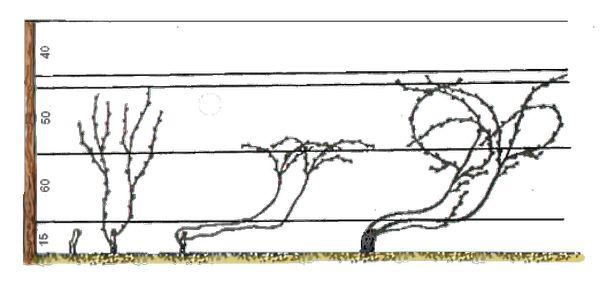
Leave 3-4 buds on the fruiting vines, and cut off the rest. The total load on the bush should be 30-40 buds.
Mulching
To prevent the soil from drying out too quickly after watering, 14 days after planting, you can apply a 5-10 cm layer of peat mulch to the soil. After that, loosen the soil from time to time.
Preventive spraying
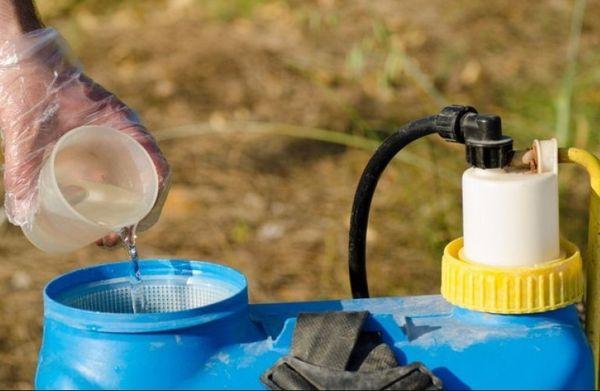
It's best to spray with the safest biological products. To be effective, air temperatures must be at least 10°C, so they can be used before bud break and after flowering. These fungicides (for diseases) include Fitosporin, Pentafag, Farmayod, and Baktofit.
To combat insect attacks, you can use Actofit (against mites and thrips), Fitoverm, and Bitoxyballicin (against leaf rollers). These can be used during flowering and even when fruit set.
Protection from birds and pests
To protect against birds, you can place metal netting around bushes. You can also wrap the bushes in nylon stockings or curtain tulle.
The variety is resistant to phylloxera attacks.
Preparing for winter
In the fall, after the leaves have fallen from the vines, the grape bushes are pruned. Vines that are brown, meaning they are ripe, are left. Vines that are not yet ripe and have a green tint are cut off.
Then the trunks are earthed up. The grapes are then untied and laid on the ground. Metal arches are then installed in the soil, and agrofibre is stretched over them. The ends of the greenhouse are not covered with agrofibre, only the top and sides, to prevent the vines from rotting. The grapes are completely covered with agrofibre when the air temperature drops below -15°C. Fallen snow is placed on top of the agrofibre.
Loosening and weeding
After watering and heavy rains, the soil should be loosened slightly to prevent crusting. Weeds should also be removed.
Methods of reproduction
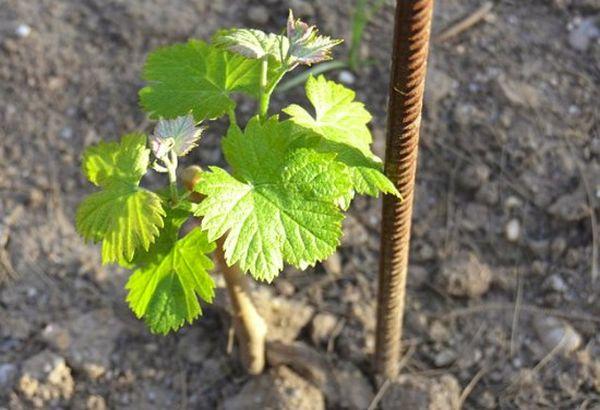
Platovsky grapes can be propagated by seeds, cuttings, and layering.
The easiest method is layering. The vine is pressed into the soil, furrows are dug, and the vines are covered with soil, keeping the soil constantly moist. Then, the rooted layers are cut from the parent vine.
You can propagate the vines using your own cuttings. In the fall, take shoots up to 20-30 cm long and 7-10 mm in diameter from the center of the vine. Then soak them in water for 24 hours. Next, treat them with iron sulfate. Then, place them in a cellar and store them until January 15th.
Afterwards, fertile soil is poured into the cut plastic bottles and the cuttings are placed there.
For grafting cuttings, we recommend using Riparia Kober 5BB or Berlandieri varieties as rootstocks. They are resistant to phylloxera.
Diseases and pests
To treat grapes, spray them with Horus, Antracol, Ridomil according to the instructions.
To combat insect pests, spray grapes with Actellic, Karbofos, and Fufanon. Allow 10 days between sprays.
How to grow in a barrel
Each barrel should hold 65 liters. Next, drill 40 holes in the bottom, each 1 cm in diameter. A drainage layer of small pebbles or expanded clay should be placed on the bottom. Fill the remaining space with a substrate of leaf mold, sand, and peat.
Plants can be planted in barrels from the end of May to the end of September.
For the winter, the barrels containing the grapes should be buried in the ground on the plot, and in early spring, the barrels are removed from the ground and moved to the greenhouse. Then, as early as April, the plants begin to bloom.
Harvesting and storage
In the south, grape harvesting begins in the first ten days of August. The berries should be picked as they ripen. To do this, carefully cut the grape clusters with scissors. They can then be placed in wooden boxes or baskets.
The boxes of berries are moved to a room with a temperature of +1 to +4 degrees Celsius. Overripe bunches are eaten and used to make wine. To prolong their shelf life, sprinkle the bunches with fresh sawdust.
Tips from experienced gardeners
It is recommended to standardize the harvest, leaving 2 clusters on the stem.
They also prune out side shoots and any vines that aren't producing fruit. They also trim off any foliage that blocks the clusters from the sun.
Related posts:
 Description of 30 grape varieties for Siberia, planting and care for beginners
 Beginner's Guide to Growing Grapes in Open Ground in Central Russia
 How to grow grapes in the Moscow region in open ground without a greenhouse
 Description of 30 varieties and types of Muscat grapes, planting, cultivation and care
 Description of the Julian grape variety, planting and care instructions
 The ripening time of grape vines by variety, how to speed up the process, and what to treat the plant with
 Description of the Krasotka grape variety, planting and care technology
 Description and characteristics of the Rumba grape variety, cultivation technology