
- History of selection
- Description and Features
- Characteristics of the variety
- Frost resistance
- Drought resistance
- Productivity and fruiting
- Applications of berries
- Disease resistance
- Advantages and disadvantages of the variety
- How to plant correctly
- Recommendations for choosing deadlines
- Site selection and preparation
- How to select and prepare planting material
- Planting diagram
- Care instructions
- Watering mode
- Top dressing
- Pruning and garter
- Protection from birds and insects
- Preparing for winter
- Preventive spraying
- Trellis
- Methods of reproduction
- Cuttings
- Graft
- Diseases
- Gray rot
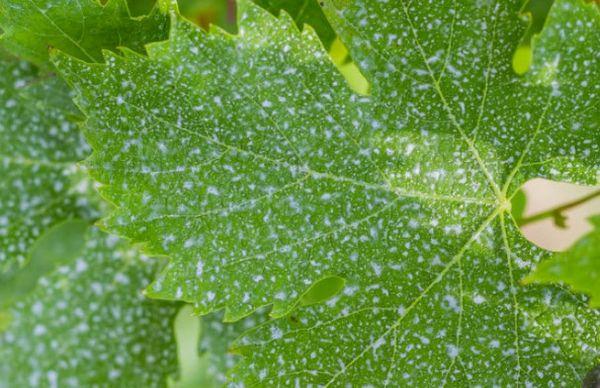
- Mildew
- Oidium
- Anthracnose
- Harvesting and storage
- Tips and advice from experienced gardeners
The diversity of grapevine varieties has led to a situation where high productivity and dessert-like fruit flavors are no longer sufficient. The Krasotka grape hybrid is sought after by amateur gardeners not only for its high yield and refreshing flavor, but also for the unusual cluster colors that enhance the decorative appeal of a garden plot.
History of selection
The Krasotka variety is the result of amateur selection. In 2004, enthusiastic winegrower E. G. Pavlov developed an early-ripening hybrid using cross-pollination. Victoria grapes, characterized by a beautiful color, sweet taste of fruits, and the collection of pollen from European and Amur varieties.
Description and Features
The full ripening of the Krasotka grape vine and its early maturity are due to its genetic properties and multi-layered root system, which increases the intensity of moisture and nutrient extraction from the soil. The hybrid grows to a medium height, with vines reaching 6 meters in length.
The bisexual flowers of the crop do not require pollinators.
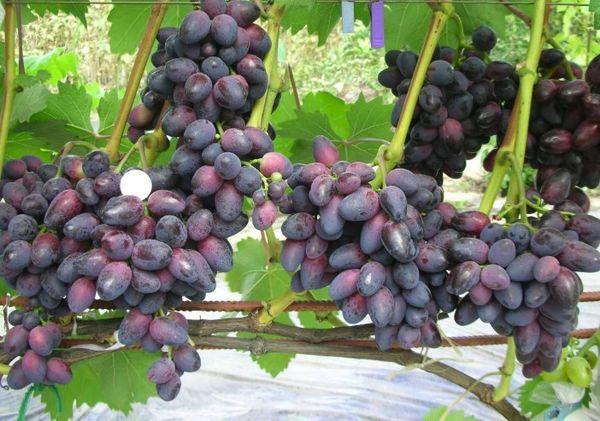
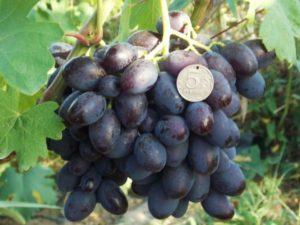
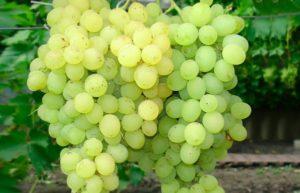
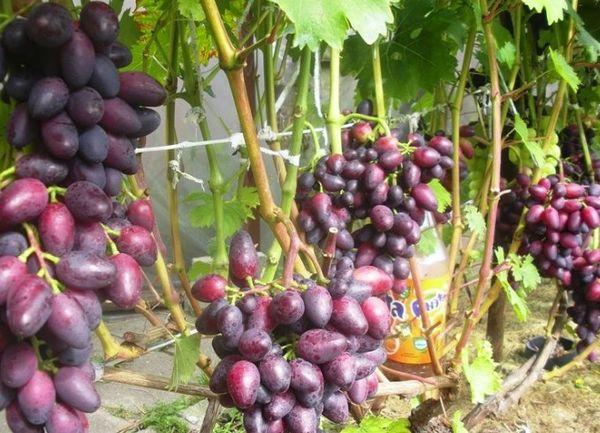
The fruits are loosely packed in cone-shaped, elongated clusters with one or more wings. The minimum weight of a cluster is 0.4 kg, the maximum is 0.8–1.0 kg.
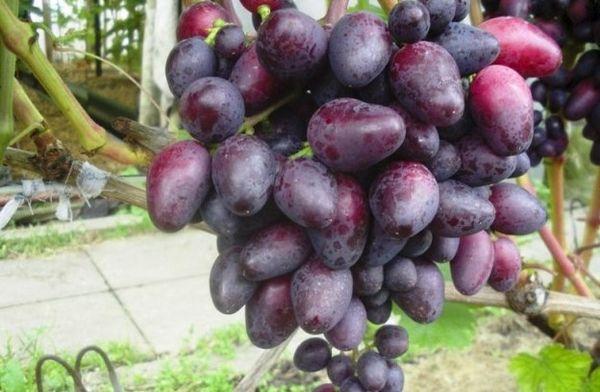
The berries are ovoid-elongated and unevenly colored, ranging from pink to coral at the base and purple at the elongated ends. Each berry weighs 7–10 g and is 2–3 cm long. The juicy pulp contains a small number of seeds.
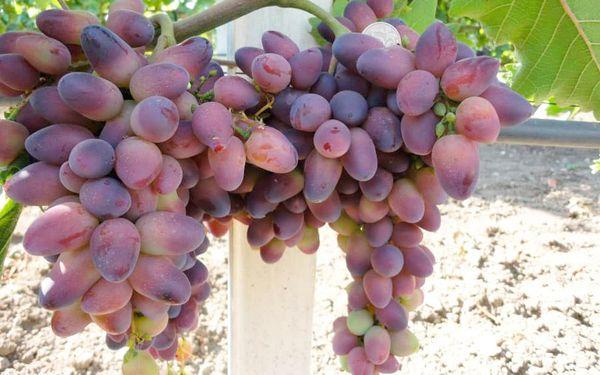
The taste of the fruit grapes - sweet with hints of muscat, vanilla, and a hint of piquant acidity. Professional tasters rated the Krasotka fruit's consumer qualities at 4.6 out of 5.
Characteristics of the variety
The hybrid is characterized by good winter hardiness, high drought tolerance, and average yield. Gardeners note that the fruit's appearance and flavor are preserved during long-distance transport thanks to its thick skin.
Frost resistance
Frost resistance testing has not yet been completed, but in the northern regions of Belarus, the Krasotka grape variety, when covered, tolerates winters with temperatures down to -24°C without ill effects.
In Russia, the hybrid is grown in the south, in the central zone.
Drought resistance
Thanks to its powerful, deep-rooted root system, Krasotka is able to obtain water independently. This explains the grape's resistance to drought and high summer temperatures.
Productivity and fruiting
The hybrid blooms in late May. Fruiting begins in the 2nd to 3rd year of the vine's life. The grapes ripen within 3.5 to 4 months of the spring growing season. The yield is average, but consistent.
The Krasotka grape variety shows its greatest productivity when grown in open ground.
Applications of berries
The variety of sugar-like components, organic acids, and rich vitamin and mineral complex found in grapes make them valuable for the body. The amount of vitamins, micronutrients, and macronutrients remains unchanged when consumed fresh.
The Krasotka grape variety is versatile. Its fruits are used for juice, jam, and wine.
In folk medicine, grapes and juice are used to treat hepatitis, anemia, and vascular conditions, as well as to prevent kidney stones. Grapes reduce the symptoms of tuberculosis, respiratory inflammation, and gout. In patients with hypertension, blood pressure and pulse rate are normalized.
Disease resistance
Despite its high resistance (5-7 points out of 10), mildew and anthracnose can affect grapes if agricultural practices are not followed and unfavorable weather conditions are present. The crop is moderately susceptible to rot. The Krasotka hybrid requires preventative vine treatments and preventative measures.
Advantages and disadvantages of the variety
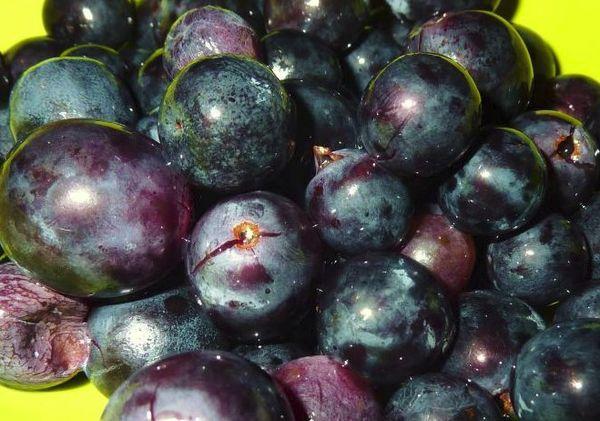
The fruits of the Krasotka grape variety crack when the soil is overwatered, and the ovaries fall off when the soil lacks boron and calcium. These are the only shortcomings of the hybrid.
Gardeners consider the following to be the advantages of this crop:
- early maturity;
- decorativeness of the bush;
- marketable appearance, dessert taste of berries;
- average frost resistance, high drought resistance;
- strong immunity;
- shelf life, preservation of the original appearance of fruits during transportation.
The Krasotka grape variety is not demanding in terms of soil or seasonal fertilizing.
How to plant correctly
Planting grapes begins with selecting and preparing a suitable site, selecting the right seedling, and determining the timing. Adherence to planting procedures is key to the successful development and fruiting of the hybrid.
Recommendations for choosing deadlines
In southern regions, Krasotka grape seedlings have enough time to root if planted in the fall before mid-October. In central and northern regions, vines are planted in the spring, after the threat of frost has passed. This gives the plant time to establish itself, gain strength, and enter winter prepared.
Site selection and preparation
Heat-loving grapevines require good daylight hours, protection from northerly winds, and well-drained, non-acidic soil (pH 6.5–7). They thrive in black soil, rocky soil, and sandy soil that warms quickly. Vines are often planted against the walls of buildings or along a fence facing south. In this case, they are spaced 1 meter from the support.
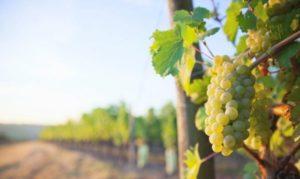
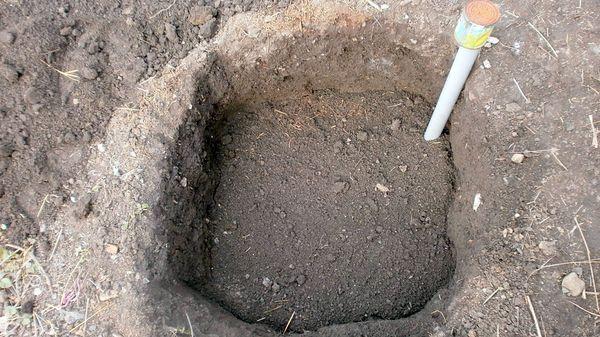
To prevent mature trees in the garden from casting shadows on grape bushes, Krasotka is grown no closer than 5 m from them, and the distance between fruit bushes and the hybrid should not exceed 2 m.
Planting grapes in lowlands with high air and soil humidity, and areas with underground springs located closer than 1.5 m from the surface is excluded.
Three to four months before planting, prepare the planting hole. Sandy soil deficient in nitrogen is mixed with a bucket of manure and 1 kg of ash. If the site has heavy black soil, dilute the soil with a bucket of sand and add phosphorus fertilizer (200 g of superphosphate).
In any case, a drainage layer of crushed stone and brick fragments is made at the bottom of the pit.
How to select and prepare planting material
Krasotka grape seedlings are purchased at garden centers, nurseries, or vineyards, where they can obtain comprehensive information about the hybrid and how to care for it.
A suitable seedling has:
- 3–4 white roots on the cut, at least 2 mm thick;
- 1-2 shoots 0.5 cm thick, 20-25 cm long;
- 3-5 buds on the vine.
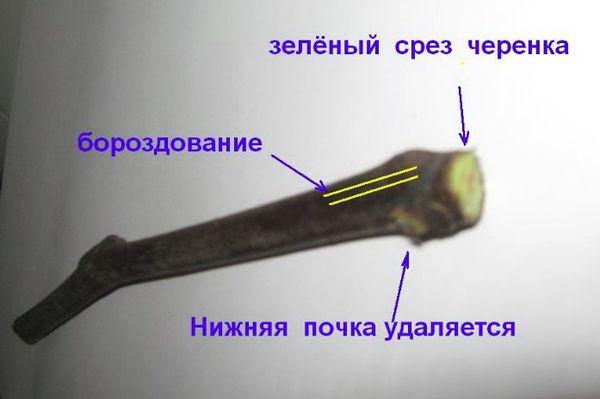
If you remove a piece of brown bark with your fingernail, there should be a green stem underneath. A grapevine's viability is also determined by its buds. If they fall off when pressed with your finger, the vine is discarded.
Roots longer than 15–20 cm are trimmed. Before planting, soak the Krasotka seedling in water or a honey solution (1 tablespoon per 1 liter of water) for 24 hours. A rooting stimulant can be added if desired.
Planting diagram
Hybrid bushes are planted at a distance of 1.2–1.5 m from each other in planting holes 0.8–1 m deep and 60 cm wide. The distance between rows is 2.5–3 m.
Planting technology of Krasotki grapes:
- pre-install the support;
- the seedling is deepened into the hole so that the root collar is level with the ground;
- cover the vine with soil and tie it to a support;
- water the seedling with 20 liters of water and mulch.
Experienced winegrowers advise digging a 5 cm diameter pipe vertically into the hole for underground irrigation of the crop.
Care instructions
Further care for the Krasotka hybrid includes watering, supplemental fertilizing, and regular pruning. The plant requires staking and protection from diseases, pests, and birds. To ensure a successful winter, the grapevine requires some preparatory work.
Watering mode
Spring irrigation kick-starts the growing season. If the winter was light on snow, the first irrigation of grape vines is done in March before bud break; if there was sufficient winter rainfall, it's done in April.
Re-moistening of the soil under the bushes is carried out at the beginning of May, 3 weeks before flowering.
Summer irrigation is aimed at fruit ripening and maintaining optimal soil moisture. To prevent the ovaries from falling off the vine, Krasotka is not watered during or immediately after flowering.
As the soil dries, moisten the soil around the grapes until the fruit acquires its typical varietal color. Irrigation is stopped 2-4 weeks (depending on the expected storage period) before ripening to prevent waterlogging and cracking of the fruit.
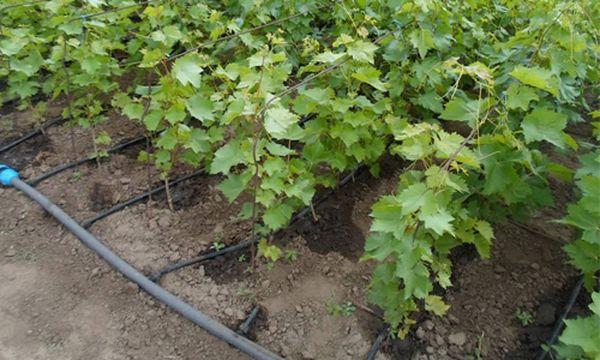
To prevent the roots from freezing in winter, in late October–early November, after insulation, the hybrid is generously watered for the last time this season.
The average volume of water for irrigation is 50–70 liters per 1 sq. m.
During the first year after planting, vines are watered weekly. By mid-July, the frequency of waterings is reduced to twice a month.
Top dressing
In the spring, at the beginning of the growing season, add 5 kg of chicken manure to a trench dug near the grape bush and moisten it thoroughly. Another way to supply the grapes with essential nitrogen-rich elements is to water them with a wood ash infusion.
If there is no organic matter, 40 g of urea and superphosphate, 30 g of potassium fertilizers are added under the Krasotka bush.
A week before flowering, the crop is treated on the leaves with ready-made preparations Kemera, Florovit, Master, Biopon.
After the formation of pea-shaped berries, the grapes are watered with a solution of 10 liters of water and 30 g of a mineral complex.
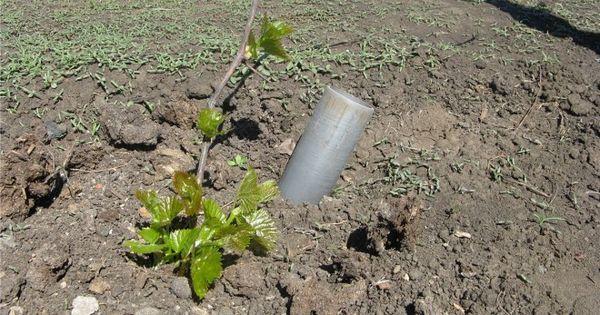
In summer, during fruit ripening, the hybrid is fertilized with 5 tablespoons of potassium magnesium sulfate and 1 tablespoon of ammonium nitrate dissolved in 10 liters of water, or irrigated with ash water.
To increase the sugar content of the berries, 7 days before technical ripeness, Krasotka is watered with a solution consisting of a bucket of water, potassium and superphosphate (20 g each).
Two weeks after the fruits ripen, foliar feeding is carried out with solutions of ready-made preparations Novofert, Aquamarine, Kemera.
In the fall, after the leaves have fallen, a bucket of humus is added under the Krasotka bush to increase the frost resistance of the vine.
Fertilizing of the crop begins in the second year.
Pruning and garter
In the first year after planting, the Krasotka grape vine is pruned to two buds. In the fall, the two shoots that have grown in opposite directions are shortened—the first to two buds, the second to four.
The following year, after removing the cover, the plant's shoots are tied to the first row of trellis wire, directing their tops in different directions. In the fall, two shoots on the long branch are cut back, and the rest are shortened. The stems growing vertically from the branches, located closer to the trunk, are pruned to two buds, forming replacement branches; the remaining branches are pruned to four. These replacement branches will become the fruiting branches.
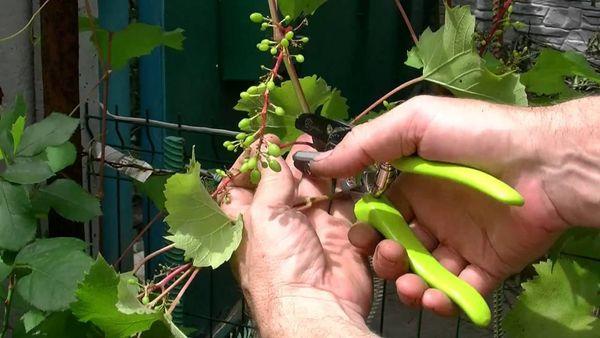
In the spring of the third year, two long hybrid vines are tied horizontally to a trellis, directed in opposite directions. At the end of July, the current year's shoots are shortened by 10–20 cm.
In the fall, after the grapes have been harvested and the growing season has ended, the four outermost shoots, along with some of the branches, are pruned. The remaining two vertically growing branches, each with two shoots, are shortened in the same way as the second-year pruning.
In case of freezing of grapes in winter, it is recommended to leave 3 buds on replacement branches and 6 on fruit branches.
By the third year, 4 branches can be formed on the bush if, in the second year, 4 shoots are left, which are shortened to the fifth bud.
Trellis-like tying of grapes results in uniform illumination of hybrid shoots, a reduced risk of fungal infection and pest attacks, and an increased yield.
The perennial branches of the crop are tied to the first row of wire stretched between the dug-in posts. Fruiting branches are secured to the second row of wire, with summer growth above.
Protection from birds and insects
Protecting the Krasotka grape variety from birds involves the following measures:
- fencing off fruits with a special net on supports;
- wrapping each bunch in gauze or wrapping paper;
- scaring birds away from vines using sound devices and flashing objects.
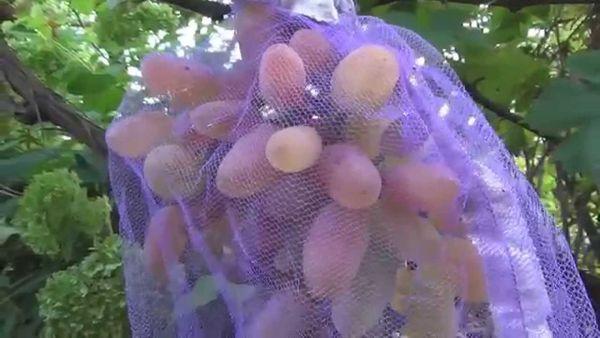
To reduce the damage caused by wasps to zero, prevent berry cracking, destroy wasp nests, and hang traps with sweet syrup on the vines.
Grapes are protected from other insects by insecticide treatments. Slizneed (slug-eater) helps get rid of slugs, Decis and Avant (for leaf rollers), and Demitan and Bi-58 (for mites).
Preparing for winter
After harvesting, the Krasotka grape vines are removed from the trellises and bent down for the winter. To prevent the vines from touching the ground, cardboard or boards are placed underneath them. The vines are laid on the mat and secured with staples and covered with spruce branches, agrofibre, or burlap. Boards or slate are laid on top. In winter, the structure is covered with snow.
Preventive spraying
To repel insect pests and prevent infection of grapes with fungal spores, spray the bushes in calm, cloudy weather.
In early spring, the dormant Krasotka vine is treated with a 3% solution of Bordeaux mixture, and before flowering, with a 1% solution of this agent.
To protect the crop from powdery mildew and spider mites, 2 weeks before flowering, the vine is dusted with colloidal sulfur and sprayed with solutions of Quadris and Kumulus.
In summer, when the pea-shaped berries have formed on the bunch, the grapes are treated with Topaz.
In the fall, after pruning the hybrid, the vine is sprayed with iron sulfate, and the soil under the bush is watered with a solution of Actellic to destroy insects overwintering in the soil.
Trellis
A grapevine trellis is the most effective and cost-effective method for organizing, optimizing, and positioning grapevines. Its structure guarantees excellent conditions for fruiting. The strong and durable frame has all the necessary qualities to ensure the growth and development of shapeless vines.
Methods of reproduction
Grapes are propagated by seeds, grafting, cuttings, and layering. Grafting and cuttings are suitable methods for the Krasotka hybrid.
Cuttings
After the leaves fall, select the current year's grape shoots, pencil-thin, with internodes no longer than 10 cm. The cut vines are soaked in water for 24 hours, treated with copper sulfate, dried, and placed in a cellar or under the freezer compartment of the refrigerator, after placing them in a bag of pine sawdust.
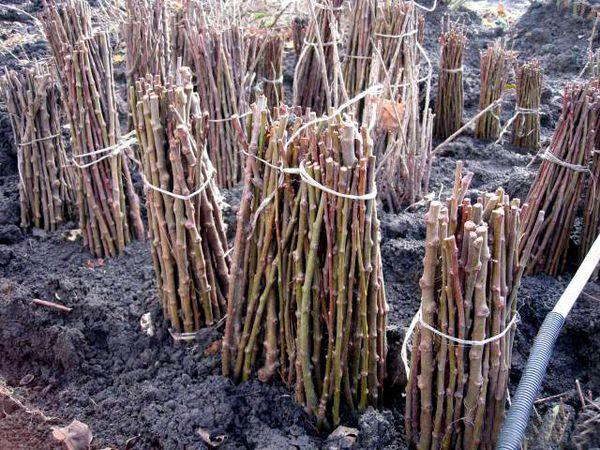
In February, Krasotka cuttings are soaked in water for two days with honey and Kornevin. Make longitudinal cuts at the bottom. Root the shoots in water or in containers with soil, burying the lower ends 1 cm deep.
The more space remains under the lower end of the cutting, the better the root system will develop.
When the threat of spring frosts has passed, the seedlings are transplanted into open ground.
Graft
To increase winter hardiness, improve crop characteristics, and rejuvenate the vineyard, regionalized grape varieties more winter-hardy than the Krasotka hybrid are chosen as rootstocks. The scion is made from green or woody cuttings.
Grafting can be done in spring, summer, and winter using cleft and copulation techniques. The cleft method is suitable for woody cuttings.
Before the procedure, a shoot section with 2-4 buds and a wedge-shaped lower end is soaked in water for three days. The rootstock shoots are trimmed, leaving a smooth, horizontal trunk 15 cm high.
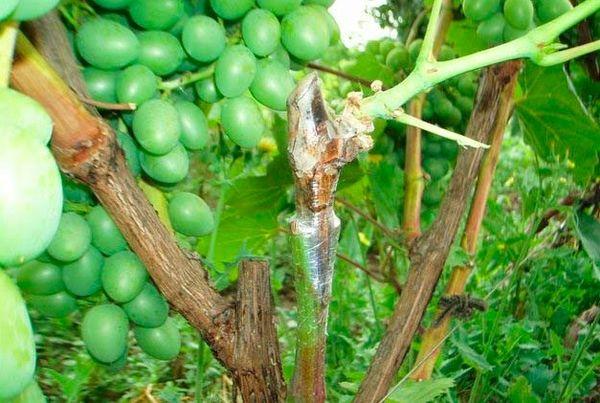
A knife is used to make a cleft in the stump, into which the wedge-shaped end of the grapevine cutting is inserted. The lower bud of the scion should be facing outward, and the cambium should be aligned with the cambium of the rootstock.
The cutting is secured to the rootstock with rope, wrapping it around the stump. The grafting site is covered with plastic film. If the graft has taken, the bud on the cutting will begin to swell within 2–3 weeks.
Diseases
Despite its high immune defense, if agricultural practices are not followed, the Krasotka hybrid is susceptible to fungal diseases common in vineyards.
Gray rot
The fungus Botrytis cinerea attacks all parts of the grapevine. In rainy springs, the tips of the shoots become covered with a gray coating, and the flowers turn brown and fall off. Brown spots, with or without a coating, appear on the leaves and young shoots. The berries, with micro-injuries, become water-soaked and then rot.
To combat fungus, remove the affected parts of the Beauty plant and use folk remedies - a solution of potassium permanganate (1 teaspoon per 10 liters of water) or baking soda (100 g per 10 liters of water).
If there are multiple gray mold outbreaks, use fungicides such as Sumilex or Ronilan. For prevention, spray the hybrid vines with Bordeaux mixture or copper sulfate in early spring.
Mildew
When grapes are infected with mildew, round yellowish spots appear on the upper side of the leaves, and a white, powdery coating appears on the underside. The disease later spreads to the inflorescences and bunches. The fruit turns brown and becomes inedible, the leaves fall off, and the tops dry out.
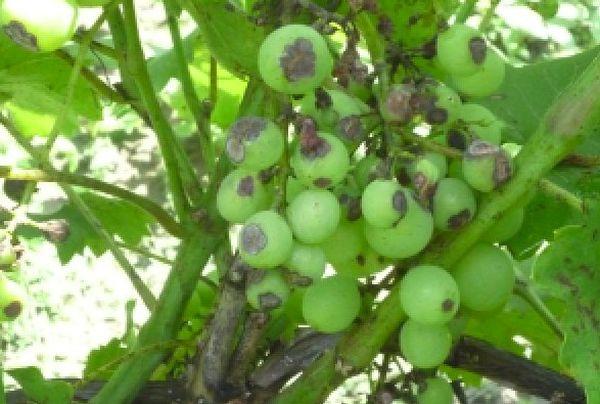
The fight against fungus begins with pruning and burning dried parts of shoots and leaves of the hybrid.
At the initial stage of the disease, treating grapes with copper sulfate is effective. It is recommended not only to spray the vines but also to water the soil around the bush.
In case of extensive damage to Krasotka, the fungus is eradicated with stronger fungicides - Ridomil Gold, Abiga-Peak, Champion.
To prevent disease, remove fallen leaves throughout the season. After removing the hybrid's cover and in the fall, dig up the soil, preventing the bush from becoming overloaded with extra clusters and non-fruiting shoots.
Oidium
Signs of powdery mildew on grapes include a greyish-white coating on both sides of the leaves, leaf curling, dying off of inflorescences, and drying and cracking of the fruit.
To eliminate fungus on vines, dust the plant and the soil beneath with finely dispersed colloidal sulfur. Treatments of the hybrid with this product, repeated up to six times every two weeks, are effective at temperatures of 20°C or higher in the morning.
To combat powdery mildew, in addition to sulfur, use the fungicides Horus and Skor. For prevention, increase soil aeration by loosening the soil, prevent overcrowding, and treat grapes with Switch and Karatan.
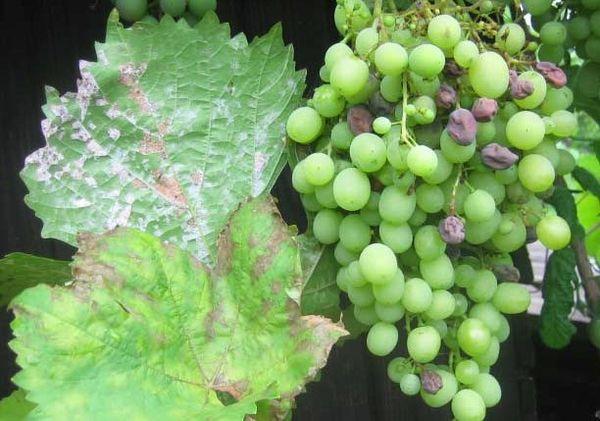
Anthracnose
Fungal spores penetrate grapevine shoots, causing black or brown elongated spots, cracking of the bark, and stem drying. On the hybrid's leaf blades, small black spots develop into dark spots outlined by a black border. The spores engulf the entire leaf, which soon dries up and falls off.
Anthracnose on Krasotka grapes manifests itself as concave brown spots with purple centers. Depending on the weather, the berries rot or dry out.
To prevent infection, spray grape bushes with Bordeaux mixture before bud break, and then with copper sulfate two weeks later. If the Krasotka vine is severely affected by anthracnose, use systemic fungicides such as Acrobat, Fundazol, or Ridomil.
Harvesting and storage
The Krasotka grape harvest begins in August, 3.5–4 months after the start of the growing season. If the grapes are not picked within two weeks of reaching consumer ripeness, they lose their sugar content and crack.
Hybrid bunches are cut with scissors in the morning on a dry day and placed in wooden crates, stem-side up. It is recommended to wear gloves when handling the berries, avoiding contact.
The grape containers are placed in a ventilated cellar with 80% humidity and a temperature of 2–4°C, after lining the bottoms of the boxes with paper and sprinkling the bunches with sawdust. To extend the shelf life of the fruit, the bunches of Krasotka are hung on a specially taut wire.
If there are not many grapes, the bunches are laid out on the shelves of the refrigerator in one layer.
An effective method of storing the hybrid is to cut the fruits together with the vine, the end of which is placed in a container with water.
Before storing grapes, the bunches are inspected, removing dried, unripe or rotten berries.
Tips and advice from experienced gardeners
Experienced gardeners on forums offer recommendations for growing Krasotka grapes:
- purchase grape seedlings during the period of mass sales in order to avoid artificially induced ripening of the vines;
- To prevent the hybrid fruits from cracking, a canopy of transparent film is stretched over the trellises;
- Using sprinkler irrigation increases the risk of Beauty becoming infected with fungal diseases;
- first year grapes are tied to a temporary support;
- When tying the fruit branch of a grape to a trellis vertically, the shoots of the current year develop normally only from the apical buds; the correct tying is horizontal;
- It is not recommended to remove the covering material too far after opening the vines in the spring in case of recurrent frosts.
Experienced winegrowers recommend keeping a diary that records the timing and specific stages of growing the Krasotka hybrid grape and the agricultural work carried out.
Related posts:
 Description of the Julian grape variety, planting and care instructions
 How to grow grapes in the Moscow region in open ground without a greenhouse
 The ripening time of grape vines by variety, how to speed up the process, and what to treat the plant with
 How to prune grapes step by step for beginners
 Description of 30 grape varieties for Siberia, planting and care for beginners
 Description and subtleties of growing Sauvignon grapes
 Description and characteristics of the Codryanka grape variety, ripening period and care
 Description and characteristics of the Preobrazhenie grape variety, planting and care