
- The history of grape selection in Catalonia
- What makes this variety different from others?
- Botanical information
- Description of the bush
- Pollinators and flowering
- Ripening time and harvest
- Taste and calorie content of berries
- Where are berries used?
- Characteristics of the culture
- Immunity from diseases and pests
- Resistance to adverse weather conditions
- Landing of Catalonia
- Required soil composition
- Preparing the site and planting hole
- Selecting seedlings
- Timing and rules for planting operations
- Growing and care
- Regularity of watering
- Foliar and root feeding
- Formation of fruit-bearing vines
- Prevention of diseases and pests
- Preparatory work before winter
- Methods of reproduction
- Winegrowers' reviews of the variety
Experts rated the Catalonia grape variety 8.9 out of 10 for its varietal characteristics: frost-hardy, self-pollinating, high-yielding, low-maintenance, sweet berries, and uniform ripening. This variety is popular among gardeners and is also widely grown commercially. Let's take a closer look at this variety.
The history of grape selection in Catalonia
Catalonia was developed by breeders led by Alexander Vasilyevich Burdak by crossing the Burgundy Magnolia (Mantia) and Talisman varieties. The resulting variety delighted with its decorative appeal, low maintenance, excellent flavor, and a good harvest in the first summer after planting.
What makes this variety different from others?
Catalonia grapes stand out from other varieties:
- simultaneous ripening of bunches;
- fruiting in the first summer after spring planting;
- mid-season (ripening time – 80-100 days);
- absence of peas;
- suitability for long-distance transportation;
- high shelf life on the vine and when picked without loss of taste or external changes;
- average frost resistance (withstands temperatures down to -23 ºC);
- active growth;
- good survival rate;
- sweet large berries.
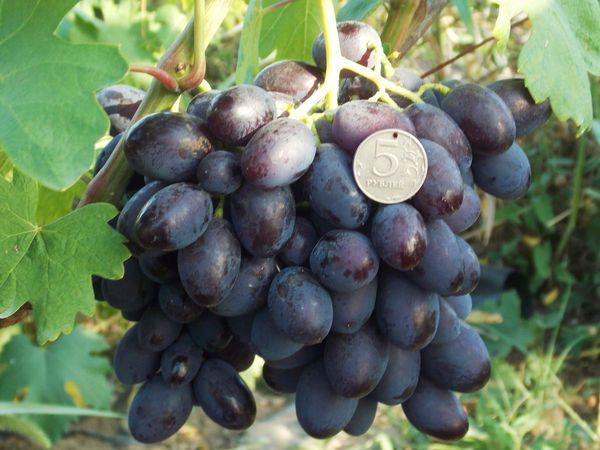
When ripe bunches are left unharvested for a long time, the fruit's flavor remains intact and the integrity of the berries is preserved. However, grapes don't like overwatering, are vulnerable to a number of fungal diseases, and even in southern regions, they require root insulation in winter.
A characteristic feature of Catalonia is the grape's tendency to have its stems grow together, but given the high stress that the shoots have to endure, this is more of a plus than a minus for the variety.
Botanical information
Catalonia is a unique hybrid variety with early ripening berries in the south and later ripening in the northern regions. This red-violet variety is suitable for fresh consumption and is considered the best in terms of yield and seedling survival.
Description of the bush
The Catalonia bush is strong and vigorous with a robust root system. Each shoot can produce three clusters of grapes. However, it's important to manage overload by pruning the clusters and vines to prevent the plant from breaking.
Catalonia adapts well to conditions, takes root reliably, and becomes established. In the first year, grape clusters weigh no more than 500 g. From the second year onward, the number of buds needs to be monitored; the vine can support up to 40.
Pollinators and flowering
Catalonia flowers are bisexual and the variety is self-pollinating.
Ripening time and harvest
The Catalonia grape harvest is in mid- to late June in the southern regions and in early to mid-September in the northern regions. In the first year, a vine will produce only 2-3 clusters of grapes; in subsequent years, the vine will be covered in clusters, with every shoot bearing berries. The berries can be stored in the cellar for long periods without losing their flavor or appearance.
Take a look Also
Taste and calorie content of berries
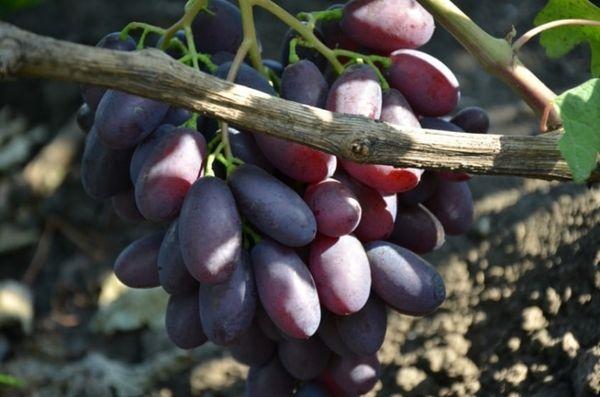
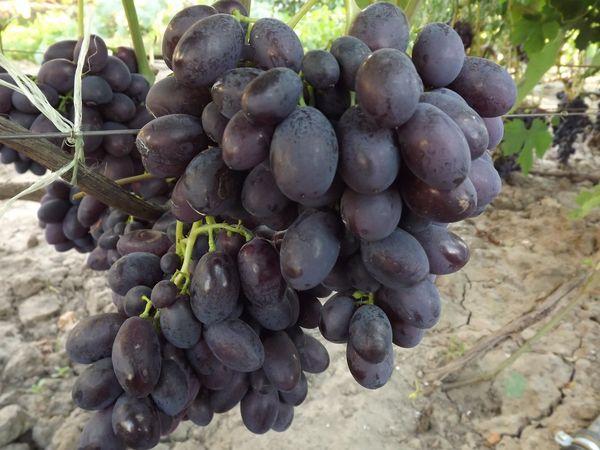
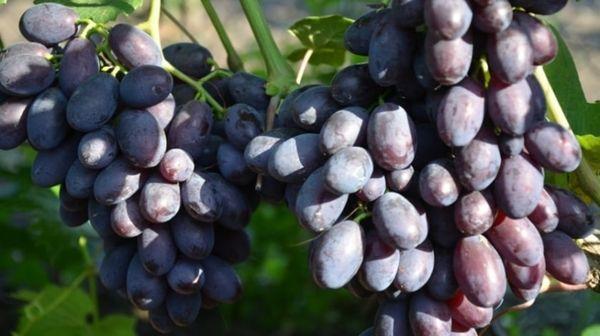
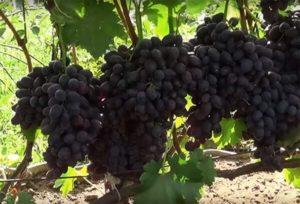
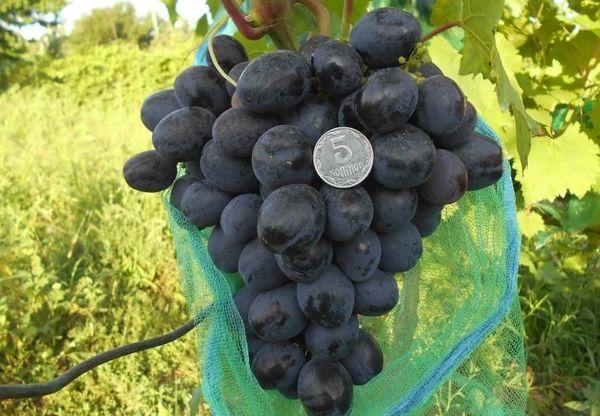
A cluster of Catalonia grapes can reach 1-1.5 kg. The berries are sweet, oval-oblong, and similar in flavor to cherries. Each berry weighs approximately 17-20 g and reaches up to 4 cm or more in length. They turn a purple-red color when ripe. The flesh is juicy, and the skin is firm but unnoticeable and edible. 100 g of grapes contain approximately 60 kcal.
Where are berries used?
The Catalonia grape is used to make aromatic and delicious table wine, desserts, drinks, and winter preserves. The grapes are added to salads and other dishes, and are eaten fresh. They are dried to make raisins, which are then added to baked goods and compotes.
Characteristics of the culture
Catalonia is a variety that is sensitive to excess moisture, demanding of soil and frost below 25 °C.
It is necessary to control watering and take measures during the rainy season, avoid planting crops in marshy and acidic soils, insulate the roots for the winter, spray timely against pests and treat plant diseases.
Grapes are used in folk medicine, and there is a special branch of treatment called ampelotherapy, which treats minor ailments using berries, leaves, and bark.
Immunity from diseases and pests
To preserve the harvest, young grapes are treated with antifungal agents. Catalonia has little resistance to fungi. In waterlogged lowlands, it's advisable to add fertile soil and sand to raise the soil level and dry the area; otherwise, gray mold will destroy the crop. Pests avoid the plant because of the tart aroma of the grape skins. The crop is not affected by leaf rollers or phylloxera.
Resistance to adverse weather conditions
Catalonia is not the most winter-hardy variety, withstanding temperatures down to -23 ºC, so crops grown in the northern and central regions are covered for the winter.
In the south, the hybrid is not covered, but in snowless winters the roots are covered so that they do not freeze.
Landing of Catalonia
Catalonia is planted in the fall and grafted in the spring, after all night frosts have passed. The harvest will be abundant if simple planting and care guidelines are followed.
Required soil composition
The soil for Catalonia should be fertile and neutral, with good drainage so that the hybrid's roots don't sit in water for long periods. Choose a dry, level, and non-hilled site.
To ensure the Catalonia vine thrives and develops well, it should be planted in a sunny location, protected from drafts and strong gusts of wind. Acidic soil should be neutralized by adding wood ash, lime, or dolomite flour. If the soil is poor, it will be necessary to add complex fertilizers, manure, or compost.
Preparing the site and planting hole
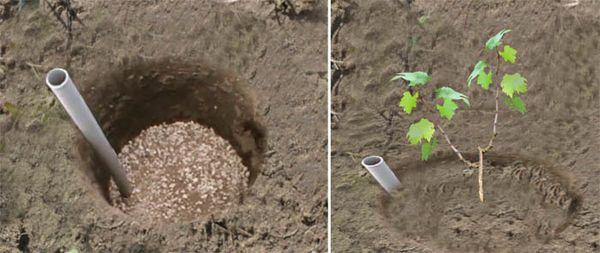
The soil is dug, and holes for the seedlings are dug 2 meters apart. The hole for each Catalonia seedling is dug at least 1 meter deep and wide. A 15-20 cm layer of broken brick, slate, or gravel (drainage) is placed at the bottom of the hole to prevent water stagnation near the grape roots. Drainage is especially important when groundwater is near the surface.
A fertile layer of compost, humus, phosphorus and potassium fertilizers is poured onto the drainage.
Selecting seedlings
Select Catalonia seedlings that are free of visible signs of disease and undamaged. Healthy cuttings are brownish-green in color. Roots should be well-developed. Avoid cuttings with bends, breaks, peeling bark, or signs of disease. Cuttings that are gray or brown in color are old and unsuitable for planting.
Timing and rules for planting operations
The optimal time for planting Catalonia is October, but it requires careful preparation. Catalonia cuttings should be soaked in water for 24 hours before planting, then disinfected with a slightly pink solution of potassium permanganate to prevent damage to the roots. Any roots that are too long should be trimmed.
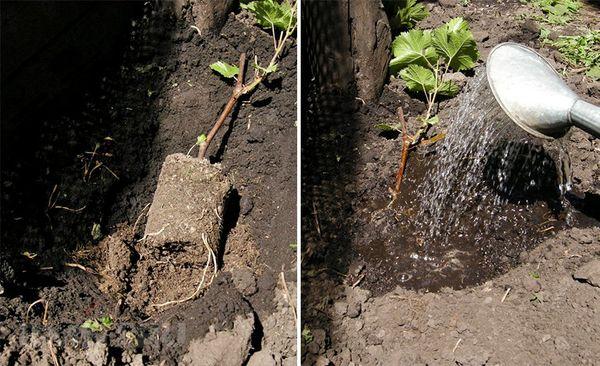
The seedling is placed in the hole, the roots are spread out, and carefully covered with fertile soil, stopping short of the ground level. Then, it is covered with soil again, compacted, and watered generously. The root zone is mulched with straw or sawdust. A sturdy stake is inserted into the ground and the seedling is tied to it so that the growing vine can be secured to the support and off the ground.
Growing and care
Caring for Catalonia is not difficult, but you need to carefully monitor the bush's growth process, ensuring its full development.
Regularity of watering
Catalonia requires regular watering, but avoid overwatering. During the growing season and dry season, it will require ample watering.
There are no general irrigation plans for grapes. The climate and weather conditions in Catalonia should be taken into account. In summer, water immediately after flowering, a second time at the end of July, and a third at the end of August. During grape ripening, watering should be stopped to prevent fungal diseases and water-logged berries. At least 10 liters of water per bush is applied.
Foliar and root feeding
Experts recommend fertilizing Catalonia along with watering. Fertilizers are diluted in warm water and applied to the underside of the vines. Mature grapes require additional feeding. Fertilizers help ensure the hybrid's full development and high yield. Fertilizer application schedule:
- the first - in early spring, immediately after planting seedlings or after wintering;
- next - before flowering;
- the third – before fruit set;
- the fourth - after harvesting;
- the last one - before wintering.
The application of fertilizer should be carefully controlled to avoid overdosing.
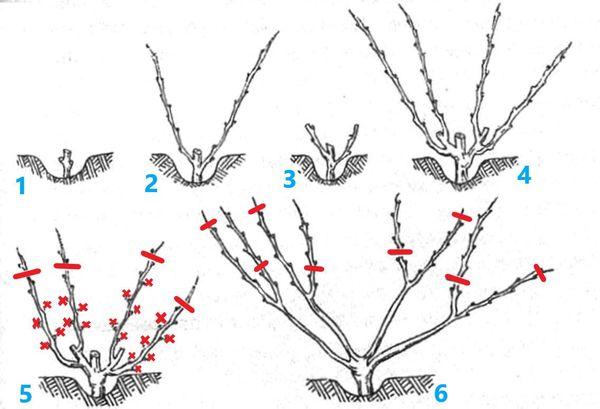
Formation of fruit-bearing vines
An important point is pruning. Diseased, damaged, or old shoots are removed. Stems with peeling bark and branches of different colors are also cut off, and all cuts are burned.
Prevention of diseases and pests
In rainy regions or low-lying areas, Catalonia grapes can be susceptible to gray mold; mildew (powdery mildew), which causes a coating to appear on the underside of leaves; and oidium (downy mildew), which covers the berries and leaves with an ashy coating. In these cases, regular spraying is necessary as a preventative measure.
The following can also affect the culture:
- chlorosis, due to a lack of iron and disruption of chlorophyll formation in the leaves;
- bacterial cancer that leads to the death of the bush;
- anthracnose, which affects the entire plant;
- A felt mite that feeds on the sap of grape leaves, living on the underside of the leaf and secreting saliva that causes a fluffy coating to form on the foliage.
To prevent caterpillar attacks in early spring at an air temperature of +15 ºC, Catalonia is treated with Bordeaux mixture.
Fungal infections are not as serious when the grapes are older than 3 years; preparations or fertilizers can help protect young seedlings.
To prevent diseases, you need to remove fallen leaves and berries from under the bushes, and also change the mulch after winter and harvest.
Preparatory work before winter
For wintering, Catalonia should be covered at the roots with agrofibre or hay, in a layer at least 15 cm thick.
Methods of reproduction
Catalonia is most often propagated by cuttings: green shoots are cut, planted in a moistened mixture of sand and peat, and covered with plastic film, simulating a greenhouse. After two weeks, the cover is periodically opened to ventilate the mini-greenhouse. In the spring, the seedlings are planted in the prepared area.
Winegrowers' reviews of the variety
Gardeners leave positive reviews about the grape variety.
Evgeniya, 43, Crimea: "As a novice winegrower, I really like Catalonia. I was given a seedling, and I don't regret planting it instead of throwing it away. There are a few complications with diseases, but I'm learning, and in the second year, my bush produced many bunches of delicious grapes. You won't find anything like this in stores. Homemade grapes are definitely better! Plant them, try them, and you too will succeed."
Konstantin, 54, Moscow Region: "Catalonia isn't the best variety for the Moscow region. My grapes only started producing clusters in the third year. The seedlings took root quickly, but this is our first time trying to produce berries. But I don't plan on parting with it just yet; I put a lot of effort into the bushes. The foliage looks beautiful, I have nothing bad to say about it. I secured it to a U-shaped trellis, and it turned into a gorgeous green arbor."
Related posts:
 Description of 30 grape varieties for Siberia, planting and care for beginners
 Beginner's Guide to Growing Grapes in Open Ground in Central Russia
 Description of 30 varieties and types of Muscat grapes, planting, cultivation and care
 The best grape varieties for growing in the Urals, planting and care rules in summer
 Description and cultivation techniques for the Muromets grape variety
 Description of the Galbena Nou grape variety, planting and care rules
 The best ways and methods for properly covering grapes for the winter
 The ripening time of grape vines by variety, how to speed up the process, and what to treat the plant with