
- Description and Features
- Vine
- Inflorescences
- Berries
- Taste
- Growing regions
- History of selection
- Main characteristics
- Drought resistance
- Frost resistance
- Productivity and fruiting
- Areas of application of fruits
- Resistance to diseases and pests
- Transportability
- Pros and cons of the variety
- How to plant correctly
- Recommendations for choosing deadlines
- Choosing a location
- Soil requirements
- Site preparation
- How to select and prepare planting material
- Planting diagram
- Care instructions
- Watering mode
- Top dressing
- Preparing for winter
- Mulching
- Prevention of diseases and pests
- Trimming
- Methods of reproduction
- Harvesting and storage
- Tips from experienced gardeners
The Galbena Nou grape variety is grown for its huge, sweet, Muscat-flavored clusters laden with amber-white berries. It's an excellent grape for making light, sweet wines. This variety is highly productive and requires careful pruning of shoots and bunches. The grapes ripen in August. If the weather is dry and hot, the clusters can remain on the vine until September, which will only enhance the flavor of the berries.
Description and Features
The distinctive characteristics of the Galbena Nou grape include its undemanding growing conditions, early ripening, and resistance to pea-shaped fruit. This variety possesses unique flavor and a magnificent Muscat aroma.
Vine
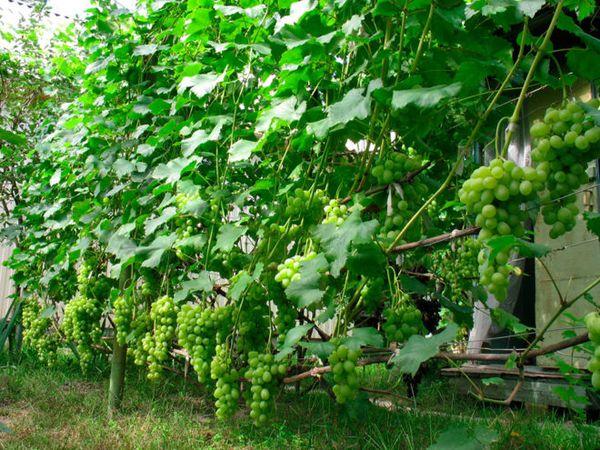
The bush grows quickly. It begins bearing fruit in the second or third year. The vines mature fully. The plant has a strong, brown trunk and flexible branches that resist breaking in strong winds. Along the entire length of the bush, there are branches bearing large clusters of grapes. It is advisable not to overload the vine, and to prune it in a timely manner, leaving no more than 35-40 buds.
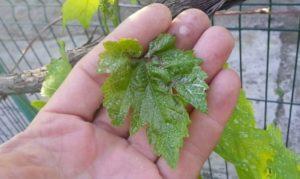
The leaves are huge, 5-lobed, dissected, with serrated edges. The leaf blade surface is light green, smooth, with clearly visible light veins. The petioles are medium-length, greenish, with pink stripes.
Inflorescences
The flowers are bisexual, fertilize well with their own pollen, and are collected in long clusters. Even in low-heat conditions, the plant is not prone to pea-sized berries. However, under unfavorable weather conditions, some of the flowers fall off, causing the clusters to appear loose.
Berries
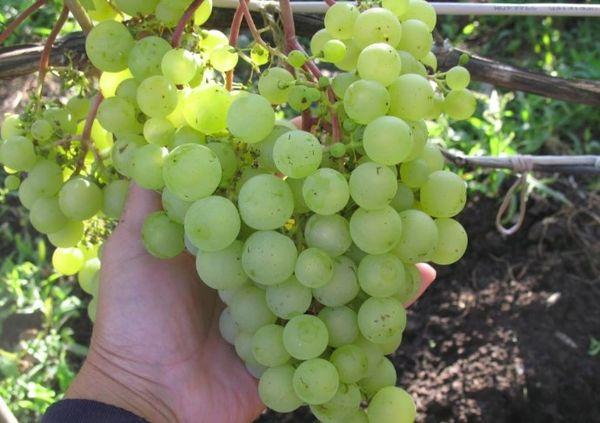
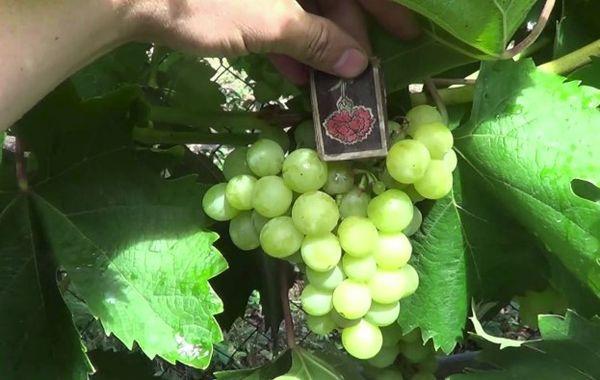
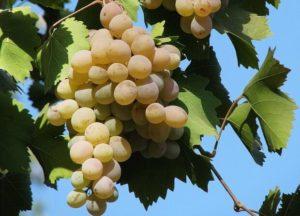
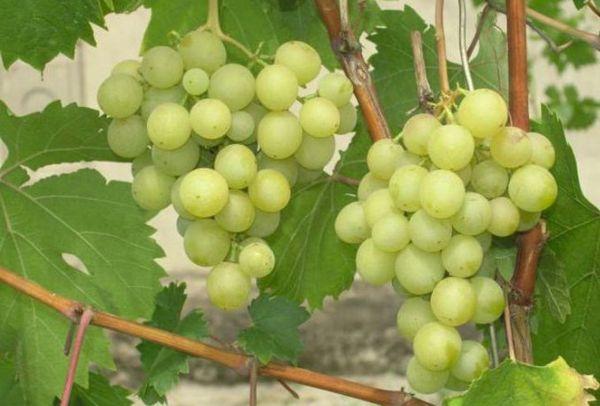
The clusters are large, wide, and conical. Each bunch weighs 450-550 grams. The older the vine, the larger the clusters. A bunch from a mature vine can weigh 650-750 grams. The grapes lightly touch each other.
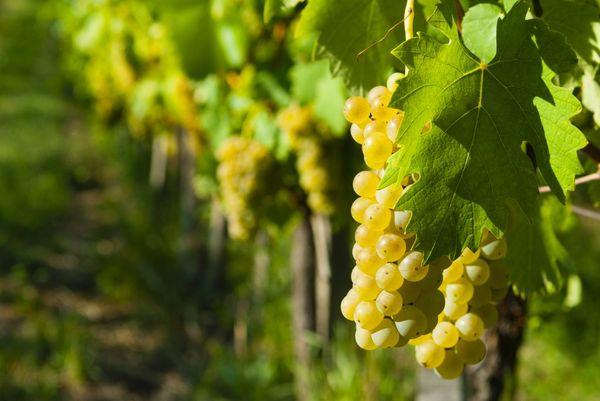
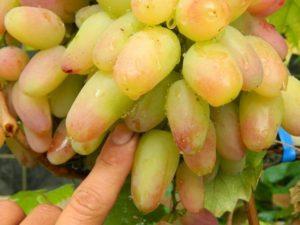
The berries are round. Each weighs 6-8 grams and measures 23 millimeters. Their color varies depending on ripeness, ranging from greenish-yellow to amber-white. The surface of the berries is covered with a bluish bloom of protective bloom.
The skin is thin but firm, easily chewed during eating. The berries may contain seeds, usually one to three. However, they are very small and barely noticeable when eaten.
Taste
The berry pulp is juicy, fleshy, dense, and crunchy. The flavor is slightly sweet, with subtle tartness and muscat notes. The sugar content is relatively high (23 percent). This is the sweetest and most delicious of all light-colored grape varieties.
Growing regions
Thanks to its frost resistance and ability to ripen quickly, this grape variety can be grown anywhere in Russia. It is zoned for the central part of Russia and ripens well in the Far East and Siberia.
History of selection
The Galbena Nou grape variety has several other names, including Zolotinka and Yellow New. It is a relatively recently developed hybrid that is gaining popularity among winegrowers each year.
The variety was developed by scientists from the Potapenko All-Russian Institute of Viticulture. The crossbreeding involved the Moldovan grape Frumoasa Albă and the domestic seedless grape Korinka Russkaya. The authors of the new hybrid are Kostrikin, Maistrenko, and Krasokhina.
Under the name Zolotinka, the grape was patented in 2013. The variety is currently undergoing trials for inclusion in the state register and approval for commercial cultivation.
Main characteristics
Galbena Nou is an early-ripening variety. The harvest can be completed on the 113th to 120th day of the growing season. The grapes ripen as early as early August.
Drought resistance
Grapes are sensitive to high humidity during the ripening period. Frequent rain or watering can cause the berries to crack. In the spring, at the beginning of the growing season, the plant requires adequate moisture.
Frost resistance
The plant can withstand temperatures as low as -25 degrees Celsius without dying. If the fruit buds freeze, the plant recovers, and the fruit grows on the side shoots.
Productivity and fruiting
This variety is highly productive. A mature bush can yield up to 10 kilograms of berries. Fruiting begins in the second or third year. Fruiting shoots account for 75-85 percent of the total. The plant should be lightened in spring, leaving no more than 35-45 buds. However, if the bush is pruned heavily, then in the summer it will begin to aimlessly increase vegetative mass.
Areas of application of fruits
The Galbena Nou grape variety is grown for fresh consumption. The berries can be used to make light wines, juices, and jams. However, this variety doesn't have a particularly attractive appearance for sale. It is rarely grown commercially, but is more often used for personal consumption and home canning.
Resistance to diseases and pests
The plant is resistant to mildew and gray mold. It is often affected by powdery mildew. It requires preventative spring treatment with fungicides and insecticides. It is especially vulnerable to wasps.
Transportability
Grapes of technical ripeness picked in dry weather can be stored in a cool place for 1-2 months.
When properly packaged, the bunches withstand long-distance transportation well; the berries do not get crushed or burst.
Pros and cons of the variety
Advantages of Galbena No:
- high yield rates;
- early ripening;
- fast fruiting;
- excellent taste;
- frost resistance;
- disease resistance;
- undemanding in care.
Disadvantages of the variety:
- the need for crop rationing;
- tendency to grow quickly and become overloaded with fruits;
- looseness of bunches due to the falling of some flowers;
- susceptibility to powdery mildew;
- the need for protection from wasps.
How to plant correctly
Galbena Nou grapes are characterized by tall, vigorous bushes. This characteristic should be taken into account before planting. Leave at least two meters of clear space around the perimeter of the adjacent plant.
Recommendations for choosing deadlines
In southern latitudes, grapes can be planted in the spring (March-April), after the soil warms to 7-10 degrees Celsius, or in the fall (October), a month before frost sets in. In northern regions, planting is best done in the spring (May), after the threat of frost has passed. Over the summer, the young seedlings will have time to take root, grow, and strengthen.
Choosing a location
For planting, choose a sunny location protected from chilly winds. It's not recommended to plant grapes in areas where moisture accumulates after rain or snowmelt.
Soil requirements
Grapes grow and thrive in fertile soil with a neutral or slightly acidic pH. The plant does not tolerate excess lime or moisture.
The soil should be light, fertilized, and well-drained.
Site preparation
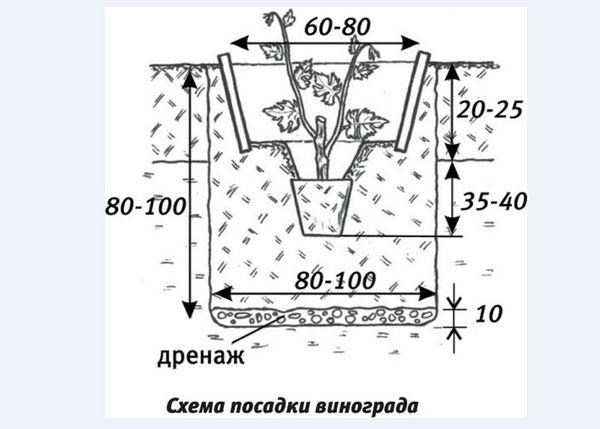
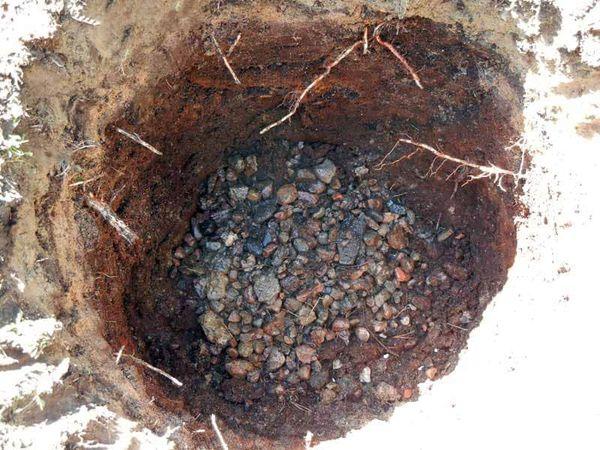
A month before planting the grapes, dig a hole 80 centimeters deep and 50 centimeters in diameter. Add half a bucket of compost, some peat and sand, 300 grams of wood ash, and 65 grams each of potassium sulfate and superphosphate to the soil. Add some crushed stone to the bottom of the hole for drainage.
How to select and prepare planting material
For planting in open ground, a one-year-old seedling is needed. The plant should have a well-developed, healthy root system and a single shoot 10-25 centimeters long.
Before planting, the roots should be soaked in water with Kornevin or manure added. The main shoot can be shortened, leaving 5-6 buds.
Planting diagram
A third of the fertilized soil is returned to the previously dug hole. Then, a hole the size of the rhizome is dug in the soft soil, the seedling is inserted, and the remaining soil is covered. After planting, the plant is watered generously.
Care instructions
Caring for Galbena Nou grapes is the same as caring for any other crop. The plant requires timely fertilizing, soil loosening, and weed removal.
Watering mode
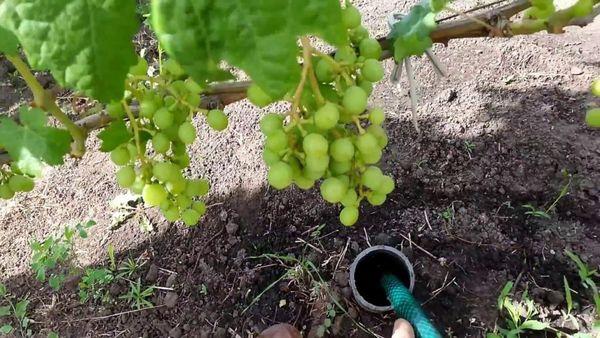
Grapes are watered only during droughts, or when there has been a prolonged absence of rain. The plant requires the most moisture in the spring, at the beginning of the growing season. To achieve this, water recharge is performed by pouring 5-10 buckets of water under each plant. The same procedure should be carried out in the fall, just before the onset of frost. In the summer, watering should be stopped a month before the berries ripen, otherwise they will crack.
Top dressing
Grapes respond well to the addition of organic and mineral nutrients. Fertilize at least three times per season. In the spring, water the plant with a weak solution of fermented manure. Before flowering, add a small amount of potassium sulfate and superphosphate to the soil (50 grams per 12 liters of water). Mineral nutrients can be added after harvest. For the winter, the area around the trunk should be insulated with well-rotted humus.
Preparing for winter
In the fall, when the temperature drops to -5°C (-4°F), add more soil and humus to the base of the vine. When the temperature drops to -10°C (-5°F), the vines can be removed from the trellis and laid on pine branches. Cover the vines with a layer of dry leaves, burlap, or plastic stretched over arches.
Mulching
Immediately after planting the seedling, it is recommended to mulch the area around the tree trunk. Peat, rotted sawdust, or hay are good options for mulch. Mulching will reduce moisture loss and prevent weeds from growing to the surface.
Prevention of diseases and pests
Galbena Nou grapes are rarely affected by fungal diseases. If the weather is warm and humid, the plant can be susceptible to mildew, oidium, and gray mold. To protect against fungi, the shoots are treated with a solution of copper sulfate and colloidal sulfur in early spring.
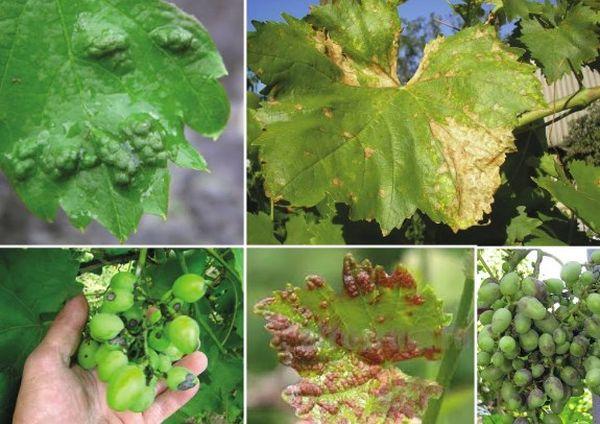
In summer, if damage is detected, the bush can be sprayed with a fungicide solution (Oxychom, Paracelsus). Avoid chemical treatments during flowering and three weeks before harvest.
The high sugar levels in berries attract many wasps. To protect against insects, place bait near the bush or on its branches and cover the bunches with netting or transparent fabric.
Trimming
Pruning is done in early spring, before bud break, or in late fall, after the leaves have fallen. This procedure prevents the bush from becoming too large. Shoots are shortened, leaving 5-7 buds on each. In spring, only 1-2 clusters should be left on each branch, no more, otherwise the berries will grow small and slightly sour.
Methods of reproduction
Galbena Nou grapes are propagated vegetatively. In this case, the new plant inherits all the parent's qualities. Cuttings left over from pruning are used for propagation. The branches are placed in a glass of water until roots appear. Then, they are placed in a container with fertile soil mixture, and when the plant is one year old, they are planted outdoors.
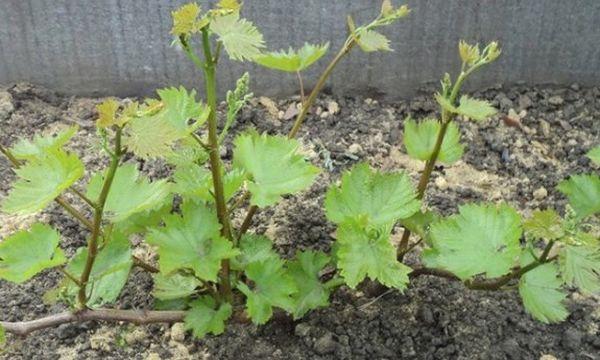
Grapes can be propagated by grafting or layering. To graft, take a Galbena nou bud and graft it onto any grape variety. When propagating by layering, the one-year-old vine is bent to the ground, covered with soil, watered throughout the season, and when roots appear, the layer is cut from the mother vine and planted in a new location.
Harvesting and storage
Grapes are harvested at technical maturity, when the berries acquire their characteristic color and sweet flavor. The harvest is carried out in dry weather. The bunches are carefully cut and placed in plastic crates. In a cool room, at a temperature of 0 to -2 degrees Celsius, grapes can be stored for 1-1.5 months. The berries are eaten fresh, used to make juices, jams, raisins, and table or dessert wines.
Tips from experienced gardeners
Recommendations for growing Galbena nou:
- It is not advisable to overload the vine with bunches, otherwise the berries will grow small;
- pruning is best done in spring, after wintering;
- grapes are not watered during ripening;
- berries can be protected from wasps by spraying the bush with a vinegar solution;
- Before wintering, it is better to remove the vine from the trellis and insulate it.
By following simple vineyard care guidelines, you can delight your family with sweet and aromatic berries every summer. This variety's grape clusters are small, but they ripen fully and have a unique flavor.
Related posts:
 Description of 30 grape varieties for Siberia, planting and care for beginners
 Description of 30 varieties and types of Muscat grapes, planting, cultivation and care
 The best ways and methods for properly covering grapes for the winter
 Description and cultivation techniques for the Muromets grape variety
 Beginner's Guide to Growing Grapes in Open Ground in Central Russia
 The best grape varieties for growing in the Urals, planting and care rules in summer
 Description and characteristics of the Syrah grape variety, where it grows
 How to plant grapes step by step, with a description of the process and care