
- History of selection
- Description and characteristics of the variety
- Main characteristics
- Appearance
- Clusters
- Berries
- Frost resistance
- Productivity
- Transportability
- Disease resistance
- Pros and cons
- How to plant correctly
- Site selection and preparation
- How to choose and prepare a seedling
- Recommendations for choosing deadlines
- Planting diagram
- Care instructions
- Watering
- Mulching
- Top dressing
- Formation
- Preventive spraying
- Protection from wasps and birds
- Shelter for the winter
- Methods of reproduction
- seedlings
- Grafting cuttings
- Layering
- With bones
- Diseases and pests
- Mildew
- Gray rot
- Oidium
- Bacterial cancer
- Phylloxera
- Harvesting and storage
- Applications of berries
- Tips and advice from experienced gardeners
The Victor grape variety is a table hybrid. It differs from other grape varieties in that its shoots grow very quickly, and the vines ripen quickly. It is planted in central Russia. The pink or scarlet berries are very sweet and have thick skins, making them easy to transport and marketable. The vines produce high yields. The variety is not listed in the State Register.
History of selection
The Viktor grape variety was developed by amateur breeder Kraynov by crossing the Kishmish Luchistyi and Talisman varieties in 2000-2002. The variety is not included in the State Register of Breeding Achievements.
Description and characteristics of the variety
Among early-ripening grape varieties, Victor is considered the best due to its dessert-like flavor, excellent presentation, and ability to withstand long-distance transportation.
Main characteristics
The Victor grape variety thrives in both hot and cool climates. It is most often planted in central Russia and the northern Moscow region.
These are powerful bushes that take up quite a lot of space, so it is worth allocating a lot of space for planting this grape variety.
Appearance
The grapevine has a massive vine with numerous buds, and the bushes are vigorous. The flowers are bisexual, and it self-pollinates well. Therefore, it does not require the addition of pollinators. The grape buds open in early June.

Clusters
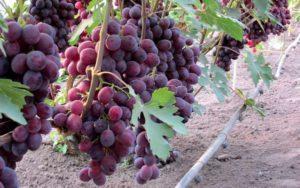
The clusters are cone-shaped. The average cluster weight is 0.5-1 kg. The maximum weight of a bunch of grapes for this variety is 1.8-2 kg. The clusters are medium in density and evenly spaced.
Berries
The grapes are large, measuring 2-2.6 cm in width and 3.4-4.2 cm in length, with an average weight of 15-18 g. With excellent care, the berries can reach 6 cm in length and weigh up to 20 g. The berries are oval-shaped, with a slightly pointed end, similar to the Damskie Fingers variety. Pea-sized grapes are not pea-sized. Pea-sized grapes are the presence of grapes of varying sizes on a single bunch. Each berry contains 1-2 seeds.
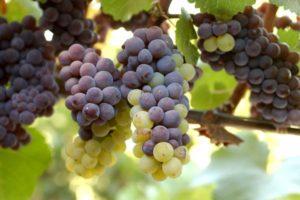
The grapes range in color from pale pink to purple-red, depending on how long they are exposed to sunlight. They ripen at approximately the same time each year. The berries have an excellent flavor; they are very sweet, with a floral aroma. The pulp is fleshy yet juicy. They have thin skins. Sugar content: 17%, titratable acids – 8 g/l.
Frost resistance
The Victor grape variety is very winter-hardy. Without cover, it can withstand temperatures down to -22°C to -24°C. Seedlings thrive in any climate. It is planted in the south and central parts of Russia.

Productivity
The yield is high. A single Viktor grape bush can yield up to 6-7 kg of fruit.
Transportability
Grapes retain their marketable appearance during long-distance transportation.
For transportation, brushes should be tightly packed in wooden boxes.
Take a look Also
Disease resistance
The Victor grape variety is resistant to fungal diseases such as mildew, oidium, and gray mold. However, it should be sprayed with antifungal agents every 3-4 years to reduce the risk of disease.
Pros and cons
Pros:
- no pea-sized berries;
- early ripening of fruits;
- excellent yield;
- dessert taste of grapes;
- self-pollinating variety;
- the vine is 2/3 ripe;
- cuttings quickly take root and take root well;
- grapes are easy to care for;
- grapes are undemanding to soil composition;
- withstands winter temperatures down to -22…-24 ˚С;
- the variety is transportable.
Cons:
- since grapes bloom in early June, the ovaries can be damaged by recurrent frosts;
- The high sugar content of the berries attracts wasps.

How to plant correctly
To plant the Victor grape, select a well-lit site away from cold winds. Avoid planting along walls or fences. It's best to plant it on a hill or elevated surface. The soil should be fertile and light. Avoid planting in marshy soil.
Groundwater levels should be no higher than 2 m.
Site selection and preparation
Twenty days before planting the Victor grapes, dig planting holes. They should be spaced 5 meters apart. Each hole should be 0.8 meters in diameter and the same depth. First, add crushed rock or gravel to the bottom for drainage. Then add compost, potassium salt, superphosphate, and nitrogen, followed by a 10 cm layer of soil. Leave the holes to settle.
How to choose and prepare a seedling
Purchase seedlings from reputable nurseries. Soak them in water for 1 hour before planting.
Recommendations for choosing deadlines
The best time to plant grape seedlings is early May. Alternatively, you can do this in the fall, from October 20 to November 15.
Planting diagram
Insert a stake into the hole in the center of the mound. Then place the seedling, spread the roots, and cover with soil. Do not cover the root collar with soil. Then tie the seedling to the stake and water thoroughly. Pour 3 buckets of water under each seedling. Then, be sure to loosen the soil shallowly. Repeat watering after 10 days.

If grapes are being planted in a cold northern region, the vines are placed near a wall. Crushed brick is placed at the bottom of the planting hole. Watering pipes are installed 0.5 m from the center of the hole.
Care instructions
The grapes are watered, then the soil is loosened shallowly and mulched with a 10-cm layer of moss. Weeds are removed regularly. Three years after planting, the bushes begin to be fed.
Since the bushes bloom very early, they may be exposed to frost. In this case, water the grapes generously before frost and cover them with agrofibre.
Watering
Both over- and under-watering are harmful to grapes, so it's important to monitor soil moisture levels. You can avoid watering during prolonged downpours.
Watering should be done approximately once a week after planting, and once every two weeks after the seedlings have been growing for a month. Stop watering the vines two weeks before harvesting.
When watering a fully grown bush, pour two buckets of warm, settled water under it. A moisture-recharging watering is done in the fall.
Mulching
After planting, apply a 5-10 cm layer of sawdust or moss. Loosen the mulch occasionally and renew it if it's less than 5-10 cm thick.

Top dressing
A few weeks after removing the winter cover, prepare a mixture of 30 g of superphosphate, 50 g of ash, 2 kg of manure, and a bucket of water (10 liters). This mixture is enough for 3-4 small bushes. After fertilizing, be sure to water thoroughly and loosen the soil. Repeat this fertilizing when the buds open.
In the fall, you should feed it with Biopon, Clean Leaf, Ukravit, stepping back 30 cm from the trunk.
Formation
Grapevines can be pruned short, leaving 3-4 buds on each stem, or long, leaving 8-10 buds on each shoot. The average vine bears 30 buds. Excess shoots are always pruned.
In the spring, pruning is done. This involves cutting back the grapevine roots that are at risk of freezing. This involves cutting off the roots that grow near the soil surface, known as "dew roots." To do this, remove the top layer of soil to a depth of 25 cm. The roots are cut with pruning shears. The wounds are treated with copper sulfate (2%) or boric acid (1%). This procedure protects the plants from bacterial canker. Then, soil is replenished.
Preventive spraying
The first preventative treatment is done before flowering, and then during flowering. The third treatment is done before winter shelter. The biological spray Fitoverm is well suited for this purpose.
Protection from wasps and birds
Since grapes attract wasps, it's necessary to set traps for them. Prepare containers filled with water, sugar, and poison.

To protect against birds, place a metal mesh with small cells around the bushes.
Shelter for the winter
The vines are untied from their supports, bent to the ground, tied together, and then covered with soil or plastic film or spruce branches. The covering is removed at the end of April, once all the snow has melted.
Methods of reproduction
Victor grapes can be propagated using your own seedlings, layering, cuttings, and then grafting them, or planting seeds.
seedlings
Around June 15th, young green cuttings with three buds are taken. The top cut is 2 cm above the bud. The bottom cut is 3 cm below the internode. The cuttings are placed in jars filled with settled, clean water.
Take a 5-liter plastic bottle, cut off the top, and make drainage holes in the bottom. Fill it with a mixture of 1 part soil, 1 part humus, and 2 parts sand. Place 4 cuttings in the bottle at a depth of 5 cm, leaving 10 cm between each plant. Trim the lower leaves from each cutting, and shorten the remaining leaves by half.

Water generously. Place in a plastic bag and place on a south-facing windowsill. Water with warm water every seven days and air the plant. After 45 days, the plant will develop roots. In August, transplant the cuttings to their permanent location in the garden.
Grafting cuttings
In the fall, cuttings with three buds are taken. Before storing, the cuttings are waxed and then refrigerated. In the spring, the cuttings are refreshed and grafted into a cleft in the stump (rootstock). Rootstocks of the following varieties are recommended: Kober 5BB, Riparia x Rupestris 101-14, and Riparia Gluar, as the root systems of these plants are resistant to rot, preventing the bushes from dying when attacked by phylloxera.
Layering
Dig a trench 30 cm deep. Bend the shoots to the ground and cover with soil. In the fall, you can separate the rooted shoots from the parent plant.
With bones
Selected seeds are placed on a damp cloth, then in a plastic bag, and refrigerated at 3°C to 0°C for 2-3 months. The seeds should be inspected every 10 days, and the cloth should be kept moist.


Afterwards, the seeds are taken out, placed on a damp cloth, and left for 3 days.
Next, place the cracked grape seeds in containers with a substrate made from 1 part soil, 1 part humus, and 1 part sand. Plant the seeds 1 cm deep. Water generously and place them on a south-facing window, but shade it with tulle. Keep the soil moist. You can cover it with plastic wrap until the seedlings appear. Once the sprouts have grown, transplant them into the soil.
Diseases and pests
The variety is fairly resistant to fungal diseases. However, it is susceptible to phylloxera and bacterial canker.
Mildew
The variety is immune to mildew.
Gray rot
The variety is resistant to gray mold.
Oidium
Immune to powdery mildew.
Bacterial cancer
This disease affects all parts of the grapevine, making it impossible to propagate. Most often, the disease appears as a tumor near the root collar. The tumor can range in size from 0.5 cm to 30 cm. There are currently no chemical treatments for bacterial canker. Therefore, if a tumor is detected, cut it back to healthy wood and treat the wounds with a 5% copper sulfate solution.

Phylloxera
Pests of the Victor grape can be detected by the galls on the foliage, which resemble spherical warts. However, phylloxera can also be root-borne, in which case it is noticed by slower growth of the grape vines, smaller leaves, and a decrease in yield.
To kill pests, spray plants with chemicals such as Actellic or Fozalon. Biological agents such as Fitoverm can also be used. Add 6 ml of Fitoverm to 1 liter of water. Spray 1 liter of solution per 10 m². Spray 2-3 times a week.
Harvesting and storage
This variety is very early. Only 100-110 days pass from the time the buds burst on the vine to the harvest of ripe berries. The clusters are pruned from the vines in early August. They should not be broken off. They are trimmed with pruning shears, leaving a 5 cm stem.
For storage, bunches can be hung in a dark, cool room. This will keep the bunches for up to 3 months.

Applications of berries
Grapes are dried to make raisins. They are used to make compotes. Regularly eating 200 grams of red berries helps strengthen the heart and blood vessels, normalize blood pressure, and promote healthy stomach and intestinal function. Grapes are also used to make wine and juice.
Tips and advice from experienced gardeners
It's only worth fertilizing Victor grape seedlings in their third year of growth, as before that, the fertilizers added to the soil during planting are sufficient.
Only young seedlings are covered for the winter.
Related posts:
 Description of 30 grape varieties for Siberia, planting and care for beginners
 How to grow grapes in the Moscow region in open ground without a greenhouse
 Description of 30 varieties and types of Muscat grapes, planting, cultivation and care
 Description of the Julian grape variety, planting and care instructions
 The ripening time of grape vines by variety, how to speed up the process, and what to treat the plant with
 Beginner's Guide to Growing Grapes in Open Ground in Central Russia
 Description of the Krasotka grape variety, planting and care technology
 The best grape varieties for growing in the Urals, planting and care rules in summer