
- Description and Features
- History of selection
- Varieties
- Grigio
- Blanc
- Meunier
- Gri
- Fran
- Nero
- Noir
- Main characteristics
- Description of the bush
- Description of bunches and berries
- Productivity
- Transportability
- Frost and drought resistance
- Disease resistance
- Taste qualities
- Applications of berries
- Pros and cons of the variety
- How to plant correctly
- Recommendations for choosing deadlines
- How to choose and prepare a site
- How to select and prepare planting material
- Planting diagram
- Care instructions
- Watering mode
- Top dressing
- Trimming
- Mulching
- Preventive spraying
- Protection from birds and pests
- Preparing for winter
- Loosening and weeding
- Topping
- Methods of reproduction
- Diseases and pests
- Oidium
- Mildew
- Gray and white rot
- Black spot
- Phylloxera
- Ticks
- Leaf roller
- Harvesting and storage
- Application in winemaking
- Tips from experienced gardeners
Pinot Grigio grapes have been cultivated for a long time. It's an industrial crop, widely used for wine production. Considered to be very low-maintenance, the plant is grown by many gardeners. To achieve good results and a bountiful harvest, it's important to strictly adhere to the proper agricultural practices.
Description and Features
Pinot is considered a commercial grape variety. It is also known as a wine grape. The fruits of this plant are widely used in winemaking. In French, this name means "pine cone." This refers to the visual resemblance of the grape's clusters to pine cones.
History of selection
This plant was first mentioned in the 18th century. At that time, this grape was cultivated exclusively in France. Charles IV greatly enjoyed the wine made from the plant's berries.
The variety originally originated in Burgundy. However, it was later cultivated in Italy. Winemakers there succeeded in producing a light, fragrant wine with honeyed notes from the plant's fruit.
Subsequently, Soviet scientists conducted selective breeding, which resulted in a more productive variety. The resulting crop began to be grown in the North Caucasus and throughout the former Soviet Union.

In 1970, the crop passed state testing. Since then, it has been actively cultivated in Russia.
The most delicious wines from this variety are made in Italy and France. However, similar drinks can also be found in Germany, Chile, Australia, and the USA.
Varieties
Several grape varieties are actively grown today. All fall under the Pinot varietal category.
Grigio
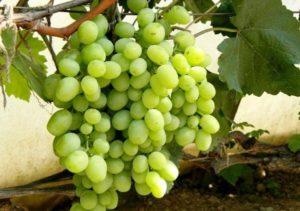
This Italian variety is considered very popular. It is a white grape widely used for wine production.
Blanc
This variety is considered an old mutation of the Grigio and Gris varieties. It is characterized by medium to tall bushes. The plant is widely grown in Italy, Austria, and France. It can also be found in Germany and the USA.

This grape is characterized by early ripening and stable yields. It is widely used in the production of elite white wines.
Meunier
This variety is also known as Black Riesling. It is widely used in winemaking and imparts a rich, fruity aroma. It is most commonly grown in France and is widely used in the production of champagne.
Gri
This variety is a Grigio clone, grown in Switzerland. This plant is characterized by dark-skinned grape clusters. However, when pressed, it produces a light-colored juice.
Fran
This variety is characterized by an early ripening period. The plant is characterized by a fairly high drought tolerance. It can be planted in calcareous soil and grown on dry hillsides. However, if planted in a lowland or on a flat surface, there is a risk of severe fruit and flower drop. Frostbite on the vines is common.

In terms of frost resistance, the plant is inferior to Riesling. Furthermore, it has average resistance to fungi.
Nero
This Swiss variety is considered a clone of Noir. Although cultivated as a distinct species, it shares the same characteristics as its parent. Its aromas include fruity, oaky, vegetable, and floral notes.
Noir
This variety translates as "black cone." It first appeared in Burgundy. Today, it is grown almost everywhere. However, it is most often found in regions with a cool, temperate climate.
A large amount of this grape is grown in the Champagne region and is widely used to make white sparkling wines.
Main characteristics
Before planting a plant, it's important to familiarize yourself with its key characteristics. This will help you achieve good results.
Description of the bush
This variety is characterized by vigorous vines. The main form of Pinot grapes is characterized by low yields and reddish-brown leaves in autumn. Some varieties produce more abundant crops and have golden leaves.
The crown of the first leaves on young branches is covered with dense down. Mature shoots, 1 year old, are light brown with dark nodes. They are characterized by shortened internodes.
The leaves are medium-sized, about 15 centimeters long. The foliage is rounded and medium-dissected. The flowers are bisexual.
Description of bunches and berries
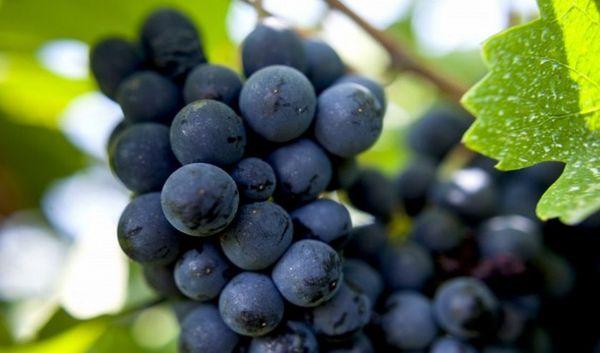
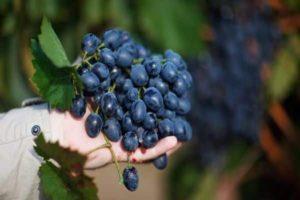
The clusters are medium-sized and cylindrical-conical in shape. They are characterized by short stems. Each cluster weighs 80-150 grams. The fruits are reddish-brown in color. Varieties with golden berries are also available.
Depending on the variety, the fruits can be round or slightly oval. The skin appears thin at first glance, but is actually quite strong.
Productivity
The variety boasts average yields. Approximately 52% of the shoots on a single bush are fruiting. When grown on an industrial scale, it yields 9 tons of fruit per hectare.

Producing a high-quality harvest requires suitable soil, timely treatment for diseases and pests, and the absence of drafts. The limited yield is more than compensated for by the excellent taste of the finished wine.
Transportability
Grapes of this variety tolerate transportation well. Their skins are quite strong and resist cracking or damage during transit.
Frost and drought resistance
This variety is characterized by relatively high frost resistance. The plant tolerates temperatures down to -20 degrees Celsius. Bushes damaged by frost recover fairly quickly.
Disease resistance
This variety is highly susceptible to mildew and oidium. In rainy weather, it can suffer from gray mold. However, the plant is virtually immune to attacks from grape budworm.
Taste qualities
The fruit is characterized by juicy and tender flesh. Inside is a colorless juice with a harmonious flavor. Each berry contains up to three seeds. The average sugar content of grapes is 20%.

Applications of berries
The crop is used to produce high-quality table wines. The berries are widely used to make sparkling wines and champagne base wines. This grape variety produces fresh, dry wines with excellent acidity balance.
Pros and cons of the variety
The key advantages of culture include the following:
- high frost resistance – up to -30 degrees;
- the possibility of producing high-quality wine;
- possibility of cultivation in the central part of Russia;
- saving space on the site - the bushes of this variety are tall.
However, the plant also has certain disadvantages. These include:
- lack of resistance to many diseases and pests;
- low yield parameters;
- dependence on climate and weather conditions.
How to plant correctly
To reap a good harvest, it's recommended to plant properly. There are many factors to consider when doing so.
Recommendations for choosing deadlines
It's recommended to plant this variety in spring or fall. In the former case, planting can be done from March to May. When planting in the fall, it can be done in September or October.
How to choose and prepare a site
To speed up the variety's adaptation to new conditions and reap a bountiful harvest, you need to choose the right plot. Grapes prefer open, sunny locations. A south or southwest facing location is preferable.
The crop requires fertile soil. The quality and yield of the harvest depend on this. It does not tolerate acidic and saline soil well. It can be planted in elevated areas or well-drained locations. The soil should be neutral or alkaline.

The distance between bushes and rows should be 1 meter. The planting hole should be 80 x 80 centimeters.
If the soil on the site is not very fertile, it is worth adding humus to it.
It is recommended to pour the soil into a mound and carefully place the seedling in the central part.
How to select and prepare planting material
It's recommended to purchase a seedling before planting. It should have strong, healthy roots. When broken, they should feel like a raw potato. The trunk should be straight and healthy, with no damaged areas.
Under the bark, the seedling should have a rich green hue. When purchasing, press on the buds. If they fall off, it's best not to buy the plant. It's best to buy from specialized nurseries.
Before planting, the bush should be soaked in water for 24 hours. If necessary, trim its roots and soak them in a clay slurry.
Planting diagram
When planting a crop in the ground, you should do the following:
- Place a drainage layer at the bottom of the pit.
- Sprinkle it with prepared soil on top.
- Place fertilizer based on 250 grams of ash and the same amount of Nitroammophoska into each hole.
- Carefully place the plant in the center and spread out its roots.
- Sprinkle with soil and compact it well.
- Water the plant generously.
Care instructions
To ensure the plant develops normally, it is recommended to provide it with complete and high-quality care.
Watering mode
It's recommended to water the plant generously. However, don't overwater. The soil should be moistened for the first time in March or April, depending on the amount of snow in the winter. Use warm water for irrigation. This grape variety shouldn't be watered during the flowering period.

Top dressing
During the growing season, it's recommended to apply fertilizer 3-4 times. Experienced gardeners recommend following this schedule:
- the first time fertilizer is applied before flowering;
- the second - 2 weeks before the formation of ovaries;
- the third – 2-3 weeks before harvest;
- fourth - after harvesting.
Trimming
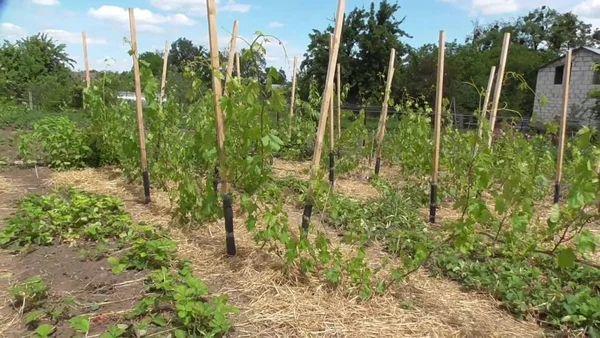
This variety requires regular pruning. This should be done in the spring, after removing the covering material. During this time, remove dead branches and excess shoots. The vines should be tied to wooden stakes.
Mulching
This procedure helps prevent moisture loss, prevent weed growth, and enrich the soil with nutrients. To perform this procedure, sawdust, pine needles, and dry grass are sprinkled around the tree trunk.
Preventive spraying
Grapes can be susceptible to mildew and oidium. Preventative spraying can help prevent this. Fungicidal products such as Topaz or Strobi are used for this purpose. Bordeaux mixture is also an excellent choice.
Protection from birds and pests
To protect berries from birds, use wire mesh. To prevent wasps from damaging the fruit, use nets and poisoned baits.

Preparing for winter
To protect the grapes for the winter, dig a special trench along the rows. It is recommended to lay the vines in the furrow and cover them with soil, plastic, and other materials.

Loosening and weeding
The plant is highly susceptible to weeds, which is why it's so important to regularly loosen the beds.
Topping
This procedure should be performed in the spring. It involves breaking off strong branches above the 10th node.
Methods of reproduction
Grapes can be propagated in a variety of ways. The simplest method is to purchase ready-made seedlings. Layers can also be used. It's recommended not to separate them from the plant, but to plant them in the soil nearby.
Only plant breeders propagate the plant by seed. When propagating the crop vegetatively, cuttings must be prepared. For this, shoots with one to three buds are used.
Diseases and pests
Grapes of this variety are sometimes susceptible to various diseases. Early detection is essential to combat them.
Oidium
This disease is caused by high humidity. Ventilating the bushes and treating them with chemicals such as Strobi and Topaz will help combat it.
Mildew
This disease causes damage to the green parts of the plant, causing a white coating to appear on the leaves. Systemic fungicides can help combat this problem.

Gray and white rot
All green parts of the plant and wood that is one year old are susceptible to rot. The fungus thrives on young shoots. Fungicides can help combat it.
Black spot
The infection is believed to be caused by a fungus. The disease is especially common in conditions of high humidity, affecting all green parts of the plant. Thanos and Strobi can help combat the problem.
Phylloxera
This is one of the most dangerous pests, a green-yellow aphid. If a bush is infested, it must be completely destroyed.
Ticks
These pests attack a wide range of crops, including grapes. Acaricides, such as Actellic and Omite, are recommended for protection.
Leaf roller
Caterpillars attack buds and young leaves. Chemical treatments can help combat the problem.
Harvesting and storage
The fruit development period takes 130-150 days. The grapes ripen by mid-September. The bunches are carefully cut and stored in containers. Industrial grapes should be processed immediately.
Application in winemaking
Grape clusters are used to make table and sparkling wines. They are also used as a base for champagne.

Tips from experienced gardeners
When growing a crop, it is worth following the recommendations of experienced gardeners:
- choose the right planting material;
- observe the rules for carrying out planting operations;
- water the plant on time;
- carry out pruning;
- apply fertilizers;
- provide protection against diseases and pests;
- protect crops from wasps and birds;
- cover the plant for the winter;
- loosen and weed the beds;
- mulch the soil.
Pinot Grigio grapes are considered a popular industrial crop, often grown for wine production. To achieve significant success, it's essential to strictly follow all the recommendations of experienced gardeners. This will help ensure a bountiful harvest and a robust vine.
Related posts:
 Description of 30 grape varieties for Siberia, planting and care for beginners
 Description of 30 varieties and types of Muscat grapes, planting, cultivation and care
 How to grow grapes in the Moscow region in open ground without a greenhouse
 The best grape varieties for growing in the Urals, planting and care rules in summer
 The ripening time of grape vines by variety, how to speed up the process, and what to treat the plant with
 Beginner's Guide to Growing Grapes in Open Ground in Central Russia
 Description of the Julian grape variety, planting and care instructions
 Description and rules for growing Solaris grapes