
- Description and Features
- History of selection
- Main characteristics
- Description of the bush
- Description of bunches and berries
- Productivity
- Transportability
- Frost and drought resistance
- Disease resistance
- Taste qualities
- Applications of berries
- Pros and cons of the variety
- How to plant correctly
- Recommendations for choosing deadlines
- How to choose and prepare a site
- How to select and prepare planting material
- Planting diagram
- Care instructions
- Watering mode
- Top dressing
- Trimming
- Autumn
- Spring
- Mulching
- Preventive spraying
- Protection from birds and pests
- Preparing for winter
- Methods of reproduction
- Diseases and pests
- Harvesting and storage
- Tips from experienced gardeners
The Krasnostop grape is one of the oldest varieties used for winemaking. Initially grown in the Krasnodar Krai, it later spread to other regions. Below is information on growing the Krasnostop Zolotovsky grape variety in private plots, its key characteristics, advantages and disadvantages, propagation, harvesting, and storage.
Description and Features
In the Don region, grapevines were called "stopa" (foot). Krasnostop has a red ridge, hence its name. The vines are medium-sized, and the branches ripen early. Krasnostop is a commercial grape variety, grown primarily for wine production.
History of selection
There are two versions of the origin of the variety. According to one of them, Cabernet Sauvignon grapes The Cossacks brought the grape from France to the Don in 1812, and Krasnostop was developed from it. According to another version, the variety was brought from Dagestan in the 8th century. It was first described in 1980 on the Zolotovsky farm, after which the grape was called Krasnostop Zolotovsky.
Main characteristics
The plant produces bisexual flowers. Because of this quality, it does not require pollinators. Buds open in early April, and harvesting begins in early September in southern regions. In northern regions, the clusters are harvested at the end of the first month of autumn.
Description of the bush
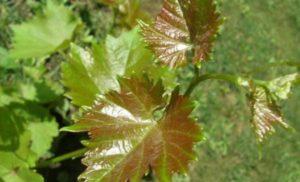
Krasnostop grape vines are characterized by a medium growth rate and a medium ripening time. The leaves are small, three-lobed, with a blunt, wide tip. They are densely pubescent beneath and smooth and reticulate-wrinkled above.
Description of bunches and berries
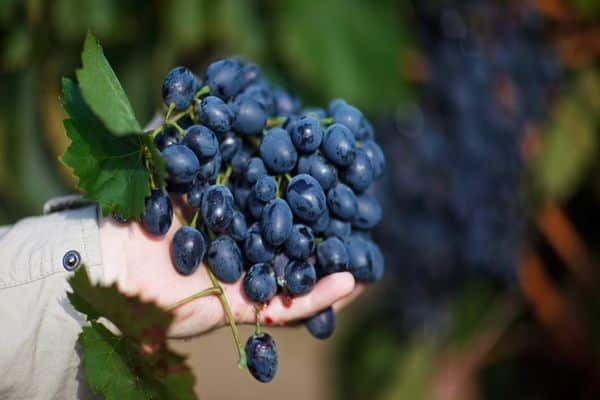
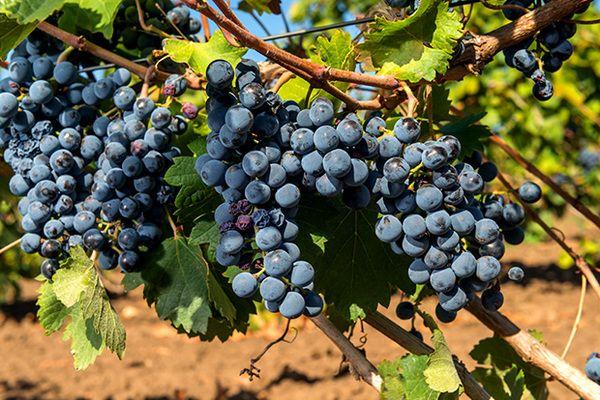
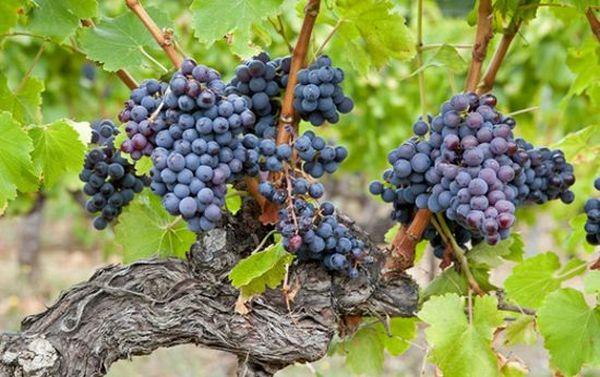
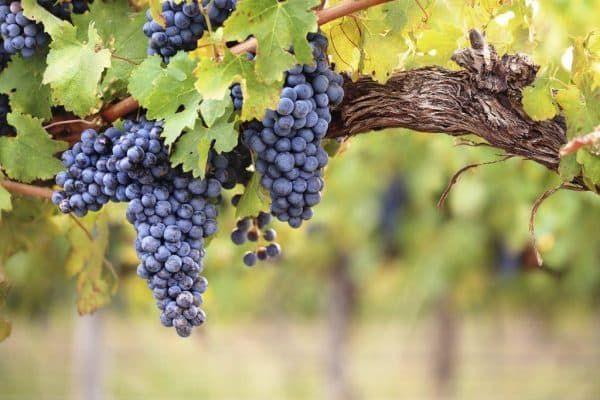
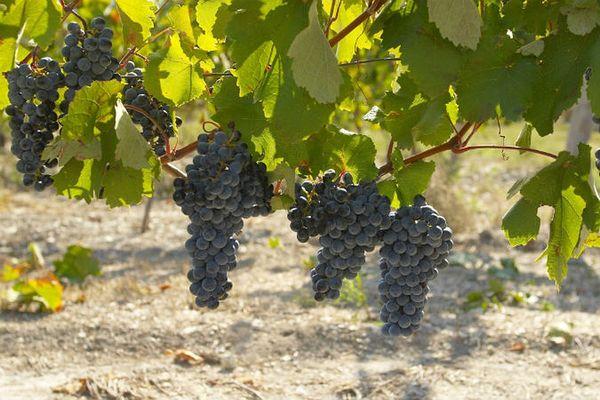
The grape clusters are medium-dense and conical in shape, 8-15 centimeters long. The fruits are round, small, and dark blue in color. The medium-thick skin is covered with a waxy coating over the entire surface.
Productivity
A gardener can harvest approximately 60 centners of juicy, healthy berries per hectare. Under favorable weather conditions and with proper agricultural practices, the yield can be increased to 80 centners per hectare. Grape clusters are harvested in early September.
Please note! To avoid damaging the vines, use scissors to remove bunches of grapes.
Transportability
The Krasnostop grape's skin is medium-thick, so it can withstand short-distance transportation well. Harvesting and transporting the grapes in the morning or evening will improve transportability. Additionally, boxes and baskets containing grapes should be covered with tarpaulin.
Frost and drought resistance
Krasnostop Zolotovsky is a variety with average winter hardiness. If winter temperatures are expected to drop below -23°C, the bushes should be covered. A distinctive feature of this variety is its ability to quickly recover even from frost.
Mature grapes tolerate short-term drought well.
Disease resistance
Krasnostop is resistant to many grape diseases, but if not properly cared for, it can be affected by downy mildew and powdery mildew. To prevent fungal diseases, spray the grapes with copper-containing preparations. Additionally, ensure the area around the trunk is clear of plant debris.
Taste qualities
The berry pulp is sweet, slightly tart, and peels easily from the skin. Sugar content ranges from 22% to 30%, with acidity typical of wine grapes. The berry flavor and aroma are simple, unremarkable, but the wines reveal notes of blueberry, elderberry, blackthorn, and spice.
Applications of berries
The fruits are used to make burgundy-colored wines. The resulting alcoholic beverages are highly palatable. The flavor and aroma vary depending on the barrel material and the winemaking method.
Pros and cons of the variety
The positive qualities of Krasnostop include the following characteristics:
- resistance to most diseases;
- unpretentiousness;
- beautiful color of wine from the berries of this variety;
- high yield;
- ease of reproduction;
- self-fertility.
The negative qualities of the variety include the need to be tied to a trellis and the need for shelter when winter temperatures drop below -23°C.
How to plant correctly
Seedlings grown in the same climate zone where they will be planted for further growth and fruiting will take root more quickly and easily. Choose a reputable nursery or reliable, trusted seller.
Recommendations for choosing deadlines
Spring planting begins after the onset of stable warm weather. The buds on the seedlings should not be fully open. Fall planting begins a month before the onset of frost. Grape vines planted in the fall require mandatory cover.
How to choose and prepare a site
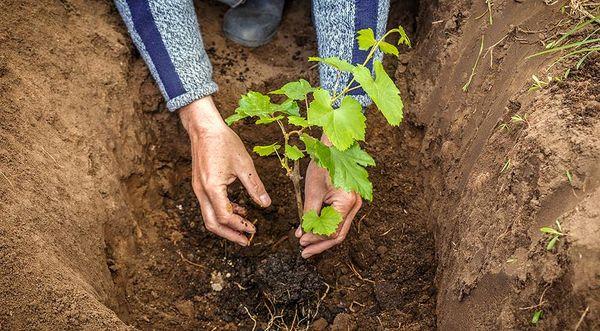
Grapes are a heat-loving crop, so they are planted on the south side of the plot, receiving maximum sun exposure. Groundwater should not be too close to the soil surface. The planting site is cleared and fertilized if necessary. It is recommended to dig the planting trench approximately two weeks before planting.
How to select and prepare planting material
Select whole bushes, free of scratches, dents, or signs of disease. Trim the root system slightly before planting. If the root system has dried out during long transportation, soak it in a bucket of water for 24 hours.
Take a look Also
Planting diagram
The bushes are planted at intervals of 1-1.2 meters. The distance between rows is 1.5-2 meters. Krasnostop grapes are planted as follows:
- dig a hole measuring 80×80×80 centimeters;
- lay out a layer of expanded clay or small stones;
- add some soil and set the bush vertically;
- water, fill with the remaining soil, and compact.
The tree trunk circle is covered with a layer of humus.
Care instructions
To ensure good fruiting, Krasnostop grapes need to be watered, fertilized, mulched, pruned, and sprayed prophylactically against diseases and pests.
Watering mode
Grape vines require ample watering at planting time and again a week afterward. Subsequently, the soil should be moistened during prolonged periods of dry weather. Excessive moisture can cause fungal infections.
Top dressing
The first spring fertilization is done before bud break with ammonium sulfate and superphosphate. This is then repeated before flowering. In the fall, manure is applied to the grapes. In this case, fertilizer application is unnecessary the following spring.
Trimming
To reduce the strain on the bushes, pruning is performed. Without pruning, it's impossible to grow a high-quality harvest. In the summer, in addition to branches, excess clusters are removed.
Autumn
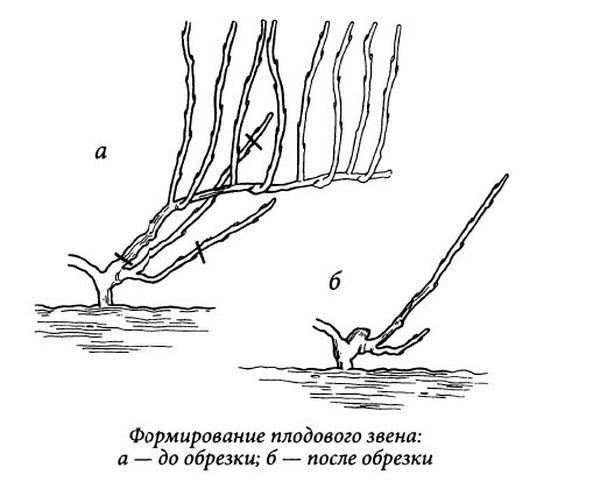
Autumn pruning is performed after the leaves have fallen. Before this time, the procedure is not performed due to the intensive maturation of the vines. Autumn pruning involves removing immature branches to facilitate the bushes' wintering. Broken and diseased branches are also removed.
Spring
Spring pruning is especially important, as improper pruning can result in no harvest at all this year. Shoots that produced fruit the previous year are pruned. In addition to formative pruning, shoots that did not survive the winter frost are removed.
Important! To prevent the bushes from becoming infected with various diseases, pruning should be done with disinfected pruning shears.
Mulching
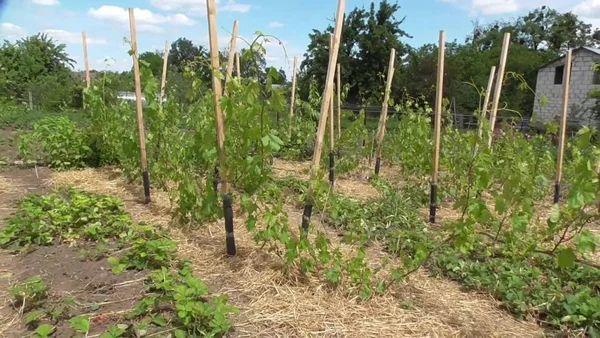
The tree trunk circle is covered with humus or peat for several reasons. First of all, mulched soil retains moisture better. Furthermore, it makes it difficult for weeds to penetrate the mulch layer. Another reason for this procedure is to prevent a crust from forming, which would impede root respiration.
Preventive spraying
If improperly cared for or subject to heavy rainfall, Krasnostop grapes are susceptible to disease. To prevent this, preventative spraying of the bushes is carried out several times during the season. Copper-containing preparations are used for this purpose.
Protection from birds and pests
To protect against wasps, set sweet traps by pouring kvass into a bottle or dissolving jam in water. To repel birds, set up scarecrows or hang rustling film on the trellis.
You can get rid of harmful insects by spraying with approved insecticides.
Preparing for winter
To help the bushes survive winter weather, several measures are taken. In the fall, they are watered to replenish moisture, then mulched. The bushes and soil are sprayed with insecticides and fungicides. Young grapes are removed from the trellis and covered with branches and agrofibre.
Take a look Also
Methods of reproduction
Krasnostop grapes are propagated by cuttings taken in the fall, stored in a cellar, and then planted first in a nursery, then in a permanent location. Another common method of propagating grapes is by layering, which is done by bending the cuttings to the ground, securing them, separating them from the mother vine after germination, and planting them in the garden. Grafting onto a strong vine is also a common method of propagating the variety.
Diseases and pests
Krasnostop grapes are susceptible to powdery mildew and mildew. These diseases affect all above-ground parts of the vine. Affected fruits rot or dry out. To prevent damage from these pathogens, spray the grapes with antifungal agents.
Pests that may infest the plant include spider mites, leaf rollers, and variegated beetles. These pests impair the ripening and quality of the berries. Insecticides are used against these harmful insects. As a preventative measure, remove leaves and weeds from the tree trunk area.
Harvesting and storage
When ripe, the berries of this variety acquire a dark blue, almost purple color. In the south, grape harvesting begins in the first ten days of September. Dry, warm weather is essential for harvesting.
If the bunches are going to be stored for some time, they need to be sorted and rotten berries removed.
Tips from experienced gardeners
Krasnostop has long been cultivated across Russia, and during this time, winegrowers have gained extensive experience in cultivating the variety. Here are some tips from experienced gardeners on growing grapes:
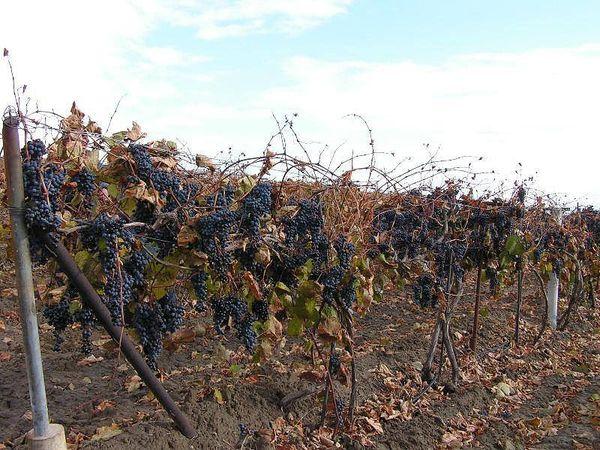
- The vines need to be tied to the trellis so that they are evenly exposed to the sun.
- Excess branches and stepsons require constant pruning.
- Without waiting for diseases and pests to appear, the bushes are sprayed with fungicides and insecticides.
- The soil under the bushes is mulched with humus.
- Fertilizing will help improve immunity and the quality of the harvest.
Krasnostop is one of the best wine grape varieties. Wines made from its fruit have pleasant berry notes. It's easy to grow, and its characteristics contribute to the production of high-quality, delicious wines.
Related posts:
 Description of 30 grape varieties for Siberia, planting and care for beginners
 How to grow grapes in the Moscow region in open ground without a greenhouse
 The ripening time of grape vines by variety, how to speed up the process, and what to treat the plant with
 Description of 30 varieties and types of Muscat grapes, planting, cultivation and care
 Description of the Julian grape variety, planting and care instructions
 Beginner's Guide to Growing Grapes in Open Ground in Central Russia
 Description of the Krasotka grape variety, planting and care technology
 Description and characteristics of the Syrah grape variety, where it grows