
- History of selection
- Description and characteristics of the variety
- Main characteristics
- Appearance
- Clusters
- Berries
- Frost resistance
- Productivity
- Transportability
- Growing regions
- Disease resistance
- Pros and cons
- How to plant correctly
- Site selection and preparation
- How to choose and prepare a seedling
- Recommendations for choosing deadlines
- Planting diagram
- Care instructions
- Watering
- Mulching
- Top dressing
- Formation
- Preventive spraying
- Protection from wasps and birds
- Preparing for winter
- Methods of reproduction
- Seeds
- Cuttings
- Layering
- Diseases and pests
- Oidium
- Spotted anthracnose
- Mildew
- Spider mite
- Alternaria
- Harvesting and storage
- Applications of berries
- Tips and advice from experienced gardeners
Bred for vineyards in southern regions but successfully grown in the Moscow region, the Julian grape variety has been highly praised by Russian gardeners for its many positive characteristics. This hybrid attracts both professional and amateur winegrowers with its early ripening period, pink color, dessert-like fruit flavor, and decorative bushes.
History of selection
Successful winegrower V. U. Kapelyushny obtained the Yulian grape hybrid as a result of cross-pollination of the large-fruited, early-ripening Kesha variety and the high-yielding pink Rizamat, bred in Uzbekistan.
The new variety has adopted and enhanced the best characteristics of its parents.
Description and characteristics of the variety
Yulian is an early-ripening hybrid table grape. It stands out among other varieties for its large clusters of fleshy, sweet, intensely pink berries. The fruits ripen within 3-3.5 months of the growing season. The variety is not susceptible to pea formation. It requires regulating the number of inflorescences and clusters.
Main characteristics
In addition to its attractive appearance, the Julian grape variety has a number of positive characteristics that influence the choice of hybrid by winegrowers.
Appearance
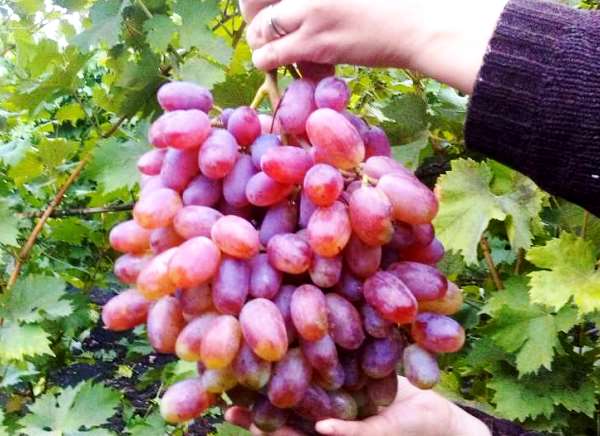
In terms of the decorative appearance of the bush, the Yulian hybrid resembles its parent Central Asian variety, Rizamat.
The vigorous, brown-colored grapevine grows vigorously and ripens fully, which is important for regions with short summers. The leaves are moderately wrinkled, rounded, and three- to five-lobed.
In May, the medium-sized bushes are covered with small, bisexual flowers gathered in panicles. The grapes do not require pollinators; ovaries form even during prolonged rainfall.
Clusters
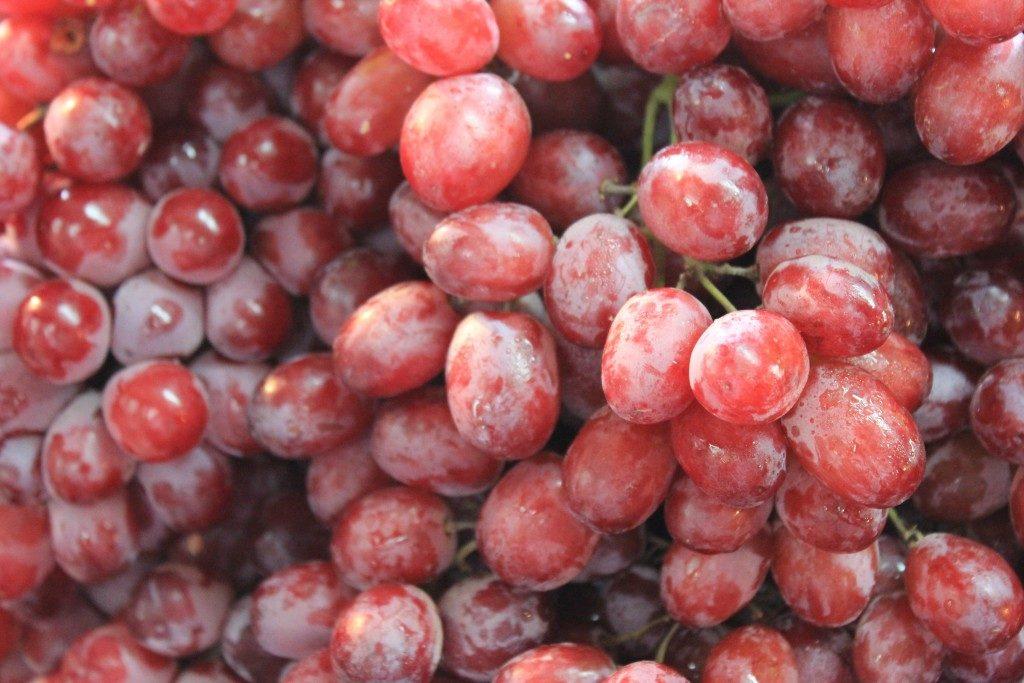
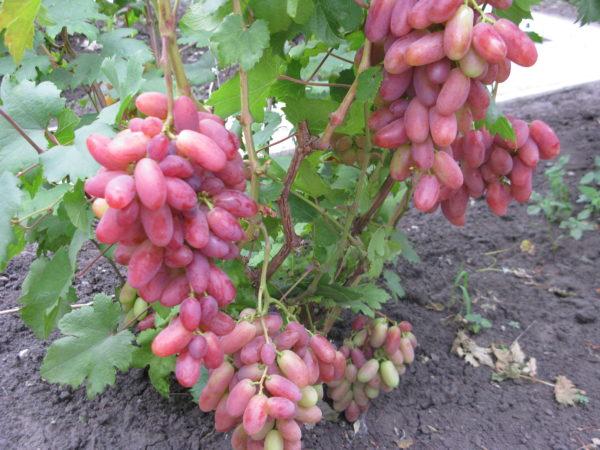
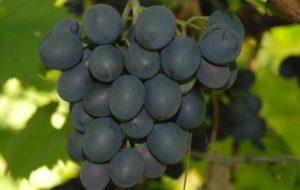
The loose, shapeless clusters of Julian grapes resemble a cylinder at the base, becoming conical towards the tip. They can consist of a single wing, two, or three. The weight of a single Julian bunch, depending on cultivation practices and climate conditions, ranges from 0.7 to 2 kg.
Berries
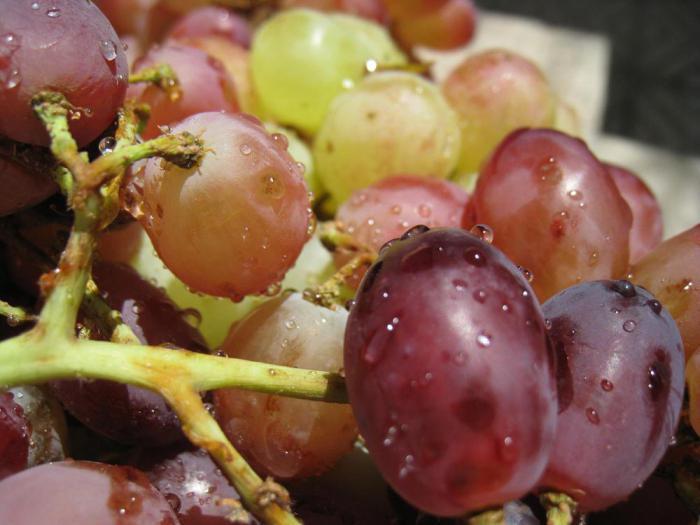
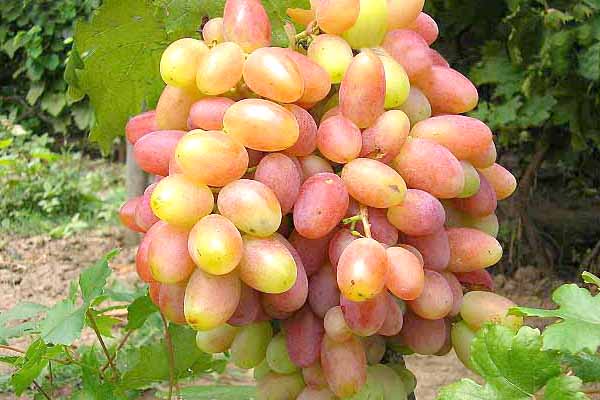
The fruits of the Julian grape variety are yellow before ripening. By the time they reach technical maturity, the clusters turn a deep pink, and when they reach consumer ripeness, they turn red.
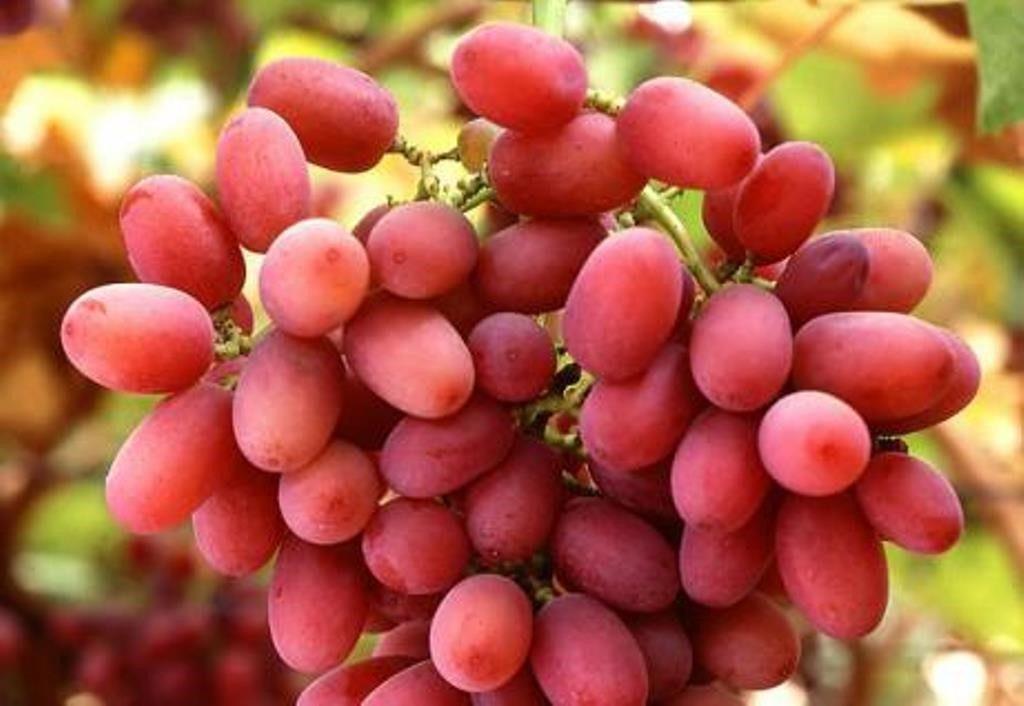
Each hybrid berry weighs 15-20 grams and is up to 4 cm long. The grapes are shaped like a finger. The flesh is dense, crisp, and sweet. The high natural sugar content (28%) of the grapes ensures a sweet taste even at the technical ripeness stage, which is important for harvesting. According to gardeners, in addition to the high sugar content, the Yuliana grapes also have hints of Muscat and strawberry.
Frost resistance
Despite frost resistance of grapes, down to -23°C, folk breeder Kapelyushny recommends fully preparing for winter. In southern regions, vineyards do not freeze without cover, but productivity is significantly reduced.
Productivity
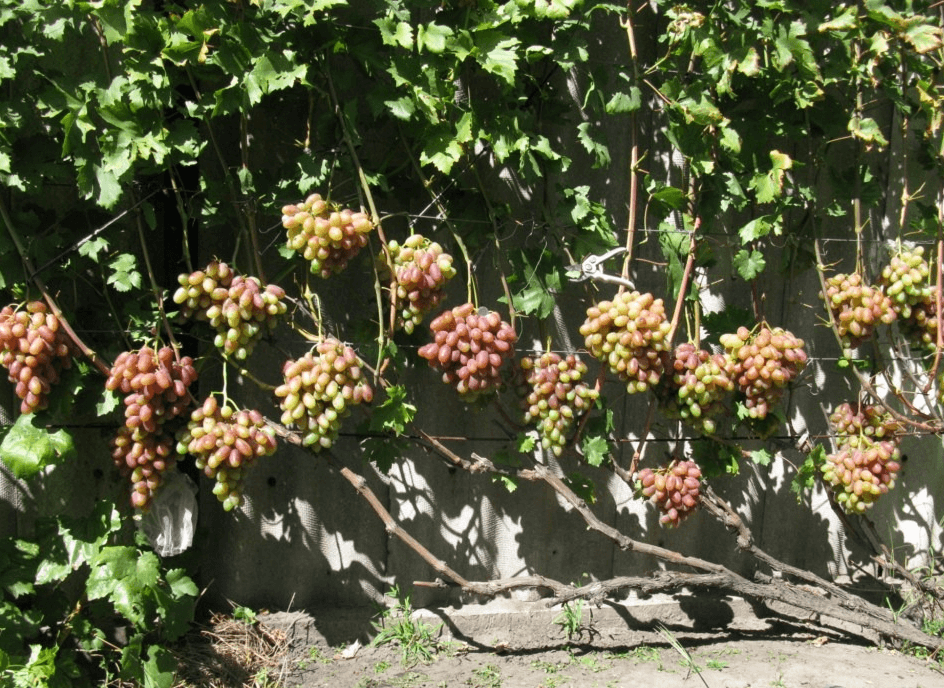
Due to the intensive formation of side shoots, in addition to the main harvest, in regions with a warm climate, an additional 15 bunches are obtained.
The Yulian hybrid yields 30-60 kg per vine. Once ripe, the grapes remain fruit-bearing and do not crack on the vine for a long time.
Transportability
The thin yet dense skin of the fruit ensures excellent transportability to sales and processing sites. The hybrid's clusters retain their original appearance and flavor, and do not bruise or run.
Growing regions
The Julian grape is recommended for cultivation in Ukraine, Moldova, and the southern regions of Russia, where the variety exhibits the highest productivity.
The hybrid is cultivated in the Moscow region and even in Siberia, provided the vines are insulated before winter frosts.
Disease resistance
The grape variety has been noted to be resistant to powdery mildew, downy mildew, and gray mold. Because it is resistant to wasp cracking, it is rarely attacked by grape vines.
Pros and cons
Winegrowers cite the disadvantages of the Julian hybrid as insufficient frost resistance, light requirements, and reduced productivity when grown in the central zone compared to southern regions.
The Julian grape variety has many more positive characteristics. They include:
- early maturity of the variety;
- strong immune protection against diseases and pests;
- thin skin, no cracking, marketable appearance of fruits;
- sugar content, harmonious taste of berries;
- high productivity of the hybrid;
- preserving the quantity and quality of the harvest during long-distance transportation;
- relatively high winter hardiness of the crop;
- shelf life.
The advantages of the variety also include a high (up to 95%) survival rate of seedlings due to a powerful root system.
How to plant correctly
To ensure successful rooting and adaptation of the Julian grape to the proposed climate conditions, select a site in advance, prepare the soil, and purchase suitable seedlings before planting. To prevent the vines from interfering with each other, adhere to a planting pattern.
Site selection and preparation
The vineyard site should be unshaded and well-lit throughout the day. To protect the hybrid from drafts and northerly winds, vines are planted along fences or buildings. Due to the Julian grape's powerful roots, a site with a groundwater table higher than 1.5 meters should not be selected.
Preparing the site for the crop begins with clearing, leveling, and digging. Julian grows well in well-drained, light sandy loams, clay loams, and black soil. Grapes are highly productive, with the fruit gaining sugar content in sandy and rocky soils.
Acidic, salty and waterlogged soil is not suitable for planting vines.
To alkalize the soil, add 0.5 kg of dolomite flour or a glass of lime per 1 square meter.
If the site has heavy clay soil, add sand, turf, and fine crushed stone to improve aeration. Sandy soils are enriched with humus and manure. When digging in two layers, add 4 kg of organic matter per square meter to black soil, and up to 8 kg to sandy, infertile soils. Add 100 g of superphosphate to the humus and manure.
How to choose and prepare a seedling
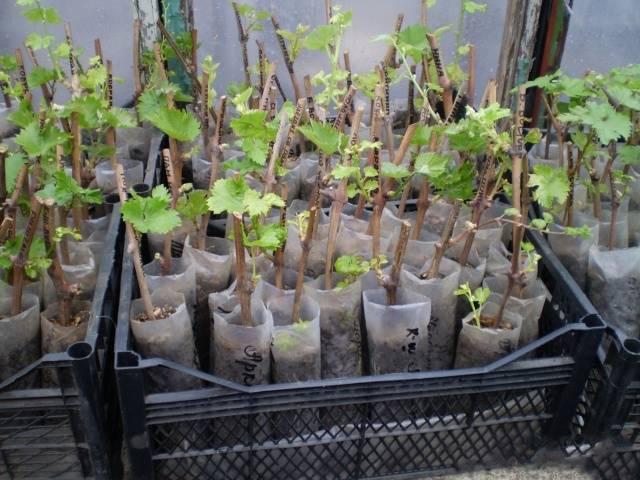
Julian grape seedlings are purchased from garden centers, nurseries, and vineyards. Suitable planting material has at least 3-4 developed roots, a distinct graft site, flexible vines, and live buds.
Hybrid seedlings with dark, dry cuts on the roots, brittle shoots, and buds that fall out when pressed with fingers are rejected.
Before planting, the seedling is soaked overnight in water with honey or a rooting stimulant. The vine roots are trimmed to 15 cm and disinfected in a potassium permanganate solution.
Recommendations for choosing deadlines
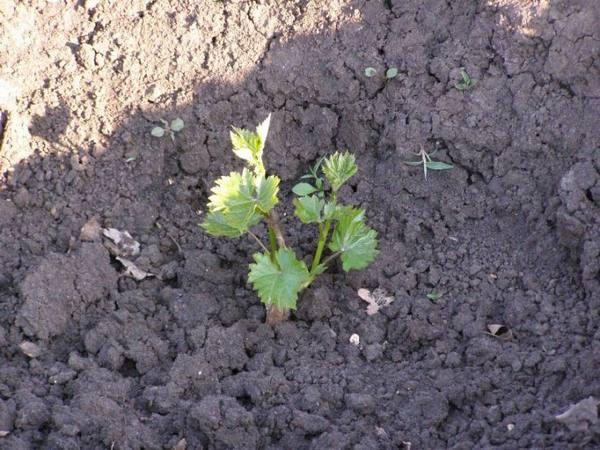
In the south, Julian grapes are planted in the fall until mid-October, and in the central and northern regions, in the spring, before the growing season begins. Over the course of the season, the young vines establish themselves, gain strength, and are well-prepared for the winter.
Planting diagram
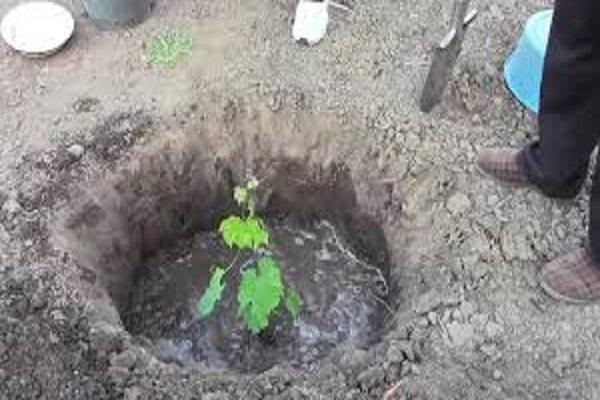
If the site is fertilized, no additional fertilizer is needed in a planting hole 0.8 meters deep and 0.8 meters in diameter. Create a 10-centimeter drainage layer at the bottom using scraps of building materials and crushed stone, then cover it with a layer of soil.
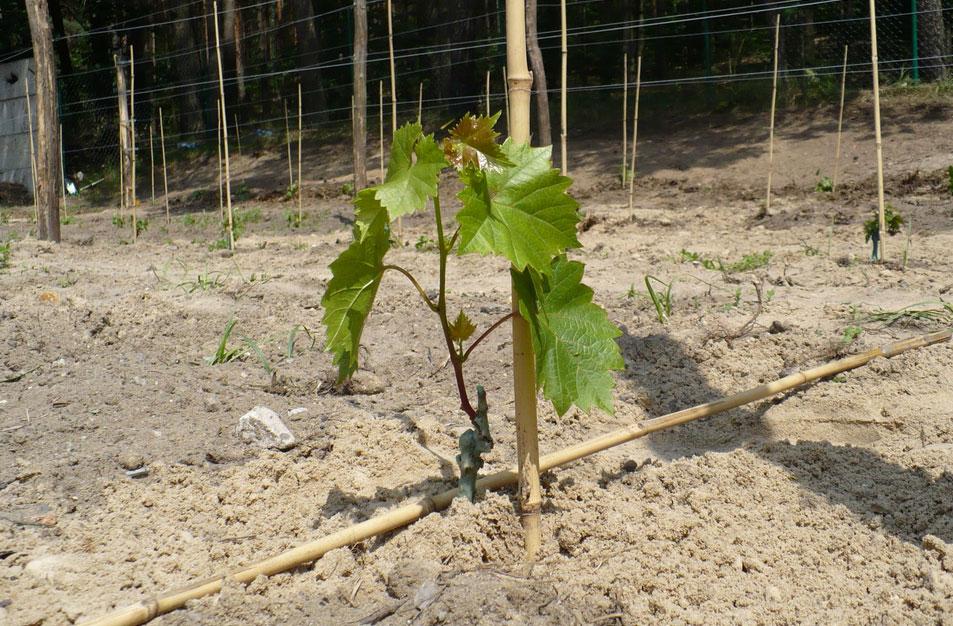
If pre-planting preparation has not been carried out, a mixture of fertile soil, humus and mineral complex fertilizers is added to the drainage hole from above.
Julian grape planting technology:
- a temporary support is installed at the bottom of the hole;
- a metal or plastic pipe with a diameter of 5-7 cm is dug in for underground irrigation;
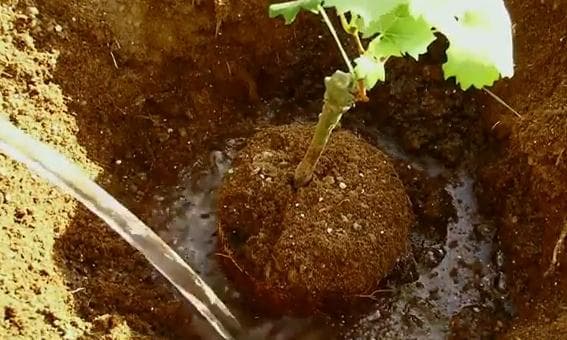
- generously moisten the hole with warm water;
- lower the seedling, straighten the roots, avoiding kinks;
- cover the grape bush with substrate;
- compact the soil;
- re-water, mulch.
When planting, step back from the fence and from neighboring seedlings by 2-2.5 m.
Care instructions
Adherence to agricultural practices affects the health and fruiting of the Julian grape. Care includes irrigation, fertilization, pruning, and cultivation.
Watering
The first time Julian is watered with warm water is in early spring, during a winter with little snow, to jump-start the growing season. If there is sufficient precipitation during the winter, irrigation is not necessary.
Irrigation in summer is important for the formation of ovaries and the filling of hybrid fruits.
Young grapes in the first year of life and adult bushes in the heat, in the absence of rain, are watered weekly in the amount of 10-20 liters per plant.
To prevent soil cracking and root freezing, when preparing for winter, the soil is moistened at a rate of 6 buckets per 1 square meter.
 It is not recommended to water the grapes during flowering and 2 weeks before the fruit ripens.
Mulching
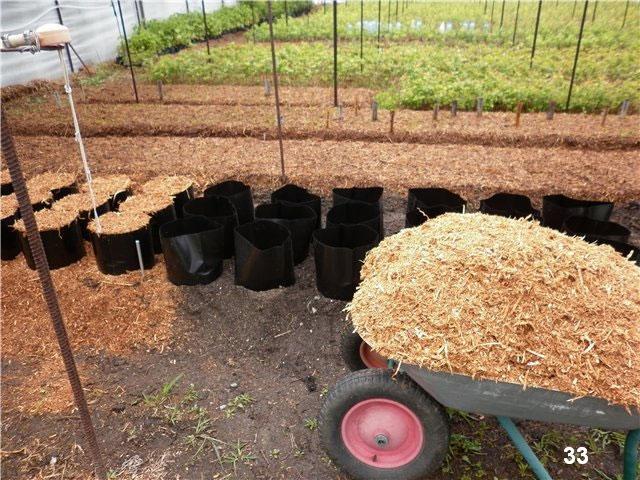
To reduce the intensity of irrigation, reduce the amount of weeding and to provide additional nutrition to the root system, the hybrid is mulched with straw, freshly cut grass, and chicken manure.
Coniferous wood sawdust and peat increase soil acidity, which adversely affects the development of vines.
To avoid soil acidification, the soil under the bushes is mulched for the first time after warming up to +12 °C.
Top dressing
In early spring, before removing the cover, add a solution of a mineral complex to the Julian grape bush. Dissolve 5 g of potassium, 10 g of ammonium nitrate, and 20 g of superphosphate in a bucket of water.
A similar top dressing of the crop is carried out before the blooming of Julian's flowers.
The hybrid reacts negatively to a lack of magnesium, therefore, during the growing season until the fruits turn color, the vine is sprayed with a solution of magnesium sulfate (250 g per 10 l of water) every 2 weeks.
To ensure successful wintering of bushes, ash is added when loosening the soil in the fall, and the soil is mulched with humus and compost.
Formation
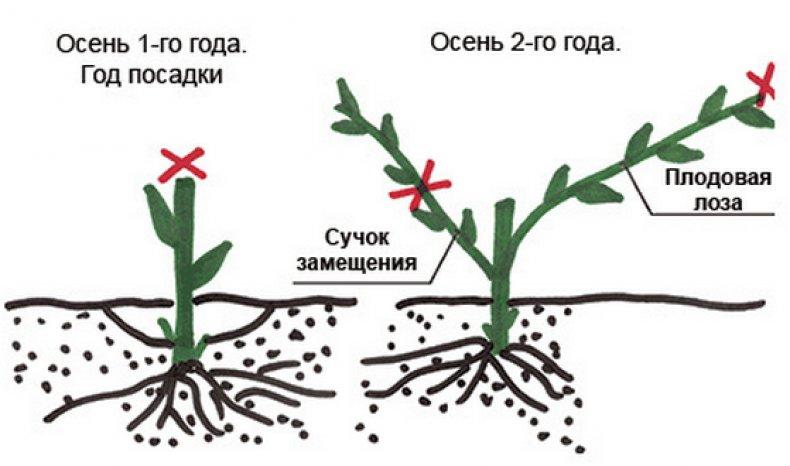
In the first year, the Julian grapevine is covered for the winter in the fall without pruning. The following year, three shoots (sleeves) are left on the previous year's vine, called a shoulder, laid horizontally on a trellis, spaced 80 cm apart.
In autumn, the sleeves are shortened by 8-10 buds and stored together with the shoulder for the winter.
In the spring of the third year, clusters form on the fruiting links of the grapes that have grown from the branches. Buds that appear on the shoulder and below the wire of the first row of the trellis are removed. Fruit-bearing vines are pruned in the fall.
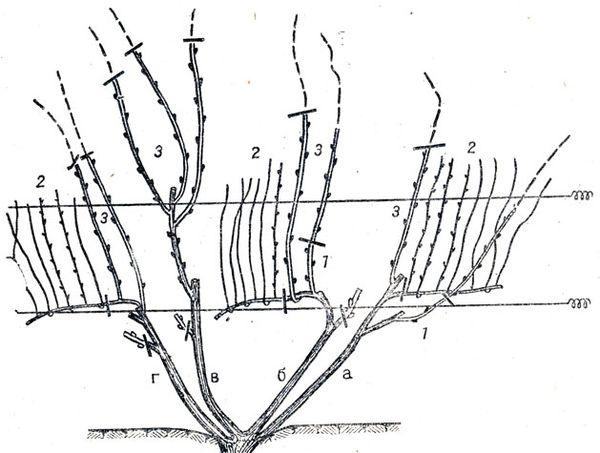
The bush enters winter with a shoulder and double branches, each consisting of shoots from the previous year and the current year. After pruning, the Julian grape bush should have 40-45 buds remaining.
Preventive spraying
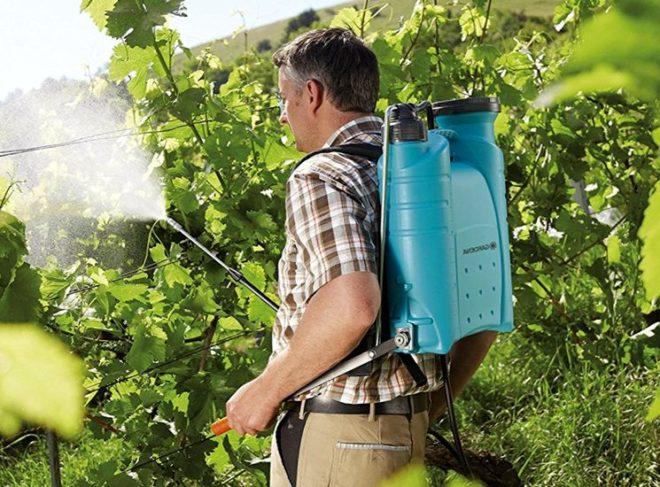
Before the buds open in the spring, the hybrid and the trunk circle are treated with Bordeaux mixture or copper sulfate.
After 2 weeks, the grape bushes are sprayed with Nitrofen (200 g per 10 l of water), 14 days before flowering, Julian is dusted with colloidal sulfur against oidium.
To prevent fungal spore infestation, the vines are treated again at the beginning of fruiting with Quadris and Topaz. Before wintering, the vines are sprayed with ferrous sulfate.
Protection from wasps and birds
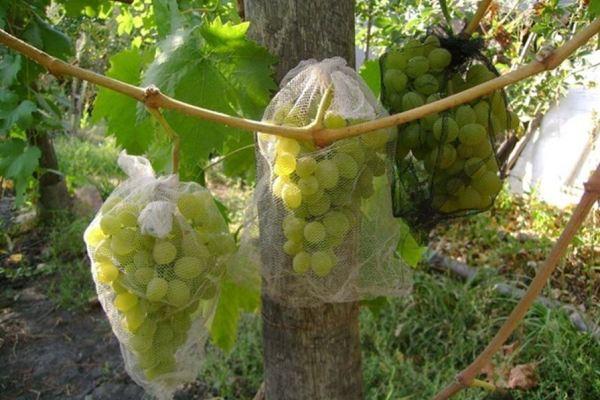
To protect the Julian grape harvest from birds, two types of products are used: those that impede access to the berries and those that repel them.
The first group includes a protective net used to fence off the vineyard, wrapping paper, and gauze bags secured to the bunches.
To deter birds from the hybrid's fruit, CDs and plastic bags cut into strips are hung on the trellises. Balloons with painted eyes are attached to the top row of trellis wires. A scarecrow can be placed nearby, but birds quickly become accustomed to it.
To prevent wasp attacks on grapes, grape clusters are inspected for rot and damaged berries are removed. To distract insects from sweet berries, plastic bottles filled with sweetened water are placed in the vineyard as bait.
Preparing for winter
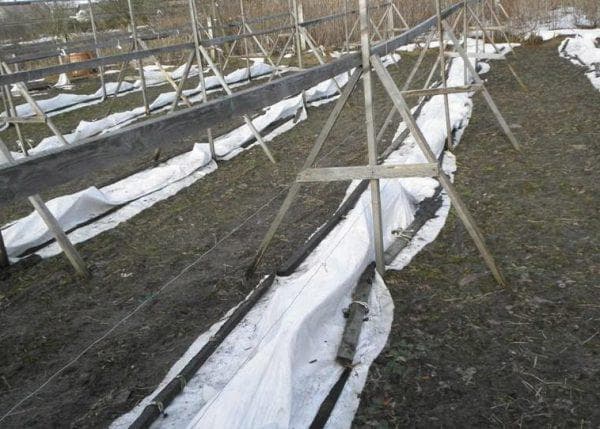
After harvesting, the grapevines are removed from their supports so the vines bend toward the ground. Before frost, the vines are tied together and laid on boards or cardboard. The Julian vines are covered with burlap and spruce branches, then covered with slate or linoleum. After a snowfall, a snowdrift is piled on top of the structure.
Methods of reproduction
The Julian grape is propagated by seeds, which do not guarantee the preservation of varietal properties, and by faster, more reliable vegetative methods - cuttings and layering.
Seeds
Soaked for 4 days before sowing and mixed with sand, the grape seeds are scattered over the surface of the container's soil in a 5 cm layer, placed in a dark place, and moistened daily.
After 3-4 weeks, the seeds swell and burst. The prepared seedlings are then sown in greenhouse beds. When the plants have three to five leaves, they are planted outdoors.
Cuttings
Strong grapevines grow from pencil-thin cuttings 30–40 cm long. The cuttings are taken in the fall, soaked in water for 48 hours, treated with a solution of potassium permanganate or copper sulfate, and stored.
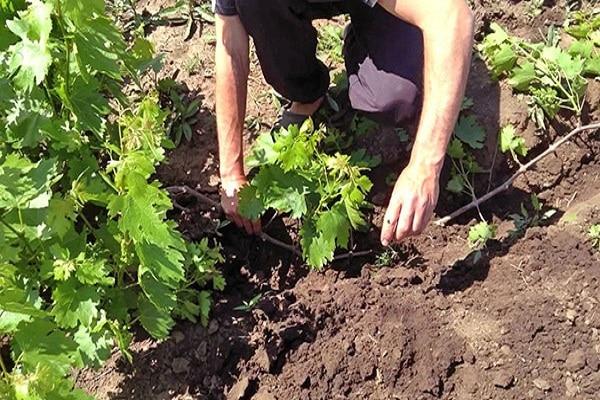
A cellar or refrigerator is suitable for this purpose. Julian's cuttings are stored in plastic bags sprinkled with sawdust.
In February, the planting material is removed from storage, the cuts are renewed, the bark at the bottom is scratched with a knife, and it is placed in a jar with water and Kornevin for 48 hours.
Then they are transplanted into a container with soil. After rooting, the seedlings are moved to the garden bed for further growth.
Layering
One-year-old Julian grape vines, either established at the base of the bushes or located closer to the ground, are laid in prepared trenches and secured with metal staples. Only the internodes are covered with soil. The buds are left exposed until new shoots emerge, after which they are also buried.
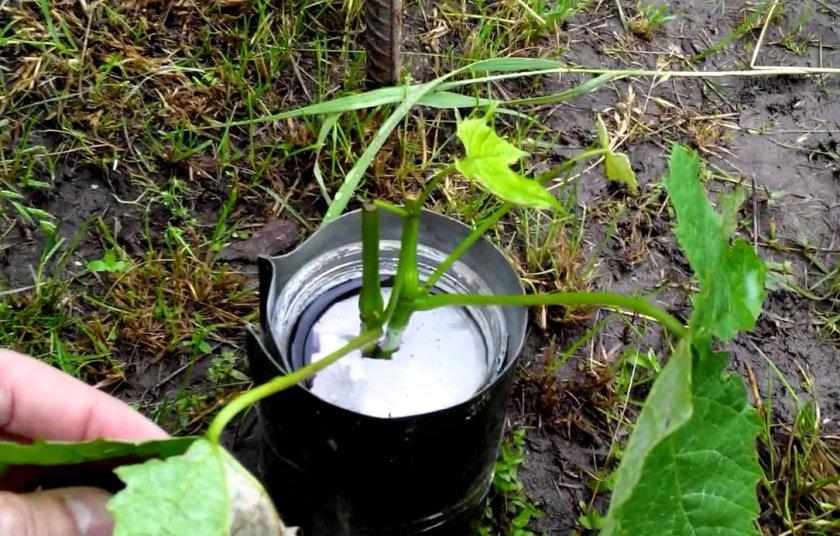
To develop a strong root system in young plants, this procedure is performed in early spring, with the tops of the cuttings trimmed off. The seedlings are ready for transplanting in the fall.
Diseases and pests
Crowded grape vines, poor ventilation, and high humidity lead to the rapid development of fungal spores. Despite its strong immunity, Julian is susceptible to powdery mildew, downy mildew, anthracnose, and insect attacks.
Oidium
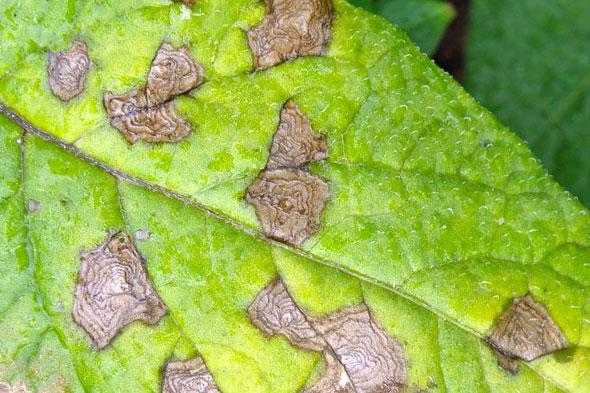
A white, powdery coating appears on both sides of the leaves, on the shoots, and less commonly on the grape pods, developing into brown spots. As a result of the fungal activity, the Julian grape's leaves curl, the inflorescences fall off, and the berries become deformed and inedible. The hybrid's yield decreases the following year, as the vines fail to ripen during the current season.
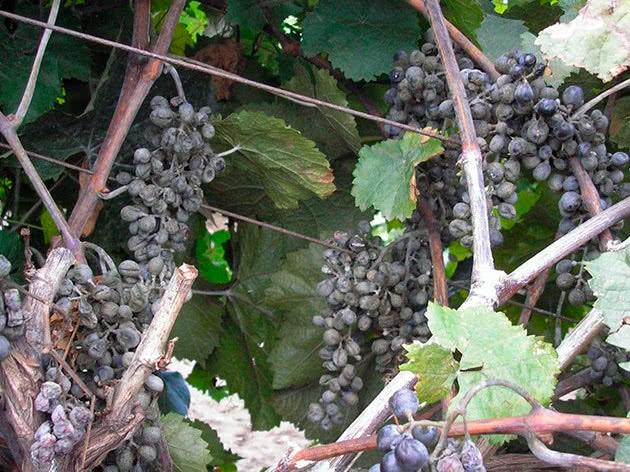
To combat powdery mildew, spray finely dispersed sulfur on the Juliana grape vines. Spraying the vines with a solution of sulfur and slaked lime, taken in equal parts, is effective.
Treatments with colloidal sulfur are carried out 3-5 times every 2 weeks in the morning at a temperature of at least +20°C.
In addition to sulfur, fungicides such as Horus and Skor are used. When buds begin to open, systemic medications such as Flutriafol and Bayleton are used.
Spotted anthracnose
In rainy weather anthracnose on grapes Anthracnose appears in early spring. The fungus attacks all above-ground parts of the plant. Distinctive signs of the disease include holes in the leaves and light necrotic spots with a dark border on the berries, which is why anthracnose is also known as "bird's eye."
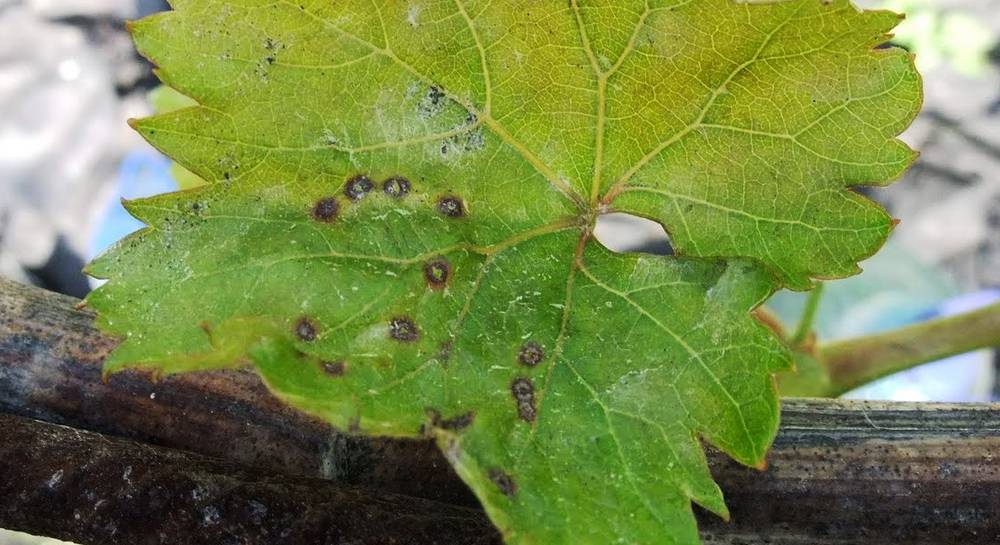
Elongated longitudinal spots appear on the shoots of the hybrid, at the site of which cracking occurs, and the vine becomes brittle.
It's impossible to cure the affected parts of the Julian grapevine. They are cut out and disposed of. Treatment is preventative. Grape bushes are treated with copper-containing preparations such as Ridomil, Tsikhom, Ordan, and Kartotsid.
Previkur, Polikarbacin, and Fundazol prevent the spread of fungus. Vines are treated at least three times, every 10-12 days.
Mildew
Downy mildew first attacks the grape leaves.On young leaf blades, the yellowish, shiny spots are more rounded, while on older ones, they are elongated along the veins. Mycelium, visible as a white coating, develops on the underside of the hybrid's leaves. The tips of the shoots begin to dry out, and the foliage falls prematurely. The plant's growth is stunted, and the fruits shrivel.
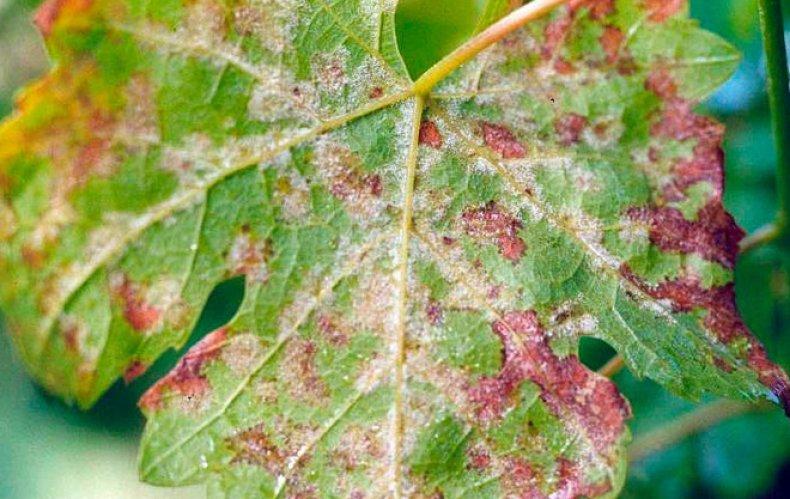
When the first oily spots appear, the grapes and the soil around them are treated with a solution of copper sulfate every 2 weeks throughout the growing season, excluding the period of flowering and ripening of the fruits.
Among folk remedies, solutions of ash (1 kg per 10 liters of water) and manganese (1 teaspoon per bucket of water) are effective at the early stage of mildew development.
If fungus has severely damaged the Juliana vine, use Quadris, Ridomil, or Champion. To prevent addiction, it is recommended to alternate chemical treatments.
Spider mite
The microscopic spider feeds on the sap of grape leaves and berries. As a result of this parasitic insect's activity, light spots with brown areas in the center first appear on the Julian leaf blades. Webbing is visible on the affected areas of the bush, and photosynthesis is impaired or completely stopped.
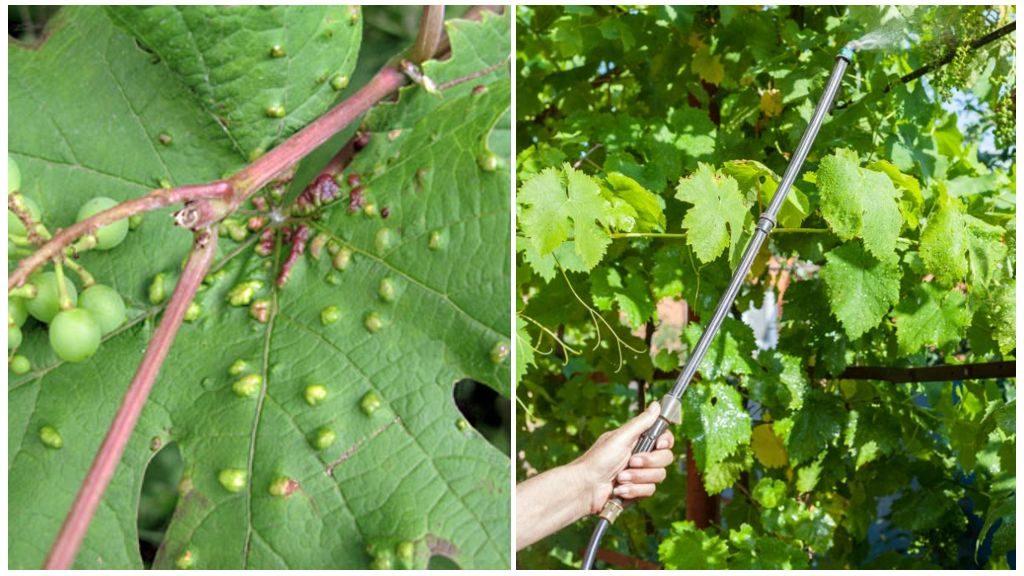
Grape leaves become smaller, curl, and fall off. The vine's immune defenses weaken, the plant survives the winter poorly, and yields decline.
From spider mites on grapes They are eliminated using folk remedies - spraying with infusions of onions, garlic, horseradish leaves, and soapy water.
If insects have multiplied significantly, use sulfur-based chemicals such as Kumulus, Thiovit, and Jet.
Alternaria
Pathogen grape diseases belongs to the group of saprophytes that affect plants with weakened immunity.
In May, the leaves, shoots, and berries of the Julian plant become covered with a silvery coating. The leaves turn black and fall off. The berries become deformed and inedible.
To protect against the disease, the vines are treated with copper-containing preparations such as Gold MC and Ridomil in early spring. Once the clusters have formed, the hybrid is sprayed with Quadris and Skor every two weeks.
Harvesting and storage
The Julian grape variety is harvested in late July – early August.
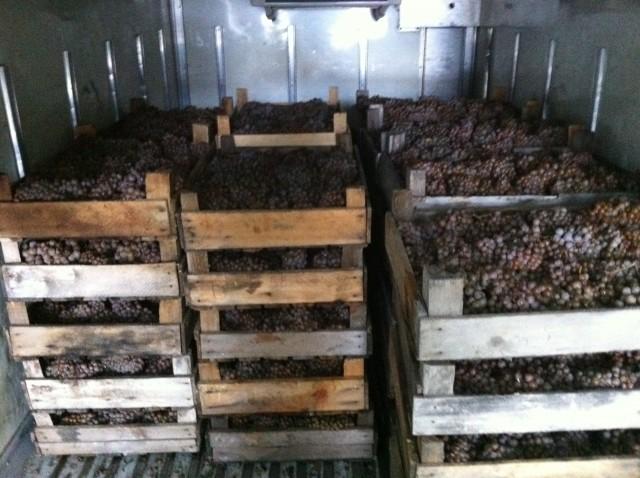
To extend the shelf life of the fruit, pick them wearing gloves, being careful not to touch the berries to avoid damaging the waxy coating. Bunches of Julian grapes are cut with scissors in dry, cloudy weather and immediately placed in a single layer, stem side up, in a paper-lined container.
The grapes are transferred to the cellar in the same boxes. Optimal conditions for long-term storage are 80% humidity and a temperature of 2-4°C.
If you have an empty refrigerator, you can arrange the Julian bunches on the shelves, or hang them from a wire stretched in a cool, ventilated room.
Applications of berries
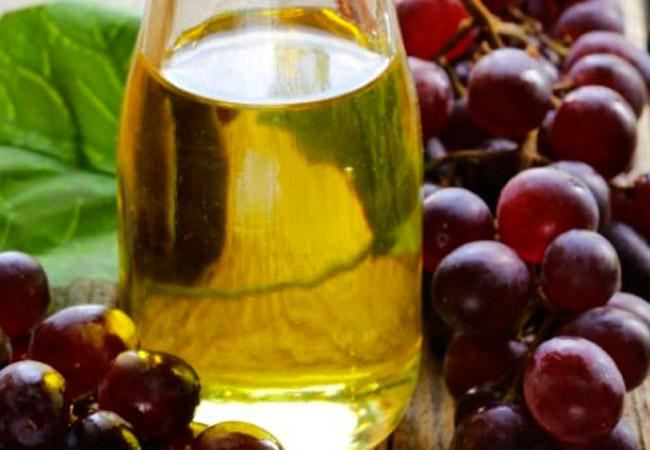
The Julian table grape variety is intended for fresh consumption. The berries of this hybrid are used for juice, fruit drinks, and compotes. Due to its high sugar content, the variety is not suitable for winemaking, so the fruit is used for blending wines.
Grapes, in addition to their culinary use, are used in folk medicine.
Fresh berries and the juice of the plant are included in the complex treatment of anemia, liver disease, and vascular diseases. Julian's fruits normalize blood pressure and alleviate the symptoms of gout, bronchitis, and tuberculosis.
In home cosmetology, masks made from crushed hybrid fruits make the skin of the face and body more elastic, firmer, and smooth out fine wrinkles.
Tips and advice from experienced gardeners
To ensure that planting and growing Julian grapes brings satisfaction rather than disappointment, it is recommended to follow the advice of experienced winegrowers:
- One- to two-year-old Julian seedlings with well-developed roots that haven't dried out during transportation take root best. When transporting, wrap the vine roots in damp burlap and then place them in a plastic bag.
- To avoid burning, hybrid seedlings should not be placed in the planting hole with undiluted fertilizer. Minerals and organic matter should be mixed with the fertile soil layer or a soil layer should be added.
- Water the Julian grapes in the morning or evening with warm, settled water from a bucket. Cold water in hot weather shocks the plant and delays the start of vegetation in early spring.
- To ensure that the current year's fruiting links grow from all the buds, and not from just one apical one, the bush's branches are tied to the trellis horizontally, and not vertically.
- When covering grape vines for the winter, small gaps are left for ventilation to prevent the crop from rotting.
Gardeners growing the hybrid keep diaries. They record the specifics and timing of agricultural practices, and document the stages of development and fruiting of the Julian grape variety.
Related posts:
 Description of the Krasotka grape variety, planting and care technology
 How to grow grapes in the Moscow region in open ground without a greenhouse
 Description of 30 grape varieties for Siberia, planting and care for beginners
 The ripening time of grape vines by variety, how to speed up the process, and what to treat the plant with
 Description of 30 varieties and types of Muscat grapes, planting, cultivation and care
 Beginner's Guide to Growing Grapes in Open Ground in Central Russia
 Description and characteristics of the Alpha grape variety, the subtleties of cultivation
 Description and characteristics of the Syrah grape variety, where it grows