
- General description of the disease
- History of appearance
- Stages of development
- Symptoms
- Routes of distribution
- Diagnostics
- External manifestations and signs
- Consequences
- Treatment methods
- Chemicals
- Organic fungicides
- Combined
- Prevention with drugs
- Bordeaux mixture
- Oxychom
- Abiga Peak
- Polyhom
- Polycarbacin
- Thiovit Jet
- "Topaz"
- Actellic
- Thanos
- Ridomil Gold
- "Acrobat"
- Review of popular fungicides
- Abiga Peak
- Acrobat MC
- Bordeaux mixture
- Copper sulfate
- Oxychom
- Ridomil Gold
- Quadris
- Convertible top
- Thiram
- Folk remedies
- Wood ash
- Garlic cloves
- Potassium permanganate
- Planting around dill as a preventative measure
- Resistant varieties
- Golden Resistant
- Dniester pink
- Buffalo
- Pineapple
- Cardinal
- Mascot
- Post-harvest care
- Conclusion
When growing grapes in their gardens, many people encounter dangerous diseases that affect grapevines. One of the most dangerous grape diseases is mildew. To get rid of this disease, it's important to thoroughly understand its characteristics and the most effective treatment methods.
General description of the disease
Before starting treatment, it is necessary to understand the description of this fungal pathology.
History of appearance
Powdery mildew was first mentioned in North America. Gardeners learned of this dangerous disease affecting grapes and other plants in 1834. It first appeared on wild grapevines and gradually spread to farmers' gardens.
The disease arrived in Europe several decades later, in 1874. However, downy mildew began appearing in vineyards en masse in 1901. It significantly reduced yields until the 1950s. When the first chemical treatments became available, gardeners were able to treat the disease themselves.

Stages of development
There are several stages of the disease's development, the characteristics of which should be familiarized with in advance:
- Mycelium. This is the early stage, during which the fruiting bodies swell due to increased humidity, burst, and are spread throughout the garden by the wind.
- Conidial stage. Fungal spores are carried by the wind and land on plants, where they begin to germinate. The conidial stage does not last very long, until the grape bushes begin to bear fruit and the berries ripen.
- Ascomycete stage. At this stage of development, the leaves of affected plants become covered with a light coating and yellow spots. In July or August, fruiting bodies containing spores form on the leaves, which are carried by the wind to neighboring seedlings in late summer.

Symptoms
To detect powdery mildew early, you should be familiar with its main symptoms. These include the following:
- Foliage lightening. In spring, light spots 20-30 mm in size appear on the surface of the leaf blades. Gradually, they turn yellow.
- Bloom on the underside of leaves. A fluffy, light-colored bloom can be seen on the underside of leaves. Sometimes it appears on the surface of grape berries.
- Growth retardation. The development of young shoots may slow or stop completely.
- Leaf drop. If left untreated, affected leaves will begin to fall off.
Routes of distribution
Many gardeners are interested in the spread of this fungal disease. As vineyards expand northward, mildew is increasingly common in northern regions. Unfavorable climate conditions slow the disease's progression, but it still infects seedlings.
Powdery mildew spreads thanks to strong winds, which carry fungal spores from infected seedlings. The pathogens can also be spread by seeds and other planting materials.

Diagnostics
Early diagnosis can help save diseased plants, so every gardener should learn how to diagnose mildew.
External manifestations and signs
Powdery mildew can be diagnosed early by its external signs and symptoms. An infected plant looks different from healthy plants. A characteristic external manifestation of mildew is a white coating one millimeter thick. It completely covers the surface of the leaf blade. Without timely treatment, yellowish spots appear on the leaves, leading to wilting and leaf drop.

Signs of powdery mildew also include spotting on the surface of the berries. Initially, they appear covered with light spots, which darken over time.
Consequences
If this fungal disease is not treated, gardeners will face the following consequences:
- Reduced yield. Shrubs affected by powdery mildew begin to bear fruit less effectively. The yield of such plants decreases by 60-80%.
- Deterioration in fruit flavor. Berries harvested from infected seedlings have a characteristic bitter taste, which spoils the grapes' flavor. Because of this, they are rarely used for processing and making wine or juice.
- Weakening of the seedling. Plants affected by powdery mildew become significantly weaker and less able to cope with pest attacks and low temperatures.
Treatment methods
There are three main methods of treating grape bushes that you need to familiarize yourself with in advance.
Chemicals
You can treat vineyard mildew with chemicals. This method is considered the most effective, which is why many gardeners use it. The following types of chemicals are used during treatment:
- Contact cleaners. These cleaners are made from copper. The advantage of contact cleaners is that they leave a protective film on the treated surface after use.
- Systemic. These are modern preparations that destroy pathogens inside and outside the plant.
Organic fungicides
Sometimes gardeners avoid spraying seedlings with chemicals and try treating them with organic fungicides. These biological treatments are less effective, but they can help eliminate the disease at an early stage. Regularly spraying the bushes with biological treatments can reduce the infection rate and prevent further development of powdery mildew.

If the infestation is severe, treatment with organic agents will not help and you will have to use chemicals.
Take a look Also
Combined
To get rid of powdery mildew, you can use combination fungicides. A distinctive feature of these products is that they contain components from both systemic and contact treatments. Fungicide spraying should be done regularly, 3-4 times throughout the season. If used correctly, these products will stop the growth of the fungal pathogen and eliminate the disease.
Prevention with drugs
There are several remedies that are used to prevent the appearance of mildew.
Bordeaux mixture
Bordeaux mixture is a popular preventative against fungal diseases. The first treatment of seedlings with this solution is during the flowering period. Experts recommend using dilute solutions, with a concentration of no more than two percent.

A second spraying is carried out after the vineyard has flowered. In this case, a one-percent mixture is used. The seedlings are treated in the evening, when there is no wind or sun.
Oxychom
This product is made from oxadixil and oxychloride. The advantages of "Oxychom" include its effectiveness and ease of use. The product is sold as a powder and must be dissolved in water beforehand. To prepare the working mixture, add 60-80 grams of the product to a ten-liter bucket of water. The mixture is then stirred for 1-2 minutes and used to treat the vineyard.
The product is used 2-3 times per season, with a 2-3 week interval between each treatment.
Abiga Peak
An effective product containing copper oxychloride, which suppresses the pathogens that cause powdery mildew and other fungal diseases, Abiga-Peak is used to prevent:
- mildew;
- late blight;
- fusarium;
- scabies;
- bacteriosis.
To prepare a spray mixture, add 50 milliliters of Abiga-Peak to ten liters of warm water. Let the mixture steep for half an hour and then apply to the bushes.

Polyhom
To protect ornamental, garden, and vegetable crops, use "Polychom." This protective agent repels pests and destroys fungal spores.
The medication has a protective contact effect and is therefore effective against spores on the surface of plants. Treatment is carried out with a pre-prepared working solution. To create the treatment, ten liters of water are mixed with 45 milliliters of the medication. Grape seedlings are sprayed no more than once a month.
Polycarbacin
This systemic fungicide has both protective and curative properties. Therefore, gardeners use Polikarbatsin to prevent and eliminate powdery mildew. It also helps combat macrosporiosis, gray mold, and spotting.
The product is sold as a powder in small 50-60 gram sachets. One sachet is sufficient for the preventative treatment of 4-5 tall grapevines. "Polycarbacin" should be used 2-3 times during the summer.

Thiovit Jet
Thiovit Jet will help protect your vineyard and other plants from pests and diseases. This product contains microelements that help kill pathogenic microorganisms. Thiovit Jet comes in the form of small granules that are dissolved in water before use. To prepare the solution, add one granule to 10-12 liters of liquid. Stir it in, then spray the vine.
The procedure is carried out late in the evening in windless weather. The grapes should be treated with a fungicide twice per season.
"Topaz"
A systemic fungicide made from penconazole. Experts recommend using Topaz with caution, as it has a hazard class of 3. It is sold as an emulsion that must be dissolved in water before use.
Grapes should be treated with Topaz at least twice—before and after flowering. A diluted mixture should be used to avoid damaging the vines. To create it, add 1-2 milliliters of fungicide to five liters of cold water.

Actellic
This insecticide has contact and stomach action and is most often used for pest control. However, Actellic is sometimes used to prevent powdery mildew in plants. Its main active ingredient, methyl pirimiphos, kills fungal spores.
"Aktellik" should be used starting in mid-spring, when the air warms up to 15-20 degrees Celsius. At these temperatures, the insecticide's effectiveness increases significantly. Bushes are sprayed with this medication once in spring and summer.
Thanos
To eliminate fungal diseases and protect grape seedlings from powdery mildew, you can use Thanos. This product is considered one of the most effective fungicides, often used in growing many garden and vegetable plants.
Thanos is sold in the form of water-soluble granules. To create a grape treatment mixture, dissolve one granule in a ten-liter container of water. Thanos should be used at least three times per season.
Ridomil Gold
To prevent powdery mildew, early blight, late blight, and other fungal diseases from affecting planted grapevines, you can use Ridomil Gold. Spray the vines with the product to keep them free of fungal spores. This product contains mancozeb and mefenoxam.

To prepare a spray solution for grape bushes, mix 50-60 grams of Ridomil Gold with ten liters of water. Apply to the plants in the morning and evening.
"Acrobat"
"Acrobat" is considered an effective fungicide because it is manufactured using two active ingredients: cinnamic acid and dithiocarbamate. These micronutrients are quite effective against fungal spores that develop due to powdery mildew.
"Acrobat" is produced as a powder, sold in ten-gram packages. To create a mixture for treating grapevines, add one package to a bucket of water and stir. The mixture is left to steep for an hour, after which it is sprayed onto the surface of the grapevines.
Review of popular fungicides
There are nine fungicidal drugs that are considered the most effective in combating mildew.

Abiga Peak
Abiga-Peak is made from copper oxychloride, which targets and destroys fungal spores. It's recommended to familiarize yourself with the product's instructions for proper use.
First, a working mixture is prepared for use on the diseased grapevine. 50-70 milliliters of fungicide are mixed with water. It's best to use warm water, as Abiga-Peak dissolves better in it. The grapevines are sprayed with the solution every three weeks throughout the season.
Acrobat MC
This medication is indispensable in the fight against late blight, powdery mildew, early blight, and other fungal infections. "Acrobat MC" is sold in granule form, which dissolves quickly in warm and cold water. It is made from mancozeb and dimethomorph, which kill the pathogens that cause fungal diseases.

To prepare a working solution of Acrobat MC, dissolve one capsule in 8-10 liters of water. Sometimes two capsules are added at once to make the mixture more concentrated.
Bordeaux mixture
To get rid of powdery mildew and save your grape vines, you can spray them with Bordeaux mixture. It's made by mixing slaked lime and copper sulfate in equal parts. The resulting mixture has disinfectant properties, eliminating dangerous microorganisms from your plants.
The first treatment is carried out when the buds on the stems are swelling. The next time, the plant is sprayed with the product during the growing season. In this case, a weak 1% fungicide is used.
Copper sulfate
A powdered product made from copper sulfate. It is used by gardeners to treat vegetables and garden crops for fungal diseases. Copper sulfate's advantages include its long-lasting protective action and effectiveness.
To treat a hundred square meters of vineyard, you'll need to prepare ten liters of working solution. To do this, add 90-10 grams of the solution to water. Do not add more copper sulfate, as too much will harm the plant.

Oxychom
A powdered fungicide used for foliar application on vineyards and other garden plants. It's a two-component product made from oxadixil and copper oxychloride. The ingredients in Oxychom inhibit pathogenic flora and gradually destroy them. This eliminates powdery mildew and cures grapes.
To prepare the remedy, add 20-25 grams of powder to 10-14 liters of water. Mix thoroughly, then spray the plant seedlings.
Ridomil Gold
It's no secret that fungal diseases are very dangerous and must be treated immediately. Ridomil Gold can help treat grapevines infected with powdery mildew. This fungicide is a contact agent, meaning it only begins to affect plants after contact with the pathogenic microflora.
The solution is mixed with water in a ratio of one part to ten parts. The prepared mixture must be used within five hours of preparation, before it begins to spoil.
Quadris
To protect vineyards from fungal diseases, you can use Quadris. This versatile product is used in both protected and open-air vineyards. Quadris can be used on grapes, cabbage, potatoes, legumes, onions, garlic, and other vegetable crops.
The solution is mixed in a bucket of water at a ratio of one part to ten parts. If the plant is already infected with mildew, a more concentrated solution is used. Seedlings should be treated in windless weather.
Convertible top
A granular fungicide sold in 20-gram sachets. Cabrio Top's main advantage is its ability to protect vineyards from downy and powdery mildew. It also contains components that can treat anthracnose, rubella, and escoria.
It is recommended to use the product during the flowering period of plants, before the berry clusters begin to form. Spraying should be done every two weeks, as the fungicide's protective effect lasts only 15-16 days.

Thiram
This is a protective fungicide that does not penetrate plants and suppresses spores on stems and leaf blades. Thiram acts by contact and therefore will not protect against diseases that develop inside seedlings. Therefore, experts recommend using the product only to combat mildew at the initial stage of its development.
To create an effective working mixture, "Thiram" is mixed with water in a ratio of one part to five. Plants are treated in late spring and early summer.
Folk remedies
Sometimes gardeners don't want to treat grape seedlings with fungicides or insecticides, so they use folk remedies instead.
Wood ash
Some believe that wood ash can only be used as a fertilizer. However, an ash decoction is considered effective against most diseases and dangerous plant pests. This solution repels cruciferous flea beetles and aphids from seedlings, and eliminates powdery mildew.

To create an ash mixture, pour boiling water over 350 grams of powder, stir, and let steep for several hours. To thicken the mixture, add 70-80 milliliters of liquid soap. Apply the mixture morning and evening once every 30-40 days.
Garlic cloves
Various folk remedies are used to combat mildew, but a garlic solution is considered one of the most effective. To create a medicinal decoction, finely chop six cloves of garlic and pour it into a liter of boiled hot water. Then, let the mixture steep for 24 hours at room temperature, then mix it with five liters of water.
Take a look Also
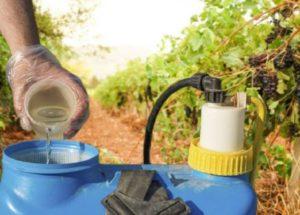
Infected plants are treated once a week until the powdery mildew symptoms disappear. If the garlic infusion doesn't help get rid of the mildew, chemical or biological treatments will have to be used.
Potassium permanganate
Potassium permanganate or manganese solution is considered an effective antiseptic. Regular use of this solution helps destroy pathogenic microelements and fungal pathogens in plants. To prepare the working solution, water is mixed with manganese powder in a ratio of one to ten. The solution is then heated on a gas stove for twenty minutes and left to steep for two hours.
The seedlings are sprayed with the cooled manganese solution once every 10-15 days.

Planting around dill as a preventative measure
There are various plants that prevent powdery mildew. To protect vineyards from this disease, many gardeners plant dill bushes near them.
To plant it, make small holes 30-50 centimeters away from the grapes to plant the seeds. The following year, dill bushes should sprout, protecting the vineyard from powdery mildew and pests.
Resistant varieties
Some gardeners don't want to waste time treating powdery mildew and therefore plant varieties that are resistant to mildew.
Golden Resistant
This is a high-yielding grape variety with a mid-season ripening period. A characteristic feature of this variety is its resistance to most diseases that affect grapevines. Therefore, those who plant Golden Resistant Grape in their garden will not have to worry about treating mildew. The plant is tall, so to prevent its stems from breaking, it will be necessary to tie them to additional supports.

The plant's disadvantages include slow stem growth and the small size of ripe berries.
Dniester pink
A hybrid variety developed by breeders in late 1955. Distinguishing features of the Dniester Pink grape include its tall stature and resistance to low temperatures and powdery mildew. It is a high-yielding variety, with each plant yielding over fifteen kilograms of berries. The fruits are bright pink with a slight burgundy hue. They ripen in late September, making it a late-ripening grape.
Buffalo
A hybrid grape variety created by breeders in 1938. The bush can grow up to 5-6 meters, making it considered tall. Buffalo produces fairly large clusters of berries, weighing up to 500 grams. Ripening begins in mid-August and continues until early September. The plant's fruits boast excellent flavor with a strawberry aroma.
Bushes of this variety are very rarely infected with powdery mildew and are not susceptible to pest attacks.

Pineapple
An American grape that resulted from crossing the Labrusca, Vinifera, and Vitis varieties. The plant received its name from the characteristic pineapple flavor of its ripe berries.
The bushes are medium-sized and rarely exceed three meters in height. They are covered with large foliage, the surface of which is tinted green. This pineapple variety is early maturing, with the berries beginning to ripen in mid-July. The plant has a well-developed immunity and is resistant to fungicides and mildew.
Cardinal
This Californian variety was developed in the late 1930s. Initially popular in the United States, it is now a favorite among gardeners worldwide. Many prefer to plant Cardinal because of its resistance to fungal diseases and temperature fluctuations.
Among the disadvantages of Cardinal are its low yield and slow ripening of berries.
Mascot
This frost-hardy variety can be grown outdoors even in northern regions. Talisman fruiting is mid-late, beginning in late August. With proper care, the planted plants will be resistant to fungal and viral diseases.

Post-harvest care
Grapes must be properly cared for after harvesting the ripened crop. The following procedures are performed during care:
- Preventative treatment. In the fall, seedlings should be treated with insecticides or fungicides to protect them from fungal spores.
- Watering. Plants require irrigation even after the berries have been picked. In August and early September, water the bushes 1-2 times a week to prevent the soil from drying out too much.
- Fertilizing. Grapes should be fertilized in early October, before frost sets in. This ensures the plant has enough nutrients for the winter.
- Weed removal. Grass is removed in September and October, before the cold weather sets in.
- Pruning. Pruning involves removing dead stems and weak shoots from the plant.
Conclusion
People who have been growing grapes in their gardens for a long time periodically treat powdery mildew. To quickly get rid of this affliction, it's important to familiarize yourself with the main chemical and folk remedies popular among gardeners.
Related posts:
 Causes of powdery mildew on zucchini and methods of disease control
 Sulfur control of powdery mildew on gooseberries using folk and chemical remedies
 The best eggplant varieties for growing in a polycarbonate greenhouse: planting and care
 Description and types of diseases and pests of grapes, treatment and control
 Causes and treatment of powdery mildew on apple trees, control and treatment rules
 Causes and treatment of powdery mildew on cucumbers, control measures using folk remedies
 How to combat white plaque on grape leaves and what is the best treatment
 The best grape varieties for growing in the Urals, planting and care rules in summer