
- Features of the Ruby Jubilee grape variety
- History of appearance
- Advantages and disadvantages
- Characteristics and description of the bush
- Fruit
- Flowering and pollination
- Ripening period
- Collection and use of berries
- What is special about this variety?
- Resistance to low temperatures and drought
- Susceptibility to insects and diseases
- We plant vines on the plot
- Preparing the planting hole and seedlings
- Planting times and rules
- Specifics of caring for the Ruby Jubilee
- Pruning and shaping fruit-bearing vines
- Watering mode
- What fertilizers do grapes need?
- Loosening and mulching the soil
- Preventive treatments
- Do I need to cover it for the winter?
- Methods of reproduction
- Winegrowers' reviews of the variety
This variety is known to many for its high yield, beautiful appearance, and unique flavor. Besides the berries, Rubin Jubilee grape leaves are used in cooking, for example, in the preparation of the signature Caucasian dish dolma. It is also successfully used to make red wines. Let's discuss the specifics of growing this crop.
Features of the Ruby Jubilee grape variety
This variety is perfect for growing in garden plots. It produces abundant fruit, has an attractive appearance, and excellent flavor. It will be a beautiful addition to any home, gazebo, or garden.
It ripens quite early compared to other varieties. It's easy to care for, so even a novice gardener can handle it.
History of appearance
Few people know that this variety was created as a gift for his beloved wife. It was bred by agronomist Kraynov for a significant date – their fortieth wedding anniversary, also known as their "ruby" wedding anniversary.
Gardeners immediately appreciated this variety. It is typically grown in warm regions: southern Russia, Crimea, and Ukraine. However, it cannot be grown in central Russia because it cannot tolerate severe frosts of -30 degrees Celsius.
Advantages and disadvantages
This variety is easy to grow and frost-resistant. It can withstand temperatures down to -20°C. Furthermore, the bush doesn't require pollination because its flowers are hermaphrodites.
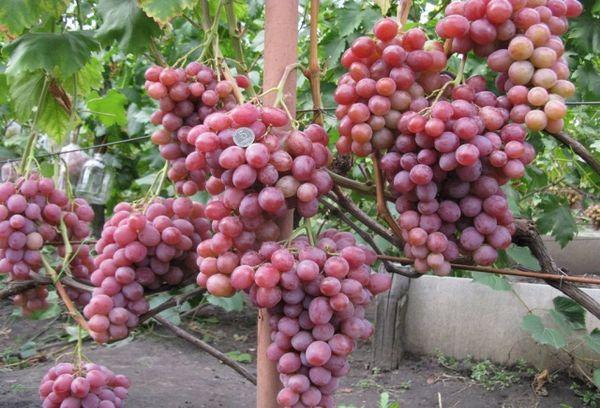
Other advantages of the variety:
- the berries grow to a large size;
- the color of the berries is unusual and beautiful;
- rich harvest;
- strong shoots.
But, despite many advantages, the variety has some disadvantages:
- wasps love the bushes;
- Birds often sit on them and eat the berries;
- In bad weather conditions, flowers quickly fall off.
Birds can be protected with fine mesh, and wasps can be controlled with special traps. Alternatively, you can create shelters for the plants.
The plant can't tolerate temperatures below minus twenty-one degrees Celsius. Therefore, it needs to be well wrapped for the winter.
Characteristics and description of the bush
This is a table hybrid. It is considered a mid-early variety. The berries store well and are transportable. The bushes are hardy, grow well, and are resistant to various plant pathogens. However, preventative measures are still necessary.
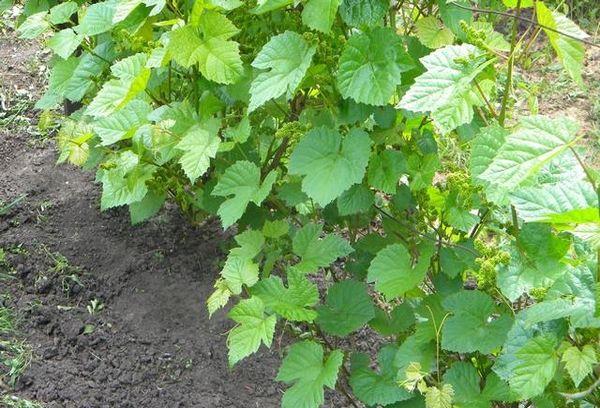
New seedlings take root easily. The bush is medium-sized, typically no more than five meters tall. As it grows, it needs to be tied to a support. The bush needs to be pruned once or twice a year, removing 6-8 buds.
Fruit
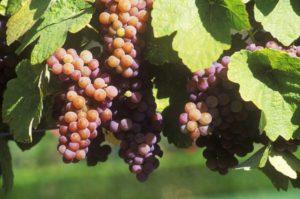
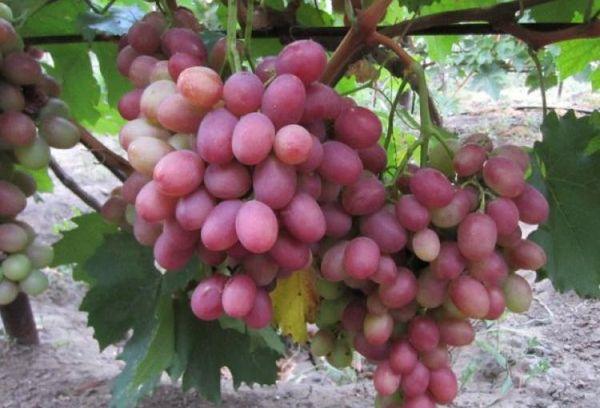
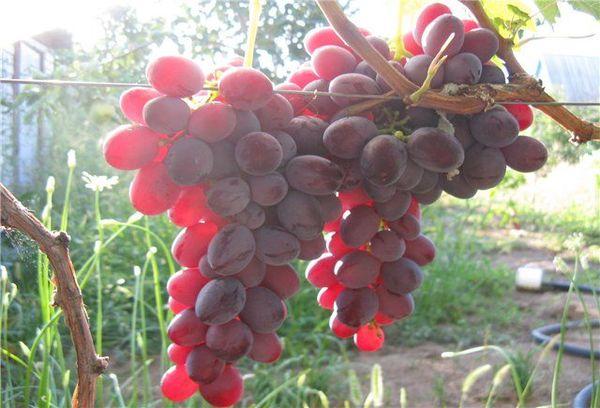
This variety produces berries weighing about a kilogram on the vine. The clusters are medium-sized and cylindrical. The berries are large and oval, weighing approximately 18 grams each. The berries are a deep ruby-red color. The stem is firm.
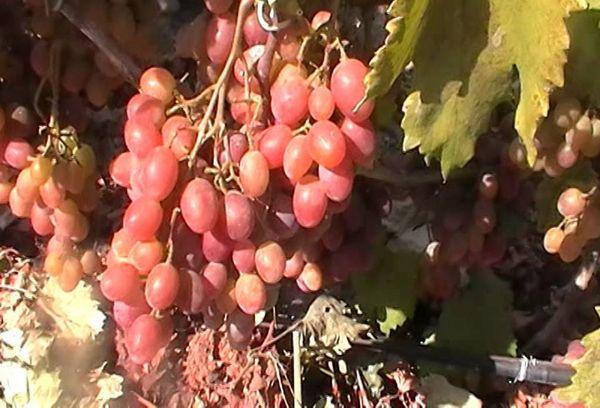
The berries have a medium-thick skin that's barely noticeable when eating. The juicy flesh has a slight crunch when bitten. The flavor is nutmeg with hints of rose.
Flowering and pollination
The plant blooms well and pollination occurs on its own.
Ripening period
The fruits usually ripen by the end of August. However, some prefer to wait until September to pick the berries.
Collection and use of berries
The bunches are harvested in September, and the fruit produces excellent wine. The berries are also used for compotes, juice, drying, and making raisins, as well as wine vinegar.
What is special about this variety?
This variety is renowned for its flavor and appearance, as well as its low-maintenance nature. It's easy to grow, hardy, and disease-resistant.
Resistance to low temperatures and drought
This grape is frost-resistant, but not below twenty degrees Celsius. Severe frosts will kill the plant.
Ruby Jubilee loves warmth and heat, but fears rain. Heavy rains cause its flowers to fall off.
Susceptibility to insects and diseases
Wasps love the ruby jubilee.
The variety is resistant to powdery mildew, rot and other diseases.
We plant vines on the plot
Ruby Jubilee is fairly easy to establish in a garden and doesn't require much energy. However, there are still some care guidelines to follow.
Preparing the planting hole and seedlings
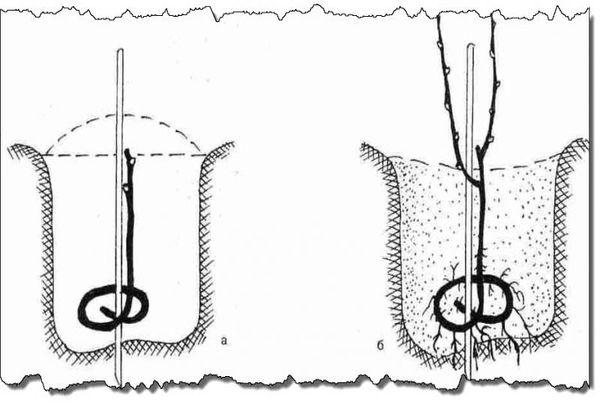
Planting takes place in the spring. The seedlings must be soaked beforehand.
The solution for soaking seedlings consists of:
- succinic acid;
- sodium humate;
- Kornevin.
This solution will give the roots strength so that the plant takes root better.
It's best to dig a hole for the grapes on the south or southwest side of the plot. A fence should be placed on the north side to protect the plant from cold winds. There shouldn't be any trees nearby, as the plant dislikes shade.
Groundwater should be at least one and a half meters below the grapevine roots. Soil should be prepared in winter or fall. Dig a hole 80 meters deep and the same diameter.
A bucket of drainage is poured into the hole, then half a kilo of superphosphate, then humus (also a bucket).
Planting times and rules
In April, place the seedling in the prepared hole. Then lightly cover it with soil, leaving the root end exposed. After this, create shade around the plant for about two weeks.
Specifics of caring for the Ruby Jubilee
Caring for grapes involves seasonal procedures.
Pruning and shaping fruit-bearing vines
From the first year of planting, the vines need to be trained. To do this, leave the strongest shoot and cut back the others. In other years, pruning is done in the fall, after the harvest. Then, in the spring. First, prune away the weak, worn shoots.
Don't break the branches off by hand; use pruning shears. Treat the cut area with hydrogen peroxide or potassium permanganate.
Watering mode
After planting, you don't need to water frequently; once a month is sufficient. As soon as the seedling is planted, water it immediately.
What fertilizers do grapes need?
The plant needs to be protected from weevils. To do this, the bushes are sprayed with chemicals:
- Tokution;
- Tsimbush;
- Cidial;
- Ekamet;
- Sevin;
- Fozalon;
- Sumiditsin.
In addition, the bushes are treated with fertilizers:
- In spring, use chicken manure with ash and urea.
- Before flowering – zinc and boron.
- During flowering, spray with manganese sulfate and boron.
- In summer – nitrogen, potassium and phosphorus.
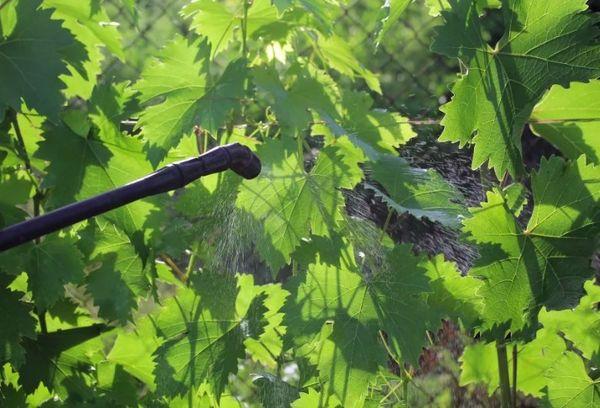
It also needs to be sprayed with Bordeaux mixture to control pests.
Loosening and mulching the soil
After planting, loosen the soil around it and remove weeds. When the leaves appear, remove the soil from the trunk. In June, dig a hole around the plant to harden off the roots. Fill it in in August.
Preventive treatments
In addition to applying fertilizers and pest control products, it is useful to treat the plant against rubella, bacteriosis, and chlorosis.
Do I need to cover it for the winter?
The plant must be covered for the winter as early as October. The leaves should be trimmed and removed from their supports. Then, dig a trench nearby and fill it with peat. The shoots are placed on top and dug in. Cover the top with plastic wrap. Snow is piled onto the cover and removed in the spring.
Methods of reproduction
In the fall, a 30 cm branch is taken from the pruned vine, placed in non-freezing soil, and in the spring, when it takes root, it is buried in the ground.
Winegrowers' reviews of the variety
Gardeners are often pleased with this plant:
- Pavel, Krasnodar Krai: "I was drawn to this variety by the beauty of its berries. I planted it in my garden four years ago. It bears fruit abundantly every year. I couldn't be happier! I use fertilizer to improve the quality of the harvest."
- Anna, Ivanovo Oblast: "I was afraid to plant this variety because of the winter cold. But everything turned out well. Only a small portion died; most survived."
Related posts:
 The best grape varieties for growing in the Urals, planting and care rules in summer
 Description of 30 varieties and types of Muscat grapes, planting, cultivation and care
 Description and characteristics of the best seeds of pea varieties and types
 Descriptions of the 20 best cherry varieties for the Moscow region, their planting and care
 Beginner's Guide to Growing Grapes in Open Ground in Central Russia
 Description of blight-resistant tomato varieties for open ground and greenhouses
 Rules for growing tomatoes in open ground, choosing a variety, planting and care
 80 Best Eggplant Varieties for Different Regions with Descriptions and Characteristics