
- History of selection
- Description and characteristics of the variety
- Main characteristics
- Appearance
- Clusters
- Berries
- Frost resistance
- Productivity
- Transportability
- Disease resistance
- Pros and cons
- How to plant correctly
- Site selection and preparation
- How to choose and prepare a seedling
- Recommendations for choosing deadlines
- Planting diagram
- Care instructions
- Watering
- Mulching
- Top dressing
- Formation
- Preventive spraying
- Protection from wasps and birds
- Shelter for the winter
- Preventive measures against diseases and pests
- Methods of reproduction
- Seeds
- Cuttings
- Layering
- Scion cuttings
- Harvesting and storage
- Applications of berries
- Tips and advice from experienced gardeners
Anyuta is a mid-late ripening grape variety. Its large, aromatic, light-burgundy berries are primarily intended for fresh consumption. Below is information on growing Anyuta grapes in garden plots, the pros and cons of the crop, propagation methods, and tips and recommendations from experienced winegrowers.
History of selection
The Anyuta grape variety was created by Russian breeder Kraynov. He crossed Kishmish Radiant and Talisman. He named the variety after his granddaughter. Grapes are adapted for cultivation in central Russia., in the south, as well as in Moldova and Ukraine.
Description and characteristics of the variety
The bushes are vigorous, with vines reaching 3 meters in length. The variety is self-pollinating, so there's no need to plant pollinators. The grape's root system is well developed. The berries are loosely packed in the cluster, giving it a loose texture.
Main characteristics
The Anyuta grape variety can produce its first fruits as early as the second year after planting. However, it's best to remove them, leaving just a few berries for sampling. The variety begins to bear fruit fully in the fourth year.
Appearance
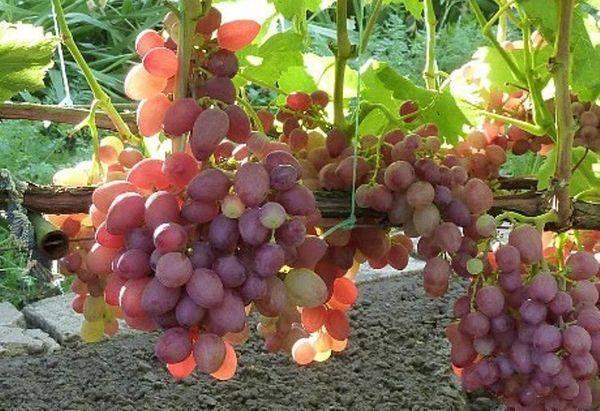
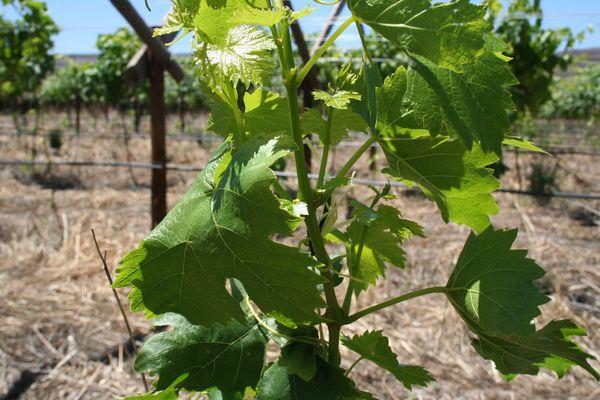
The ripe vines are dense, thick, and reddish-brown. The grape leaves are large, light green, and divided into three sections. Each shoot produces two to three clusters. To ensure large clusters, every third cluster is removed. The berries are light burgundy.
Clusters
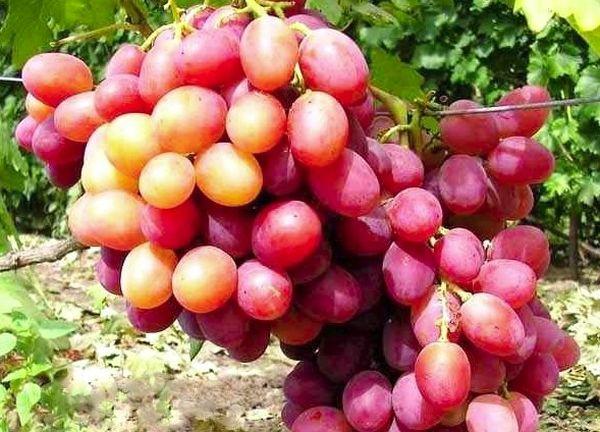
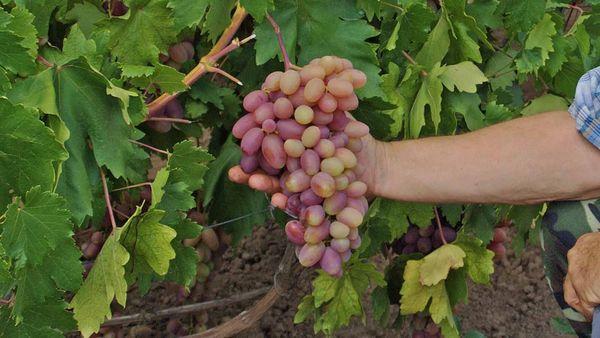
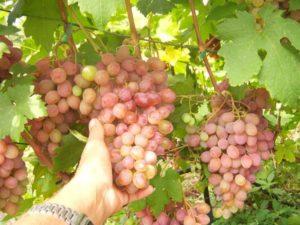
Anyuta grape clusters are loose, making them easy to eat. The average bunch weight is 700-1100 grams. Some specimens reach 1.5-1.7 kilograms. The fruits are large, and pea-shaped fruits are not observed.
Berries
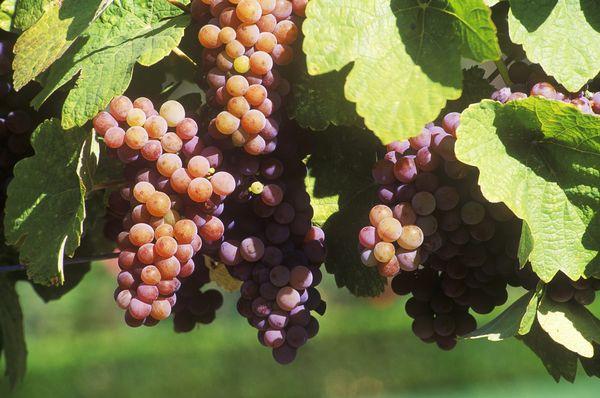
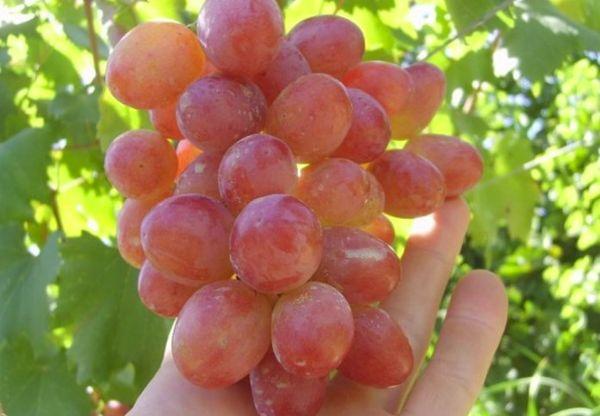
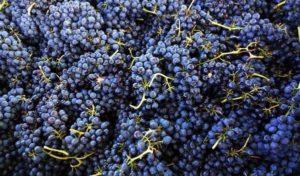
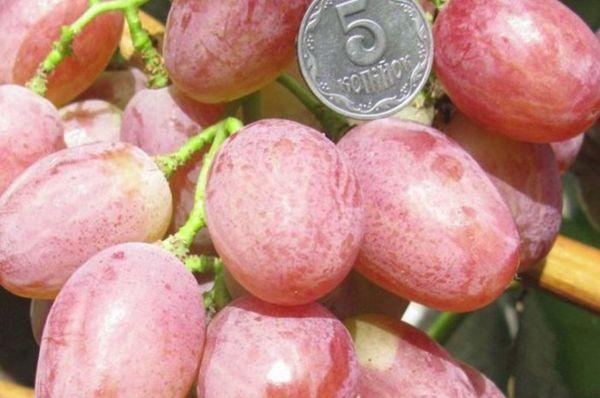
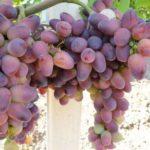
When fully ripe, Anyuta berries are an intense pink or light burgundy color. Each berry measures 35 x 25 millimeters, weighs 10-15 grams, and is oval in shape. The skin and flesh are firm. The berries contain up to four large seeds.
Please note: Rainfall during the grape ripening period may cause the berries to crack.
Frost resistance
The Anyuta grape variety can withstand temperatures down to -23°C. If the winter is expected to be extremely cold, the vines should be covered. Young vines planted this year require mandatory cover.
Productivity
Anyuta berries ripen in September. A single bush yields 6-10 kilograms of fruit. The yield depends on weather conditions and the gardener's care of the bushes.
Transportability
The grapes have firm skins and flesh. This quality allows the bunches to be transported over long distances. The berries store and transport well.
Disease resistance
The Anyuta variety has good resistance to many grape diseases. These can be prevented by regularly spraying the bushes with fungicides. Removing plant debris from the trunk circle and thinning the crown will also help prevent diseases.
Pros and cons
The Anyuta grape variety has many positive qualities. The most important ones are:
- large-fruited;
- high marketability;
- excellent transportability;
- storage duration;
- high taste qualities;
- good immunity.
Disadvantages include the presence of large seeds in the berry pulp, as well as cracking of the fruit during rainfall.
How to plant correctly
Anyuta grape seedlings are purchased from reputable sellers at a nursery or garden center. If the root system of the seedlings has dried out slightly during transportation, soak it before planting.
Site selection and preparation
The Anyuta grape prefers sunny locations. The planting site should be protected from cold winds. The vines will thrive best when planted against a south- or southwest-facing wall.
The plot is prepared six months before planting grapes or 2 weeks before.
The area is cleared, and an 80x80 cm hole is dug. A drainage layer of pebbles or crushed rock is placed at the bottom, followed by humus and phosphorus-potassium fertilizer. If the soil is heavy and clayey, sand and fertile soil are added.
How to choose and prepare a seedling
To avoid disappointment, purchase Anyuta grape seedlings from reputable sellers. The vines are inspected to ensure the stem is viable and the root system is healthy.
The top of the vine can be slightly cut: if the cut is green, the cutting is alive. A healthy root will have a white cut. The grapevine's root system is soaked in water for about a day, to which a small amount of potassium permanganate can be added.
Recommendations for choosing deadlines
Anyuta grapes can be planted in either spring or fall. Spring is preferable because the seedlings have time to establish themselves well before frost sets in. When planting in fall, the area around the trunk is mulched, and the vines are bent to the ground and covered.
Planting diagram
The planting depth for Anyuta grape seedlings is 80 centimeters. The distance between bushes is at least 1 meter, and between rows, about 3 meters. Planting is as follows:
- add some fertile soil into the hole;
- the seedling is planted in such a way that 2-3 buds remain above the soil surface;
- fill in the remaining soil;
- The bushes are watered generously.
To prevent moisture from evaporating from the soil, the ground around the seedlings is covered with mulch.
Care instructions
The Anyuta grape requires the same care as other varieties: crown shaping, fertilizing, mulching, and preventative spraying. In anticipation of severe frosts, the vines are removed from their supports and covered with agrofibre.
Watering
Grape vines require ample watering immediately after planting. Summer rainfall will be sufficient to nourish the roots. Only in the event of prolonged drought is additional watering necessary. However, overwatering can lead to fungal diseases.
Mulching
The following materials can be used as mulch: straw, dried grass, and sawdust. By covering the grapevine's trunk area, gardeners help retain moisture in the soil and prevent a crust from forming on the surface. Another positive property of mulch is that it prevents weed growth.
Top dressing
It's difficult to harvest a bountiful crop without fertilizing the grapes. Fertilizing should be done at least three times per season. The first fertilization is done in the spring, before bud break, with nitrogen fertilizers. The second is done before flowering, with potassium and phosphorus, and the third, after fruiting, primarily with potassium.
Formation
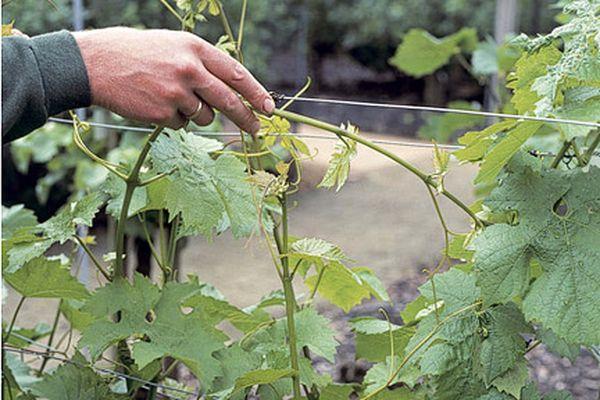
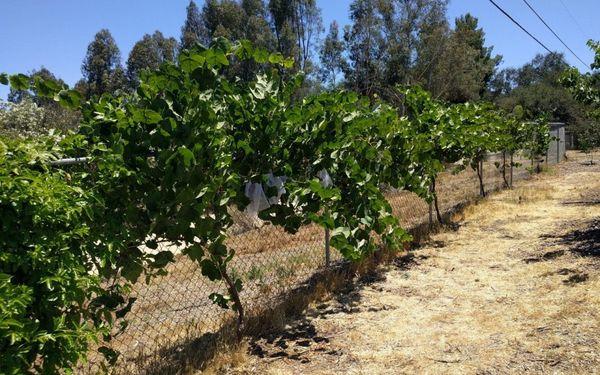
The Anyuta grape variety is trained starting in the first year after planting. The strongest shoots are left and tied to a trellis, while the rest are removed. Additionally, excess clusters are pruned, as they can cause the vine to break and reduce the quality of the harvest. After harvesting, the woody vines are cut back, counting 8-10 buds.
Preventive spraying
Although the Anyuta variety has good resistance to major grape diseases, it's still necessary to spray the plants with fungicides for prevention. Follow the instructions on each treatment and preventative product. The first sprays are applied in early spring, before bud break. Irrigate not only the vines but also the soil beneath the bushes.
Protection from wasps and birds
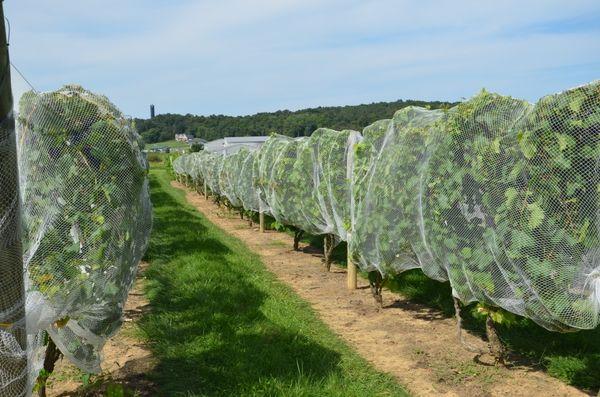
Pests love to feast on sweet grapes. To protect against wasps, you can set sticky traps, such as a saucer filled with jam and water and placed near the grape bushes. Gardeners also practice placing each ripe bunch in a fine-mesh net.
Shelter for the winter
Young grapevines require winter protection. To do this, the vines are removed from the trellis and laid on the ground, covered with spruce branches. The vines are then covered with spruce branches and agrofibre. This protection is given not only to young vines but also to mature vines if temperatures below -23°C are expected.
Important! Do not use polyethylene film as a covering material.
Preventive measures against diseases and pests
Pathogenic microorganisms and pest larvae love to overwinter in fallen leaves, so it's essential to remove plant debris from around the tree trunks in the fall. For the same reason, grass growing near bushes should be trimmed. In the spring, spray the plants with insecticides and fungicides.
Methods of reproduction
In home gardens, gardeners typically propagate grapes using cuttings, layering, and grafting. Seed propagation is rarely used, as it is labor-intensive and may not preserve varietal characteristics.
Seeds
For propagation, select the largest seeds, wash them, dry them, and refrigerate them for 6-8 weeks. In late winter or early spring, plant the seeds 1-1.5 centimeters deep in individual containers. Once the seeds germinate, the young plants are planted in the ground, having first hardened off in the open air.
Cuttings
To propagate using this method, woody cuttings are cut in the fall, tied into bundles, placed in containers filled with soil or sand, and then brought into the basement. In the spring, the viability of the cuttings is checked by cutting off the top: if the cut is green, the vine will easily root. The shoots are potted; once they have rooted well and sprouted leaves, they are planted outdoors.
Layering
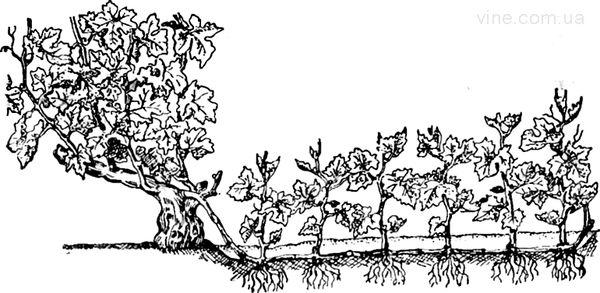
Propagation by layering is carried out as follows:
- the vines selected for obtaining young bushes are cleared of leaves;
- dig a shallow ditch;
- vines are placed in it and pinned down;
- The groove with the shoot is watered and covered with earth.
Throughout the season, the cuttings are watered, the soil around them is loosened, and the grass is removed. When young bushes emerge from the ground, they are dug up and replanted.
Scion cuttings
For propagation, select a cutting of the Anyuta grapevine that is at least five years old. In the fall, it is divided into 10-12-centimeter-long sections, which are dipped in a weak solution of potassium permanganate, then dried, wrapped in a damp cloth, and refrigerated. The grapevine chosen as the rootstock is pruned in the fall, and the cut ends are wrapped in plastic film.
The grafting procedure is carried out in the spring as follows:
- cuttings prepared in the fall are sharpened and placed in a growth enhancer solution, for example, Epin;
- a 3-4 cm deep split is made on the rootstock using a grafting knife;
- The scion is placed in the gap, secured with twine, and covered with clay.
If the vine on the rootstock is large, 2 scion cuttings can be placed in the cleft.
Harvesting and storage
Harvesting of Anyuta grapes begins as the berries ripen. In southern regions, the harvest begins in September, while in temperate climates, it can even reach October. The grapes are picked in dry weather. This variety stores and transports well.
Please note: If you spread the grapes in a single layer on newspaper or paper placed at the bottom of a wooden crate, their shelf life will be extended.
Applications of berries
The variety was primarily grown for fresh consumption due to its excellent flavor. The large berries are sweet and have a distinct muscat aroma. Anyuta grapes can also be used to make wine, juice, and fruit drink. The berries are also dried into raisins and frozen.
Tips and advice from experienced gardeners
Gardeners who have been growing grapes for a long time give the following advice and recommendations:
- Grapes are a light-loving crop, so the place for planting them should be as sunny as possible.
- Tie up the vine: this will prevent it from breaking and will give it the correct direction.
- If winter frosts below -23°C are expected, the shoots should be removed from the trellis and covered with agrofibre.
- Remove shoots and weak suckers, which will not be able to produce quality fruit anyway.
- Water the grapes only if the weather is dry for a long time.
- Spray the bushes with fungicides several times per season.
The Anyuta grape requires less maintenance than other varieties. And by following the advice and recommendations of experienced winegrowers, gardeners can easily grow the crop in their own garden and then enjoy delicious, aromatic berries.
Related posts:
 Description of 30 grape varieties for Siberia, planting and care for beginners
 How to grow grapes in the Moscow region in open ground without a greenhouse
 Beginner's Guide to Growing Grapes in Open Ground in Central Russia
 Description of 30 varieties and types of Muscat grapes, planting, cultivation and care
 The ripening time of grape vines by variety, how to speed up the process, and what to treat the plant with
 Description of the Julian grape variety, planting and care instructions
 Description of the Krasotka grape variety, planting and care technology
 Description and characteristics of Anyuta tomatoes, yield and cultivation