
- History of selection
- Description and Features
- Characteristics of the variety
- Frost resistance
- Drought resistance
- Productivity and fruiting
- Applications of berries
- Disease resistance
- Advantages and disadvantages of the variety
- How to plant correctly
- Recommendations for choosing deadlines
- Site selection and preparation
- How to select and prepare planting material
- Planting diagram
- Care instructions
- Watering mode
- Top dressing
- Trimming
- Protection from birds and insects
- Preparing for winter
- Preventive spraying
- Preventive and Pest Control Measures
- Methods of reproduction
- Harvesting and storage
- Tips and advice from experienced gardeners
The large-fruited Sofia grape variety has long been popular among winegrowers and gardeners in Russia and neighboring countries. This fruit variety boasts excellent flavor, early ripening, and high weather resistance. Thanks to the natural immunity inherited from its parent varieties, Sofia grapes are rarely affected by diseases and pests.
History of selection
The variety was developed by Ukrainian experimental breeder V. V. Zagorulko, who crossed Kishmish Luchisty and the well-known Arcadia grape variety at the end of the last century. The new hybrid inherited the best varietal characteristics from its parents and quickly became popular among gardeners and farmers.
Nowadays, the Sofia grape variety is a frequent inhabitant of garden plots in Ukraine, Russia, Belarus and Moldova.
Description and Features
To grow a healthy, fruit-bearing grape bush, you need to familiarize yourself with the features and characteristics of the fruit crop:
- Hybrid grape bushes grow tall, with well-developed fruit shoots capable of bearing a heavy load.
- When fully ripe, the vine turns a rich brown color.
- The leaf blades are very large, with a smooth surface of an emerald hue, which turns yellow in autumn.
- During the flowering period, racemose inflorescences with female flowers appear on the grapevine, which implies the presence of pollinators with similar flowering periods.
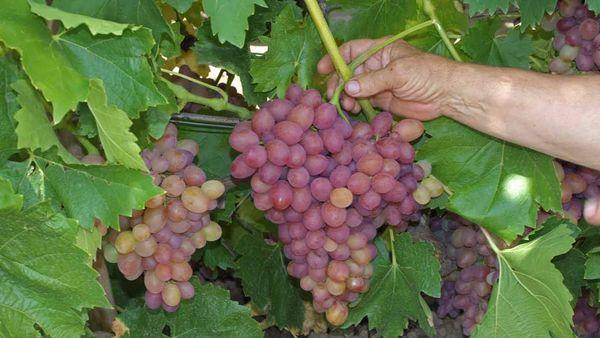
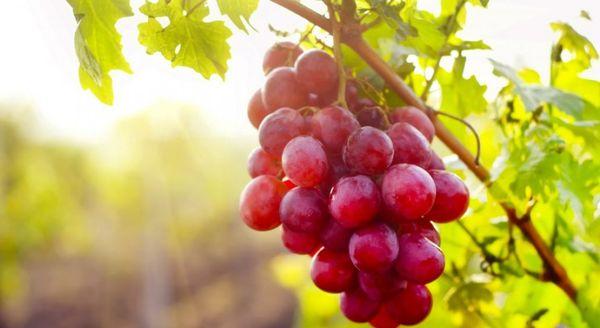
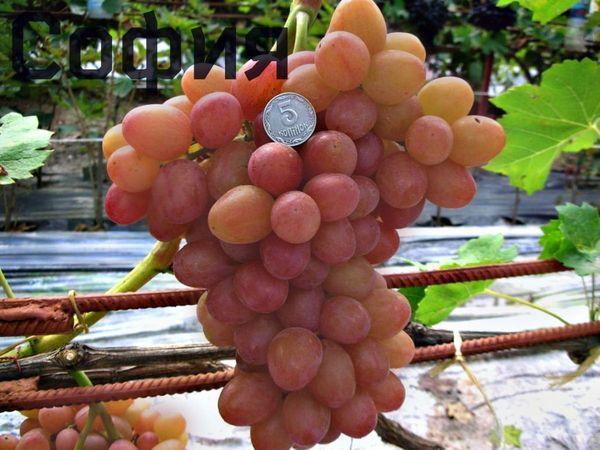
- Ripe grape clusters are large, in the shape of a wide cone, the weight of each bunch ranges from 700 grams to 1.5 kilograms.
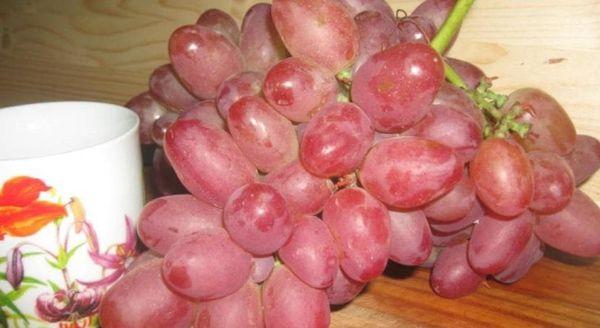
- The berries ripen smooth, oval-shaped, weighing up to 15-17 grams, with a rich, refreshing taste and aroma.
- The skin of the berries is thin, with a protective pruinose layer, and is not felt at all when eaten.
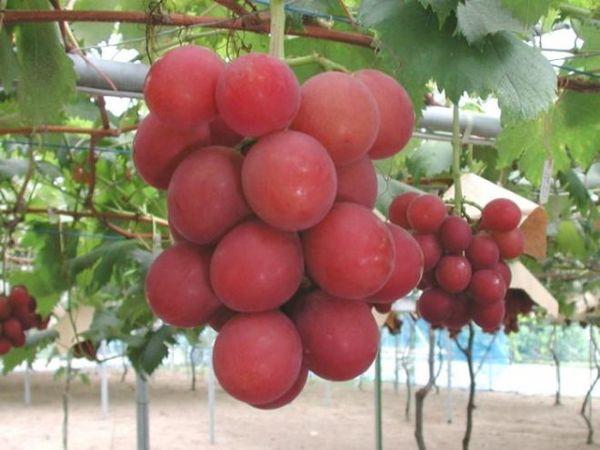 Important! Due to the high density of the clusters, the fruits often become deformed and damaged, creating areas of rot.
Characteristics of the variety
The hybrid grape variety Sofia, with proper care and favorable weather conditions, exhibits high yields. However, the variety is prone to over-planting, which negatively impacts ripening time and fruit flavor.
Frost resistance
The Sofia grape variety is a heat-loving plant that requires additional insulation during harsh and cold winters. The bushes can withstand temperatures down to -21 to -23 degrees Celsius, but they won't survive any more severe frosts without additional care.
Take a look Also
Drought resistance
However, the hybrid grape variety tolerates heat and drought well. Even at 37 degrees Celsius, the grape vines grow, develop, and bear fruit beautifully.
Productivity and fruiting
Berries ripen depending on the weather conditions in the growing region. In southern regions, 100-105 days are sufficient for the fruit crop to ripen. In the temperate climate of the central zone, grapes ripen 115-120 days after the start of the growing season.
The first fruiting occurs in the second year of open-ground growth. A single young plant can yield up to 10 kilograms of grape clusters. Mature grape vines produce 50 to 70 kilograms of ripe bunches with beautiful, large berries.
Important! The Sofia grape variety is not self-pollinating. To achieve high-quality and large yields, the plants require pollinating neighbors.
Applications of berries
Sofia grapes are a versatile table fruit variety. Their berries contain a wealth of essential acids and nutrients. Therefore, fresh grapes are recommended for consumption.
Ripe fruits are used to squeeze juice, make nectars, compotes, jams, and preserves. The berries are used to decorate desserts and to make homemade wine and liqueurs.
Disease resistance
Excellent natural immunity protects berry bushes from diseases and pests. However, if care is not followed, the risk of fungal and viral infections increases significantly.
Advantages and disadvantages of the variety
To avoid making mistakes when growing Sofia grapes, it's important to carefully study all the pros and cons you'll encounter when cultivating berry bushes.
Advantages:
- The variety is characterized by high yield rates.
- Early stages of fruiting and ripening of berries.
- Excellent taste of fruits.
- Grape bushes are able to withstand prolonged heat and drought.
- The fruit crop is easily propagated by vegetative methods; cuttings quickly take root and establish themselves.
Flaws:
- The tendency of fruit shoots to be heavily overloaded.
- Average resistance to low temperatures, which significantly reduces the growing area of the Sofia grape variety.
- The main drawback of this fruit crop is its inability to self-pollinate. Grapevines of other varieties with similar flowering times must be planted nearby.
Important! Ripe berries quickly fall from the bushes and are prone to cracking in high humidity.
How to plant correctly
Sofia grapes prefer loose, light, fertile soils with neutral acidity and moisture levels.
Recommendations for choosing deadlines
Planting of grape seedlings in open ground is carried out in the spring, as soon as the soil warms up to +10 degrees, or in the fall, 4-6 weeks before the first frost.
Site selection and preparation
For planting, choose a level, well-lit area sheltered from strong winds and drafts. The bushes grow best on a south or southwest facing site.
Site preparation rules:
- 4-6 weeks before planting, the soil is dug up and cleared of weeds.
- The soil is mixed with organic fertilizers and mineral substances, and compost or humus is added.
- On the prepared site, planting holes are dug, at least 60-70 centimeters deep, the distance between seedlings is left from 2 to 3 meters, between rows, up to 4 meters.
- Drainage and a layer of fertile soil are placed at the bottom of the hole.
- The hole is watered generously and a support stake is driven in to support the plant.
Important! The permissible groundwater level on the site should not exceed 2 meters from the soil surface.
How to select and prepare planting material
It is recommended to purchase seedlings of hybrid varietal crops only from proven and reliable nurseries.
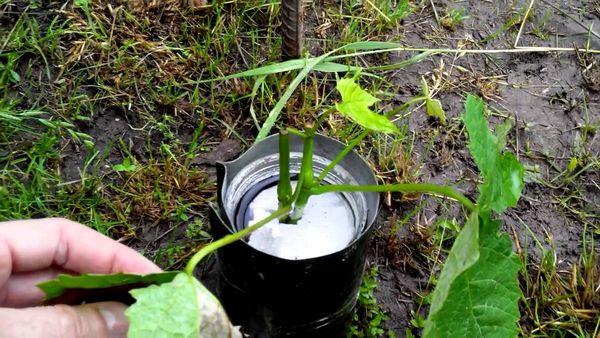
The plant is inspected for rot and damage. The roots are well developed and moist, with no broken or damaged shoots.
Before planting in open ground, seedlings are placed in a container with settled water and left for 7-10 hours.
Planting diagram
On the day of planting, the rhizomes of the grape seedlings are trimmed, leaving only long and healthy shoots.
Planting order:
- The seedling is placed in the center of the planting hole.
- The roots are carefully spread out in the hole and sprinkled with fertile soil.
- The soil under the planted bush is compacted and watered generously.
- The seedling is tied to a support peg.
- After finishing the work, the tree trunk circle is mulched with humus or peat mixed with wet sawdust.
Important! Vigorous and tall grapevines require additional support to ensure the plants can bear fruit and develop smoothly.
Care instructions
Timely and proper care of grape bushes is the key to obtaining a high-quality harvest.
Watering mode
The Sofia grape variety does not tolerate high soil moisture. Overwatering causes the berries to crack and rot.
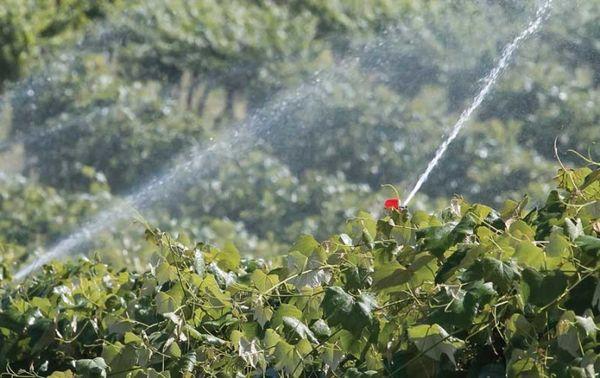
It is best to provide the hybrid fruit crop with drip irrigation, and during heavy and prolonged rains, cover the trunk circle with film or roofing felt.
The Sofia grape variety is watered no more than 2-3 times during the entire growing season.
Top dressing
Fertilizing is done twice throughout the season. In early spring, the bushes are fertilized with organic matter; during fruit formation, the grapes require mineral fertilizers.
Trimming
Grape vines undergo annual formative and sanitary pruning. In spring, shoots are cut back to 5-7 fruiting buds.
Also, in spring and autumn, sanitary pruning of plants is carried out, removing broken, frozen and damaged branches and shoots.
Important! During the flowering period, it's important to monitor the formation of grape clusters and ovaries. No more than 2-4 clusters are left on each vine, and the inflorescences are thinned out.
Protection from birds and insects
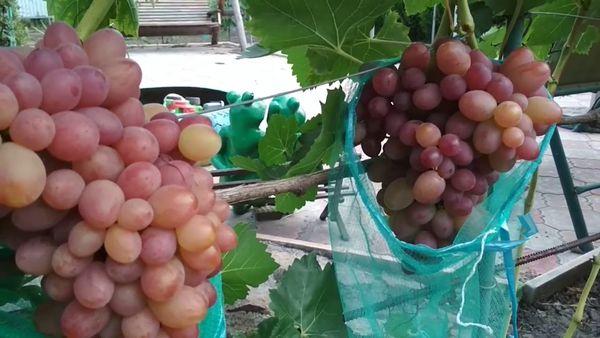
Birds can quickly destroy a significant portion of a grape harvest. Therefore, shiny objects are hung on the grapevines to repel them. Wasps are also a common attacker of grape clusters.
To protect against birds and wasps, the bunches are covered with special nets that protect the berries from birds and large insects.
Preparing for winter
Due to the relatively low cold tolerance of the Sofia grape variety, it is recommended to insulate it even in regions with a southern climate. To do this, the shoots are removed from their supports and bent to the ground. The vines are covered with dry leaves and special fiber.
The soil under the tree trunk circle is mulched with a thick layer of compost or humus, and the plants are watered generously.
Preventive spraying
To prevent the vineyard from being damaged by diseases and pests, the bushes are sprayed with chemical or biological protection agents twice a year.
Preventive and Pest Control Measures
With the onset of spring, before the buds begin to open, the fruit crop is sprayed with preparations based on fungicides and insecticides.
Important! With proper and timely care, the risk of disease and pest attacks is significantly reduced.
Methods of reproduction
To grow varietal grapes in a garden plot, vegetative propagation methods of fruit crops are used.
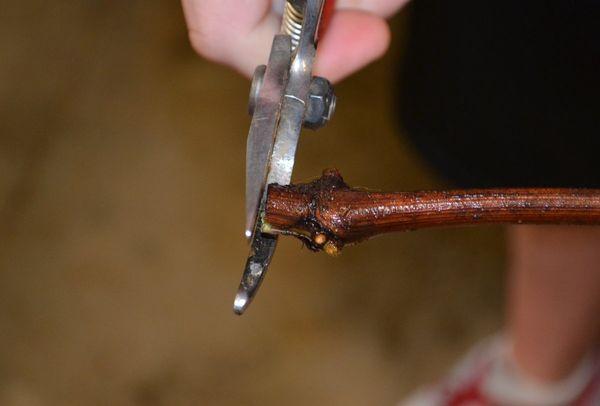
Sofia grapes are propagated by cuttings, layering, and grafting of cuttings onto old rootstock.
Harvesting and storage
In the southern regions, the harvest takes place in mid-August; in the temperate zone, the berries ripen 2-3 weeks later.
Due to the thin, delicate skin of the berries, the grape clusters quickly lose their marketable appearance and flavor. Therefore, the Sofia grape variety is not suitable for long-term transportation and storage.
Tips and advice from experienced gardeners
Experienced gardeners and winegrowers recommend not leaving ripe berries on the bushes. Sudden changes in humidity and temperature can cause the berries to crack and fall off, negatively impacting the variety's yield.
Related posts:
 Description of 30 grape varieties for Siberia, planting and care for beginners
 Description of 30 varieties and types of Muscat grapes, planting, cultivation and care
 The best grape varieties for growing in the Urals, planting and care rules in summer
 Beginner's Guide to Growing Grapes in Open Ground in Central Russia
 The ripening time of grape vines by variety, how to speed up the process, and what to treat the plant with
 Description and characteristics of the Syrah grape variety, where it grows
 Description of the Cardinal grape variety and growing rules
 Description and cultivation techniques for the Muromets grape variety