
- Description and Features
- Vine
- Inflorescences
- Berries
- Taste
- Growing regions
- History of selection
- Main characteristics
- Drought resistance
- Frost resistance
- Productivity and fruiting
- Areas of application of fruits
- Resistance to diseases and pests
- Transportability
- Pros and cons of the variety
- How to plant correctly
- Recommendations for choosing deadlines
- Choosing a location
- Soil requirements
- Site preparation
- How to select and prepare planting material
- Planting diagram
- Care instructions
- Watering mode
- Top dressing
- Preparing for winter
- Mulching
- Prevention of diseases and pests
- Trimming
- Methods of reproduction
- Harvesting and storage
- Tips from experienced gardeners
The Muromets grape variety is a favorite among winegrowers across the country. Its popularity is well-deserved. Muromets is an early-ripening red table grape variety. The berries, with their dark purple skins, can be harvested 106-110 days into the growing season. This variety is suitable for both home and commercial cultivation. It boasts remarkable flavor and a beautiful presentation.
Description and Features
The Muromets grape grows quickly and blooms profusely. Its clusters are large and heavy. Branches sometimes break under the weight of ripe berries. It's advisable to remove excess inflorescences before flowering. The variety requires timely pruning. A total of 40-45 buds should be present on the bush. No more than 10-20 shoots should be left on each vine. Each branch should have one inflorescence.
Vine
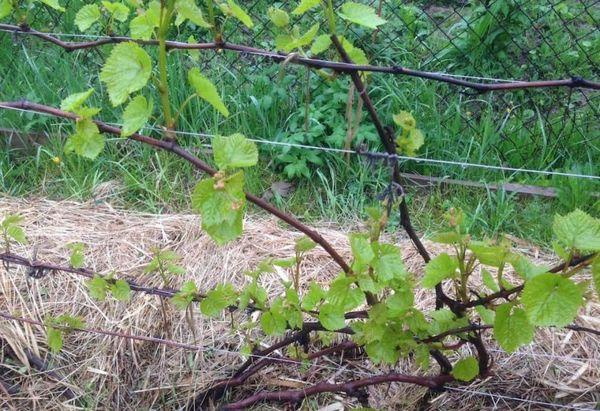
This plant grows into a tall, sturdy bush. The vine grows quickly, reaching 1.9-3 meters in height. Immediately after planting in fertilized soil, the cuttings form shoots. The plant's growth and development require careful monitoring and timely pruning.
The leaves are huge, green, 5-lobed, with sunken veins and serrated edges. The surface of the leaves is matte and wrinkled.
This variety is characterized by fasciation of the lower part of the main shoot, as well as shoot growth outside the axils. Branches sometimes become flat, and their tips split.
Inflorescences
The flowers are bisexual, small, and clustered in inflorescences. Ovaries are formed at 99 percent. Under favorable weather conditions, the flowers are well pollinated. If there is frequent rainfall during the flowering period, the fruit may become pea-shaped.
Berries
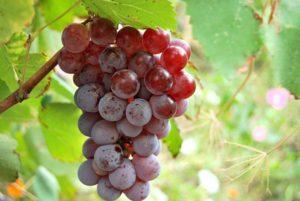
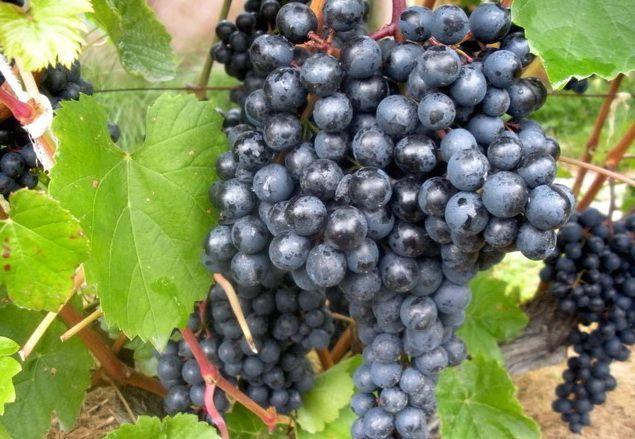
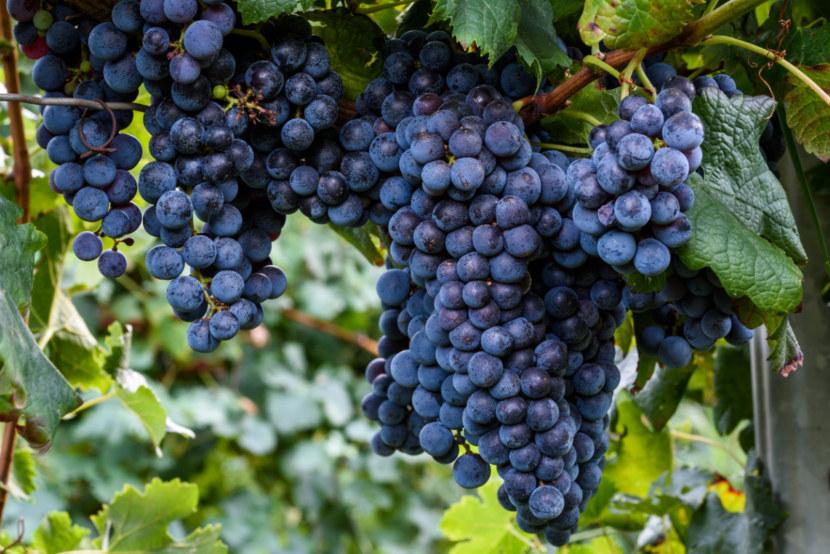
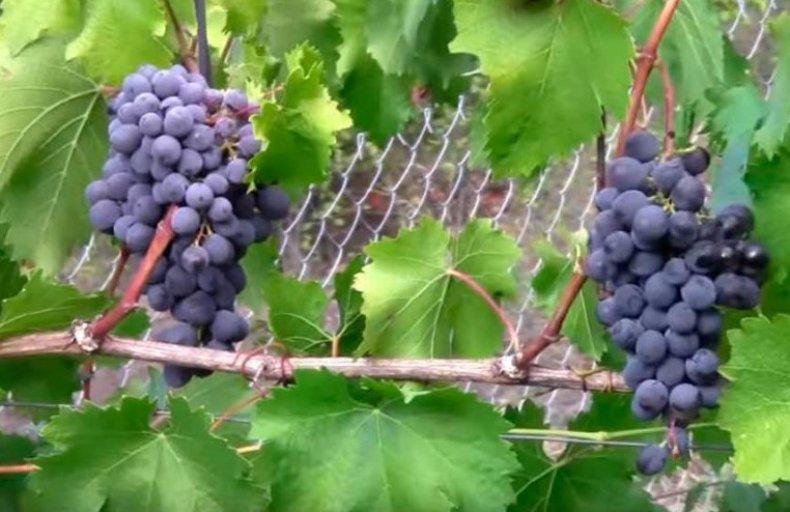
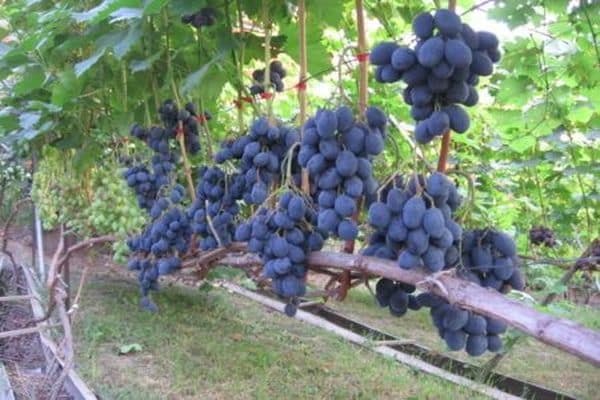
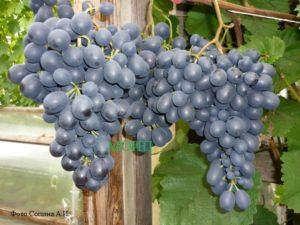
Muromets produces large, conical clusters laden with berries, each weighing almost 0.45 kilograms. With proper care, a single cluster can weigh up to 1,000 grams.
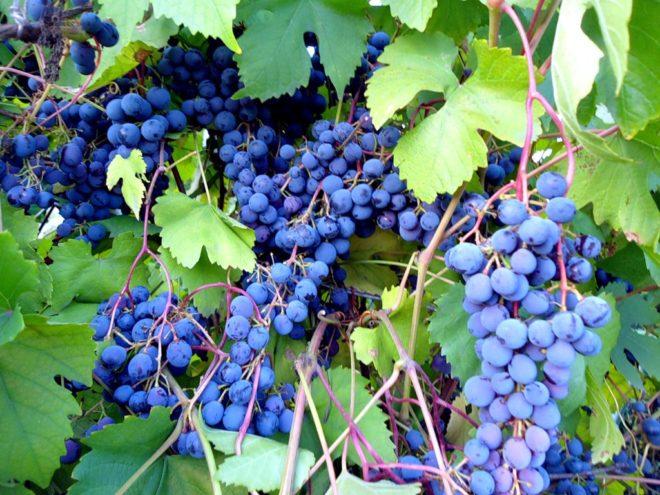
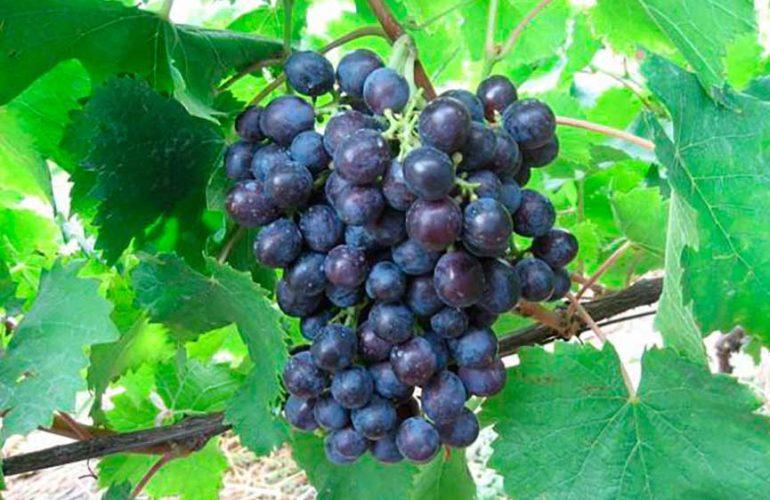
The berries are oval-round in shape and dark purple in color. A waxy bloom is visible on the surface, protecting them from microorganisms and adverse weather conditions.
Each berry weighs 5 grams and is 23 millimeters long. Thinning the berries as they ripen increases their size. Each berry contains 1 to 4 small seeds. Sometimes, the seeds may be missing. The skin is thin, soft, and easily torn, making it imperceptible when eaten.
Taste
Ripe grapes have fleshy, juicy, and crisp flesh. The flavor is sweet with a subtle tartness. The Muromets variety is characterized by a high sugar content (17-19 percent). The grapes have a light Muscat aroma.
Growing regions
The Muromets grape variety is zoned for central Russia. It can be grown in the Lower Volga and Ural regions, the Moscow region, as well as in Siberia and the Far East.
History of selection
Muromets was developed in the 1960s at the Ivan Michurin Central Laboratory. The Severny and Pobeda varieties were used for the cross. The new variety was developed by Ivan Filippenko and Elena Shtin. From the Severny variety, the grape derives excellent winter hardiness, and from Pobeda, its remarkable flavor.
The new cultivar was named after the epic hero Ilya Muromsky. The new variety produced very large bunches. Muromsky grapes were undergoing variety testing for a long time. It was only added to the state register in 1988.
Main characteristics
The main characteristic of the Muromets grape is its early maturity. There is simply no other early-ripening variety suitable for cultivation in the central part of Russia.
Drought resistance
Muromets grapes tolerate drought well. The crop requires maximum moisture only at the beginning of the growing season. During ripening, precipitation and watering are undesirable.
Frost resistance
The vine can withstand temperatures as low as -26 degrees Celsius. However, some buds may freeze, so it's best to insulate the bush before the cold weather sets in. The risk of vines freezing is 9 to 20 percent.
Productivity and fruiting
The fruits ripen in early August, sometimes a little later. The ripening period is influenced by the climate of the growing region. In southern latitudes, the harvest is usually at the end of July.
In colder regions, the berries ripen by early September. In any region, the bunches are 100 percent ripe.
Muromets is a high-yielding crop. On average, one mature bush can yield 8-16 kilograms of berries. If overloaded, the berries may only ripen in the upper part of the cluster, while the lower parts may wither before ripening. It is advisable to regulate the yield.
Areas of application of fruits
In high humidity, grapes crack, and in this state they are used only for making juices, compotes, and jams. If the weather is dry, the bunches can hang on the vine for 1.5 months, accumulating sugar content.
On an industrial scale, Muromets grapes are grown for sale or wine production.
The harvest for sale is collected in August, during the period of technical ripeness, when the berries acquire the color characteristic of the variety and become sweetish in taste.
To produce expensive table wines, the grapes are harvested in September. For dessert wines, the grapes are picked in October. However, the grapes can only hang on the vine for long if the weather conditions are favorable.
Resistance to diseases and pests
Like any grape variety, Muromets is susceptible to mildew, gray mold, and powdery mildew. To protect the plant from diseases, preventative treatments with colloidal sulfur and copper-containing preparations are used. Insecticides are used to control insect pests. This variety is often attacked by wasps. Birds do not peck the grapes.
Transportability
Muromets grapes transport well. The berries retain their shape well, without bruising or cracking. Bunches picked in dry weather can be stored for 1-2 months in a cool place or in the refrigerator.
Pros and cons of the variety
Advantages of Muromets:
- early ripening period;
- huge size of bunches;
- wonderful taste;
- good shelf life and transportability;
- high yield;
- excellent winter hardiness;
- full ripening of the bunches.
Disadvantages of the variety:
- tendency to pea in case of lack of heat;
- requires crop rationing due to excess inflorescences;
- cracks due to excess moisture during ripening;
- low resistance to powdery mildew and grey rot;
- often attacked by wasps.
How to plant correctly
Grapes are a sun-loving crop. Dark-fruited varieties require more heat than light-fruited varieties. However, Muromets grapes have a short growing season. This crop ripens in almost any region of Russia.

Recommendations for choosing deadlines
Grapes can be planted in early spring, before bud break (mid-March), or in the fall, before October. Fall planting is not suitable for northern regions, where young seedlings won't have time to establish themselves before frost sets in. Spring-planted plants will have time to grow and strengthen over the summer.
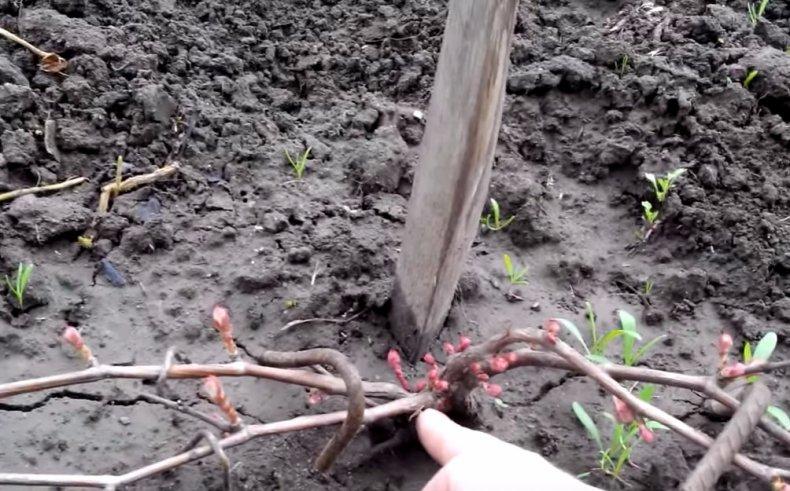
Young seedlings with blossoming leaves, which are sold in a container, are best planted when the threat of night frosts has passed, that is, in May.
Choosing a location
It's best to plant grapes in a sunny, sheltered area protected from cold winds. Choose a slope facing south or southwest.
In cold regions, the plant can be planted on the south side of the house or fence.
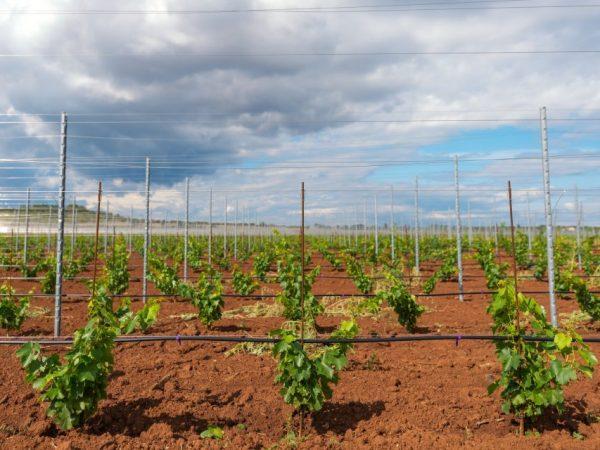
Grapes don't tolerate stagnant air and water. After rain, moisture should not accumulate at the base of the vine. Leave 1.5 meters of clear space between the neighboring plants.
Soil requirements
Grapes prefer fertile soil with a neutral or slightly acidic pH. Although the plant prefers an alkaline environment, the soil should be free of lime. Excess carbonates negatively affect berry quality and yield, and lead to leaf chlorosis.
Site preparation
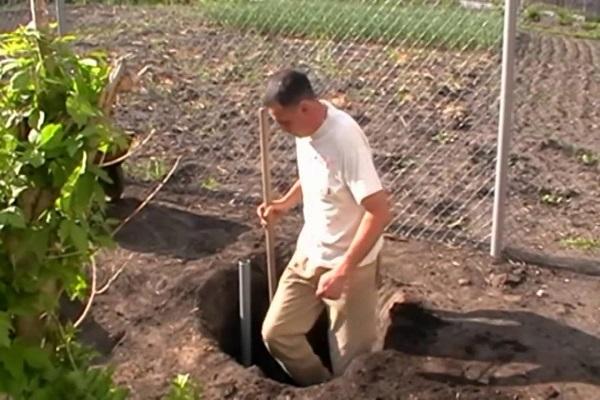
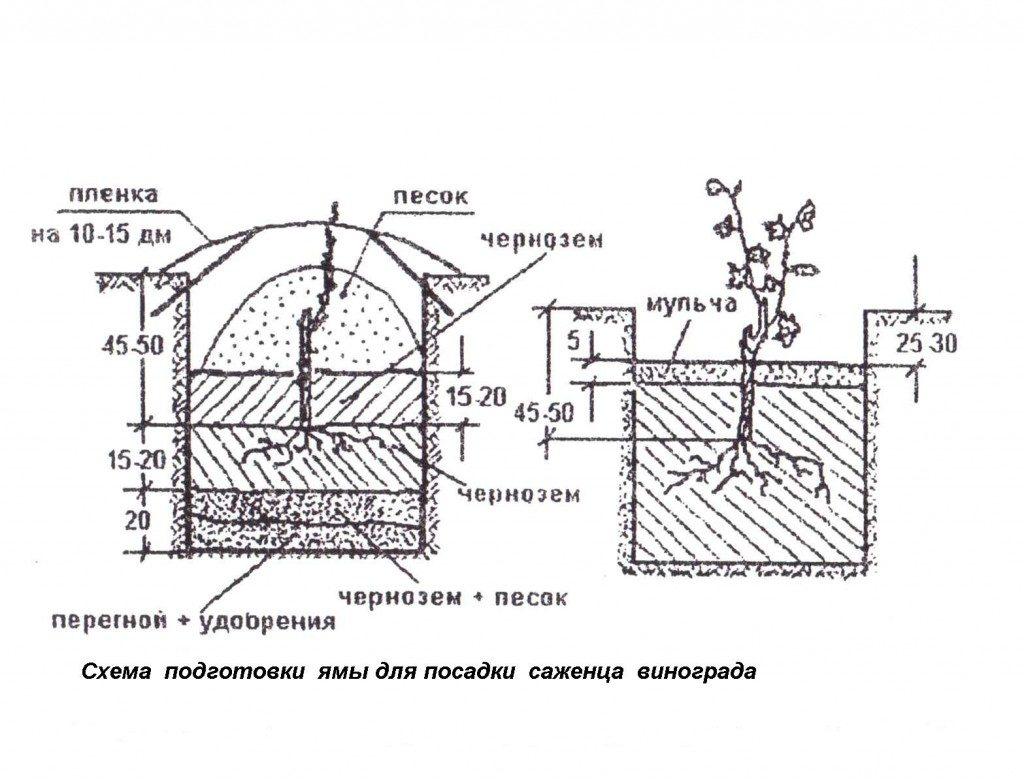
A month before planting, prepare a hole and fertilize the soil. Avoid over-fertilizing the soil to avoid burning the young plant. Dig a hole 80 centimeters deep. If the soil is clayey, add a little peat and sand. Mix the excavated soil with manure (half a bucket), wood ash (300 grams), and nitrogen, phosphorus, and potassium supplements (50 grams each).
How to select and prepare planting material
For planting, it's best to buy a one-year-old seedling. It will produce its first harvest in the second year. The seedling should have a healthy root system, with more than three roots 12 centimeters long and 4 millimeters thick. Before planting, the plant should be immersed in a nutrient solution. The roots can be disinfected with Hexachlorane. The roots and main shoot should be trimmed slightly. Four to five buds should remain on the shoot.
Planting diagram
The fertilized soil should be returned to the hole. A little gravel can be placed at the bottom for drainage. Then, make a 40-centimeter-deep hole in the ground and plant the young seedling in it. Cover the plant's roots with soil and then water with two buckets of water. The soil can be mulched with peat. Place a trellis or stake near the grapes.
Care instructions
Muromets grapes require timely fertilizing and scheduled pruning. The plant will be less susceptible to diseases if treated with colloidal sulfur and copper sulfate in the spring, before the leaves emerge.
Watering mode
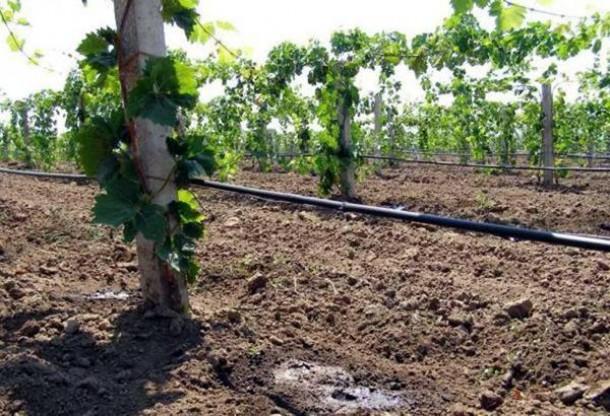
The vineyard is watered only during droughts. In the spring, before flowering, a water recharge is needed, which involves pouring 5-10 buckets of water under the vine. The same procedure is carried out in late fall, before frost sets in. At the beginning of the growing season, during droughts, the plant is watered once a week, but generously. 3-5 buckets of water are poured under the vine. Watering is stopped during the ripening period.
Top dressing
Muromets grapes require timely fertilization. Before flowering, the plant can be fed with potassium sulfate, superphosphate, or fermented manure. In summer, the bush can be sprayed with a boric acid solution. Before wintering, the base of the vine should be insulated with humus.
Preparing for winter
The base of the vine should be insulated with humus and a thick layer of soil when the temperature drops to -5°C (-4°F). The vines can be removed from the trellis and bent to the ground when the thermometer reaches -10°C (-12°F). The top of the vines can be covered with soil, agrofibre stretched over arches, or burlap.
Mulching
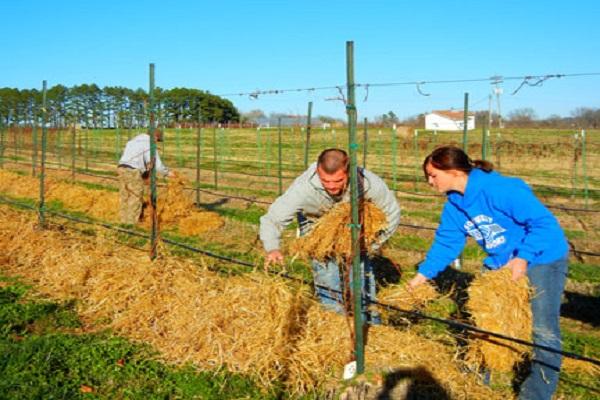
The soil around the tree trunk can be mulched with peat, plastic film, or sawdust. Mulch will protect the soil from intense evaporation and prevent weeds from growing.
Prevention of diseases and pests
To protect plants from fungal diseases (mildew, oidium, gray mold), preventative spraying with a solution of copper sulfate and colloidal sulfur is carried out in the spring.
The foliage can be treated with fungicides (Strobi, Agiba-Peak, Topaz).
Of all the pests, wasps are the most common pests that attack Muromets grapes. Traps, baits, and vinegar sprays are used to protect against insects. Identifying and destroying wasp nests is recommended.

Trimming
Bush shaping can be done in various ways. For plants that are planned to be covered for the winter, a fan-shaped, multi-arm pruning method is chosen. Shoots formed in this way can be tied into loose bundles before wintering and laid on the ground or in a trench.
Methods of reproduction
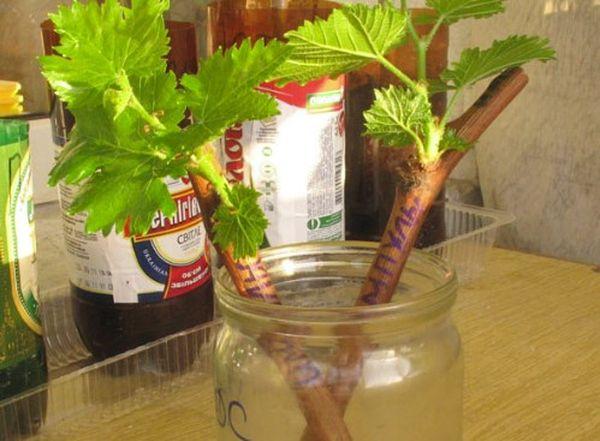
Muromets grapes are propagated vegetatively, using cuttings or layering. This method of propagation produces a plant with the same characteristics as the parent plant. Cuttings are taken fresh, 10 centimeters long, with 2-3 buds. They are rooted in cups and then transplanted to their permanent location.
To propagate by layering, take a one-year-old vine and bend it to the ground. This procedure is carried out in the spring, and the soil is kept moist throughout the summer.
Prolonged contact with the soil will cause the shoot to develop its own root system. In the fall, the shoot can be cut from the mother plant and transplanted to its permanent location.
Harvesting and storage
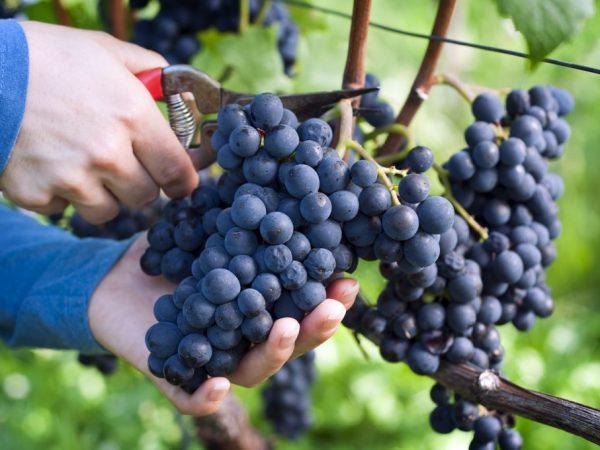
Grapes are cut with scissors at the stage of technical ripeness, when the berries have acquired their characteristic color and lost their astringent flavor. Healthy bunches, free from disease and insect damage, can be stored in the refrigerator for up to two months.
The fruits can be picked when fully ripe. Sweet grapes are eaten fresh or used to make wine, juice, and jam. The berries are dried to make raisins.
Tips from experienced gardeners
Recommendations for growing grapes:
- You can’t plant the plant in the shade – the grapes will grow poorly and produce a modest harvest;
- no more than 2 clusters should be left on the shoot, otherwise the berries will be small;
- the longer the bunches hang on the bush, the sweeter they become;
- grapes should be harvested only in dry weather;
- If there is frequent rainfall during the ripening period, the vineyard can be covered with film.
Related posts:
 Description of 30 grape varieties for Siberia, planting and care for beginners
 Beginner's Guide to Growing Grapes in Open Ground in Central Russia
 Description of 30 varieties and types of Muscat grapes, planting, cultivation and care
 The best grape varieties for growing in the Urals, planting and care rules in summer
 The best ways and methods for properly covering grapes for the winter
 Description and characteristics of the Syrah grape variety, where it grows
 Description of the Galbena Nou grape variety, planting and care rules
 The ripening time of grape vines by variety, how to speed up the process, and what to treat the plant with