
- The history of Carmenere grape selection
- General description
- Vine
- Bunch
- Productivity
- Useful properties of berries
- Tasting evaluation
- Caloric content
- Acidity
- Characteristics of the variety
- Winter hardiness and drought tolerance
- Immunity to diseases and parasites
- Landing
- Deadlines
- Preparing the site and planting hole
- Planting vines
- Specifics of caring for Carmenere
- Watering and fertilizing
- Loosening and mulching the soil
- Trimming
- Disease prevention
- Shelter for the winter
- Reviews from winegrowers
Carménère is a grape variety used primarily for winemaking. The plants have well-developed vines and a medium ripening period. They thrive only in warm regions with fertile soil. The fruit contains a high amount of sugar, so the grapes are not consumed raw, without processing.
The history of Carmenere grape selection
Carménère is an ancient French grape variety. It was first described in the early 19th century. At that time, the French were cultivating the variety extensively in their own territories. However, the grapes were susceptible to powdery mildew and phylloxera, leading to the replacement of the variety with more resistant varieties.
This grape variety was first cultivated by Chilean winemakers about 1.5 centuries ago. Industrial-scale cultivation continues in the country today. Successful cultivation of individual specimens is observed throughout the world.
General description
Carménère is a mid-early grape variety with a growing season of 115-130 days. It produces vigorous, tall, and spreading vines, reaching up to 2 meters in height.
Vine
This variety has a fast-climbing, dark-brown vine that grows to form a voluminous hedge. The vine matures at 2-3 times its own length. The leaves are bright green, dense and abundant, and not drooping. The flowers are easily pollinated, being considered bisexual.
Bunch
Berry clusters can vary in shape, but are typically cylindrical-conical and winged. The cluster size is medium to small.
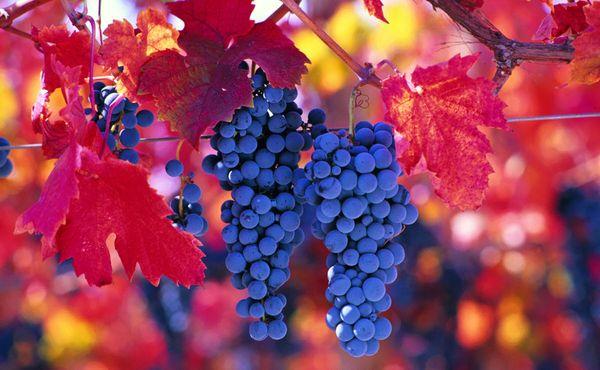
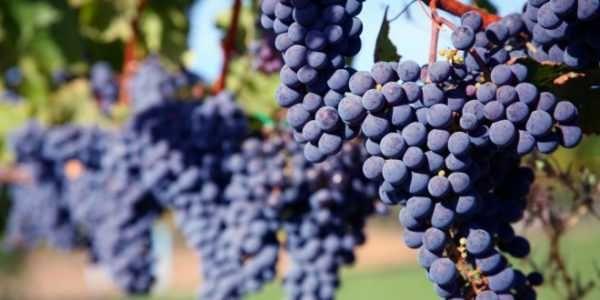
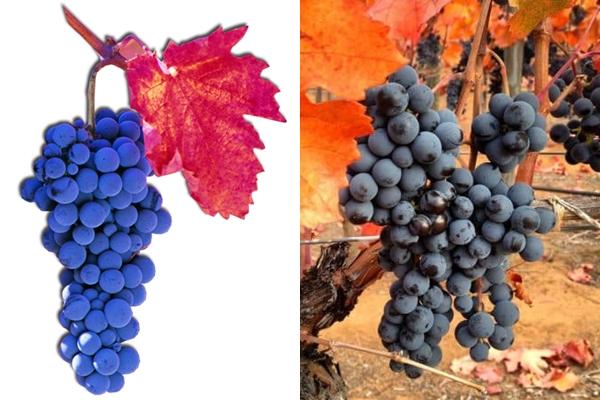
When fully ripe, the bunch weighs 800 grams and averages 30 cm in length. The grapes are dark blue to purple in color, with juicy, fleshy flesh. The berries have a crisp, pleasant nightshade flavor, with a herbal aroma at the end. The skin is thin and soft.
The quality of ripe fruit depends on pruning. Winegrowers who perform this procedure correctly and promptly will receive well-formed clusters and a large quantity of grapes.
Productivity
Growing grapes in open ground, you can get 17-21 kg of berries from a single bush. When planted in greenhouses, the yield is low. Increased yields can be achieved through proper pruning and fertilizing during the growing season.
To obtain a higher yield from a grape bush, artificial pollination must be performed after the initial natural pollination. This procedure, when combined with other care guidelines, will increase the weight of ripened fruit by 1.5 times.
Useful properties of berries
This variety is beneficial for people with blood disorders. Taking Carmenere can improve:
- condition of blood vessels, heart;
- general condition of the body.
It also promotes the production of collagen and elastin in the tissue area, which helps rejuvenate the body.
Tasting evaluation
High-quality Carménère wine is produced from the Carménère grape variety, grown in Chile's most fertile soils. The recipe and other tasting characteristics may vary based on the personal preferences of the producers.
The wine's visual presentation is a red color with various shades. The bouquet features vibrant fruity notes, often enriched with hints of spice and herbs. The taste is expressed by the delicate undertones of ripe grapes.
Due to the high tannin content, the wines have bright flavor aromas:
- black currant;
- plums;
- figs;
- prunes.
The aroma also features black and white pepper, anise, vanilla, cinnamon, and licorice. Vegetable notes include green bell pepper, herbs, lavender, and olives.
Among the mineral aromas are:
- smoked meats;
- wet ground;
- skin;
- tobacco;
- coffee.
Caloric content
Carménère is a high-calorie product: 67 kcal per 100 g. Due to its high calorie content, it should be included in the diet in moderation.
Children under 6 years of age are not given grapes.
Because it's high in calories, this variety is often used to make rosé and red wine. It's also used to make raisins, which are used in baked goods and confectionery.

Acidity
The bush's acidity is 6-8 grams per liter. The berries contain a higher sugar concentration—around 23%. Everything depends on the region where the variety is grown and how the plant is watered and fertilized.
If the growing conditions for the grape bush are suitable, the taste of the variety improves, developing berry and chocolate flavors and a rich aroma.
Characteristics of the variety
Carmenere is a technical variety and has the following characteristics.
Winter hardiness and drought tolerance
Carménère has a moderate frost resistance, so careful preparation for winter is essential. If the grapes freeze, they can die. They can withstand temperatures down to -22°C.
The crop should be planted in sunny areas of the garden with good, fertile soil. Black soil is the best location.
Bushes should be planted in a north-south direction to ensure proper lighting of the area.
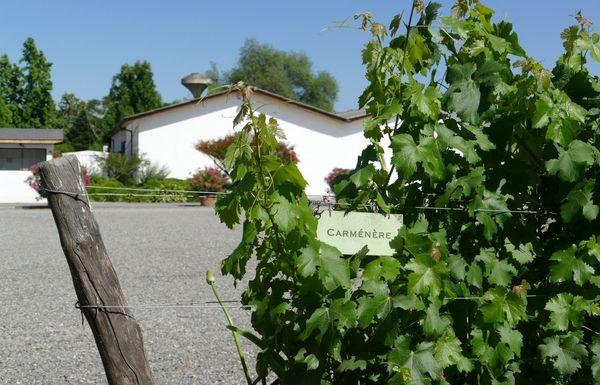
Carménère is a heat-loving plant. When planted in cold climates, its growth is slow and yields are small. It is recommended to cultivate the plant in the south. Furthermore, strong winds can cause the flowers and ovaries to fall off. For this reason, Carménère should be planted in gardens protected from the wind, near the walls of the estate, or near a fence.
Take a look Also
Immunity to diseases and parasites
The grape is resistant to most diseases, including powdery mildew. The variety is susceptible only to fungal diseases, such as gray mold, which develop due to high humidity in the vineyard. More dangerous pests for the berries are birds, which peck at the fruit.
Landing
It is important to pay attention to the timing of planting, site preparation, and the correct placement of the seedling in the ground.
Deadlines
Grape seedlings can be planted at any time, as soon as warm weather arrives. Vines are planted in early spring or fall. However, many gardeners believe spring is a more favorable time. Planting in spring will give the seedlings time to establish roots before fall, allowing them to overwinter.
Preparing the site and planting hole
Grapes are planted in an open, sunny spot. The longer the vine spends in the sun, the better the yield.
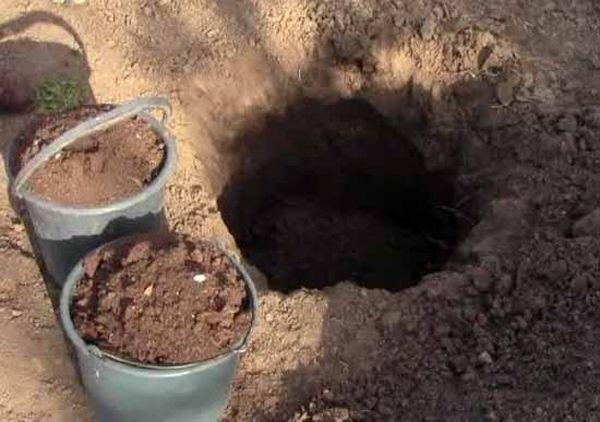
How to prepare the site:
- Dig a hole at least 80 cm deep. Fill the bottom of the hole with drainage material: pebbles, broken brick, small crushed stone.
- The hole is filled with a mixture that includes crushed stone, crushed rock, and fertile soil.
- To deacidify the soil, dolomite flour (1 tbsp) or eggshells are added.
- The last layer is black soil.
- The hole is filled gradually, each layer requiring abundant watering.
At the end, you need to drive 2 metal pipes nearby and tie wire to them.
Planting vines
After preparing the hole, the seedling is planted:
- A small hole is dug in the ground.
- The seedling is placed and the roots are straightened.
- Covered with earth.
- The soil is lightly compacted around the stem.
Afterwards, the vine is watered generously with warm water.
Specifics of caring for Carmenere
Without proper care, it's impossible to get a good grape harvest. This includes watering, fertilizing, and pruning.
Watering and fertilizing
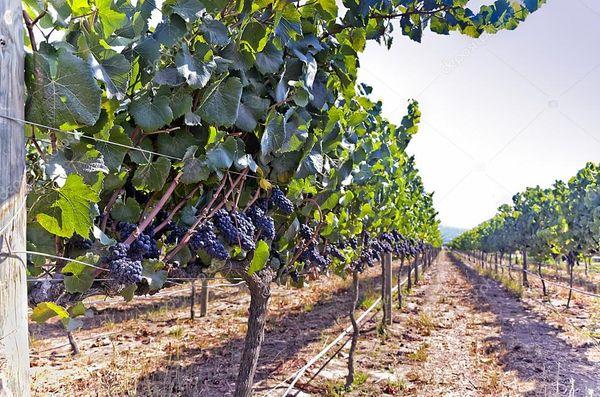
Watering grapes Fertilizing and top dressing are done at the same time. During the first half of the season, the plant requires nitrogen fertilization. In the second half of the season, after the grape harvest, the soil is fertilized with phosphorus and potassium. Manure, ash, and cow manure are also added. Top dressing with mineral and organic fertilizers is done once a month.
The first irrigation of vineyards occurs during bud formation, followed by a subsequent irrigation during flowering. A third irrigation is necessary after the harvest. The final irrigation is before the onset of frost.
Young seedlings are watered every 3 days for the first 14 days after planting using warm water, after which the intensity is reduced to 1-2 times every 30 days.
Loosening and mulching the soil
Weeding of grape bushes is carried out as needed. The soil beneath the bushes is also loosened immediately.
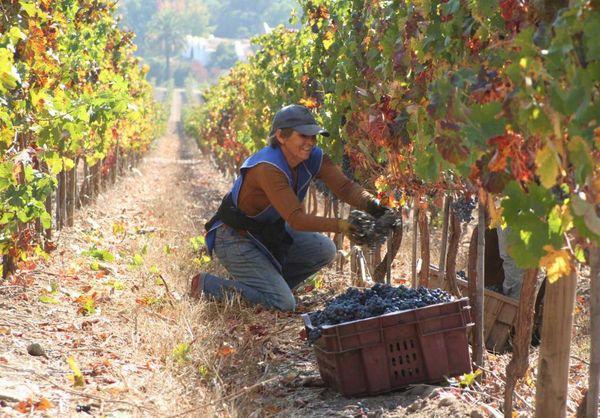
Mulching the soil is done by placing a layer of mulch around the plant's trunk. This can be:
- milled wood;
- mown grass;
- peat.
Trimming
The grape variety requires pruning twice a year:
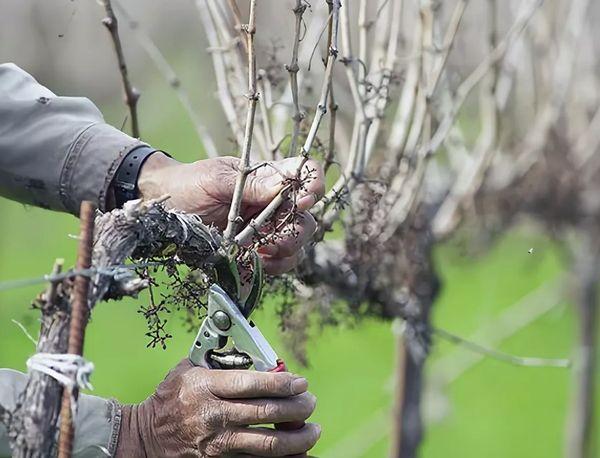
- Pruning takes place in the fall, when the grapes have been harvested – broken branches and dried shoots are cut off.
- Spring pruning is carried out in early March. Six to eight shoots on each fruiting shoot are shortened. This should be done after the onset of warm weather, with temperatures not falling below -3 degrees Celsius.
It's important to ensure there are 10-15 buds per shoot. To ensure optimal light exposure for the grape clusters, shoots are spaced: one bunch is left per shoot.
Pruning the Carmenere variety is essential, as failure to do so can lead to a decrease in yield, and the bush will begin to break off due to the weight of very large branches.
Disease prevention
Prevention involves regular inspection of grape bushes to detect diseases in a timely manner and take appropriate measures.
For prevention, the plant is sprayed:
- fungicides;
- Bordeaux mixture;
- Karbofos;
- with a solution of laundry soap.
Spraying grapes Carmenere is carried out 3-4 times a month during the growing season.
If parasites or fungal diseases are detected on neighboring grape bushes, spring treatment of the plants is required.
Shelter for the winter
When winter temperatures in cold regions drop to -20 degrees Celsius, grape bushes need to be covered. Tarpaulins and other insulating materials are used for this purpose.
Reviews from winegrowers
Gardeners have a relatively positive opinion of the Carménère grape. However, careful selection of the planting site is recommended by winegrowers.
Grape vines must be well protected from the wind, otherwise the yield will be low. Gardeners consider the lack of side shoots a plus for caring for the plant. Among the plant's advantages, they note the beautiful autumn leaf colors.
Winegrowers advise against planting this variety in gardens with unstable climates. The vines will grow in such regions, but the yield will be poor.
Gardeners praise the taste of Carmenere grapes; the flavor is very similar to rich nightshade.
Related posts:
 Description of 30 grape varieties for Siberia, planting and care for beginners
 How to grow grapes in the Moscow region in open ground without a greenhouse
 Description of 30 varieties and types of Muscat grapes, planting, cultivation and care
 Description of the Julian grape variety, planting and care instructions
 Beginner's Guide to Growing Grapes in Open Ground in Central Russia
 The ripening time of grape vines by variety, how to speed up the process, and what to treat the plant with
 Description of the Krasotka grape variety, planting and care technology
 The best grape varieties for growing in the Urals, planting and care rules in summer