
- Description and Features
- History of selection
- Properties
- Caloric content
- Benefits and harms
- Acidity
- Characteristics of the bush
- Vine
- Bunch
- Productivity
- Taste qualities
- Winter hardiness and drought resistance
- Disease resistance
- Applications of berries
- How to plant correctly
- Recommendations for choosing deadlines
- Site selection and preparation
- How to select and prepare planting material
- Planting diagram
- Care instructions
- Watering
- Top dressing
- Mulching
- Garter
- Disease prevention
- Protection from birds and pests
- Preparing for winter
- Pruning and shaping
- Methods of reproduction
- Advantages and disadvantages of the variety
- Harvesting and storage
- Tips and advice from experienced gardeners
The Tason grape variety is widely popular for its pleasant flavor and aroma. It is most often used to make dessert and table wines. Below is information on the history of its selection, advantages and disadvantages, planting, care, and propagation methods for Tason grapes in garden plots. Experienced gardeners will provide recommendations for growing the variety.
Description and Features
The Tason grape is a vigorous plant. It ripens early, harvesting in late July or early August. It is highly sought after for its sweet flavor with aromas of strawberry, rose, Muscat, and honey. It is used to make dessert and table wines.
History of selection
The Tason grape is a product of domestic selection. It was developed at the Ya. Potapenko Novocherkassk All-Russian Research Institute of Viticulture and Winemaking. Two varieties formed the basis: the table Muscat Italia, which imparts a vibrant flavor, and the Zoreva hybrid, from which Tason inherited its early fruiting characteristics.
Properties
Grapes contain a large number of useful substances, due to which they have a positive effect on the human body.
Elite wines are made from the sweet, aromatic berries. Thanks to their dense skins, the grapes store and transport well.
Caloric content
Tason grapes are sweet and aromatic. This variety has a moderate nutritional value: 65 kcal per 100 grams.
Benefits and harms
Tason grapes have the following positive qualities:
- improves the functioning of the gastrointestinal tract;
- has a calming effect on the nervous system;
- saponins found in the berry block cholesterol;
- helps to improve immunity;
- improves mental activity.
Grapes can be harmful to people suffering from high stomach acidity, as well as diabetics.
 Since grapes are a heavy food, even healthy people should not consume them in large quantities.
Acidity
The sugar content in grapes is high – 20-21%. The acidity is 5-6%. The balance of sugar and acid ensures a harmonious flavor of the grapes.
Characteristics of the bush
The flowers of this variety are bisexual and do not require additional pollination. The berries ripen in 100-110 days. They have a dense skin, juicy flesh, and small seeds.
Vine
Tason grape vines are vigorous, with robust shoots and root systems. The vines ripen along their entire length. The leaves are deeply dissected, with five lobes.
Take a look Also

Bunch
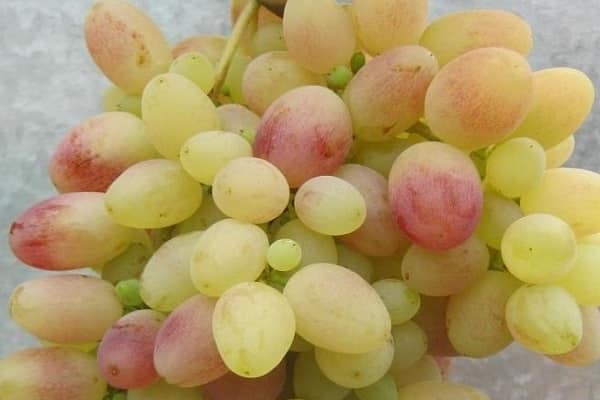
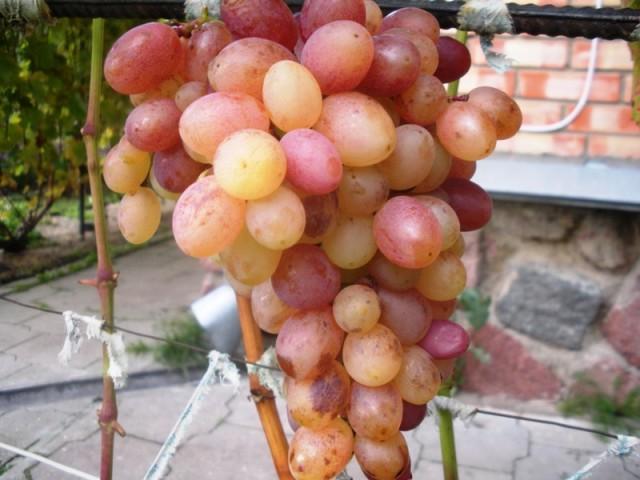
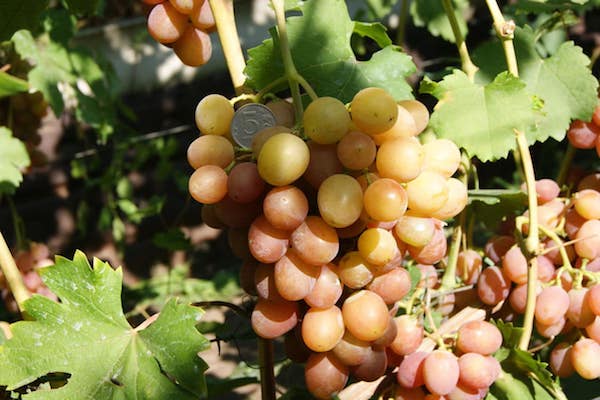
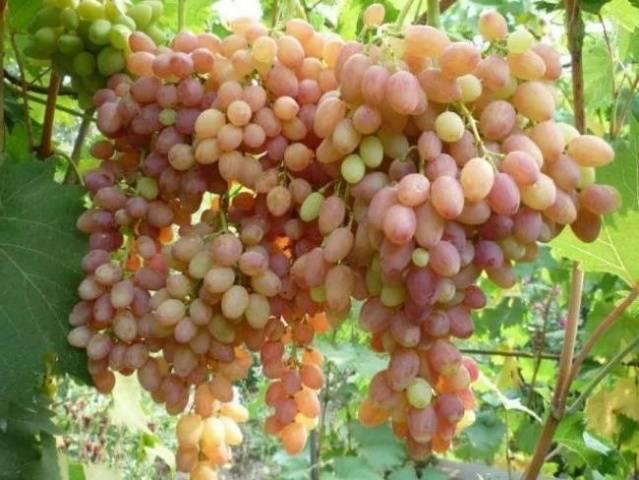
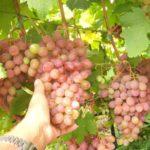
The berries of this variety are oblong and golden-pink in color. As they ripen, they acquire a rich amber hue. The berries are gathered in cone-shaped clusters weighing 500-800 grams, with some reaching 1200 grams. The fruits mature to a uniform size, weighing 6-7 grams.
Productivity
In the southern regions, grape harvesting begins on July 20th. The grape clusters ripen uniformly. A gardener can harvest 35-40 kilograms of aromatic berries from a single vine. They cling tightly to the clusters and do not fall off even when overripe.
Taste qualities
Consumers have recognized the Tason grape as one of the most delicious varieties of this crop, giving it a score of 8.2 out of 10. Its sweet, muscat-like flavor makes it a popular choice among winemakers.
Winter hardiness and drought resistance
The variety is characterized as moderately frost-resistant. It can withstand winter temperatures of -22-24°C. Therefore, if severe frosts are expected, especially during a winter with little snow, the bushes should be covered. The Tason grape is not resistant to prolonged dry weather.
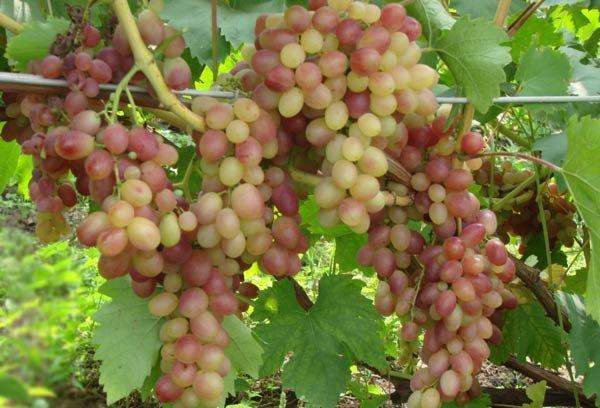 Please note: Since this variety has moderate frost resistance, plants in northern regions require winter protection.
Disease resistance
The variety has good immunity and rarely gets sick. If care is improper, it can be susceptible to powdery mildew, downy mildew, and oidium. By using preventative sprays, gardeners can prevent many diseases.
Applications of berries
Tason grapes can be eaten fresh or used to make dessert wine. They can also be juiced, dried into raisins, or frozen. Harvested grape clusters can be stored for up to 3 months.

How to plant correctly
Seedlings are purchased from nurseries located in the same climate zone as the garden plot.
Recommendations for choosing deadlines
Experienced gardeners recommend planting grapes in the spring. Depending on the region and climate, this may be late March or April. Spring planting allows the grapes to take root and develop well before frost sets in.
Site selection and preparation
The area planted for Tason grapes should receive ample sunlight. If the sun is insufficient, the berries will be pale green and not as sweet and aromatic as the specifications suggest.
The bushes grow powerfully, so there is no need to plant other plants close to them.
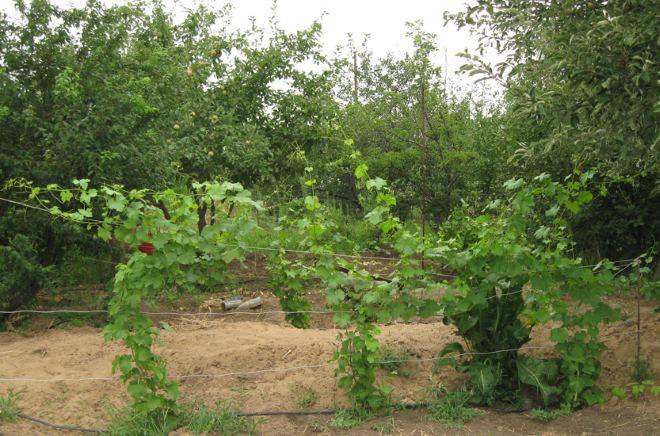
Six months before planting, the selected site is cleared, dug over, and fertilized. At this time, you can dig holes 80 centimeters deep and 1 meter in diameter. Fill them with compost, rotted manure, and mineral fertilizer.
How to select and prepare planting material
When choosing a seedling, look for healthy vines and a well-developed root system. The bushes should be free of scratches, dents, or new growths. If the roots have dried out slightly during transportation, soak the seedling in a bucket of warm water for several hours.
Planting diagram
Leave at least 1.5 meters between bushes. The distance between rows is 2-3 meters. Planting the Tason grape is as follows:
- a pre-dug hole is filled with a third of fertile soil;
- a seedling is placed in the middle;
- 2-3 buckets of water are poured into the hole;
- the remaining substrate is added.
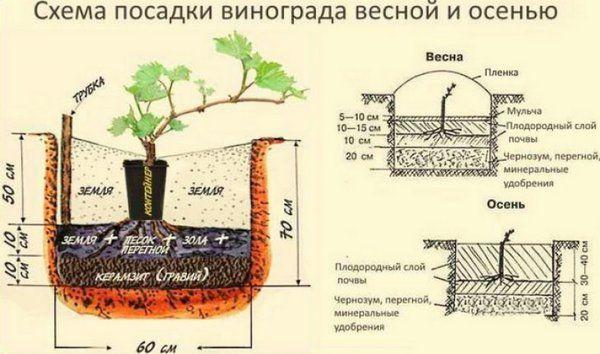
The soil is compacted slightly, and the tree trunk circle is covered with mulch.
Care instructions
To ensure a high-quality grape harvest, the bushes need to be cared for: watered, fertilized, pruned, and sprayed to prevent diseases and pests.
Watering
Grapevines don't tolerate drought well, so they need to be watered at least four times per season if there's no rainfall. However, it's important to be aware that standing water at the grapevine roots can lead to fungus. Avoid overwatering the soil during the ripening period, as this can cause the grapes to crack.
Top dressing
In spring, nitrogen fertilizers are applied to promote abundant green growth. During flowering, superphosphate is used to promote berry formation. Potassium chloride is used to ripen the bunches and prepare the plantings for winter.
Mulching
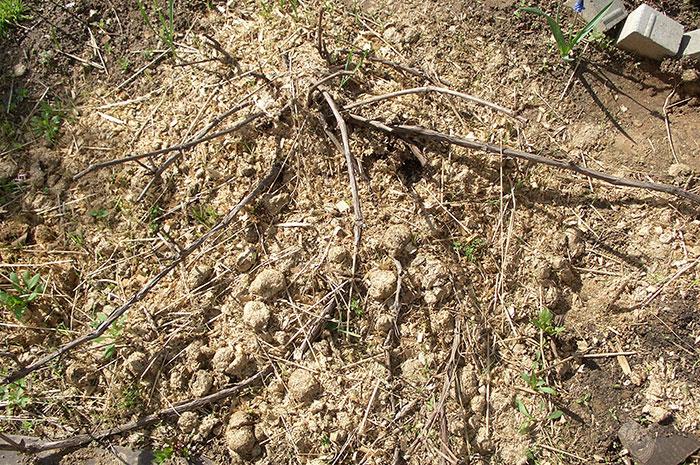
To retain soil moisture, the tree trunk area is covered with mulch. Straw, dried grass, or sawdust are used for this purpose. As the mulch decomposes, it will provide additional nutrition for the roots. It is applied in a layer 5-6 centimeters thick.
Garter
As soon as the first shoots appear, they are tied to a stake or wire. This is necessary to prevent them from breaking in sudden and strong gusts of wind. Staking the vines improves ventilation within the bush and allows sunlight to reach the clusters.
Disease prevention
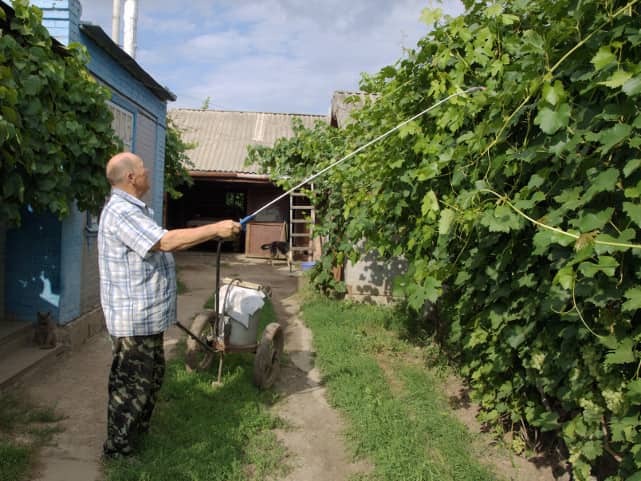
To protect grapes from diseases and pests, preventative spraying with insecticides and fungicides is necessary. To prevent powdery mildew from developing on leaves, treat them with copper-containing preparations. Volatile carbon disulfide also helps repel insects. In the fall, remove leaves from the trunk circle, as these can harbor fungal spores.

Protection from birds and pests
During the ripening period, grapes attract wasps and birds. Sticky traps are used to control them. If the grape supports are wooden, holes in them, where insects like to nest, should be sealed. Fine-mesh bags can also be used to repel wasps and birds.
Preparing for winter
To ensure that the Tason grapes successfully survive the winter, the following measures must be taken:
- After harvesting, treat the vines and the trunk circle with a 5% solution of copper or iron sulfate.
- Remove the shoots from the trellis and bend them to the ground, laying them on a bed of straw and spruce branches.
- Cover them from above with spruce branches and non-woven material.
 Important! Do not use plastic film as a cover, otherwise the vines may rot.
Pruning and shaping
Throughout the season, the bushes are inspected, and diseased, dry, and frost-damaged branches are pruned. To prevent the bushes from becoming dense and to ensure sufficient sunlight for the clusters, excess, weak shoots are removed. Five to eight buds are left on each stem. For these same purposes, the bushes are trained in various ways, such as fan-shaped, standard, cordon-shaped, sleeve-shaped, and bowl-shaped.
Take a look Also
Methods of reproduction
There are several ways to propagate the Tason grape variety: layering, cuttings, and grafting. To propagate the variety by layering, you need to plant it in the spring, care for it throughout the season until the roots and shoots appear, then dig it up and replant.

To propagate grapes by cuttings, the cuttings are taken in the fall, stored in a basement over the winter, and then planted in a container in the spring, then in the ground. To propagate grapes by grafting, the cutting is cut into a wedge shape and inserted into a cleft in the selected rootstock. The graft is then tightly wrapped.
Advantages and disadvantages of the variety
The advantages of this variety include the following characteristics:
- early ripening;
- good shelf life and transportability;
- rich taste and aroma of berries;
- high yield;
- absence of small berries in the bunch;
- self-fertility.
The disadvantages of the Tason grape include an average level of frost resistance and susceptibility of fruits to wasp damage.
Harvesting and storage
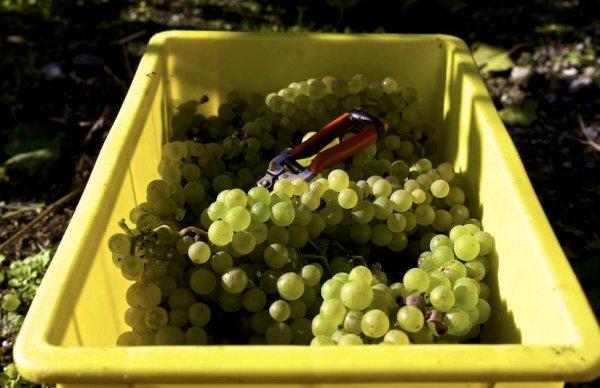
Harvesting begins, depending on the growing zone, in late July or early August. The berries are stored in the refrigerator for a month.
If the bunches are hung in a cool, dark place, the shelf life increases to 3 months.
Tips and advice from experienced gardeners
Farmers offer the following tips and recommendations for growing Tason grapes:
- Conduct preventative treatments in spring and autumn with copper or iron-containing preparations.
- Cut back weak shoots for the winter, leaving well-ripened ones at least 1 centimeter thick.
- Since Tason has average frost resistance, remove the shoots from the trellis in late autumn, pin them to the ground, and cover them with spruce branches.
- Do not plant grapes in places where water runs off roofs.
- Apply nitrogen fertilizers only in spring.
Throughout the season, Tason grapes require constant care: watering, fertilizing, mulching, pruning, pest and disease protection, and winter shelter. Despite this, the variety is popular with gardeners for its abundant harvest of healthy, tasty, and aromatic berries.
Related posts:
 Description of 30 grape varieties for Siberia, planting and care for beginners
 Description of 30 varieties and types of Muscat grapes, planting, cultivation and care
 The ripening time of grape vines by variety, how to speed up the process, and what to treat the plant with
 Description and cultivation techniques for the Muromets grape variety
 Description and characteristics of the Syrah grape variety, where it grows
 Description of the Galbena Nou grape variety, planting and care rules
 Beginner's Guide to Growing Grapes in Open Ground in Central Russia
 Description and characteristics of the Rumba grape variety, cultivation technology