
- The Importance of Water for a Vineyard
- When planting seedlings
- Features of watering by timing
- During the flowering period
- During the ripening of berries
- After harvesting
- Methods
- Surface
- Drainage system (underground)
- Drip method
- How often should you water in open ground?
- In the spring
- In summer
- In the fall
- Signs of moisture deficiency and excess
- Helpful Tips
How should grapes be watered in summer—during flowering and fruit ripening? The plant requires ample watering during bud break and as the fruit grows and ripens. During flowering and a month before harvest, the vineyard should not be watered. Irrigation techniques and methods are selected based on the climate and soil conditions. Throughout the growing season, the soil is moistened with warm water.
The Importance of Water for a Vineyard
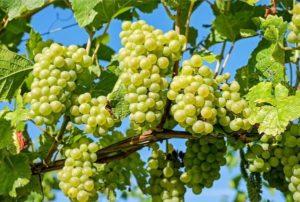
Grapes need water for normal growth and development. The plant absorbs nutrients from the soil only in liquid form. Water delivers nutrients and participates in photosynthesis. In hot weather, moisture evaporates, removing heat from the leaves.
If there's not enough water, the plant's internal temperature can spike, causing overheating. In hot summers, water is needed not only for nutrition but also to cool the grapes.
However, overwatering is undesirable for vineyards. Watering should be done only as needed. Each grape variety requires a specific watering schedule. Some grapes love moisture, while others don't tolerate excess water. Irrigation is influenced by the local climate, growing season, and soil type.
For example, sandy soil drains more quickly, while clay soil, on the contrary, retains moisture. In hot, arid regions, vineyards need to be watered more frequently than those growing in cool, humid climates. During flowering, the plant requires more moisture than during grape ripening. Overwatering ripening grapes can cause cracking.
Grape varieties that love a humid environment:
- Isabel;
- Lydia;
- Saperavi;
- Neretinsky.
When planting seedlings
Grapes are planted in spring or fall. During planting, the seedlings are watered generously with sun-warmed rainwater. A watering can can be used for watering. Pour 10-20 liters of water (1-2 buckets) into each hole.
If the grapevine was planted in the spring, it should be watered weekly for the first year. A bucket of water should be poured under the bush. During prolonged rainfall, the young sapling should be protected from overwatering. You can dig trenches to drain excess moisture away from the bush or cover the plant with plastic.
When planted in the fall, water the seedling for the first two weeks (one bucket per week). Then, stop watering. Autumn rainfall should be sufficient to nourish the plant. If the weather is too dry, you can water the grapes weekly until November. Before the onset of frost, perform a moisture-replenishing watering and protect the seedling by covering it with a thick layer of soil.
Features of watering by timing
Grapevine moisture requirements vary depending on the growing season and the time of year. A vineyard that has survived a dry winter requires a moisture boost. Pour 8-10 buckets of warm water under each vine in early spring.
If the winter was snowy, then after the snow melts there is no need to water the vineyard.
During the flowering period
If spring rainfall is infrequent, the vineyard will require additional watering before flowering. Insufficient moisture will cause flowers to fall off, which will, in turn, impact the yield. Pour 2-3 buckets of water under each vine once a week. The amount of water needed depends on the grape variety and soil conditions. Watering should be stopped during flowering to prevent flower drop.

During the ripening of berries
In June, after flowering has finished, the vineyard is watered only during dry spells. Three to four buckets of water are poured under each vine once a week. When the berries begin to ripen, that is, change color to the color typical for the variety, watering should be reduced. During this period, the vines are watered once every two weeks. If the vines are watered too frequently, the berries will become waterlogged or crack. If there is insufficient moisture, the berries will grow small and sour. In August, the vineyard is generally not watered at all.
After harvesting
Even after harvest, the vineyard needs to be watered at least every two weeks. Artificial irrigation is used if the autumn is dry and hot. During rainy weather, the plants do not need watering.
Two weeks before the onset of frost, the vineyard is watered generously. This moisture-replenishing irrigation helps the plant survive the winter without dying. 10-12 buckets of water are needed per square meter.
Methods
There are several ways to water grapes. The main goal of any of them is to provide the roots with moisture. The choice of method depends on the regional climate and soil type. In hot weather, with high evaporation, it is advisable to use subsurface irrigation. If this method is too costly, you can mulch the soil. Mulch helps reduce moisture loss by half.
Surface
This is the simplest and most accessible method of watering. However, it's best to water grapes in grooves, holes, and furrows dug around the vine. These can be permanent or temporary. After watering, the temporary furrows are covered with soil. Simply pouring water over the top will only moisten the soil to a depth of 30-50 centimeters, and in hot weather, the moisture will quickly evaporate.
When watering above ground, avoid allowing moisture to come into contact with the leaves. Water coming into contact with the plant creates ideal conditions for fungal growth. During the ripening period, moisture coming into contact with the fruit can cause cracking.
Surface irrigation has several drawbacks. Firstly, it requires a lot of water to moisten the soil. Secondly, the moist soil around the tree trunk creates ideal conditions for fungal infections. Furthermore, this type of irrigation causes the soil to become saline over time.
Drainage system (underground)
Surface irrigation cools the soil, and grapes prefer warm soil. It's better to direct water into the deeper layers of the soil. Subsurface irrigation reduces water consumption by half. There are two methods for subsurface irrigation: vertical and horizontal.
With the vertical method, vertical holes are dug in the soil 0.5 meters from the bush using a shovel or hand. Pipes are inserted into the holes. For underground irrigation, porous or perforated pipes with a diameter of 6 centimeters and a length of 50 centimeters are used. A layer of crushed stone is placed at the bottom of the hole and along the sides of the pipes to prevent clogging. Water is supplied to these pipes through a hose or a watering can.
With the horizontal method, a perforated pipe is installed horizontally at a depth of 0.5 meters. Water is supplied through hoses. The pipes should be located 50 centimeters from the bush.
They are wrapped in fine mesh or lined with stones to prevent soil from getting into the holes. However, horizontal pipes often become clogged, and checking their condition regularly is not easy. Even properly organized watering can lead to the bush not receiving a drop of water at all.
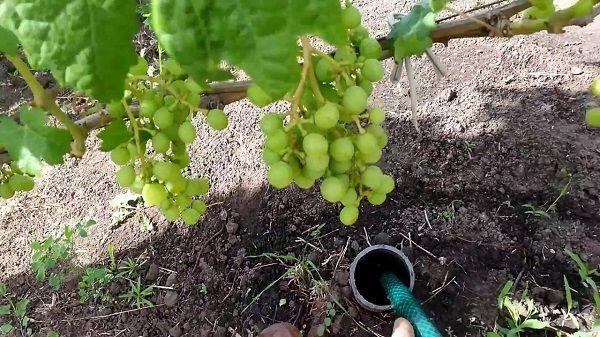
The underground method is recommended for loamy and clay soils, where water poorly permeates the roots and quickly evaporates from the surface. This method has several advantages: it reduces water consumption, reduces the risk of fungal diseases, and allows the roots to grow deeper, increasing the plant's frost resistance.
Drip method
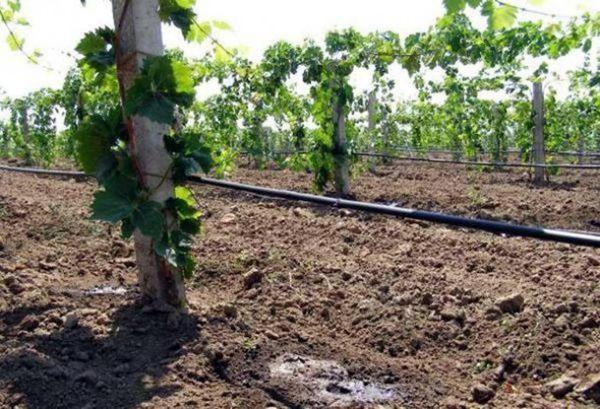
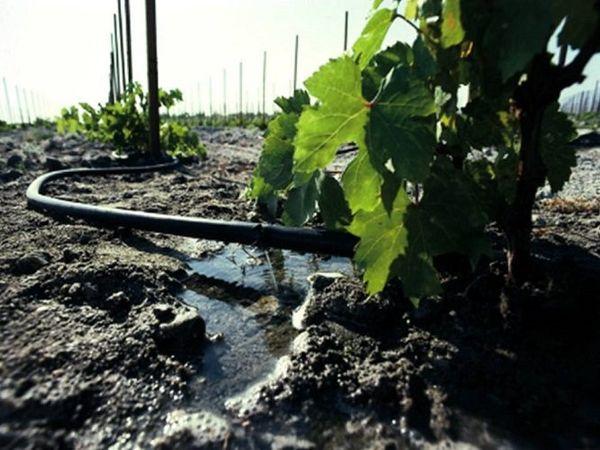
Drip irrigation is used for sandy and sandy loam soils, where water quickly infiltrates to the roots. This method requires running a hose with perforations to each plant. Water is then gravity-fed from a tank located at a certain height to each plant. This method requires time for installation and additional funds for hoses, faucets, water collection tanks, and a pump.
How often should you water in open ground?
To grow grapes, they need 600 liters of water over the entire growing season, equivalent to 60 buckets per plant. In the central part of the world, the plant receives almost all of its required moisture from precipitation. In the southern latitudes, the climate is more arid. The plant receives half of this amount from precipitation. During droughts, grapes need artificial irrigation.
In the spring
The moisture accumulated during autumn rains and the melting of winter snows only lasts until flowering. Spring growth of leaves and shoots requires 20 percent of the accumulated water. During flower bloom, grapes consume only 5 percent of the moisture.
 If there is enough water in the soil, the pruned bush “cries”. In this case, the grapes are watered as late as possible, somewhere around the beginning of berry growth, when they are the size of peas. If the fall and winter were dry, and no water flows from the cuts of the pruned grape vine, then the plant needs watering before flowering. Pour 3-4 buckets of water under the vine every week.
In summer
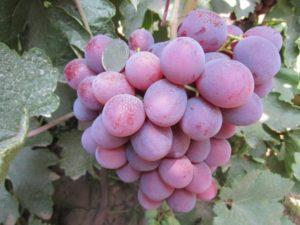
In early summer, pour 3-4 buckets of water under each bush once a week. During the ripening period, it is recommended to water the grapes infrequently but deeply. Watering should only be done during dry and hot weather. If you pour a bucket of water under a bush, the moisture will quickly evaporate. Watering should be infrequent but deep. In July, water each plant twice a month with 6-8 buckets of water.
It's important to remember that the berries soften a month before ripening. Many varieties can crack due to excess moisture as they ripen. In August, stop watering the vineyard. If the weather is rainy towards the end of summer, you should create drainage channels, mulch the soil with plastic film, or cover the vine with plastic sheeting.
In the fall
During the fall, water the plant sparingly, as rain is common during this period. During dry periods, 3-4 buckets of water can be poured under the bush every two weeks. The final watering is done before frost sets in and the vineyard is covered. Pour 10-12 buckets of water under the bush. Abundant moisture supply is necessary to protect the soil from freezing in winter. The vineyard should enter winter with moist soil. If the autumn is wet, pre-frost moisture replenishment is not necessary.
Signs of moisture deficiency and excess
Symptoms of water deficiency:
- drying out of leaf edges;
- the appearance of yellow spots on leaf blades;
- change in leaf color (yellowing);
- straightening of shoot crowns;
- the lower leaves fall off, then the upper ones;
- drying of shoot tips;
- The berries become smaller, some wrinkle and dry out.
What happens when there is excess moisture:
- vigorous growth of shoots;
- formation of a large number of stepsons;
- slow ripening of fruits;
- watery taste of berries;
- At low temperatures the roots rot.
Helpful Tips
Notes from experienced winegrowers:
- In total, the vineyard is watered no more than 10 times during the season.
- The young plant needs weekly watering.
- An adult bush is watered once every 2 weeks.
- Watering plants can be combined with fertilizing.
- To reduce soil moisture loss, it needs to be mulched.
- The frequency of artificial watering depends on the amount of precipitation.
- In rainy weather, the plant is not watered.
- In case of prolonged drought, the vineyard is watered generously every week.
- Do not use tap water or very cold water for watering.
- Grapes are not watered during the flowering period and a month before the fruits ripen.
Related posts:
 Description of 30 grape varieties for Siberia, planting and care for beginners
 The best ways and methods for properly covering grapes for the winter
 Description of 30 varieties and types of Muscat grapes, planting, cultivation and care
 The best grape varieties for growing in the Urals, planting and care rules in summer
 Description and cultivation techniques for the Muromets grape variety
 Beginner's Guide to Growing Grapes in Open Ground in Central Russia
 How to plant grapes step by step, with a description of the process and care
 The best eggplant varieties for growing in a polycarbonate greenhouse: planting and care