
- Description and Features
- History of selection
- Main characteristics
- Description of the bush
- Description of bunches and berries
- Productivity
- Transportability
- Frost and drought resistance
- Disease resistance
- Taste qualities
- Applications of berries
- Pros and cons of the variety
- How to plant correctly
- Recommendations for choosing deadlines
- How to choose and prepare a site
- How to select and prepare planting material
- Planting diagram
- Care instructions
- Watering mode
- Top dressing
- Trimming
- Autumn
- Spring
- Mulching
- Preventive spraying
- Protection from birds and pests
- Preparing for winter
- Methods of reproduction
- Diseases and pests
- Harvesting and storage
- Tips from experienced gardeners
Breeders are constantly working to develop new varieties of table grapes. They differ in ripening time, as well as in fruit size, flavor, and color. The Pamyati Negrulya grape is a mid-late variety with large, dark purple berries. Below is information on the main characteristics, features, advantages, and disadvantages of this variety, as well as on growing grapes in your garden.
Description and Features
The grapevines are vigorous and tall, reaching up to 3 meters in length. The vines mature throughout the season. Pamyati Negrulya is a mid-late ripening grape variety, with berries that are sweet and edible even before they are fully colored. Harvesting begins in early autumn.
History of selection
"Memory of Negrul" is the work of Moldovan breeders. In 1975, they crossed the Coarnă Neagră variety with the Pierrell hybrid, resulting in a plant resistant to frost and fungal diseases, with good flavor and high yields. The variety was registered in Moldova only in 2015.
Additional information. Alexander Mikhailovich Negrul was a Soviet geneticist and breeder who dedicated his entire life to grape cultivation. Moldovan breeders named the grape variety they developed after him.
Main characteristics
The variety is capable of self-pollination, so the grape bush can be grown even if planted as a single specimen in a plot.
Description of the bush
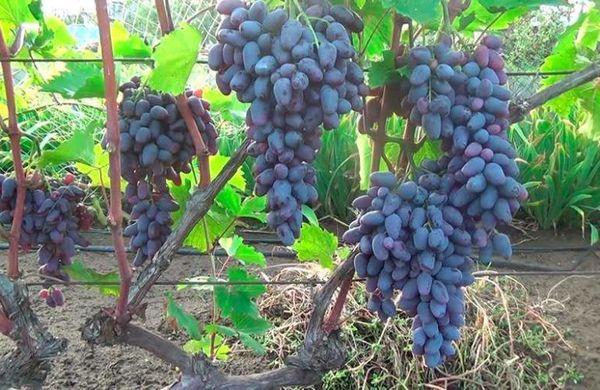
During the season, the grapevine shoots ripen well, with three-quarters of them bearing fruit. The leaves are five-lobed, light green, and pubescent on the underside. Both male and female flowers are produced, so the grapevines do not require pollinators.
Description of bunches and berries
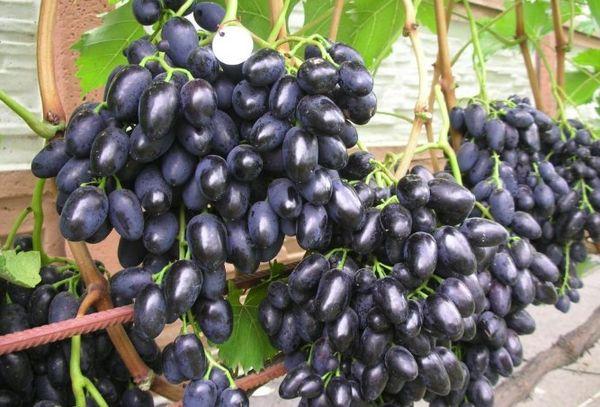
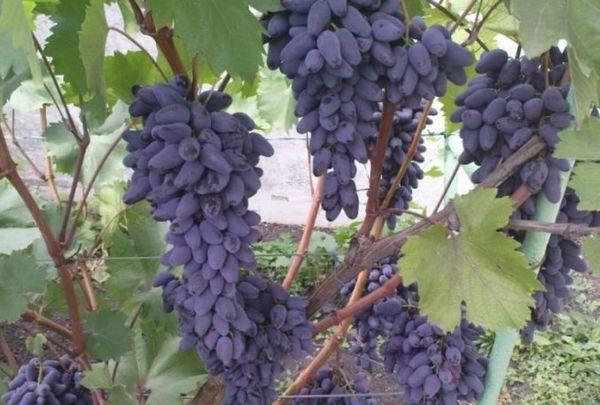
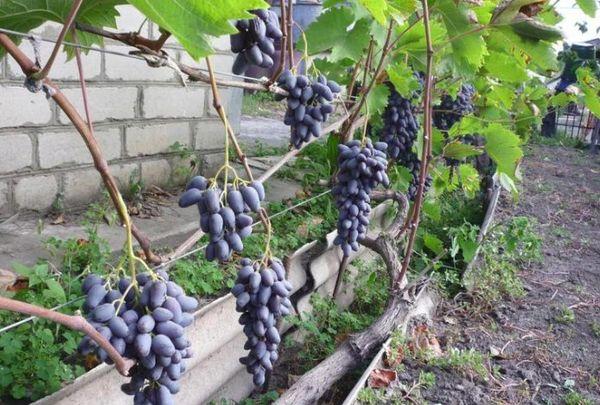
The clusters are cylindrical, weighing between 400 and 700 grams, with some specimens reaching 1.5 kilograms. The berries are oblong and ovoid, weighing 5 to 9 grams. The fruit is a rich, dark purple with a dense, waxy coating. The pulp contains 2 to 3 seeds.
Productivity
Under favorable weather conditions and proper care, 180-200 centners of berries are harvested per hectare. The first few clusters form in the second year after planting. This is a mid-season variety, harvested in September.
Transportability
The berries have thick skins, making them easy to transport over long distances. At the same time, the bunches retain their marketable appearance, as the fruit is not prone to shattering.
Take a look Also

Frost and drought resistance
The variety can withstand temperatures down to -25°C. When growing grapes in cold climates, winter shelter is required. The vines tolerate lack of water well.
Disease resistance
The Pamyati Negrulya grape variety is characterized as resistant to the main diseases of the crop: mildew, oidium, and gray mold. To increase resistance, it is recommended to spray the vines with copper-containing preparations.
Taste qualities
The berries contain 16-18% sugar. Their flavor is sweet and tart, without being overly garish. Tasters rated their taste at 8.5 out of 10.
Applications of berries
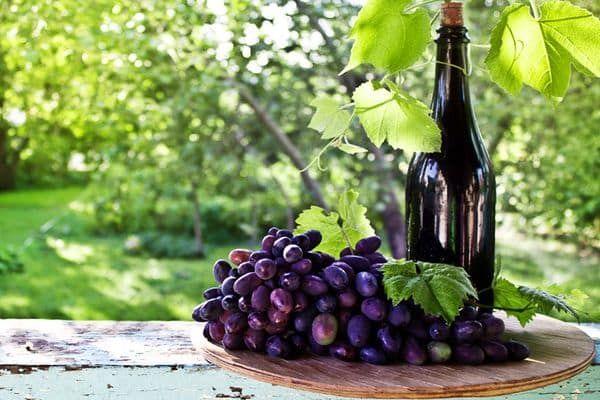
Pamyati Negrulya is a table grape variety, the berries of which are primarily used fresh. The grapes store well, so they can be enjoyed even in early winter. The fruits can also be used to make compotes, juices, and wine.
Pros and cons of the variety
The positive qualities include the following varietal characteristics:
- self-fertility;
- good survival rate of vines;
- strong immunity;
- portability of transportation;
- good shelf life;
- versatility of berries.
The negative qualities of the Pamyati Negrulya grape include the need to regulate the load on the vine, as well as the need for the bushes to be covered at temperatures below -25 °C.
How to plant correctly
The quality of the harvest depends not only on care but also on the correct selection of planting material and the right location. Don't buy seedlings from random people: there's no guarantee you'll plant a varietal.
Recommendations for choosing deadlines
Planting can be done in either spring or fall. In the former case, the vines are planted in April or May, depending on the climate zone. When planting in the fall, keep in mind that the vines need time to establish themselves before frost.
How to choose and prepare a site
For planting grape vines, choose a sunny, wind-free site. The soil should not be heavy or wet. Planting grapes in areas where the groundwater level is close to the surface is dangerous.
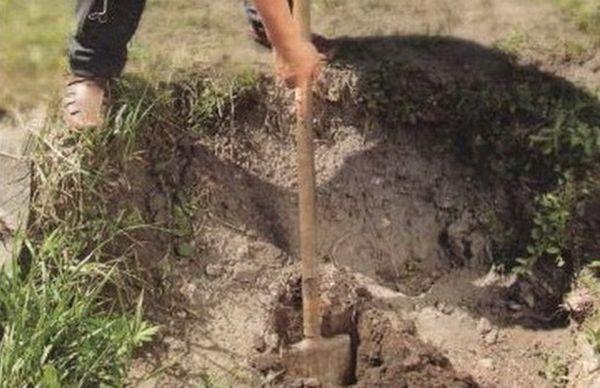
Prepare the plot for planting the "Memory of Negrul" grapes in advance: remove weeds and roots, and till the soil. It's best to dig the hole two weeks before planting. Line the bottom with drainage, then add a layer of soil mixed with mineral fertilizer.
Important! To prevent root burn, apply mineral fertilizers to a layer of soil that does not come into contact with the plant's root system.
How to select and prepare planting material
The bushes selected for planting should have mature shoots with firmly attached buds and well-developed roots. Three to four buds are left on the cuttings. The root system of the seedlings is placed in a bucket of water for 24 hours and lightly trimmed before planting.
Planting diagram
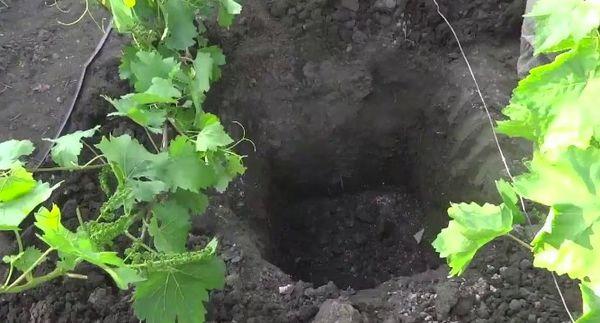
Dig a hole 80 centimeters deep and 1 meter in diameter. If you plan to plant two or more bushes, leave 1.5 meters between them. The distance between rows is 3 meters. Planting is carried out in the pre-dug hole as follows:
- a seedling is placed in the middle of the hole;
- a peg is driven in nearby;
- the grape bush is covered with soil;
- compacted, watered.
The tree trunk circle is covered with mulching material.
Care instructions
To grow grape clusters with large, delicious berries, you need to properly care for your grape bushes: fertilize, prune side shoots, and spray them preventatively. Young seedlings require winter protection.
Watering mode
The "Memory of Negrul" grape variety is drought-resistant. Only young seedlings require frequent watering. If rainfall is low during the season, soil moisture is needed in early spring, during bud break, and after flowering. In the fall, watering is performed to replenish moisture.
Top dressing
In the third year after planting, organic matter is added to the soil. This is necessary for the development of bacteria in the soil, which have a beneficial effect on the growth of the vines. Grapes also require potassium and phosphorus, which are added according to the instructions on the packaging. Before applying fertilizer, the soil is thoroughly watered.
Trimming
Bush training is essential for a high-quality harvest. If the plant has too many branches, they will drain the energy needed to produce large clusters. Pruning is carried out in spring and fall.
Autumn
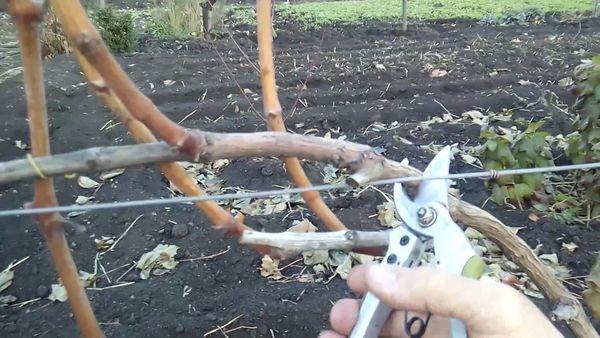
In the fall, a preliminary pruning is carried out: shoots are not pruned back too much, as it is unknown how they will survive the winter. Unripe vines, as well as dry, diseased branches, are removed. Autumn pruning is carried out after the leaves have fallen.
Spring
In the spring, the final pruning is performed. Dead shoots are removed, and the remaining vines are shortened to 7-8 buds. This procedure is performed with disinfected tools.
Mulching
To prevent moisture from evaporating from the soil, the tree trunk area is mulched with various materials, such as straw, dry grass, or compost. This also makes it more difficult for weeds, which can carry diseases and pests, to grow out from under the cover.
Preventive spraying
Before pathogenic microorganisms and harmful insects appear on the grapes, preventative spraying is necessary. Fungicides and insecticides are used for this purpose. The bushes are sprayed several times throughout the season, excluding the flowering period.
Protection from birds and pests
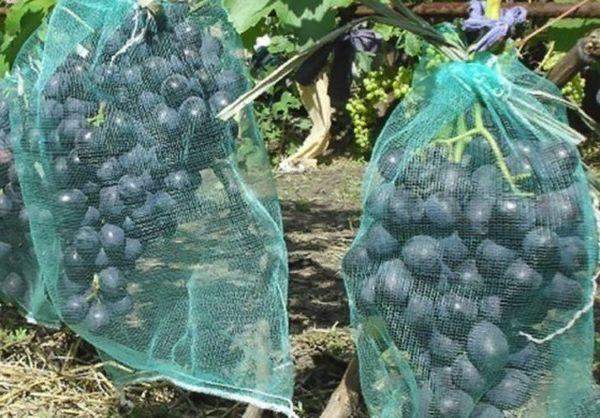
You can repel feathered pests by installing scarecrows, rustling film, and rattles. This will distract wasps from a bottle of grapes with jam diluted with waterIn addition, each brush is wrapped in a special fine-mesh net.
Preparing for winter
In the fall, leaves are removed from the trunk circle and immature vines are pruned. After this, a moisture-recharging irrigation is administered to help the vines survive the winter frosts. After a few days of slightly below-freezing temperatures, the vines are covered with branches, spruce branches, and agrofibre.
Please note: Only breathable material is used as covering material.
Methods of reproduction
There are several ways to propagate the Pamyati Negrulya grape variety. This can be done by spring or summer cuttings; the shoots are bent to the ground, from which young vines grow. Another commonly used propagation method is grafting a varietal cutting onto a healthy rootstock.
Diseases and pests
The Pamyati Negrulya grape variety has a strong immune system and typically develops diseases when growing in unfavorable conditions. For example, if there is excessive rainfall during the season, the seedlings may become infected with rot. To prevent this, the vines should be sprayed with fungicides as a preventative measure. A 5% carbolineum solution is used against the insect pest phylloxera.
Harvesting and storage
Grape clusters are cut with sharp scissors in dry weather; if dew is present on the berries, they will not keep for long. The harvest is stored in well-ventilated boxes with low sides. One common method of preserving the fruit is hanging the bunches on hooks. The grapes are inspected at least once a week, and rotten berries are removed if necessary.
Tips from experienced gardeners
For over forty years, Pamyati Negrulya has been cultivated in garden plots. During this time, they have accumulated a wealth of experience in growing grapes and are ready to share it with beginning farmers. Here are some tips from experienced winegrowers on planting and caring for the plants:
- Purchase varietal bushes only from sellers who have been in the market for a long time.
- Take into account the grapes' requirements for heat and plant them in a well-lit area.
- Choose a planting site on an elevated area, especially if the groundwater in the garden area is close to the soil surface.
- A month before harvesting the berries, stop watering completely, otherwise the berries will be watery and tasteless.
- Remove excess bunches from the vine, which can cause the berries to become smaller.
- Carry out preventive spraying with antifungal preparations, starting in early spring.
The Pamyati Negrulya grape is a high-yielding, mid-late ripening variety. It is easy to grow, disease-resistant, and produces excellent-tasting fruit. However, to achieve these qualities, the vines require proper care.
Related posts:
 Description of 30 grape varieties for Siberia, planting and care for beginners
 How to grow grapes in the Moscow region in open ground without a greenhouse
 Description of the Julian grape variety, planting and care instructions
 The ripening time of grape vines by variety, how to speed up the process, and what to treat the plant with
 Description of 30 varieties and types of Muscat grapes, planting, cultivation and care
 Beginner's Guide to Growing Grapes in Open Ground in Central Russia
 Description of the Krasotka grape variety, planting and care technology
 Description of the Memory of the Teacher grape variety, planting and care features