
- History of selection
- Description and Features
- Characteristics of the variety
- Frost resistance
- Drought resistance
- Productivity and fruiting
- Applications of berries
- Disease resistance
- Pollinator varieties
- Mascot
- Laura
- Victoria
- Bashkir early
- Gunna
- Madeleine Angevin
- Pukhlyakovsky
- Chaush
- Moldovan Black
- Advantages and disadvantages of the variety
- How to plant correctly
- Recommendations for choosing deadlines
- Site selection and preparation
- Illumination
- Protection from drafts
- Groundwater
- Soil requirements
- Mutual arrangement of plants
- How to cook
- How to select and prepare planting material
- Planting diagram
- Care instructions
- Watering mode
- Top dressing
- Pruning and shaping
- First season
- Second
- Third
- Protection from birds and insects
- Preparing for winter
- Preventive spraying
- Methods of reproduction
- Cuttings
- Graft
- Layers
- Diseases and pests
- Oidium
- Mildew
- Anthracnose
- Bacteriosis
- Gray rot
- Harvesting and storage
- Tips and advice from experienced gardeners
Grapes are a sun- and heat-loving fruit crop, traditionally cultivated exclusively in regions with mild, continental climates. However, thanks to scientists and amateur breeders, grape varieties less demanding of weather and climate conditions have emerged. The Nizina grape variety has proven itself in temperate climates, earning it widespread popularity among gardeners and farmers.
History of selection
The emergence of the hybrid grape variety Nizina can be called a revolutionary event in Russian selection.
The new variety of berry crop was developed by amateur breeder Viktor Nikolaevich Kraynov, a well-known Russian winegrower, who crossed the Talisman variety and the Tomaisky grape using pollination.
In 1998, the breeder harvested the first hybrid crop, which was later named Nizina. After extensive testing, in 2015, the new hybrid variety was added to the state register of fruit crops, with a recommendation for cultivation in any climate zone of the country.
Description and Features
Nizina grapes are recognized as a table grape variety, a versatile fruit crop with early ripening berries. This fruit crop is characterized by high yields, large berries, and low maintenance.
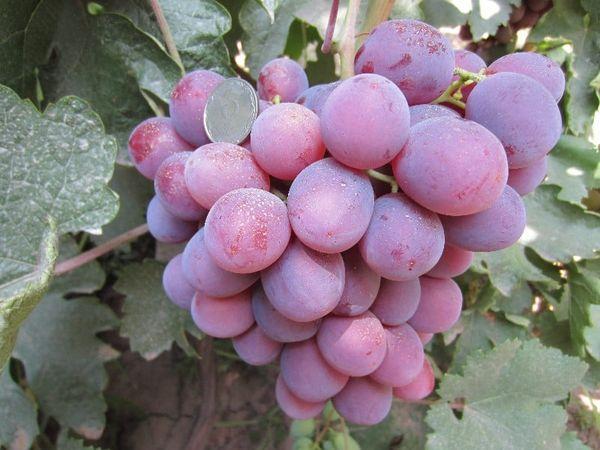
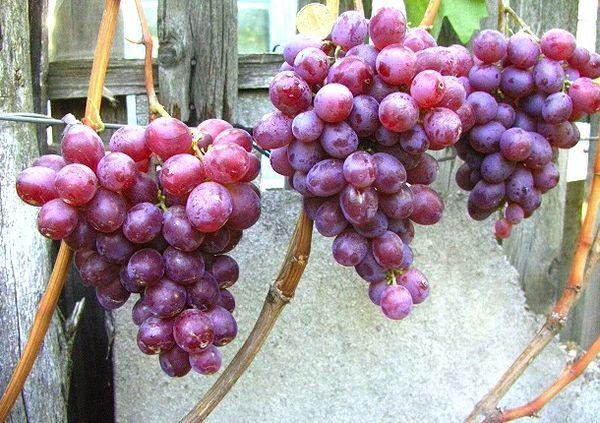
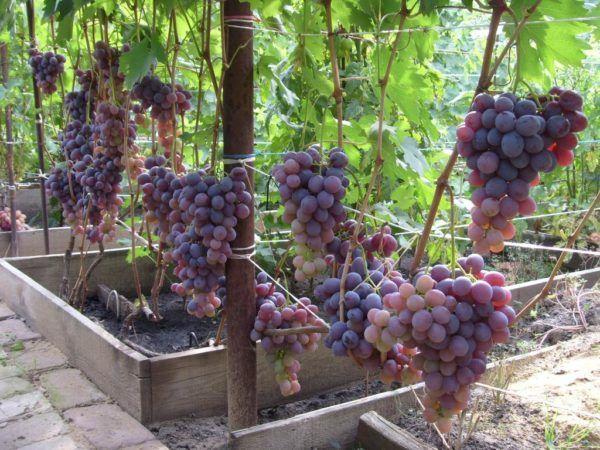
- The grape vines are tall, with spreading branches. During the growing season, a vine produces up to 25 fruiting shoots, producing clusters weighing from 700 g to 1.5 kg, with large berries.
- The leaf blades are typical for fruit crops, green in color with serrated edges.
- During flowering, clusters of small flowers of both sexes appear. However, to increase the fruiting of Nizina grapes, it is recommended to plant pollinators with similar flowering times.
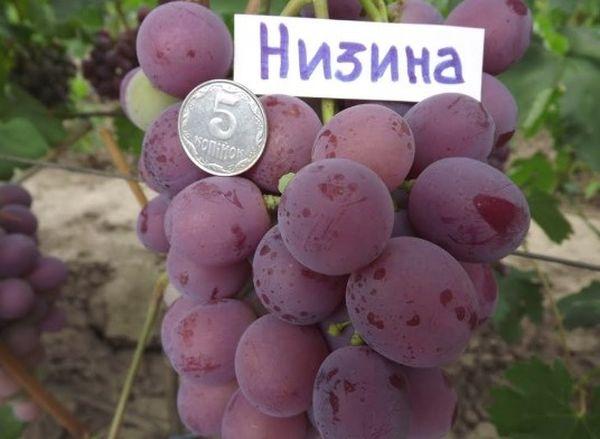
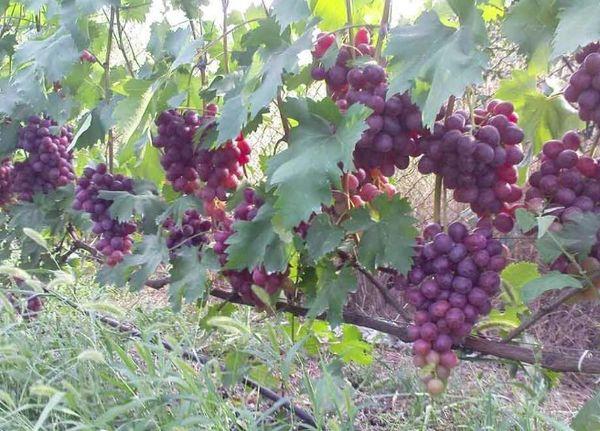
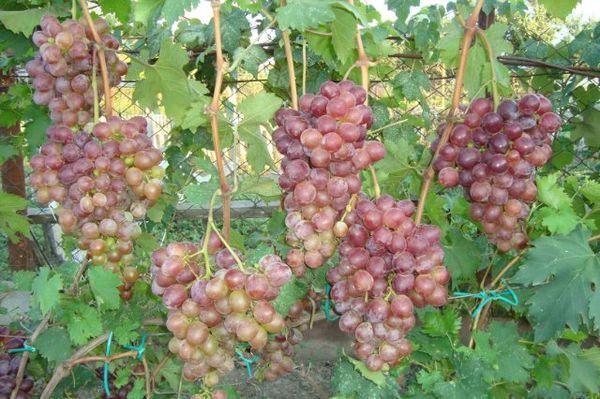
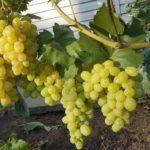
- The clusters are dense, cylindrical or cone-shaped, with more than 30 berries ripening on each, weighing from 10 to 12 g and dark purple in color.
- The fruits are juicy, with a fleshy, sweet pulp and a dense, thin skin. When ripe, the berries develop a cherry aftertaste.
- Sugar levels range from 16 to 18%, acids up to 9 g/l.
Tip! The longer the grapes remain on the vines, the sweeter the berries become.
Characteristics of the variety
When developing the hybrid berry crop Nizina, characteristics such as resistance to low temperatures, drought, fungal infections, and pests were taken into account.
Frost resistance
The fruit crop's resistance to winter frosts allows it to be grown even in northern regions.
Berry bushes easily tolerate frosts down to -23 degrees, and with reliable winter shelter down to -33-35 degrees.
Drought resistance
The variety reacts negatively to both prolonged droughts and soil with high moisture content.
Therefore, it is recommended to water fruit bushes no more than once every 30 days, and in case of rainy weather, irrigation work is abandoned altogether.
Productivity and fruiting
Nizina grapes begin bearing fruit in the third or fourth year of growth and development in the soil. Harvest timing depends on the weather conditions in the growing region. In hot, southern latitudes, berries are harvested beginning between August 10th and 15th. In temperate climates, the grapes ripen in the last week of September.
From the beginning of the flowering period until the berries are fully ripe, it takes from 125 to 130 days.
A single bush yields up to 20 kg of fruit. In industrial production, maximum yields reach 17 tons per hectare.
Important! In temperate climates, it's essential to monitor the load on fruiting shoots. Overloaded vines take longer to ripen, which is unacceptable given the weather conditions and can lead to crop loss.
Applications of berries
This table fruit variety is recommended for consumption both fresh and processed. The berries contain minerals, vitamins, amino acids, and antioxidants essential for proper body function and protection.
Juices, nectars, jams, preserves, and marmalades are made from grapes. Grapes are also used in baked goods, desserts, sauces, and dairy products.
Many experienced housewives freeze, preserve, and dry fruits, and make homemade wine and liqueurs.
Disease resistance
With proper care, the Nizina hybrid grape is rarely affected by fungal, viral diseases and pests.
The problem faced by winegrowers growing this fruit variety is its low resistance to powdery mildew.
Pollinator varieties
To increase fruiting, professional gardeners recommend planting other varieties of fruit crops near the Nizina.
Mascot
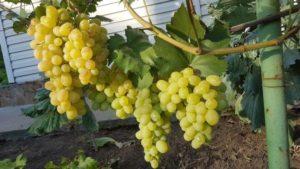
The Talisman table grape variety is considered early-ripening, ripening within 122 to 130 sunny days. The bushes are tall, with spreading branches and large clusters weighing up to 1 kg. The berries are large, juicy, and sweet, with a whitish-greenish hue.
This variety is relatively frost-resistant, easily surviving winter temperatures down to -23°C (-23°F), and is rarely affected by fungi, viruses, or pests. The plant is not self-pollinating.
Laura
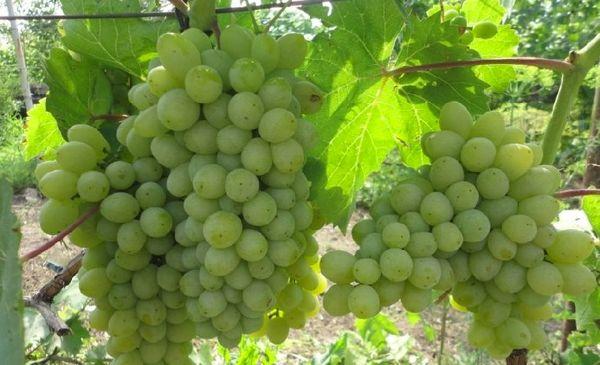
The variety was developed and bred by Ukrainian breeders. Ripening periods of Laura grapes 110 to 115 days. Large, cone-shaped clusters weighing up to 2.5 kg. The berries are elongated, whitish-greenish in color, with firm, juicy flesh and a sweet flavor. Neighbors with similar flowering times are necessary for fruiting.
Victoria
A table grape variety with a ripening period of 115-120 days. Compact bushes with large clusters weighing up to 700 g and berries ranging from 6 to 8 g in size, red-raspberry in color. The fruits are sweet and juicy with firm flesh and a muscat aroma. A mature bush can support up to 30 fruit buds.
The variety is resistant to low temperatures and fungal infections.
Fruit crops require pollinators.
Bashkir early
The variety is designed for cultivation in cold climates and therefore has increased resistance to low temperatures.
The clusters are small, but contain large, juicy, sweet berries of a dark purple hue.
The variety is not capable of self-pollination and requires the right neighbors.
Gunna
An early-ripening grape variety with a technical maturity period of 90 to 100 days. The clusters are small, cylindrical, and bear deep pink berries with a delicate Isabella aroma.
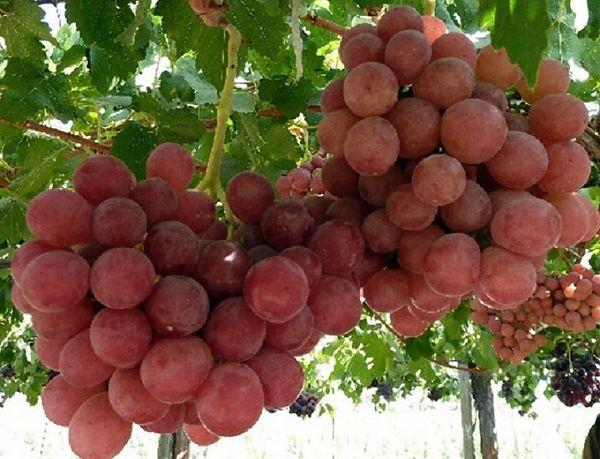
The variety is excellent for both fresh consumption and for making homemade wines.
Madeleine Angevin
Madeleine Angevin table grapes are distinguished by their early ripening period and varietal varieties.
The fruit crop tolerates low temperatures well, which allows the berry bush to be grown in different climatic zones.
Pukhlyakovsky
A fruit crop with early flowering and late ripening. The bushes are tall, with strong branches and shoots, bearing large, cluster-shaped inflorescences and berries.
Fruit ripening occurs 150-155 days after the beginning of flowering.
The fruits are juicy, sweet, and amber-colored. Up to 17 tons of ripe berries are produced per hectare.
Chaush
The Chaush grape variety is resistant to drought and heat and is recommended for cultivation in southern regions.
The variety is high-yielding; with proper care and pollinators, up to 20 tons of ripe berries can be obtained from 1 hectare of land.
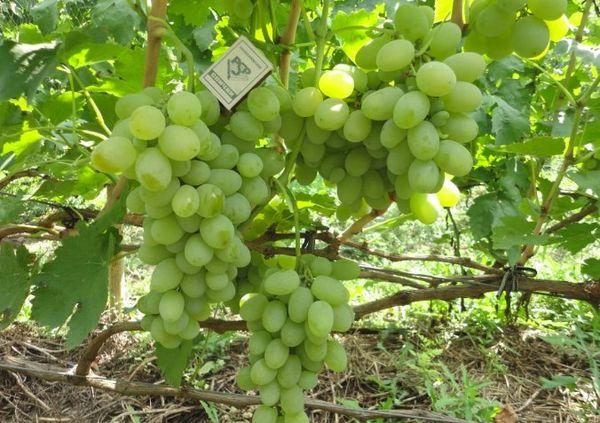
The grapes are large, greenish-yellowish in color, with juicy, dense pulp and a sweet and sour taste.
Low resistance to temperature changes and frost, often susceptible to fungal infections and pests.
Moldovan Black
A table berry variety ripening in up to 137 sunny days. The berries are large, purple in color, and have a pleasant sweet and sour flavor.
Up to 15 tons of ripe fruits are harvested from one hectare.
The variety is frost- and disease-resistant and tolerates short-term droughts well. It is not suitable for winemaking; it is recommended to consume fresh.
Advantages and disadvantages of the variety
Before planting Nizina in your garden, you need to clearly identify all the advantages and disadvantages of the variety.
Advantages:
- High yield rates.
- Resistance to low temperatures and recurrent frosts, which simplifies the cultivation of fruit crops in regions with different climatic conditions.
- Annual, stable fruiting.
- Large fruits with excellent taste.
- Rarely affected by fungi and viruses.
- Duration of storage and possibility of long-distance transportation of ripe berries.
Important! A distinctive feature of this variety is the full ripening of the fruiting vine.
Flaws:
- Prolonged drought and high temperatures increase the risk of disease development.
- The bush produces a large number of fruiting shoots, which increases the load on the vine and delays the ripening of the berries. Constant shoot management is necessary.
- Spreading plants require a large area to grow and develop, which makes them difficult to grow in small areas and gardens.
Otherwise, the Nizina grape variety is unpretentious, both in terms of care and in the process of planting seedlings.
How to plant correctly
To obtain a high-quality harvest, it is necessary to choose the right location and adhere to the planting dates for grape seedlings.
Recommendations for choosing deadlines
It's recommended to plant the Nizina grape variety in the spring, before the growing season begins. This will give the seedlings enough time to adapt to their new location and establish roots.
In autumn, planting is carried out in the first half of September so that the seedlings have time to take root and prepare for winter before the first frost.
Site selection and preparation
Any grape variety loves sunny areas and elevated areas, and the Nizina variety is no exception.
Illumination
For planting fruit crops, choose south-facing, well-lit areas. Even slight shade negatively impacts the ripening and flavor of the fruit.
Protection from drafts
Grape bushes do not tolerate gusty, cold winds and strong drafts, but at the same time the plantings must be ventilated.
In gardens and vegetable plots, buildings or fences can serve as protection from drafts.
Groundwater
Close proximity to groundwater is detrimental to grape vines. The plants' rhizomes quickly rot and die.
The maximum permissible groundwater level is not less than 2.5 m from the soil level.
Soil requirements
Preparing the soil for planting seedlings and planting holes requires special attention.
The Nizina grape variety prefers loose, fertile soils with low acid and moisture content.
Mutual arrangement of plants
Hybrid grape bushes are spreading, so the plants require a lot of space to grow and develop.
The distance between plantings should be 2.5 to 3 m, and between rows 3-4 m. The length of a row should not exceed 30-40 m.
How to cook
4-6 weeks before planting, prepare the soil.
- Organic matter and mineral fertilizers are added to the black soil.
- The area is thoroughly dug to a depth of 80 cm, debris, weeds, roots are removed, and the soil is loosened.
- Sandy soil is mixed with humus or manure, and a small amount of clay is added.
- For heavy clay soils, add compost and a little river sand.
- Drainage is placed in the planting holes, and prepared fertile soil mixture is poured on top.
The area is watered, and support pegs for the seedlings are driven into the holes.
How to select and prepare planting material
Varietal seedlings of hybrid grapes are purchased from specialized centers or nurseries.
- 2-3 year old plants tolerate transplantation best.
- The seedling is carefully examined for damage and disease.
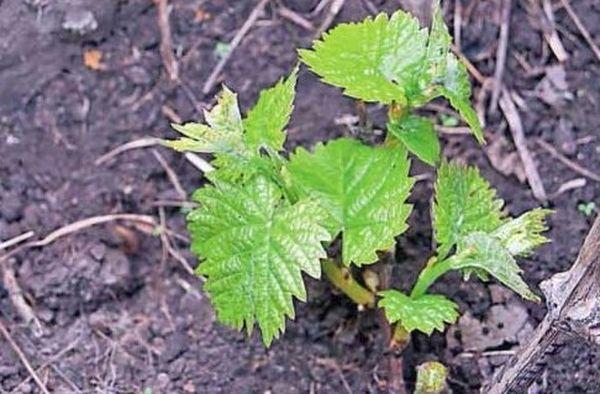
- The trunk of the plant is straight, uniform in color, and must have green leaves or buds.
- The roots are well developed and moisturized, without damage or signs of rot.
Before planting in open ground, seedlings are placed in a container with warm water and left for 10-15 hours.
Tip! To prevent diseases and pests, treat the rhizomes with a weak solution of potassium permanganate.
Planting diagram
Before planting, the roots of the grape seedlings are trimmed, leaving only the longest and healthiest branches.
- The plants are placed in the center of the hole.
- The roots are evenly distributed in the planting hole and covered with a fertile mixture.
- The soil is compacted and the seedling is tied to a support.
- The planted plant is watered generously.
- The tree trunk circle is mulched with humus or dry grass.
Important! Leaving gaps between the roots and the soil during planting encourages the development of fungal and viral infections and the spread of pests.
Care instructions
Caring for a vineyard is not complicated and includes watering, fertilizing, pruning, and preventative treatment of the bushes.
Watering mode
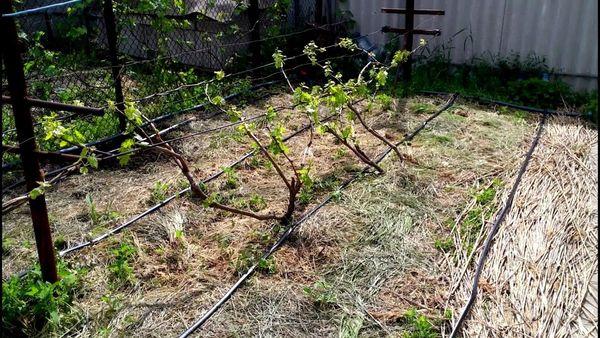
Irrigation is carried out taking into account the climatic characteristics of the area where the fruit crop is grown.
The basic watering schedule is once every 3-4 weeks. Up to 30 liters of water is poured under each bush.
During rainy periods, watering is stopped; during drought periods, it is increased.
Top dressing
Grape bushes expend a lot of energy and nutrients to ripen the berries, so the plants need additional nutrition.
- At the beginning of the growing season, grape bushes are fertilized with organic matter.
- During the flowering and fruit set phases, the berry crop lacks phosphorus and potassium.
- During the ripening period of berries, the bushes are also fed with potassium fertilizers.
The final fertilizing is done in late autumn. Humus and wood ash are added to the soil.
Pruning and shaping
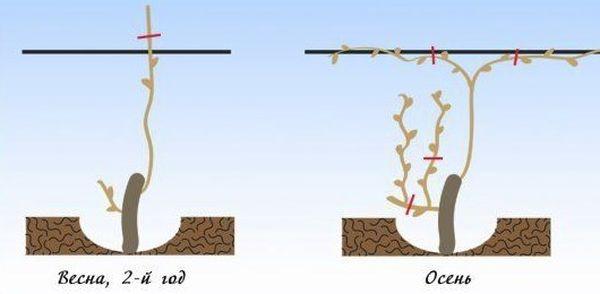
To increase yield and ensure proper growth, grape bushes undergo annual formative and sanitary pruning.
First season
During the first year of growth, the plant develops roots and green mass. All young shoots are removed, leaving 2-3 shoots.
Second
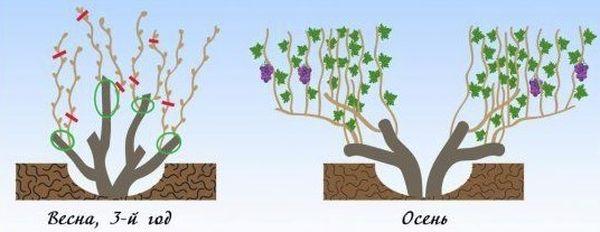
In the second year of growth, grape vines develop their main skeletal branches and shoots. To do this, two to four shoots are left on the vine, and the rest are pruned.
Third
At the beginning of spring, the main branches are shortened, the formed branches are tied to supporting structures, and the growing vine is secured vertically to a trellis.
Every autumn, sanitary pruning is carried out, removing broken, dry, damaged and old branches and shoots.
Protection from birds and insects
Bunches of beautiful and tasty grapes often attract birds and insects that can damage the crop.
To scare away birds, people set up scarecrows, tie shiny objects to them, or cover berries with fine mesh.
To prevent pests, fruit crops are sprayed with insecticides in early spring.
Preparing for winter
Before winter dormancy, the fruit crop is watered generously, fertilized, the trunk circle is loosened and mulched with a thick layer of humus.
In regions with harsh winters, grapevines are removed from their supports and bent to the ground. They are covered with plastic and spruce branches when snow falls, creating a high snowdrift.
Preventive spraying
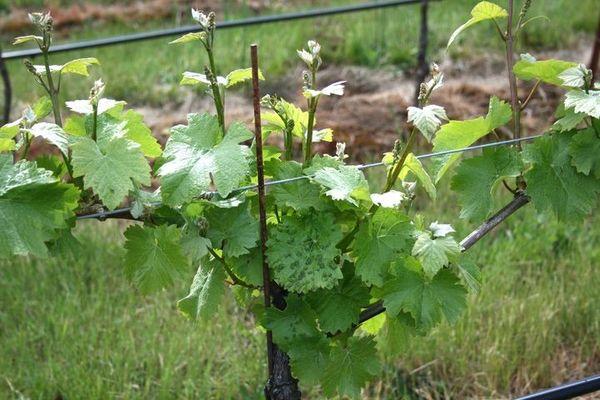
To avoid losing the berry harvest and strong, healthy grape bushes, preventative treatments of the bushes with chemical and biological preparations are carried out twice a year.
Methods of reproduction
To increase the number of grape bushes and rejuvenate plants, vegetative propagation methods are used.
Cuttings
In the spring, prune a strong shoot from a healthy, mature bush and divide it into equal parts. Each cutting should have buds or leaves.
The cutting is planted in a container with a fertile mixture, and at the beginning of autumn, the rooted seedling is transferred to open ground.
Graft
A young cutting is grafted onto an old grapevine. To do this, an incision is made in the bark of the mature plant's rootstock, and the cutting is secured with special tape.
Layers
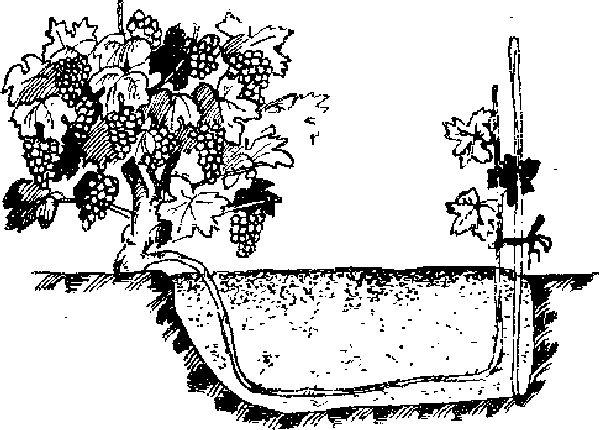
Propagation by layering is a quick and easy way to obtain new seedlings. In early summer, select a strong, lower shoot from a healthy bush and bend it toward the soil surface. Cover the layer with soil, leaving the upper part of the branch above the soil surface. In the fall, dig up the shoot and separate it from the mother bush, along with the roots that have formed. The seedling is then transplanted to a separate hole.
Diseases and pests
Unfavorable weather conditions and violation of care rules often lead to fungal and viral infections in vineyards.
Oidium
Powdery mildew poses a threat to the health of fruit crops and their harvest. The disease manifests itself as a grayish coating on shoots, leaves, ovaries, and berries.
The process of fruit rotting is accompanied by a rotten smell.
For treatment and prevention, sulfur-based preparations or fungicides are used.
Mildew
Downy mildew attacks the leaves, ovaries, and berries of grapes. It appears as yellow and brown spots. The inflorescences dry out, and the berries become small.
To combat fungus, preparations based on fungicides and copper are used.
Anthracnose
Fungal infection appears as brown spots on the leaves, which eventually turn into holes.
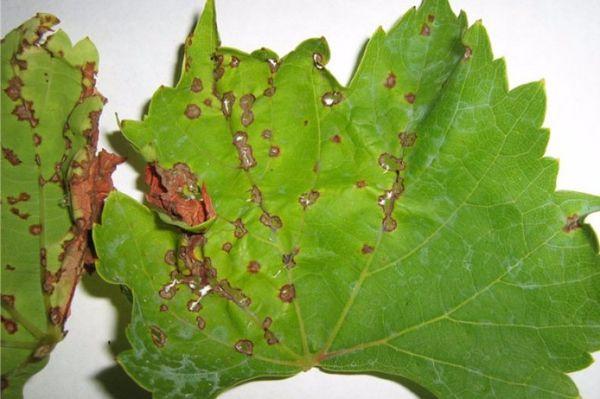
Plants are treated with Bordeaux mixture or fungicides.
Bacteriosis
The disease attacks grapevines through contaminated soil, plant damage, and pests. Bacterial rot manifests as dark spots on berries, leaves, and shoots.
Chemical and biological means of protection are used for treatment.
Gray rot
The disease manifests as a gray, fuzzy coating on berries, foliage, buds, and ovaries. For treatment and prevention, plants are sprayed with biological agents or fungicides.
Harvesting and storage
Harvest timing depends on the weather and climate conditions of the growing region.
In southern latitudes, Nizina grapes begin to be harvested in mid-August. In regions with moderate and cool climates, ripening occurs in mid-September.
Thanks to their thick skin, the berries have a long shelf life and easily withstand long-distance transportation without losing their marketable appearance. Ripe bunches of grapes can be stored in the refrigerator for up to 3 months.
Tips and advice from experienced gardeners
The main recommendations for gardeners and vegetable growers revolve around timely care and proper planting of seedlings. A key aspect of growing the Nizina grape variety is regulating the load on the fruiting shoots. The fruit tree produces too many buds, which delays ripening and reduces the size of the berries.
Related posts:
 Description of 30 grape varieties for Siberia, planting and care for beginners
 How to grow grapes in the Moscow region in open ground without a greenhouse
 The ripening time of grape vines by variety, how to speed up the process, and what to treat the plant with
 Description of 30 varieties and types of Muscat grapes, planting, cultivation and care
 Beginner's Guide to Growing Grapes in Open Ground in Central Russia
 Description and characteristics of the Rizamat grape variety, planting and care
 Description of the Julian grape variety, planting and care instructions
 Description and characteristics of the Laura grape variety, planting and care