
- Description and Features
- History of selection
- Main characteristics
- Description of the bush
- Description of bunches and berries
- Productivity
- Transportability
- Frost and drought resistance
- Disease resistance
- Taste qualities
- Applications of berries
- Pros and cons of the variety
- How to plant correctly
- Recommendations for choosing deadlines
- How to choose and prepare a site
- How to select and prepare planting material
- Planting diagram
- Care instructions
- Watering mode
- Top dressing
- Autumn
- Spring
- Summer
- Trimming
- Mulching
- Preventive spraying
- Protection from birds and pests
- Preparing for winter
- Garter
- Pinching out stepsons
- Methods of reproduction
- Diseases and pests
- Mildew
- Gray rot
- Phylloxera
- Oidium
- Harvesting and storage
- Tips from experienced gardeners
The Agat Donskoy grape is suitable for beginners: it's easy to care for, frost-resistant, and rarely susceptible to disease. The berries contain only 15% sugar, making them suitable for even diabetics. Below is information on growing Agat Donskoy grapes, their main characteristics, advantages and disadvantages, and propagation methods.
Description and Features
Agata Donskogo grape vines are distinguished not only by their abundant fruit production but also by their decorative qualities. They can be planted near arbors or used to grow vines over arches. This variety is easy to grow, boasting increased frost resistance and an early ripening period. The flowers are bisexual and self-pollinate, eliminating the need to plant pollinator varieties.
History of selection
The Agat Donskoy variety was developed by Russian breeders at the Novocherkassk Research Institute of Viticulture and Winemaking. They crossed the varieties Russkiy Ranniy, Dolores, and Zarya Severa. The hybrid was initially named Vityaz, later changed to Agat Donskoy because its ripe fruits resemble dark agates clustered in clusters. It is widely known by both names. It has become widespread not only in the south, but also in the Urals, Siberia, and the Far East.
Main characteristics
The Agat Donskoy grape isn't considered a particularly flavorful variety. It's more prized for its frost and drought resistance and good yield. It's a mid-early variety, with 115-120 days from the first buds to ripening.
Description of the bush
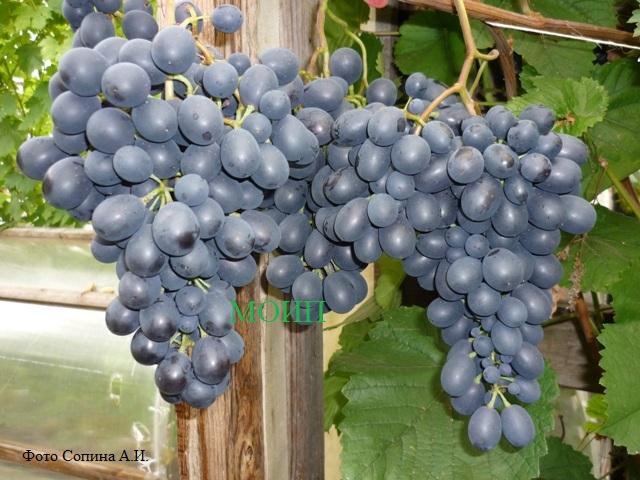
The grapevine shoots are large and vigorous, with five-lobed, dark green leaves. Annual growth reaches 2-3 meters. Young shoots are green, while mature shoots are brown. The root system is tiered, with the lower roots extending deep into the soil.
Description of bunches and berries
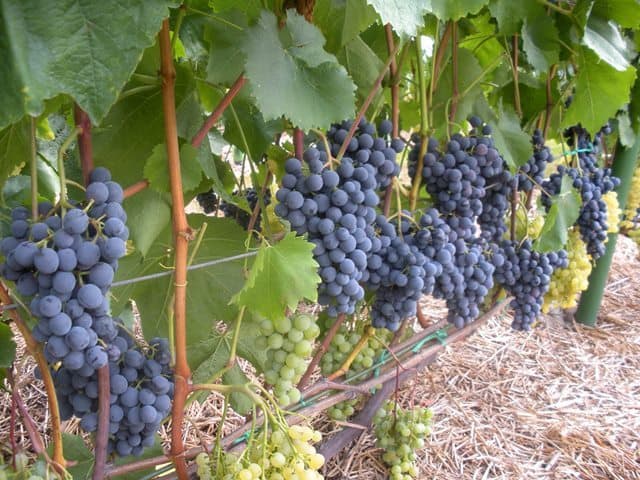
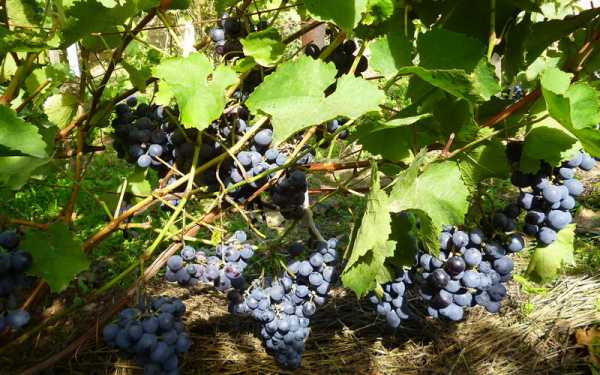
The clusters are cone-shaped, weighing up to 400-600 grams. The berries are round, dark purple, and weigh 4-6 grams. They are covered with a waxy coating. The berries are loosely arranged in the cluster, preventing them from being damaged.
Productivity
The first grape clusters appear on the vine in the third year after planting. A full harvest is reaped after 4-5 years. Up to 40-50 kilograms of berries can be harvested from an Agat Donskoy grape vine. Yield should be controlled, leaving no more than two clusters per shoot.
Transportability
Grape clusters can withstand long-distance transportation, but only if they are well packaged. This is possible thanks to their dense, yet not tough, easily edible skins. However, it's best to process the berries immediately after harvesting.
Frost and drought resistance
Agat Donskoy grape vines can tolerate winter temperatures down to -26°C without cover. Due to its frost resistance, the variety can be grown in cold climates. If a snowless, frosty winter is expected, the vines are removed from their supports and covered. The vines are also drought-resistant.
Disease resistance
The Agat Donskoy grape variety is rarely affected by mildew and gray mold. Minimal fungicide spraying is required to prevent these diseases. It can be affected by powdery mildew, which is effectively controlled by many antifungal agents.
Taste qualities
The grapes taste ordinary, without a distinct aroma. They contain 15% sugar. The fruits are soft, juicy, and balanced, containing amino acids beneficial for the body. Their taste is rated 3.7 out of 5.
Applications of berries
The berries are eaten fresh, used to make juices, compotes, and frozen. Wine is rarely made from them: it lacks a distinctive flavor and doesn't keep well. The berries contain seeds, which are not suitable for making raisins.

Pros and cons of the variety
The advantages of Agat Donskoy grapes include the following characteristics:
- drought resistance;
- frost resistance;
- good transportability;
- disease resistance;
- undemanding to maintenance conditions.
The disadvantages include the simplicity of taste and the lack of a pronounced aroma.
How to plant correctly
The Agat Donskoy grape is undemanding of soil conditions, but it does not tolerate excessively waterlogged soils. It is best planted on the south side of the plot, in a location with a low water table.
Recommendations for choosing deadlines
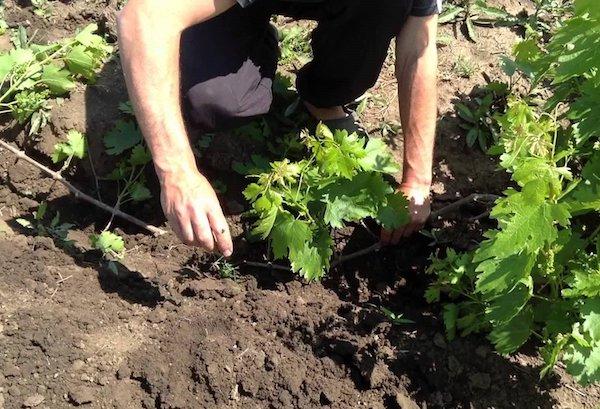
Winegrowers disagree on the best time to plant grapes. Some recommend planting in the fall because there's less scorching sun and the vines thrive during this period. Others suggest planting in the spring, before bud break, which allows the plants time to establish roots and develop well before frost sets in.
How to choose and prepare a site
The Agat Donskoy grape prefers to grow in a sunny location throughout the day. It should not be flooded after rains or during the spring snowmelt. The site is cleared, and a hole is dug two weeks before planting.
How to select and prepare planting material
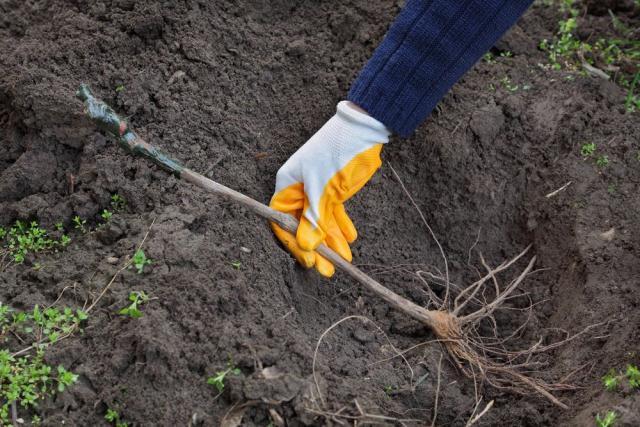
The quality of the grape harvest depends, not least, on the correct selection of seedlings. They should be free of dents, rot, and growths. Particular attention should be paid to the root system. The day before planting, the seedlings are placed in water to saturate the roots.
 Important! In the growing zone of the Agat Donskoy grape variety, groundwater should not be closer than 1.5 meters to the soil surface.
Planting diagram
The Agat Donskoy grapevines are vigorous, so they should be spaced at least 3 meters apart. The planting hole should be 60 centimeters deep and 70 centimeters in diameter. Planting should be done as follows:
- expanded clay or small stones are placed at the bottom of the ditch for drainage;
- the top third of the hole is filled with a mixture of fertile soil and humus;
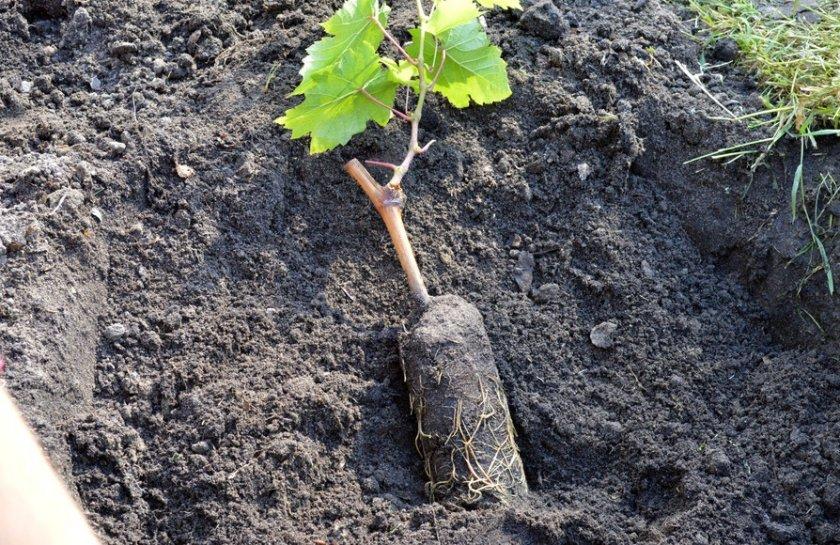
- a seedling is placed on the mound, the roots are straightened, and covered with soil;
- The tree trunk circle is compacted and watered generously.
The soil around the bushes is covered with mulch made from peat, humus or rotted manure.
Care instructions
Care includes watering, mulching, fertilizing, and pruning. To protect against diseases and pests, the bushes are sprayed with insecticides and fungicides several times per season.
Watering mode
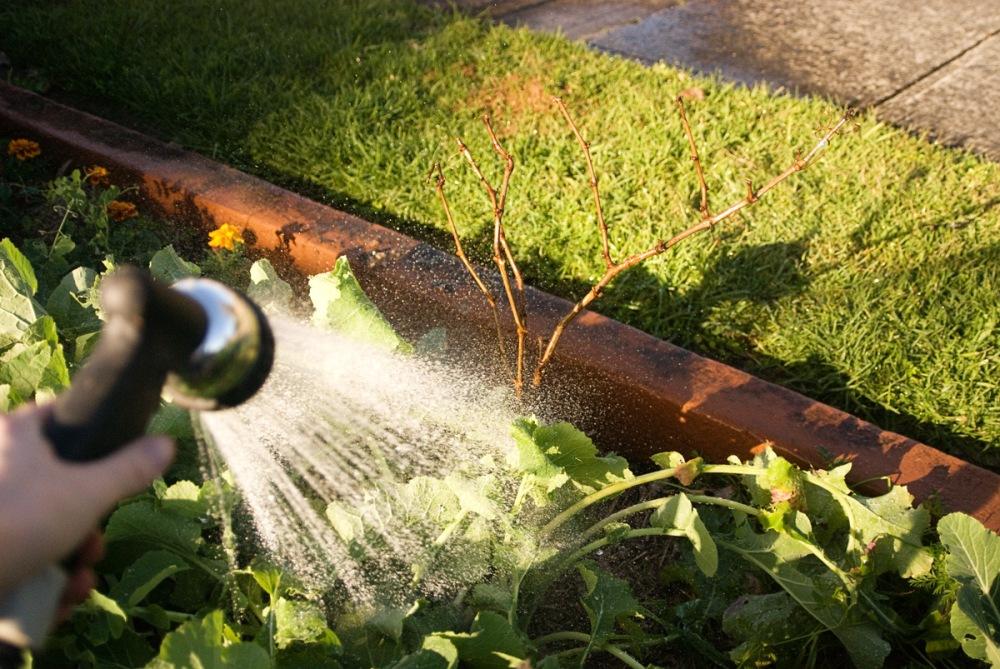
The bushes are watered generously during planting and for the following 2-3 weeks. Subsequently, the grapes are watered only during periods of severe drought.
Excess moisture can lead to fungal diseases.
Top dressing
Fertilize the bushes several times per season. Each period requires its own fertilizer composition. Foliar feeding is also possible.
Autumn
Fruiting takes a lot of energy from bushes. You can help them recover by watering them with potassium-containing fertilizers. Wood ash is rich in potassium.
Spring
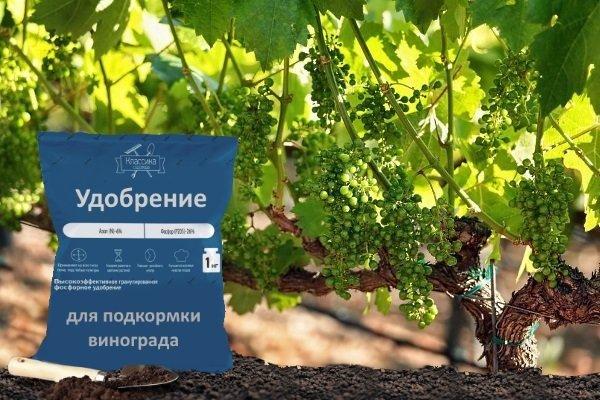
In spring, the best fertilizer is a solution of superphosphate, ammonium nitrate, and potassium sulfate dissolved in a bucket of water. Alternatively, you can use rotted manure or chicken manure diluted with water.
Summer
Before flowering, use complex mineral fertilizers containing phosphorus, potassium, and boric acid. Nitrogen is needed in minimal quantities during this period.
Trimming
The bush is pruned several times a season to regulate fruiting. This is done in spring and fall. No more than eight buds should remain on the shoots. Dry, broken, and diseased branches are also trimmed.
Mulching
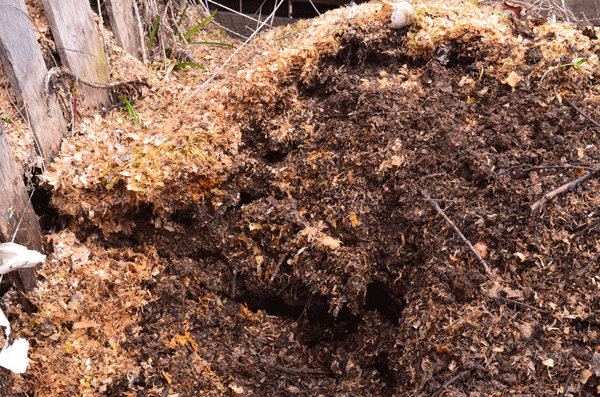
Grape bushes are mulched with peat, compost, sawdust, and straw immediately after planting. This helps retain soil moisture. Furthermore, it makes it harder for weeds to penetrate the covered soil.
Preventive spraying
To prevent the appearance of diseases and pests, grapes need to be sprayed with various preparations in the spring and fall.
Insecticides are used against pests, and fungicides are used against fungal diseases.
We must try to use preparations that cause as little harm to the environment as possible.
Protection from birds and pests
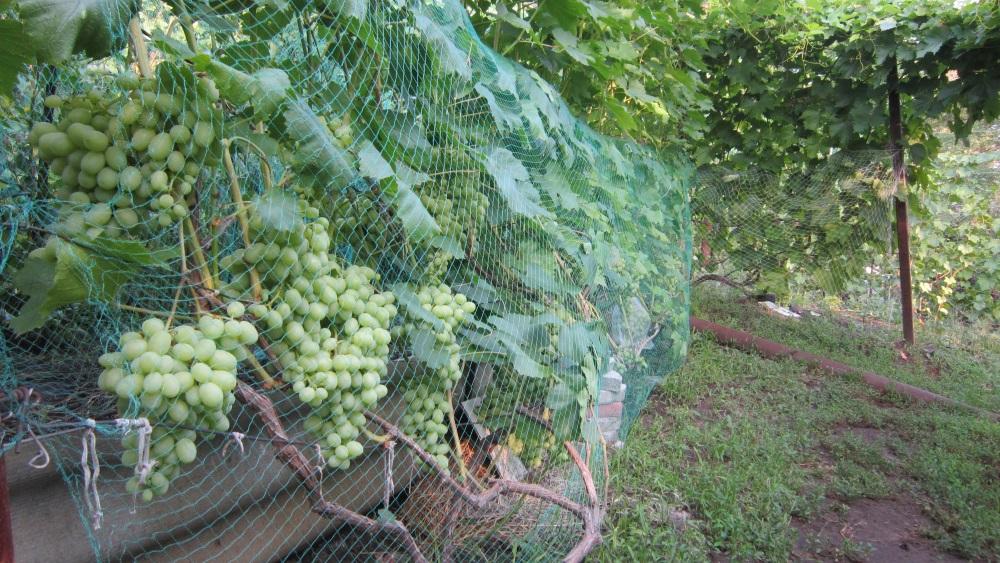
Bird repellents include scarecrows, rustling cut-up film, and black-painted kites. To keep away feathered pests and wasps, cover the clusters with window tulle or fine-mesh netting. You can also find and destroy wasp nests and use liquid smoke to start a fire to repel pests.
Preparing for winter
Grape vines are watered in the fall: hydrated roots will better withstand severe frosts. The area around the trunk is hilled up when frost sets in. If there's a threat of severe frost, the vines are removed from the trellis and covered with spruce or agrofibre.
Garter
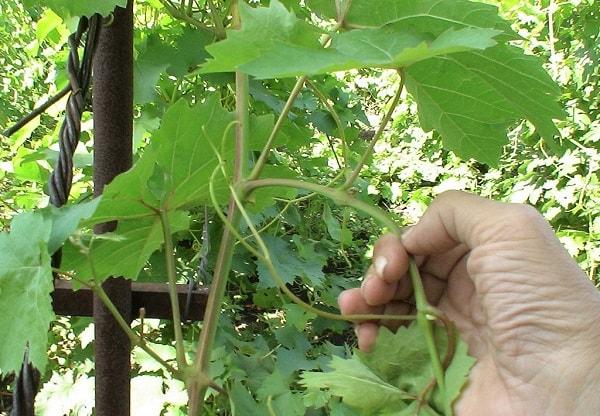
As soon as shoots emerge, they need to be tied to a support. Strengthened in this way, the branches will not break at the slightest gust of wind. The staking helps the grapevine climb the trellis without falling over.
Pinching out stepsons
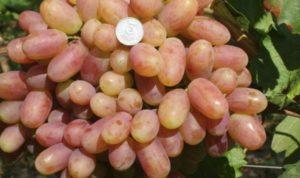
When a bush develops a large number of shoots, the quality of the harvest decreases: energy is expended not only on the fruiting clusters but also on the development of extra branches. For this reason, side shoots must be removed promptly.
Methods of reproduction
Grapes can be propagated in a garden using cuttings, layering, and grafting. While the first two methods are easy for a gardener to propagate themselves, the latter option is best left to professionals.
Propagation of the crop from seeds is not generally used by farmers.
Please note: Tools used for grape propagation must be disinfected to prevent infection of the plantings with various diseases.
Diseases and pests
If not properly cared for, Donskoy Agat may be susceptible to certain diseases and pests.
Mildew
This disease affects all above-ground parts of plants. It's also known as downy mildew. It's triggered by dry or, conversely, excessively damp weather. To prevent the disease, plants are sprayed with antifungal agents.
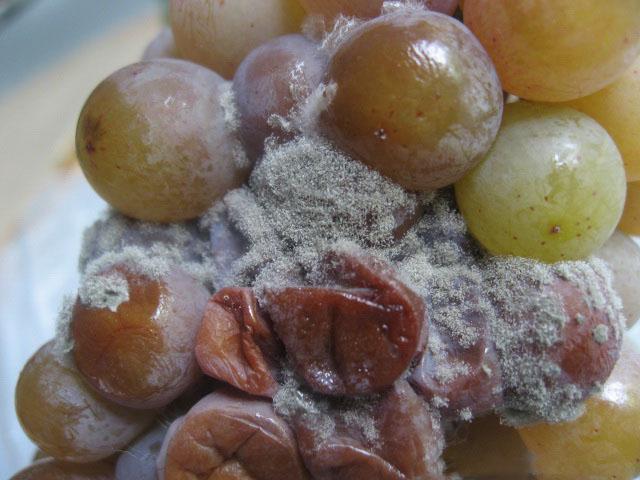
Gray rot
This is another fungal disease that affects the above-ground portion of the bush. Infected leaves and fruits dry out and then fall off. To prevent gray mold, grapes are sprayed four times per season.
Phylloxera
Grape aphids are a common pest. They cause warty growths on the leaves. Spraying the bushes with Actellic, Confidor, or BI-58 can help control them.
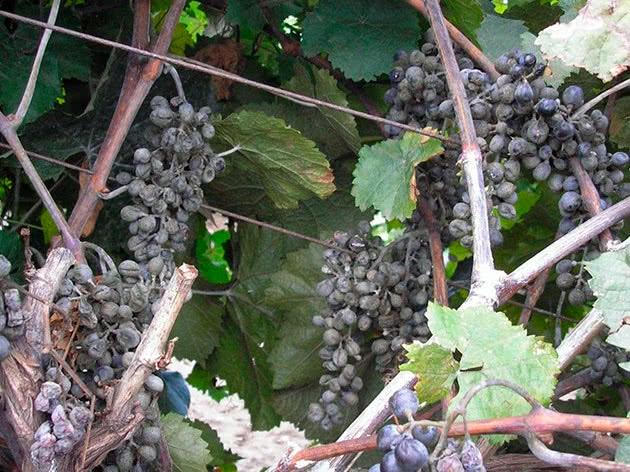
Oidium
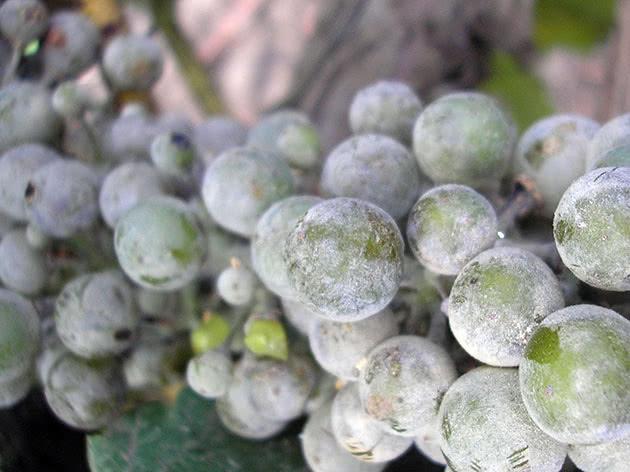
This fungal disease causes a white coating to appear on grape leaves. The fruit begins to crack and rot. To prevent powdery mildew, grapes are sprayed with fungicides.
Harvesting and storage
The harvest begins in August. Dry weather is essential on the day of harvest, otherwise the grapes will quickly spoil. It's best to use the grapes immediately; they can't sit for long without spoiling. You can extend their shelf life slightly by spreading the grapes out in a single layer.
Tips from experienced gardeners
Long-time grape growers at Agat Donskoy offer the following advice:
- To ensure the berries are sweet, provide the crop with a well-lit place with sunlight.
- The variety can be affected by fungal diseases; to prevent this, the bushes need to be sprayed with fungicides several times per season.
- Water only young grapes when planting. If it rains in the summer, no additional irrigation is necessary.
- To regulate fruiting, trim off the side shoots and excess clusters.
The Agat Donskoy grape variety does not have the same vibrant flavor and aroma as other varieties, but it can be grown by gardeners in the Urals, Siberia, and the Far East.
Related posts:
 Description of 30 varieties and types of Muscat grapes, planting, cultivation and care
 Description of 30 grape varieties for Siberia, planting and care for beginners
 How to grow grapes in the Moscow region in open ground without a greenhouse
 Description of the Julian grape variety, planting and care instructions
 Beginner's Guide to Growing Grapes in Open Ground in Central Russia
 The ripening time of grape vines by variety, how to speed up the process, and what to treat the plant with
 Description of the Krasotka grape variety, planting and care technology
 The best grape varieties for growing in the Urals, planting and care rules in summer