
- History of selection
- Description and characteristics of the variety
- Main characteristics
- Appearance
- Clusters
- Berries
- Frost resistance
- Productivity
- Transportability
- Disease resistance
- Pros and cons
- How to plant correctly
- Site selection and preparation
- How to choose and prepare a seedling
- Recommendations for choosing deadlines
- Spring
- Autumn
- Planting diagram
- Care instructions
- Watering
- Mulching
- Top dressing
- Shaping and pruning
- Spring
- Summer
- Autumn
- Preventive spraying
- Protection from wasps and birds
- Preparing for winter
- Transfer
- Loosening and rolling
- Methods of reproduction
- Grafting onto rootstocks
- Seeds
- seedlings
- Diseases and pests
- Gray rot
- Anthracnose
- Lime chlorosis
- Black spot
- Phylloxera
- Spider mite
- Leaf roller
- Harvesting and storage
- Applications of berries
- Tips and advice from experienced gardeners
Industrial grapes are used to make alcoholic beverages, both at home and in wineries. Table grapes are eaten as desserts, used to make various preserves for the winter, and used to make raisins. Some varieties combine these two characteristics. The grape known as Lydia belongs to this group. It is a member of the Isabella group.
History of selection
The history of the Lydia grape variety began in France. Wild grapes were brought there from North America, along with fungal pathogens. Local berry plants lacked immunity to them, so they perished en masse.
Farmers were forced to crossbreed the American variety with French ones. The result was a hybrid named Lydia.
Gradually it spread throughout many European countries, then to Georgia, Belarus and Ukraine.
Description and characteristics of the variety
Winegrowers note that the variety boasts outstanding taste and aroma characteristics.
The fruits have a distinctive aroma, reminiscent of wild grapes. They also have a sweet, strawberry-like flavor.
The plant tolerates short-term drought. However, prolonged lack of moisture results in small and sour fruits.
Main characteristics
Despite the berry's centuries-long history, it continues to be cultivated. This is due to the positive characteristics of the Lydia grape.
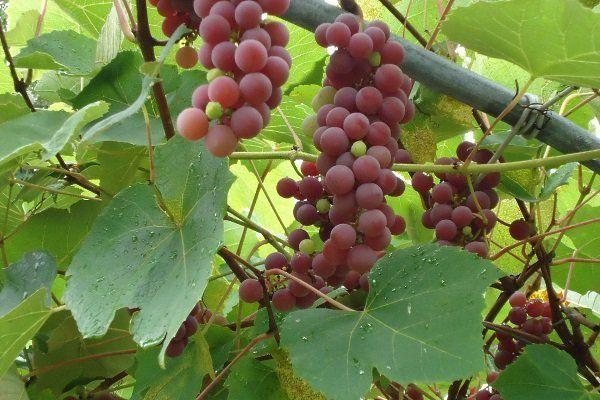
Advantages of the variety:
- It has a high yield.
- 3-5 bunches can appear on the vine and reach maturity.
- The berries take a long time to ripen, with at least four months passing from the moment the ovary is formed to the fruit's full maturity. This means you can enjoy the sweet fruits in the fall.
Grapes can also be used in cooking and in the preparation of regular and alcoholic beverages.
Appearance
The appearance of perennial grapes is as follows:
- The leaf blades are green, large, divided into 3 or 5 parts, and heavily pubescent below.
- The branches are colored brown.
- The flowers are white, small, collected in small inflorescences.
- The root system is powerful, has a radius of 3-4 meters, and goes into a depth of 3-5 meters.
In the southern regions, Lydia grapes are used in landscape design to decorate fences and walls.
Clusters
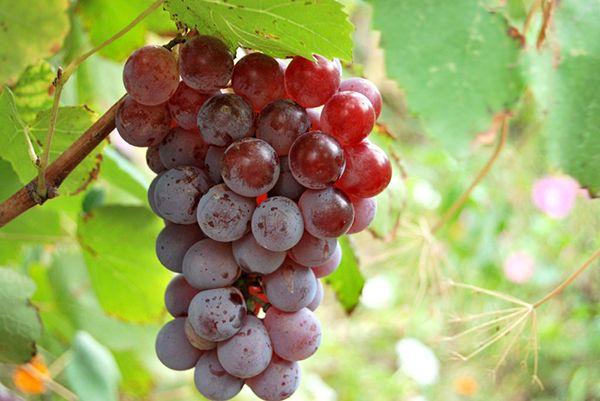
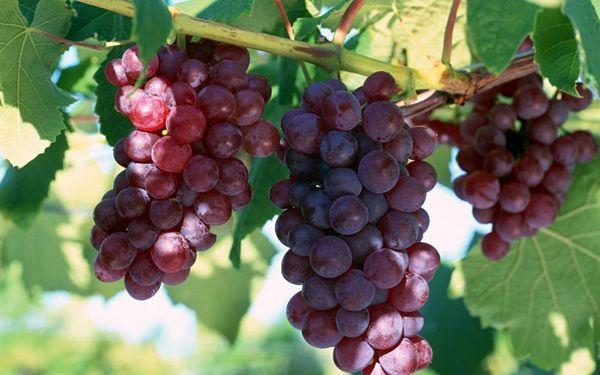
The bunches are cylindrical, small, weighing up to 100-120 grams.
Berries
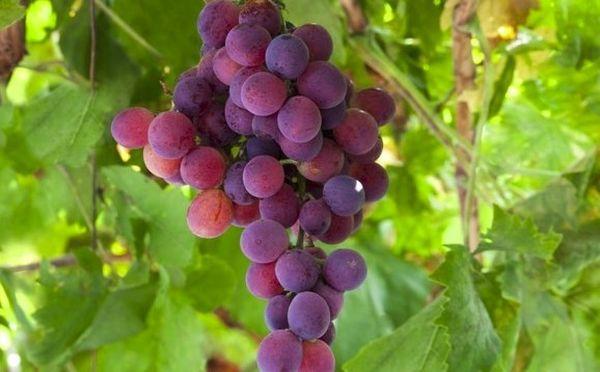
Appearance of Lydia grapes:
- round shape;
- color red-violet;
- the skin is thick, with a wax-like coating;
- weight 3-4 grams.
The pulp of the berries is juicy, with a sucrose content of up to 20%, acidity of 6-9 g/l.
Frost resistance
The perennial grape variety Lydia can withstand winter cold down to -28°C if it is under cover.
Productivity
One plant produces 25-30 kilograms of berries, and perennial vines located on one hectare produce up to 120 centners of excellent raw material.
Transportability
The berries have good transportability and can withstand long-distance transportation.
At a temperature of +9 °C, the bunches retain their taste and appearance for 2 months.
Disease resistance
Lydia grapes can be affected by some diseases and insect pests.
Pros and cons
The berry plant has many positive qualities:
- unpretentious;
- with good yield;
- resistant to most diseases;
- tolerates harsh winters well;
- the fruits are well stored and transported;
- is self-pollinating.
Grapes also have negative properties:
- there is a high risk of phylloxera infestation;
- the stems grow quickly, which affects the weight of the berries;
- Ripe fruits fall off if not picked in time.
If the fermentation process is not properly organized, wine made from Lydia grapes may contain substances that negatively affect human health.
How to plant correctly
Planting the Lydia grape variety is not difficult, but the gardener needs to know some rules.
Site selection and preparation
First, select a site:
- well lit throughout the day;
- windproof;
- groundwater should not come close to the surface;
- The soil must have a neutral pH.
Dig holes 80-90 centimeters wide and deep. Add a 15-centimeter drainage layer at the bottom using broken brick, pebbles, crushed rock, and expanded clay. Then add compost mixed with river sand and a complete fertilizer. Once all preparations are complete, plant the grapes and water thoroughly.
How to choose and prepare a seedling
Choose a visually healthy plant with 2 buds and undamaged leaves.
Before planting, the seedling is placed for 24 hours in a bucket of water in which a growth stimulator has been dissolved.
Recommendations for choosing deadlines
Planting berry plants at different times has its pros and cons.
Spring
Spring is considered the best time for planting. Young plants will establish themselves and grow stronger in their new location. However, the downside is that Lydia grapes require frequent watering. Furthermore, unexpected morning frosts can damage the seedlings. Retailers rarely stock this type of planting material in the spring.
Autumn
In the fall, all farm stores stock Lydia grapes. However, planting them carries the risk of premature frosts damaging the plants if they aren't protected.
Planting diagram
The distance between rows should be 85-90 centimeters, and between the plants themselves – 60 centimeters.
Care instructions
Almost all gardeners note that the Lydia grape variety is undemanding in terms of care.
Watering
Berry plants don't require much irrigation. If there's sufficient summer rainfall, watering is needed 3-4 times during the growing season. Sandy soil requires 6-7 irrigations.
Mulching
Freshly cut grass can be used for mulching.
But the gardener will need to continually add more as it turns into hay.
Top dressing
The plants also require additional feeding. The first is applied during bud formation and includes a mixture of ammonium nitrate, potassium salt, and superphosphate. The second is applied during bunch formation and uses the same formula but without nitrogen-containing substances. The third is applied after harvest with a specialized grape fertilizer.
Take a look Also
Shaping and pruning
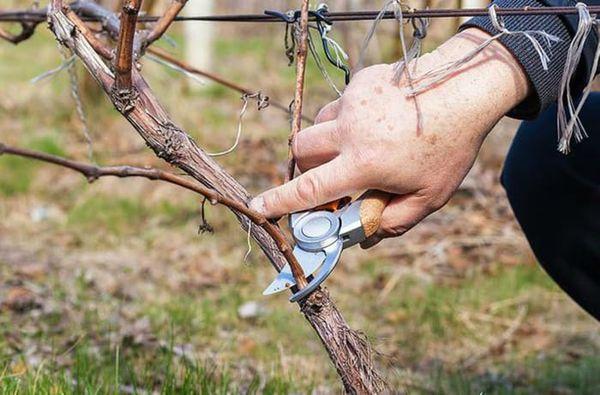
Starting from the second year of life, Lydia grapes need pruning and crown shaping.
Spring
In the spring, this procedure is performed for sanitary purposes. Only after a constant temperature of +5 to +7°C is established are dried grapevine branches removed.
Summer
In summer, the plant requires thinning. Remove shoots that do not bear berries.
Autumn
Another pruning is performed in the last month of autumn. The first time, the main stem is pruned to leave 3-5 buds. Each subsequent year, 8 buds are added. The final pruning should be around 50 buds.
Preventive spraying
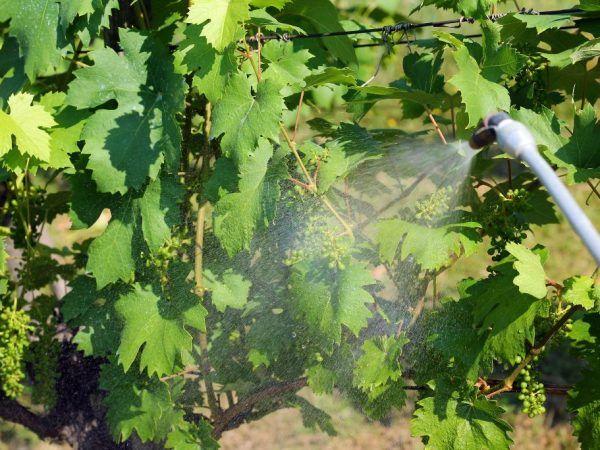
After the first leaves emerge, spray the plants prophylactically with a potent, universal pesticide. This procedure should be repeated after 1.5 months. In midsummer, treat the grapes with Bordeaux mixture to prevent powdery mildew.
Protection from wasps and birds
Besides insect pests, berries can be attacked by birds and wasps. If left unchecked, they can ruin a significant portion of the harvest from each plant. Initially, place several large containers of clean water near the vineyard. Birds may drink from them and avoid pecking at the berries. The water in the containers should be changed periodically.
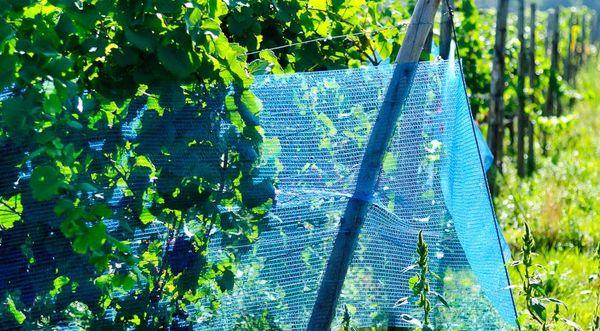
Then, the perennial Lydia grape variety is wrapped in double mesh netting, Chinese fishing netting, or window tulle. The key is to use a fine mesh.
You can repel the little invaders with homemade scarecrows, bundles of tapes, or shiny CDs tied to twine. Sound-producing objects, such as rattles made from foil, plastic bottles, or soda cans, are also helpful. These should be placed throughout the area where the Lydia grape variety is planted.
Berries need to be protected from bees and wasps. First, walk around your garden plot and check for nests. If so, destroy them. Then, buy sticky insect traps and hang them near your plants.
Preparing for winter
In late autumn, before the onset of cold weather, perennial Lydia grapes are always covered. They are laid on plastic sheeting on the ground, covered with it, and then covered with a layer of soil. Then they are covered with old roofing felt.
Then boards are placed on the structure to prevent it from flying apart in strong gusts of wind.
Transfer
In some cases (when redeveloping a site or when plants bear fruit poorly) it is necessary grape transplantationYoung bushes tolerate this procedure best. They take root well in their new location and begin to bear fruit within a few years.
It is not recommended to touch plants that are older than 5 years.
Loosening and rolling
Removing roots close to the soil surface is called root-cutting. It's performed in early spring (as soon as the soil thaws) in the following sequence:
- The soil around the plants is removed to a depth of 20 cm.
- Using sharpened pruning shears, cut off the surface roots.
- The cut areas are filled with garden pitch and copper sulfate.
- The soil is returned to its place.
It's equally important to constantly loosen the topsoil and remove weeds promptly. But once a year in the fall, deep loosening to a depth of half a meter is carried out, simultaneously applying a complex fertilizer.
Methods of reproduction
The Lydia grape variety is propagated in several ways.
Grafting onto rootstocks
Sometimes plants are propagated by grafting. A cutting from the healthiest plant or a bud (eye) is grafted onto the plant.
Seeds
The seed method is almost never used, as it takes a huge amount of time to obtain a small plant.
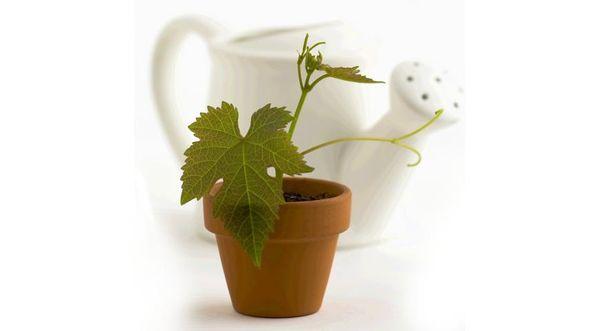
seedlings
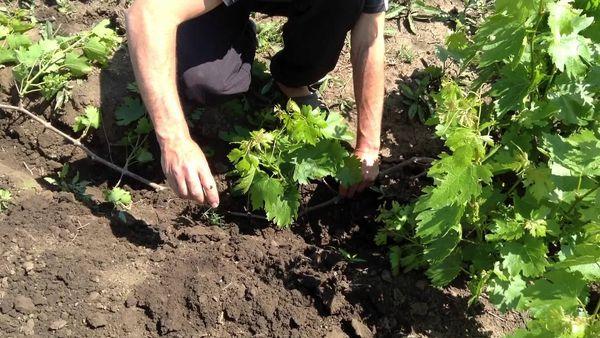
The seedling is carefully removed from the container it was grown in and placed in the prepared hole. It's important not to disturb the soil around the roots. The hole is then filled with compost and lightly compacted. A support is placed next to the grapevine.
Then the young plant is shaded using available means - thick paper, fabric.
After 10 days, the shading is removed and the soil is watered. This procedure is repeated as needed. After each watering, the soil is loosened and weeds are removed.
Diseases and pests
One of the disadvantages of the Lydia grape variety is its susceptibility to certain diseases and pests.
Gray rot
Poor ventilation can lead to gray mold. This disease is dangerous because it spreads rapidly throughout the vine and attacks all vegetative organs.
Anthracnose
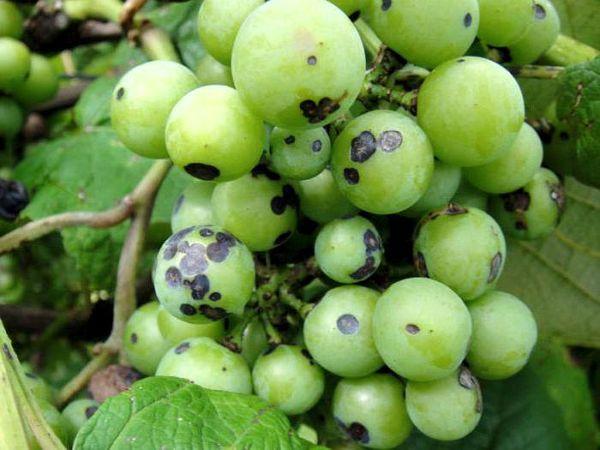
If the soil or seeds are infected with anthracnose, dark spots will appear on the plant. Stop the rot. grapes can be treated with Bordeaux mixture.
Lime chlorosis
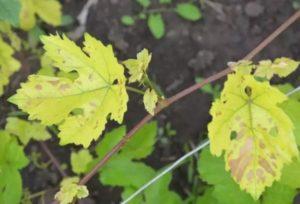
If the soil is low in iron, grapes will stop growing, turn yellow, and eventually die. Infected leaves should be removed and burned, and the remaining branches should be treated with special solutions according to the instructions.
Black spot
The disease causes small black specks to appear on grape leaves. To prevent the disease, spray with a fungicide during bud break.
Phylloxera
To stop the disease from progressing, remove and burn the affected plant parts as quickly as possible. Fungicides are also used for control.
Spider mite
White film and yellow spots on grape leaves indicate pest infestation. If the vines aren't treated promptly with pest control products, the entire harvest can be lost.
Leaf roller
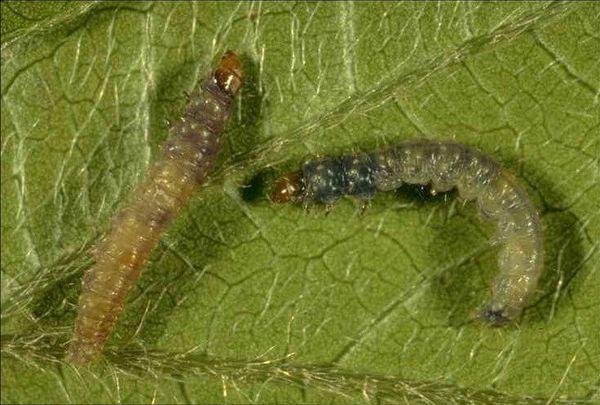
It is active throughout the entire fruiting season, affecting not only leaves, but also berries.
Regular prevention is necessary.
Harvesting and storage
When harvesting, avoid shaking the plant or vine too much, otherwise ripe grapes will fall over. Storage should be maintained at a constant temperature of 13°C; this will give the berries a shelf life of 9-10 weeks.
Applications of berries
Most often, Lydia grapes are used for making wine drinks, as well as for baking and desserts.
Tips and advice from experienced gardeners
The most important thing when growing Lydia grapes is to respond quickly to disease and ripening. Then you can reap a bountiful harvest from each plant.
The Lydia grape variety does not require a lot of maintenance, but will delight its owner with delicious berries.
Related posts:
 The ripening time of grape vines by variety, how to speed up the process, and what to treat the plant with
 Description of 30 grape varieties for Siberia, planting and care for beginners
 How to grow grapes in the Moscow region in open ground without a greenhouse
 Description of 30 varieties and types of Muscat grapes, planting, cultivation and care
 Description of the Julian grape variety, planting and care instructions
 Beginner's Guide to Growing Grapes in Open Ground in Central Russia
 Description of the Krasotka grape variety, planting and care technology
 Description and characteristics of the Laura grape variety, planting and care