
- Reasons for relocating to another location
- Deadlines
- Spring
- Summer
- Autumn
- Age of the bush
- Annual
- Two-year-old
- Three-year-old
- Perennial
- Choosing a location
- How to properly transplant grape vines
- Preparing the pit
- Excavation
- Methods
- With a lump of earth
- With completely or partially exposed roots
- Trimming
- Care after transplantation to a permanent location
- Watering
- Fertilizer
- Treatment against diseases and pests
- Frost protection
- Errors
Situations often arise where mature, fruit-bearing grapevines require replanting in the summer. Such operations are often combined with radical changes to the garden or the construction of a new building. This isn't as difficult as it might seem at first glance. However, to quickly adapt and restore fruiting to its previous level, the plant requires special attention and care.
Reasons for relocating to another location
A young sapling is planted in a permanent location and grows there for years. However, planning a suitable spot for it in advance isn't always possible. Over time, plans change, and the grape plot becomes necessary for more important purposes.
There are many reasons why you have to replant grapes in the middle of the season:
- initially wrong choice of location;
- incorrect site planning;
- shading by grown trees and tall shrubs;
- transplanting plants from one area to another;
- construction of a permanent or temporary structure.
Whatever the reason, replanting mature grapes is a complex process that takes a lot of time and effort from gardeners.
Deadlines
When should you transplant grapes so they adapt more quickly to the new conditions and avoid stress? Let's find out.
Spring
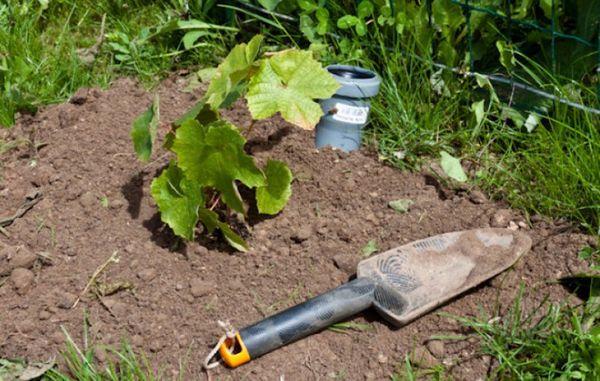
Buds are beginning to open, sap flow is activating, the plant is slowly emerging from hibernation, and the soil has warmed to 8°C? Under these conditions, you can safely transplant mature grapes to a new location. The planting time depends on the region and weather conditions: in the south, March is ideal, while in the temperate zone, late April is ideal.
Summer
Grapevines can be replanted in the summer, but this puts the vine under significant stress. Replanting the vine with the root ball will minimize stress and speed up establishment, ensuring minimal root damage. July is the hottest month, so it's best to postpone planting for at least a month.
Autumn
The best time to transplant grapes in southern regions is late autumn. During this period, the leaves have fallen, the plant slowly enters dormancy, and will focus all its energy on rooting. In colder regions, transplanting is planned for early autumn, allowing time for the plant to establish roots before the real frosts arrive.
Take a look Also

Age of the bush
Young bushes no older than seven years take root best in a new location, since the root system of an adult grapevine is branched, and a gentle transplant without severe damage is impossible.
Annual
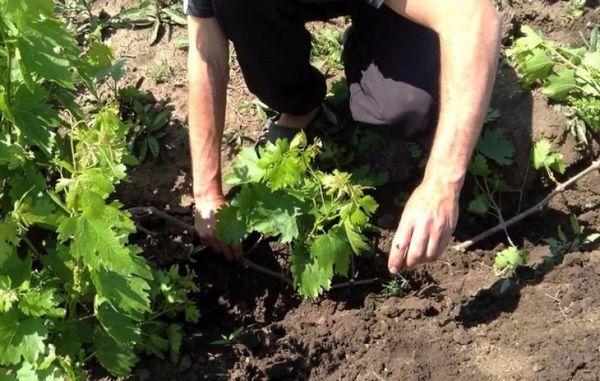
After the cutting has rooted, the one-year-old seedling requires transplanting to a permanent location. A young plant with several shoots and a small root system tolerates this process well and grows quickly.
Two-year-old
A two-year-old sapling has a good root system and stronger, more developed shoots. When replanting, the above-ground portion of the grapevine is pruned, leaving no more than three buds. In this condition, it quickly adapts to the new conditions, and within a short time, new shoots begin to develop from the buds.
Three-year-old
A three-year-old grapevine can hardly be considered young. It has a fairly robust root system and woody stems. Careful handling of the roots is required when replanting.
Before replanting, grapevines are pruned, leaving no more than four buds. Neglecting radical pruning will make it difficult for the plant to adapt to its new location, and the root system will be unable to adequately supply it with nutrients and moisture. In this case, the plant is highly likely to die.
Perennial
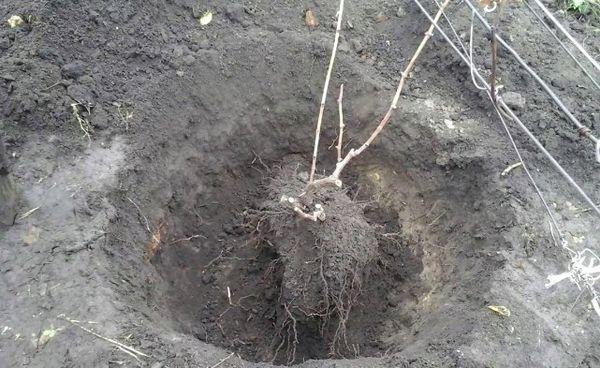
Mature plants require special care when repotting. Their roots are located deep in the soil and cannot be dug up without damaging them. Trimming the above-ground portions short and leaving no more than six buds will facilitate establishment.
 Experienced gardeners do not recommend replanting grapes older than five years. Severe damage to the roots and aboveground parts can make it difficult for the plant to recover. It's especially important not to risk repotting an old plant during the summer.
Choosing a location
Grapes require plenty of sun to ripen. They should be positioned so that the plants receive even light throughout the day. It's best to avoid damp, low-lying areas, as grapes don't like being overwatered. Growing in such areas increases the risk of root freeze damage during the winter.
How to properly transplant grape vines
Careful attention to preparatory work and meticulous care after transplanting will speed up the adaptation of grapes to a new location.
Preparing the pit
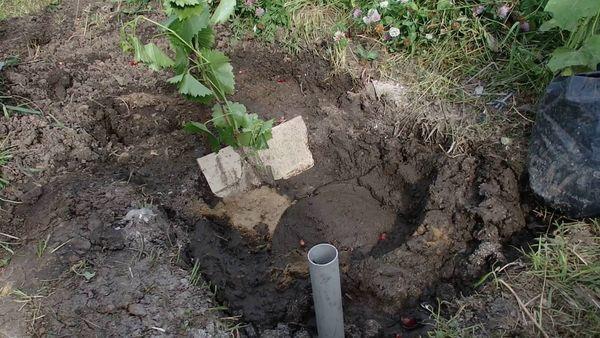
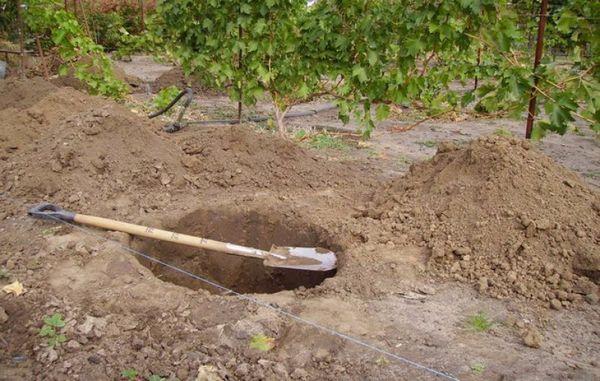
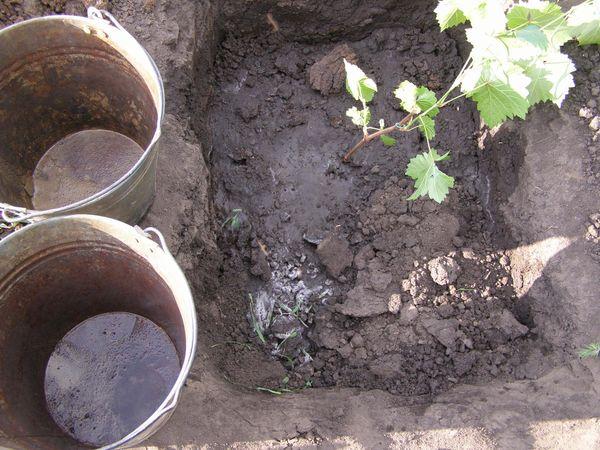
At least a month before the planned transplant, prepare a planting hole. Its size depends on the age of the bush and should be at least a meter wide and deep. A drainage layer is installed at the bottom of the hole. Humus, sand, and phosphorus-potassium fertilizers are added to the soil.
Excavation
The most difficult step in transplanting mature grapevines is removing them from the ground. This work is carried out very carefully, taking care not to significantly damage the roots or vines.
Methods
There are many different ways to transplant grapes to a more suitable location. Let's look at the most common options for summer transplantation.
With a lump of earth
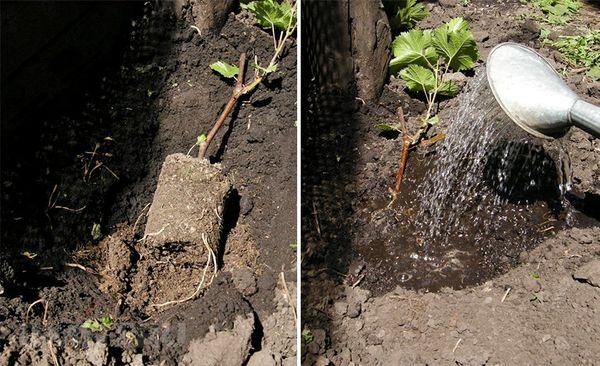
Repotting the plant with the root ball will help it quickly recover in its new location. Digging up a mature bush without damaging the root ball will require considerable effort. Follow these steps:
- pruning of grapes is carried out at a height of about 20 cm from the ground;
- carefully dig around the bush at least 50 cm away, cutting off large roots;
- to move from place to place, use a wheelbarrow or a sheet of metal;
- The root system is carefully placed into a pre-prepared planting hole and covered with soil.
This is the most gentle method. It allows the mature plant to quickly adapt to new conditions.
With completely or partially exposed roots
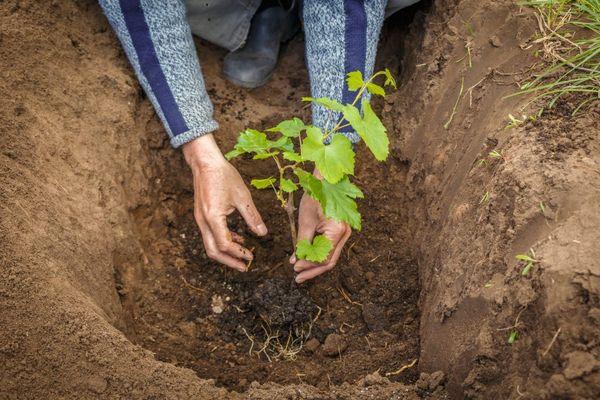
Young plants can be transplanted with their roots partially or completely exposed. Adult plants undergo severe stress when transplanted this way, and there's a high risk of dying.
The transplant is carried out in the following sequence:
- the soil under the bush is well saturated with moisture;
- cut the bush short, leaving no more than two shoots;
- the grapes are dug around on all sides at a distance of about 50 cm;
- the plant is removed, carefully freeing the roots from the soil;
- rotten roots are cut off;
- a plant without soil weighs very little and does not require much effort when moving from place to place;
- the root system is placed in a pre-prepared mixture of clay, manure and a small amount of potassium permanganate or rooting agent;
- The plant is placed in a hole, covered with soil and thoroughly watered with settled warm water.
When replanting in spring and summer, grapes need protection from the sun. Large vines are protected with covering material. Large plastic bottles are often used for small plants.
Trimming
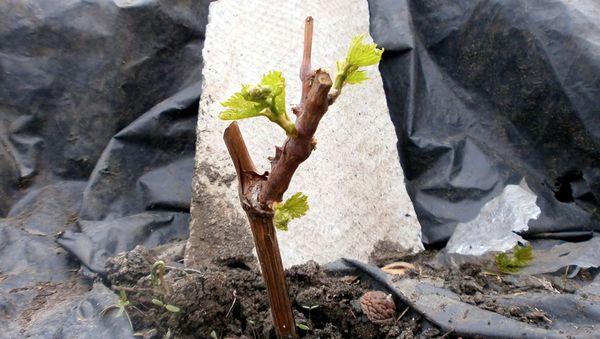
When replanting, grapevines are pruned to a height of about 20 cm. Short shoots can be left, but long ones will need to be removed. The cut area is carefully treated with garden pitch.
When transplanting weak plants, the above-ground part is completely cut off, leaving a small stump.
Care after transplantation to a permanent location
To ensure that a newly transplanted bush quickly adapts to new conditions, it requires attention and care:
- periodic watering;
- timely application of fertilizers;
- protection from diseases and pests;
- reliable shelter during the winter period.
The above measures will not only help the grapes recover quickly, but also promote the development of strong shoots.
Watering
After repotting, the mature plant requires ample watering. For the first three weeks, carefully monitor the soil: it should always be slightly moist.
Fertilizer
All necessary fertilizers are added when preparing the soil for planting. They usually last for several years. When replanting, you can simply mulch the root zone with rotted manure to further enrich the soil with organic matter.
Treatment against diseases and pests
Even with careful transplantation, a mature bush experiences stress and becomes susceptible to any disease. It requires special protection and attention.
Young grapes are very susceptible to various pests. Twice-annually, insecticide treatments will protect the plant from virtually all common pests. Spraying grapes with complex fungicides will prevent the development of most fungal and viral diseases.
Frost protection
Newly transplanted grapes require reliable shelter for the winterFor this purpose, covering materials or pine branches are used. When the air temperature drops to zero, the grapes are laid on the ground and covered with covering material.
When replanting in spring in regions with a mild climate and warm winters, covering the grapes is not required.
Errors
That's it. The grapes have been dug up and replanted. But why is it wilting and not growing? What does it need? Perhaps mistakes were made. Let's look at the most common ones:
- inconsistency in timing during spring transplantation: planting in frozen or already dried out soil;
- severe damage to the root system during digging;
- failure to maintain a balance in watering during the adaptation period;
- excessive load of the aboveground part on the root system.
Of course, transplanting a mature grapevine to a new location is not advisable, but in case of urgent need and by observing all the details, it is possible to move the plant to a new location with minimal losses, quickly restoring its growth and fruiting.
Related posts:
 Description of 30 grape varieties for Siberia, planting and care for beginners
 How to grow grapes in the Moscow region in open ground without a greenhouse
 Description of 30 varieties and types of Muscat grapes, planting, cultivation and care
 The ripening time of grape vines by variety, how to speed up the process, and what to treat the plant with
 Description of the Julian grape variety, planting and care instructions
 Beginner's Guide to Growing Grapes in Open Ground in Central Russia
 Description of the Krasotka grape variety, planting and care technology
 Description and characteristics of the Alpha grape variety, the subtleties of cultivation