
- Advantages and disadvantages of growing tomatoes outdoors
- Which varieties to choose
- The Black Prince
- Bullfinch
- Martha
- Altaic
- Korneevsky
- Purchasing and sorting seeds
- Purchase
- Sorting
- How to increase seed germination
- Growing seedlings for open beds
- Planting of seed material
- Growing seedlings
- Timing of seedling planting
- Selecting a location and preparing the soil for planting seedlings
- Selecting a site
- Soil preparation
- Planting patterns
- Chess
- Ribbon-nested
- Ribbon
- Square-nested
- Sequence of actions when transplanting into the ground
- Caring for tomatoes after planting
- Watering
- Fertilizer
- Pinching out stepsons
- How to tie up tomatoes
- Protection from diseases and pests
- Growing secrets from gardeners
- Conclusion
Tomatoes are a common vegetable grown by every gardener. Most residents of northern regions plant them in greenhouses. However, some people grow tomatoes outdoors. Before planting tomatoes outdoors, it's important to familiarize yourself with all the nuances of planting vegetables in the garden.
Advantages and disadvantages of growing tomatoes outdoors
Many people with summer cottages plant tomatoes in their gardens to harvest ripe fruit in the summer. Planting vegetables outdoors has its own characteristics and advantages that every gardener should know. The advantages of growing vegetables outdoors include:
- Improving seedling immunity. It's no secret that outdoor conditions are harsher than those in a greenhouse. Because of this, all planted seedlings grow stronger and more resistant to night frosts and gusts of wind.
- Moderate humidity. Tomatoes are considered a plant that does not tolerate high humidity. Many believe that open space is beneficial for the growth and fruiting of tomato plants.
- Protection from certain diseases. There are a number of diseases affecting nightshade crops that occur when grown in greenhouses. Therefore, some decide to grow them outdoors to protect them from such diseases.
However, planting vegetables in the garden has not only advantages, but also disadvantages:
- Ground tomatoes produce fruit several times worse than greenhouse tomatoes;
- It is more difficult to regulate the soil temperature than in a greenhouse;
- When grown outdoors, many varieties grow slowly.
Which varieties to choose
To grow good, large fruits, you need to familiarize yourself with the varieties of tomatoes that are suitable for growing outdoors.
The Black Prince
Among the large-fruited varieties with frost resistance, the following is popular: Black Prince tomatoThe hybrid was developed by Chinese breeders for cultivation in harsh climatic conditions.
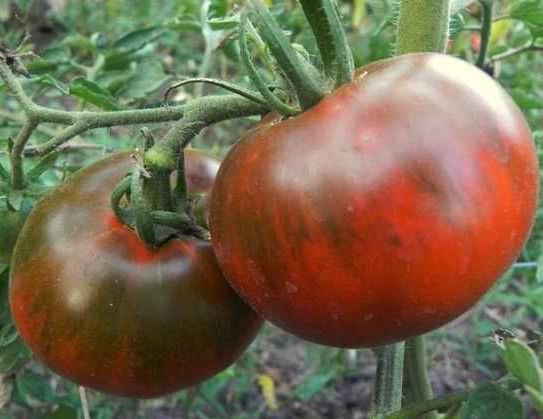
Ripe fruits appear on the bushes four months after sowing the seeds. The tomatoes have dark burgundy skin and weigh up to 300 grams. The yield per square meter is 6-8 kilograms.
Bullfinch
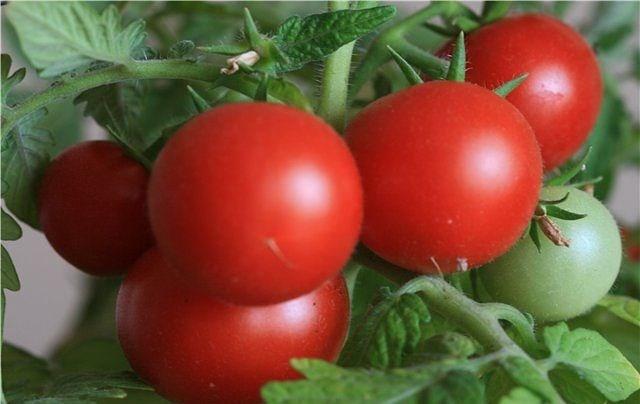
Fans of low-growing plants can purchase compact ones Snegiri tomatoesThe bushes are only 35-45 centimeters tall. They don't require staking or pinching. During cultivation, small clusters form on the bushes, each bearing 3-4 fruits. The harvest's advantages include excellent flavor and resistance to cracking after harvest.
Martha
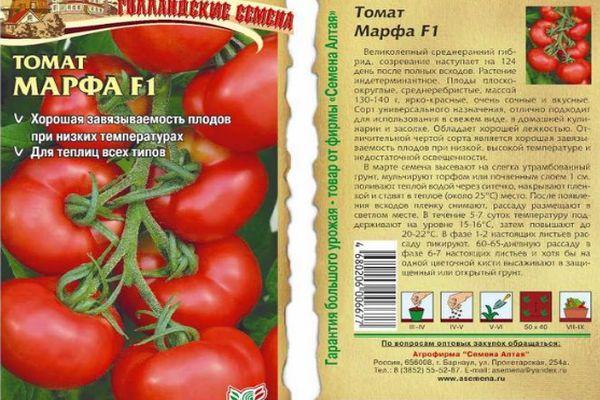
This is a high-yielding hybrid tomato that can withstand even severe frosts. Marfa produces spreading, tall bushes over one and a half meters tall. After three months, the first ripe tomatoes appear on the plant, ready to be picked and eaten. They are quite small, so a single plant yields 3-4 kilograms.
Marfa's virtues include:
- resistance to sudden temperature drops;
- ease of care;
- dense fruits that can be stored for a long time and do not crack.
Altaic
Gardeners who don't want tall tomatoes can purchase Altai tomato seeds. This variety is characterized by its mid-season ripening and frost resistance. The Altai variety produces simple clusters of 5-6 tomatoes. Each fruit weighs approximately 350-400 grams. Ripe tomatoes have a ribbed surface and a flattened, round shape.
Korneevsky
This tomato was developed by Russian breeders in the late 1980s specifically for planting and growing in harsh climates. Korneev tomatoes have strong, tall bushes, growing up to two meters. Gardeners recommend tying them to supports to prevent them from breaking in the wind.

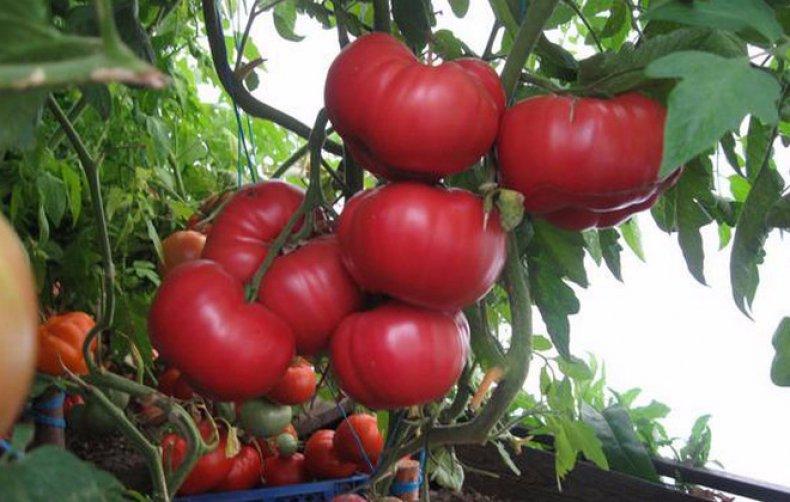 The advantages of the Korneevsky variety include its productivity, thanks to which it is possible to harvest 6-8 kilograms of tomatoes from one plant.
Purchasing and sorting seeds
Anyone planning to plant tomatoes in their garden should familiarize themselves with the specifics of purchasing and sorting seed material.
Purchase
When purchasing tomato seeds, several factors are taken into account:
- Plant height. It's no secret that tomato varieties vary in plant height, so consider this when purchasing seedlings. To ensure a higher yield of ripe tomatoes, it's recommended to purchase taller varieties.
- Fruit size. Another factor to consider when purchasing tomatoes is their size. In this case, the choice depends on the purpose of growing them. For example, if tomatoes are grown for canning, it's best to choose varieties with small fruits weighing 100-150 grams.
- Frost resistance. Since tomatoes will be grown outdoors, you need to choose frost-tolerant seeds. Frost resistance information is provided on the packaging the seeds come in.
Sorting
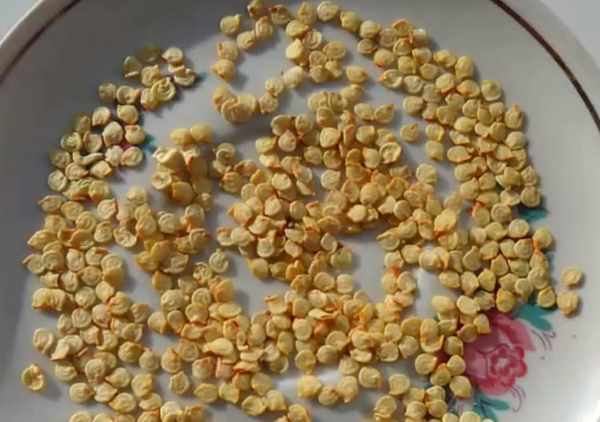
Before planting, you should cull and sort the purchased seeds to select the right seeds for your garden. Experts recommend selecting only large tomato seeds, as they contain many nutrients. These seeds often produce large, vigorous plants.
To select high-quality seeds, a special saline solution is used.
To prepare it, add 30-35 grams of salt to a glass of water and stir the mixture. Add the seeds to the mixture and let them soak for half an hour. During this time, some of the seeds will float to the surface. Remove any floating seeds from the glass and discard them, as they will not germinate. The seeds that remain at the bottom of the glass are used for planting.
How to increase seed germination
Experienced gardeners recommend improving the germination rate of tomato seeds themselves. This requires pre-soaking the tomato seeds. Several methods are recommended to help seeds germinate better:
- Aloe juice. This plant contains biological stimulants, so it is often used to prepare soaking solutions for planting material. To prepare the solution, squeeze the juice from two aloe leaves and mix it with warm water. The seeds are then soaked in the solution for 15-20 hours. This procedure is performed 1-2 days before planting tomatoes.
- Yeast solution. A yeast solution, which contains the components necessary for plant growth, is considered an effective means for soaking and germinating seeds. To create the solution, add 50 grams of yeast to 300 milliliters of water and stir.
- Ash infusion. To prepare a solution to improve germination, use straw or wood ash, which is rich in minerals. To create the infusion, add 90 grams of ash to a liter of solution, then place the tomato seeds in a container with the solution. Soak them for about six hours.
- Humate solution. This solution promotes the germination of even old seeds with reduced growth potential. Gardeners recommend using sodium humate, as it contains more nutrients. When preparing the working solution, add 2-3 grams of powder to 200 milliliters of water. The seeds should be soaked in the solution for 24 hours.
- Mushroom infusion. Mushrooms contain many components essential for normal tomato growth and development. Therefore, some gardeners prepare an infusion from dried mushrooms to improve seed germination. 150 grams of mushrooms are poured into boiling hot water, left to steep for 5-6 hours, after which the seeds are added to the container for soaking.
Growing seedlings for open beds
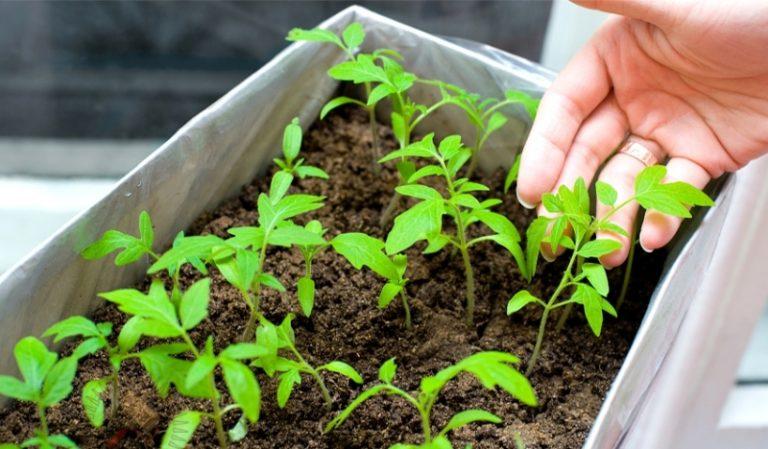
First, you need to start growing seedlings that will later be transplanted into open ground.
Planting of seed material
Before sowing seeds, you need to prepare the soil mixture and select the containers in which the seedlings will grow. To grow young tomato seedlings, use fertile soil that hasn't been used for several years. This type of soil contains many nutrients that positively influence the seedlings' development. To make the soil more fertile, add fertilizer beforehand. Before planting, mix the soil with peat, ash, manure, and turf.
Peat containers are suitable for growing seedlings, in which they will quickly take root and grow faster.
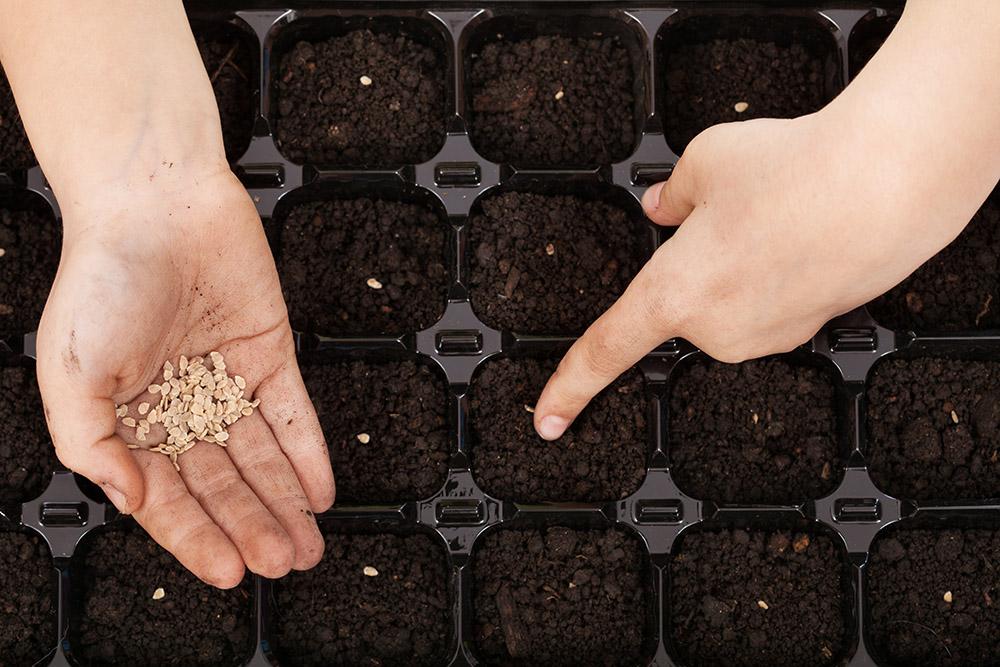
Before planting, fill all pots with soil mixture. Sowing begins with digging holes in the soil for the seed. Two to three seeds are planted in each hole.
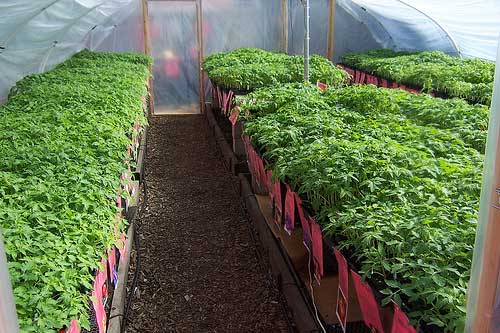
Growing seedlings
To grow strong and healthy seedlings, you need to familiarize yourself with the nuances of caring for them:
- Maintaining temperature control. When growing seedlings, carefully monitor the temperature. Young seedlings do not tolerate low temperatures well, so they should not be kept below 10-15 degrees Celsius.
- Lighting. Without sufficient light, seedlings will grow poorly. Therefore, some gardeners place containers with planted seedlings on illuminated windowsills. Fluorescent lamps are also installed near the tomato plants to improve lighting.
- Watering. It's well known that tomatoes need watering, as they don't grow well in dry soil. You'll need to moisten the soil at least twice every 10 days. You shouldn't water seedlings more often, as high humidity can cause them to become infected with late blight.
- Fertilizer. Young seedlings, like any plant, require nutrients to promote growth. Fertilize twice a month. Add manure, wood ash, and mineral fertilizers to the soil.
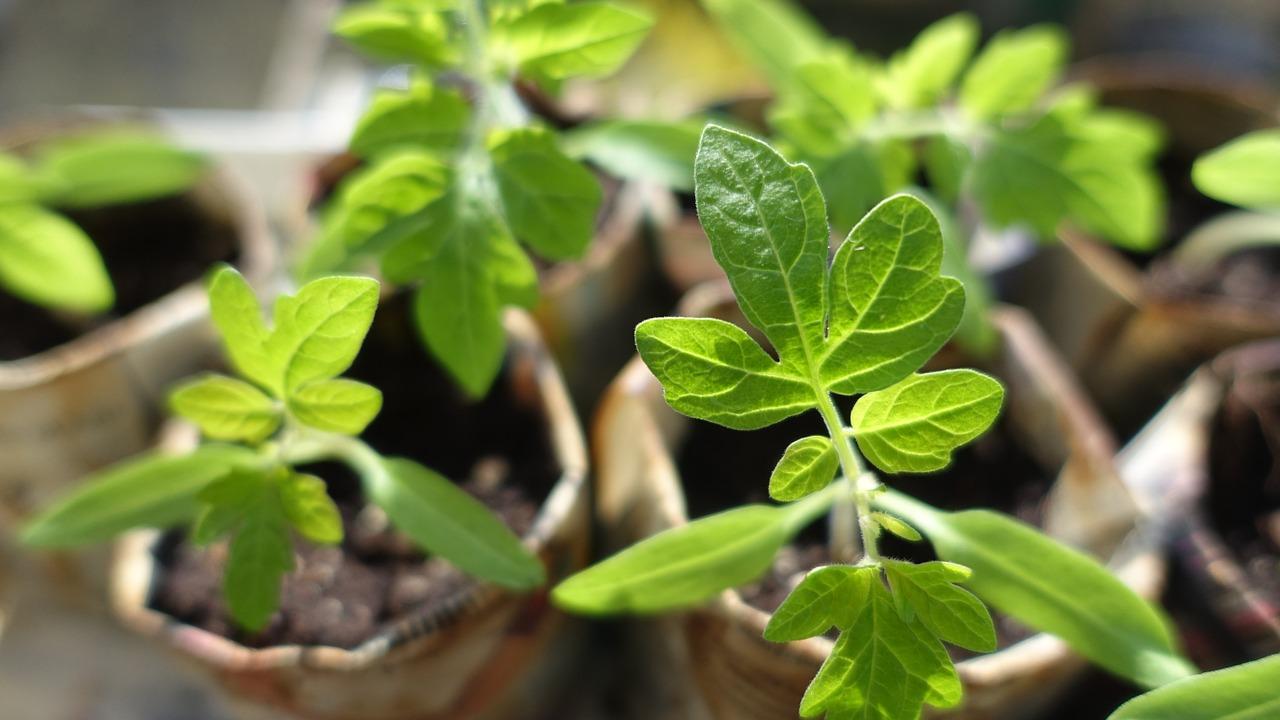
Timing of seedling planting
Before planting vegetables in the garden, it's important to figure out when to do so. If tomatoes aren't planted outdoors at the right time, the risk of them dying increases significantly. When choosing the right time to transplant seedlings, consider the characteristics of the variety being grown.
For example, if a frost-resistant tomato was purchased and planted for cultivation, it can be planted in the ground in mid-spring when there are only slight night frosts.
Heat-loving varieties should be planted in May, as they can be killed even by the first frost. The ripening rate of the fruit should also be taken into account when determining the timing. Early-ripening tomatoes should not be planted too late, so the seedlings are transplanted in early May. Mid-season vegetables ripen 15-20 days longer, allowing them to be transplanted in the second half of May.
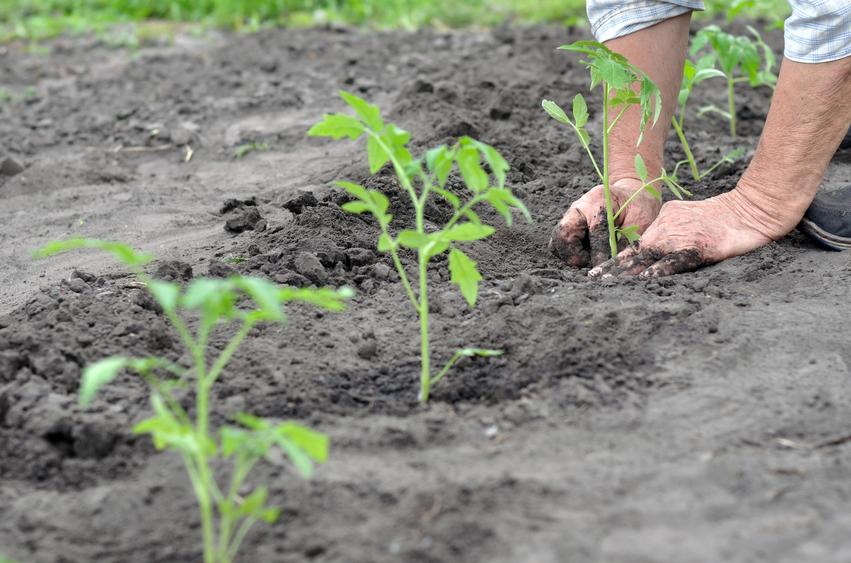
Selecting a location and preparing the soil for planting seedlings
To ensure that transplanted seedlings take root and grow well, you need to select a site for planting and prepare it in advance.
Selecting a site
Tomatoes are known to be sun-loving vegetables, so they are best planted in well-lit areas. Experienced gardeners recommend choosing sites on south-facing slopes for transplanting. These sites are well protected from cold gusts of wind.
Avoid planting seedlings in shaded areas with high humidity and a high water table. In such conditions, seedlings will grow slowly. When choosing a suitable location, also consider the soil's acidity. It's recommended to choose sites with a pH of 6 or 7.
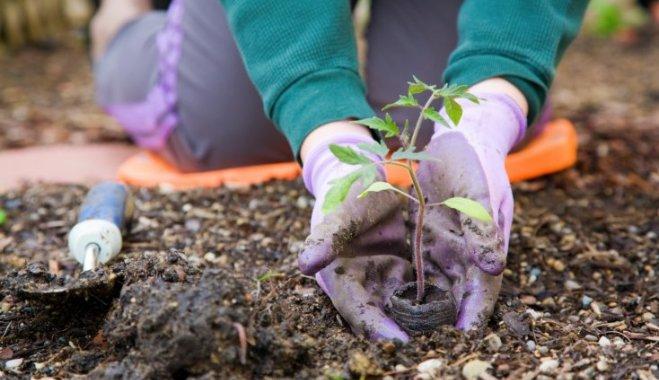
Additionally, the choice of site depends on what vegetables were previously grown there. Tomatoes grow best after legumes or potatoes.
Soil preparation
The soil in which vegetables are grown affects their yield, so careful soil preparation is essential. Experts recommend fertilizing the soil before planting. A solution of copper sulfate is recommended. One and a half liters of solution is used per square meter of garden space. To enrich the soil with nutrients, wood chips, peat, humus, and potassium sulfate are also added.
Planting patterns
There are proven methods for planting vegetables in gardens. Therefore, be sure to plant tomatoes using one of the methods discussed.
Chess
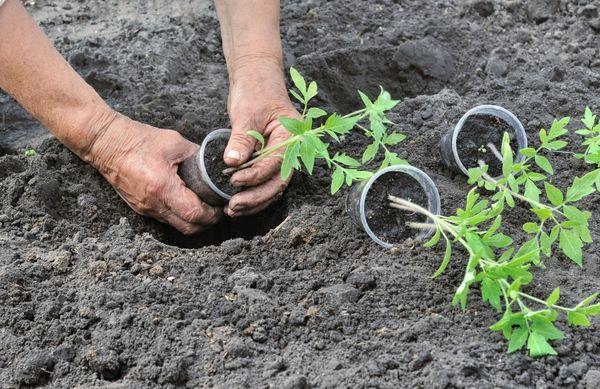
This is a common tomato planting pattern used when growing dwarf varieties formed into 2-3 stems. Using this method, seedlings are planted in two rows, 60-65 centimeters apart. If the plants are compact, the distance between them can be reduced to 50 centimeters.
Take a look Also
Ribbon-nested
When using the strip-nest planting method, tomato plants are spaced parallel to each other. Gardeners recommend this arrangement because it simplifies harvesting the ripened crop. When planting tall tomatoes, space the plants 65-70 centimeters apart.
Ribbon
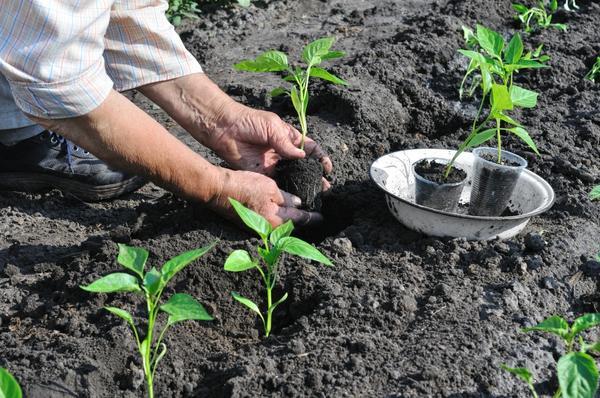
The tape method is considered the simplest method for transplanting seedlings, ideal for inexperienced gardeners. This technique is best used when planting compact bushes with early-ripening fruit.
When growing tall tomatoes, it is better to avoid the ribbon system, as the planted vegetables will take up too much space in the garden.
Square-nested
Using a square-nest pattern, space rows 50-60 centimeters apart and bushes 65-70 centimeters apart. At least three bushes are planted in each hole.
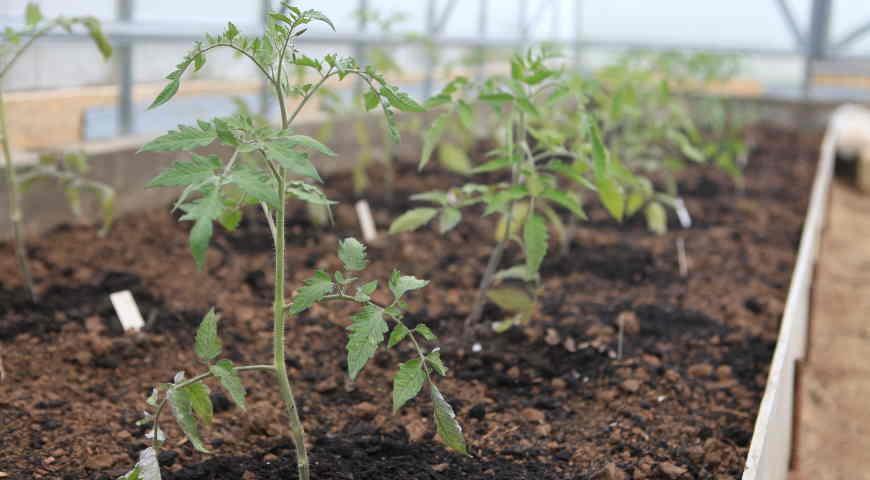
Sequence of actions when transplanting into the ground
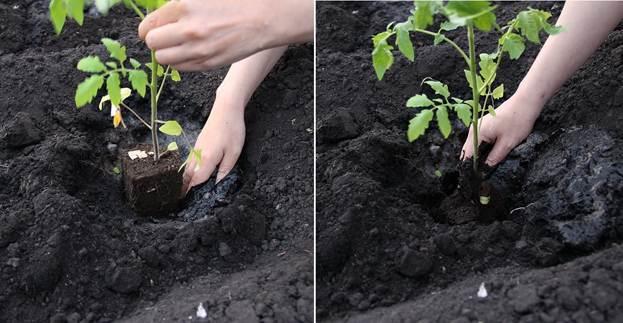
When transplanting seedlings to a permanent location, the following sequence of actions is performed:
- Marking out the beds. First, the area chosen for planting is marked with a special garden marker.
- Making holes. After marking, make the holes where the seedlings will be planted. Each hole is 5-8 centimeters deep.
- Removing seedlings from pots. To carefully remove the seedlings, tap the sides of the pot with your hand. Then, grasp the seedling by the lower part of the stem and gradually lift it out of the soil.
- Planting. The removed seedlings are planted in the holes created and covered with soil.
Caring for tomatoes after planting
A good harvest can only be grown if you take proper care of your tomato bushes.
Watering
It's important to water the plants properly to prevent them from drying out. Water the tomatoes 3-4 times a week during dry weather. Each plant requires one and a half liters of water.
Fertilizer
Fertilizing is done a week after planting the seedlings. The first time, the bushes are fed with a manure solution, cow manure, and superphosphate. A second feeding is done two weeks later. Ammonium nitrate, potassium, and ash are added to the soil.

Pinching out stepsons
When growing tomatoes, you need to care for the planted plants and remove side shoots. This procedure is performed to remove excess side shoots that do not bear fruit. Use sharp garden shears to remove the stems.
How to tie up tomatoes
Staking is used when growing tall tomatoes over one meter tall. They are tied to metal or wooden supports. The first staking is done when the seedlings reach 60-75 centimeters.
Protection from diseases and pests
To protect vegetables from pests and diseases, regularly clear the garden of weeds. Also, treat all plants with fungicide mixtures two to three times per season.
Growing secrets from gardeners
There are several secrets you should know before planting tomatoes in open ground:
- Using warm water. It's best to water tomatoes with warm water, typically between 20-25 degrees Celsius. This accelerates plant growth and improves fruiting.
- Watering with potassium permanganate. To ensure juicier fruit, water the bushes with a potassium permanganate solution once a week.
- Fertilizing with ash and salt. A mixture of salt and ash is poured under the bushes during fruiting. This promotes ripening of tomatoes.
Conclusion
Many gardeners want to grow tomatoes outdoors. Before doing so, it's important to familiarize yourself with common varieties and understand the specifics of planting and growing the vegetable.
Related posts:
 The best eggplant varieties for growing in a polycarbonate greenhouse: planting and care
 What is the best way to feed tomato seedlings to make them plump?
 Description and characteristics of the best seeds of pea varieties and types
 How to prune grapes step by step for beginners
 How to properly plant cucumber seedlings at home and what to feed them with
 Description of blight-resistant tomato varieties for open ground and greenhouses
 How to propagate and grow peas, cultivation technology, and care in open ground
 How to choose a tomato variety for growing in Ukraine and when to plant seedlings