
The super-early Snegir tomato was developed specifically for growing in regions with cold, short summers. This variety is resistant to frost, short-term drought, and disease. The bushes are highly productive and require no shaping.
Benefits of Tomatoes
The Snegir tomato variety was bred by Russian agrobiologists and is intended for open ground and plastic shelters. The Snegir tomato has not yet been included in the Register of Breeding Achievements.
The variety's characteristics and description indicate that it can be grown in the climatic conditions of northern regions, as well as Siberia and the Urals. This early-ripening tomato begins bearing fruit 90-95 days after the shoots emerge en masse.
The main advantage of tomatoes is that they maintain fruiting even in low-light conditions. Fruit set is unaffected by sudden cold snaps and frosts.
Miniature, non-standard bushes of determinate plants reach a height of 30-40 cm and require no shaping. The plants have a medium amount of foliage. The leaves are small and deep green.
You can grow Snegiri tomatoes at home. In pots or containers on windowsills and balconies. Tomatoes adapt well to short-term temperature drops and moisture stress. Creating ideal conditions significantly increases the crop's yield.
This variety is characterized by intermediate-type inflorescences. The first flower stalk appears at the level of the 6th or 7th leaf, and subsequent clusters form at intervals of 1-2 leaves.
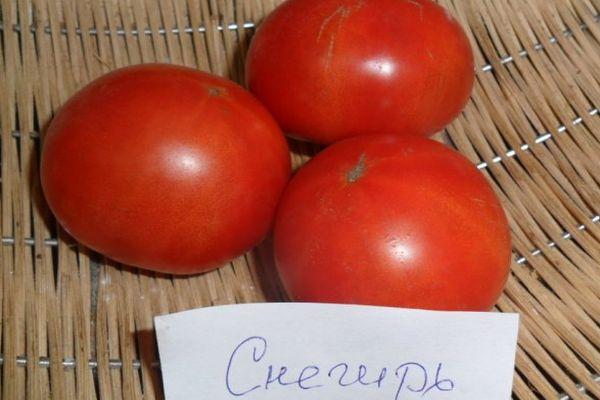
The clusters contain 3-5 medium-sized tomatoes weighing 130-150 g. The fruits are flat and round, with subtle ribbing near the stem. At technical maturity, the tomatoes are dark green, turning a rich red as they ripen.
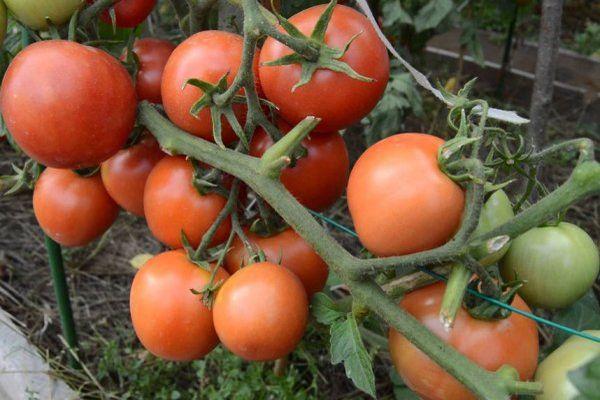
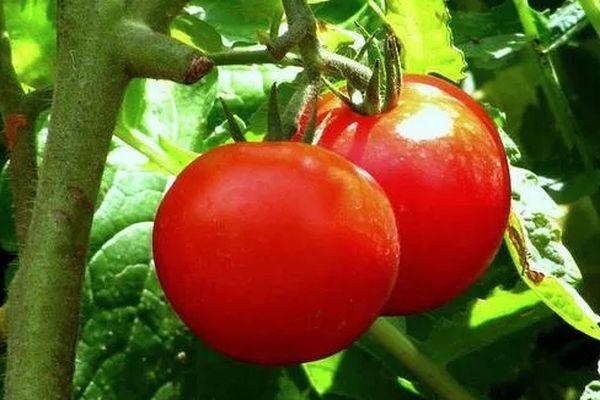
The thin yet dense skin perfectly protects the fruit from cracking during ripening. The tomato flesh is juicy, moderately firm, with a pleasant, slightly sweet flavor. When cut horizontally, chambers containing a small number of seeds are visible.

The variety is undemanding regarding soil composition and can produce a large harvest when grown in relatively poor soil. In cooking, the fruits are used fresh and for canning.
Cultivation techniques for the variety
Due to the early ripening time of the crop, seeds can be sown outdoors. In temperate climates, sowing is done under a double layer of film to protect the plants from frost.
Growing tomatoes without picking increases the yield. Up to 3 kg of tomatoes can be harvested from a single bush, although this will require a later harvest. The Snegiri tomato is typically grown from seedlings.
Carefully prepared soil for seeding allows for the growth of healthy seedlings. The substrate consists of equal parts garden soil and humus. A small amount of washed sand is added to improve the soil structure.
To significantly improve germination, seeds are treated with a growth stimulant before planting. Prepared soil is added to the containers, lightly compacted, and furrows are made 1 cm deep.
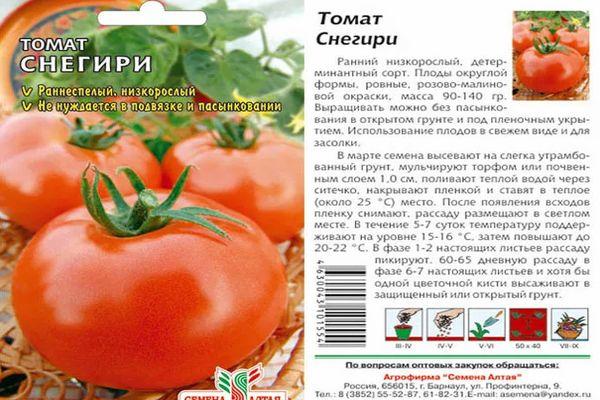
The seeds are placed in the containers, watered, and covered with plastic film to create a greenhouse effect. Germination requires a temperature of 23 to 25°C. Once the sprouts emerge, the temperature is lowered by a few degrees, the plastic film is removed, and the container is moved to a well-lit area.
When the first true leaves appear, the seedlings are pricked out and transplanted into individual pots. The plants are fed with a combination fertilizer containing a high concentration of nitrogen. This will allow the foliage to quickly develop and the stems to strengthen.
Seven to ten days before transplanting, harden off the seedlings by placing them outside or on the balcony for 30 minutes at a time. This time can be gradually increased to several hours. The seedling bed should be prepared well in advance.
When planting tomatoes, consider crop rotation. The best predecessors for tomatoes are legumes, carrots, and cabbage. Formed seedlings with one flower stalk are transplanted into the holes.
Each of them is supplemented with humus or compost, and complex mineral fertilizers according to the manufacturer's recommendations. The distance between bushes should be 30-40 m. Leave 70 cm between rows.

In the first few days after planting, cover the plants with plastic wrap. Tomatoes require infrequent but abundant watering with warm water. Fertilizers are applied at two-week intervals. Fertilizers containing potassium and phosphorus are used. Fertilizers are applied to the roots.
The compact bushes require no additional support. To ensure better air circulation, it's recommended to remove the lower leaves. The Snegir variety is resistant to fungal diseases.
As a preventative measure, the bed is treated with a hot, aqueous solution of potassium permanganate before planting. Young bushes are sprayed with special preparations. Timely weed removal and soil loosening will help protect the plants from damage.
Biological pests can be controlled with insecticides applied before flowering. After fruit set, folk remedies (celandine infusion, a solution of laundry soap and water) are recommended.
Opinions and recommendations of vegetable growers
Due to its undemanding nature in various growing conditions, the Snegiri tomato is becoming popular among gardeners and receiving positive reviews.
Antonina Ivanova, 57 years old, Magnitogorsk
Last season, my neighbors planted the Snegir variety in their garden and offered me a few seedlings. This cold-hardy tomato was perfect for growing in the garden. The seedlings took root in their new location after planting. I periodically loosened the soil, watered them with warm water, and at the end of July, I picked the first fruits from the bush. The fresh tomatoes are very aromatic and have a pleasant, delicate flavor.
Related posts:
 Description of the Snegir potato variety, planting and care instructions
 The best eggplant varieties for growing in a polycarbonate greenhouse: planting and care
 Rules for growing tomatoes in open ground, choosing a variety, planting and care
 How to propagate and grow peas, cultivation technology, and care in open ground
 Methods for planting and propagating cherries at home
 How to properly plant peas in a greenhouse and open ground
 The best grape varieties for growing in the Urals, planting and care rules in summer
 Description of varieties of sowing peas and cultivation, to which family they belong

I planted these tomatoes last year and used a bioactivator for plant growth. BioGrowTo be honest, I don't regret my decision to do this, I recommend buying it, the harvest will please anyone.