
- Which varieties are suitable for growing at home?
- For the Urals and Siberia
- For the Moscow region
- For the South
- Seed preparation and stratification
- Preparing soil and planting material
- Timing and technology of planting
- We create conditions for seedling germination
- Lighting
- Soil composition
- Humidity and temperature
- Rules for caring for tomatoes at home
- Picking
- Watering and fertilizing tomatoes
- Pinching out stepsons
- Tying and shaping the bush
- Pollination
- Treatment against diseases and pests
- When to expect the harvest
In order to grow indoor tomatoesTo grow these plants, you need to choose the right variety, select a container, and prepare the soil. There are some unique considerations when caring for them indoors. Particular attention should be paid to lighting, fertilizing, and pollination. Establish a proper watering schedule and remember to treat for pathogens and pests. This will ensure a bountiful harvest.
Which varieties are suitable for growing at home?
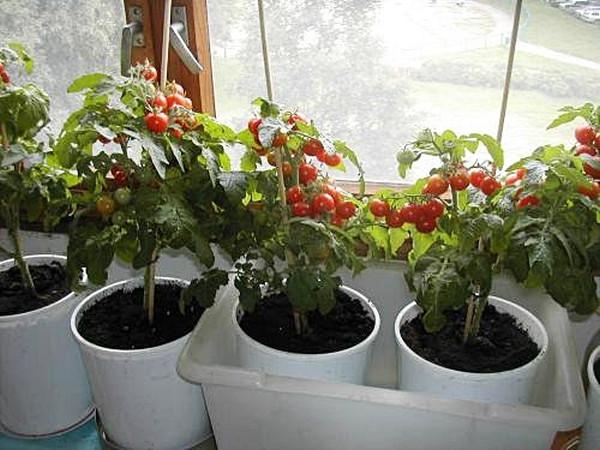
Tomato varieties that thrive in small containers are suitable for growing indoors. These plants have roots that don't spread too much, and their stems are short and strong.
The following are suitable for growing in an apartment:
- low-growing (stem height no higher than 30 cm);
- resistant to lack of light;
- early maturing;
- self-pollinating tomato varieties.
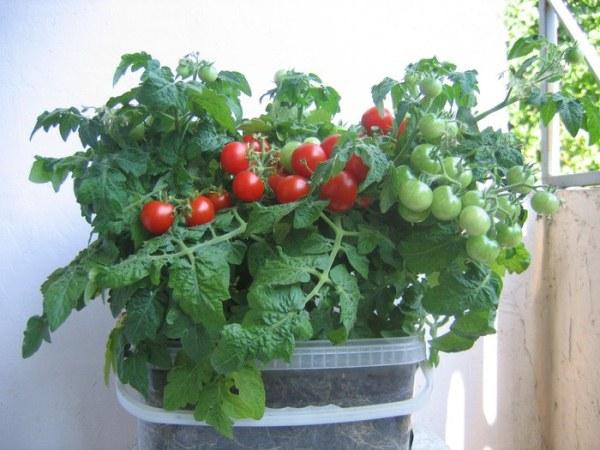
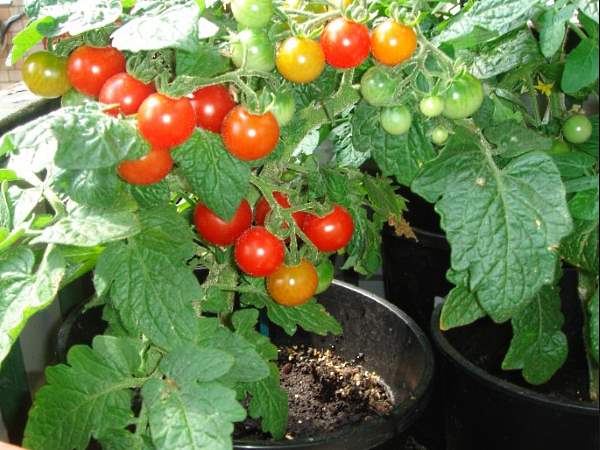
Varieties such as Bonsai, Honey Bunch, Pinocchio, Filippok, Slastena, and Micron feel good in flower pots.
For the Urals and Siberia
For regions where daylight is scarce in any season, the following varieties are suitable:
- Gina;
- Glossy;
- Siberian Express;
- Tayana;
- Iceberg;
- Yamal;
- Nastenka;
- Masha in the North.
For the Moscow region
The following tomato varieties are considered productive and easy to grow in homes in the Moscow region:
- Angelica;
- Pearl;
- Gold;
- Balcony miracle;
- Pygmy;
- Sanka;
- Moscow dawns;
- Bushman.
For the South
Varieties grown in warmer regions of the country must tolerate high temperatures and low humidity. The following varieties will produce high yields:
- Maestro;
- Adelina;
- Pink Andromeda;
- Amiko;
- Asterix;
- Leandra;
- Orpheus.
Seed preparation and stratification
To ensure that the seeds germinate well and the sprouts are strong and disease-free, the material must be selected and prepared in advance:
- Only large, dense seeds are suitable for planting. Selection is done manually or using a salt solution. Place all the seeds in salt water and let them sit for 15 minutes. After this time, empty and spoiled seeds will float to the surface. Any seeds that sink to the bottom should be rinsed and dried.
- Seeds harbor pathogens on their surface, which become active under favorable conditions. To eliminate bacteria, the seedlings are immersed in a potassium permanganate solution for 20 minutes.
- To activate internal processes in seeds, they are soaked in solutions that stimulate growth and development. For this purpose, solutions are prepared using preparations such as Epin, Zircon, and succinic acid.
- To ensure all seedlings germinate, the seeds are germinated. Germination also allows the first shoots to appear a week earlier. The seeds are spread on a damp gauze surface and covered with another layer of damp cloth. The seedlings are then placed in a dark, warm place for two days.
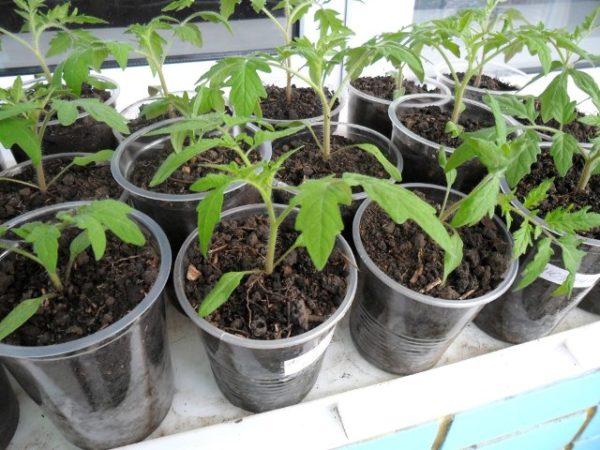
The seeds are initially planted in a common container. Once the seedlings have grown, each plant is transplanted into a separate 500 ml cup. Once eight true leaves have appeared, they should be transplanted into flower pots of at least a liter in size.
Preparing soil and planting material
To plant tomatoes, you need loose, fertile soil with neutral pH and good aeration. General-purpose ready-mixed soil is available at the store. Alternatively, you can make your own soil mix by mixing garden soil with humus, peat, and river sand.
Before sowing seeds, the soil must be disinfected. This can be accomplished by pouring boiling water, a solution of potassium permanganate, or Fitosporin, or by heating it at a high temperature in the oven.
The prepared and processed planting material is then planted in a common container or individual flower pots. A wooden box is ideal for a common container.
Timing and technology of planting
To harvest tomatoes by early summer, begin sowing in early January. However, you can also enjoy a fresh vegetable harvest in winter; in this case, sowing should be done in summer.
Sowing tomato seeds is carried out in the following order:
- prepared soil is poured into the container;
- make furrows 1.5 cm deep;
- spread the seeds out, leaving a distance of 2.5 cm;
- sprinkle with a small layer of soil;
- moisten the soil with a spray bottle;
- cover the container with film;
- The crops are stored in a dark, warm place.
As soon as most of the seedlings appear, the container is moved to a light windowsill and the film is removed.
We create conditions for seedling germination
To know how to grow strong and healthy seedlings, you need to familiarize yourself with the optimal conditions for development.
Lighting
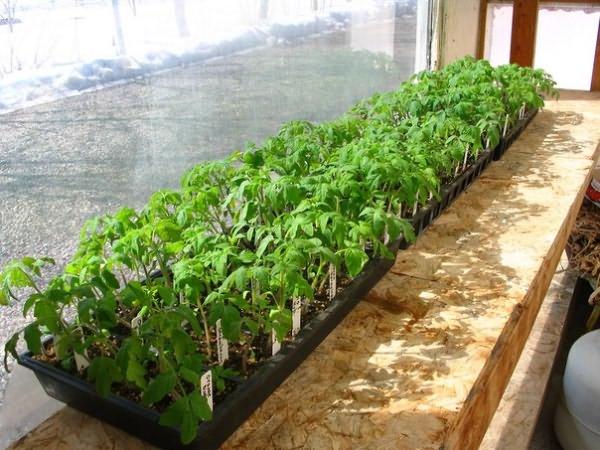
Tomatoes love light. The optimal daylight hours for tomatoes are 15 hours. Therefore, it's best to keep tomato plants on the south or west side of the apartment. It's important to protect the green parts of the plants from direct sunlight.
During winter and spring, additional illumination with special lamps is required (phytolamps, fluorescent lamps, and LED lamps are suitable). Light sources are suspended above the seedlings at a distance of 25 cm.
Soil composition
To ensure healthy vegetable growth and a good harvest, the soil must be selected correctly. It should contain the following components:
- 53% humus;
- 41% black soil;
- 6% sand;
- 200 g wood ash;
- 30 g each of potassium sulfate, urea and superphosphate.
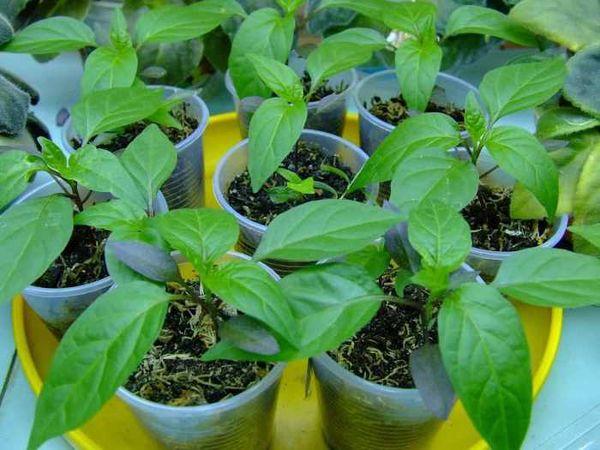
The resulting mixture is poured into a container with holes in the bottom to allow excess moisture to escape.
Humidity and temperature
At each stage of tomato development, a certain air temperature and humidity level must be maintained:
- To ensure the emergence of seedlings, you will need to maintain the room temperature at 21-24 degrees.
- Later, daytime temperatures are lowered to +19 degrees, and nighttime temperatures to +15 degrees.
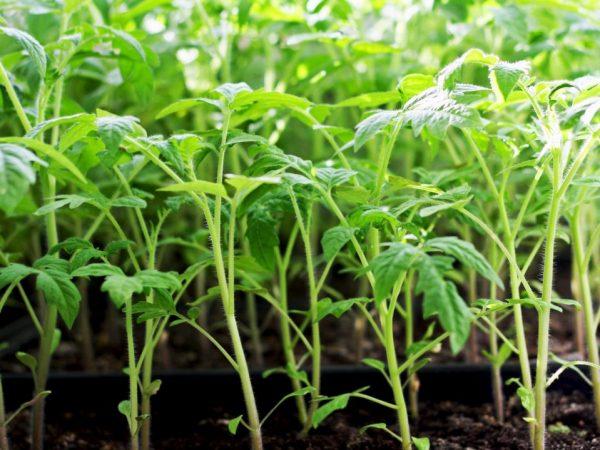
You can reduce the room temperature by ventilating it. A favorable humidity level is considered to be 65%. If the air in the apartment is too dry, periodic misting with water from a spray bottle will be necessary.
Rules for caring for tomatoes at home
Tomato plants require proper care. Regular watering, fertilization, disease control, bush training, and other agricultural practices are included during cultivation.
Picking
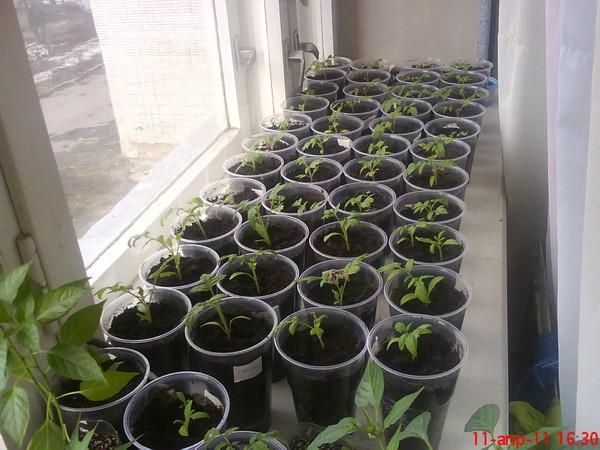
When the first pair of leaves unfurls on each bush, the plants become crowded and begin to shade each other. At this time, the first transplant is performed. This procedure is performed approximately 3.5 weeks after germination.
After 4.5 weeks, transplant the plants again into separate containers. By this time, each plant will have 9-10 pairs of leaves. Choose a larger container, with a capacity of 2-3 liters.
Watering and fertilizing tomatoes
Tomatoes require regular, moderate watering. If the air temperature and humidity are normal, watering should be done once every six days. Use warm, settled water.
To ensure that the supply of nutrients does not become depleted, tomatoes should be fertilized on time:
- The first feeding is done after transplanting. The soil is watered with a solution based on preparations such as "Ukorenitel" or "Kornevin."
- Two weeks before transplanting to a permanent location, fertilize with compounds containing a high nitrogen content.
- Ten days after transplanting to a permanent location, complex mineral compositions are added, for example, Nitroammophoska.
- The crop requires additional components during the period of ovary formation.
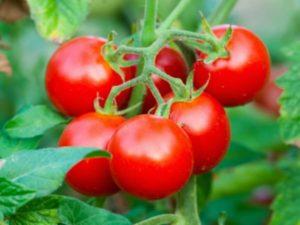
Proper watering and fertilizing will strengthen the immune system and prevent the bushes from wilting.
Pinching out stepsons
Numerous lateral shoots block light and air flow. This can cause tomato plants to stunt their growth. If numerous lateral shoots form, pinch them off. Remove the lateral branches located in the leaf axils.
Tying and shaping the bush
Tomato varieties grown indoors don't require shaping. However, in some cases, additional steps are required:
- If the plant exceeds 28 cm in height, the top should be pinched.
- To ensure that all parts of the bush receive sufficient light and air, the lower rows of leaves are removed.
- It is important to promptly remove old, dried leaves, branches and clusters from which the harvest has already been collected.
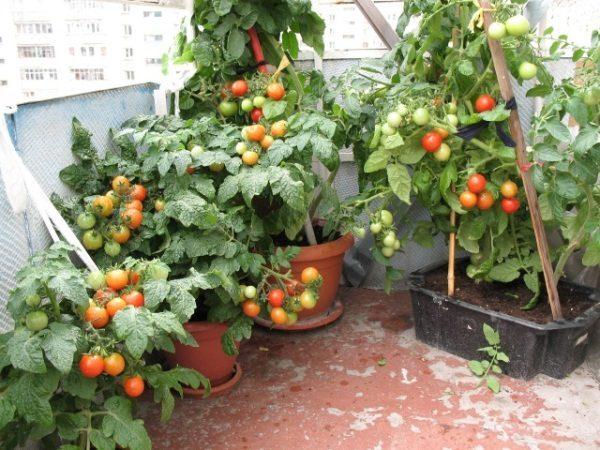
Indoor tomato varieties are characterized by a determinate growth habit and strong stems. However, the stems can bend and break under the weight of the fruit, so they need to be supported with a staking system.
Pollination
Tomatoes grown indoors produce a high-quality harvest without pollination. If desired, pollination can be done independently. Simply brush the flowers with a brush or gently shake the stems during flowering.
Treatment against diseases and pests
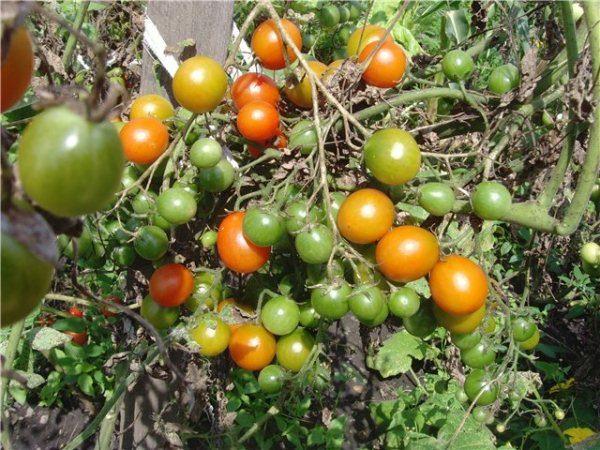
Houseplants are less susceptible to infections and pests. However, problems can arise if the optimal temperature and watering regimen aren't maintained.
To grow a healthy crop, preventative treatments are essential. Traditional recipes are safe and effective. These can include common salt, garlic, yeast, and whey.
When to expect the harvest
The ripening period depends on the variety. On average, the harvest ripens after 4 months. A single bush can yield up to 1.5 kg of ripe tomatoes.
The fruits are picked as soon as the skin begins to turn pink. The harvested fruit is left on the windowsill to ripen.
Related posts:
 What is the best way to feed tomato seedlings to make them plump?
 How to prepare tomato seeds for planting seedlings
 What varieties of tomatoes are best to plant in a polycarbonate greenhouse?
 Description of the Bryanochka cherry variety, planting and care instructions
 What fertilizers and when to use for feeding tomatoes in a greenhouse
 Description and characteristics of the best indeterminate tomato varieties for greenhouses
 The best and most productive tomato varieties for greenhouse cultivation in the Urals, with descriptions
 Description and characteristics of the best seeds of pea varieties and types