
- History of selection
- Description and characteristics of the variety
- Height of a mature tree
- Flowering and ripening period
- Productivity
- Transportability
- Drought resistance
- Frost resistance
- Applications of berries
- Pollinators
- Tyutchevka
- Veda
- Iput
- Taste qualities of fruits
- Advantages and disadvantages
- How to plant
- Recommended timeframes
- Choosing a location
- Southeastern
- Southern
- Southwestern
- Preparing the planting hole
- How to select and prepare planting material
- Selection criteria
- Preparing for landing
- Requirements for neighbors
- Planting diagram
- Care Features
- Watering
- Top dressing
- Protecting seedlings
- Additional measures to protect seedlings from diseases and pests
- Autumn digging and loosening
- Collection and destruction of fallen fruit
- Delicate pruning
- Destruction of undergrowth
- Regular watering
- Top dressing
- Preventive treatment
- Trimming
- Formative
- Sanitary
- Rejuvenating
- Preparing for winter
- Diseases and pests
- Hollow spot
- Gray rot
- Coccomycosis
- Cherry fly
- Cherry sawfly
- Weevil
- Black aphid
- Scab
- Reproduction of culture
- Harvesting and storage
Sweet cherries are one of the most popular crops, yet they are also known for their finicky nature. The main challenge is adapting the plant to low temperatures, even in temperate climates. The Bryanochka cherry variety was developed by breeders to improve the plant's winter hardiness. Gardeners note the advantages of this variety, including its ability to withstand severe frosts, good transportability, and excellent taste.
History of selection
The Bryanochka cherry variety was developed relatively recently – it was added to the national register in 2009. Its creators are breeders M. V. Kanshina, L. I. Zueva, and A. A. Astakhov.
Description and characteristics of the variety
Bryanochka is a versatile cherry variety. The berries are equally suitable for canning and eating fresh. They are also used to make sweet preserves for the winter. The berries can be flash-frozen, after which they can be eaten fresh all winter long without losing their flavor. The berries are juicy and sweet.
The Bryanochka variety, compared to others, is an undemanding plant. Its temperature and climate requirements are lower than those of other varieties.
Height of a mature tree
This is a medium-sized fruit-bearing tree. Even at maturity, it doesn't exceed 4 meters in height. It begins to bear fruit fully in the fourth or fifth year, depending on the quality of care and climate.
This is a late-ripening variety, with ripening beginning only in August. The tree's crown is oval and not too dense, with moderately spreading branches. Thanks to the few leaves on the branches, the berries receive sufficient sunlight during ripening.
This variety is characterized by large, oval-shaped leaves, slightly pointed and serrated. The leaves are a rich green color.
Flowering and ripening period
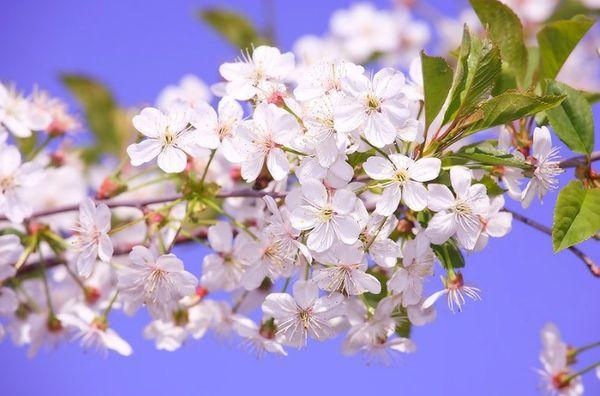
In spring, the tree produces a profusion of flowers. Each inflorescence has three stalks. The flowers are snow-white and consist of five petals that are loosely separated from each other. The anthers and pistils are located close together. Fruiting depends directly on the presence of pollinators.
To ensure that ovaries form on neighboring trees at the same time, they are planted in the same year.
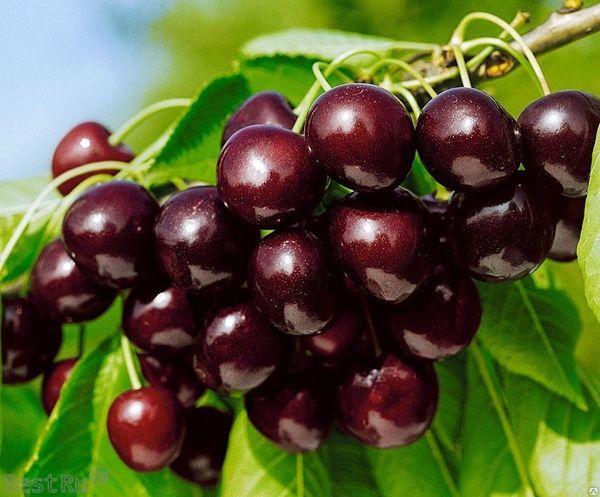
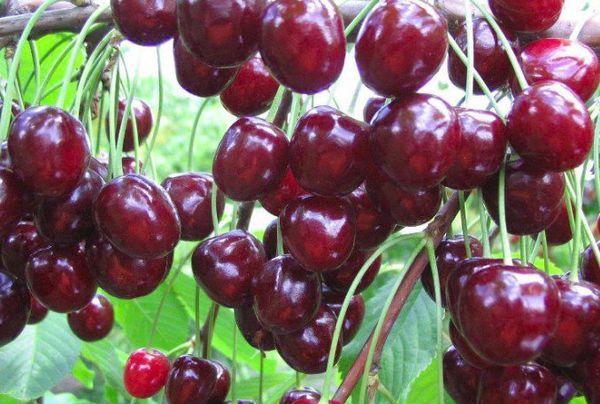
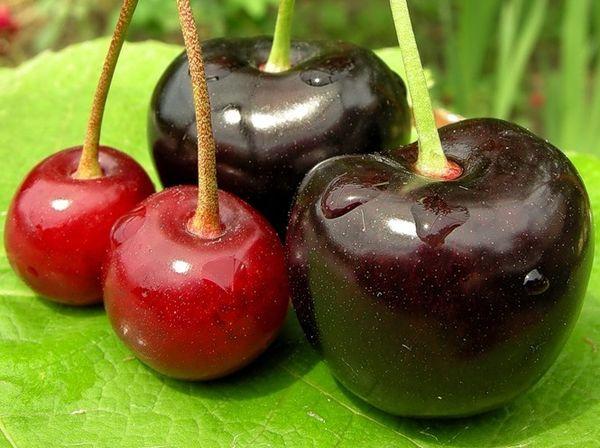
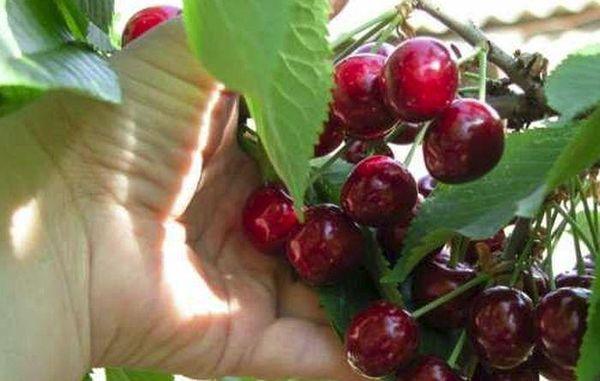
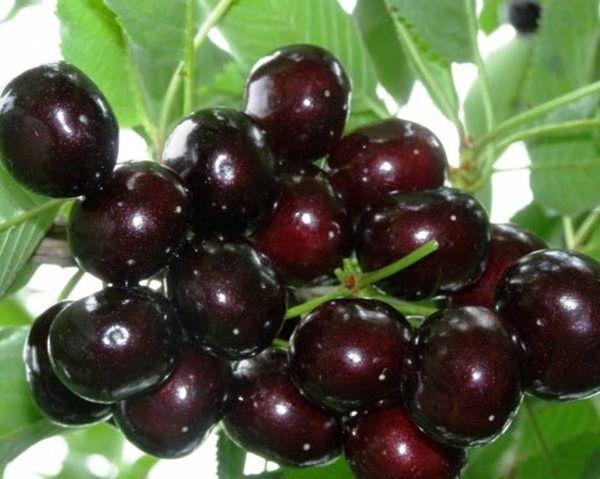
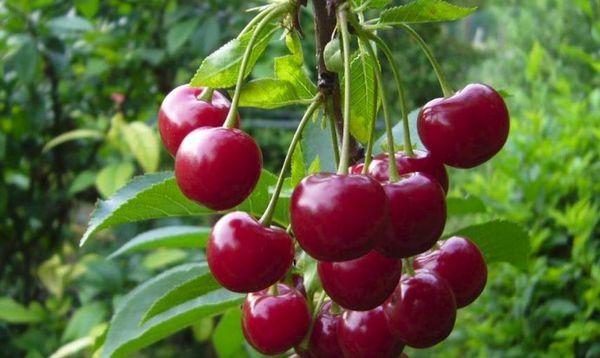
Once ripe, the berries acquire a rich red color. They weigh between 4 and 7 grams, depending on how much sunlight the cherry tree receives. The berries are wide and heart-shaped, with a pointed tip and a flattened base. The flesh is sweet and firm. The pit is small and easily separated from the flesh.
Productivity
If there are no frosts in spring and early summer, and the tree can be protected from diseases, up to 40 kilograms of berries can be harvested from a mature tree.
Agricultural experts consider the fruiting of this variety to be average – up to 90 to 300 centners are obtained per hectare.
Transportability
Bryanochka cherries have a firm consistency and uniform shape, which helps them maintain their marketable appearance for a long time. If you place no more than 7 kilograms of cherries in a single container, they will not become crushed during transportation.
Drought resistance
This variety is considered drought-resistant and doesn't like groundwater levels close to the surface. However, during flowering and ripening, the tree requires watering. It is recommended to do this up to seven times per season.
Frost resistance
The main advantage of this variety is its increased frost resistance. The plant can withstand temperatures down to -30 degrees Celsius. Even at these minimum temperatures, the tree loses less fruit than other varieties. However, if the temperature drops to -3 degrees Celsius during flowering, the yield may decrease.
Applications of berries
The berries are best eaten fresh. Cherries are also used to make preserves, jellies, compotes, and marmalades. They are also successful in making liqueurs and tinctures.
Pollinators
To ensure abundant fruiting, the tree requires the presence of suitable varieties nearby. Therefore, before planting the seedlings, it's important to ensure suitable pollinators are available.

Tyutchevka
It is a good pollinator for Bryanochka. Tyutchevka also has a late ripening period and a medium-height tree. The variety is winter-hardy.
Veda
Another excellent pollinator for the Bryanochka cherry variety. This frost-resistant hybrid ripens late.
Iput
This self-sterile, early-ripening variety tolerates frosts without loss. It makes a good pollinator for Bryanochka.
Taste qualities of fruits
The cherry of this variety is firm, sweet, and juicy. It received a high tasting score of 4.7. Sugar content is 12 percent, and the ascorbic acid content is 16 ml.
Advantages and disadvantages
The advantages of this variety include:
- high productivity;
- annual fruiting;
- frost resistance;
- taste qualities.
The disadvantage is that the variety is self-sterile, so pollinators are required for fruiting.
How to plant
Planting the Bryanochka cherry variety is the same as planting other trees of this type.
Recommended timeframes
If you plan to plant seedlings in a warm climate, it's recommended to do so in the fall to allow the tree to establish itself before the cold weather sets in. In regions with severe frosts, planting cherries in the fall is not recommended, as the cold can kill the seedling. In this case, spring is the best time to plant.
It is recommended to plant the seedling before the buds begin to swell.
Choosing a location
The plant is best planted on a level site or a slight slope with plenty of sunlight. The chosen site should be free of groundwater, as this variety does not like excessive moisture. A south-facing site is recommended. A slight slope with loamy soil is ideal – this will allow moisture to penetrate freely and prevent it from stagnating in one spot.
Southeastern
Planting a tree in the southeast is only recommended if there are no drafts and the area is well-lit. If the chosen site contains objects that will shade the sapling, it's best to choose a different planting location.
Southern
The best option is to choose a planting site on the south side of the plot. This will ensure the tree receives sufficient light and is protected from cold winds.
Southwestern
In this case, it's best to choose a sunny, elevated location. It's important to ensure the area is protected from drafts and cold winds.
Preparing the planting hole
It's customary to prepare the planting hole in advance. This procedure is done in the fall, even if planting is planned for the spring.
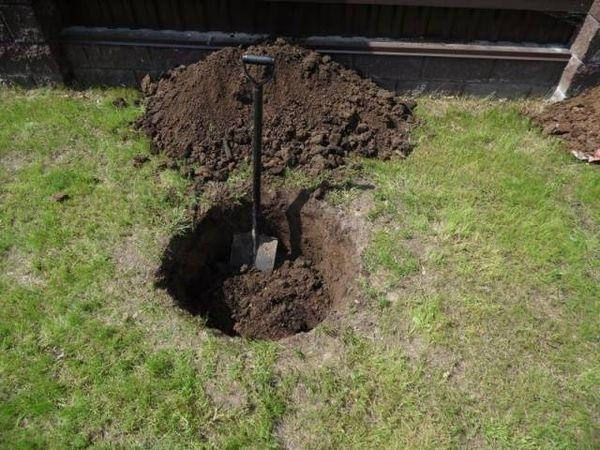
If the soil is highly acidic, add lime to the hole. If planting is planned for the fall, prepare the hole 2-3 weeks before planting. Make a hole 70 x 90 centimeters in size.
Add fertilizers to the dug hole: phosphate, organic, and potassium. The use of fertilizers is also encouraged. Add fertilizer to the soil two weeks before planting young plants.
How to select and prepare planting material
Purchase planting material only from reputable stores. Before purchasing, carefully inspect all seedlings and select only the strongest ones. It's important to pay attention to the root system—it should be strong, healthy, and well-developed. It's recommended to look for graft marks on the trunk—this will indicate the variety.
Selection criteria
You should pay attention to the following characteristics of the seedling:
- number of branches;
- there can only be one conductor; otherwise, the tree may break and die at the beginning of fruiting;
- The roots should be slightly moist and have a healthy appearance.
During transportation, it is recommended to wrap the roots of the tree with a damp cloth, then wrap it in plastic.
Preparing for landing
It's best to choose a seedling that's no more than two years old. The roots should be about 25 centimeters long.

Just before planting, the tree should be dipped in water to enrich it with moisture. To disinfect the plant, you can use a solution of Fitosporin or Kornevin.
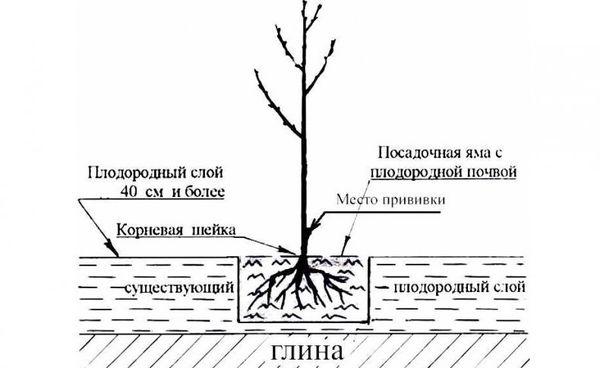
Place the seedling in the previously prepared hole, spread the roots evenly, and cover them with soil. Leave no empty spaces between the roots. Firmly compact the soil around the seedling. Dig a trench around the tree and fill it with two buckets of water.
Requirements for neighbors
The best neighbors for the Bryanochka variety include:
- other varieties of cherries;
- cherry plum;
- cherries;
- plums.
The tree has a fairly sparse crown, so a flower bed can be created under the tree.
It's not recommended to plant apple, pear, or currant trees next to cherry trees. This is because cherry trees have a strong root system, which prevents these plants from developing.
Planting diagram
There should be at least 3 meters of space between plants. It's recommended to plant several seedlings at once – they will bloom at the same time and produce a good harvest.
Care Features
Proper care of your cherry tree will help keep it healthy, and timely action will help ensure a good harvest.
Watering
Cherries don't like excessive moisture. They only require plentiful watering 4-5 times throughout the season. The only exception is during prolonged droughts, when more frequent watering is needed.
The first watering should be done in early spring before the growing season begins. The second – during flowering. The third – when berries are forming. The fourth – in late autumn. The last watering is the most important.
Cherry trees do not tolerate excess moisture, so during prolonged rains the ground around the tree should be covered.
For watering, use settled, not cold water.
Top dressing
Fertilizing should be done at the same time as watering. Cherry trees don't require additional feeding for the first few years. Fertilizing can begin in the third or fourth year, using the following schedule:
- nitrogen fertilizers – during the growing season;
- organic – during the period of ovary formation;
- complex – late autumn.
Protecting seedlings
Before the first winter, the seedling should be covered with paper bags or corrugated cardboard. The material should be secured in several places, but not too tightly. This precaution will not only protect the young tree from frost but also prevent hares from nibbling it. In subsequent years, there is no need to cover the cherry tree, as it is quite frost-hardy.
Additional measures to protect seedlings from diseases and pests
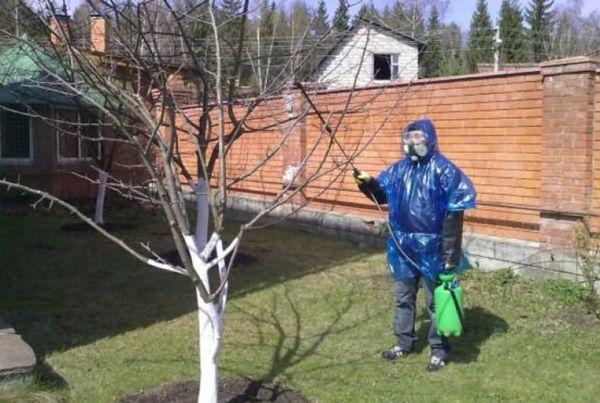
To prevent tree diseases, all stone fruit plants in the garden should be treated in the spring with a solution of Bordeaux mixture and copper sulfate (1%). Almost all types of damage that can occur in this cherry variety can be prevented with copper-containing solutions.
Autumn digging and loosening
It's important to keep the area around young trees free of overgrowth. Regular loosening of the soil around the plant and digging the soil in the fall are essential.
Collection and destruction of fallen fruit
Fallen fruit can cause various diseases. For this reason, it's important to collect fallen fruit in a timely manner every year. Leaves and affected shoots should also be removed. All of these should be removed from the area and destroyed.
Delicate pruning
Pruning should be done very carefully, removing shoots only when necessary. It's important not to damage the tree. After pruning, treat the cuts with garden pitch.
Destruction of undergrowth
Cherry is one of those trees that produces a large number of root suckers as it grows. Moreover, the older the tree, the more suckers it will produce. To remove them, it's best to use pruning shears, cutting the suckers at a height of up to 30 centimeters from the ground.
Regular watering
Cherry trees don't require frequent watering. Moisturizing should be added to the soil only a few times a year, following the schedule described above.
Top dressing
Regular fertilization will help increase the tree's yield and promote healthy growth. However, mindless fertilization is also not recommended – it should be timely and nutritious.
Preventive treatment
To ensure a plant grows strong and healthy, preventative treatment is essential. This includes spring spraying, tree-trunk treatment, and various types of pruning.
Trimming
At different stages of a tree's growth, it requires different types of pruning. This can be formative, sanitary, or rejuvenating.
Formative
This type of pruning should be performed every spring, beginning in the tree's first year of growth. Each year, a new crown layer should be formed, leaving only the strongest shoots. All other branches should be pruned.
Sanitary
The procedure involves removing damaged, dead, or frost-damaged branches. Pruning is performed in the fall to help the tree survive the winter frosts.
Rejuvenating
If a tree has not been pruned for several years, its crown may become too dense, which will inevitably affect the yield.
Rejuvenating pruning is essential to extend the tree's lifespan and increase fruiting.
Preparing for winter
Winter is the time when the tree needs to rest and recharge for the new fruiting season. Although Bryanochka is considered a frost-hardy variety, it needs to be insulated before the cold weather sets in. Pine needles or burlap can be used for this purpose.
If wild animals are frequenting the area, the tree trunk should be covered with plywood or hardboard sheets. This is to protect the bark from damage. Before the onset of frost, the tree should be watered, as damp soil does not freeze as quickly.
Diseases and pests
Like any fruit tree, the Bryanochka cherry variety is susceptible to diseases and pests. To prevent the plant's demise, control measures are necessary.
Hollow spot
This disease causes brown spots to appear on the leaves, followed by holes. Cracks may appear on the branches, with gum leaking from them.
To cure the disease, all affected shoots should be immediately removed and burned. The soil around the trunk should be dug up. Afterwards, the tree should be sprayed with copper sulfate.
Gray rot
The disease is also known as moniliosis. In damp weather, brown spots appear on the leaves, which eventually become covered with a film.
Shoots should be cut back 10 centimeters below the affected area. To restore the tree's health, use a fungicide such as Horus, Topsin, or Azozen.
Coccomycosis
Brown spots appear on the upper side of the leaves. Over time, they form into one large spot, and the leaf itself begins to dry out. By summer, the tree may become bare.
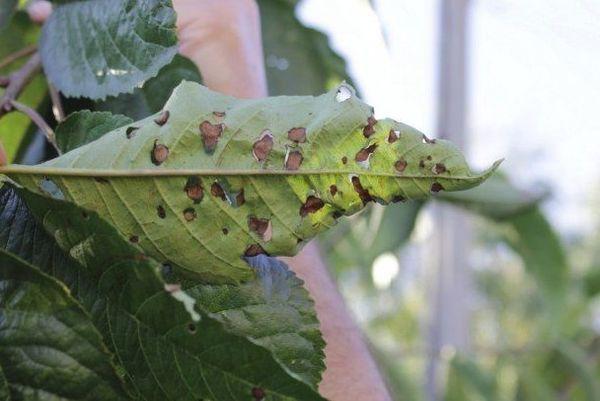
All fallen leaves should be removed from the area and burned. After 10 days, the cherry tree should be sprayed with fungicides, Bordeaux mixture, or copper sulfate.
Cherry fly
A small fly with striped wings lays its larvae in green berries. After eating the pulp, they transform into flies.
Products such as Fitoverm and Healthy Garden are suitable for pest control. Spraying should be done during the flowering period, before petals begin to fall.
Cherry sawfly
The beetle lays eggs on the leaves and seals them shut. The larvae completely consume the leaves, descend to the ground, and burrow into it.
For prevention, dig up the soil around the trunk in spring and fall. Treatments such as Karate, Karbofos, and Aktara have also proven effective.
Weevil
A red-green beetle with a proboscis. It destroys ovaries and berries by making holes in them. It prefers to overwinter in the soil beneath the plant.
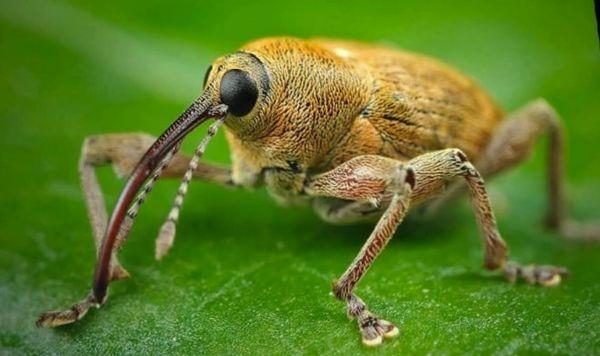
Every year in the fall you should dig up the soil, you can make trapping belts, use insecticides.
Black aphid
There are a large number of ants on the tree, the leaves are curled, and small black bugs can be found around.
You can fight the pest using such preparations as Fitoverm, Iskra, and Intavir.
Scab
On the leaves and berries one can observe olive-brown velvety spots, abundantly covered with fungal spores.
To prevent this, all fallen leaves and berries should be promptly removed and disposed of, and the soil around the tree trunks should be dug up and loosened.
Reproduction of culture
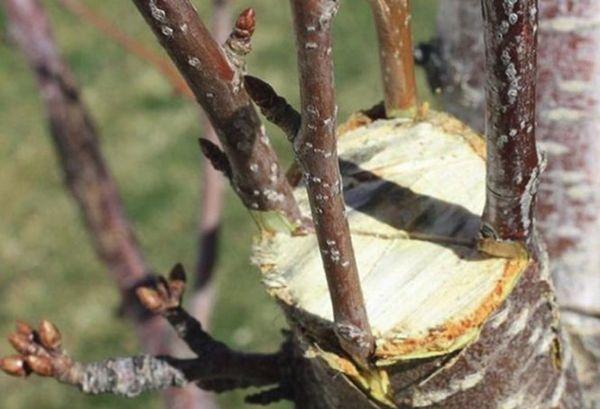
For reproduction cherries can be grown using the grafting method, as well as growing seeds. Seedlings grown from seeds may not always retain the characteristics of the parent variety. For this reason, they are often used as rootstocks.
Harvesting and storage
Late-ripening cherry varieties are suitable for longer storage. This requires firm flesh, which Bryanochka possesses. It is recommended to pick the berries in the morning, as this is when the fruit is at its firmest.
If cherries are not to be preserved, but, for example, to be kept in the refrigerator, they should be picked only with the stems.
When harvesting, do not mix damaged fruits with whole ones. The stem on which the berry is attached indicates its freshness; brown stems indicate that the fruit is no longer fresh.
Even if all the rules are followed, cherries shouldn't be stored for more than a week. Drying, freezing, or canning can help extend this shelf life.
At room temperature, fermentation begins inside the berries, and they quickly spoil. At this stage, they can no longer be preserved or frozen.
Related posts:
 Planting and caring for cherries, feeding and growing rules
 Descriptions of the 20 best cherry varieties for the Moscow region, their planting and care
 Description and cultivation of the Bryansk pink cherry variety, pollinators
 Description and characteristics of the Veda cherry variety, planting and care scheme
 The health benefits and harms of cherries, rules of consumption, and their effects on the body
 Description of the Drogana yellow cherry variety, planting and care
 Characteristics and description of the Large-fruited cherry variety, pollinators and care
 Description of the cherry variety Lyubimitsa Astakhova, planting and care