
- History of selection
- Description and Features
- Characteristics of the variety
- Drought resistance
- Frost resistance
- Productivity and fruiting
- Taste qualities
- Disease resistance
- Scab
- Moniliosis
- Clusterosporiasis
- Gum flow
- Applications of berries
- Pollinators
- Francis
- Surprise
- Black Daibera
- Bigarro Oratovsky
- Valery Chkalov
- Advantages and disadvantages
- How to plant correctly
- Recommendations for choosing deadlines
- Requirements for the location
- Requirements for neighbors
- Selection and preparation of planting material
- Planting diagram
- Aftercare
- Watering
- Sanitary pruning
- Fertilizer
- Whitewashing with slaked lime
- Preparing for winter
- Crown formation
- Diseases and pests
- Hollow spot
- Gum flow
- Scab
- Monilial burn
- Aphid
- Weevil
- Cherry fly
- Harvesting and storage
Large-fruited and sweet, sweet cherries are a favorite summer treat. The berries ripen in late June and are immediately available for sale. You can grow this variety yourself at your own dacha. Unlike cherries, sweet cherries are more heat-loving. They can withstand the frosty winters of central Russia, but sometimes even at temperatures as low as 15 degrees below zero, half of the flower buds are damaged.
History of selection
The Krupnoplodnaya cherry variety was developed back in the 1960s by Ukrainian breeders Mikhail Oratovsky and Nikolai Turovtsev. The breeding work was conducted at the Melitopol Horticultural Experimental Station. The research focused on crops suitable for cultivation in the warm climates of Ukraine and central Russia.
The new variety was created by crossing the Napoleon White cherry with several other varieties, including the Valery Chkalov, Elton, and Zhabule cherries. The result was a tree with large berries that ripen in late June. The cultivar underwent extensive testing. The Krupnoplodnaya cherry was officially added to the variety register in 1983.
Description and Features
The Krupnoplodnaya cherry tree grows up to 4-5 meters tall. Growth should be controlled through careful pruning. This cherry tree grows very quickly. The crown is not very dense and has a spherical shape. Even without formative pruning, few skeletal branches emerge. The main branches are strong and thick. The bark is brown and rough.
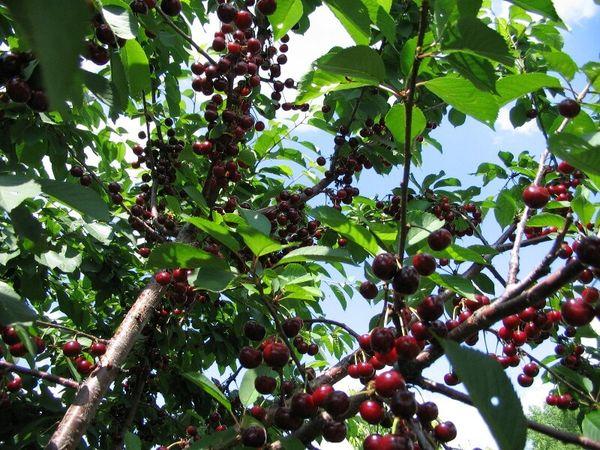
The leaves are large, oblong, with zigzag edges, and are a rich green. The flowers are large, white, with five petals. They are gathered in umbel-shaped inflorescences of five to six. Cherry blossoms begin to bloom in May, after the threat of frost has passed.
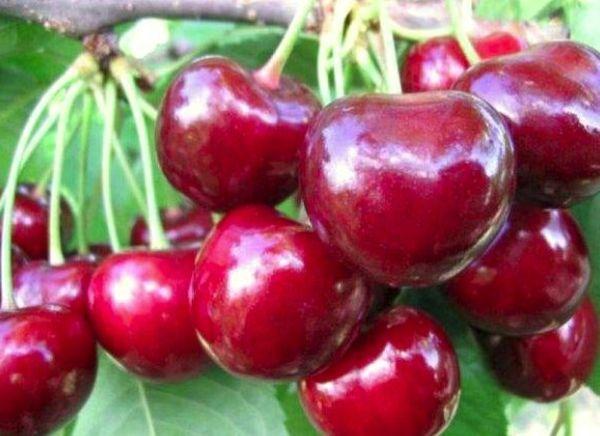
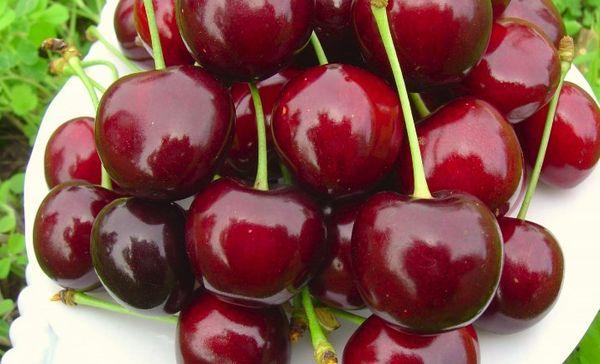
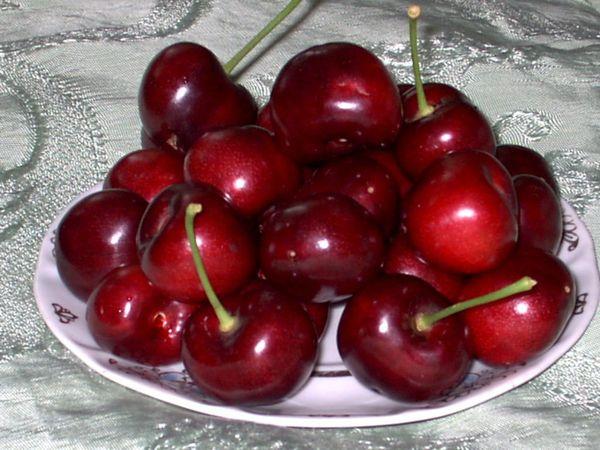
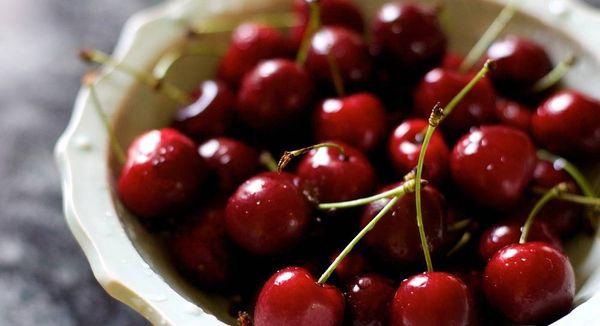
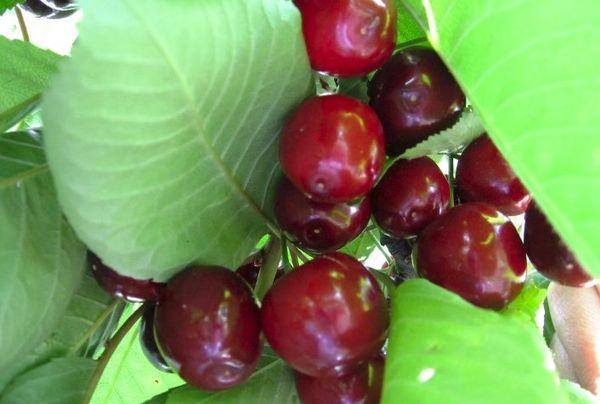
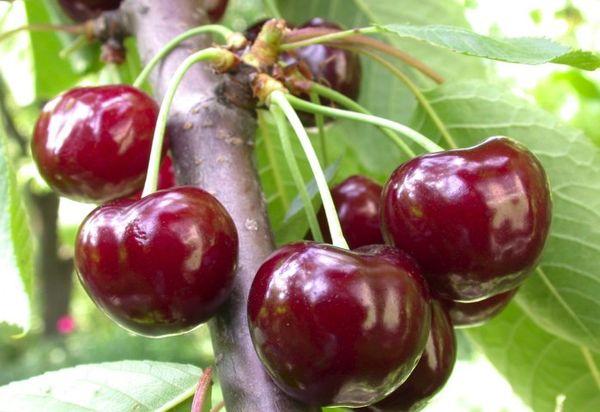
The fruits are striking in their size. Each berry weighs 10-14 grams, sometimes reaching 18 grams. The berries are round and dark red. When cut, they resemble a heart. The skin is firm but thin, easily peeled. The flesh is cartilaginous, juicy, dark cherry-colored, and has a sweet and tart taste.
The stone is large and separates easily from the pulp. The berries have a beautiful shape that they retain during long-term storage and transportation. This variety is suitable for commercial cultivation.
Characteristics of the variety
The Krupnoplodnaya sweet cherry has a number of positive qualities, making it very easy to grow in any home. The tree will bear fruit regularly if properly cared for.
Drought resistance
Thanks to the unique characteristics of its root system, the tree can easily survive dry periods by extracting moisture from the lower soil layers. However, to ensure a large berry harvest, cherry trees need to be watered during flowering and fruit set, especially in the event of prolonged drought.
Frost resistance
This variety is recommended for growing in warm climates; trees can be planted in central Russia. Flower buds do not freeze at winter temperatures of -10 to -20 degrees Celsius. If the air temperature drops to -30 degrees Celsius, the tree may freeze. In this case, half of the flower buds will be damaged. The risk of frost damage increases in diseased trees growing in poor soil and trees depleted by heavy crops.
Productivity and fruiting
The first harvest of sweet berries can be harvested 3-4 years after planting. A ten-year-old tree produces 44-56 kilograms of cherries per season. This variety is known for its regular fruiting. The tree bears fruit on the branchlets and the previous year's growth every year, without interruption. The cherry tree lives for about 30 years.
Taste qualities
This is a dessert variety with excellent flavor characteristics. The tasting score is 4.6 out of 5. The berries are sweet and tart. The sugar content is almost 10 percent. Cherries are rich in vitamin C and other beneficial substances.

Disease resistance
The variety is resistant to rot and many fungal diseases. Cherries are rarely affected by diseases if fallen leaves are removed from the tree's trunk in the fall, and preventative treatments are carried out against major diseases in the spring, along with soil fertilization.
Scab
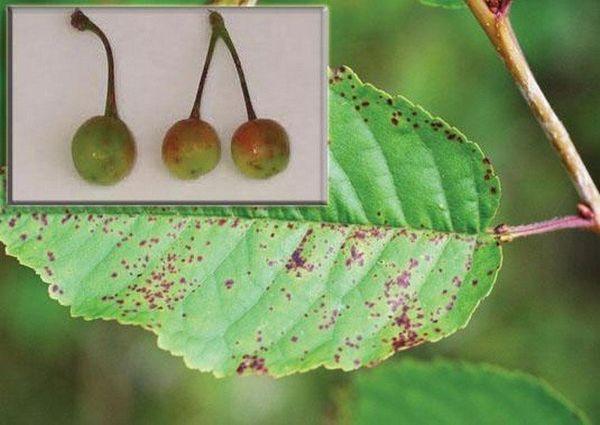
This fungal infection, which affects leaves and berries, can lead to partial crop losses. The fungus is active in warm, humid weather and overwinters in fallen leaves and last year's fruit remaining on the tree. With timely fertilization with superphosphate and removal of fallen leaves, the risk of disease is low.
Moniliosis
This is a fungal disease that causes fruit rot and the appearance of gray mold pads. The variety is resistant to moniliosis. Proper cherry care can help reduce the risk of fungal infection.
Clusterosporiasis
This is a fungal disease that causes holes in the leaves. The disease progresses in parallel with gummosis, that is, when the wood is damaged. The Large-fruited cherry tree is relatively resistant to this disease.
Gum flow
Gum flow occurs when the bark is mechanically damaged. Gum oozes from cracks and wounds. Trees growing in acidic, wet, or heavy, clayey soils are most often affected.
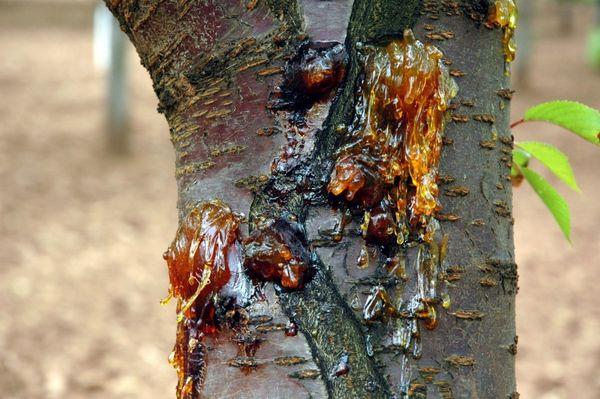
Gum formation can be caused by sunburn or severe frost. Under a combination of various unfavorable factors, this condition can occur on the Krupnoplodnaya cherry tree.
Applications of berries
Cherries can be eaten fresh or used to make compotes, jams, juices, wines, and liqueurs. The berries are also used in delicious desserts, baked goods, and creams. Sweet cherries can be made into candied fruit or marmalade. This variety is not suitable for freezing.
Pollinators
The Krupnoplodaya cherry is considered partially self-fertile. To ensure a good harvest of berries, several pollinator trees need to be planted nearby.
Francis
This cherry tree blooms and bears fruit at the same time as the Krupnolodnaya variety. However, the berries are much smaller. A single Francis cherry weighs only 6 grams. The color is yellowish-pink, and the flavor is slightly sweet. The first harvest of berries can be collected in the fifth year. At temperatures below -24 degrees Celsius, 50 percent of the flower buds are damaged.
Surprise
This winter-hardy tree begins flowering and fruiting at the same time as the Krupnoplodnaya variety. The berries are small, weighing 7 grams, and dark burgundy in color. This variety is resistant to diseases and insect pests.
Black Daibera
A very sweet cherry variety with medium-sized, dark-red berries. The tree blooms and bears fruit at the same time as the Krupnoplodnaya variety. It is characterized by low frost resistance. This variety is best planted in southern latitudes.
Bigarro Oratovsky
Despite its name, this is a domestic variety well suited to growing in warm climates. It can serve as a pollinator for the Krupnoplodnaya variety, as it has the same flowering period. Bigarreau Oratovsky's berries are small, dark red, and slightly sweet.
Valery Chkalov
This variety was bred for cultivation in southern latitudes. However, even in the central zone, it retains half its yield in cases of persistent frost. The berries, weighing 8 grams, are dark cherry in color and have a sweet taste.
Advantages and disadvantages
Advantages of the variety:
- large size of berries;
- excellent taste characteristics;
- commercial appearance of berries;
- high transportability;
- stable yield.
Disadvantages of large-fruited cherries:
- low frost resistance;
- tendency to crack when exposed to excess moisture;
- need for pollinators.
How to plant correctly
For planting, select varietal seedlings are purchased and immediately transplanted to their permanent location. The hole for the cherry tree is prepared 1-2 months in advance.
Recommendations for choosing deadlines
You can plant the Krupnoplodnaya cherry tree in early spring, immediately after the snow melts, or in early October. Fall planting is preferable, as this season provides favorable conditions for root development.
The tree should be planted 20-35 days before the onset of frost to allow it time to establish itself in its new location. Fall planting is not suitable for northern regions. Young trees do not respond well to cold temperatures and may freeze in winter.
In warm climates, the tree can be planted in mid-March, immediately after the snow melts. To ensure the sapling takes root, it needs to be watered regularly in the first few weeks after planting.
Requirements for the location
It's best to plant the Krupnoplodnaya cherry tree on the south side of the plot, in a sunny spot. The tree dislikes shade and excessively boggy soil. The chosen planting site should be protected from cold winds.
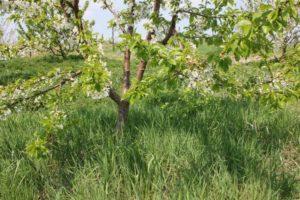
When choosing a suitable site for a cherry tree, consider the soil conditions. Loamy or sandy loam soil is ideal. If the soil is too clayey and nutrient-poor, you can dig a larger hole, amend the selected soil with peat, sand, and humus, and then backfill.
Requirements for neighbors
It's best to plant several different cherry varieties near Krupnoplodnaya to act as pollinators. The distance from the neighboring tree should be 3-5 meters.
Selection and preparation of planting material
Before planting, you should buy seedlings that are 1-2 years old, not older. It's best to buy planting material from nurseries or garden centers. A young cultivar must have a grafted site. An ungrafted seedling may be a wild plant.
A young tree may have an open or closed root system. If the roots are visible, they can be carefully inspected for rot and then placed in a nutrient solution with Kornevin or slurry for several hours.
It's impossible to check the root system of container-grown seedlings. However, you can inspect the branches and trunk of such trees. The branches should be firm, and the buds should be moist. The bark should be smooth and undamaged.
Planting diagram
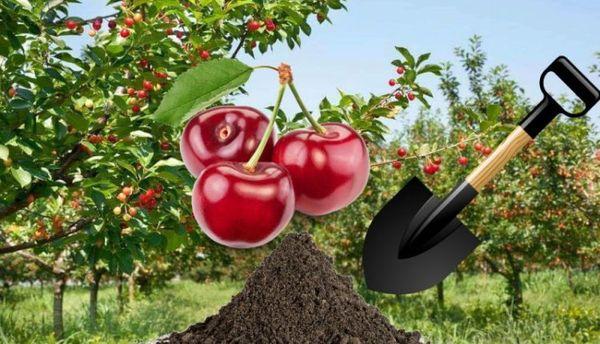
To plant large-fruited cherries, dig a hole 70x70 centimeters deep. Add some crushed stone to the bottom for drainage. The dug soil is then mixed with a bucket of well-rotted compost, peat, sand, potassium sulfate, and superphosphate (100 grams each), dolomite flour, and wood ash (300 grams).
Pour two-thirds of the prepared soil mixture into the hole. You can insert a stake for support. Place the seedling on top, spread its roots, and cover with soil, leaving 5 centimeters below the root collar. The graft should remain above the soil surface. Firm the soil around the tree. Then pour two buckets of water under the root. You can mulch the area around the tree with peat or sawdust.
Aftercare
The Krupnoplodnaya cherry tree requires minimal care. The main things to keep the tree's trunk area clean, fertilize regularly, prune branches that crowd the crown, and perform preventative treatments to protect against diseases and insect pests.
Watering
Cherry trees generally have shallow roots, with only a few reaching a depth of 1.5-2 meters, where water reserves may be present. Immediately after planting, young trees are watered every three days. A bucket of water is poured under the roots. Mature trees are watered only during droughts.
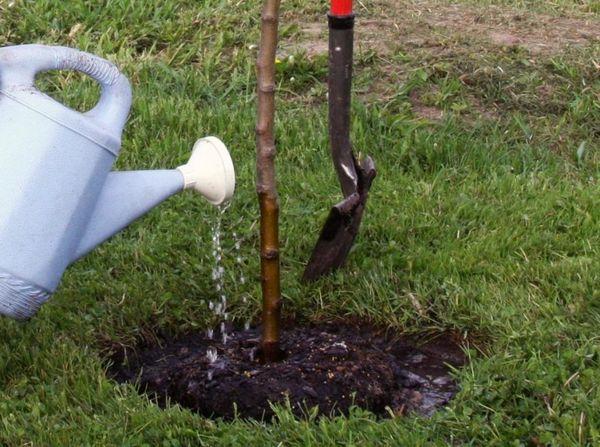
Cherry trees require moist soil during flowering and fruit set. During this period, water the tree weekly, applying 2-5 buckets of water at the roots.
When the berries begin to ripen, watering is reduced. Overwatering the soil can cause the fruit to crack. In the fall, before the onset of cold weather, a moisture-replenishing watering is essential.
Sanitary pruning
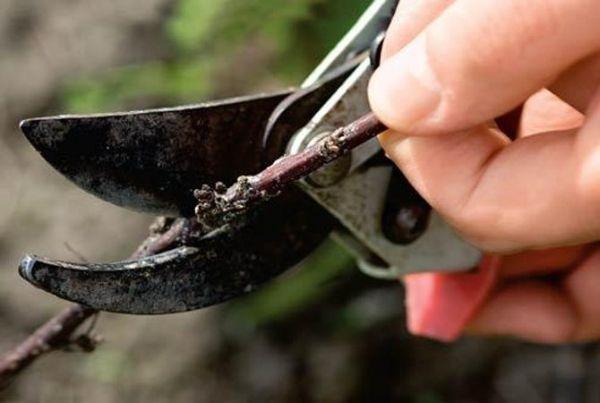
Weak and diseased branches can be pruned in early spring, before the leaves emerge, or in late fall, after the leaves have fallen. During sanitary pruning, remove all remaining leaves and fruit, as they may harbor spores of fungi harmful to cherry trees. Remove pruned branches from the tree's surrounding area, and clean out any deep wounds, treat them with a copper sulfate solution, and then seal them with garden pitch.
Fertilizer
During the first few years, the plant should receive sufficient nutrients from the planting hole. A young tree can be fed in early spring with just a weak urea solution. During the fruiting period, a mature tree requires more intensive feeding.

In the spring, before flowering, add 100 grams of superphosphate and potassium sulfate to the tree's trunk. To reduce acidity, add a little wood ash to the soil. In the summer, the foliage can be sprayed with a weak solution of urea and boric acid. In the fall, around October, the tree's trunk is mulched with humus, and in the spring, around April, it is dug into the soil.
Whitewashing with slaked lime
The tree trunk is whitewashed with slaked lime in early spring or late fall, before frost sets in. This treatment protects the cherry tree from diseases, insects, rodents, as well as sunburn and frost cracks.
Preparing for winter
The tree is insulated in late autumn, before the onset of frost. The area around the trunk is mulched with peat and humus, and the trunk is tied with burlap. You can wrap the tree with roofing felt and surround it with spruce branches. This will protect the bark from rodents. In winter, snow should be constantly added to the tree and compacted immediately.
Crown formation
Two-year-old seedlings purchased from a nursery already have a formed crown. For home-grown trees, the central trunk should be shortened by a third during the first year. For the second season, leave 3-4 skeletal branches and prune the rest. All branches should also be trimmed back slightly.
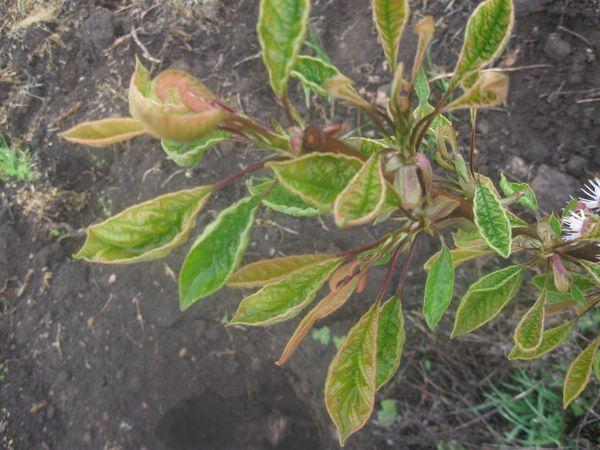
In the third year, remove only branches and suckers that thicken the crown, leaving the branch tips intact. In the fourth year, remove excess shoots and branches growing below the main stems. Pruning is best done in early spring; this will delay flowering and prevent flowers from being killed by subsequent frosts. All large cuts and wounds should be sealed with garden pitch.
Diseases and pests
Cherry trees growing in a dry, hot climate rarely get sick. After all, fungi don't thrive at high temperatures. However, warm weather won't protect the plants from insect attacks.
In the central part of Russia, where summer rainfall is high, trees can be susceptible to various rots. Timely preventative treatments can prevent these diseases. In early spring, the trunk is coated with Bordeaux mixture, and the area around the trunk is watered with a copper sulfate solution. In summer, the foliage can be treated with fungicides and insecticides.
Hollow spot
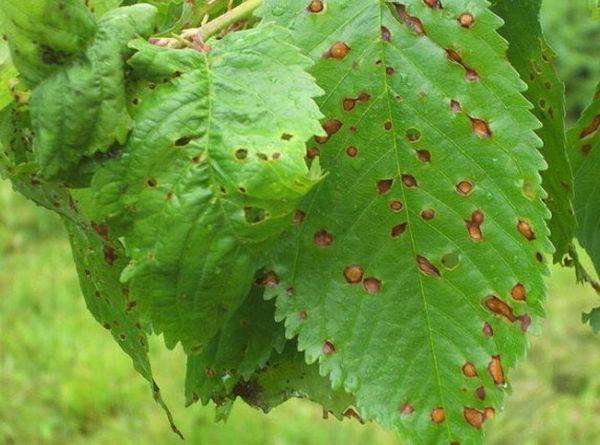
A disease that causes spots with a crimson border to appear on the leaves, followed by holes. Treatment with a fungicide (Trichodermin, Gliocladin) prevents the spotting. Urea fertilizer, as well as fungicides such as Bordeaux mixture or copper sulfate, are used for prevention.
Gum flow
Gum leaks when the tree bark is damaged. If a wound is discovered, clean out the rot, treat it with a copper sulfate solution, and seal it with garden pitch.
Scab
A disease that causes dark spots on fruits and leaves. Scab can be prevented by spraying with fungicides (Cuprozan, copper sulfate).
Monilial burn
A disease that causes leaves to appear sunburned. Spraying with a solution of Urea or Horus fungicide can help prevent the disease.
Aphid
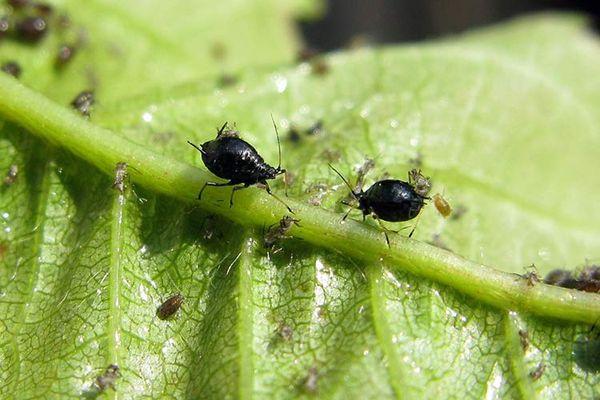
An insect that feeds on leaf sap and causes yellowing of foliage. Spraying with insecticides such as Inta-Vir, Aktara, and Insegar can help control aphids. Urea can be used as a preventative measure.
Weevil
An insect that damages cherry blossoms, buds, and ovaries. Insecticides (Actellic) are used to control the weevil.
Cherry fly
An insect that lays eggs on berries. The fly larvae feed on the fruit. Spraying with insecticides such as Iskra, Karate, Alatar, Decis, and Aktara prevents the pest.
Harvesting and storage
The harvest is done when the berries are ripe, usually in late June or early July. Fresh berries can be stored in the refrigerator for two weeks. It's best to process cherries, making jam or compote for the winter. Berries in syrup are the perfect addition to any dessert.
Related posts:
 Descriptions of the 20 best cherry varieties for the Moscow region, their planting and care
 Description of the Drogana yellow cherry variety, planting and care
 Planting and caring for cherries, feeding and growing rules
 The health benefits and harms of cherries, rules of consumption, and their effects on the body
 Description of the best cherry varieties and cultivation in the Urals, planting and care
 Description and cultivation of the Bryansk pink cherry variety, pollinators
 Description of the Vasilisa cherry variety, cultivation and care
 Description of the Bryanochka cherry variety, planting and care instructions