
- History of selection
- Description and characteristics of the culture
- Characteristics of the variety
- Drought and frost resistance
- Pollination
- Flowering period
- Ripening time
- Productivity and fruiting
- Applications of berries
- Resistance to diseases and pests
- Growing regions
- Central
- Middle zone
- Baltic States
- Belarus
- Ukraine
- Moldova
- Pollinators
- Napoleon
- Francis
- Large-fruited
- Bigarro Oratovsky
- Melitopol black
- Franz Joseph
- Advantages and disadvantages of the variety
- How to plant
- Recommended timeframes
- Choosing a suitable location
- Requirements for neighbors
- How to select and prepare planting material
- Planting diagram
- Care instructions
- Watering mode
- Top dressing
- Sanitary pruning
- Crown formation
- Preparing for winter
- Digging
- Mulching
- Thermal insulation
- Snow cone
- Diseases and pests
- Tinder fungus
- Gray rot
- Cherry fly
- Pipe wrench
- Birds
- Harvesting and storage
The Drogana yellow cherry variety was bred in Germany. This large, spreading tree produces bright yellow, fleshy fruits used for compotes, jams, and fresh eating. This easy-to-grow tree is easy to grow in your own garden, but like any plant, it has its advantages and disadvantages, which we'll discuss below.
History of selection
The exact date of the cultivar's domestication has not been determined. Since 1947, it has been cultivated in the North Caucasus and the Lower Volga region. Before that, it was successfully cultivated in Saxony and Central Asia. During the Soviet period, yellow cherries were widely grown in Belarus, Moldova, and Armenia. This fruit tree thrives in the climate of the Astrakhan and Volgograd regions.
The cherry tree's name is associated with the surname of its originator, Drogan, but the exact history of its selection is unknown. The fruit tree is not included in the State Register of Plant Varieties of the Russian Federation.
Description and characteristics of the culture
Drogan's Cherry:
- A tall tree (5-6 m) with a light brown trunk, which takes up a lot of space in the garden, so when planting, this fact should be taken into account first of all (the branches of the tree have a greenish tint, there is a bluish coating).
- It has a pyramidal or oval crown (you can shape it yourself before the fruiting period begins).
- It is distinguished by a large number of leaves and fruits (the leaves are medium-sized, oval, shiny, the tip of each leaf is pointed).
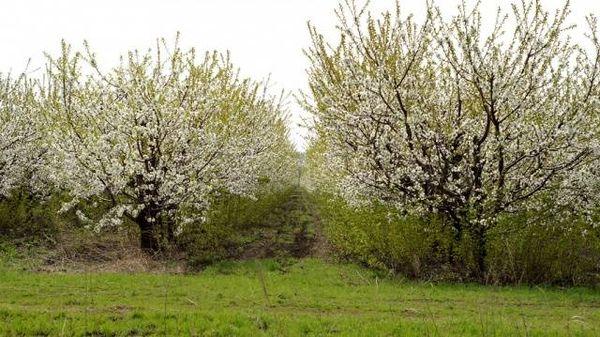
- It blooms with medium-sized flowers that form small inflorescences (each inflorescence has 2-3 flowers with saucer-shaped corollas and white touching petals).
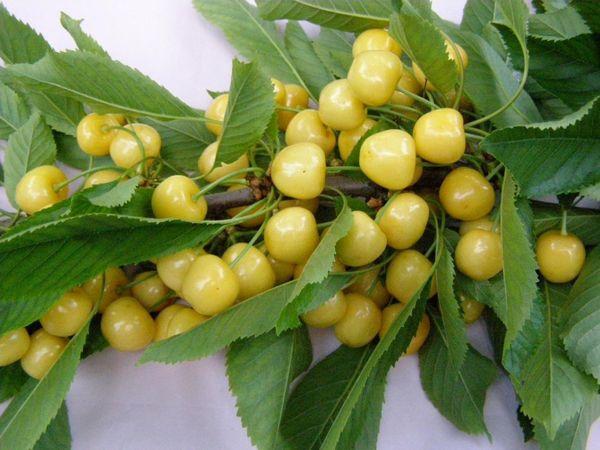
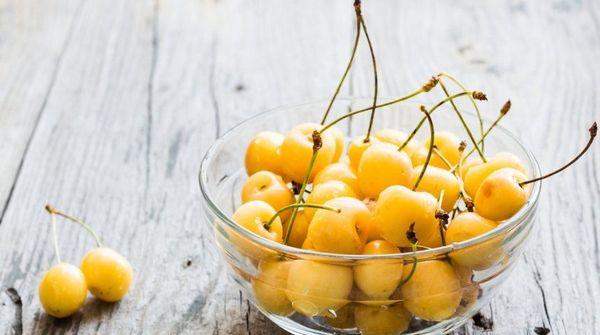
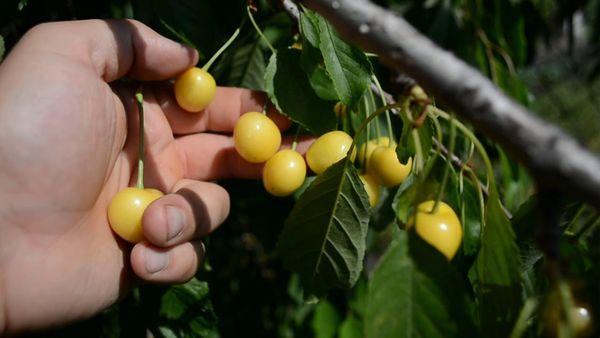
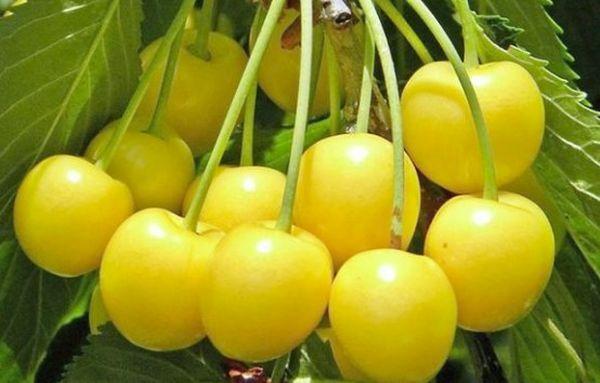
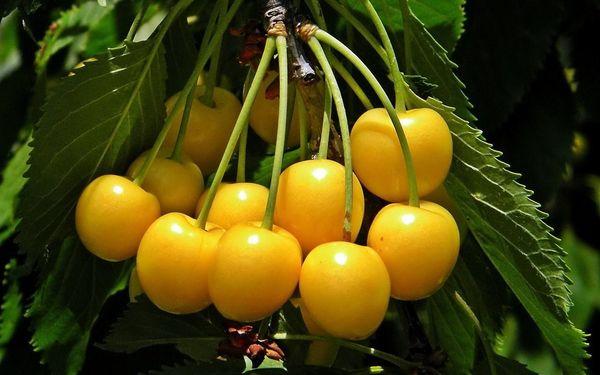
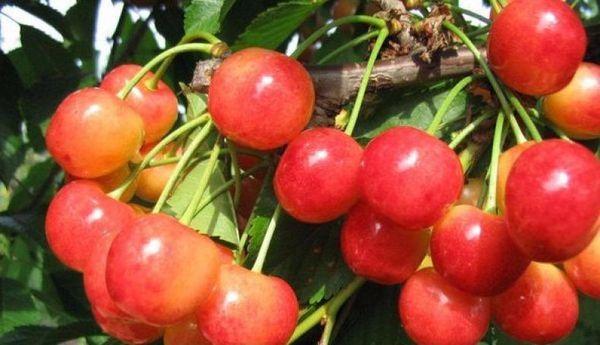
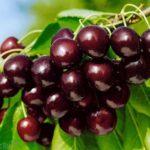
The fruits are large, weighing from 6.6 to 8 g. The skin is bright yellow, the flesh is a shade lighter and firm. The juice is clear, and the pit is oblong and difficult to separate from the flesh, unlike the equally elongated stem. The taste of the cherry is sweet, even sugary.
Characteristics of the variety
Drogan's cherry adapts well to various weather conditions, but before planting, it is necessary to study information about its pollination methods, flowering period, fruit ripening time, and potential pests; otherwise, achieving a good harvest will be difficult.
Drought and frost resistance
Cherries tolerate heat and drought well and are watered like other fruit trees. They can go without watering for a month or more. If there is occasional rain in the summer, the tree may not need watering at all.
It tolerates frost well, rarely showing signs of frost damage on shoots and generative buds. Due to the nature of its flowering, the tree is also resistant to spring frosts.
Pollination
The tree does not pollinate itself, so if there are no other fruit trees on the site (within 30-40 meters), then they must be planted, since the crop is self-sterile.
The process occurs most quickly when there are yellow, red and black cherries nearby, which bloom at about the same time as the Drogan cherry.
 There should be no other fruit trees (pears, apples) growing in the spaces between the trees being pollinated. It's best to plant the trees—the pollinator and the recipient—with no more than 3-4 meters between them. Mid-season flowering varieties are always planted next to late-blooming ones.
Flowering period
Cherry trees bloom at the end of May, which is very late. However, late blooming allows most of the buds to be protected from frost, which positively impacts the harvest.
Ripening time
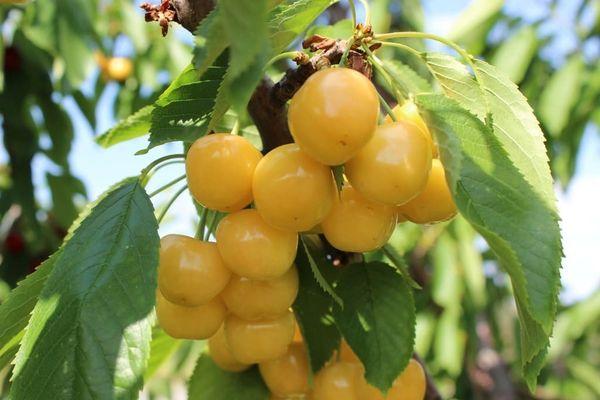
The fruits ripen in late June or early July, depending on the year and growing region. The fruits ripen simultaneously and remain on the tree for a long time.
Productivity and fruiting
The first berries should be expected once the tree reaches 4-6 years of age. A single cherry tree can yield up to 100 kg of berries in a good year. The average yield is 50-70 kg per tree.
Applications of berries
Harvested berries should be used as quickly as possible; they do not transport or store well—they rot, become wormy, and moldy. The fruits are eaten fresh, preserved as compote, mashed with sugar, and preserved for the winter as jam.
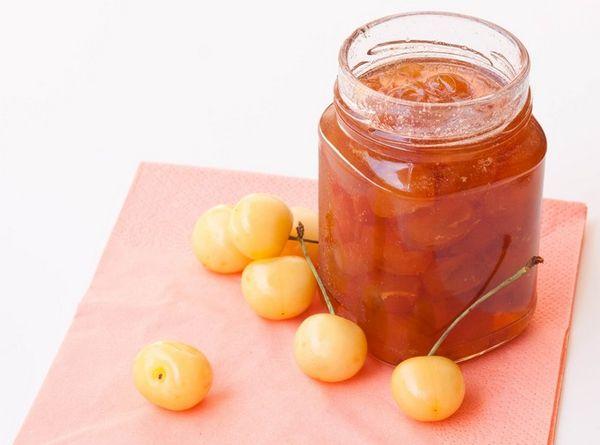
Cherries of this variety cannot be frozen; their skin is too thin, it quickly cracks and loses its presentable appearance, and when defrosted, the berries simply melt.
Take a look Also
Resistance to diseases and pests
Drogan's cherry is resistant to diseases and pests. However, in rainy summers, trees are susceptible to gray mold, and in drought, to cherry blossom fly. Birds and rodents are also a concern, so gardeners should consider using fungicides, repellents, and traps in advance.
Growing regions
Drogan's cherry quickly acclimatizes, but it doesn't thrive in all climates. It is commonly found in central and central Russia, the Baltic states, Belarus, Ukraine, and Moldova.
Central
Late-ripening varieties, which grow primarily in the south but tolerate light frosts, are suitable for central Russia. Adelina, Poetry, and Italianka cherry varieties can be planted alongside the Drogana cherry as pollinators.
Middle zone
In central Russia, the Drogana cherry doesn't produce the best yield, up to 30 kg per tree. However, considering this is normal for other trees, growing this variety is quite profitable. The key is proper planting (after frost) and caring for it until fruiting begins (pruning to shape the crown and watering).
Winter weather here is challenging (frosts down to -32 degrees Celsius), so the late-blooming yellow cherry 'Drogana' is ideal for the temperate climate. Bryanochka and Revna can be planted nearby.
Baltic States
Cherries have been cultivated in the Baltic countries since the 18th century. The largest number of trees of various varieties can be found in the garden plots of farmers in Estonia and Latvia. Growing conditions here are unique, but according to the 1970 census, there were at least 17,500 trees in Estonia alone.
These were primarily winter-hardy varieties, but gradually, the Baltic countries began to cultivate cherries, previously native to the south. The late-ripening Drogana cherry is suitable for any region.
In winter, its trunk can be wrapped in warm clothes, covered with straw and hay, protecting it from frost, and spring frosts are not a problem for it.
Belarus
The Drogana variety is not widely grown in Belarus. The following cherry varieties are common here:
- Pleasure;
- Northern;
- Rival;
- Tyutchevka.
But in some gardening farms you can also find Drogan cherries.
Ukraine
During the Soviet era, Ukraine accounted for over half of all cherry plantings. Currently, the main cherry varieties grown include Sopernitsa, Legenda Mlieva, Valeria, Bagration, Kievlyanka, Frans Iosif, and Drogana, among others.
Moldova
In southern Moldova, cherries are especially popular among gardeners. Red, yellow, and black varieties are grown here. The climate in the north is unsuitable for most varieties, with late spring frosts causing blossom drop. However, the Drogana cherry blossoms late, making it frost-resistant, making it suitable for cultivation, if not on an industrial scale, then certainly in isolated garden plots.
Pollinators
Drogan's yellow cherry needs pollinators.
Pollinate:
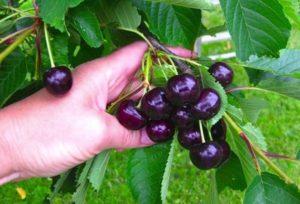
- Bryanochka. A late-ripening variety. Its dark-red berries are particularly sweet. It is distinguished by significant frost resistance and has a sparse crown, not being very tall, so it doesn't disturb neighboring plants even when planted close to each other.
- Revnoy. A mid-season variety, it's partially self-pollinating, but mostly requires a neighboring cherry to participate in the pollination process, much like the Drogan cherry. The black berries are large and very sweet.
- Bagration. The light yellow, fleshy fruits of this variety, covered with a pink blush, compete favorably with Drogan in taste and sweetness.
Sweet cherry varieties Napoleon, Francis, and Krupnoplodnaya are considered good pollinators. If there are no fruit trees near the Yellow Drogan, it will bear fruit, but a good harvest will not be possible.
Napoleon
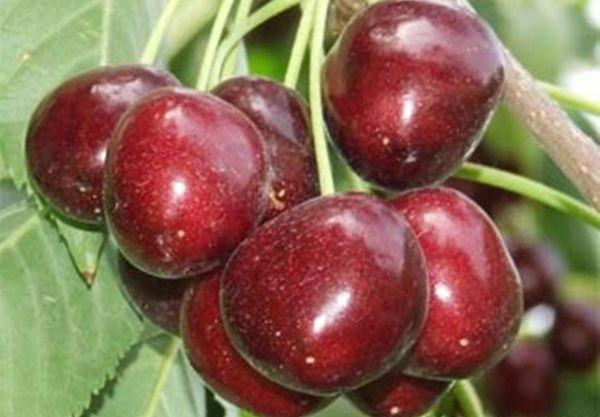
There are several varieties of this cherry: yellow, pink, and black. It's best to plant trees with yellow and pink berries near the Drogan cherry. The pink cherry is large, with shiny, thin skin and firm, very sweet flesh.
It blooms in late May, and the harvest is in late June. Napoleon cherries are frost-intolerant, making them unsuitable for cultivation in central Russia, the Baltics, and northern Moldova. Yellow and black Napoleon cherries are more frost-tolerant, but in the fall, gardeners always prepare them for winter by wrapping the trunks in warm fabric (old clothes, blankets).
Successful pollination requires stable air temperatures—above 10-15 degrees Celsius—and no rain, wind, or heat. Drogana lutea and Napoleon have similar characteristics.
Francis
A vigorous cherry variety bred in the Czech Republic. It blooms early, so it may not always serve as a pollinator for the late-blooming Drogana cherry. The exception is when both varieties are grown in the central and northern climates, where the Francis cherry's bloom is delayed due to late bud development.
The berries are large, sweet, and very juicy. The tree is frost-hardy, but may not withstand severe frosts, so it requires additional winter protection for the trunk.
Large-fruited
Large-fruited cherry It is a medium-sized, spherical tree. Bred in Ukraine, it is distinguished by its unusually large fruits for its species, with individual berries reaching 18 g. It is a mid-season variety, ripening in mid- to late June.
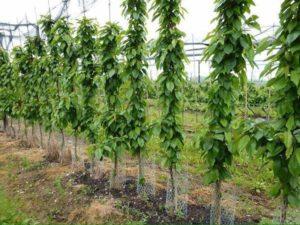
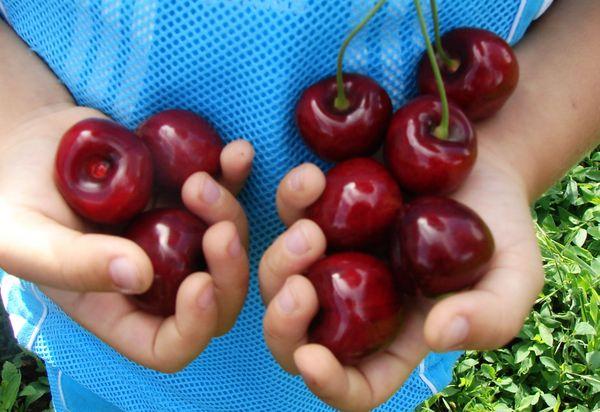
It thrives best in southern regions (Krasnodar, Crimea). Mature trees tolerate subzero temperatures well, but young seedlings may die. Besides the Drogana yellow variety, the Francis cherry variety can also be a natural pollinator for large-fruited cherries.
Bigarro Oratovsky
A productive, self-sterile variety with a late ripening season. It thrives in northern regions. It's almost ideal for pollination with yellow Drogana, as it has a pleasant dessert flavor, partially imbued with yellow cherry.
Melitopol black
One of the best mid-late varieties, successfully cultivated in Ukraine, Moldova, and Russia. It produces tasty, medium-sized berries that ripen by the end of June. The variety yields high—up to 80 kg per tree. Suitable pollinators include the Drogana Zhetaya, Bigarreau Oratovsky, and Krupnoplodnaya varieties.
Franz Joseph
This is a mid-late variety. Its berries are light yellow with pink sides, large, juicy, and very sweet. It is cultivated in western Russia, Moldova, southern Ukraine, and Central Asia. This variety is suitable for commercial cultivation; it is adapted to challenging climates, tolerating both frost and drought. For pollination, cherries with roughly the same ripening period—mid- to late June—are used.
Advantages and disadvantages of the variety
The positive features of the Drogana yellow variety include:
- pleasant taste of fruits, rated at 4.3 points;
- frost resistance;
- undemanding to soil quality;
- the ability to survive for long periods of time without water.
When planting, consider the potential downsides of growing this particular variety. These are typically considered to be:
- lack of shelf life of fruits;
- impossibility of transportation over long distances (marketable appearance is lost, cherries spoil within a few hours).
Two trees of different varieties will have to be planted on the plot, since the Drogan cherry is self-sterile and requires pollination.
How to plant
Planting time, method, and soil quality vary by region. This cherry variety is not fussy, but it still requires at least minimal favorable conditions for growth.
Recommended timeframes
In the south, planting is done in the fall, and in the north, in the spring. This prevents the tree from dying due to frost.
The optimal time for planting is late October in the fall and late March in the spring. In this case, the soil for planting should be prepared in the fall.

Choosing a suitable location
Plant on a sunny hillock or mound. Cherries don't like soggy or waterlogged soil. The roots should be at least 2 meters away from groundwater.
Requirements for neighbors
Other fruit trees can be planted near this cherry variety, but not apple or pear trees. They will steal all the bees, and the cherry will be left without pollination.
How to select and prepare planting material
Two- to three-year-old seedlings with generative buds and a well-developed root system are suitable for planting. Planting material should be purchased from reputable gardening companies.
Before planting, remove all leaves from the tree and lime the soil. This is necessary for the normal development of the seedling.
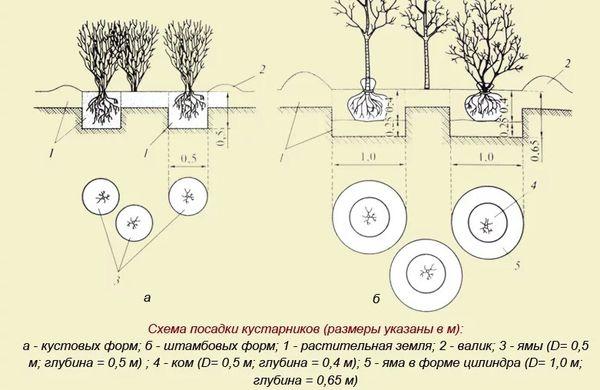
Planting diagram
Cherry trees are planted according to the following rules:
- in the selected area, dig a hole 0.7 meters deep and 0.8 meters wide;
- To provide drainage, place gravel mixed with lime at the bottom of the hole;
- Dolomite flour is placed on top of the gravel (needed to reduce soil acidity);
- place the seedling in a hole, dig a peg nearby, and tie its trunk to it (fixing it helps protect the tree from damage);
- The tree roots are covered with soil mixed with compost or humus.
The tree is watered until the water no longer soaks into the soil.
Care instructions
Drogan's cherry tree is unpretentious in care, but it is impossible to completely forget about its presence in the area.
Watering mode
Immediately after planting, water the seedling regularly. At least two buckets of water (10 liters) should be poured into each hole approximately once every two weeks. Mature trees are watered three to four times during the spring and summer. The first time is in May, if there has been no rain for a long time, twice during fruit ripening and harvest, and once in the fall. One bucket of water is sufficient for one mature tree.
Top dressing
Cherry trees are fed simultaneously with watering. In spring, the tree requires urea, superphosphate, and potassium salt. Dissolve 20 grams of each in two buckets of water and water the plants with the resulting mixture. About once every three years, dig up the soil under the tree and add up to 10 kg of humus.
Sanitary pruning
One to two years after planting, the young tree is pruned for the first time, removing old, dried-out branches. Pruning is done in early spring or fall. All lower branches are removed, and any remaining branches, if there are more than three or four, are trimmed back by 20-25 cm.
Crown formation
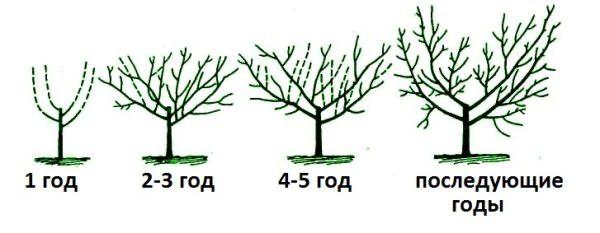
Drogan cherry trees begin to bear fruit at 4-5, sometimes 6 years of age, so before this time, it's important to shape their crown. To do this:
- the central branch and lateral shoots are cut by 1/3;
- Every year a new tier is formed so that the crown grows not in height, but in width.
A mature tree's crown is not pruned. Only side shoots that interfere with its development are removed.
Preparing for winter
In the fall, before frost, cherry trees are watered generously. This helps protect the soil from freezing. The trunks of mature trees are covered with tin, metal pipes, and roofing felt. This helps protect them from rodents.
Digging
During hot summers, the soil under the trees is dug, watered, and fertilized. Care must be taken not to damage the trunk.
Mulching
The last time the soil under the tree is dug up is in the fall, after which humus is added to the soil (mulching).

Thermal insulation
Young seedlings are covered with burlap, old clothes, and spruce branches. This helps protect them from the cold.
Snow cone
After snow falls, a snowdrift forms around the young cherry tree, gradually covering the entire tree with snow from base to top.
Diseases and pests
Drogan's cherry is resistant to many pests and diseases, but gardeners should pay special attention during rainy weather, as there is a risk of gray mold or a large infestation of cherry flies. Birds can also destroy the harvest.
Tinder fungus
A fungus that lives on the trunks of cherry trees. It appears as a brown, fossilized growth. Gradually, the growths multiply, and the tree dies. Regular treatment of the trunk with a lime solution helps prevent the problem.
Gray rot
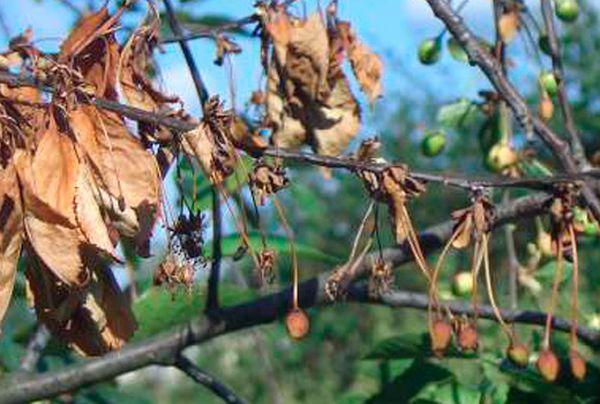
If the berries rot before ripening and develop a gray, fluffy mold, this is a bad sign, indicating the tree is infected with gray mold. Damaged fruits are removed, and the plant is treated with nitrofen and copper sulfate.
Cherry fly
The cherry fruit fly is dangerous because it lays a large number of larvae right during cherry blossom season. These larvae grow along with the berry and gradually consume the entire fruit. Control of the pest is achieved using special traps consisting of tape coated with sticky glue.
Pipe wrench
The insect eats buds, flowers, fruits, and flower buds. To protect cherry trees from the fungus, treat them with Aktara and pyrethroid preparations. Periodic soil tillage and manual removal of the beetles are helpful as a preventative measure.
Birds
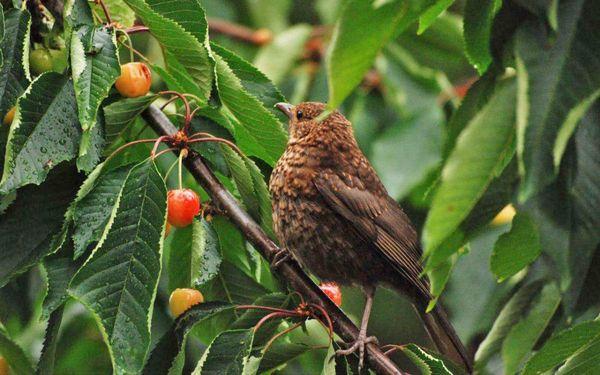
To protect against birds, large farms install special repellents or fencing nets. At home, hanging a few plastic bags or old CDs on the cherry tree is sufficient; the rattling sound will scare away the birds.
Harvesting and storage
The berries are harvested in late June and early July. Because of their thin skin, the fruits often crack while still on the vine. To prevent this, watering should be stopped or reduced three weeks before harvest. The berries are eaten fresh, but they are also suitable for drying and canning. Drogan's yellow cherries make a delicious wine.
The harvest does not have a long shelf life – 2-3 days maximum – and does not transport well, so the berries should be used for their intended purpose immediately after harvesting or delivered to the point of sale as quickly as possible.
The Drogana cherry is one of the most popular yellow cherry varieties. It is undemanding in growing conditions, frost-resistant, and tolerates drought and disease well. Its most common pest is the cherry fruit fly. Its only drawback is poor transportability, so the berries are often processed rather than sold.
Related posts:
 Descriptions of the 20 best cherry varieties for the Moscow region, their planting and care
 Planting and caring for cherries, feeding and growing rules
 The health benefits and harms of cherries, rules of consumption, and their effects on the body
 Description of the best cherry varieties and cultivation in the Urals, planting and care
 Description and cultivation of the Bryansk pink cherry variety, pollinators
 Characteristics and description of the Large-fruited cherry variety, pollinators and care
 Description of the Vasilisa cherry variety, cultivation and care
 Description of the Bryanochka cherry variety, planting and care instructions