
- Description and Features
- Characteristics of the variety
- Height of a mature tree
- Flowering and ripening period
- Productivity
- Transportability
- Drought resistance and winter hardiness
- Pollinators
- Jealousy
- Iput
- Ovstuzhenka
- Tyutchevka
- How to plant
- Choosing a location
- Requirements for neighbors
- How to choose and prepare a seedling
- How to prepare a planting hole
- Planting dates and scheme
- Care instructions
- Top dressing
- Watering
- Weeding and loosening
- Crown formation
- Sanitary and regulatory pruning
- Preparing for winter
- Diseases and pests
- Cherry fly
- Fruit moth
- Slimy sawfly
- Social sawfly
- Aphid
- Clusterosporiasis
- Moniliosis
- Harvesting and storage
- Application areas
Developed by Russian scientists A.I. Astakhov and M.V. Kanshina and approved for cultivation in the Central Region, the Bryanskaya Rozovaya cherry variety has gained popularity among gardeners due to its beneficial properties. This variety is distinguished by its high winter hardiness, ease of care, and sweet-tasting fruit.
Description and Features
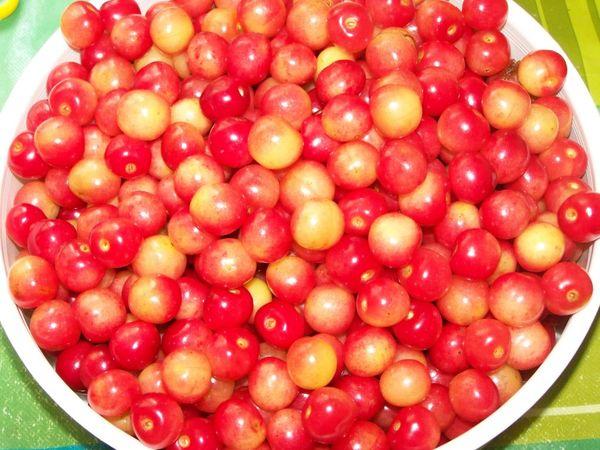
Bryanskaya Rozovaya is a late-ripening cherry hybrid. The berries reach consumer ripeness 2.5–3 months after the flowers open. This variety is distinguished from other varieties by its pinkish-yellow skin with noticeable blotches. The oval berries weigh 4–5 g. The juicy, firm flesh is yellow.
The light-brown, ovoid stone is characterized by average separation. The berries are easily removed from the thick, medium-length stalks. The fruits received a tasting score of 4.1 points for their sweet flavor, firmness, and attractive appearance.
Characteristics of the variety
When developing the Bryanskaya Rozovaya cherry, breeders focused on transferring the best traits of its parents to the new variety. The result is a self-sterile, winter-hardy, drought-resistant hybrid with a medium yield.
Height of a mature tree
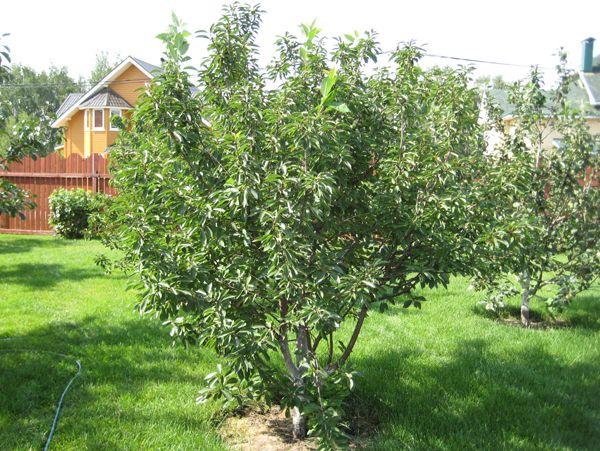
The Bryansk Pink cherry tree grows to a height of 2.5–3.5 m. Skeletal branches, positioned at an acute angle to the trunk, and straight, raised shoots form a compact, broadly pyramidal crown.
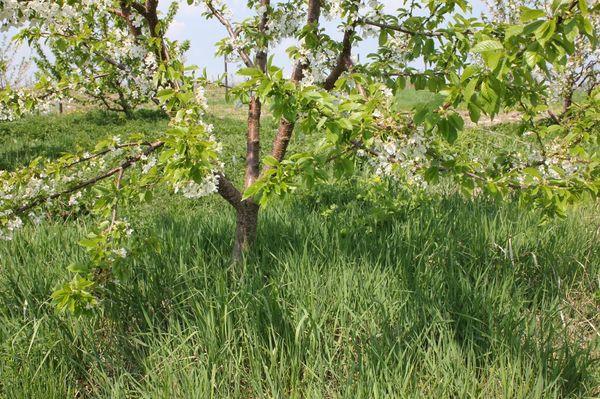
The plant's flower buds are oval, with pointed tips. The green, glabrous leaves have raised edges, tapering to a point, and are edged with large teeth.
Flowering and ripening period
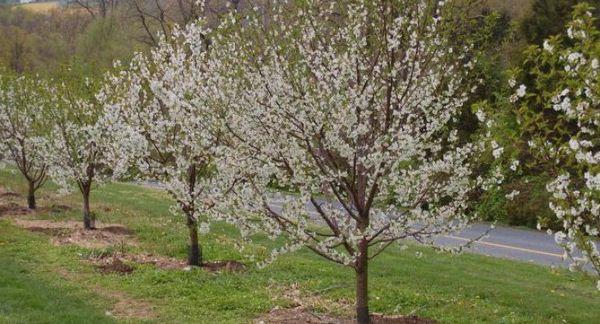
Small, saucer-shaped white flowers with five petals, gathered in clusters of three in umbels, open in mid-May. Flowering lasts two weeks. The fruits ripen on the stems in August, and in southern regions, in late July.
Productivity
The Bryanskaya Rozovaya cherry variety yields 20 kg per tree, up to 30 kg under intensive cultivation. This low yield is due to the tree's small size, which begins bearing fruit in its fifth year.
Transportability
The fruit's resistance to cracking, dry separation from the stalk, and the density of the pulp ensure that the cherry berries maintain their marketable appearance during transportation to the points of sale and processing.
Drought resistance and winter hardiness
The Bryanskaya Rozovaya cherry tree wood tolerates temperatures down to -30°C, and the buds can withstand temperatures down to -25°C. It is highly drought-resistant.
Pollinators
Other cherry varieties with similar flowering times are planted at least 4 meters away from the Bryanskaya Rozovaya tree to pollinate the self-sterile crop. The best pollinators are Revna, Iput, Ovstuzhenka, and Tyutchevka.
Jealousy
The Revna cherry tree blooms in the second ten days of May. The variety produces a medium yield (30 kg per tree) and is frost-hardy to -27°C. The dark burgundy fruits are sweet, with firm flesh and skin, making them easy to transport.
Iput
In the central part of the country, Iput blooms in mid-May, while in the south, it blooms 1–2 weeks earlier. The yield of this frost-hardy cherry is average. The tasting committee rated the fruit at 4.4 points. Some noted drawbacks include cracking of the berries when exposed to excessive moisture and difficulty separating the pulp from the pit.
Ovstuzhenka
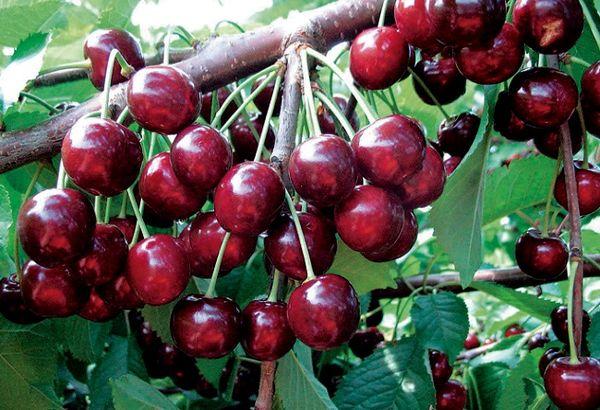
The compact, low-growing Ovstuzhenka cherry tree blooms in early May. The variety produces a modest yield of 16 kg per tree. The fruit has a tasting score of 4.7. It tolerates winters down to -31°C without loss, and its drought tolerance is average.
Tyutchevka
Large-fruited blossoms Tyutchevka cherry The variety begins to bear fruit no earlier than mid-May and begins to bear fruit in early August. The maximum yield is 40 kg per tree. The plant is frost-resistant down to -25°C. The fruits are distinguished by their marketable appearance, firm flesh, and a tasting score of 4.9.
How to plant
Planting begins with selecting a site, taking into account the surrounding area, and preparing the planting hole. Later, cherry tree seedlings are purchased and prepared for planting. For successful growth and fruiting, it is important to adhere to the planting plan and technology.

Choosing a location
Choose a site for cherry trees that receives good sunlight and is protected from cold winds. Cherries do not grow in acidic soils, sandstone, or in low-lying areas where moisture and cold air linger for long periods.
Bryansk pink cherry prefers light, moist loams and sandy loams. The ideal pH is 6.5-7.0. The tree stops growing and bearing fruit when the groundwater level rises above 2 meters. When planted in the shade, the cherry tree becomes elongated, yields decrease, and the sugar content of the fruit decreases.
Requirements for neighbors
If plant compatibility isn't observed, the cherry tree will grow weak and susceptible to disease and pest attacks. It's not recommended to plant Bryanskaya Rozovaya near trees with strong root systems, such as oak, poplar, or linden. Among fruit and berry crops, apple, pear, currant, and raspberry create unfavorable conditions for cherries.
Recommended neighbors, subject to maintaining social distancing, are grapes, plums, cherry plums, cherries, and other varieties of cherries.
How to choose and prepare a seedling
To ensure that the Bryansk Pink grows according to the variety description, select seedlings from reputable gardening farms and specialized nurseries, where, in addition to planting material, they receive recommendations on planting and care.
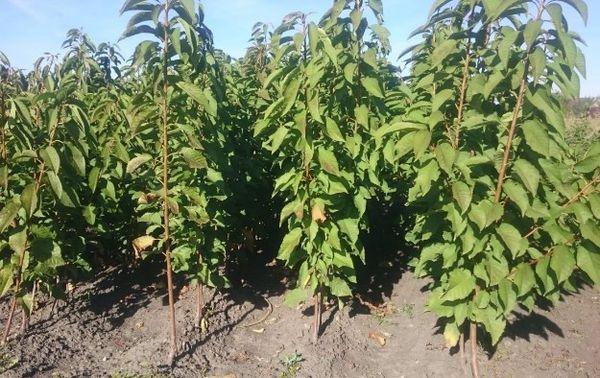
A suitable cherry tree seedling has the following characteristics:
- age - 1-2 years;
- the conductor is more powerful than the shoots;
- the buds are in a dormant state;
- developed root system without damage;
- Traces of the scion are visible on the trunk.
If a seedling's roots dry out during transportation, soak them in a bucket of water for 5-6 hours. Trim any long or damaged roots.
How to prepare a planting hole
Three to four months before planting the Bryansk Pink cherry tree, dig a cylindrical hole 60 cm deep and 80 cm wide. If the soil is heavy and poorly permeable, create a 10 cm deep drainage layer at the bottom using scraps of building materials or crushed stone.
Since cherries prefer fertile soil, the quality of the topsoil is improved. Add the following to the garden soil per square meter:
- 2 buckets of humus;
- 200 g superphosphate;
- 100 g potassium sulfate.
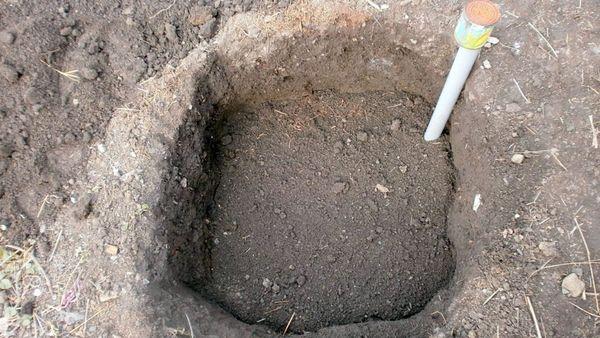
An excess of nutrients leads to the rapid formation of shoots, which do not have time to develop by the end of the season, so it is recommended to regulate the fertilizer application.
Planting dates and scheme
It's best to plant Bryanskaya Rozovaya in the spring before the buds swell. This way, the cherry will root properly and be well-prepared for its first winter. You can plant a young tree in the fall, but no later than late September to prevent the shallow root system from freezing.
If several plants are planted, maintain a distance of 3–4 m between them, and 5 m between rows.
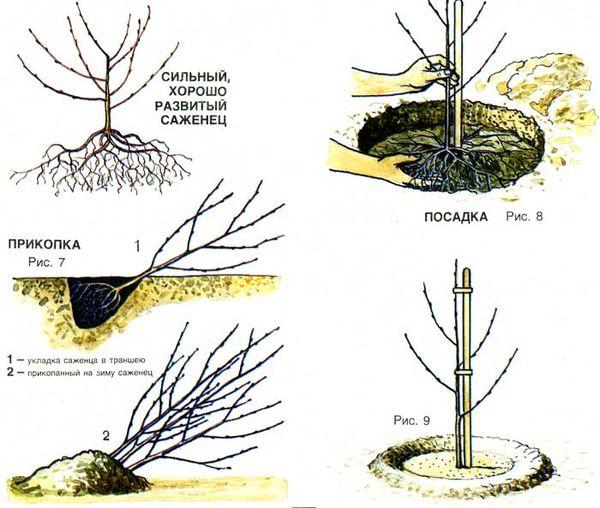
Bryansk Pink cherry tree planting technology:
- drive in a support stake, 30 cm from the center of the hole;
- the seedling is lowered onto the top of a mound built at the bottom of the hole in advance;
- the roots are spread along the slopes, directed downwards, eliminating kinks;
- fill with half of the fertilized substrate, pour in a bucket of water;
- pour out the remaining soil;
- the surface is compacted;
- tie the seedling to the support;
- pour out the second bucket of water and mulch.
The root collar of the cherry seedling after planting should be 5 cm above the soil surface.
Care instructions
The stability of fruiting and the sugar content of the berries depend not only on the genetics of the tree and planting, but also on subsequent agricultural practices, including irrigation, fertilizing, and care of the trunk circle and crown of the cherry tree.
Top dressing
Bryansk pink is fertilized twice per season. In the spring, 200 g of urea is added during the first loosening, after which the tree is watered. The second feeding is done in August after fruiting. 350 g of superphosphate granules are placed in the trunk grooves and moistened.
Every three years in the fall, before digging, add a bucket of manure, humus, or compost to the soil around the tree trunk.
Watering
Bryansk Pink cherry trees are irrigated before and after flowering, during fruit ripening, and in preparation for winter. Water the tree using three furrows spaced 40 cm apart. Mature trees require four buckets of water during the growing season, and six to seven buckets for recharge irrigation.
The seedlings are watered every week with 10 liters.
Weeding and loosening
To improve aeration and moisture permeability, the tree's trunk area is loosened when a crust forms on the soil, going no deeper than 10 cm. Weeds that compete with the Bryansk Pink cherry for nutrients are weeded as they appear.
Take a look Also

Crown formation
In early spring, before the buds swell, beginning in the second year, the tree's skeleton is formed. When creating a sparse, tiered cherry tree crown, the first tier is formed from three branches growing in opposite directions, the second tier is formed from two branches growing 70 cm above the first tier, and in the third year, from a single branch, spaced at the same distance.
In the fourth year, crown formation is completed by pruning the branches of the third tier so that the leader is 20–25 cm higher. On the lower tiers, second-order shoots are shortened to 70 cm.
Sanitary and regulatory pruning
Spring pruning of the Bryansk Pink cherry tree is carried out when the tree is dormant. First, remove any diseased or broken branches.
The next step is to remove crossing branches growing inward. They are removed completely or cut to a bud facing outward, not inward.
Remove shoots that are located at an angle of 45°C or less to the trunk and create an obtuse angle (looking down).
The vertical shoots of the crop on the skeletal branches (water sprouts), the root shoots that deplete the soil, and the shoots below the first tier are cut out.
If a branch competes with the leader for leadership, in the first year the second-order branches are removed, and in the second year the skeletal branches are removed.
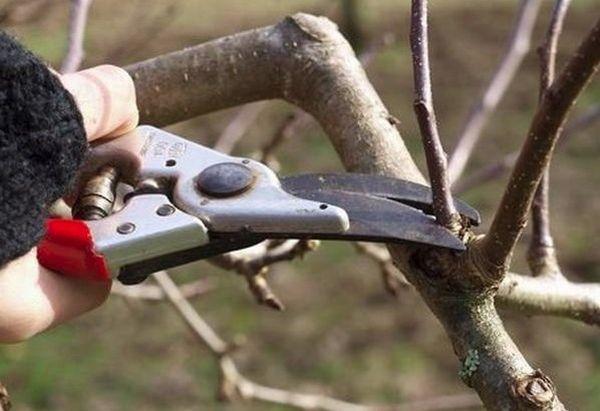
To stimulate the growth of fruit branches, annual growth longer than half a meter is shortened by a third to the outer bud.
A vertically growing branch can be left uncut and given a horizontal position by tying a rope to it, the other end of which is secured to the trunk or a stake driven into the ground.
Preparing for winter
Before the onset of winter, to increase the winter hardiness of Bryansk Pink, preparatory measures are carried out:
- Cherry trees are watered generously (60–70 l), preventing the roots from freezing;
- loosen the soil by 8–10 cm;
- add superphosphate and potassium sulfate;
- whiten the trunk and skeletal branches;
- mulch the tree trunk circle with a 5-centimeter layer of manure and peat.
Young trees are covered with burlap or agrofibre. To protect the Bryanskaya Rozovaya cherry tree from rodents, a frame of plastic or metal mesh is constructed around the tree. To retain snow, spruce branches and brushwood are placed around the tree.
Diseases and pests
To maintain the health of the Bryansk Pink cherry tree and ensure a full harvest, treatments against diseases and pests and preventative measures are carried out.
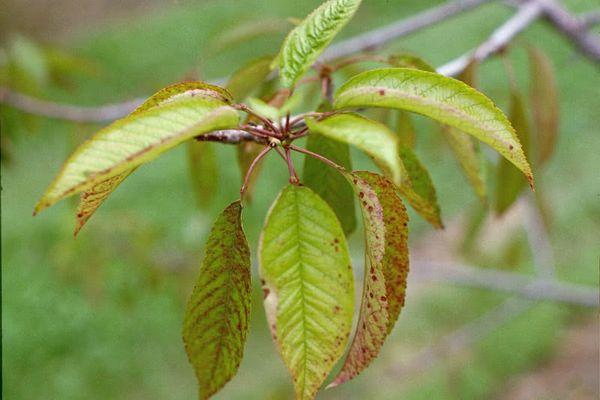
The most common parasitic insects that damage cherry trees are the cherry fruit fly, the fruit moth, aphids, and sawflies. Despite their high immunity, cherry trees are susceptible to clasterosporium and moniliosis if proper agricultural practices are not followed.
Cherry fly
A 4 mm long insect with transparent wings decorated with black stripes, a black body, and large green eyes, lays eggs in newly formed cherry fruits. The hatched white larvae cause the berries to rot and fall off.
Cherry fly is controlled using trapping belts and plastic bottle traps with syrup added to them and tied to the tree branches.
Effective chemical treatments include Phases, Actellik, Iskra, and Molniya. The first treatment is carried out 10 days after the onset of fly activity, and the second treatment is carried out two weeks later. Digging up the tree trunk in the fall and spring also reduces insect numbers.
Fruit moth
It's not the moth itself that damages the Bryansk pink cherry tree, but its 3-cm-long brown caterpillars. Using their abdominal legs, they maintain an unnatural position, camouflaging themselves as tree parts, and move by pulling their hindquarters toward their front. The caterpillars consume the buds, fruit buds, and leaves of the tree.
Pests are reduced by weeding and loosening the soil around tree trunks and between rows. Effective treatments include Fufanon-Nova, Alatar, Samurai, and Fitoverm.
Slimy sawfly
Cherry trees are damaged by sawfly larvae, which resemble black slugs or leeches up to 10 cm long. The insects eat the leaves, slowing photosynthesis, weakening the tree's immunity, and reducing yield. The pests are collected mechanically and treated with Mospilan, Aktara, and Confidor. During the fruiting period, cherries are sprayed with chamomile infusion. To prepare the infusion, add 400 g of dried flowers to 10 liters of hot water and let steep for 24 hours.
To attract predatory insects, plant herbs, marigolds, nasturtiums, and calendula around the tree trunks. Spray wood ash on damp leaves after rain; pests will burn upon contact.
Take a look Also

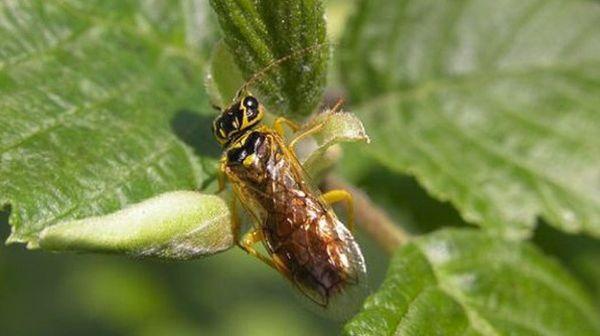
Social sawfly
Green, black-headed, 10-mm-long larvae of the social sawfly feed on the underside of cherry tree leaves in groups of up to 12 before their first molt. After molting, they disperse individually, forming a communal nest of leaves contaminated with waste products and entangled in webbing. They migrate to the soil in early August, where they overwinter. Adult insects emerge from the soil in early May.
When parasitic larvae appear, the crop is treated with calcium arsenate, Karbofos, and Actellic.
Aphid
When cherry buds open, dark green larvae emerge from the eggs of the black 2-mm aphid and feed on the sap of the leaves.
The tree weakens and survives the winter less well. It is recommended to spray the Bryanskaya Rozovaya with a 3% Nitrofen solution before the sap begins to flow, and then with Karbofos after two weeks. During widespread aphid attacks, spraying the plant with Intavir helps.
To reduce the number of chemical treatments, experienced gardeners knock insects off the cherry tree with a powerful jet of water, destroy nearby anthills, loosen the soil, and weed the tree trunk area.
Clusterosporiasis
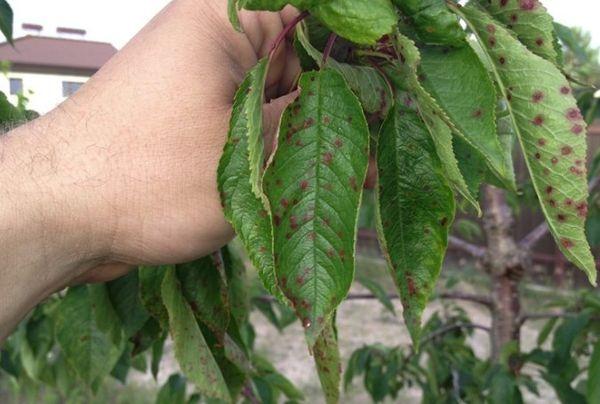
Shot-hole spot begins with the appearance of small red spots on cherry buds. The exposed gum changes color from red to black. Similar spots appear on the leaves and petioles. Over time, the affected tissue rots or dries out, falling out, forming holes. Cracks first form in the bark, and later, ulcers develop. The spots on the fruit enlarge and merge, and the berries dry out.
Affected areas of the cherry tree are removed and burned, and cankers on the trunk are treated with copper sulfate and garden pitch. At the beginning of the growing season and again after two weeks, the plant is sprayed with Bordeaux mixture or a 10% potassium chloride solution.
Moniliosis
The disease manifests itself as withering of branches and leaves, and fruit rot, most often occurring on trees in wet springs with low temperatures. Infection by Monilia cinerea conidia begins in the pistils, through which the fungi penetrate the bark, blocking the cherry tree's water-carrying vessels. Fruits with mechanical injuries are the first to be affected. Dark spots with spore pads appear on them, the berries dry out, and fall off.
Affected fruits and dried branches are removed and burned. The tree is treated with Horus, Fitoflavin, Topsin, or Bordeaux mixture.
To prevent monoliosis, irrigation and fertilizing are regulated, and thickening of the crown and mechanical damage are not allowed.
Harvesting and storage
In July and August, the Bryansk Pink cherry fruits are picked along with the stalks to extend their shelf life.
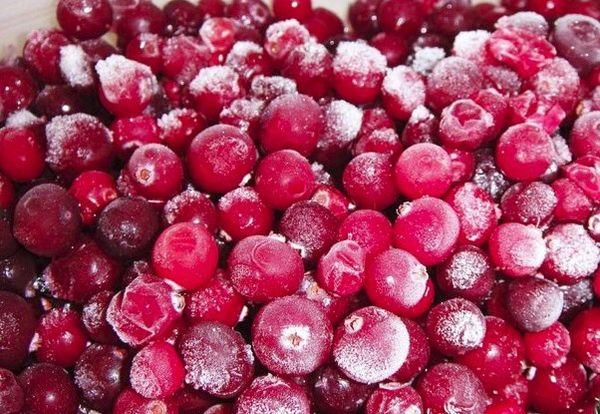
Quickly chilled dried berries will stay fresh for two weeks on the shelf under the freezer, and up to seven days in the crisper drawer. Unwashed berries should be stored in paper bags or food containers with loosely sealed lids.
Frozen berries are suitable for consumption for 8 months, dried in the oven - 1 year.
Application areas
Bryansk Pink sweet cherries are used in folk medicine as a general tonic and antipyretic. Fruit juice is used to treat tracheitis and bronchitis, stimulate digestion, and is used for constipation and kidney stones. Cherry blossoms and leaves are applied to purulent wounds to promote rapid healing.
In cosmetology, cherry fruit extract is included in creams and masks for whitening the face of freckles and age spots.
The berries of Bryansk pink contain 14.2 mg of vitamin C per 100 g of product, providing antioxidant properties that strengthen the body's immune defenses.
Sweet berries are most often eaten fresh, but to increase their shelf life they are dried, frozen, or pickled.
In cooking, cherries are used to decorate cakes. They are also used to make compotes, preserves, juice, and added to salads and cheese desserts. Chopped berries are used to make fillings for dumplings, pies, and pancakes.
Related posts:
 Planting and caring for cherries, feeding and growing rules
 The health benefits and harms of cherries, rules of consumption, and their effects on the body
 Descriptions of the 20 best cherry varieties for the Moscow region, their planting and care
 Description of the cherry variety Lyubimitsa Astakhova, planting and care
 Description and characteristics of the Veda cherry variety, planting and care scheme
 Description and characteristics of the Tyutchevka cherry variety, planting and care
 Causes and treatment of cherry diseases, methods of pest control
 Description and cultivation of the Revna cherry variety, pollinators