
- History of selection
- Description and characteristics of the variety
- Height of a mature tree
- Flowering and ripening period
- Productivity
- Transportability
- Drought resistance
- Frost resistance
- Applications of berries
- Pollinators
- Ovstuzhenka
- Bryansk pink
- Jealousy
- Raditsa
- Iput
- Lena
- Bryanochka
- Advantages and disadvantages
- How to plant
- Recommended timeframes
- Choosing a location
- Priming
- Lighting
- Preparing the planting hole
- How to select and prepare planting material
- Requirements for neighbors
- Planting diagram
- Care Features
- Watering mode
- Top dressing and fertilization
- Spring
- Summer
- Autumn
- Crown formation
- First year
- Second
- Third
- Fourth
- Preparing for winter
- Weeding and loosening
- Spring processing
- Crown thinning for a mature tree
- Diseases and pests
- Clusterosporiasis
- Moniliosis
- Scab
- Cherry aphid
- Boyarshnitsa
- Barkwood
- Reproduction of culture
- From seeds
- Cuttings
- Layering
- Harvesting and storage
For many years, it was believed that cherry cultivation was only possible in regions with warm, southern climates. However, thanks to breeders' efforts to improve the fruit crop and develop frost-resistant characteristics, cherry varieties have emerged that can be successfully grown in temperate climates. The Tyutchevka cherry, which has become very popular among gardeners and farmers in the central part of the country, is one such variety.
History of selection
The Tyutchevka cherry is the fruit of the efforts of breeders at the Lupine Research Institute. Work on developing this new fruit variety began in the mid-1990s, under the guidance of renowned scientist M.V. Kanshina.
The scientists' main goal was to develop a fruitful, frost-resistant, and easy-to-grow cherry variety.
The berry crop received its name due to the great love of the variety's creator for the poetry of the famous poet Tyutchev.
In 2001, the Tyutchevka cherry was added to the state register of fruit crops, after which the berry crop quickly spread among gardeners and farmers.
Description and characteristics of the variety
The new berry variety was developed taking into account the best properties and characteristics of fruit trees. The Tyutchevka cherry easily tolerates winter frosts, is resistant to most fungal and viral diseases, is rarely attacked by pests, and is characterized by high yields and excellent taste of ripe berries.
Height of a mature tree
The trees near Tyutchevka are small; a mature plant grows to a maximum of 4-4.5 meters with a spreading, spherical crown. The branches are strong, resilient, and brown in color, with numerous large, elongated, bright green leaf blades, serrated edges, and a pointed tip.
Flowering and ripening period
The cherry tree enters the flowering phase in late spring. Clusters of 3-4 white flowers appear on the cherry tree, which later develop into berry ovaries.
The first ripe berries appear at the end of July, and the main cherry harvest is collected in August.
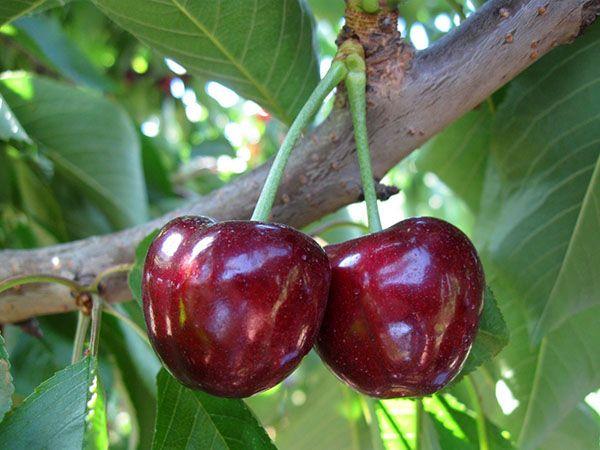
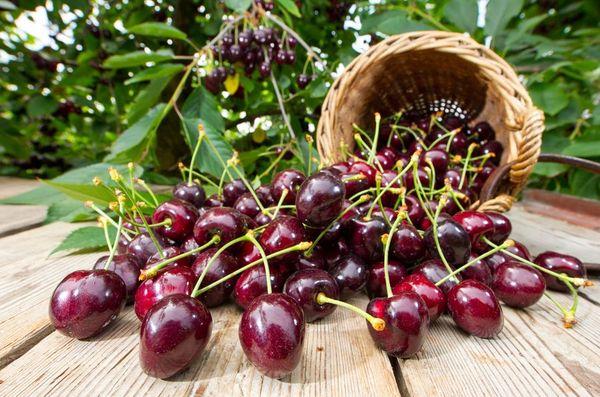
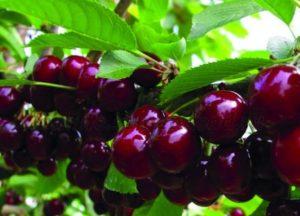
The berries are large, up to 7 g, firmly attached to the stalks, do not crack when picked, and remain dry and dense.
The skin of the fruit is thin but dense, dark red; upon close inspection, small dark spots become visible. The flesh is firm and juicy, with a distinct cherry aroma and sweet flavor. The pit is small and difficult to separate from the flesh.
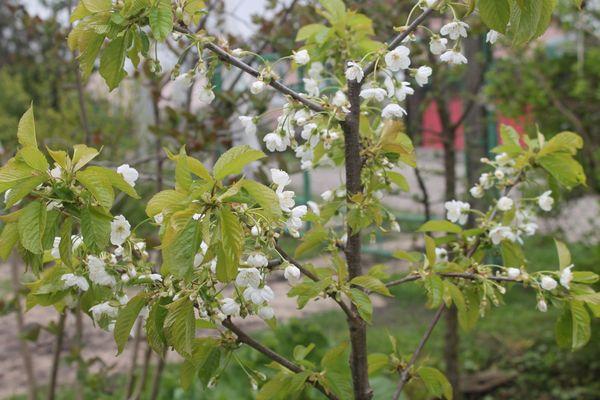
The berry tree begins to bear fruit in the 5th year of growth.
Important! To obtain a high-quality and abundant harvest of berries, the Tyutchevka cherry tree requires the right pollinators. Self-pollination of this berry crop can produce no more than 6% of fruit-bearing ovaries.
Productivity
The yield of a variety depends on proper care, pollination and climatic conditions for growing the fruit crop.
On average, a single tree yields 20 to 25 kg of ripe berries, with a maximum yield of 40 kg per plant. This is why Tyutchevka cherries are often grown commercially. One hectare yields 15 to 25 tons of ready-to-eat fruit.
Transportability
When harvested correctly and in a timely manner, the berries do not spoil or crack. And thanks to their dense flesh and durable skin, they are easily transported over long distances.
Drought resistance
Berry trees do not tolerate prolonged droughts well. Lack of moisture is especially dangerous during flowering and fruit set. Without sufficient water, cherry trees drop their flowers and fruit, which negatively impacts yield.
Frost resistance
The main characteristic of the Tyutchevka variety is its resistance to frost and temperature fluctuations. The tree easily survives winters in temperate climates, and due to its late flowering, spring frosts are not a threat to this berry crop.
In regions with cold and prolonged winters, the tree branches freeze, but with the arrival of spring the plant quickly recovers and begins to grow.
Applications of berries
Experts have recognized the variety as a dessert variety with the possibility of universal use of the fruits.
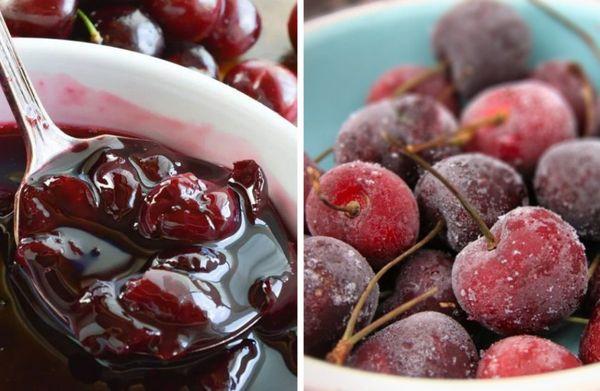
Tyutchevka cherries are recommended for both fresh and processed consumption. Ripe berries are used to make juices, nectars, preserves, jams, and marmalades. The fruits are dried, frozen, canned, and added to confectionery and dairy products. Homemade liqueurs, cordials, and wines are also made from the berries.
Take a look Also

 Important! Ripe cherries contain vitamins, nutrients, and amino acids necessary for proper and healthy body function.
Pollinators
To obtain a high-quality and large harvest of berries, the fruit crop requires the right pollinators with uniform flowering times.
Ovstuzhenka
A cherry tree with sweet, large berries that ripen mid-season. This variety is distinguished by its increased tolerance to the climate of its growing regions, excellent fruit flavor, and average yield.
To bear fruit, berry crops need the right pollinators.
Bryansk pink
A late-ripening variety with large berries in shades of orange and pink. The trees are frost-hardy and easily survive winters, but recurrent spring frosts have a detrimental effect on fruiting.
The yield is high; with the right pollinators, up to 30 kg of berries can be obtained from one plant.
Jealousy
The dark-red fruits of the Revna cherry tree ripen in midsummer, with firm, juicy flesh and a sweet flavor. This variety boasts enhanced frost resistance and natural immunity to diseases and pests. With timely and proper care, a single plant can yield up to 30 kg of ripe berries. It is partially self-pollinating.

Raditsa
An early-ripening berry crop. The trees are compact, and the variety is resistant to low temperatures and fungal infections. A single plant produces up to 30 kg of ripe berries.
Iput
One of the most popular fruit varieties among gardeners and farmers. The berries are a rich burgundy color with firm, juicy flesh and a sweet flavor. This variety can withstand temperatures down to -35 degrees Celsius, is resistant to diseases and pests, and is partially self-pollinating.
With proper agricultural practices and pollinators, one tree can produce up to 30 kg of berries.
Lena
This variety was developed at the Lupine Research Institute. The Lena cherry easily tolerates winter frosts and is resistant to some diseases and pests. The berries are large, up to 8 g, dark red, with juicy flesh and a sweet and tart flavor.
Self-pollination is completely absent; the right neighbors are necessary to obtain a harvest.
Bryanochka
Bryanochka sweet cherry, a late-ripening variety. The berries are large, up to 7 g, a rich red hue, with firm, juicy flesh and a sweet-tart flavor.
With proper care, one tree can produce up to 40 kg of ripe berries.
The plant is frost-resistant and immune to some fungal and viral diseases.
The variety is not capable of bearing fruit on its own; proper pollinators are required.
Advantages and disadvantages
To grow a healthy and fruitful tree, it is necessary to understand all the possible advantages and disadvantages of the berry variety.
Pros:
- Stable, annual fruiting.
- Excellent taste of large berries.
- The fruit crop easily tolerates low temperatures.
- Natural immunity to some diseases and pests.
- Good transportability of ripe fruits.
The Tyutchevka cherry variety is easy to care for and is suitable for growing by novice gardeners and farmers.
Cons:
- To obtain high-quality and large yields, hybrid berry varieties require the right pollinators.
- In conditions of high humidity and precipitation, the berries burst, rot and fall from the trees.
All the variety's shortcomings can be eliminated with timely and proper care of cherry trees.
How to plant
The further development and fruiting of the berry tree depends on the timing and location of planting of seedlings.

Recommended timeframes
The timing of planting seedlings in open ground directly depends on the climate of the growing region.
In temperate and cold climates, planting is recommended in early spring, before the growing season begins. In regions with mild winters, cherries are planted in the fall, 4-6 weeks before the first frost.
Choosing a location
The Tyutchevka cherry variety is planted in flat, dry, well-lit areas, protected from the north wind and drafts.
The berry crop does not tolerate close proximity to other fruit crops, so the distance between the nearest neighbors should be at least 5-7 m.
Cherry trees thrive in high elevations, but die in lowlands and marshy areas.
Priming
For planting berry trees, preference is given to fertile, loose soil with a neutral acid and moisture content.

Heavy, clayey soil is diluted with river sand and humus; lime or ash is added to soil with a high acid content.
Important! If the site has a high groundwater level, relocate the cherry tree or create artificial mounds of fertile soil. Otherwise, the plant's root system will be damaged.
Lighting
Cherries are naturally southern plants, loving sunlight and good light. A south-facing site is ideal for planting seedlings. Fences or small structures provide protection from drafts and cold gusts of wind.
Preparing the planting hole
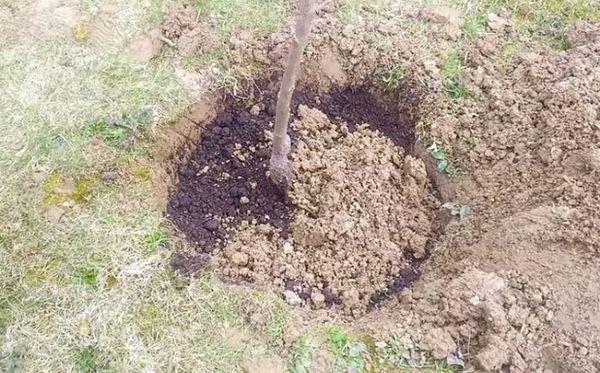
3-4 weeks before the planned planting of trees, planting holes are prepared.
- The area with fertile soil is dug up, cleared of weeds and loosened.
- Humus, organic matter and minerals are added to the soil.
- Next, dig planting holes 80 cm deep and wide.
- The distance between plantings is left at least 3-4 m, between rows up to 5 m.
- A drainage layer of sand and small stones is placed at the bottom of the hole.
- A fertile mixture is poured on top and watered.
Before planting the seedlings, a small mound of soil is formed in the hole.
How to select and prepare planting material
A future harvest of delicious and healthy berries depends on a high-quality, healthy seedling. It is recommended to purchase planting material from nurseries and specialized garden centers.
Tree skin
The bark of the tree is smooth, uniform in color, without visible damage, signs of rot, or damage from diseases or pests.
Branching
A healthy seedling has many branches, which will form the tree's crown. These branches must have buds or leaves. It is the unusual leaves that are used to select Tyutchevka seedlings.
Root system
The rhizome is carefully inspected. The roots should be free of any damage, defects, growths, or signs of rot or mold. The root system should not be overdried and should be well developed.

Age
Seedlings between 2 and 3 years old take root and establish themselves best. Young plants easily tolerate transplanting into open ground and grow and develop quickly.
Vaccination mark
Hybrid fruit varieties always leave a graft mark. This characteristic is used to determine whether a plant is a varietal or not.
In cherry trees, the graft mark appears as a thickening on a small bend at the bottom of the plant.
Important! At spontaneous markets and private sellers, ordinary cherry trees are sometimes passed off as cultivars. Inexperienced gardeners and horticulturists are especially prone to this trick.
Requirements for neighbors
The best neighbors for cherries are other varieties of this fruit crop. This will significantly increase the berry crop's yield.
Also, berry bushes are planted at a distance of at least 5 m from the cherry tree, but fruit trees of other species are not suitable for neighboring.

Planting diagram
Before planting in open ground, purchased seedlings are placed in a solution of water and clay for 10-15 hours, and then treated with a solution of manganese.
- A support peg is inserted into the hole.
- The plant is placed in the center of the prepared planting hole.
- The roots are evenly distributed throughout the hole and carefully covered with soil, leaving no voids.
- The soil under the tree is carefully compacted and watered generously.
- After planting, tie the tree to a peg, trim it, and mulch the area around the trunk with a mixture of peat and sawdust.
Important! When planting the Tyutcheva cherry variety, keep the root collar 5-7 cm above the soil surface.
Care Features
Timely watering, fertilizing, and pruning of fruit trees are the key to obtaining a high-quality and abundant berry harvest.
Watering mode
In temperate climates, trees are watered no more than 3-4 times per season. During prolonged and heavy rainfall, the area around the tree's trunk is covered with plastic film to protect the soil beneath from becoming too waterlogged.
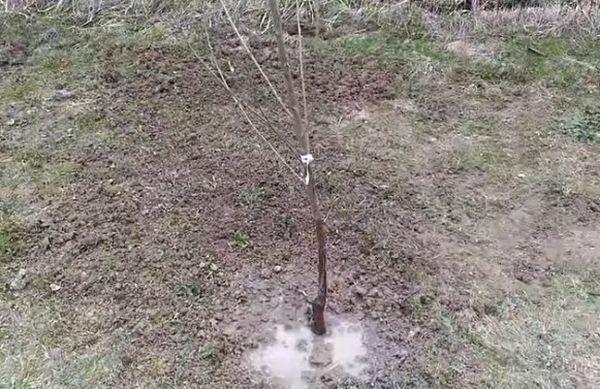
In the southern, arid regions, watering is done as needed, as soon as the top layer of soil dries out.
Important! During flowering and berry formation, increase the frequency of watering.
Top dressing and fertilization
For optimal growth, development, and fruiting, cherry trees require additional feeding and fertilizer. Provided the soil is fertile, additional feeding is applied in the second or third year of growth.
Spring
In early spring, cow manure diluted with water and mineral fertilizers are added to the soil.
Summer
During the flowering and ripening period of berries, trees need potassium and phosphorus, so a mineral complex is used for fertilization.
Autumn
In the fall, after the final harvest, the cherry trees are fed with minerals and organic compounds.
Crown formation
Proper crown formation will ensure a bountiful cherry harvest. Pruning begins in the first year after planting the tree in open ground.

First year
As soon as planting work is completed, the seedling is pruned to 6-7 buds, from which the first skeletal branches will subsequently grow.
Second
In the second year of growth, the four strongest shoots of the tree are selected to form the lower tier, the rest are removed.
Third
In the third year of growth, the formation of the lower tiers of the tree continues and the skeletal branches of the second level are laid.
Fourth
When pruning cherry trees in the fourth year of growth, the formation of skeletal branches of the second level continues and the next level of branches is laid.
Next, the fruit tree only requires crown thinning and sanitary treatment.
Take a look Also

Preparing for winter
Before wintering, trees are generously watered, and the trunk circle is mulched with a thick layer of humus and spruce branches.

The lower part of the trunk is treated with lime and covered with burlap or a special material. Also, to prevent damage to the tree by small rodents, the trunk is wrapped in netting.
As soon as the first snow falls, a large snowdrift is raked under the tree.
Weeding and loosening
Weeds carry fungal and viral diseases, as well as pests. Therefore, the tree trunk area is weeded, loosened, and mulched several times per season.
Spring processing
In the spring, trees undergo sanitary pruning, removing frozen, dead, and damaged branches and shoots. After pruning, the cut areas are treated with garden pitch.
Crown thinning for a mature tree
Over the years, the tree develops many old branches that cease to bear fruit. In late autumn, after the harvest, old and abnormally growing branches are removed, stimulating the growth and development of new shoots.
Diseases and pests
The Tyutchevka cherry variety is resistant to some fungal diseases and pests. However, if not properly cared for, the tree becomes susceptible to diseases and insect attacks.

Clusterosporiasis
The fungal disease affects not only the foliage of the plant, but also flowers, branches and buds.
The disease manifests itself as brown spots that increase in size and darken over time, and holes subsequently form at the site of damage.
For treatment and prevention, preparations based on fungicides containing copper are used.
Moniliosis
Moniliosis manifests itself as a gray coating on the fruit, causing the berries to rot. Affected shoots are removed and burned, and the trees are treated with copper sulfate or other specialized products.
Scab
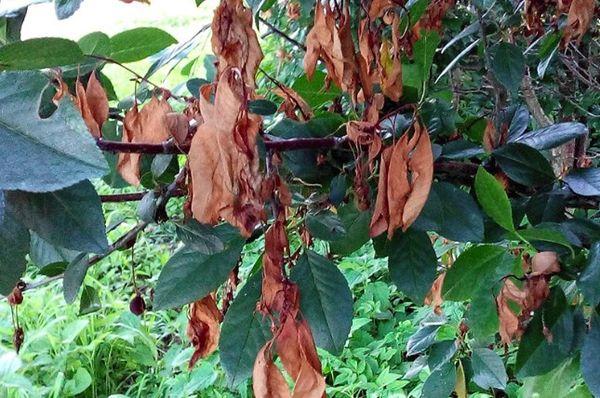
Affected leaves become covered with brown spots, curl, and dry out. For treatment and prevention, trees are treated with special fungicide-based products containing copper.
Cherry aphid
The pest feeds on the sap of cherry leaves and fruits, which leads to drying out and cessation of fruiting of the tree.
As a preventative and treatment measure, the plant is treated with insecticide-based preparations.
Boyarshnitsa
A butterfly similar in appearance to the cabbage white butterfly, the pest is particularly dangerous in its caterpillar stage, quickly destroying not only the foliage of the tree but also the crop. Insecticides are used for control and prevention.
Barkwood
A small bug that appears in the bark of infected trees in late spring. If left untreated, fruit crop yields drop and disease resistance is significantly reduced.
Only professional products can help fight pests.
Reproduction of culture
To propagate berry trees in a garden plot, vegetative or seed methods are used to obtain new cherry seedlings.

From seeds
Seeds for planting are obtained from ripe berries. The pits are carefully cleaned of pulp and stored in a container with damp sand in the refrigerator for the entire winter.
In spring, the seeds are planted in pots with fertile soil and covered with film until the first shoots appear.
Important! When propagating hybrid crops by seed, all varietal characteristics are lost.
Cuttings
Propagation by cuttings is the easiest and fastest way to obtain new cherry seedlings.
To do this, cut a strong, healthy shoot from a mature tree and divide it into equal sections containing buds or leaves. The cuttings are rooted in fertile soil and then planted outdoors.

Layering
To propagate cherry trees by layering, select a healthy, strong shoot, make two circular cuts 2 cm apart, and remove the bark between them. The cut is lined with fertile soil and treated with a growth stimulant, then wrapped in plastic. In early fall, the rooted seedling is pruned from the mother tree and transplanted into a separate container.
Harvesting and storage
The harvest of ripe Tyutchevka cherries is carried out in mid-August, in the morning and in dry weather.
To increase the shelf life of berries, they are picked with the stems attached. After picking, the fruits are sorted and sorted. The softest and weakest ones are processed, while the rest are placed in boxes or containers and refrigerated. Fresh berries will keep in the bottom drawer of the refrigerator for up to 5-7 days.
To increase the shelf life of the fruit, cherries are frozen, dried or canned.
Related posts:
 Descriptions of the 20 best cherry varieties for the Moscow region, their planting and care
 Planting and caring for cherries, feeding and growing rules
 The health benefits and harms of cherries, rules of consumption, and their effects on the body
 Description of the Drogana yellow cherry variety, planting and care
 Description and cultivation of the Bryansk pink cherry variety, pollinators
 Description and characteristics of the Valery Chkalov cherry variety, planting and care
 Description of the best cherry varieties and cultivation in the Urals, planting and care
 Description and cultivation of the Yantarnaya cherry variety, selection of pollinators